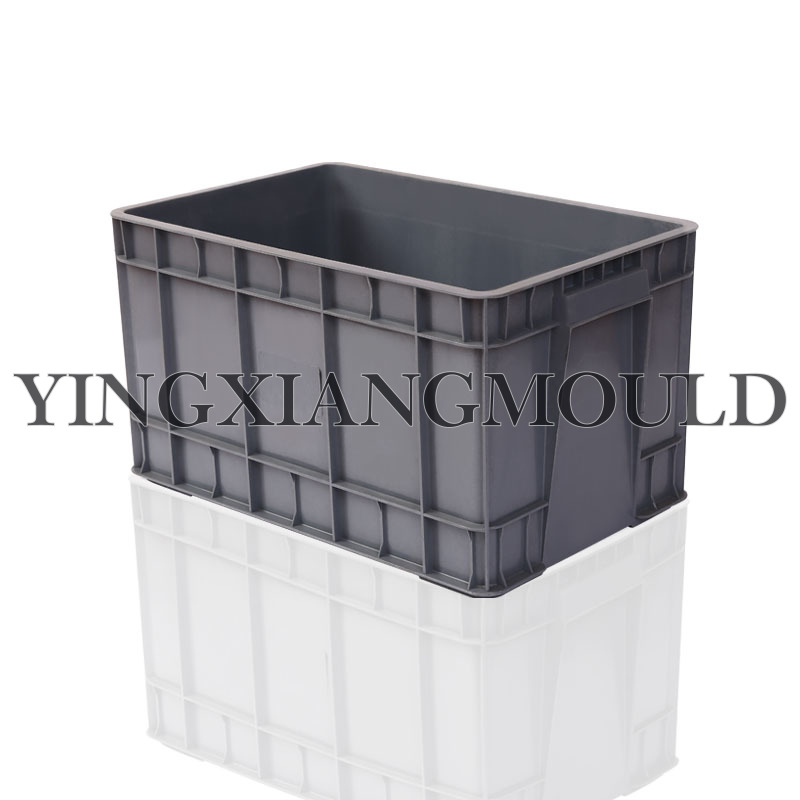
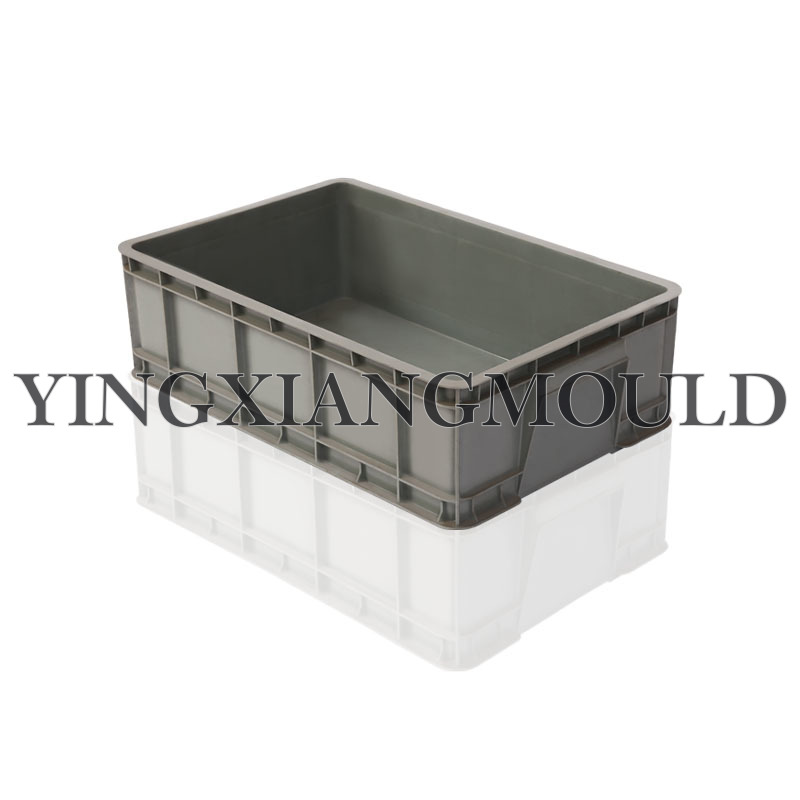
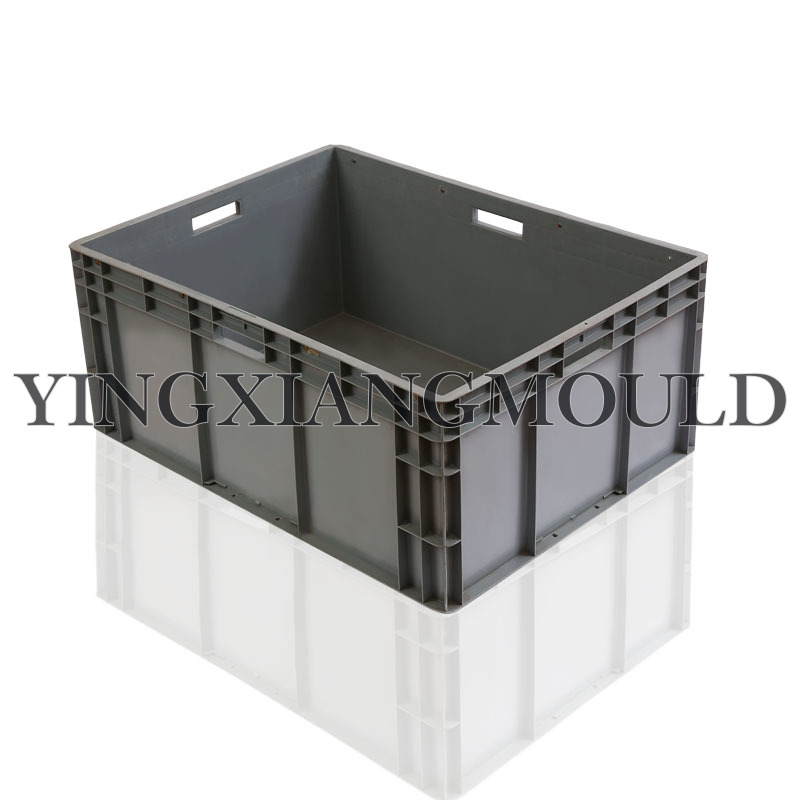
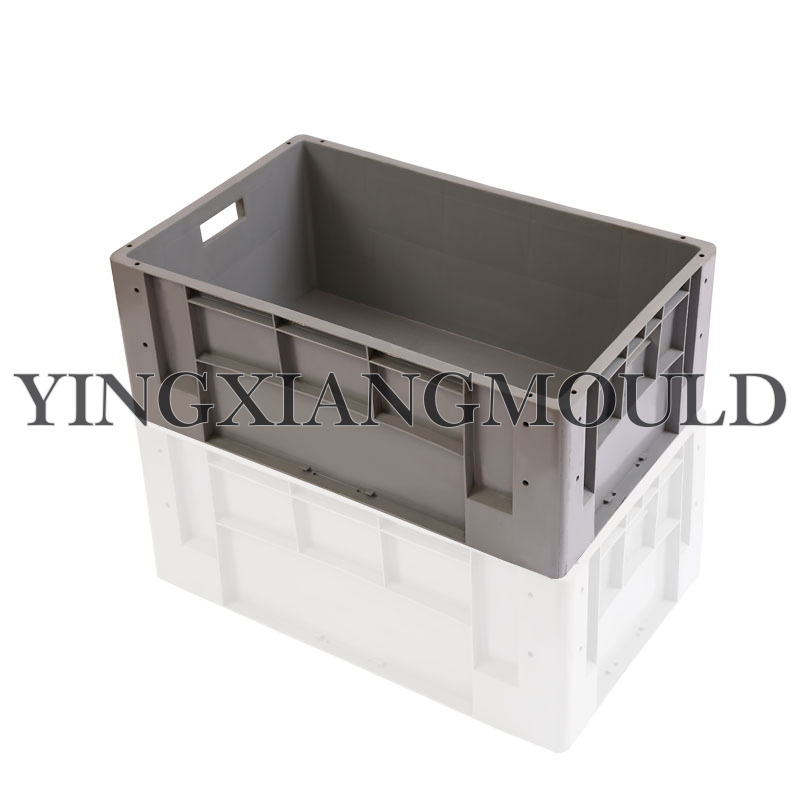
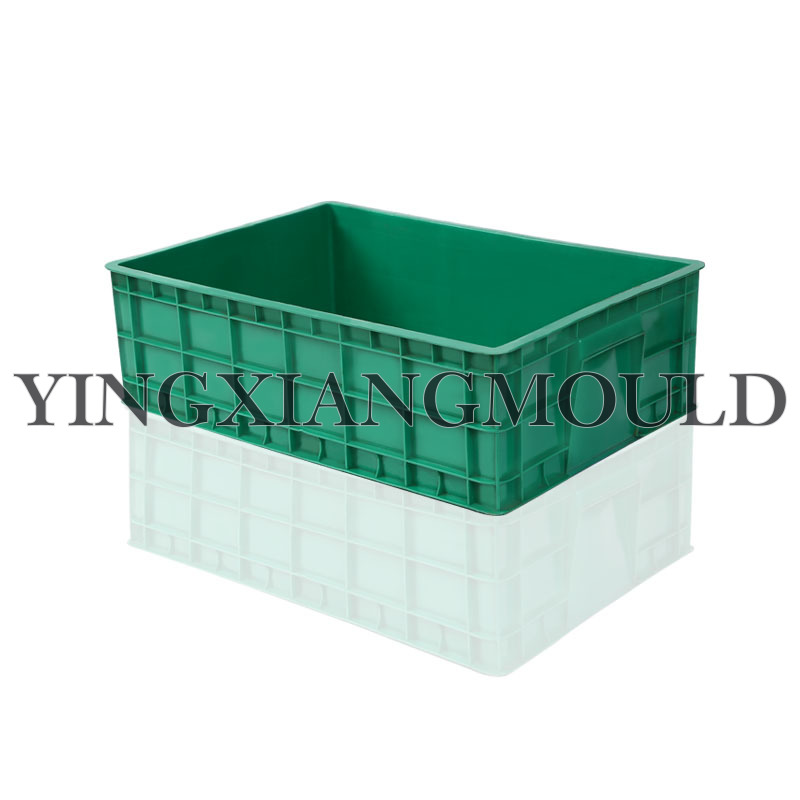
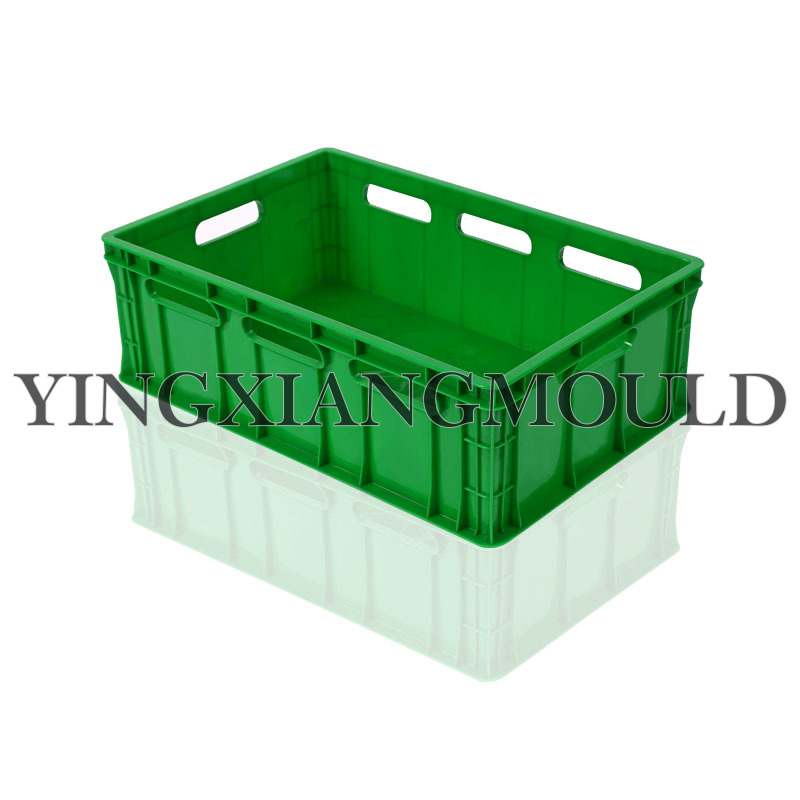
An integral box mold is a large injection mold that simultaneously molds the four walls, bottom, and reinforcing structure of a box into a seamless, monolithic component through a single injection molding process. Compared to assembled boxes made from multiple parts, integrally molded boxes have no welds or snap-fit connections, resulting in a more complete structure, more even load-bearing capacity, and better sealing.
These molds are typically large, with cavity sizes ranging from tens to hundreds of liters, and are commonly used to produce industrial turnover boxes, seafood storage and transportation boxes, refrigerated and insulated box shells, and construction toolboxes. Due to the thin walls and large surface area, integral box molds require high-tonnage injection molding machines, and also have more stringent requirements for cooling system design, venting locations, and shrinkage control.
Common molding materials include HDPE (high-density polyethylene), PP (polypropylene), and LLDPE (linear low-density polyethylene). Some insulated box shells also use ABS injection molding. It is worth noting that the Plastic Fish Boxes Mould commonly used in the seafood cold chain industry is essentially a typical subcategory of integral box molds, and its procurement logic is highly consistent with that of general integral box molds.
Key Application Scenarios: Integral Box Mold
Aquatic Cold Chain Storage and Transportation: Production of specialized storage and transportation boxes for fish and seafood. Requirements include food-grade HDPE, low-temperature resistance without cracking, seamless one-piece molding for easy cleaning and disinfection, and compliance with EU food contact material regulations.
Logistics Turnover Boxes: For e-commerce and manufacturing internal turnover scenarios, the boxes need to withstand stacking pressure. One-piece molding of PP or HDPE provides sufficient rigidity, and stacking guide structures can be designed.
Refrigerated/Insulated Box Shells: Insulated box shells for ice cream and dairy product delivery. Requirements include uniform wall thickness, precise sealing groove dimensions, and separate molding of the inner and outer shells followed by foaming material injection.
Tool/Instrument Storage Boxes: For storing hardware, electrical, and medical devices. The boxes need high strength and impact resistance, commonly using fiberglass-reinforced PP or ABS. Mold design must accommodate both sealing grooves and snap-fit installation holes.
Agricultural Product Harvesting Boxes: For fruit and vegetable harvesting and field sorting. Requirements include lightweight boxes, drainage holes at the bottom, HDPE material resistant to outdoor UV radiation, and long service life.
Retail/Supermarket Display Cases: Fresh produce display cases and freezer-mounted storage cases require high surface finish and color consistency. Molds must precisely control wall thickness uniformity to avoid color variations.
Why Source an Integral Box Mould?
For B2B buyers engaged in box production, export, or OEM manufacturing, owning an integral box mold is not only a cost-reduction strategy but also a core guarantee of supply chain stability and product competitiveness. Here are some of the most often overlooked yet crucial reasons for purchasing decisions:
Completely Eliminates the Structural Weaknesses of Spliced Structures: Traditional welded or snap-fit boxes are most prone to breakage at seams when subjected to stacking pressure, low-temperature impacts, or frequent handling. Integral molded boxes have no splicing points; the load is evenly distributed across the entire wall surface, resulting in significantly longer lifespan and higher reliability than assembled parts. This is especially critical for high-frequency usage scenarios such as seafood and cold chain industries.
Meeting Food Contact and Hygiene Compliance Requirements: The seamless, one-piece molded structure eliminates seams, avoiding the risk of liquid and bacterial residue, and making it easier to pass FDA 21 CFR, EU 10/2011, and other food contact material regulations. For manufacturers of seafood and food storage and transportation boxes exporting to European and American markets, one-piece molds are one of the necessary conditions to meet regulatory thresholds.
Cost Structure Advantages in Mass Production: Compared to purchasing finished boxes, self-manufacturing with in-house molds can reduce marginal costs to raw materials + utilities + labor; compared to assembly solutions, it reduces welding and assembly processes, lowering labor costs and defect rates. While the development cost of one-piece box molds is usually higher than that of simple molds, the amortization cost after mass production is extremely low, making it suitable for factories with stable annual output.
Customized Design Enables Differentiated Competition: The dimensions, stacking guides, brand logo, color, drainage hole location, and reinforcing rib distribution of the box can all be defined during the mold design stage, a customization capability that cannot be achieved with purchased standard products. For exporters with specific customer size requirements (such as matching specific shelving or cold storage dimensions), having in-house molds is a prerequisite for accepting orders.
Recycled Material Applications Reduce Raw Material Costs: HDPE and PP are both recyclable materials. Within the limits of product design, the overall enclosure can be injection molded using a certain proportion of clean recycled materials (PCR materials) mixed with virgin materials, reducing raw material costs without affecting structural performance.
Frequently Asked Questions
How to balance the purchase of a monolithic enclosure versus a modular enclosure?
The key to choosing between the two lies in the expected production volume and the product's intended use. Monolithic molding has a higher initial mold opening cost, but the finished product has higher structural strength, is seamless, requires fewer post-processing steps, and has a lower overall cost per unit after mass production. It is suitable for enclosure products that require food hygiene certification, leak-proof requirements, or export compliance.
Modular assembly solutions involve dispersed initial investment (multiple small molds) and flexible style changes, but involve additional assembly processes and structural risks. During long-term use, the joints are prone to aging and failure. If the product is mainly used for internal industrial handling, has no strict requirements for sealing, and frequently changes style, the modular solution has a certain flexibility advantage.
Which material, HDPE or PP, is more suitable for integral box molding?
- HDPE has better low-temperature resistance (it can withstand temperatures as low as -40°C without cracking) and a shrinkage rate of approximately 1.5%~2.0%, making it suitable for applications requiring cold resistance, such as seafood cold chain boxes and freezer storage boxes. However, HDPE has slightly lower rigidity, requiring corresponding compensation in the box wall thickness design.
- PP has higher rigidity and better heat resistance, resulting in stronger dimensional stability after molding compared to HDPE. It is suitable for applications requiring a certain level of rigidity, such as room-temperature logistics turnover boxes and toolboxes. PP is prone to embrittlement at low temperatures (below -10°C), making it unsuitable for cold chain scenarios. If necessary, copolymerized PP or elastomer-modified formulations can be used to improve low-temperature toughness.



 English
 Español