

 English
 Español
Zhao Yuting — Customer Service and After-Sales Supervisor
Home / Author / Zhao Yuting — Customer Service and After-Sales Supervisor / Fruit Folding Crate Mould: Efficient, Durable and Space-Saving Packaging Solutions
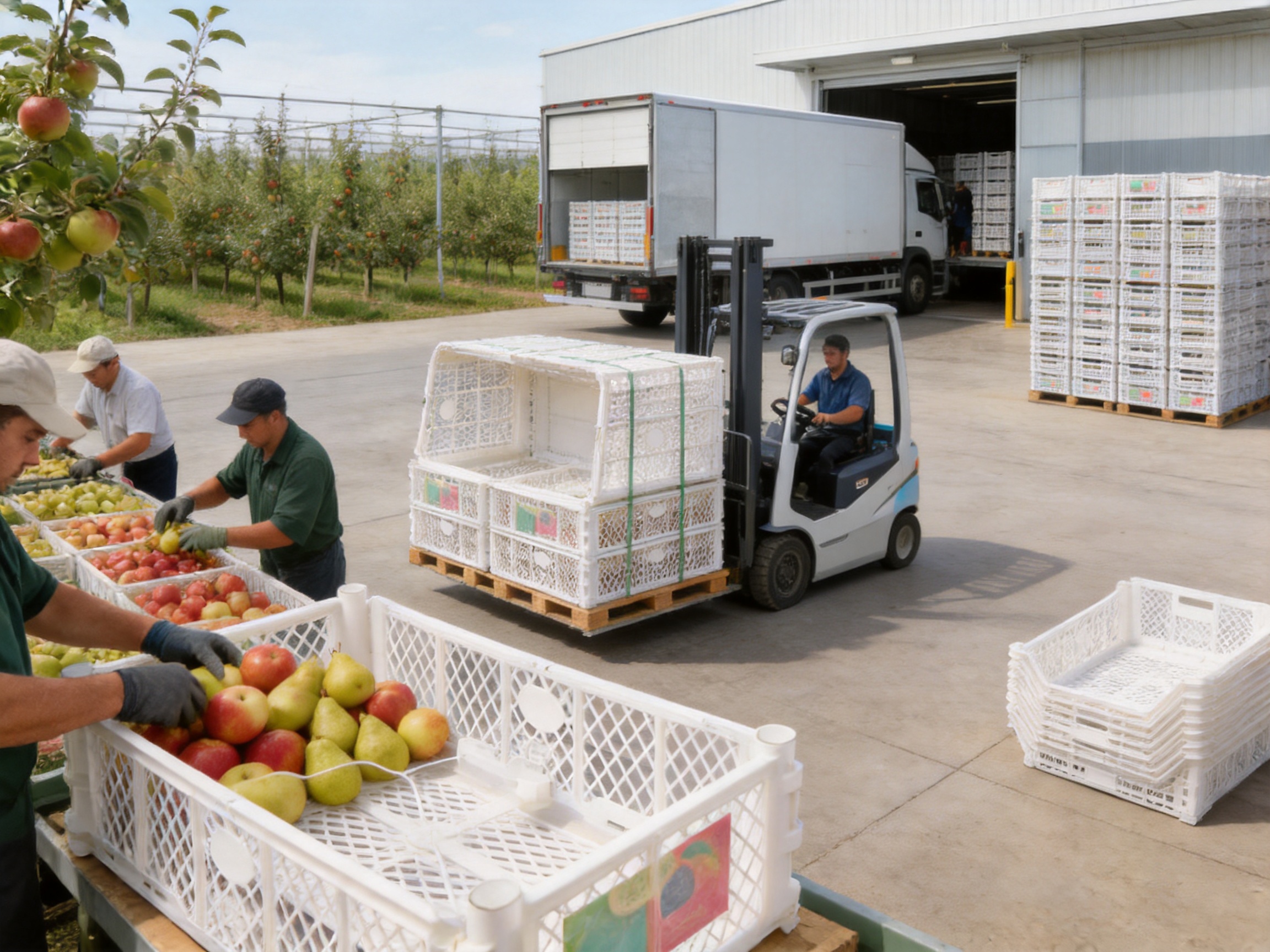
Fresh produce packaging must protect fruit during harvesting, transport, storage and retail display while also controlling operating costs. For growers, wholesalers, logistics companies and retailers, the right crate is more than a simple container. It must provide ventilation, structural strength, easy handling, hygienic surfaces, efficient stacking and reliable performance over repeated use. At the same time, empty crates should occupy as little warehouse and vehicle space as possible. A well-designed fruit folding crate meets these requirements by combining the strength of a reusable plastic crate with the space-saving benefits of a collapsible structure.
The mould used to manufacture this type of crate is therefore a critical production asset. A fruit folding crate mould must create accurate folding components, stable hinges, reinforced corners, smooth edges, consistent wall thickness and dependable locking features. It must also withstand repeated injection cycles while maintaining dimensional accuracy. The quality of the mould directly affects the crate’s usability, lifespan, appearance and production cost.
TaiZhou HuangYan YingXiang Plastic Mould Co., Ltd. develops customized plastic injection mould solutions for fruit folding crates, logistics containers, storage boxes, pallets, beverage boxes and other household and industrial products. Located in Huangyan, Taizhou, Zhejiang, China, an area widely recognized for mould manufacturing, the company combines engineering experience, modern design systems, precision processing equipment and practical production knowledge.
This article examines the structure, benefits, design considerations and manufacturing strengths associated with a fruit folding crate mould. It also explains why a professionally engineered mould can provide advantages over ordinary rigid crate moulds, low-cost tooling and poorly optimized folding designs.
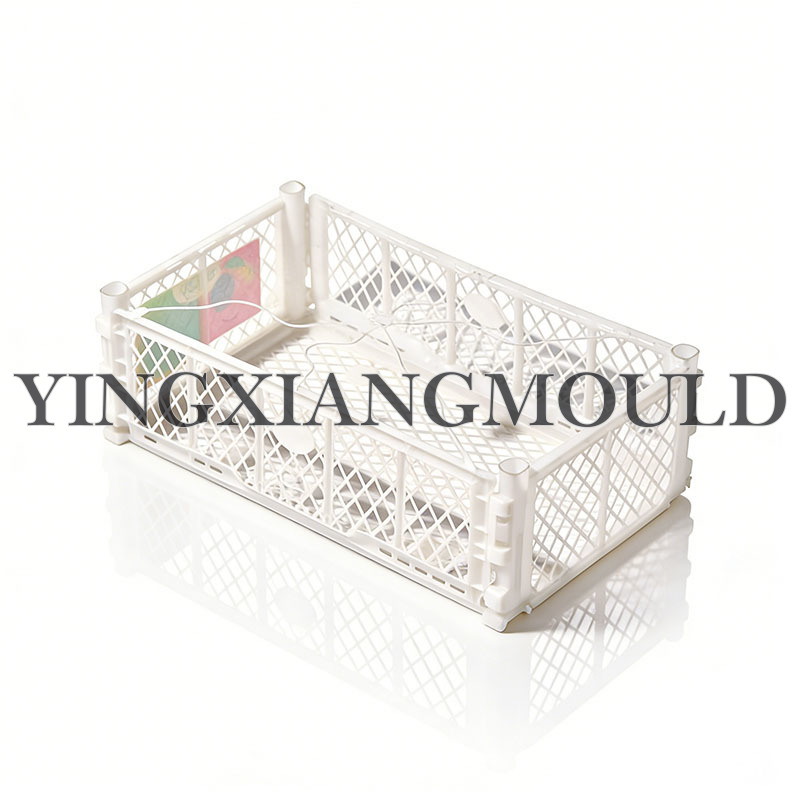
Fruit Folding Crate
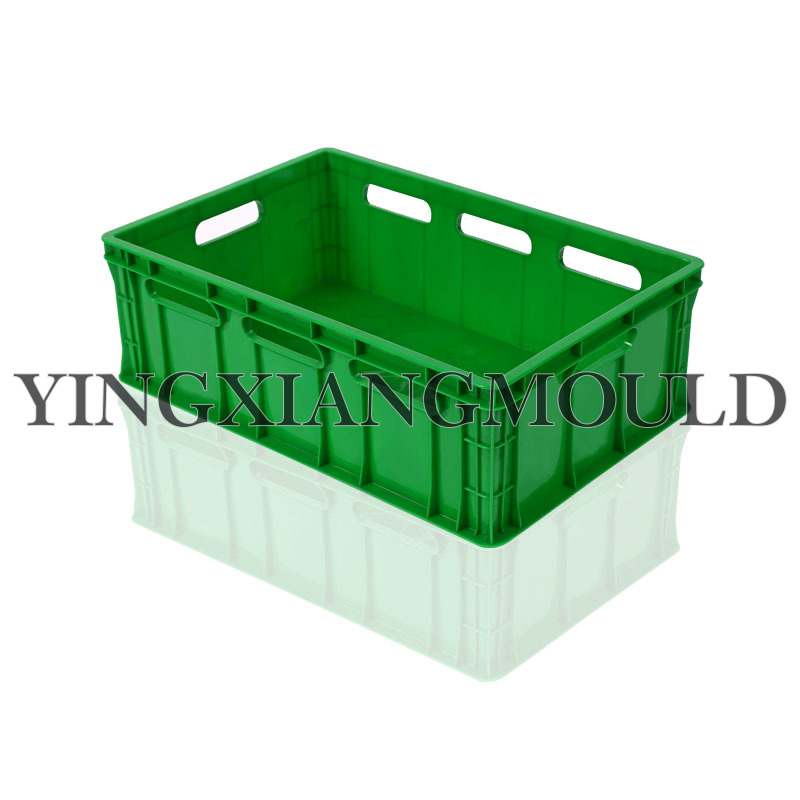
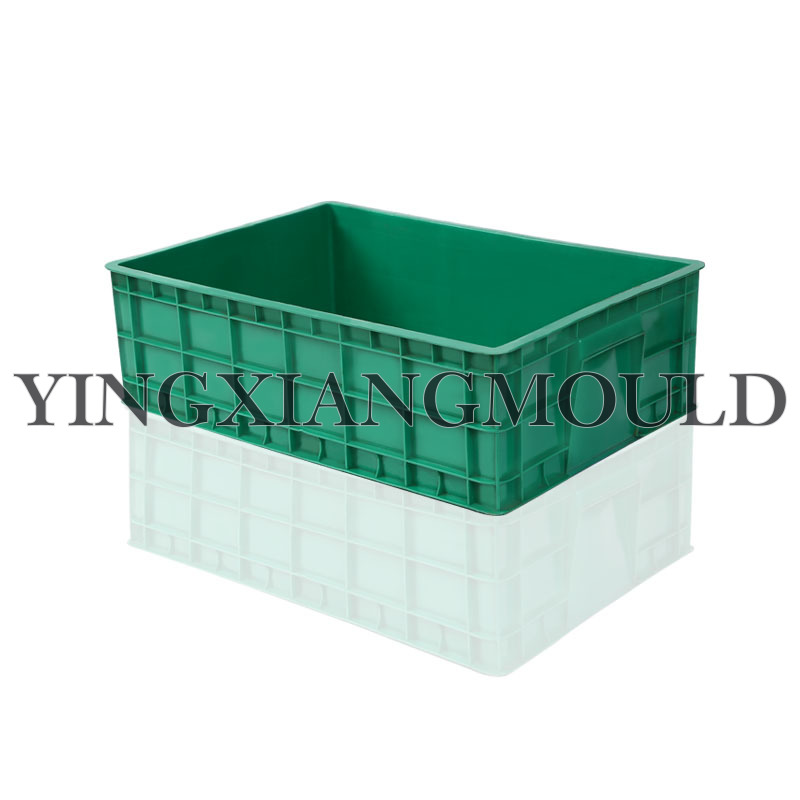
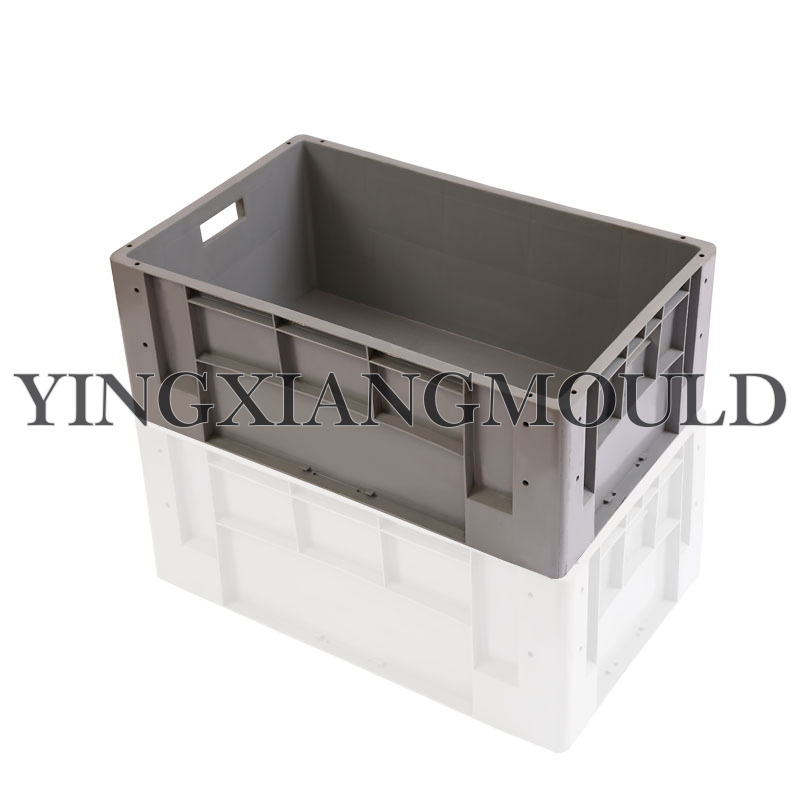
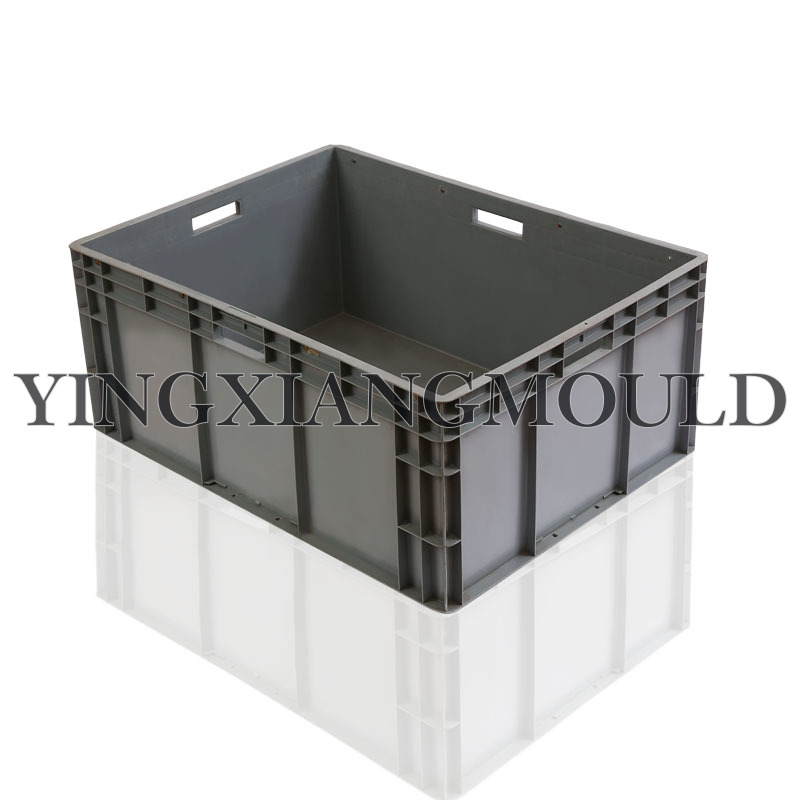
A fruit folding crate is a reusable plastic container designed for the handling, transportation and temporary storage of fruits and vegetables. Unlike a conventional rigid crate, a folding crate has side panels that can collapse inward when empty. This allows multiple empty crates to be stacked in a compact arrangement, reducing the space required for return transport and warehouse storage.
When opened, the crate forms a stable container with a usable internal volume for fresh produce. When folded, the side walls lie partially or completely within the base area, depending on the design. Locking structures, hinge points and support ribs hold the crate securely in its open position during use. These features must work together without creating sharp projections or excessive stress concentrations.
Fruit folding crates are commonly produced from injection-moulded plastic materials. The selected material may be a suitable polypropylene or another engineering-grade polymer chosen according to load requirements, temperature conditions, washing procedures, impact resistance and food-contact considerations. Material selection should always be confirmed with the customer’s application, regulatory requirements and intended market.
The crate may include open ventilation slots, reinforced side frames, ergonomic hand holes, identification areas, stacking feet, labels or customized logos. A fruit folding crate mould must reproduce these features accurately and consistently across every production cycle.
Fresh produce supply chains often involve several stages. Fruit may move from an orchard or farm to a collection center, then to a sorting facility, distribution warehouse, wholesaler, supermarket or food service operator. At each stage, the packaging must provide protection while allowing fast handling and efficient storage.
Traditional wooden boxes can absorb moisture, splinter, carry contaminants and vary in dimensional accuracy. Single-use corrugated packaging can be practical in certain situations, but it may lose strength when exposed to moisture and generally requires repeated replacement. Rigid plastic crates provide durability and washability, but they occupy a fixed volume when empty.
Folding plastic crates address this final limitation. They can be opened for filling and stacking, then collapsed after delivery or return. This reduces wasted space in backhauls and empty-container storage. The result may be improved vehicle utilization, more organized warehouses and lower packaging handling costs over the product’s service life.
For these benefits to be realized, the crate must be designed correctly. A poorly engineered folding mechanism can be difficult to operate, vulnerable to damage or unable to maintain a secure open position. A mould with poor cooling balance can produce warped panels or inconsistent hinge alignment. A mould with inadequate venting can create burn marks, short shots or visible defects. Professional mould engineering is therefore essential.
The most visible advantage of a folding crate is its reduced empty volume. Once the crate is emptied, the side walls can be folded down, allowing many more units to fit into a return vehicle or storage area. This feature is especially valuable when packaging must travel repeatedly between farms, distribution centers and retailers.
Compared with fixed-wall crates, a folding design can help reduce the number of vehicle trips required for empty packaging. It can also simplify the organization of packaging pools. A smaller folded footprint may make it easier to store crates by size, customer, product type or delivery route.
Injection-moulded plastic crates are designed for repeated handling. The crate can be used, washed, folded, transported and reopened many times when the material and structure are properly selected. Reinforced ribs distribute loads through the base and side walls, helping the crate resist deformation during stacking.
Durability provides an advantage over packaging that is intended for only one or a limited number of uses. The economic value of a reusable crate depends on its actual service life, maintenance requirements and handling conditions. A high-quality mould contributes to this value by ensuring consistent wall thickness, accurate locking features and reliable hinge geometry.
Many fruits and vegetables require airflow to reduce heat accumulation and moisture retention. Ventilation openings in the side walls and base can support air circulation during storage and transport. Properly designed openings can also help workers inspect the contents without opening every crate.
Ventilation must be balanced with structural strength. Excessively large openings may weaken a wall or create unsupported edges, while overly small openings may limit airflow and complicate cleaning. The mould designer must consider the relationship between aperture geometry, rib placement, draft angles, ejection and material flow.
Plastic crates can be cleaned more easily than porous materials when they have smooth, well-finished surfaces and appropriately designed corners. Rounded transitions reduce areas where dirt or moisture can accumulate. Drainage paths and open structures may support more effective washing and drying.
A crate used for food-related applications should be manufactured from a material and process suitable for the intended use. The customer should specify any food-contact, sanitation or traceability requirements before the mould design is finalized.
Hand holes and edge details can be designed to improve lifting comfort. A suitable grip should provide enough clearance for the user’s fingers while maintaining adequate structural support around the opening. Excessively sharp edges or poorly placed handles can reduce comfort and increase the risk of damage to gloves or hands.
Because fruit crates may be lifted when fully loaded, the handle area requires special attention. Local reinforcement, smooth transitions and appropriate rib design can improve both user experience and mechanical reliability.
When filled, folding crates must remain stable during stacking. Stacking feet, locating recesses and reinforced upper rims can help align one crate with another. Accurate moulding is particularly important because even small dimensional variations may affect stacking behavior across a large number of units.
A stable stack reduces the risk of tipping, product damage and handling delays. It also allows warehouses and vehicles to use vertical space more effectively. The final stacking arrangement should be tested with the intended crate dimensions, load, material and operating environment.
Different fruits have different packaging requirements. Small delicate fruit may need a shallower container, greater ventilation or smoother internal surfaces. Larger or heavier produce may require a deeper crate, stronger ribs and a higher load capacity. Some customers may need a standardized footprint compatible with pallets or automated handling equipment.
A customized fruit folding crate mould can accommodate variations in length, width, height, wall structure, handle design, ventilation, identification surfaces and folding mechanism. Customization allows the packaging to fit a particular supply chain rather than forcing the customer to adapt operations to a generic product.
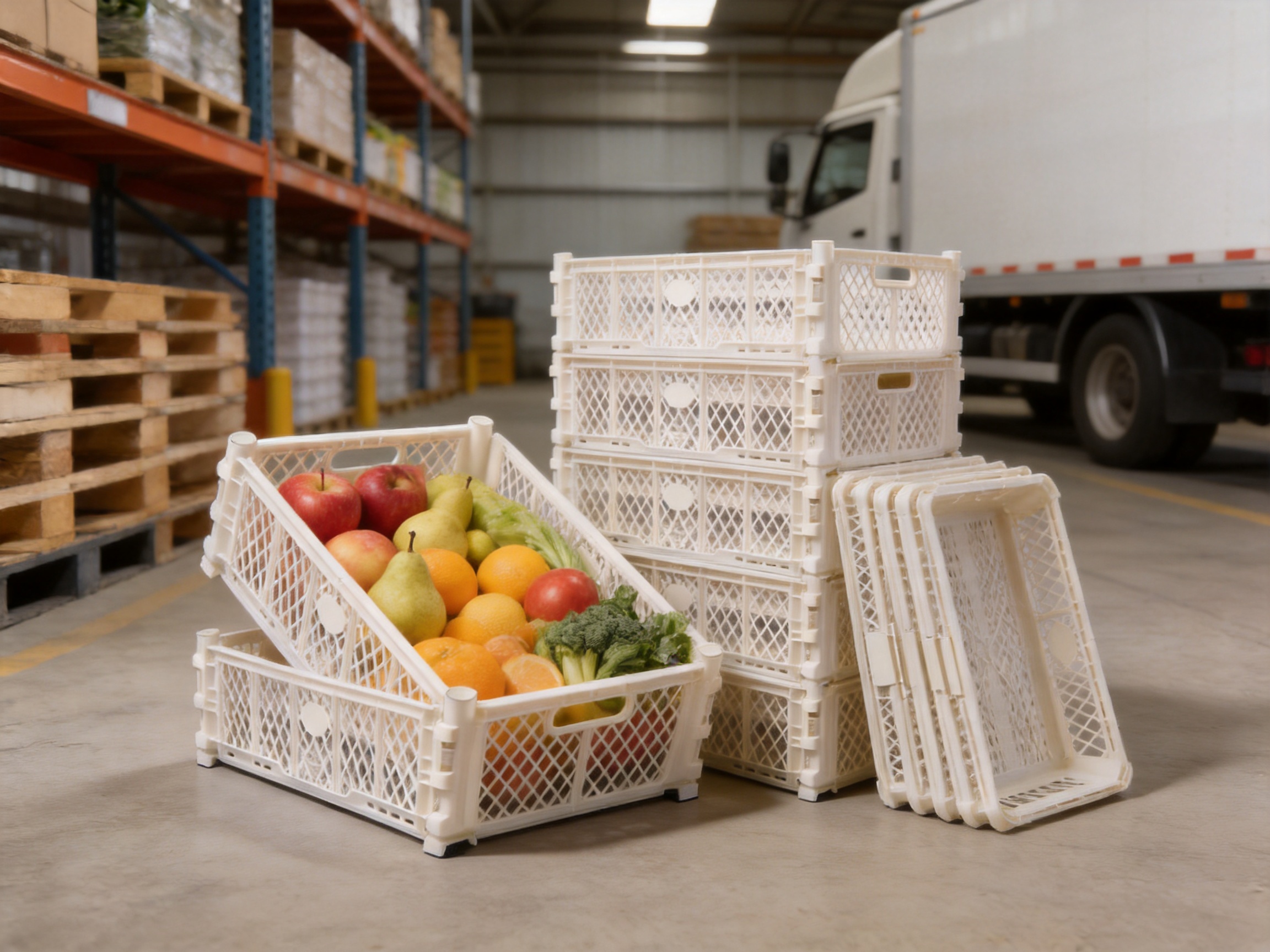
A fruit folding crate should not be evaluated only by its purchase price. The correct comparison includes storage, transportation, cleaning, replacement, handling and end-of-life considerations. A low-cost rigid crate may appear economical initially, but its fixed empty volume can create continuing logistics costs. A disposable package may have a lower unit price but require frequent replenishment.
| Evaluation Factor | Fruit Folding Crate | Rigid Plastic Crate | Disposable Packaging |
|---|---|---|---|
| Empty storage volume | Reduced through folding side walls | Fixed volume | Often compact before use, but requires replacement |
| Reuse potential | Designed for repeated cycles | Designed for repeated cycles | Usually limited or application-dependent |
| Return transport | Space-efficient when collapsed | Requires transport of full crate volume | May not be returned |
| Ventilation | Can be engineered into side panels and base | Can provide ventilation, depending on design | Depends on package construction |
| Cleaning | Suitable for washable plastic designs | Suitable for washable plastic designs | Often not designed for repeated washing |
| Handling flexibility | Can include handles, locks and folding features | Usually simple and robust | Varies by format |
| Initial mould complexity | Higher because of folding mechanisms | Generally lower than folding designs | Depends on packaging format |
| Long-term logistics efficiency | Strong potential when the crate is returned frequently | May be limited by empty volume | Depends on replacement and disposal costs |
The main competitive advantage of the folding format is the combination of reusable strength and reduced empty volume. However, this benefit depends on a well-designed hinge and locking system. If the crate is difficult to fold or open, the operational advantage may be reduced. The mould must therefore support a practical mechanism that performs consistently in real working conditions.
The folding mechanism is the defining feature of the product. It may use integrated hinge sections, pivoting elements, flexible living hinges or additional assembled components, depending on the crate structure. The selected solution affects mould complexity, assembly requirements, cycle performance and product lifespan.
Integrated plastic hinges require carefully controlled geometry and material flow. The hinge must be flexible enough to move but strong enough to tolerate repeated operation. Excessive thickness may make folding difficult, while insufficient thickness may reduce durability. The transition between the hinge and the side panel must be designed to avoid sharp stress concentrations.
An open folding crate should remain rigid during loading, stacking and transport. Locking lugs, snap-fit features or interlocking frame sections may be used to hold the walls in position. These features need accurate dimensions and suitable draft so that they release from the mould and function reliably after production.
The locking system should offer a clear operating action. Workers should be able to open and collapse the crate without excessive force or complicated procedures. The mould designer should consider shrinkage, material flexibility, tolerance accumulation and wear during repeated use.
Uniform wall thickness is a central injection moulding consideration. Large differences in thickness may cause sink marks, warpage, internal stress or uneven cooling. At the same time, a crate cannot simply use a thin wall everywhere because it must resist impact, stacking and handling loads.
Ribs, corner posts and reinforced rims can provide stiffness without making the entire wall excessively thick. The design should balance material consumption, strength, cycle time and appearance. CAE analysis can help identify potential filling, cooling and warpage risks before steel processing begins.
Crate corners often receive significant impact during handling. They also transfer forces from the base and side panels into the stacking structure. Properly placed ribs can improve rigidity and reduce local deformation.
Corner details should be designed with suitable radii rather than abrupt internal angles. Smooth transitions support better material flow and reduce stress concentration. They can also make the finished crate easier to clean.
Ventilation slots must be distributed in a way that supports airflow without compromising the side frame. Their shape may be rectangular, elongated, rounded or customized according to the desired appearance and structural requirements.
Each opening requires attention to draft, steel strength and ejection. Narrow steel sections between openings can be vulnerable during machining or production. The mould design should allow these areas to cool effectively and remain durable through high-volume use.
Draft angles allow the moulded part to separate from the core and cavity surfaces. Insufficient draft can cause drag marks, sticking, deformation or difficult ejection. Folding crates often contain many ribs, slots and recessed features, making draft planning especially important.
Ejector pins, stripper systems or other ejection solutions must apply force to suitable areas of the product. Ejection should not distort hinge sections, damage visible surfaces or interfere with thin structural elements. Balanced ejection also helps maintain stable cycle times.
The mould surface finish influences the crate’s appearance, cleaning behavior and perceived quality. Functional crate surfaces may use a practical texture that helps disguise minor handling marks, while selected areas may remain smoother for labels, logos or identification codes.
Any texture must be evaluated together with draft angle. Deeper textures generally require additional draft to prevent scuffing during ejection. The customer’s preferred color, branding method and surface appearance should be confirmed during the design review.
The mould project begins with a review of the intended crate application. Important information includes the overall product dimensions, folding method, target material, expected load, stacking arrangement, production volume, machine capacity, cycle expectations and packaging environment.
The engineering team should also understand how the crate will be opened, filled, washed, stacked, collapsed and transported. These operational details influence the hinge, locking system, handle design and reinforcement layout.
Three-dimensional CAD design is used to develop the crate geometry and mould structure. The product model must include parting lines, draft angles, wall thickness, ribs, hinge details, locking features and ejection considerations.
At this stage, the team can evaluate whether the product is suitable for injection moulding and whether any areas may create manufacturing risks. Design modifications are generally less expensive before steel is cut. A careful digital review can reduce later changes, trial delays and production interruptions.
Computer-aided engineering can assist with the analysis of melt flow, filling balance, weld lines, air traps, cooling behavior and potential warpage. Crates contain broad panels, numerous openings and structural ribs, so flow behavior can be complex.
Analysis does not replace practical engineering judgment, but it provides valuable information for gate location, runner layout, cooling channel planning and part thickness optimization. Early simulation may also identify areas where a hinge or locking feature needs refinement.
The mould structure is designed according to the crate’s dimensions, complexity and production requirements. Considerations may include the number of cavities, mould base size, core and cavity construction, slider requirements, lifters, inserts, cooling circuits and ejection arrangement.
For a large crate, a single-cavity mould may be selected to control tooling size and product dimensions, while other applications may justify multiple cavities. The appropriate configuration depends on annual demand, machine capacity, expected cycle time and the customer’s investment plan.
Modern CNC machining equipment is used to process mould components and inserts. Precision machining supports accurate parting surfaces, cavity geometry, rib details, hinge regions and locking features. The quality of machining directly affects the final product’s dimensional consistency.
Complex areas may require a combination of rough machining, semi-finishing, finishing and specialized electrode or wire-cut processes. Each process must be planned to maintain reference accuracy and minimize unnecessary rework.
Electrical discharge machining can be useful for narrow slots, deep ribs, sharp internal details and areas that are difficult to produce by conventional cutting. It supports the creation of precise features while protecting delicate steel sections.
Fine feature processing is particularly relevant to ventilation openings, locking details and hinge structures. These features should be inspected carefully because small dimensional deviations may affect assembly or folding performance.
Efficient cooling is important for cycle time, dimensional stability and product quality. The cooling system should be arranged to remove heat evenly from thick areas, corners, ribs and large panels. Poorly balanced cooling can lead to warpage or differences between opposite sides of the crate.
Cooling channels must also be positioned with consideration for mould strength and machining access. In complex designs, separate circuits may be used for different mould regions so that temperature control can be adjusted more effectively.
Air trapped inside the cavity can cause short shots, burn marks, weld-line weakness or inconsistent surface quality. Venting should be considered at the ends of flow paths, around ribs, near deep pockets and in other areas where air may collect.
Correct venting is especially important for products with many narrow openings and long flow paths. The design must provide sufficient air escape without creating flash or damaging visible surfaces.
After individual components are machined, the mould is assembled and fitted. Sliding parts, ejector systems, inserts, guide elements and cooling connections are checked for proper movement and alignment.
Trial moulding is then used to evaluate filling, ejection, folding action, dimensions, appearance and cycle behavior. The first trial may identify adjustments in processing conditions or minor mould corrections. A professional supplier documents these findings and applies controlled improvements before final acceptance.
Finished moulds should be inspected against the approved product model and technical requirements. Inspection may include dimensional measurement, parting-line verification, cavity surface review, cooling checks, ejection tests and sample crate evaluation.
The customer should review actual samples rather than relying only on drawings. Practical testing can confirm whether the crate opens smoothly, folds correctly, stacks securely, fits the intended pallet or transport system and meets handling expectations.
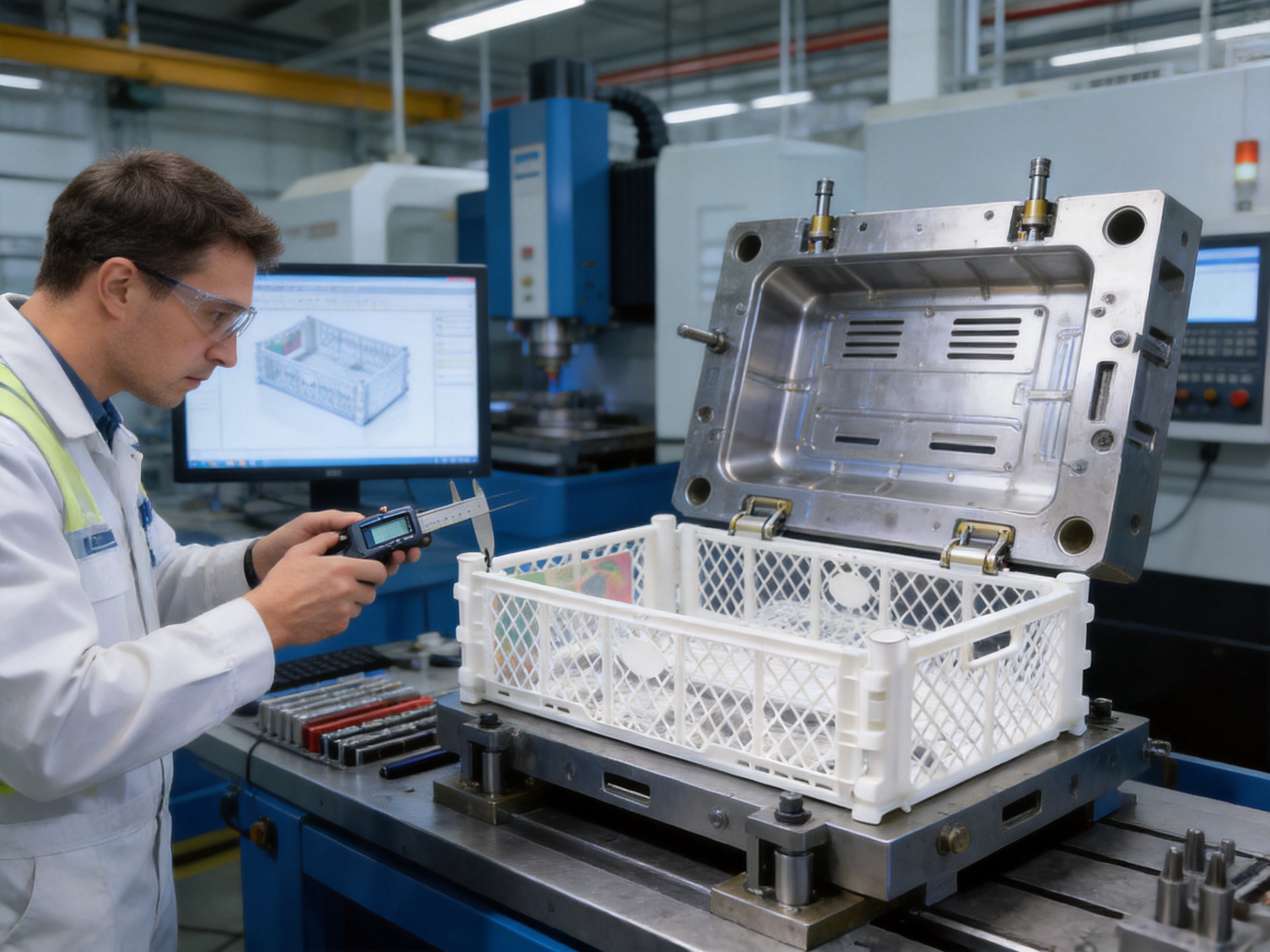
TaiZhou HuangYan YingXiang Plastic Mould Co., Ltd. was established in 2012 and operates from a 7,000-square-meter plant in Huangyan, Taizhou, Zhejiang, China. The company has approximately 50 employees, including experienced technicians and engineering personnel.
The company uses CAD, CAE and CAM systems to support product development, mould analysis and machining preparation. This digital workflow helps connect the customer’s concept with the physical mould and can improve communication during design review.
Its product scope includes crate and folding box moulds, logistics crate moulds, tray and pallet moulds, beverage box moulds, storage box moulds and moulds for daily household products. This range gives the engineering team experience across different container structures, load requirements and injection moulding challenges.
Experience with related products is valuable because many design principles overlap. A pallet mould requires attention to load distribution and warpage. A logistics crate mould requires durable ribs and accurate stacking. A household storage box mould requires appearance and smooth operation. Knowledge from each product category can contribute to better decisions for a fruit folding crate mould.
The company emphasizes lean manufacturing, long-life moulds, on-time delivery, competitive costs and comprehensive customer service. These priorities are important for customers who require more than a tool that produces an initial sample. The mould must remain practical throughout production, maintenance and future product use.
A professionally engineered mould supports consistent crate dimensions from cycle to cycle. Consistency improves folding alignment, stacking performance and compatibility with automated or semi-automated handling systems.
Low-cost tooling may reduce the initial investment by using inadequate steel, simplified cooling or insufficient inspection. Such savings can become expensive if the customer experiences high rejection rates, repeated adjustments or premature mould wear.
The folding mechanism must operate repeatedly without excessive force or looseness. Accurate mould details help the hinge and locking features perform as intended. The product should be tested through repeated opening and closing cycles under realistic conditions.
A mould supplier with experience in folding structures can identify interference risks, tolerance problems and stress concentration areas before they become production issues.
Balanced cooling, adequate venting and efficient ejection support stable production. A stable process makes it easier for the injection moulder to maintain output and quality over long production runs.
Unstable cycle behavior may lead to variation in weight, dimensions, surface finish and warpage. In high-volume packaging production, even a small percentage of defects can create significant material and labor losses.
Long-life tooling depends on suitable steel, correct heat treatment where required, durable guide and sliding components, effective lubrication access and maintainable design. Wear-prone sections should be replaceable or serviceable when practical.
Maintenance planning should be considered from the beginning. A mould that is difficult to disassemble or inspect may create longer downtime later. Good documentation and clear component identification can support faster maintenance.
Custom packaging projects often involve changes to dimensions, logos, colors, labels, stacking requirements or material. A supplier with an established design and production process can manage these details more systematically.
Effective communication includes confirming drawings, reviewing technical risks, defining approval samples and recording customer changes. This reduces misunderstandings and helps ensure that the final mould matches the actual business application.
Material selection influences the crate’s strength, flexibility, weight, chemical resistance, temperature performance and folding life. Polypropylene is commonly considered for reusable crates because of its balance of toughness, processing behavior and fatigue resistance, but the final choice should be based on the customer’s application and supplier recommendations.
Recycled material may be suitable for some logistics applications, while food-related products may require more specific material controls. If recycled content is used, the customer should evaluate consistency, odor, cleanliness, color variation and compliance requirements.
Color can be used for brand recognition, product classification, route management or inventory control. Masterbatch selection should be compatible with the base resin and processing conditions. Strong color variation may indicate inconsistent material mixing or process control.
Injection moulding parameters such as melt temperature, mould temperature, injection speed, holding pressure and cooling time must be optimized for the selected material and crate design. The correct settings are determined through trials and production validation rather than by design assumptions alone.
Quality control should cover both the mould and the moulded crate. Mould inspection may include steel condition, cavity dimensions, parting surfaces, cooling circuits, ejector movement, slider operation and surface finish.
Sample crate inspection may include length, width, height, folded height, wall thickness, weight, handle dimensions, hinge movement and locking performance. Functional tests may evaluate stacking, impact resistance, load capacity, repeated folding and washing compatibility.
Appearance inspection should check for short shots, flash, sink marks, burn marks, flow lines, weld-line problems, deformation and scratches. The acceptance standard should be agreed with the customer because cosmetic requirements vary between agricultural, logistics, retail and household applications.
| Quality Area | Typical Inspection Focus | Why It Matters |
|---|---|---|
| Product dimensions | Overall size, folded size, wall alignment and stacking interfaces | Ensures compatibility with transport and storage systems |
| Folding function | Opening force, folding movement and hinge operation | Supports efficient daily handling |
| Locking function | Engagement, release and resistance to accidental collapse | Protects contents and improves workplace safety |
| Structural strength | Base, corner, rim and rib performance | Supports stacking and repeated reuse |
| Ventilation | Opening size, distribution and unobstructed airflow | Helps manage produce conditions |
| Surface quality | Flash, sink marks, burn marks and rough edges | Improves appearance, cleaning and user comfort |
| Mould operation | Cooling, ejection, sliders and cycle repeatability | Supports stable mass production |
Fruit folding crates can be used in orchards, vegetable farms, collection stations, packing houses, cold storage facilities, wholesale markets, supermarket distribution centers and food service supply chains. They can support the movement of apples, pears, citrus fruit, stone fruit, berries, vegetables and other products when the crate dimensions and internal protection are suitable.
The same folding format may also be adapted for bakery products, packaged foods, beverages, household distribution or general logistics. However, the internal design, ventilation, load rating and hygiene requirements should be matched to the actual product.
In closed-loop logistics systems, the crates can be tracked through standardized sizes, colors, barcodes, QR codes or molded identification panels. A custom mould may incorporate suitable flat areas for labels or other identification methods.
Customers should first review the supplier’s experience with comparable products. A company that has produced only simple open containers may not have sufficient experience with hinges, folding walls, locking systems and complex ejection. Relevant experience with folding boxes, logistics crates, pallets and storage containers is a useful indicator.
The supplier’s engineering capabilities should also be evaluated. CAD design, CAE analysis and CAM manufacturing systems can support better development control. Customers may request information about design reviews, mould flow analysis, inspection equipment, trial procedures and technical documentation.
Manufacturing capacity is another important consideration. The supplier should have adequate machining, fitting, testing and project management resources for the mould size and complexity. A suitable plant and experienced technical team can help coordinate these stages.
Communication is essential when the product is customized. The manufacturer should be willing to discuss the customer’s material, machine, annual output, packaging process, preferred crate dimensions, quality standard and future modification needs.
Finally, customers should consider after-sales support. A mould is a long-term production tool, so technical assistance, maintenance guidance, spare-part planning and problem-solving support can be as important as the initial delivery.
Provide information about the fruit type, expected load, stacking height, transport method, washing conditions, temperature range and return logistics. These details help the mould designer understand the real working environment.
Review the crate dimensions, folding method, handle position, ventilation pattern, base design, stacking features, identification areas and appearance requirements. A three-dimensional product drawing is useful, but the supplier can also help develop the design if the concept is not yet complete.
Confirm the intended plastic material, color and any recycled or food-contact requirements. The injection moulding machine should have sufficient clamping force, shot capacity, platen size and ejection capability for the mould.
Analyze filling, cooling, warpage, ejection and mould structure. Resolve potential problems before manufacturing. This stage should also establish the parting line, gate approach, cavity number and maintenance concept.
Use precision machining, fitting and controlled assembly to produce the mould. Trial the tool with the intended material where possible. Evaluate both product appearance and functional performance.
After sample approval, finalize processing parameters, inspection standards and maintenance instructions. Production staff should be trained in crate operation, mould care and quality control.
Regular mould maintenance helps preserve product quality and reduce unexpected downtime. The mould should be cleaned according to the material and production environment. Vent areas, parting surfaces, ejector components and moving mechanisms should be inspected at suitable intervals.
Lubrication should follow the manufacturer’s recommendations. Excessive or unsuitable lubricant can contaminate surfaces, while insufficient lubrication may increase wear. Cooling channels may also require periodic inspection if water quality or deposits create a risk of reduced heat transfer.
For the finished crate, users should avoid exceeding the intended load or stacking height. Damaged crates should be removed from circulation if they no longer lock, fold or stack safely. Proper handling can extend the service life of the entire reusable packaging system.
A maintenance record can help identify recurring issues. If hinge wear, locking looseness or corner damage appears frequently, the information can be shared with the mould supplier for technical evaluation. In some cases, a replaceable insert or product design adjustment may improve long-term performance.
Reusable packaging can reduce the frequency of replacement when it is designed, used and maintained correctly. Folding crates may also reduce empty transport volume, which can improve logistics efficiency in closed-loop systems.
The environmental performance of a crate depends on its material, manufacturing energy, service life, washing requirements, transport distance and end-of-life treatment. A durable crate that is used many times may provide advantages over short-life alternatives, but the complete logistics system should be evaluated rather than relying on one feature alone.
Plastic crates can potentially be recycled at the end of their useful life, subject to material identification and local recycling infrastructure. Keeping material types identifiable may support better sorting and recovery. Customers should discuss any recycled-content or recyclability objectives with the mould and material suppliers before finalizing the design.
From an economic perspective, the total cost of ownership may include mould investment, crate production, washing, repair, tracking, return transport, storage and replacement. The folding feature can be particularly valuable when empty crates travel long distances or remain in storage for extended periods.
Generic crates may be available quickly, but they do not always fit a customer’s specific handling system. A custom fruit folding crate can be developed around pallet dimensions, vehicle interiors, conveyor widths, product volume, worker ergonomics and regional regulations.
Customization can also improve brand presentation. Molded logos, color coding, identification panels and consistent surface quality can help a packaging pool appear more professional. For large retailers or logistics operators, customized dimensions may reduce wasted space and simplify inventory control.
The mould itself can be optimized for the intended production scale. A customer with moderate output may prefer a cost-controlled single-cavity mould, while a high-volume producer may require a multi-cavity solution or a design focused on cycle-time reduction. This flexibility is more valuable than selecting a tool based only on its lowest initial quotation.
The main advantage is the combination of reusable plastic strength and reduced empty volume. The crate can be opened for loading and stacking, then folded for return transport or storage.
A rigid crate keeps its full height when empty, while a folding crate has side panels that collapse inward. The folding format may reduce empty storage and transport space, although it requires a more complex product and mould design.
Suitable polypropylene and other injection-moulding polymers may be considered depending on flexibility, impact resistance, load, temperature, washing and regulatory requirements. The final material should be confirmed through technical evaluation.
Yes. The length, width, height, folded height, ventilation layout, handles, stacking features, identification surfaces and locking system can be developed according to the customer’s application and equipment.
Hinges must balance flexibility, strength, material flow, cooling and repeated movement. Their thickness and transition geometry must be controlled carefully. Poorly designed hinges may crack, deform or require excessive operating force.
Warpage can be addressed through balanced wall thickness, suitable rib design, optimized gate locations, CAE analysis, balanced cooling, correct material selection and controlled injection parameters. The final solution depends on the product geometry and production conditions.
Customers should evaluate dimensions, folding movement, locking reliability, stacking stability, ventilation, surface quality, weight, ejection marks and performance with the intended material. Repeated-use tests are recommended for hinges and locking features.
Neither option is universally better. A single-cavity mould may be suitable for moderate production or large products, while a multi-cavity mould may improve output for high-volume demand. The decision depends on annual quantity, machine capability, investment budget and cycle-time objectives.
Maintenance may include cleaning, lubrication, inspection of moving parts, checking ejectors and sliders, clearing vents, monitoring cooling channels and reviewing wear on locking or hinge-related inserts. A maintenance schedule should be created for the expected production volume.
It may be suitable when the selected material, moulding process, cleaning procedure and final product meet the applicable requirements. Food-contact expectations should be defined before material and mould specifications are finalized.
Yes. Dimensional accuracy, hinge geometry, locking alignment, wall consistency, cooling balance and surface quality all influence how the crate performs. A well-made mould helps produce consistent parts and reduces defects that can shorten service life.
Useful information includes product drawings or samples, target dimensions, material, annual output, machine details, cavity preference, folding method, load requirements, stacking configuration, color, logo requirements and delivery expectations.
A fruit folding crate is a practical packaging solution for supply chains that require reusable protection, efficient handling and lower empty-volume logistics. Its value comes from the interaction of several features: a strong base, stable side panels, reliable hinges, secure locks, effective ventilation, ergonomic handles and compact folding performance.
The mould is the foundation of these features. Accurate product design, CAE-supported analysis, precision machining, balanced cooling, suitable venting, dependable ejection and careful trial testing are all necessary to produce a reliable crate. A professional mould supplier can also help optimize the design for production cost, service life, maintenance and the customer’s specific supply chain.
TaiZhou HuangYan YingXiang Plastic Mould Co., Ltd. provides customized plastic injection mould solutions from its 7,000-square-meter facility in Huangyan, Taizhou, Zhejiang, China. Established in 2012, the company has experience in folding box moulds, logistics crate moulds, pallet moulds, beverage box moulds, storage box moulds and other household and industrial plastic products. Its CAD, CAE and CAM capabilities, experienced technicians, modern equipment and focus on lean manufacturing support the development of durable, production-ready moulds.
For customers seeking a fruit folding crate mould, the best result comes from treating the project as a complete packaging system rather than a simple tooling purchase. By defining the application clearly, reviewing the product design carefully, validating the folding mechanism and testing the moulded crate under realistic conditions, buyers can create a reusable packaging solution with strong performance and long-term commercial value.
1. General principles of plastic injection mould design, including parting lines, draft angles, cooling, venting and ejection.
2. Standard engineering practices for reusable plastic transport containers and logistics packaging.
3. Polymer processing guidelines for polypropylene and other thermoplastic injection-moulding materials.
4. Quality-control methods for dimensional inspection, functional testing and appearance evaluation of injection-moulded products.
5. Packaging engineering principles for fresh produce ventilation, stacking, handling and return logistics.
6. Industrial mould maintenance practices for high-cycle injection tooling.
7. Sustainable packaging assessment principles covering reuse, transport efficiency, material recovery and total cost of ownership.
If you are interested in any of our products or services, please feel free to ask and we can talk about your ideas.
 QUICK LINKSMOBILE SITE
 FACTORY ADDRESS
 CONTACT INFORMATION