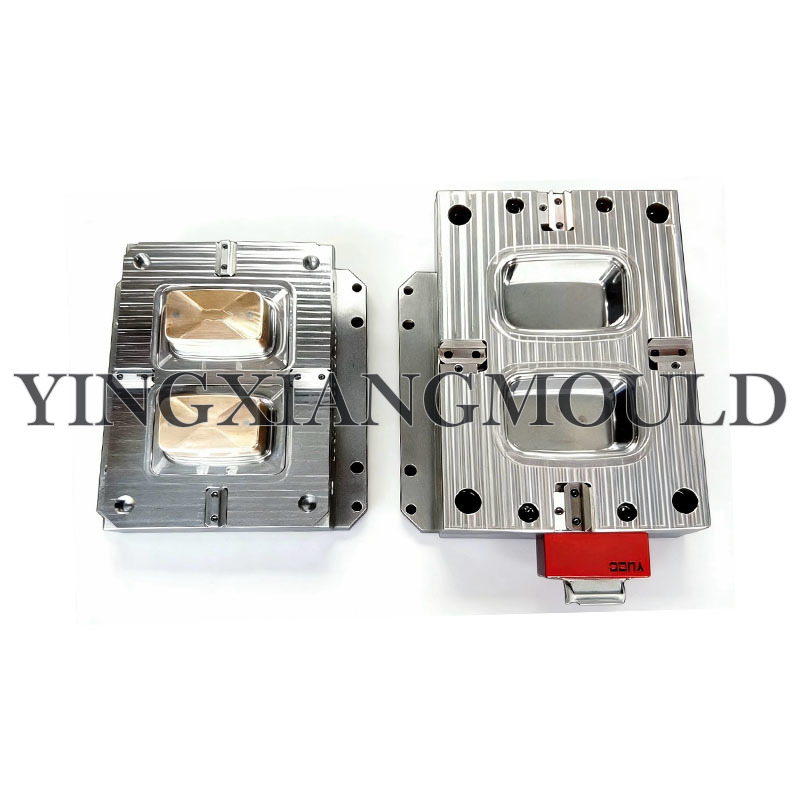
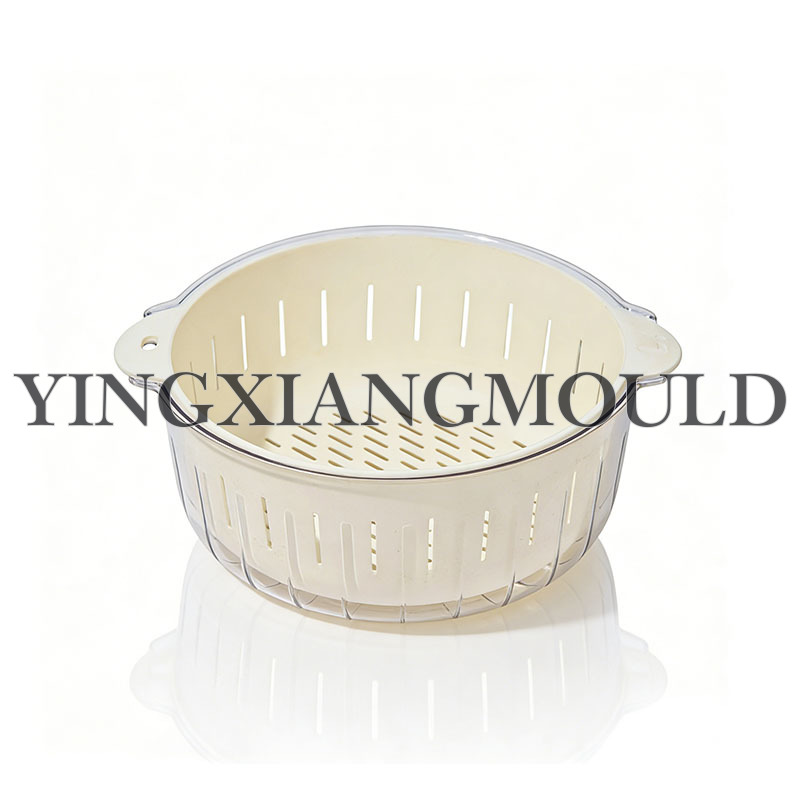
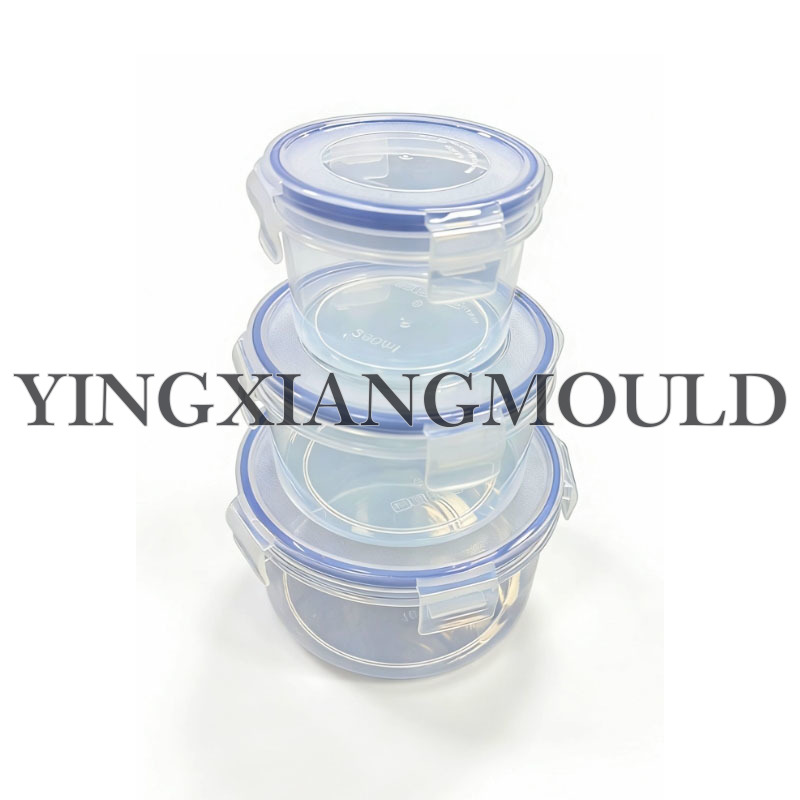
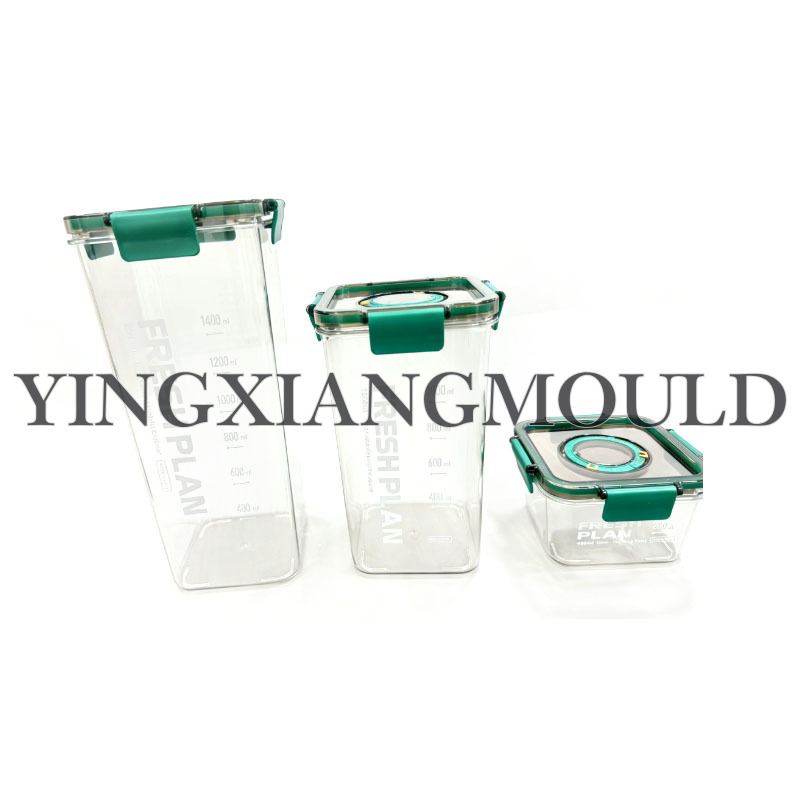
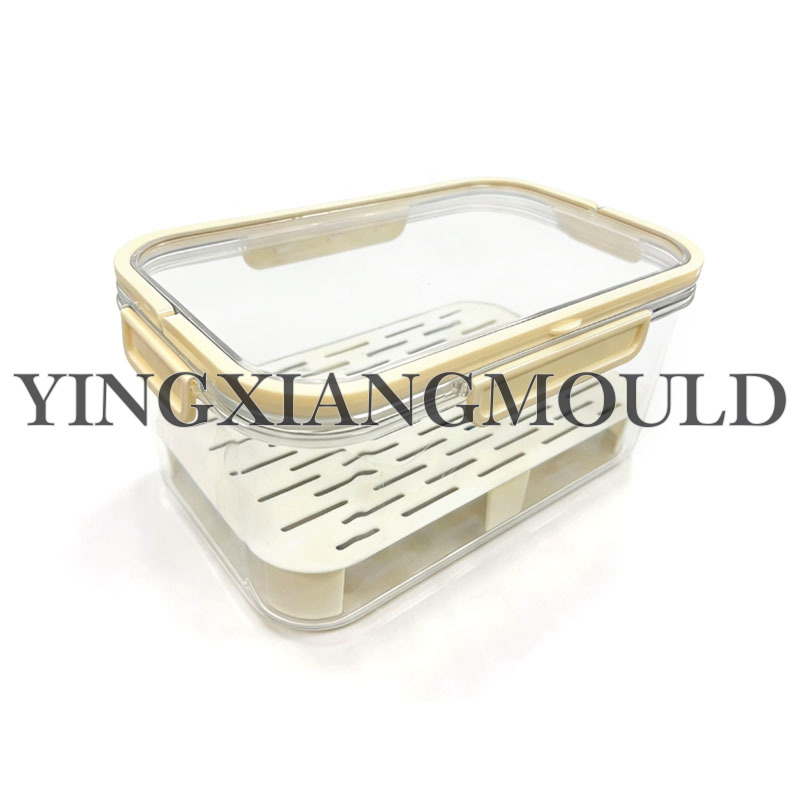
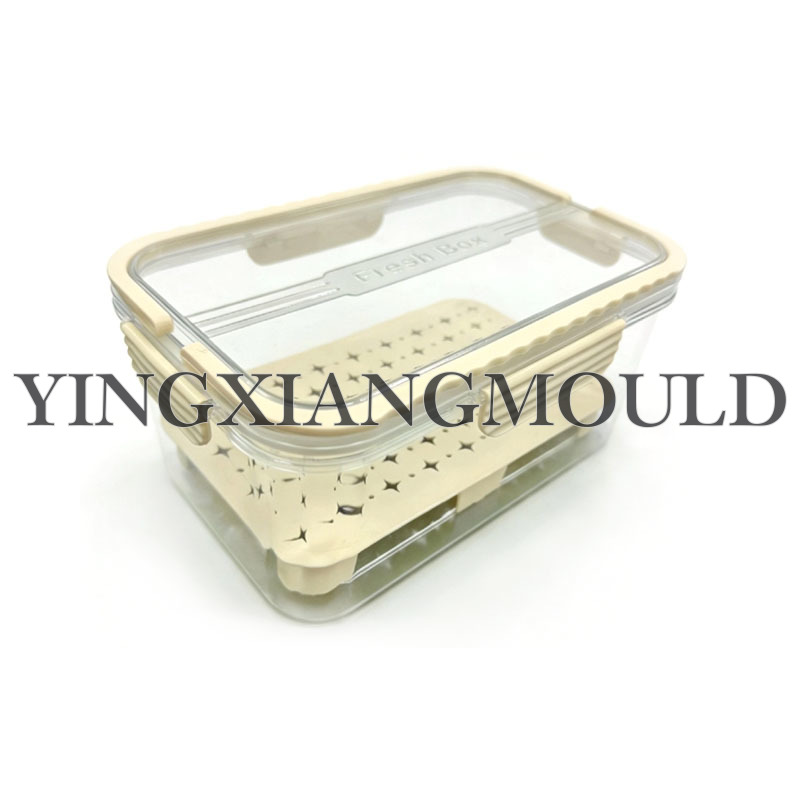
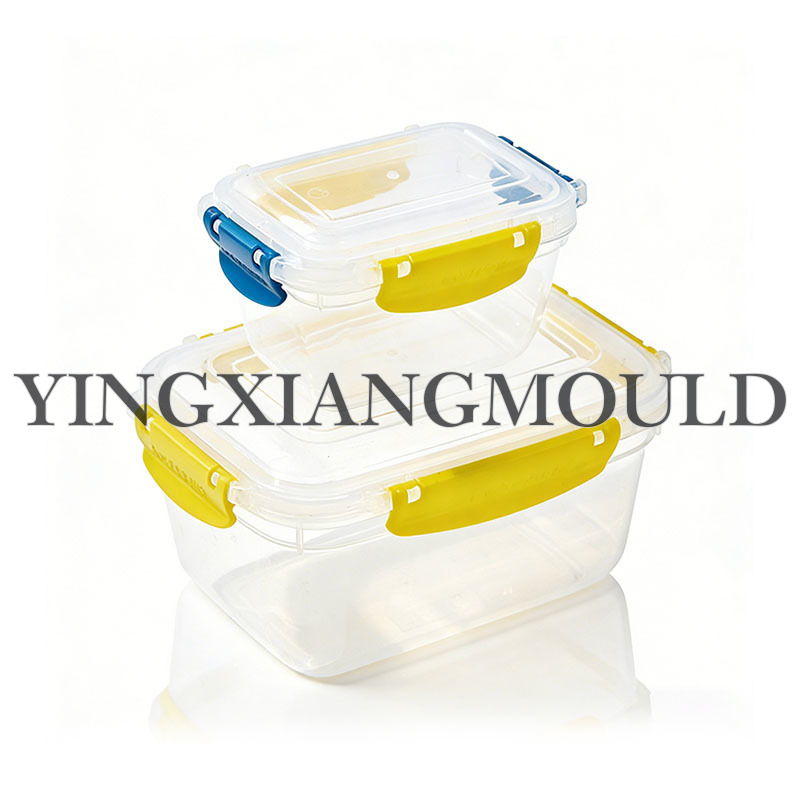
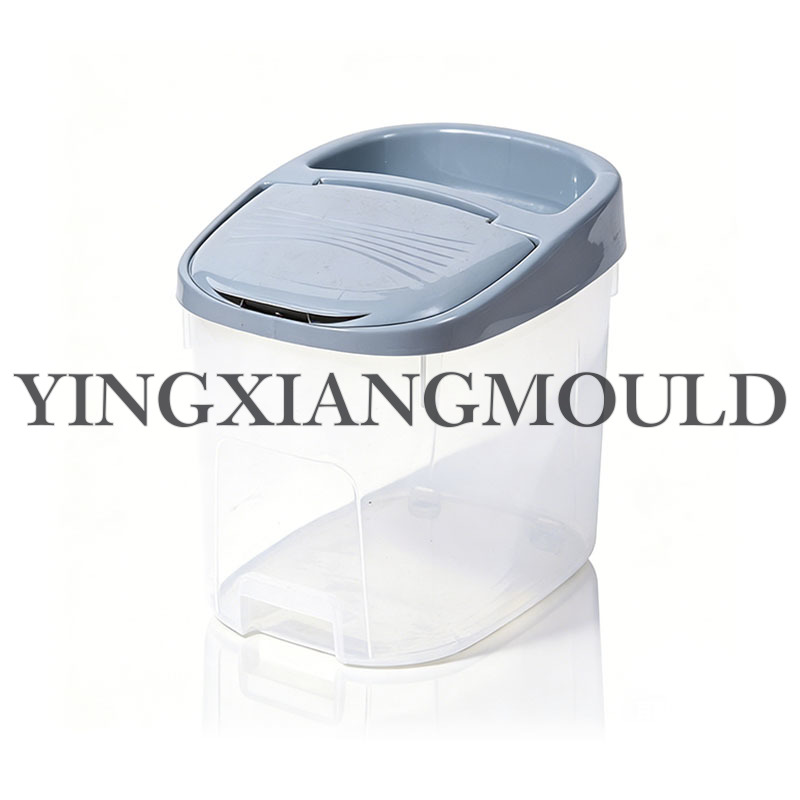
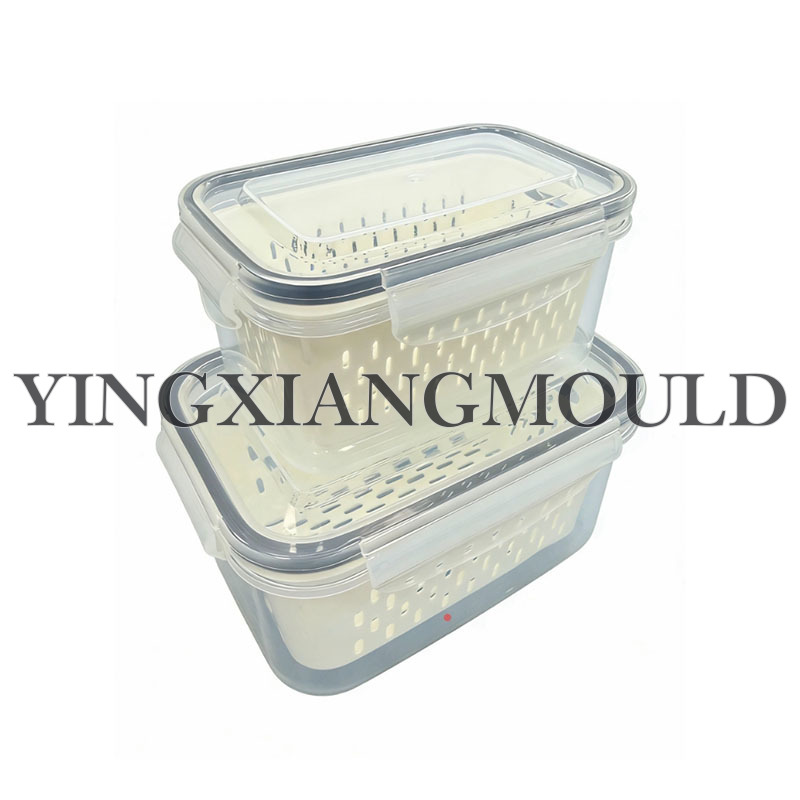
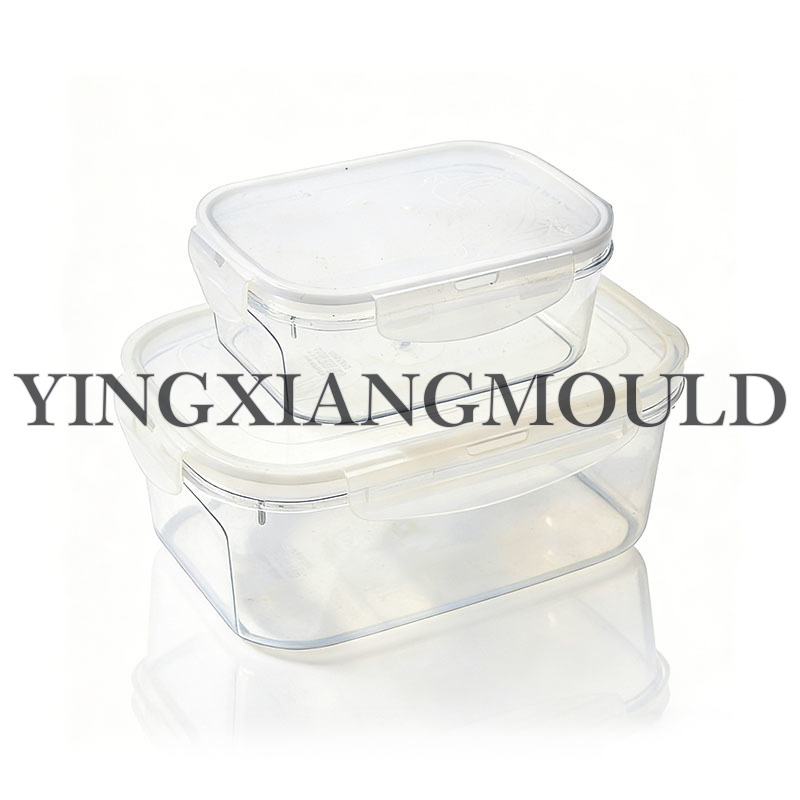
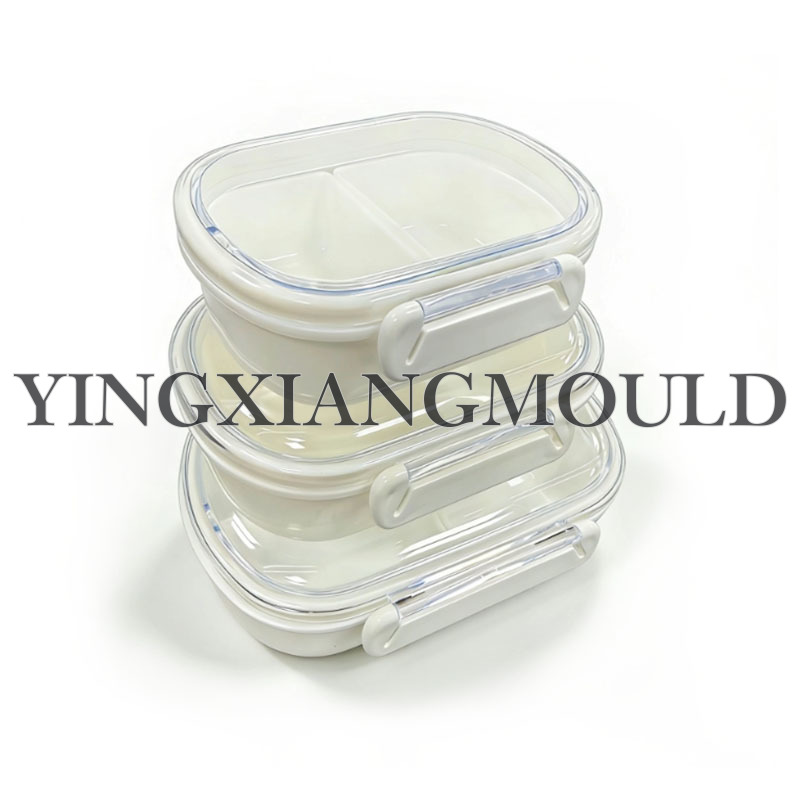
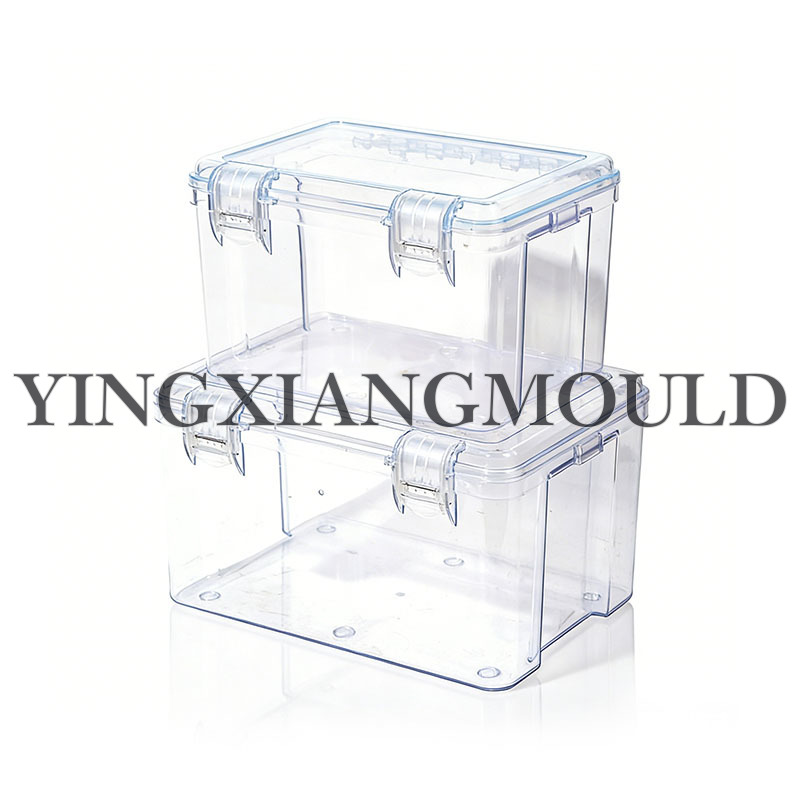
Food storage container molds are specialized molds used to produce plastic food storage boxes, food organizers, and airtight storage containers. These molds can form food containers of various shapes and capacities to meet the needs of households, catering, food processing, and retail industries. High-quality food storage container molds are typically manufactured using high-precision machining technology and wear-resistant mold steel, offering advantages such as high production efficiency, stable molding, and long service life, supporting large-scale standardized production.
Application scenarios: Which industries need to purchase food storage container molds?
1. Household Kitchen Storage
- Product Types: Rectangular food storage containers, round airtight containers, compartmentalized lunch boxes, refrigerator storage boxes, microwave-safe containers
- Design Features: Emphasis on transparency (easy to identify contents), stackable design to save refrigerator space, microwave safety markings
- Material Selection: Primarily uses PP (polypropylene, temperature resistant from -20°C to 120°C, microwave-safe) or Tritan (copolyester, high transparency, BPA-free), some use glass-like plastic to enhance product quality.
2. Food Service & Catering
- Product Types: Disposable takeout containers, reusable catering containers, insulated delivery boxes with inner containers
- Performance Requirements: Must be leak-proof (no spillage), grease-resistant (non-permeable), microwave-safe, dishwasher-safe
- Special Designs: Usually uses snap-on lids instead of screw-on lids for quick opening and closing; some require dividers (2, 3, or 4 compartments) to prevent cross-contamination of flavors.
3. Food Industry & Supermarkets Processing & Retail
- Product Types: Sauce containers, condiment jars, bulk food display boxes, baking ingredient storage containers
- Capacity Range: From 100ml small jars to 20L large containers; molds must be compatible with injection molding machines with different clamping forces.
- Design Features: Typically requires metering scales, pouring spouts, tamper-evident rings, etc.; molds must precisely mold these functional details.
4. Cold Chain & Logistics
- Product Types: Insulated liners for cold chain transport, frozen food turnover boxes, fresh food delivery boxes
- Special Requirements: Low temperature resistance (not brittle at -40°C), impact resistance (drop during transport), insulation performance (with foam layer)
- Material Characteristics: More uses HDPE or PP copolymers, with impact modifiers added to improve low-temperature toughness
Purchasing Rationale: Why do B2B buyers need to purchase food storage container molds?
1. Sealing Performance and Functional Innovation
The core competitiveness of food storage containers lies in their sealing performance. Through mold design optimization, the following can be achieved:
- Precision snap-fit structure: The fit tolerance between the lid and the box is controlled within ±0.03mm, ensuring the reliability and feel of the press-to-seal seal.
- Silicone sealing ring groove: Precisely molded sealing ring installation groove to prevent silicone strip displacement or detachment.
- Functional integration: The mold integrates value-added structures such as dividers, drain baskets, and date scales, enhancing product differentiation.
2. Material compatibility and sustainability trends
Modern food storage container molds are compatible with a variety of raw materials:
- PP (Polypropylene): Accounting for approximately 34.97% of the injection molding material market, it is the most mainstream food container material, with a wide temperature range, low cost, and microwave-safe properties.
- HDPE (High-density polyethylene): Impact-resistant and chemically resistant, suitable for large-capacity water tanks and industrial food containers.
- Tritan/PC: High transparency, BPA-free, suitable for high-end food storage containers and water cups.
- Bio-based materials: Such as PLA and sugarcane-based PP; molds need to adjust shrinkage rates and cooling parameters to adapt to the processing characteristics of these new materials.
3. Molding Efficiency and Cycle Optimization
The molding cycle of high-quality food storage container molds is typically between 25-45 seconds, directly impacting production capacity and energy consumption. Optimizing the cooling water system layout (e.g., adding water wells for cooling in the lid snap-fit and bottom reinforcing rib areas) and using a hot runner system to reduce runner waste can increase daily production capacity by 20-30%. Thin-walled designs (1.5-2.5mm wall thickness) can further shorten cooling time, but require higher mold precision and injection molding machine performance.
Frequently Asked Questions about Food Storage Container Mold Procurement
Q1: What is the typical lifespan of food storage container molds? How can it be guaranteed?
A: The lifespan of food storage container molds is typically between 500,000 and 1,000,000 injection cycles, depending on:
- Steel selection: P20 steel is suitable for around 500,000 cycles; 718H or NAK80 can reach 800,000-1,000,000 cycles; S136 and other stainless steels, with proper maintenance, can exceed 1,000,000 cycles. For high-transparency containers (such as Tritan), mirror-polished steel of NAK80 or S136 grade is typically required.
- Maintenance: Regularly clean the parting surface, check ejector pins and sliders for wear, lubricate moving parts, and prevent rust. Food-grade molds have even higher cleaning requirements; thorough cleaning is recommended after each production batch.
- Usage Guidelines: Avoid overpressure injection molding to prevent mold deformation; control raw material temperature (PP typically 200-240°C, HDPE 220-260°C); replace vulnerable parts (such as seals and springs) promptly.
It is recommended to request a mold life guarantee from the supplier during procurement, clearly specifying a list of vulnerable parts and replacement cycles.
Routine maintenance includes: daily cleaning and lubrication during production; regular cleaning of vents and inspection of worn parts; rust prevention treatment and airtight storage of the mold.
Q2: How long does the development cycle for a food storage container mold take?
A: The development cycle for standard food storage container molds is typically 35-70 days, depending on:
- Design complexity: Simple square food storage boxes: approximately 35-45 days; containers with threaded lids, snap-fit structures, or dividers: approximately 50-60 days; multi-cavity molds (two or four openings per mold) or two-color injection molds may require 60-80 days.
- Mold testing and machine adjustment: Typically, 2-3 rounds of mold testing (T1, T2, T3) are required, with 3-5 days between each round, to verify dimensional accuracy, sealing performance, lid opening and closing feel, and drop resistance.
- Customer confirmation: The efficiency of communication regarding design drawing confirmation, material selection, and surface treatment options (e.g., mirror finish, frosted, textured) directly impacts the development cycle.
It is recommended to fully communicate the target capacity, lid type (screw cap/press-fit/sealing strip), target market, and regulatory requirements during the design phase to avoid repeated modifications later.



 English
 Español