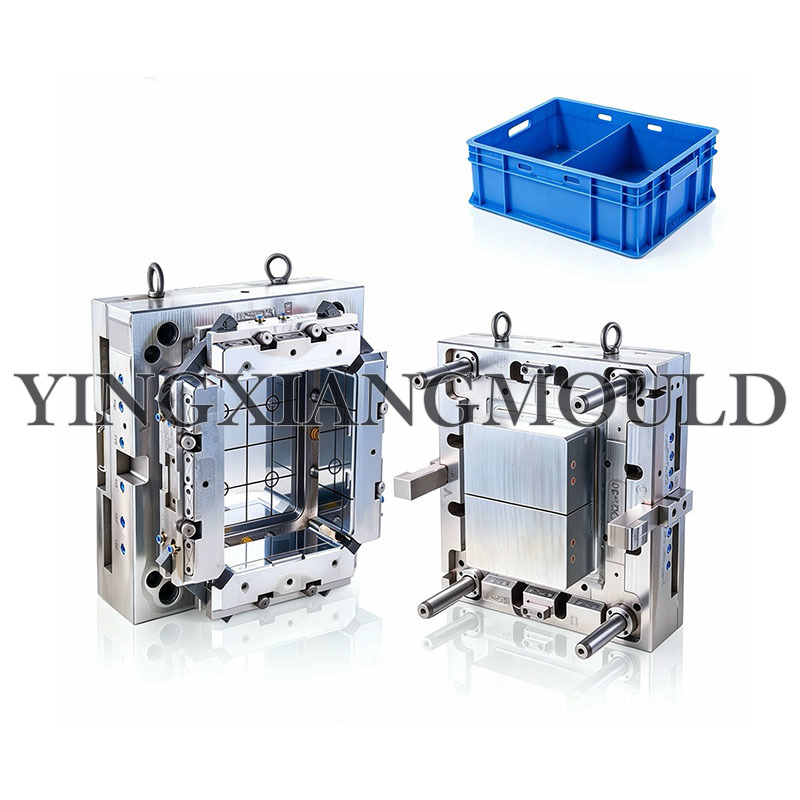
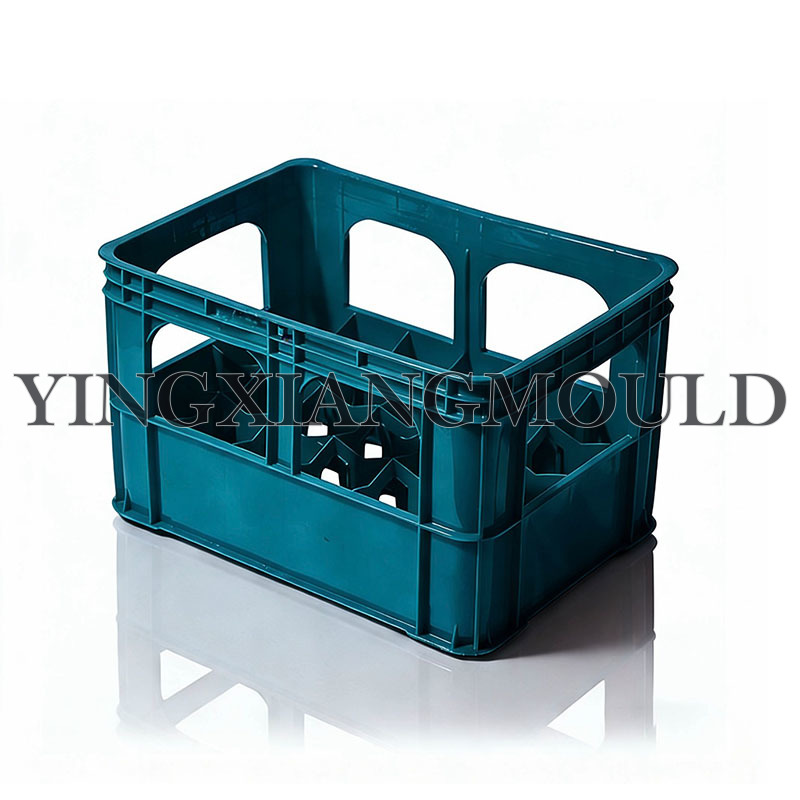
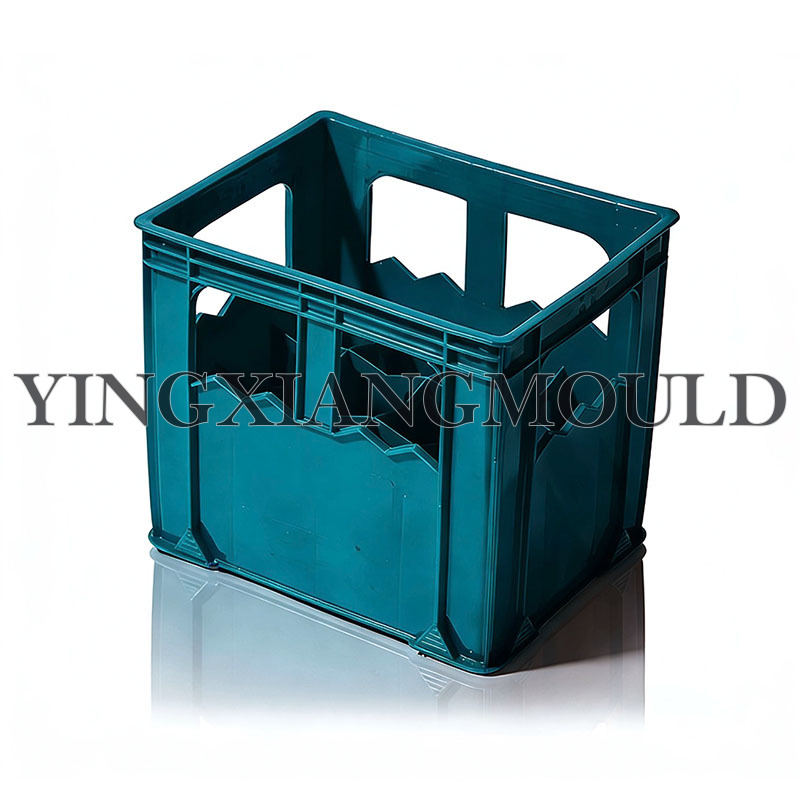
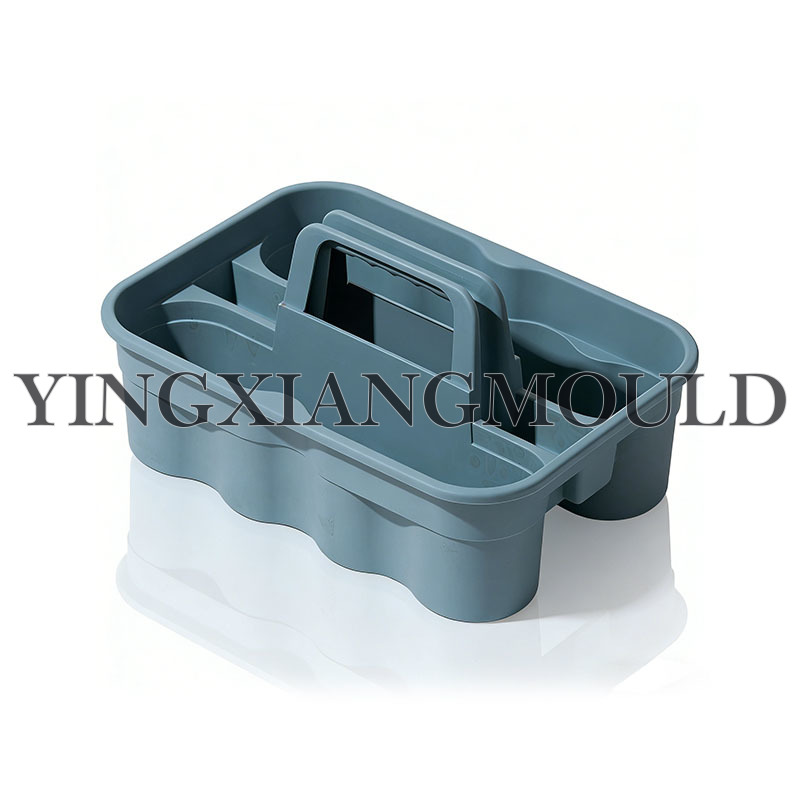
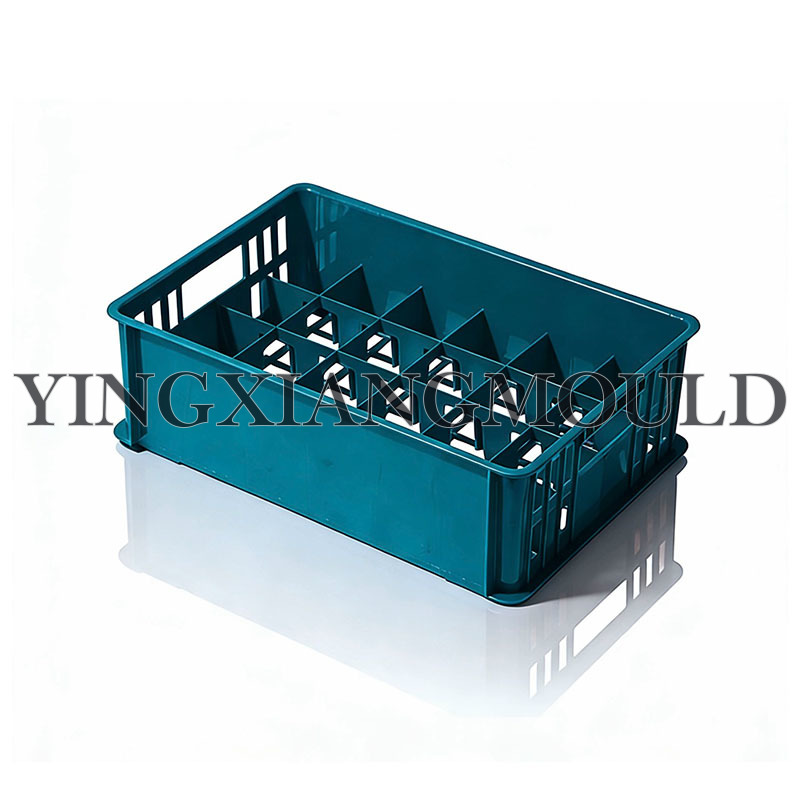
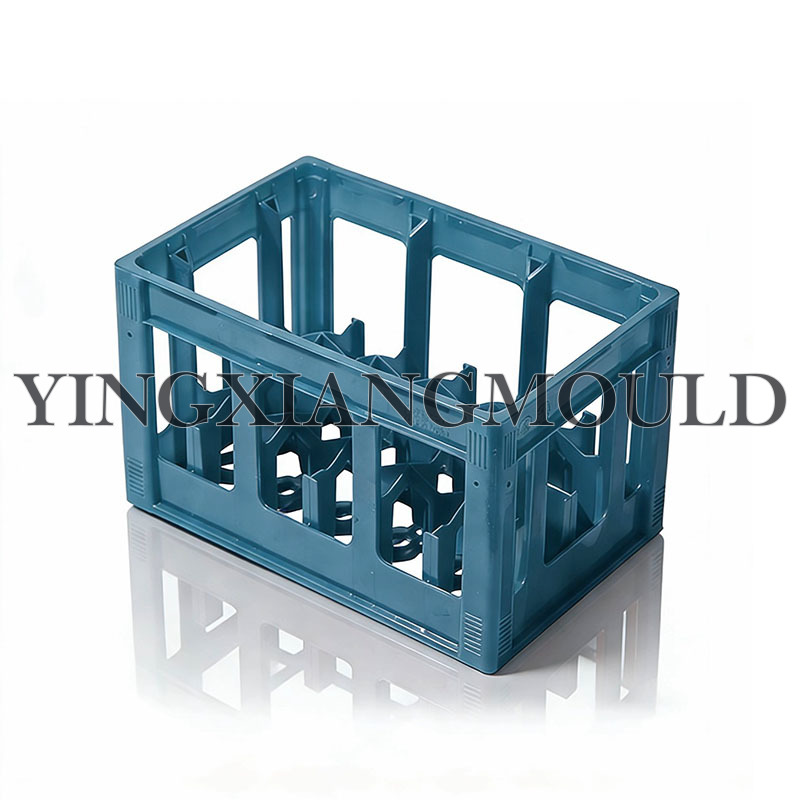
Beverage box molds are specialized injection molds used to produce plastic beverage crates, beer crates, mineral water crates, and other bottled beverage transport boxes. Through injection molding, crates with high load-bearing capacity and good durability can be manufactured. Beverage boxes typically need to withstand frequent handling, stacking, and transportation; therefore, mold design must focus on reinforcing ribs, impact resistance, and dimensional stability.
Core Components:
- Cavity: Determines the external shape, surface texture, and brand logo area of the beverage carton.
- Core: Determines the internal structure, bottle slot layout, reinforcing rib network, and wall thickness distribution of the beverage carton.
- Bottle Slot Forming Mechanism: Beverage cartons typically have multiple bottle slots (e.g., 20-bottle, 24-bottle sizes), requiring precise matching to standard bottle diameters to ensure bottle stability.
- Handle Forming Area: The handle structure on both sides or four sides must ensure structural strength under load and ergonomic grip.
- Gating System: Cold or hot runner system guides molten plastic into the large mold cavity.
- Cooling System: The design of the circulating water system directly affects the molding cycle. Due to their large size and varying wall thickness, beverage carton molds require extremely high cooling uniformity.
- Ejection System: Pushes the molded beverage carton out of the mold, typically using an ejector plate or ejector block structure.
Application Scenarios: Which industries need to purchase beverage carton molds?
Beverage crate molds serve the beverage logistics packaging industry, a significant portion of the global beverage turnover crate market.
1. Beer & Alcoholic Beverages
- Product Types: 20-bottle beer crates, 24-bottle beer crates, 12-bottle wine crates, mixed beverage crates
- Design Features: Must be compatible with glass or PET bottles; bottle trays typically feature cushioned chamfers; reinforced corners to withstand stacking pressure.
- Performance Requirements: Static load-bearing capacity typically needs to exceed 100kg (stacked 5-6 layers); low-temperature resistance (no brittleness at -5°C); impact resistance (can withstand a 1.5-meter drop test without breakage).
2. Bottled Water & Soft Drinks Drinks
- Product Types: 12-bottle, 20-bottle, 24-bottle mineral water boxes, carbonated beverage boxes, juice boxes
- Design Features: Bottle slots accommodate standard bottle diameters (e.g., 28mm, 30mm, 38mm bottle necks); lightweight design reduces logistics costs.
- Material Selection: Primarily uses HDPE (high-density polyethylene) due to its excellent impact resistance and UV degradation resistance; some use PP (polypropylene) for better scratch resistance.
3. Dairy & Cold Chain
- Product Types: Milk boxes, yogurt boxes, chilled beverage boxes
- Special Requirements: Must have low-temperature resistance (cold chain transportation -10°C to 4°C); materials must be food contact grade certified; easy to clean and disinfect.
- Design Features: Typically uses a closed or semi-closed structure to reduce dust and microbial intrusion; bottom drainage holes facilitate drying after cleaning.
Why do B2B buyers need to purchase beverage box molds?
1. Significant Benefits of Scaled Production
While the initial investment in a beverage carton mold is high (typically ranging from $8,000 to $30,000, depending on specifications and complexity), once the mold is completed, the unit production cost is extremely low. For example, a standard 24-bottle beer carton has a mold lifespan of 500,000 to 1,000,000 cycles, making the unit mold cost negligible after amortization. For beverage packaging manufacturers with an annual production capacity of hundreds of thousands of units, building their own molds is a core means of cost control.
2. Adaptability to Standardized Bottle Types and Logistics Systems
The core value of beverage cartons lies in their seamless integration with the supply chain system. Through in-house molds, standard bottle types for the target market can be precisely adapted (such as the common NRW bottles in Europe, the longneck bottles in the US, and the general-purpose PET bottles in Asia), ensuring that the bottle slot spacing, depth, and chamfer angles meet industry standards. Standardized design allows beverage cartons to perfectly match automated filling lines, warehouse racks, and transport pallets, improving overall logistics efficiency.
3. Controllable Structural Strength and Stacking Performance
Beverage cartons are typically stacked 5-8 layers during logistics, with the bottom layer needing to withstand hundreds of kilograms of pressure. Through optimized mold design, the following can be achieved:
- Reinforcing Rib Network: Scientifically designed reinforcing ribs at the bottom, corners, and side walls enhance compressive strength without significantly increasing weight.
- Lightweighting: While maintaining load-bearing capacity, the wall thickness is optimized to 2.5-3.5mm, reducing the weight of a single piece by 10-15%, saving raw material costs and reducing logistics expenses.
- Stacking Buckle: The mold design incorporates an integrated stacking buckle structure, ensuring stability and safety when stacking multiple layers.
4. Wide and Sustainable Material Selection
The mold design allows for compatibility with various raw materials:
- HDPE: Impact-resistant and UV-resistant, suitable for outdoor and long-term use, and is the mainstream material for beverage cartons.
- PP: Scratch-resistant and with better chemical resistance, suitable for applications requiring frequent cleaning.
Common Questions about Beverage Carton Mold Procurement
Q1: How to evaluate the technical capabilities of a beverage carton mold supplier?
A:
- Design Capabilities: Can you provide a Design for Manufacturability (DFM) analysis report? Can you perform mold flow analysis to verify fill balance, warpage, and cooling efficiency? Fill balance is crucial for beverage carton molds due to their large size; otherwise, one side may be overfilled while the other is underfilled.
- Equipment Assets: Do you possess large CNC machines (for machining mold frames; beverage carton molds typically require a 1.5-3 meter machining stroke), EDM (for machining complex bottle groove surfaces), wire EDM (for machining precision parts), and a coordinate measuring machine (CMM) for dimensional accuracy?
- Mold Testing Conditions: Do you own a large injection molding machine for mold testing (beverage carton molds typically require an injection molding machine with a clamping force of 800-1500 tons)? Can you provide drop tests, stacking tests, and bottle groove compatibility tests during mold testing?
- Project Experience: Have you developed molds for similar specifications (e.g., 20-bottle or 24-bottle standard cases)? Can you provide past case studies and mold testing reports? Quality System: Has the mold passed ISO 9001 certification? Does it come with dimensional inspection reports, steel material certificates, and heat treatment reports?
Q2: What additional services are needed after mold delivery?
A:
- Mold Trial and Machine Adjustment Support: Assisting customers in achieving stable production on the target injection molding machine, providing recommended process parameters (material temperature, mold temperature, injection pressure, holding time, cooling time).
- Vulnerable Parts Package: A suggested spare parts list for ejector pins, springs, sealing rings, heating rings, etc., ensuring customers can quickly replace parts locally.
- Maintenance Manual: Parting surface cleaning specifications, lubrication cycles for moving parts, rust prevention methods, and storage precautions.
- Mold Repair Service: Mold modifications during product iterations (e.g., adjusting bottle groove dimensions to adapt to new bottle types, adding brand logos, modifying stacking snap-fit structures).
- Production Ramp-up Support: Assisting with process optimization from trial production to mass production, resolving common problems such as shrinkage, weld lines, warpage, and bottle groove dimensional deviations.
- Quality traceability: Provide mold files, including steel material certificates, heat treatment records, machining dimension reports, and trial mold photos/video records.



 English
 Español