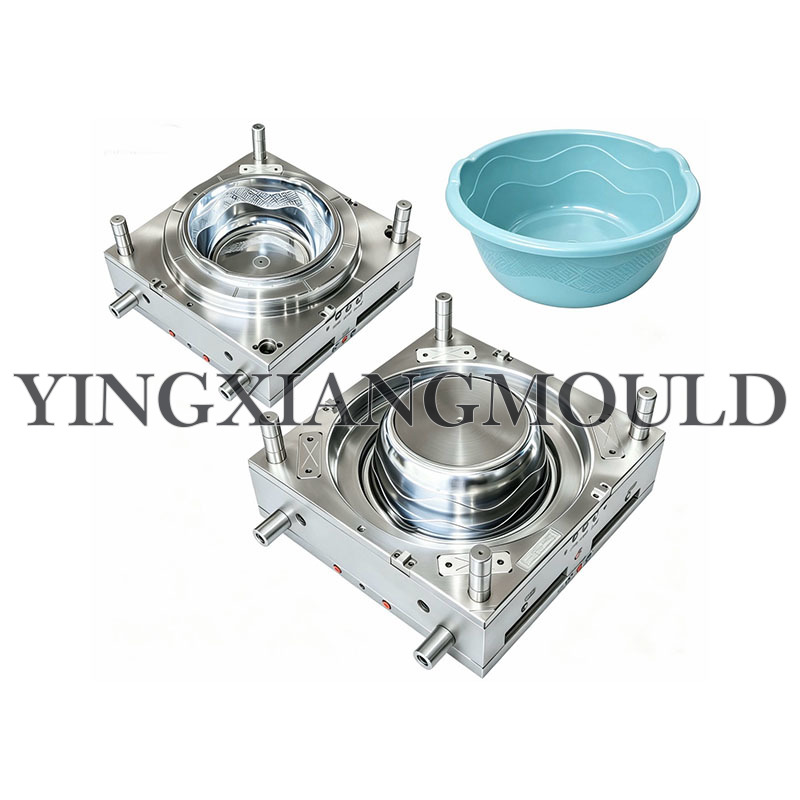
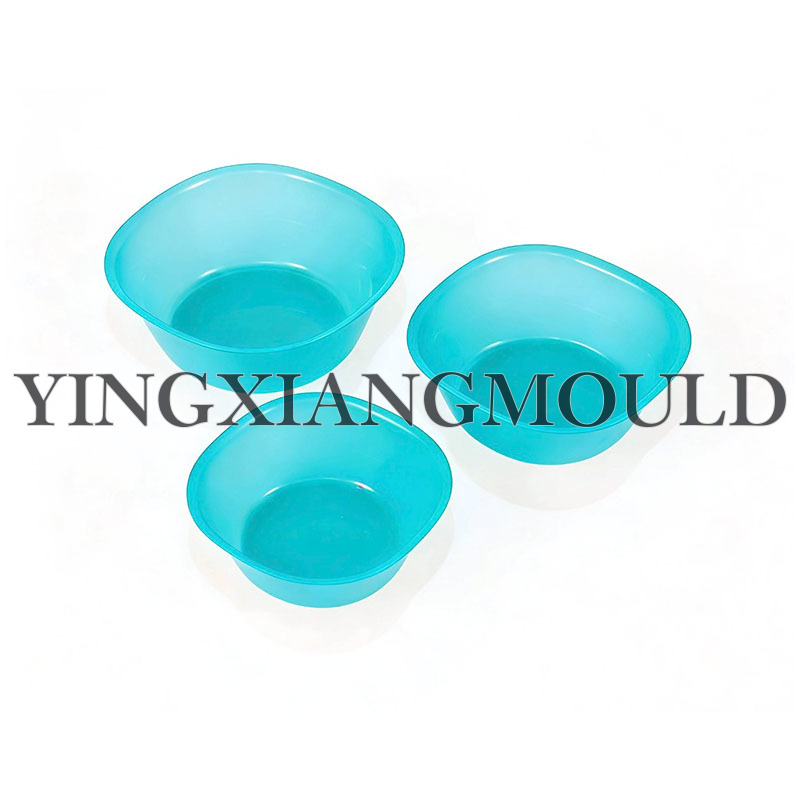
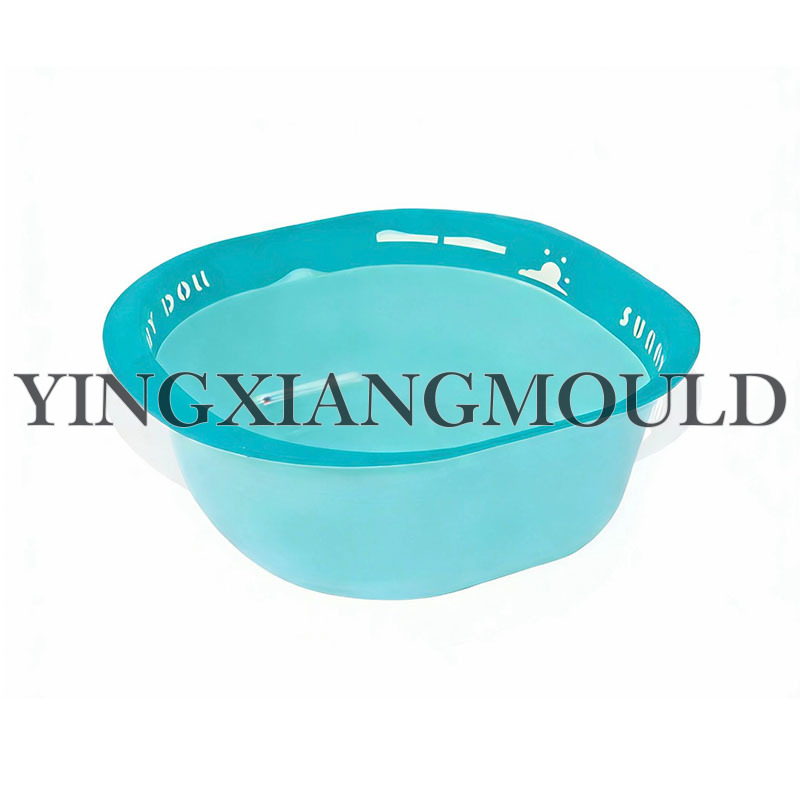
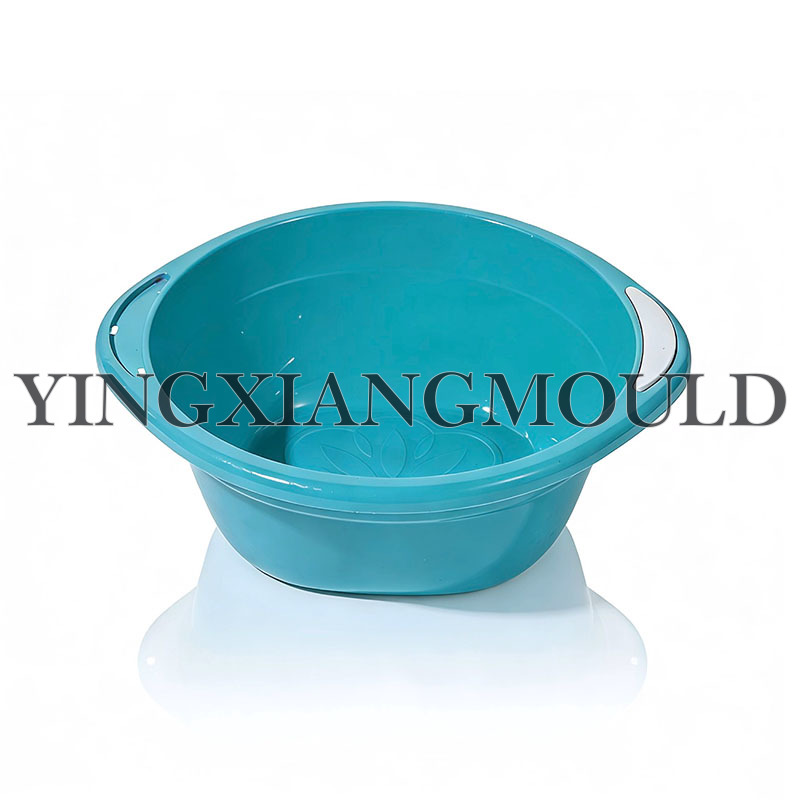
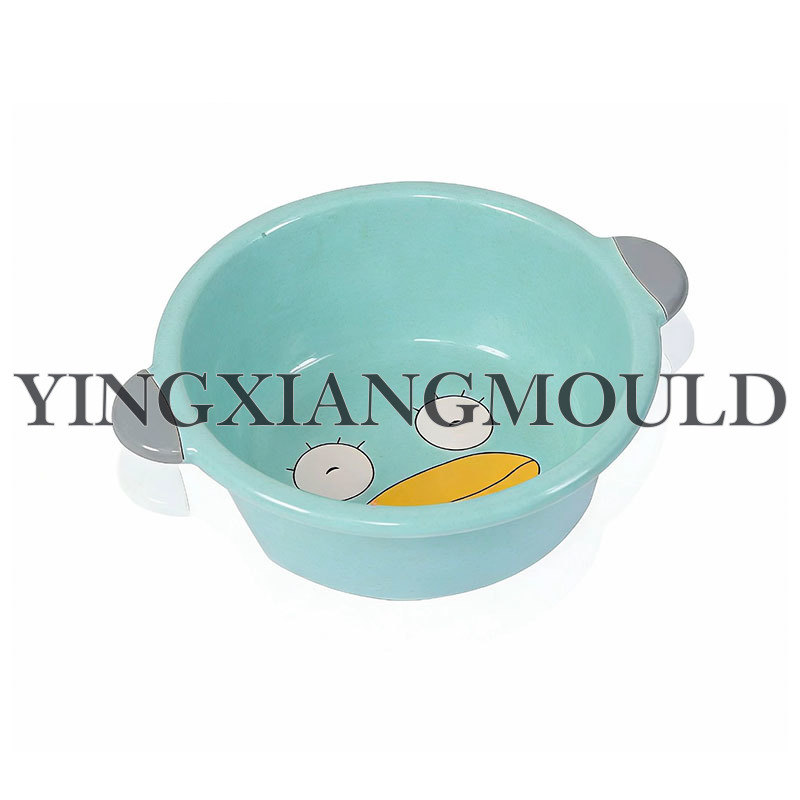
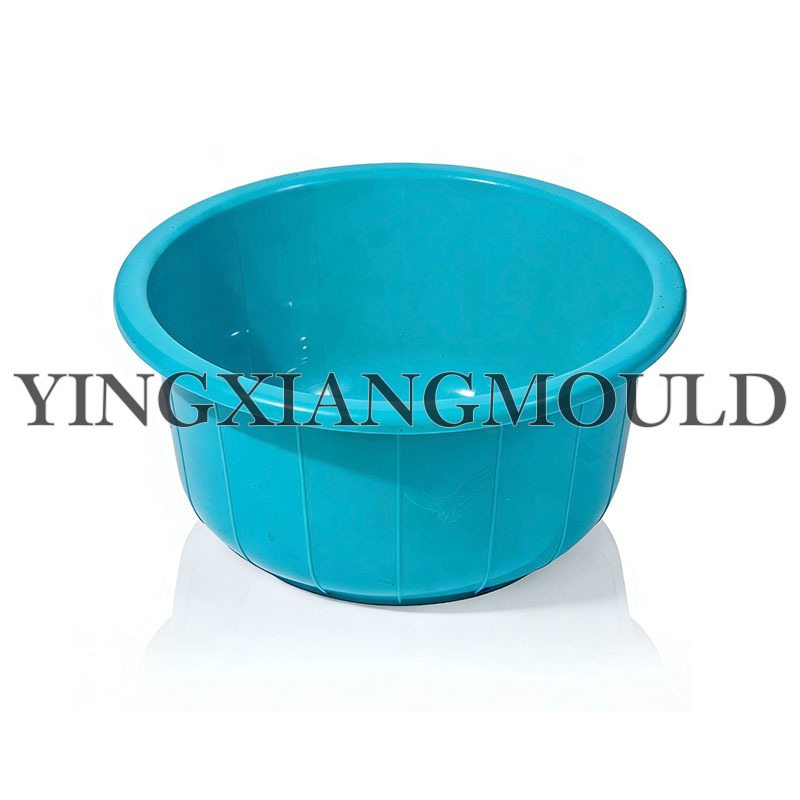
Plastic wash basin molds are industrial molds specifically designed for injection molding plastic wash basins. Wash basins are frequently used daily necessities in homes, hotels, schools, hospitals, and other places. While the finished product may seem simple, the requirements for molds are not low:
The bottom of the wash basin has a large flat surface, making it prone to warping and deformation during injection molding due to uneven cooling, resulting in an unstable base. The rounded corners of the rim and the consistency of the wall thickness directly affect the appearance and lifespan. The drainage slope of the bottom (usually 1° ~ 3°) must be precisely reflected in the mold cavity; otherwise, water accumulation will occur. These three points are the core indicators that distinguish ordinary mold factories from professional manufacturers.
Application Scenarios of Plastic Wash Basin Molds
- Household Daily Necessities Market: Wash basins are fast-moving consumer goods with extremely high annual consumption. Households replace them on average every 1 to 3 years. Retail channels are price-sensitive, and mass injection molding is the only way to control costs.
- Hotel & Property Management Procurement: Chain hotels, apartments, and property management companies purchase hundreds to tens of thousands of units at a time, typically requiring uniform color (white or brand color) and logo printing. Custom molds are needed to ensure consistency.
- School & Student Dormitory Supplies: Primary and secondary school and university dormitories uniformly supply basins, requiring high load-bearing capacity (approximately 3-5 kg when full of water) and impact resistance. HDPE material is favored due to its impact resistance.
- Hospitals & Medical Institutions: Medical basins require smooth, easy-to-clean surfaces and resistance to disinfectant corrosion. Some scenarios require antibacterial PP formulations; material compliance certificates are required for procurement.
- Export & Foreign Trade Retailers: The African, Southeast Asian, and Middle Eastern markets have high demand for plastic basins. Export buyers, by building their own molds, can flexibly respond to local size preferences and color schemes, avoiding reliance on a single supplier.
- Daily Necessities Wholesalers & Supermarket Supply Chain: Supermarkets with their own brands (PL) and daily necessities wholesalers purchase in large quantities, using their own molds to control product specifications and supply schedules, avoiding stockouts during peak seasons.
Reasons for Procurement – Why Choose Custom Molds Instead of Directly Purchasing Finished Basins?
- Completely Customizable Colors and Logos: Commercially available basins have limited color SKUs. Our own molds allow for precise color matching according to Pantone color codes, meeting brand visual standards. The basin logo can be achieved through cavity engraving or inlay, eliminating the need for secondary printing.
- Customization is the Only Solution for Non-Standard Sizes: Hotel bathrooms, medical carts, and specific shelves often have fixed installation size requirements that commercially available standard sizes cannot accommodate. Custom molds are the only feasible solution, eliminating the need to compromise product dimensions.
- Rapid Replenishment, Unrestricted by Suppliers: Basins are high-frequency consumables, often experiencing concentrated replenishment demands during holidays or peak seasons. With our own molds, replenishment orders only require scheduling injection molding capacity (typically 5-10 days), unaffected by external supplier scheduling.
- Independent Control over Materials and Formulas: Export products must meet the chemical safety regulations of the target market (such as EU REACH, Prop 65). Our own molds, combined with specified raw material grades, allow for complete raw material traceability records, reducing returns and compliance risks.
Recycled materials can be used to reduce raw material costs. Since basins are non-food contact products, some buyers can mix a certain proportion of recycled PP (usually 20-40%) into the formula to further reduce raw material costs while maintaining performance, and simultaneously comply with ESG requirements.
Purchasing Tip: Basins are large-area, thin-walled parts. Before mold making, it is essential to request a Moldflow analysis report from the factory to confirm the weld line location and warpage prediction value. This is the most effective preventative measure to avoid T1 mold failure.
Frequently Asked Questions
Is PP or HDPE better for basin molds? What impact do they have on mold design?
PP and HDPE each have their applicable scenarios and are not simply a matter of superiority or inferiority. PP has better flowability, making it suitable for thin-walled, complex-shaped basins. It has a shorter molding cycle and lower cost, making it the mainstream in the market. HDPE has stronger impact resistance and low-temperature resistance, making it suitable for high-intensity applications such as schools and construction sites, but its flowability is slightly worse, requiring higher injection pressure. The impact of the two materials on the mold is reflected in their different shrinkage rates (PP approximately 1.5~2.0%, HDPE approximately 1.5~3.0%). The mold cavity size must be designed according to the shrinkage rate of the selected material. Changing the material type midway may lead to deviations in the finished product size; therefore, the material plan should be confirmed before mold opening.
Is a 1-cavity or 2-cavity mold more suitable for a washbasin? How to determine this?
The number of cavities depends mainly on two factors: product size and annual production demand. Large washbasins with a diameter of φ42cm or more are usually made with only 1 cavity because a 2-cavity mold requires a larger tonnage injection molding machine (increasing costs), and large parts themselves have a longer molding cycle; the production capacity bottleneck is machine time, not the number of cavities. Small and medium-sized washbasins with a diameter of φ36cm or less are suitable for a 2-cavity mold, which can increase the output per unit time by about 80% (not doubling, because mold change and auxiliary time remain unchanged).
Is a slight arching at the bottom of a washbasin normal or a mold problem?
Slight arching (warping) of the basin bottom is relatively common in large-area, thin-walled injection molded parts. The root cause is uneven shrinkage in different areas during the injection cooling process. Judgment standard: Generally, after demolding and standing at room temperature for 24 hours, the flatness error of the basin bottom should be within 2mm to be considered acceptable (specific standards depend on product specifications and buyer requirements). Exceeding this range constitutes a quality issue requiring attention. Solutions include: adjusting the cooling water circuit balance, optimizing the holding pressure parameters, or adding invisible reinforcing ribs to the basin bottom. It is important to note that measurements taken immediately after demolding are inaccurate; evaluation must be conducted after the product has fully cooled and set.



 English
 Español