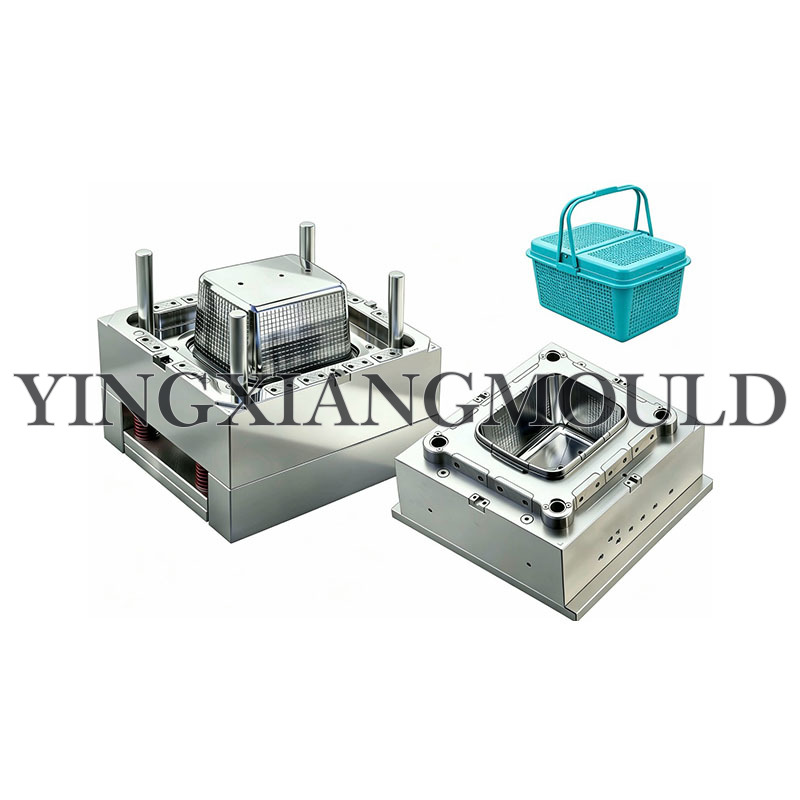
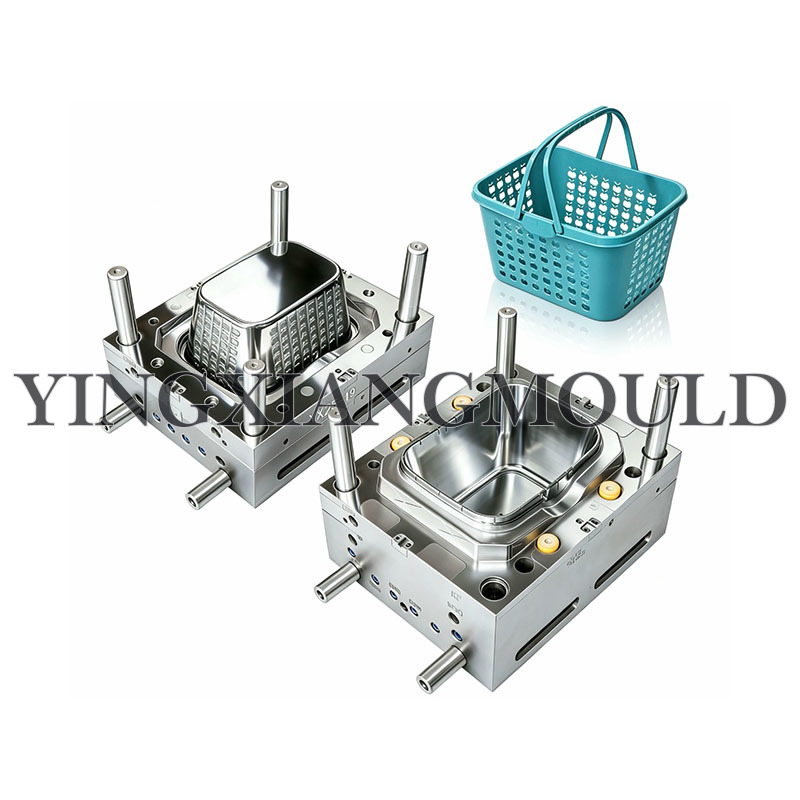
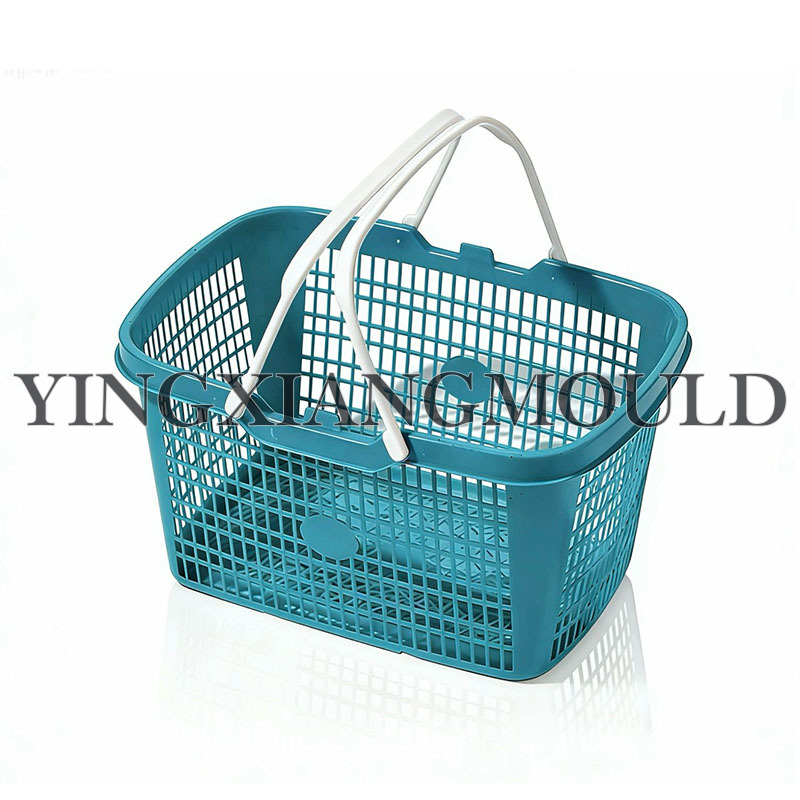
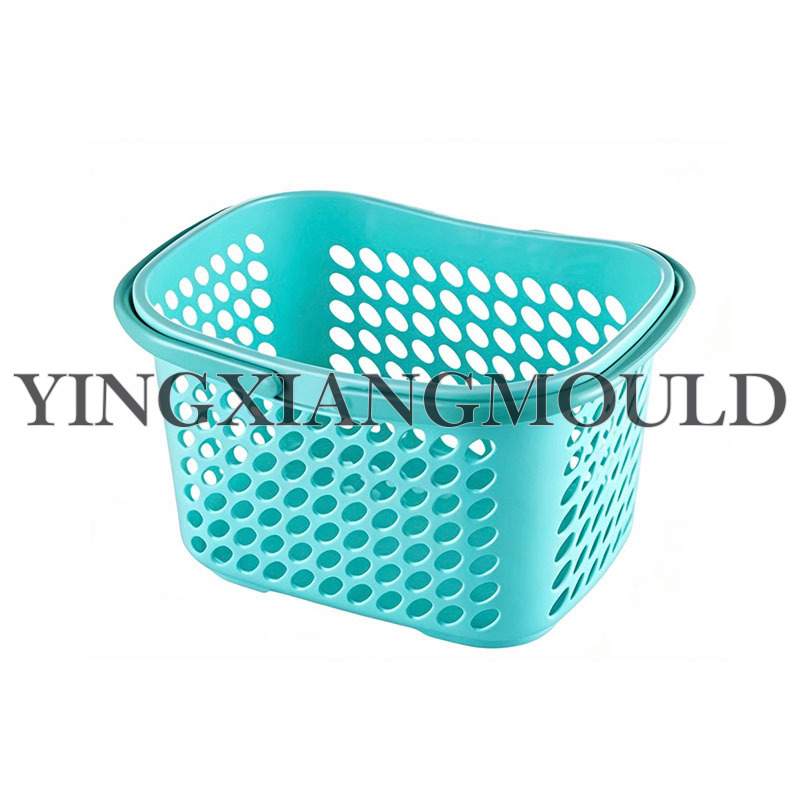
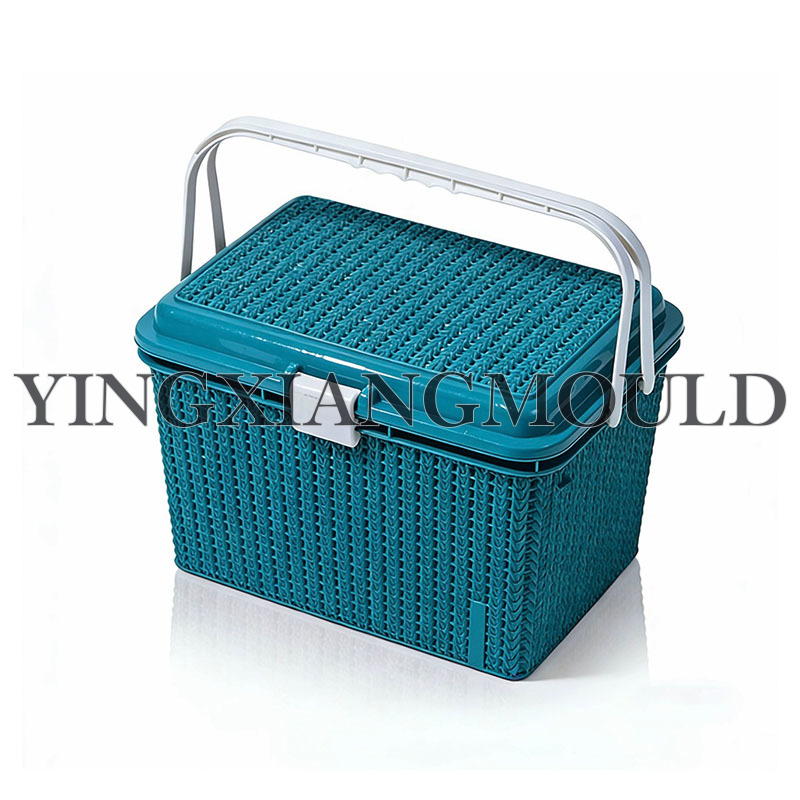
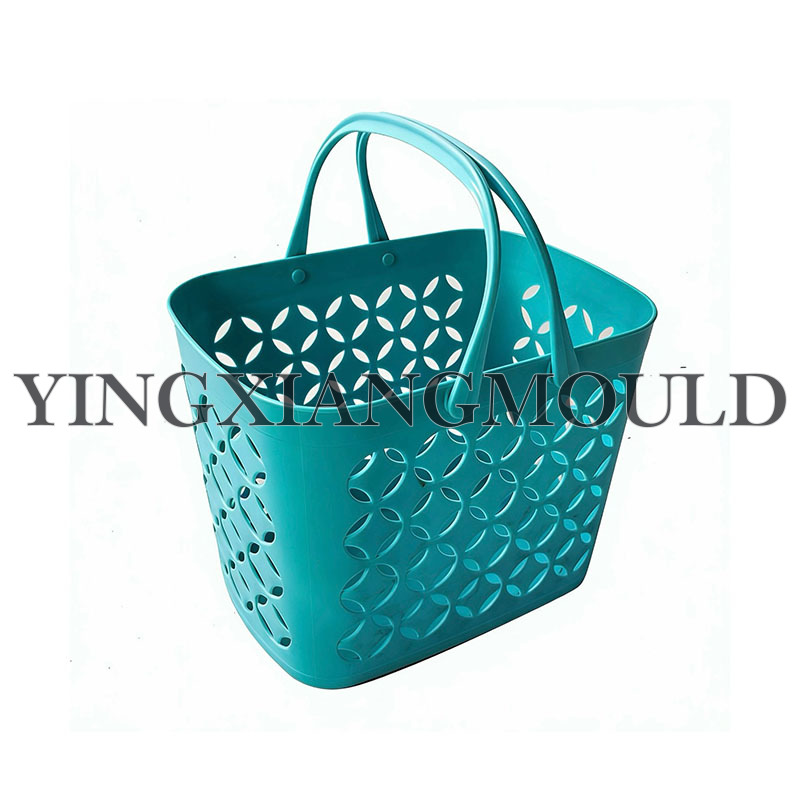
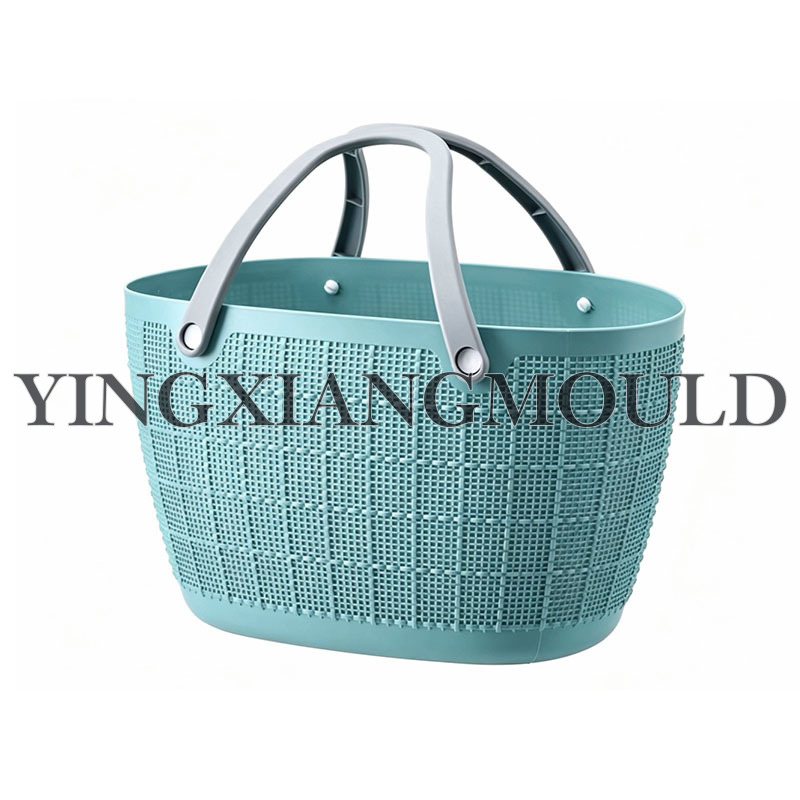
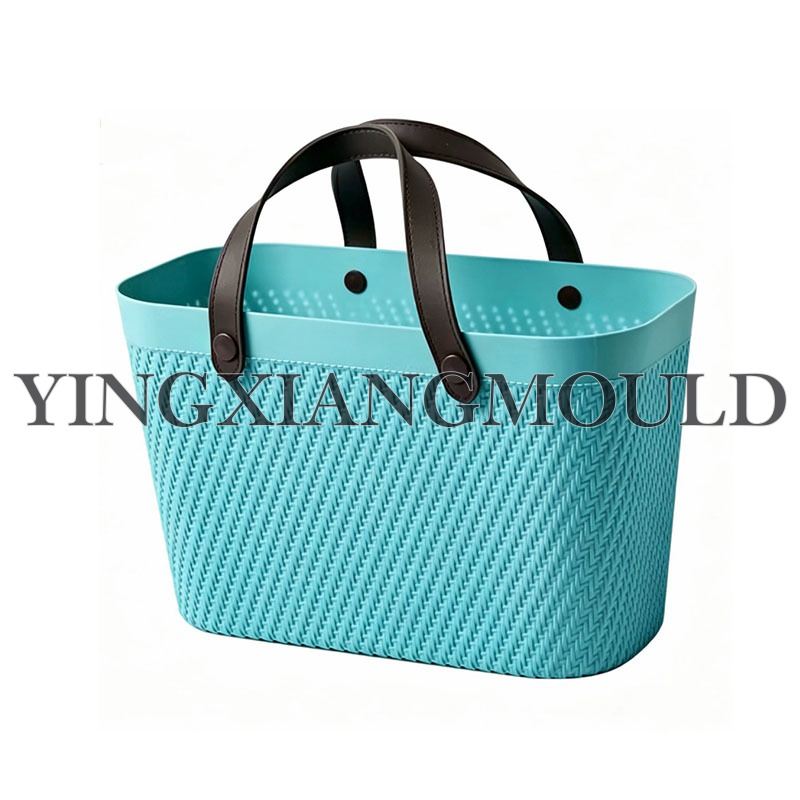
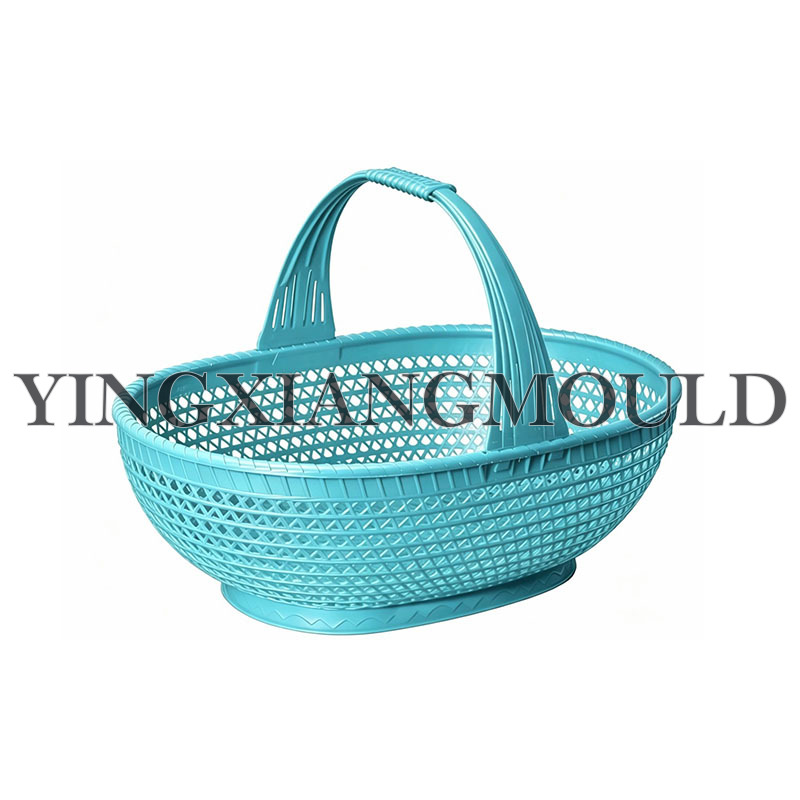
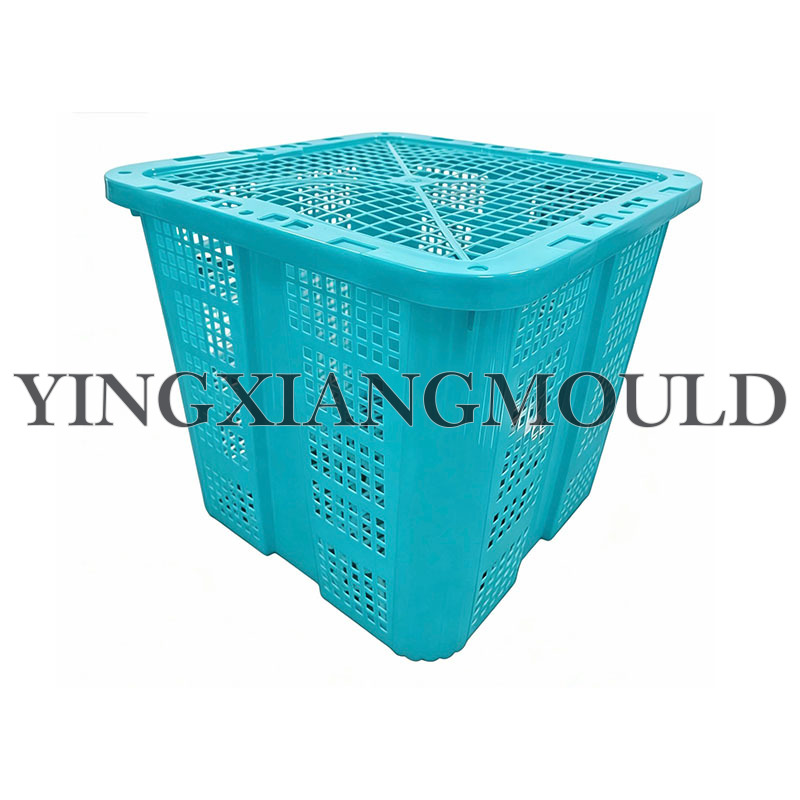
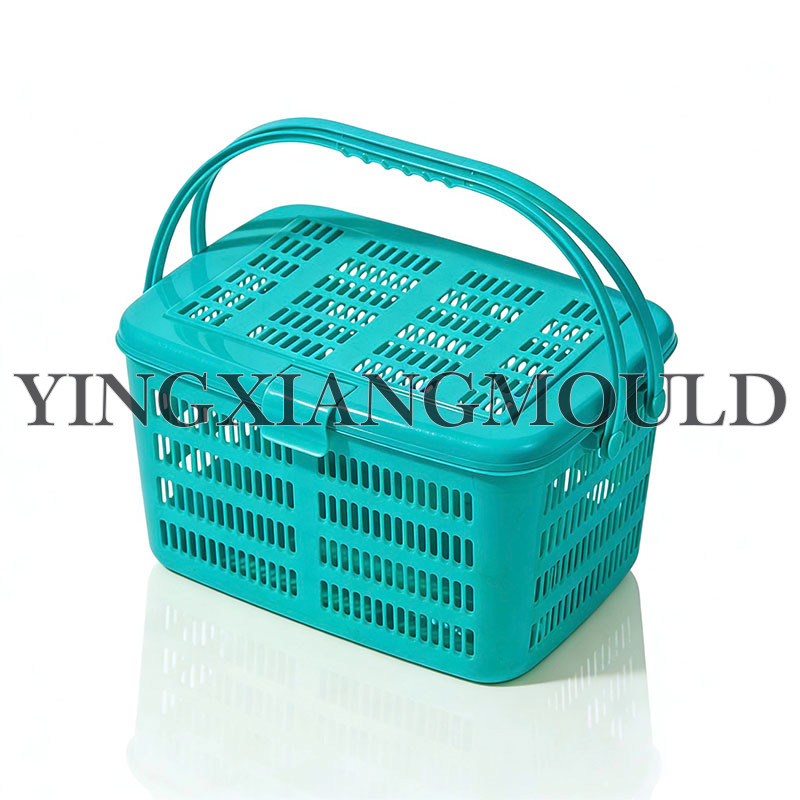
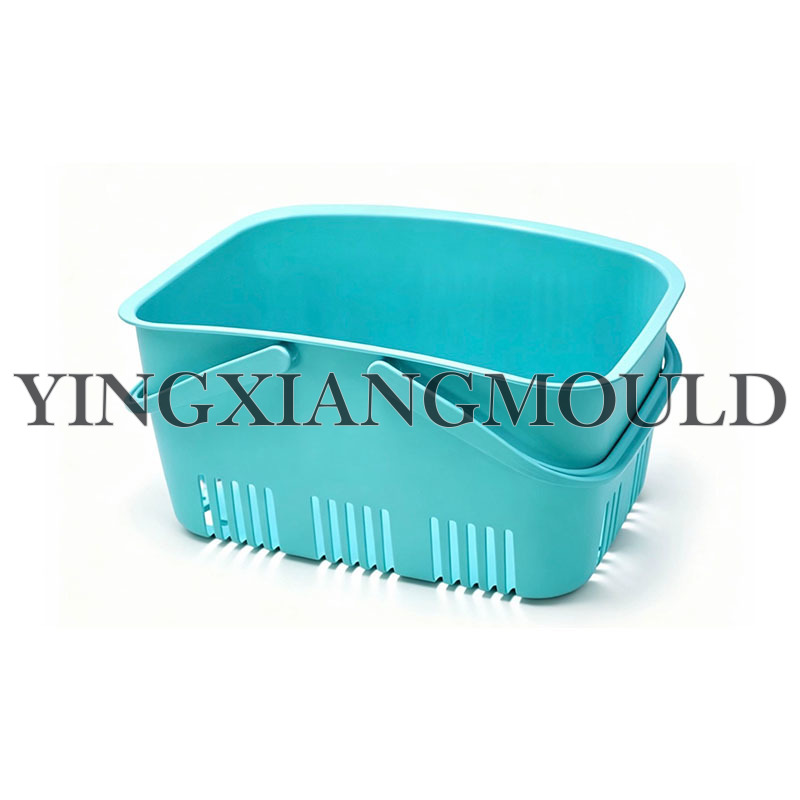
A hand basket mold is an injection mold used to produce plastic hand baskets, shopping baskets, and turnover baskets. By injecting plastic raw material into the mold cavity and allowing it to cool and solidify, a sturdy and aesthetically pleasing hand basket product is manufactured. Hand baskets are widely used in supermarket shopping, warehousing and logistics, agricultural harvesting, and household storage. Mold design must focus on handle structure, load-bearing capacity, demolding effect, and product dimensional stability to meet different usage scenarios and market demands.
Application Scenarios: Which industries need to purchase basket molds?
1. Supermarket & Retail
- Product Types: Supermarket shopping baskets (with/without wheels), convenience store hand baskets, cosmetics store display baskets, pharmacy display baskets
- Design Features: Ergonomic handles (comfortable grip, no hand strain), stackable design (saving checkout and storage space), brand logo area (easy for printing logos)
- Capacity: Typically 8L-30L, load capacity 15-25kg
- Material Selection: Mostly PP (polypropylene), with advantages of chemical resistance, low cost, and easy cleaning; wheeled shopping baskets require the addition of wear-resistant modifiers.
2. Agriculture & Fruit & Vegetable Harvesting
- Product Types: Fruit picking baskets, vegetable turnover baskets, aquaculture baskets, egg transport baskets
- Design Features: Ventilated mesh structure (drainage and breathability, prevents mold growth on fruits and vegetables), rounded corners (avoids damage to agricultural products), stackable snap-fit
- Material Requirements: Must pass food contact grade certification, some require antibacterial agents
- Performance Requirements: Low temperature resistance (cold chain transportation), UV resistance (outdoor use), pesticide corrosion resistance
3. Logistics & Warehouse
- Product Types: Express sorting baskets, warehouse turnover baskets, distribution center material baskets
- Design Features: Standardized size (compatible with 600x400mm logistics pallets), foldable or nestable design, RFID tag slots
- Material Features: More made of HDPE, with excellent impact resistance and chemical degradation resistance
- Special Requirements: Must be compatible with automated sorting lines, high dimensional accuracy required
4. Industrial & Workshop
- Product Types: Parts Storage Baskets, Tool Baskets, Hardware Accessory Turnover Baskets
- Performance Requirements: Oil-resistant, chemical-resistant, impact-resistant, heavy-duty
- Design Features: Typically uses a closed or semi-closed structure to prevent small parts from falling out; densely reinforced bottom ribs
5. Household & Daily Use
- Product Types: Bathroom Storage Baskets, Kitchen Drain Baskets, Laundry Baskets, Toy Storage Baskets
- Design Trends: Diverse colors (achieved using masterbatches), customized patterns (mold-etched textures), functional segmentation (e.g., compartmentalized laundry baskets, draining dish baskets)
- Material Selection: More PP or PE, some high-end products use TPE soft rubber handles (requires two-color molds)
Purchase Reasons: Why do B2B buyers need to purchase handbag molds?
1. Differentiated Retail Terminal Experience
Handbags are the direct point of contact between consumers and retail brands. Through proprietary molds, the following can be achieved:
- Brand Customization: The mold can be integrated to create a logo groove or raised section, facilitating subsequent silkscreen printing or hot stamping.
- Color Recognition: Different colors distinguish shopping basket sizes (e.g., small blue, medium green, large red), improving checkout efficiency.
- Ergonomic Optimization: The handle curvature, grip width, and basket center of gravity can all be precisely controlled through the mold, enhancing the user experience.
2. Functional Structural Innovation
The core competitiveness of the hand-held basket lies in its balance between portability and load-bearing capacity. Through mold design optimization, the following can be achieved:
- Grid Density Adjustment: Adjust the grid size according to the intended use (larger grids for fruit and vegetable baskets to drain water, smaller grids for parts baskets to prevent them from falling off).
- Reinforcing Rib Network: Scientifically placed reinforcing ribs at handle connections, basket bottom corners, and edges enhance load-bearing capacity without significantly increasing weight.
- Nested Design: The mold design features an integrated nested structure, allowing empty baskets to be stacked and stored, reducing storage and return transport volume by over 60%.
3. Material Compatibility and Cost Control
The basket mold is compatible with various raw materials:
- PP (Polypropylene): Accounting for approximately 36.9% of the injection molding material market, it is the most mainstream basket material, offering chemical resistance, low cost, and easy cleaning.
- HDPE (High-Density Polyethylene): Impact resistant and UV resistant, suitable for outdoor and industrial baskets.
- Recycled Materials: Modern mold designs can support raw materials containing 30-50% recycled PP or HDPE, complying with circular economy policies.
- Modified Materials: Adding glass fiber reinforcement, impact modifiers, or color masterbatches improves performance or achieves specific colors.
4. Molding Efficiency and Thin-Wall Technology
The molding cycle of a high-quality shopping basket mold is typically between 20-40 seconds, directly impacting production capacity and energy consumption. Optimizing the cooling water system layout (e.g., adding water wells at grid intersections and handle bases) and using a hot runner system to reduce runner waste can increase daily production capacity by 20-30%. Thin-wall high-speed injection molding technology (1.5-2mm wall thickness) can reduce the cycle time to 15-25 seconds, but it places higher demands on mold precision and injection molding machine performance.
Frequently Asked Questions about Shopping Basket Mold Procurement
Q1: What is the typical lifespan of a shopping basket mold?
A: 300,000-500,000 injection cycles. PP raw materials experience less wear; materials containing glass fiber or recycled materials will shorten the lifespan. Regular maintenance of the handle connection area and grid mandrels is crucial.
Q2: How long is the development cycle?
A: Standard shopping basket molds: 30-45 days; wheeled or folding structures: 50-60 days. The denser the grid, the longer the processing cycle.
Q3: How to choose steel?
A: For standard shopping baskets, P20 is sufficient; for high-frequency use or wheeled structures, 718H is recommended; for a high-gloss surface, choose NAK80. The mesh core area requires wear-resistant steel.
Q4: Cold runner or hot runner?
A: For small-batch trial production, choose cold runner (lower cost); for large-batch retail orders, choose hot runner (15-25% material savings, shorter lead time, no runner marks). For baskets with moderate appearance requirements, hot runner offers better cost-effectiveness.



 English
 Español