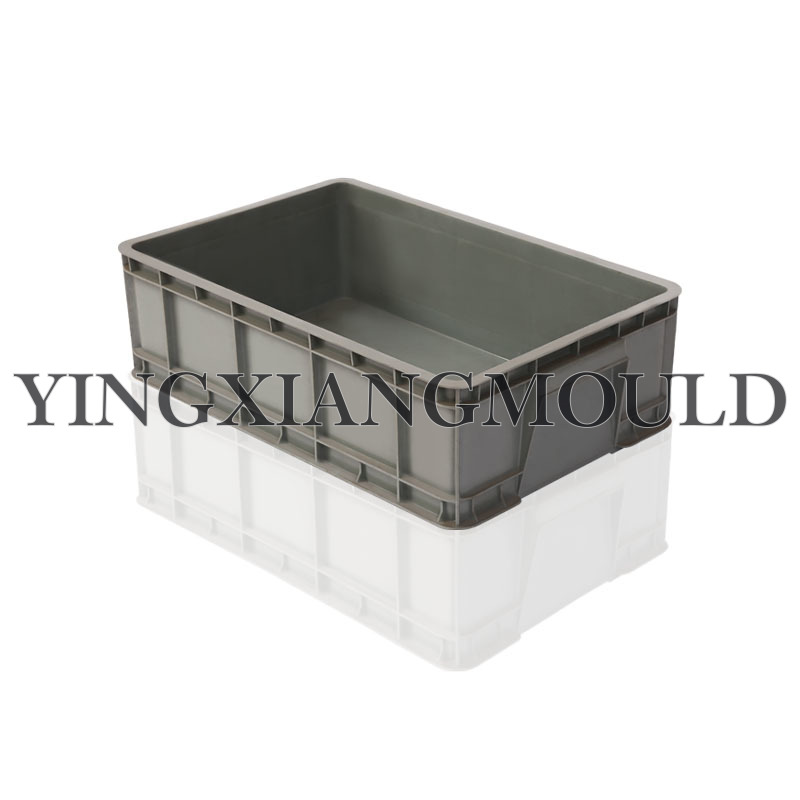
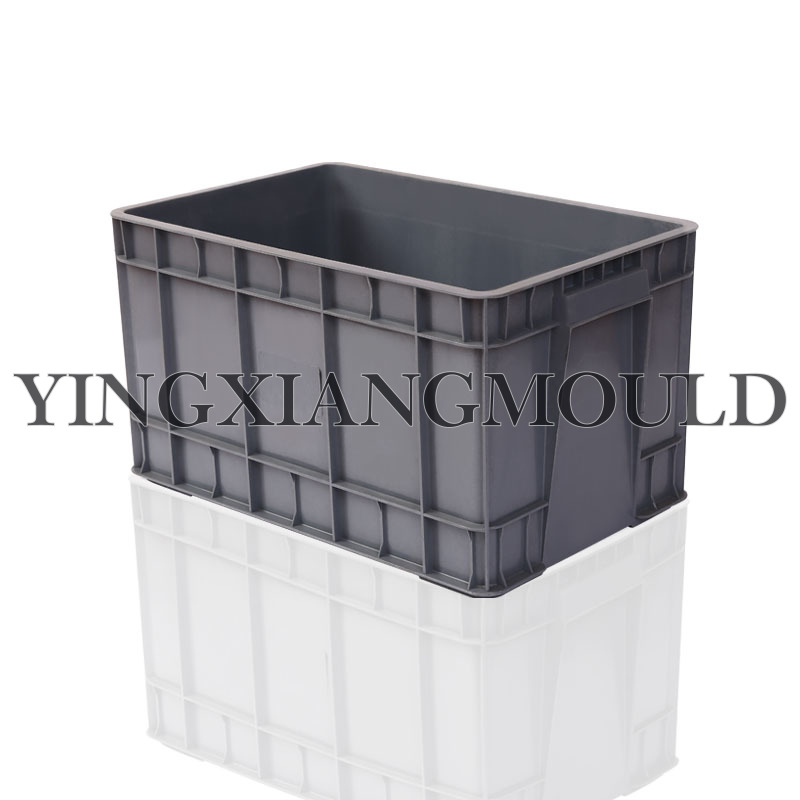
A lid that snaps shut smoothly on a sample part can bind or crack after a few thousand production cycles if the hinge geometry was not engineered with enough clearance for the tolerances that build up across a full production run. A laundry basket with lid mould looks like a straightforward variation on an open basket design on the surface, but the added hinge and closure mechanism introduces engineering considerations that a standard open-top basket mould never has to address.
A laundry basket with lid relies on either an integral living hinge molded directly into the plastic or a separate hinge pin assembly, and each approach carries different tooling demands. A living hinge needs a precisely controlled wall thickness at the flex point, thin enough to bend repeatedly without cracking but thick enough to support the lid's weight over thousands of open-close cycles, and getting this dimension right typically takes several rounds of mold trial and adjustment before the hinge behaves consistently. Buyers sourcing this mould type should ask a supplier directly how many trial cycles a proposed hinge design typically requires to stabilize, since a supplier without direct experience on lidded products may underestimate this development time significantly.
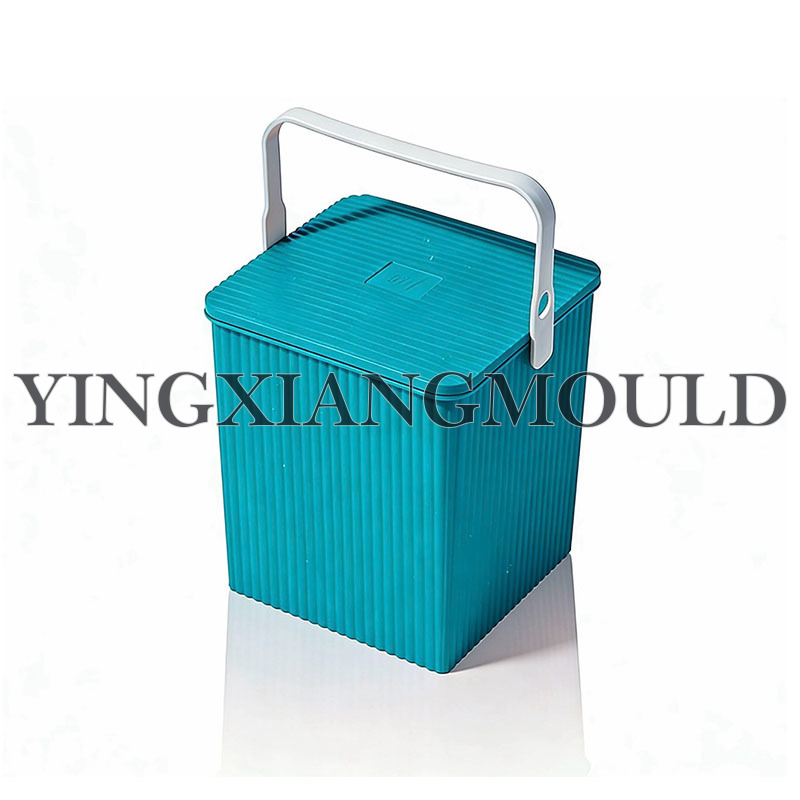
Lid hinge mould design depends on the cooling channel layout around the hinge area as much as the cavity geometry itself, since uneven cooling at the flex point creates internal stress that shows up later as premature hinge failure rather than as a defect visible during initial inspection. A laundry basket with lid produced from a mould with inadequate cooling control at the hinge can pass an initial quality check and still fail in the field once the hinge has gone through repeated use and thermal cycling in a bathroom or laundry room environment. Buyers should ask specifically how cooling channels are routed near the hinge section, since this detail is rarely visible in a general mould specification sheet.
A ventilated basket mould used for laundry baskets needs open-grid or slotted wall sections that allow airflow through damp fabric, and these ventilation openings have to be balanced against the structural strength the walls need to support a loaded basket without flexing or cracking at the grid intersections. Buyers specifying a laundry basket with lid design should confirm the grid pattern has been engineered specifically for laundry loads, since a ventilation pattern borrowed from a general storage basket mould may not provide adequate strength once the basket is filled with wet, heavy fabric.
Many laundry basket with lid designs use a snap-fit latch rather than a full hinge-and-catch mechanism, and this latch point experiences repeated stress concentration every time the lid is opened and closed, making it a common failure point if the mould geometry does not distribute that stress across a wider contact area. Buyers should request cycle-testing data on the latch mechanism specifically, separate from general mould durability figures, since a mould rated for hundreds of thousands of basket-molding cycles says nothing about how many open-close cycles the latch feature itself can withstand before cracking.
A laundry basket with lid mould generally benefits from a higher-grade steel at the hinge and latch areas specifically, even when the rest of the cavity uses a standard grade suitable for the production volume, since these localized stress points wear faster than the flat wall sections of the mould. Buyers should discuss steel grade on a section-by-section basis with a supplier rather than assuming a single steel specification covers the entire tool uniformly, since a mould that wears unevenly at the hinge before the rest of the cavity shows wear creates an awkward maintenance situation partway through the tool's expected service life.
Buyers ordering a laundry basket with lid mould for a private-label household goods line should discuss cavity count, lid color-matching requirements if a two-color mould is needed, and expected development timeline up front, since a laundry basket with lid design typically requires a longer trial and adjustment period than an open basket before the tool is ready for full production. Confirming this timeline early in the sourcing conversation helps buyers plan a product launch date around a realistic development schedule rather than one based on a simpler mould category.
If you are interested in any of our products or services, please feel free to ask and we can talk about your ideas.
 QUICK LINKSMOBILE SITE
 FACTORY ADDRESS
 CONTACT INFORMATION


 English
 Español