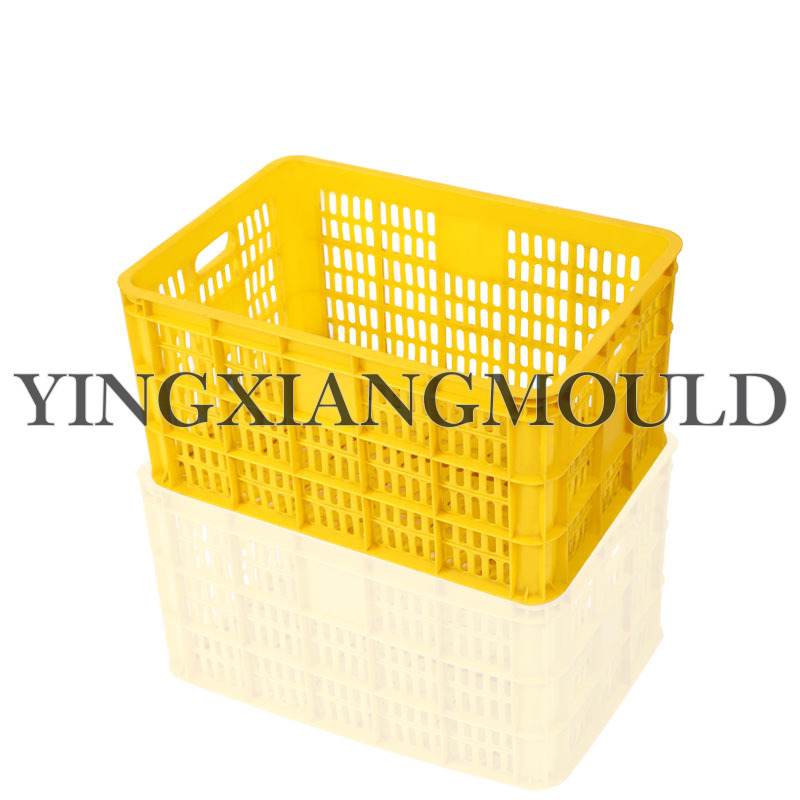
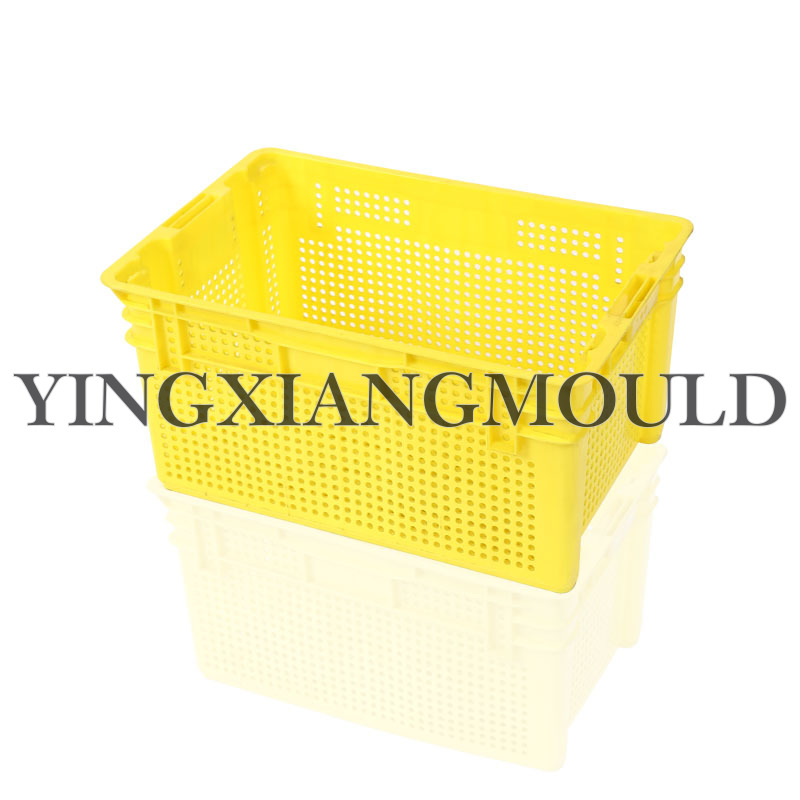
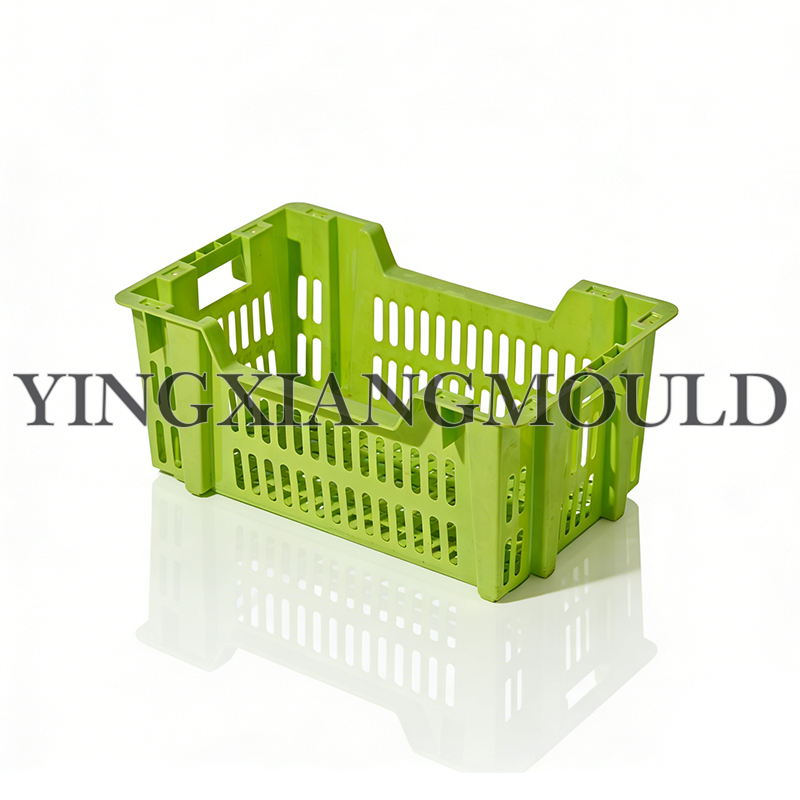
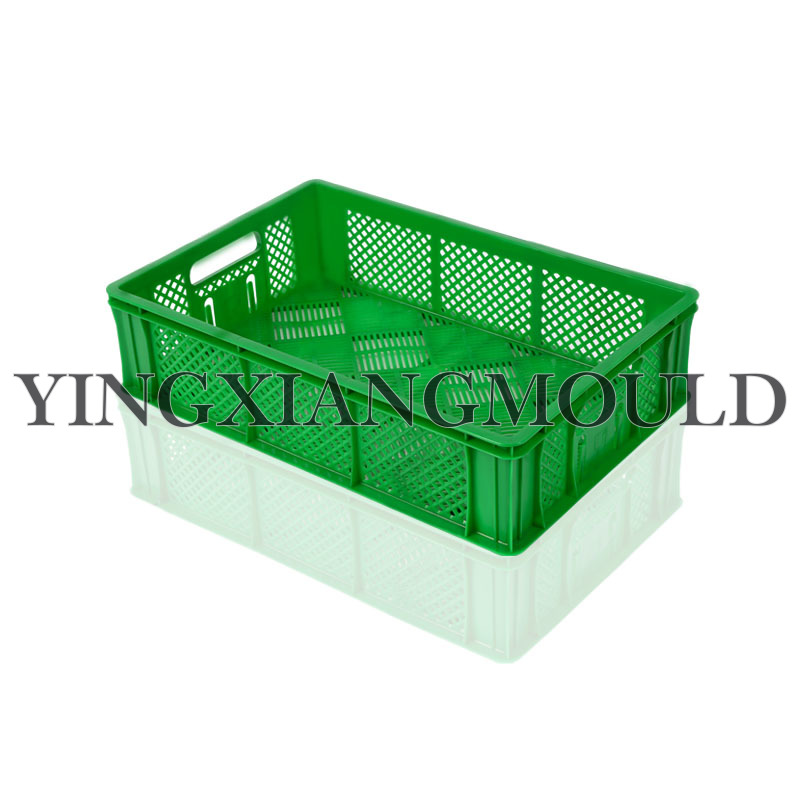
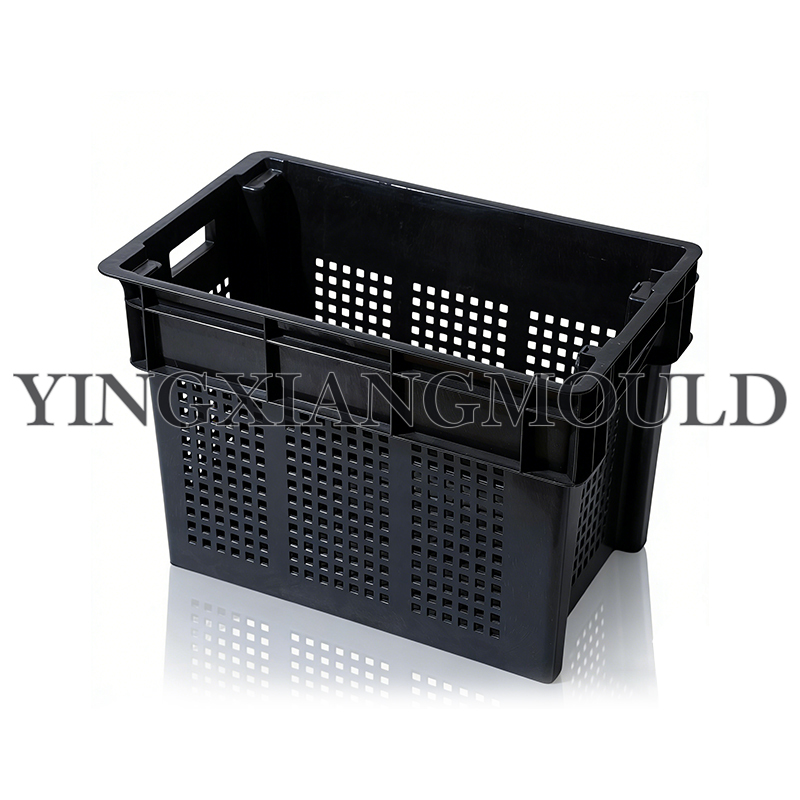
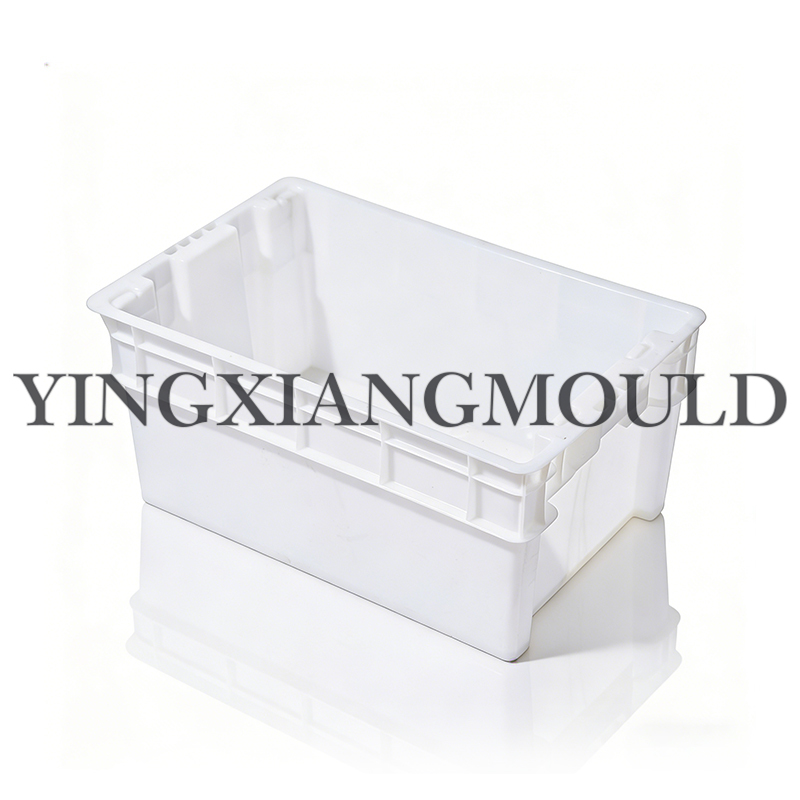
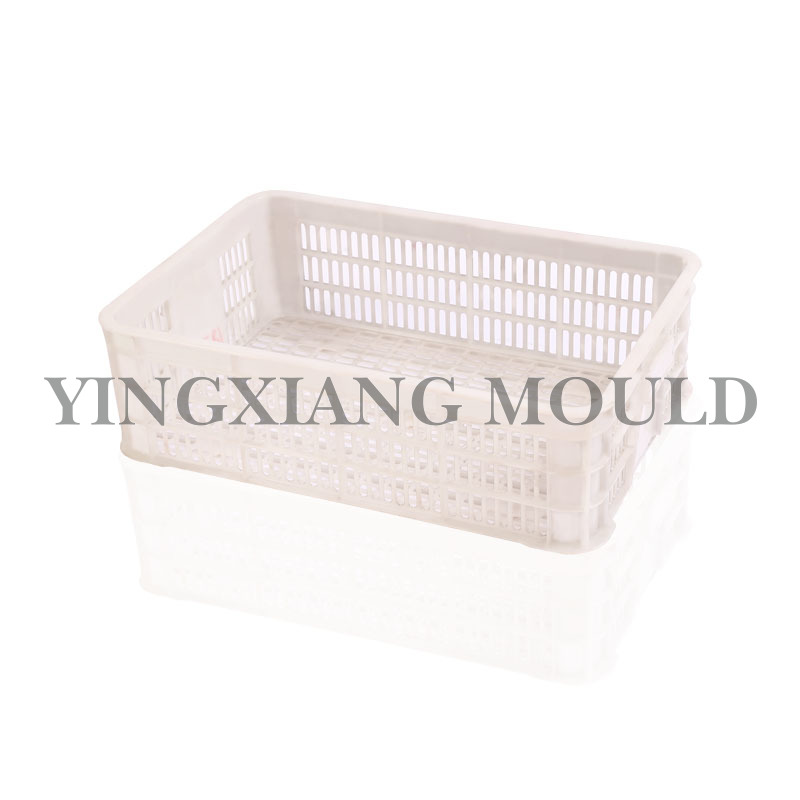
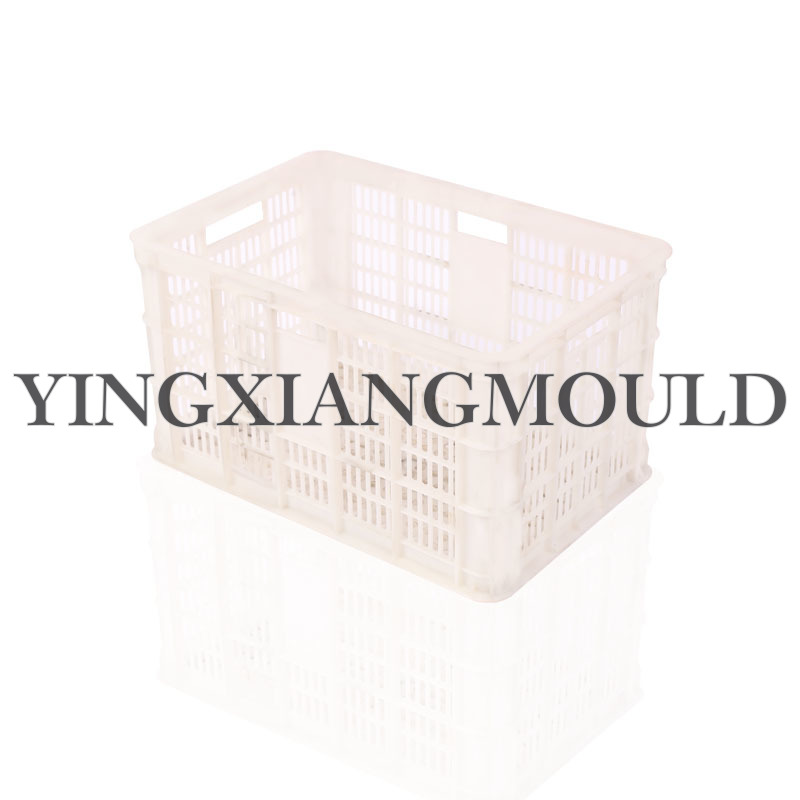
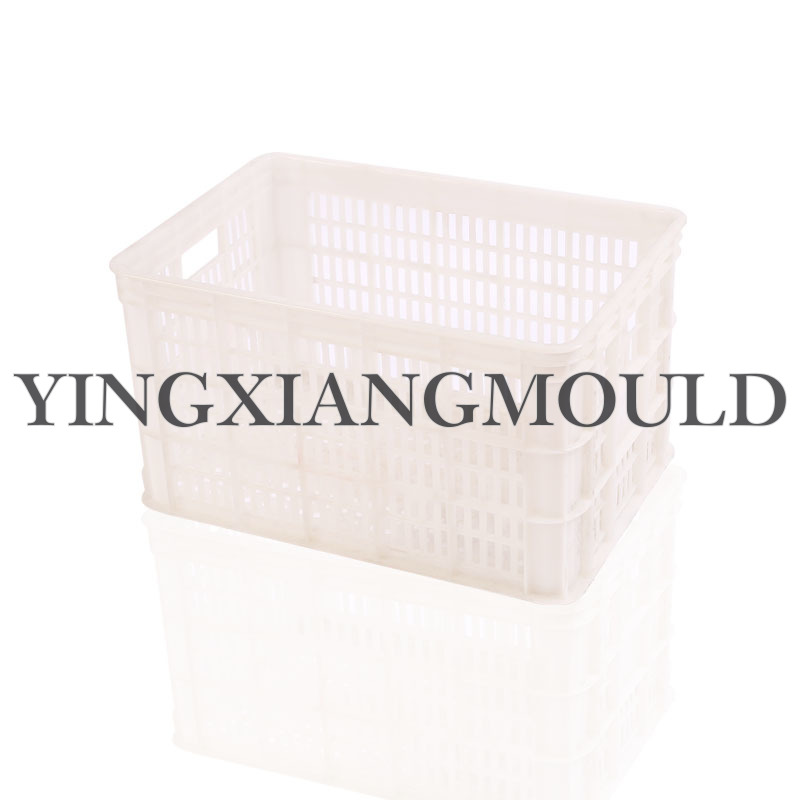
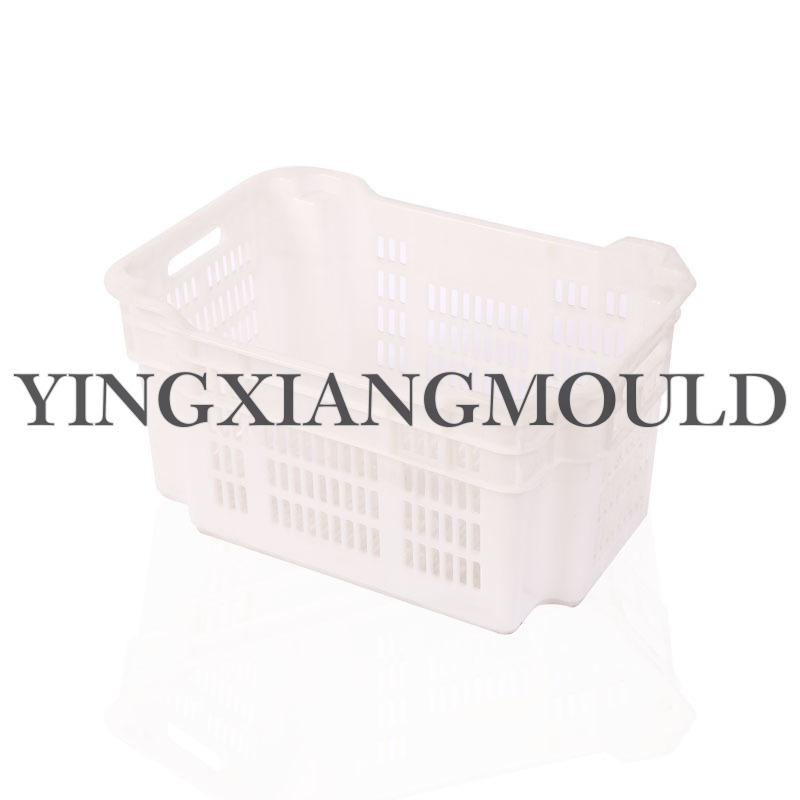
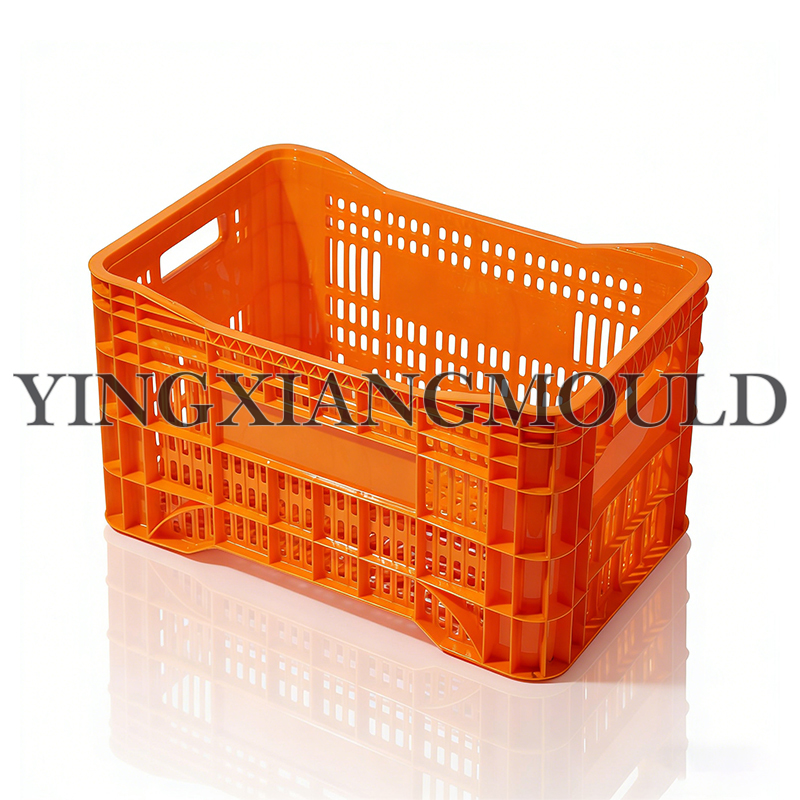
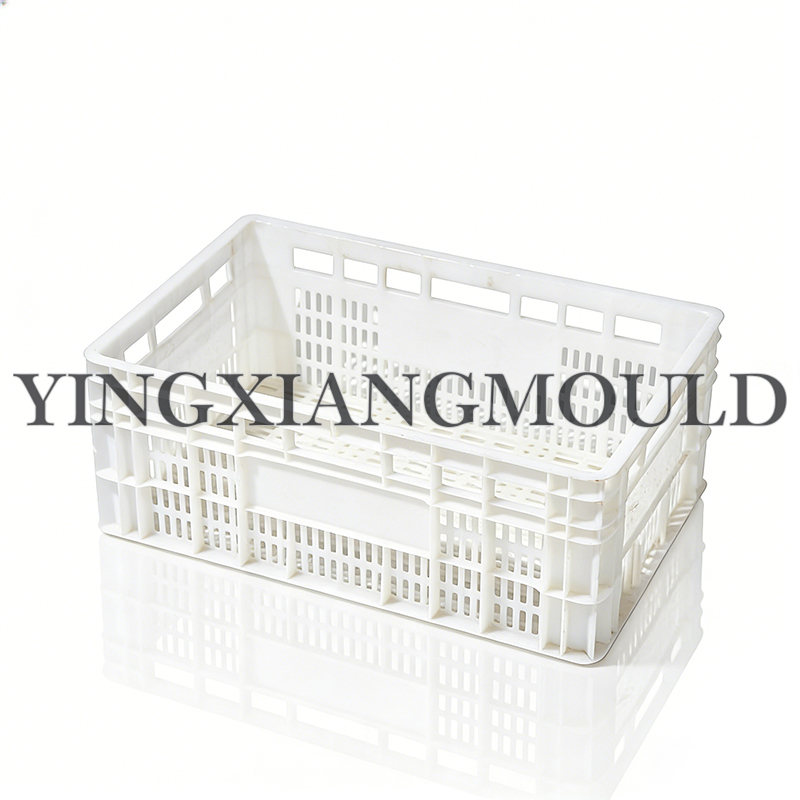
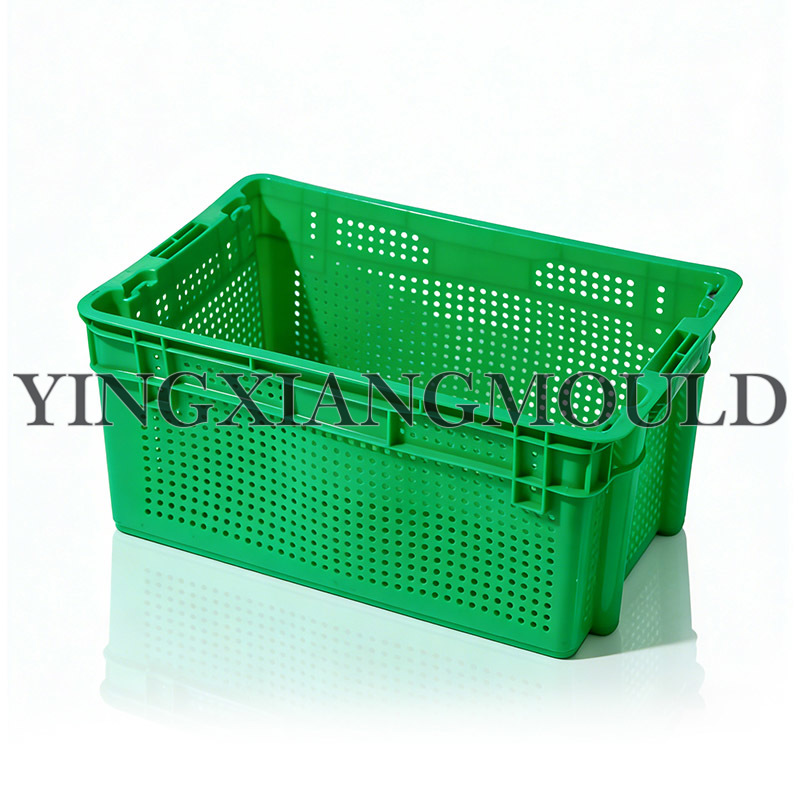
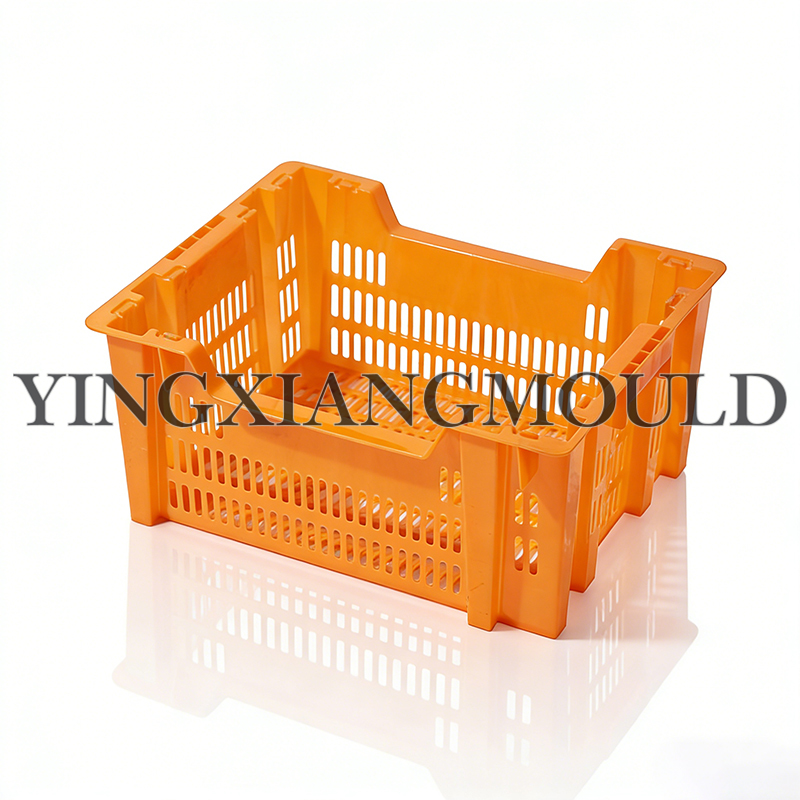
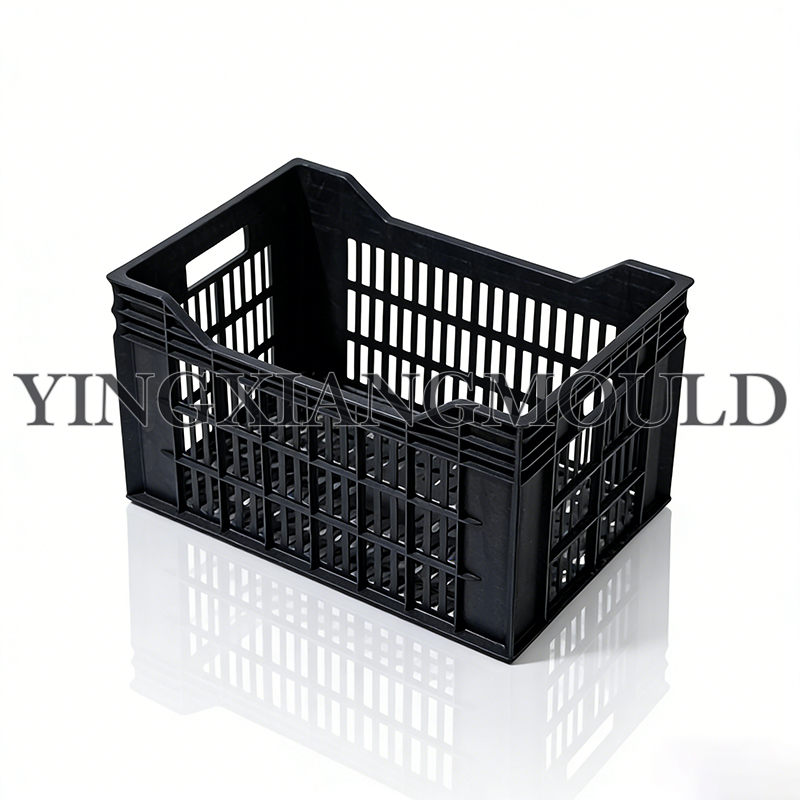
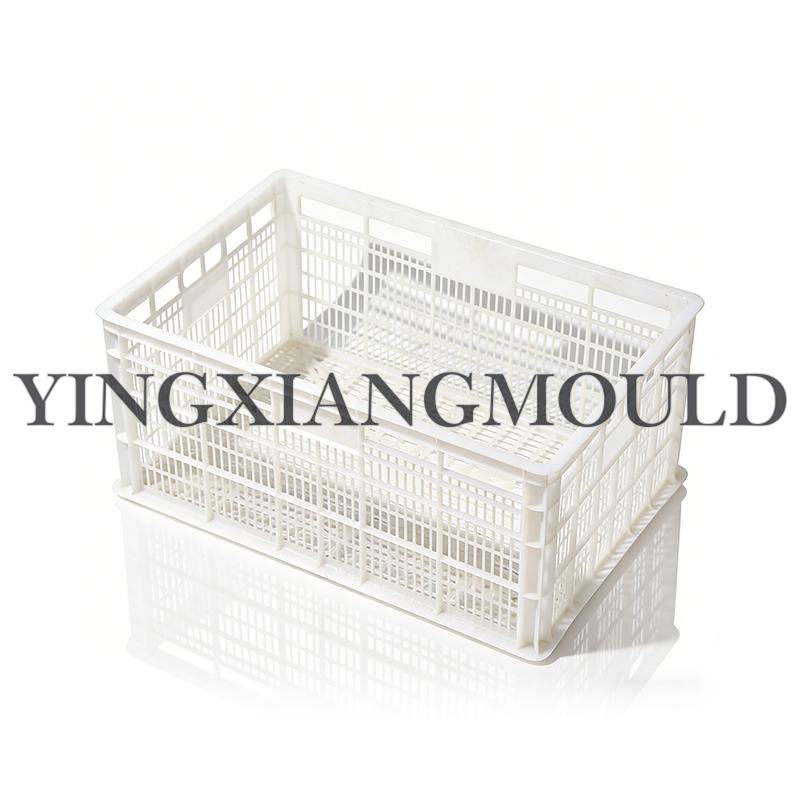
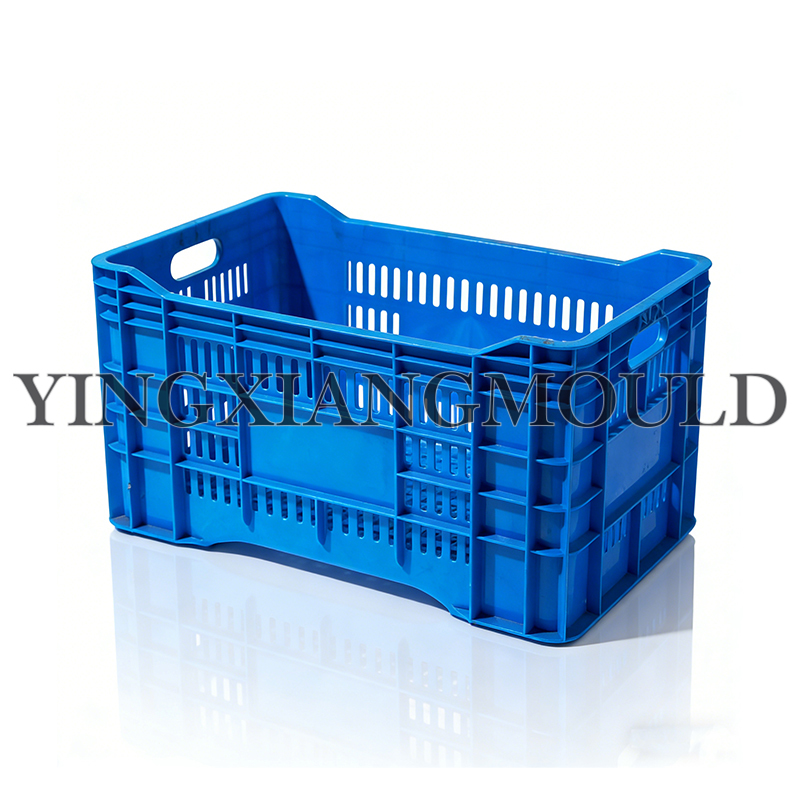
Logistics box molds are injection molds used to produce plastic logistics turnover boxes, storage boxes, and transport boxes. By heating and melting plastic raw materials and injecting them into the mold cavity, they are cooled and solidified to obtain dimensionally precise and high-strength logistics box products. Logistics box molds are widely used in warehousing and logistics, automotive manufacturing, electronics, food processing, and pharmaceutical industries.
Application Scenarios: Which industries need to purchase logistics box molds?
1. E-commerce & Express Logistics
- Product Types: Express sorting boxes, parcel turnover boxes, return processing boxes, last-mile delivery boxes
- Design Features: Standardized dimensions for automated sorting lines, wear-resistant (high-frequency handling), nestable for return trips to save on shipping costs
- Performance Requirements: Dynamic load-bearing capacity 20-30kg, drop resistant (1 meter drop without breakage), temperature range -20°C to 60°C
- Material Selection: Mostly HDPE (high-density polyethylene), with excellent impact resistance and chemical degradation resistance; some contain UV inhibitors.
2. Retail & Supermarket Distribution
- Product Types: Store replenishment boxes, fresh produce delivery boxes, promotional display boxes, cold chain insulated boxes
- Design Features: Aesthetically pleasing (matches brand colors), lightweight (easy for store staff to handle), nestable and stackable (saves back-end storage space)
- Functional Requirements: Fresh produce delivery boxes must have ventilation holes or drainage design; cold chain boxes must have an insulation layer; some are equipped with transparent windows or label slots.
3. Manufacturing & Automotive Parts
- Product Types: Parts storage boxes, workstation tool boxes, auto parts turnover boxes, semi-finished product transfer boxes
- Design Features: Standardized dimensions (compatible with automated warehouses), can be equipped with dividers (for categorized storage of small parts), anti-static (for electronic components)
- Material Characteristics: Mostly HDPE or PP, with added antistatic agents or conductive carbon black; some require oil and chemical corrosion resistance.
- Special Requirements: Must be compatible with automated sorting lines, high dimensional accuracy (within ±1mm); reusable packaging (RTP) is commonly used in the automotive industry.
4. Agriculture & Cold Chain
- Product Types: Fruit and Vegetable Harvesting Boxes, Aquatic Product Transport Boxes, Frozen Food Turnover Boxes, Central Kitchen Distribution Boxes
- Design Features: Ventilated mesh structure (drainage and breathability, prevents fruit and vegetable mold), rounded corners (avoids damage to agricultural products), foldable for easy return of empty boxes
- Material Requirements: Must pass food contact grade certification, some require the addition of antibacterial agents; resistant to pesticide corrosion, UV resistant (outdoor use)
- Performance Requirements: Low temperature resistance (cold chain transportation -5°C to 4°C), stackable load-bearing capacity of over 50kg
Purchase Reasons: Why do B2B buyers need to purchase logistics box molds?
1. Space Efficiency and Logistics Cost Optimization
The core value of logistics boxes lies in space efficiency. Through mold design optimization, the following can be achieved:
- Stacking Design: 1-3° draft angle, vertical stacking when fully loaded, maximizing capacity, suitable for warehouse storage and automated systems.
- Nested Design: 7° taper, nested storage when empty, saving 60-80% of return transport space, suitable for express delivery and distribution scenarios.
- Dual-Purpose Stacking/Nesting Design: Stacking or nesting is achieved by rotating 180°; the mold structure is complex but accommodates both scenarios, suitable for round-trip logistics of automotive parts, etc.
Pure stacking design has a capacity 14-18% larger than nesting design, but the return cost for empty boxes is 3-5 times higher. The choice of mold solution directly affects the total lifecycle logistics cost.
2. Controllable Structural Strength and Durability
Logistics boxes need to withstand extreme conditions in the supply chain. Through mold design optimization, the following can be achieved:
- Reinforcing Rib Network: Scientifically placed reinforcing ribs at the bottom plate, side wall corners, and stacking buckles enhance compression and impact resistance.
- Wall Thickness Optimization: Optimizing the wall thickness to 3-5mm while maintaining strength reduces single-piece weight by 10-15%, saving raw material costs and lowering logistics expenses.
- Abrasion-Resistant Design: Adding abrasion-resistant protrusions or thickening treatment to the bottom and corner areas extends service life.
3. Material Compatibility and Sustainability Trends
Logistics box molds are compatible with various raw materials:
- PP (Polypropylene): Accounting for approximately 28.5%-34.97% of the injection molding material market, it is the most mainstream logistics box material, offering chemical resistance, low cost, easy cleaning, and microwave heating capability.
- HDPE (High-Density Polyethylene): Impact-resistant and UV-resistant, suitable for outdoor and industrial logistics boxes, and a mainstream choice for cold chain logistics.
- Recycled Materials: Modern mold designs can support raw materials containing 30-50% recycled PP or HDPE, complying with circular economy and carbon neutrality policies. EU packaging regulations require all plastic packaging to be recyclable by 2030.
- Modified materials: Adding glass fiber reinforcement, impact modifiers, or masterbatches improves performance or achieves specific colors.
Frequently Asked Questions about Logistics Box Mold Procurement
Q1: How to choose between stacking and nesting molds?
A: Consider the logistics direction. For one-way full-load transport, choose stacking molds (14-18% larger capacity); for empty return trips, choose nesting molds (60-80% space saving); for round-trip logistics, choose dual-purpose stacking/nesting molds (more expensive but lower total life-cycle cost).
Q2: What is the molding cycle time?
A: Standard wall thickness (3-5mm): 40-70 seconds; Thin-walled high-speed (2.5-3mm): 30-45 seconds. Cooling is slower in the bottom plate reinforcing rib area; water channel layout is crucial.
Q3: How to choose a supplier?
A: We look at four points: whether they have experience in logistics box molds (stack/nesting fit precision), whether they own large-scale trial molding equipment (usually requiring 500-1500 tons of clamping force), whether they can provide stacking test reports (5-6 layers fully loaded without collapsing), and whether they are familiar with European/Japanese standard dimensional systems.



 English
 Español