

 English
 Español
Miao Shuhan — Export Business Development Executive
Home / Author / Miao Shuhan — Export Business Development Executive / Transparent Storage Box Injection Mould: Design, Manufacturing, and Performance Guide
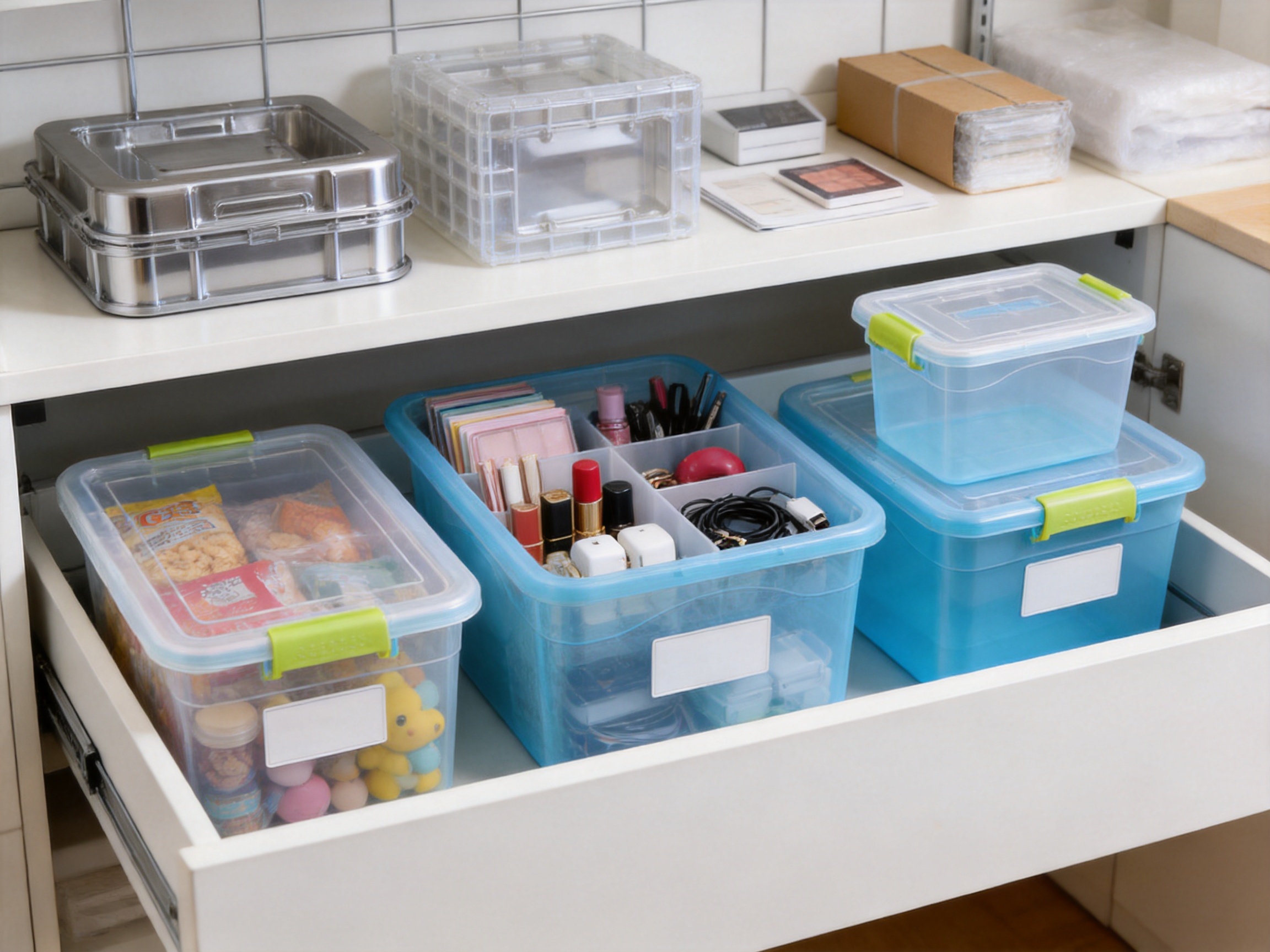
Transparent storage boxes have become an increasingly practical solution for homes, offices, kitchens, workshops, retail environments, and educational spaces. Unlike opaque containers, a transparent box allows users to identify its contents immediately. This simple feature saves time, reduces unnecessary opening and closing, and helps maintain an orderly storage system. When the box is produced through a carefully engineered plastic injection mould, it can also provide consistent dimensions, smooth surfaces, rounded corners, reliable strength, and an attractive appearance.
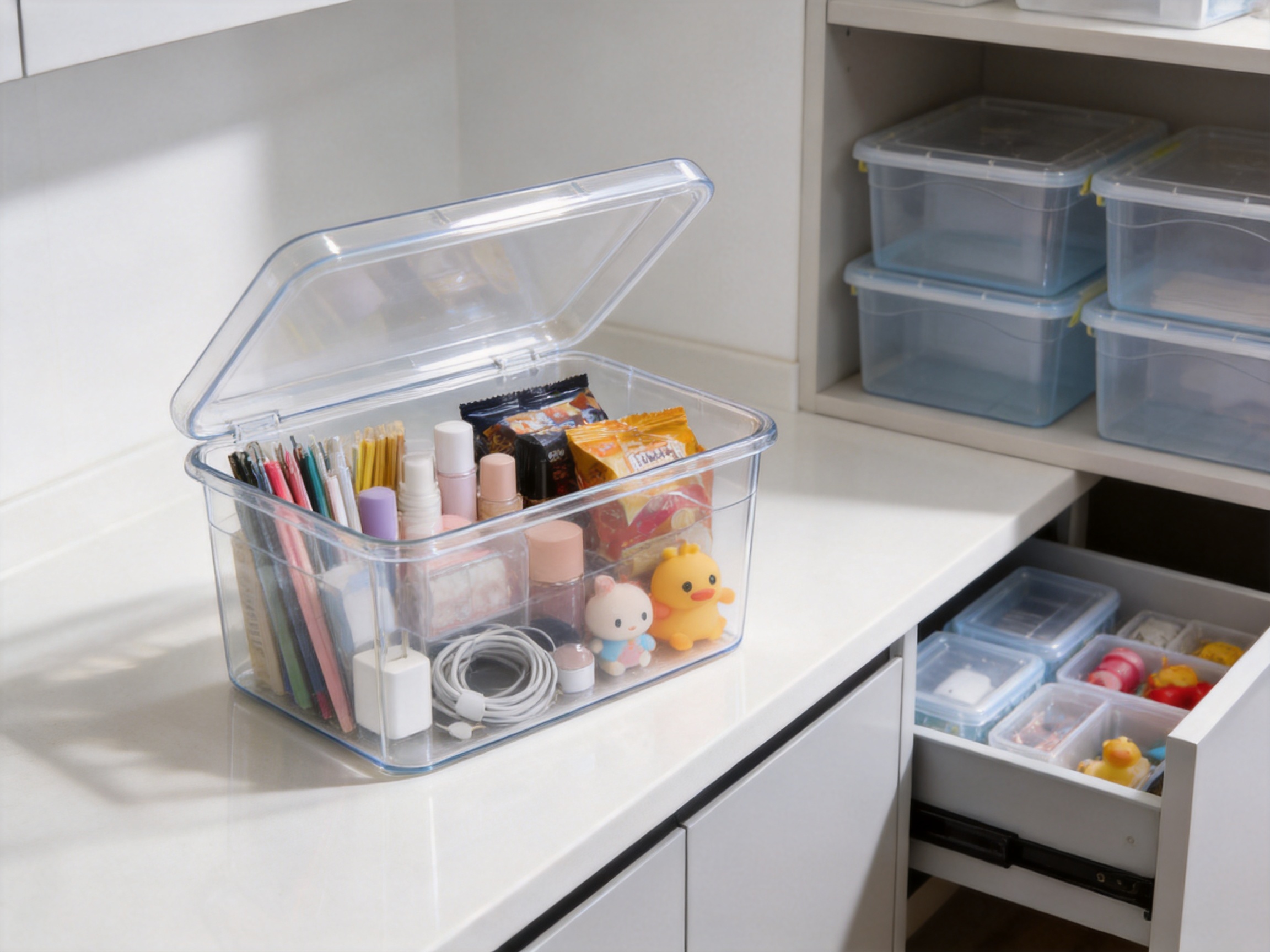
The transparent storage box described in this article is designed for convenient household organization. It is made from high-transparency polypropylene, commonly known as PP, through a single injection-moulding process. Its clear body makes stationery, snacks, cosmetic accessories, electronic cables, children’s toys, and other small items easy to recognize. The smooth opening supports convenient access, while the uniform wall thickness helps balance material efficiency, appearance, and load-bearing performance.
Behind the finished product is a complete mould development process. The quality of the storage box depends not only on the plastic material but also on product design, mould steel selection, machining accuracy, cooling design, ejection performance, injection parameters, surface finishing, and quality inspection. A professional mould manufacturer must consider all of these factors before the first production cycle begins.
This article explains the characteristics of transparent storage boxes, the technical requirements of their injection moulds, the advantages of the product compared with ordinary storage solutions, and the manufacturing capabilities of TaiZhou HuangYan YingXiang Plastic Mould Co., Ltd. It also provides a practical reference for buyers seeking a customized food storage container mould, household product mould, or transparent plastic box mould.
A transparent storage box is a reusable plastic container intended to keep small items organized and visible. The product can be placed in drawers, cabinets, on shelves, inside wardrobes, or on desktops. Its principal purpose is to provide a clean and accessible storage area without requiring users to search through multiple opaque containers.
The product uses a compact rectangular structure with rounded corners. This geometry helps the box fit common storage spaces while reducing sharp edges that could cause discomfort or accidental scratches. The smooth opening is designed to make access simple. Users can place items inside, remove them quickly, and clean the container without dealing with complex internal structures.
High-transparency PP provides a useful balance between visibility, toughness, weight, and cost. It is lighter than many rigid alternative materials and is suitable for high-volume injection moulding. Depending on the selected grade and application, PP can support repeated daily use while maintaining a practical appearance. For household organization, its combination of durability and affordability makes it an effective material choice.
The product may also be customized according to a customer’s application. Size, colour, structure, surface treatment, logo area, wall thickness, stacking features, and packaging can be modified during the design stage. Although the reference product is transparent, the same mould development approach may be adapted for translucent or coloured versions when the application requires a different visual effect.
The most obvious advantage of a transparent storage box is immediate content recognition. Users can see whether the container holds cables, cosmetics, snacks, toys, office supplies, or other articles without opening it. This is particularly valuable when several boxes are placed together in a drawer or cabinet.
Visibility also improves inventory management. In a home kitchen, the user can identify food-related items more quickly. In an office, stationery can be located without disturbing other supplies. In a workshop, small components can be separated and identified at a glance. For families, transparent boxes make it easier to arrange children’s toys and determine which container should be returned to a shelf.
The box is sized to fit common drawers and cabinet shelves. A properly designed rectangular form makes better use of available storage space than irregular baskets or flexible bags. Multiple units can often be arranged side by side, allowing users to divide a large storage area into smaller functional sections.
Efficient organization does not depend only on external dimensions. The internal cavity should provide useful capacity while keeping wall thickness under control. The mould designer must ensure that the corners, draft angles, opening, and bottom structure do not create unnecessary dead space. A balanced design provides practical storage volume without making the product difficult to mould or excessively heavy.
A smooth opening improves the user experience. It allows items to be placed into the container and removed without catching on rough edges or moulding flash. The opening may also be designed with a modest rim or reinforced perimeter to improve rigidity and provide a comfortable handling area.
Rounded corners are especially important for household products. They reduce sharp contact points and make the box more suitable for use by children and families. From a manufacturing perspective, rounded corners can also support more uniform material flow than extremely sharp internal intersections.
Reusable storage products provide long-term value because they can be used repeatedly rather than discarded after a single application. A durable injection-moulded box can be used in multiple rooms and for different purposes as household needs change. The same container may hold food packaging accessories, craft materials, cables, toys, or personal care products over its service life.
Reuse also places demands on the mould and product design. The bottom, side walls, corners, and opening must be capable of handling repeated loading and unloading. The design should avoid weak areas, excessive weld lines, sharp transitions, or thin sections that could become vulnerable during ordinary use.
A smooth plastic surface is easy to wipe and maintain. The single-moulding process reduces the need for assembly joints, which may otherwise collect dust or moisture. When the product is used for food-related organization, a cleanable interior is especially important. The final application and material grade should always be reviewed carefully by the purchaser to ensure that the product meets the intended food-contact requirements.
Transparent storage boxes compete with fabric organizers, cardboard cartons, opaque plastic bins, glass containers, and low-quality thin-wall containers. Each alternative has its own use, but the injection-moulded transparent box offers a useful combination of visibility, repeatability, moderate strength, cleanability, and customization.
| Storage solution | Main limitation | Advantage of the transparent injection-moulded box |
|---|---|---|
| Opaque plastic bin | Contents cannot be identified without opening | Visible contents support faster selection and better organization |
| Fabric organizer | May absorb dust and lose shape | Rigid PP construction is easier to wipe and maintains its form |
| Cardboard box | Limited resistance to moisture and repeated use | Reusable plastic construction provides better everyday durability |
| Glass container | Heavier and more vulnerable to breaking | Plastic construction is lightweight and more practical for general household storage |
| Low-quality thin-wall box | May deform, flash, or crack easily | Controlled mould design supports more uniform walls and improved consistency |
| Mixed-size containers | Unused gaps reduce storage efficiency | Custom dimensions can be developed for drawers, shelves, and cabinets |
One of the strongest competitive advantages is the relationship between visibility and convenience. An opaque box may provide similar physical capacity, but it requires more handling. Users must open the lid, inspect the contents, and close the box again. A transparent box reduces these steps. In busy kitchens, offices, retail stockrooms, and family homes, this small time saving can become significant over months of repeated use.
Compared with cardboard or fabric products, the PP box offers a more stable structure. It is less likely to collapse when placed on a shelf, and it can be cleaned more easily after contact with dust or minor spills. Compared with glass, it is lighter and generally more suitable for drawers, children’s rooms, and frequently handled storage areas.
Compared with inexpensive, poorly engineered plastic boxes, a professionally developed product can provide a more consistent opening, better corner transitions, improved surface quality, and reduced moulding defects. These improvements are particularly important when the box is sold in retail channels, where visual appearance strongly influences customer perception.
The injection mould is the foundation of product quality. A storage box may appear simple, but its relatively large surface area and open cavity create several technical challenges. The mould must fill the cavity evenly, control shrinkage, release the product without distortion, and maintain the transparency and surface quality expected by the customer.
The parting line should be positioned so that it does not create an objectionable mark on the most visible areas. It should also support reliable mould opening and product removal. For a box with an open top, the parting strategy must account for the external walls, internal cavity, rim, corner radii, and any optional stacking or reinforcing features.
Good parting-line planning reduces the risk of mismatch, flash, and visible steps. It can also simplify later polishing and inspection. The mould designer normally evaluates the product model in three dimensions before finalizing the parting structure.
Draft angles are required to release the box from the mould. Without sufficient draft, the product may stick to the core or cavity, resulting in scratches, deformation, or excessive ejection force. The correct draft value depends on the material, surface texture, depth, wall geometry, and desired appearance.
Transparent products require particular attention because scratches and drag marks are easy to see. A carefully selected draft angle, combined with a polished mould surface, helps preserve the visual quality of the box during ejection.
Uniform wall thickness is one of the most important design considerations. Large variations in thickness can lead to uneven cooling, sink marks, warpage, internal stress, and inconsistent shrinkage. These problems may affect the appearance and dimensional accuracy of the final container.
The product description specifies a uniform wall structure and moderate load-bearing capacity. To achieve this, the mould design must maintain balanced material distribution around the sides, bottom, rim, and corners. If reinforcement is required, it should be introduced through carefully designed ribs or local geometry rather than excessive solid thickness.
The gate determines how molten plastic enters the cavity. A suitable gate location promotes balanced filling and reduces visible flow marks. The runner system must deliver material efficiently while controlling pressure loss and minimizing waste.
For a transparent or high-appearance product, gate vestige and flow lines must be considered from the beginning. The gate should be placed in an area where any small witness mark is less noticeable, while still allowing the cavity to fill evenly. A professional mould maker may evaluate alternative gate positions through mould-flow analysis before machining begins.
Cooling has a major effect on cycle time, dimensional stability, and product warpage. The mould should contain cooling channels arranged as evenly as practical around the cavity and core. Uneven cooling can cause one side of the box to shrink differently from another, resulting in a twisted or distorted container.
Because a box has broad walls and a relatively large bottom area, cooling design must cover both the side sections and the base. The mould maker may use simulation, practical experience, and trial data to optimize channel size, spacing, and location. Efficient cooling can shorten the production cycle while maintaining consistent quality.
The ejection system must remove the box without leaving severe marks or causing deformation. Ejector pins, stripper structures, or other mechanisms may be selected according to the product shape. The ejection force should be distributed across suitable areas, particularly when the side walls are broad or the material is still warm.
For a high-appearance storage box, ejector marks should be minimized and located in less visible areas whenever possible. The system must also return reliably before the next injection cycle. Poor ejection design can cause sticking, scratches, cracks, cycle interruptions, and accelerated mould wear.
Polypropylene is the reference material for the transparent storage box. PP is widely used in injection moulding because it offers low density, good processability, reasonable impact resistance, and competitive cost. Its relatively light weight is helpful for household containers that may be moved frequently or placed in drawers and cabinets.
Transparency depends on the specific PP grade, additives, processing conditions, mould surface, and product thickness. The material supplier and moulding processor should confirm the required transparency level before mass production. If the customer needs a different balance of clarity, stiffness, heat resistance, or impact performance, other plastics may be considered.
The available material range for customized moulding projects may include PP, PC, PS, POM, PE, PU, PVC, ABS, and PMMA. Each material has different properties and moulding requirements. For example, PC may be selected when higher impact performance and clarity are needed, while ABS may be considered for rigid coloured household products. PMMA can provide high optical clarity but may require more careful handling because it is more sensitive to certain impact conditions.
Material selection should be based on actual use rather than appearance alone. The customer should consider whether the box will contact food, be exposed to heat, carry heavy objects, remain outdoors, or require high impact resistance. A professional mould manufacturer can help evaluate these requirements, but the final material approval should be made according to the intended market, regulations, and product specifications.
The mould material influences service life, polishing performance, corrosion resistance, dimensional stability, and maintenance requirements. The available mould steel options include 1CR13, 2CR13, 3CR13, 4CR13, S136, CR16, 2316, 718H, P20, and other grades selected according to project requirements.
For transparent products, mould surfaces may need a high level of polishing. Stainless mould steels such as S136 or 2316 can be considered when corrosion resistance and polishability are important. P20 and 718H may be suitable for various general-purpose mould structures, depending on the expected production volume, surface requirements, and customer budget.
Steel selection is not simply a matter of choosing the hardest available grade. The appropriate choice should reflect the expected number of moulding cycles, plastic material, product appearance, cooling conditions, maintenance plan, and manufacturing cost. An experienced mould maker can combine different steel grades within one mould when this provides a sensible balance between performance and cost.
Proper heat treatment, rough machining, semi-finishing, precision machining, polishing, and assembly are equally important. Even premium steel cannot compensate for poor machining or insufficient quality control. The mould must be produced according to approved drawings and checked against dimensional requirements before it enters the trial stage.
The process begins with a review of the customer’s product concept, drawings, or three-dimensional data. The engineering team examines dimensions, wall thickness, corner radii, draft angles, opening geometry, expected use, material, and appearance requirements.
At this stage, potential problems can be corrected before mould construction. The team may recommend changes to improve filling, reduce warpage, simplify ejection, improve stacking, or reduce unnecessary mould complexity. Early design review is one of the most effective ways to control cost and shorten development time.
Computer-aided design systems are used to develop the product model, mould structure, parting line, core, cavity, sliders if necessary, cooling channels, ejector layout, and standard components. The design should include enough detail for machining, inspection, assembly, and future maintenance.
Three-dimensional CAD data allows engineers to identify interference, confirm opening and closing actions, and review the relationship between the product and mould components. It also supports communication with the customer before steel is cut.
Computer-aided engineering can be used to assess filling behaviour, pressure distribution, cooling, shrinkage, and potential weld-line locations. For a broad storage box, such analysis can help determine whether the selected gate and runner arrangement will provide balanced filling.
Simulation does not replace practical moulding experience, but it can reduce uncertainty. It allows the team to compare design alternatives and identify high-risk areas early. Adjustments to wall thickness, gate position, cooling layout, or process parameters may be made before machining begins.
After the mould structure is approved, CAM systems generate tool paths for CNC machining. High-speed machining and precision equipment are used to produce the core, cavity, inserts, mould plates, and other components. Machining accuracy affects the final product’s dimensions, surface quality, parting-line condition, and repeatability.
Rough machining removes the main amount of steel, while semi-finishing and finishing operations establish the final geometry. Special attention is given to the product opening, corners, bottom, and other visible areas. Where required, electrical discharge machining or additional finishing methods may be used for complex details.
A transparent storage box benefits from a smooth mould surface. Polishing must be controlled carefully because different areas may require different surface conditions. Excessive polishing can alter dimensions or soften critical edges, while insufficient polishing may leave machining marks on the product.
The final surface treatment should correspond to the customer’s appearance expectations. A clear product generally requires a clean, uniform surface without obvious scratches, pits, machining marks, or irregular texture. The mould polishing team works together with the engineering and inspection teams to maintain the intended surface quality.
During assembly, mould components are fitted, aligned, and tested. The team checks the movement of the mould, the fit of the core and cavity, the operation of the ejection system, the cooling circuits, the guide components, and any optional mechanisms.
Assembly quality directly affects mould reliability. Misalignment can produce parting-line mismatch, uneven wear, flash, and dimensional variation. Proper assembly also makes later maintenance easier because components are installed according to a clear structure and documented design.
The first mould trial provides practical information about filling, appearance, ejection, dimensions, cycle time, and process stability. Engineers inspect the trial parts and compare them with the approved product requirements.
If improvements are needed, the team may adjust injection speed, holding pressure, cooling time, mould temperature, gate details, venting, ejection timing, or other factors. In some cases, the mould itself may require a controlled modification. Trial moulding is not merely a demonstration; it is a critical validation stage before production approval.
Before delivery, the mould is inspected for dimensions, operation, surface quality, cooling performance, ejection reliability, and completeness of accessories. Trial samples may be provided for customer approval. The mould is then prepared for shipment in a composite wooden box to help protect it during transportation.
Clear documentation is valuable at delivery. It may include mould drawings, spare-parts information, trial parameters, maintenance recommendations, and product inspection data. These records help the customer operate the mould efficiently and plan future servicing.
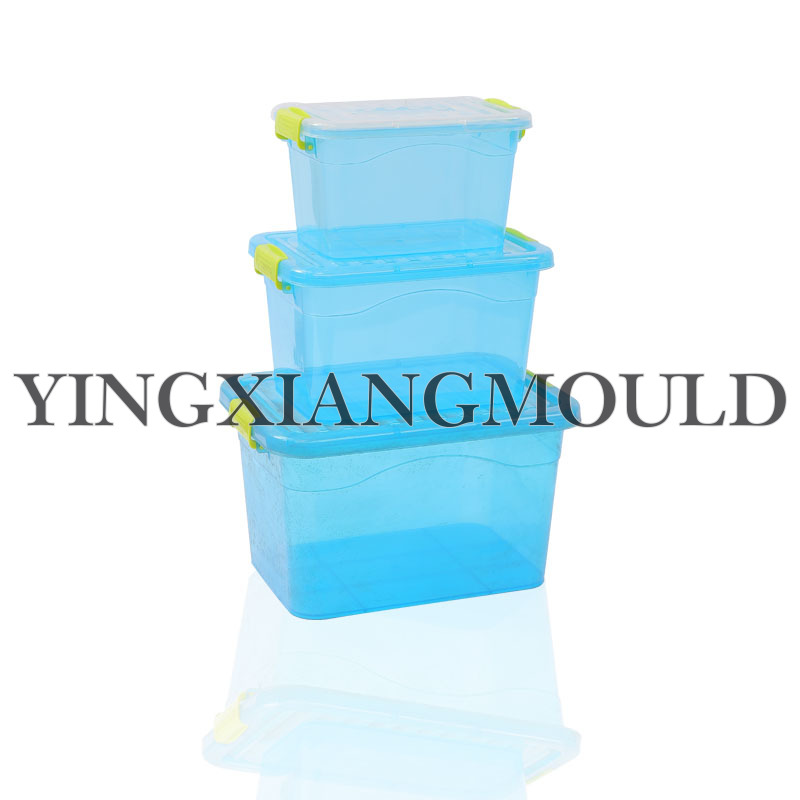
Transparent storage box
TaiZhou HuangYan YingXiang Plastic Mould Co., Ltd. is located in Huangyan, Taizhou, Zhejiang, an area widely recognized for mould manufacturing. Established in 2012, the company operates a plant covering approximately 7,000 square metres and has around 50 employees. Its organization combines design engineers, machining personnel, mould assemblers, technicians, inspection staff, and customer-service specialists.
The company uses CAD, CAE, and CAM systems to support mould development. These digital tools help connect product design, engineering analysis, machining, and production preparation. A coordinated digital workflow can reduce design misunderstandings and improve communication between the customer and the manufacturing team.
Its production scope includes crate moulds, folding box moulds, tray moulds, pallet moulds, beverage box moulds, and moulds for daily household products. This product range is relevant to transparent storage box development because many of the same technical principles apply: large plastic surfaces, repeated production, controlled wall thickness, reliable ejection, and efficient cycle times.
The company reports a supply capacity of approximately 50 mould sets per month. Actual capacity for an individual project depends on mould size, complexity, material, cavity arrangement, steel grade, surface requirements, and production schedule. Nevertheless, this stated capacity indicates an established manufacturing operation rather than a small workshop focused only on isolated prototype work.
Customized service is another important strength. The customer may specify product size, colour, material, packaging, mould steel, production volume, and application. The mould can be developed for a single-cavity or multi-cavity arrangement according to demand. A high-volume project may justify a more complex configuration, while a lower-volume or highly customized product may be better suited to a simpler mould structure.
The company’s stated manufacturing priorities include lean production, long-life moulds, on-time delivery, premium quality, competitive cost, and comprehensive customer service. These priorities are particularly relevant for storage-box manufacturers, because the final product often competes in price-sensitive markets while still requiring reliable appearance and dimensional consistency.
Quality control should cover both the mould and the moulded product. A mould may be dimensionally accurate but still produce unsatisfactory parts if the process is not properly adjusted. Similarly, a well-designed mould can be damaged or underperform if it is not maintained correctly.
Appearance inspection examines transparency, surface marks, weld lines, flow lines, burn marks, black spots, bubbles, flash, scratches, and colour consistency. Clear products make many defects more visible, so the inspection environment and evaluation standard should be agreed in advance.
Important dimensions include overall length, width, height, opening size, bottom dimensions, wall thickness, corner geometry, and any stacking or locating features. Dimensional inspection confirms whether the product will fit its intended drawer, shelf, cabinet, or packaging system.
Functional checks may include opening smoothness, stability on a flat surface, resistance to moderate loading, stacking performance if applicable, and ease of cleaning. If the box is intended for a particular storage system, it should be tested in that system rather than evaluated only as an isolated part.
The specified plastic should be verified before production. Processing conditions should be recorded to support repeatability. Important parameters may include barrel temperature, mould temperature, injection speed, holding pressure, cooling time, and total cycle time. Stable process control helps reduce differences between production batches.
Although the reference product is a transparent household storage box, a mould can be customized for a wide range of customer requirements. The most common customization area is size. A customer may request a compact box for cosmetic accessories, a shallow box for stationery, a medium container for snacks, or a deeper version for toys and household accessories.
Colour can also be customized. Transparent, translucent, frosted, and solid-colour versions may be developed depending on the selected plastic and appearance target. If transparency is essential, the colour masterbatch and processing conditions must be selected carefully to avoid cloudiness or uneven tone.
Product structure may include stacking ribs, locating points, finger grips, label areas, drainage openings, internal dividers, or compatible covers. Every added feature influences the mould design. For example, an undercut may require a slider or lifter, while a deep internal rib may complicate ejection. These features should therefore be evaluated for both user value and manufacturing cost.
Branding can be added through embossed or recessed logos, printed labels, or separate identification areas. A logo area should be positioned where it remains visible without interfering with the user’s ability to see the stored contents. The customer should provide artwork and confirm the required dimensions before mould design is finalized.
Packaging can be discussed as part of the project. The mould itself is supplied in a composite wooden box for transportation protection. Finished storage boxes may require individual bags, nested packing, cartons, protective separators, or retail-ready packaging according to the customer’s distribution channel.
In the kitchen, a transparent container can help organize packaged snacks, dry goods accessories, utensils, sachets, and small preparation items. Its visibility helps users identify contents quickly and maintain a cleaner cabinet or pantry. The appropriate PP grade and product compliance requirements should be confirmed when direct food contact is expected.
Stationery, pens, clips, cables, notebooks, labels, and small office accessories can easily become scattered. A transparent box provides a defined location for each item while allowing users to see whether supplies are available. Several boxes can be assigned to different categories and arranged in desk drawers or cabinets.
Cosmetic accessories, brushes, samples, hair items, and travel-size products can be stored in separate containers. The smooth surface supports easy wiping, while the clear body allows the user to locate a desired accessory without emptying the entire storage area.
Charging cables, adapters, memory cards, earphones, and small electronic accessories are often difficult to organize. A transparent box allows different categories of cable or device accessory to be separated and identified. The rigid structure also protects the contents from being compressed by other flexible items.
Small toys, building components, drawing supplies, stickers, and craft materials can be sorted into different containers. Rounded corners and a smooth opening support safer handling, although supervision is recommended when the product is used by young children and when small parts are stored inside.
Small shops, service counters, laboratories, and stockrooms may use transparent boxes for samples, supplies, accessories, and small inventory. The clear design reduces search time and creates a more organized visual environment. For commercial use, customers may request custom dimensions or special labelling areas to match shelving systems.
Cost control begins before mould construction. A product that is difficult to fill, cool, or eject will usually require more complex tooling and may have a longer production cycle. A strong design therefore seeks a balance between appearance, strength, capacity, and manufacturing simplicity.
Appropriate wall thickness is central to this balance. Excessive thickness increases material consumption, cooling time, and product weight. Insufficient thickness may reduce rigidity and create filling or warpage problems. A well-engineered wall structure uses material where it contributes to performance and avoids unnecessary mass in low-stress areas.
The number of cavities should reflect forecast demand. A single-cavity mould may offer a lower initial investment and greater flexibility for customized products. A multi-cavity mould can increase output and reduce per-piece moulding cost when demand is high enough to justify the added tooling investment. The right selection depends on annual volume, product price, available machine capacity, and expected product life.
Standard mould components can also help control cost and shorten manufacturing time. However, standardization should not compromise the product’s critical dimensions or appearance. The engineering team should use standard parts wherever practical while maintaining the required performance of the mould.
Maintenance planning contributes to total cost of ownership. A mould that is easy to clean, lubricate, inspect, and repair can remain productive for longer. Replaceable inserts may be used in areas subject to wear or damage. Clear records of mould structure and spare parts help avoid unnecessary downtime.
Before production begins, the mould should be installed and connected according to the approved technical requirements. Cooling circuits should be checked for leakage and correct flow. The ejection system should be tested at low speed before normal production. The moulding machine should have sufficient clamping force, injection capacity, and mould dimensions for the selected product.
Processing conditions should be established gradually. Operators should avoid changing multiple variables at the same time because this makes troubleshooting difficult. A stable process sheet should record the approved settings and inspection results. If the product becomes cloudy, warped, scratched, or dimensionally inconsistent, the operator should examine material drying, mould temperature, cooling balance, injection speed, ejection timing, and mould cleanliness.
After each production run, the mould should be cleaned of plastic residue and moisture. The parting surfaces, vents, ejector components, guide pillars, and cooling connections should be inspected. Anti-rust protection may be required during storage, especially when the mould is placed in a humid environment.
Routine maintenance intervals depend on production volume and material. High-volume production may require more frequent inspection of the gate, runner, ejector system, and parting line. Any unusual noise, increased ejection force, flash, or product change should be investigated promptly rather than ignored.
A storage box mould is a long-term production asset. The mould determines not only whether the first sample is acceptable but also whether thousands of later parts can be produced consistently. An experienced mould manufacturer can identify risks earlier, recommend practical structures, and coordinate design, machining, assembly, trial moulding, and after-sales support.
Experience with household products is valuable because these products are judged closely by appearance and ease of use. Consumers notice uneven edges, poor transparency, visible flash, difficult openings, and unstable shapes. The manufacturer must therefore understand both engineering requirements and market expectations.
Experience with crates, folding boxes, pallets, trays, and beverage containers is also relevant. These products require dependable injection moulds, efficient production cycles, controlled shrinkage, and strong structural design. The knowledge gained from larger and more demanding plastic products can be applied to compact transparent storage boxes.
Communication is another important factor. A professional supplier should clarify the product purpose, annual demand, material, appearance, dimensions, packaging, machine information, delivery schedule, and acceptance criteria. Clear communication reduces the likelihood of costly changes after mould construction has started.
For international customers, practical support is especially important. Engineering files, inspection records, trial samples, operating guidance, and maintenance information help the customer integrate the mould into its own production system. A supplier that offers comprehensive service can become a long-term manufacturing partner rather than only a tooling vendor.
Reusable storage boxes can support more organized consumption by helping households keep products in good condition and avoid unnecessary replacement. A durable container can serve different purposes over time, extending its useful life. Lightweight PP also reduces transport weight compared with many rigid alternatives.
Environmental performance depends on the complete product life cycle, including material selection, manufacturing efficiency, packaging, use, and end-of-life management. Customers should check local recycling systems and product-marking requirements. Where suitable facilities exist, recyclable plastic products should be separated and handled according to local guidelines.
Efficient mould design can also reduce manufacturing waste. Balanced runners, appropriate gate selection, optimized cycle times, and controlled start-up procedures may help lower scrap. In some projects, the customer may evaluate runnerless or hot-runner systems, although the economic suitability depends on product volume, material, mould complexity, and maintenance requirements.
Environmental claims should be based on verified information rather than assumptions. The manufacturer and customer should define measurable objectives, such as reducing material weight, minimizing rejected parts, improving mould life, or increasing the percentage of reusable packaging.
Buyers should begin by defining the finished product. The required length, width, height, capacity, opening style, wall thickness, transparency, colour, load level, and intended application should be documented. Drawings or three-dimensional files are helpful, but a product concept can also be discussed with the mould engineering team during the early stage.
The expected production volume should then be evaluated. This information affects cavity number, steel selection, cooling design, mould automation, and overall investment. A mould for occasional production may have different priorities from a mould intended for continuous high-volume manufacturing.
Material requirements must be clear. PP is suitable for the reference product, but the customer may prefer another polymer for higher clarity, greater impact resistance, chemical resistance, or specific regulatory reasons. The mould design should be reviewed after the material decision because shrinkage and processing behaviour vary between plastics.
Appearance standards should be written down. Terms such as “clear,” “smooth,” or “high quality” may have different meanings to different parties. It is better to specify acceptable weld lines, gate marks, parting-line visibility, scratches, haze, dimensional tolerance, and colour variation.
Finally, the buyer should evaluate the supplier’s engineering resources, manufacturing equipment, inspection system, previous product experience, delivery ability, communication, and maintenance support. The lowest initial quotation is not always the lowest total cost if the mould requires repeated modifications or causes unstable production.
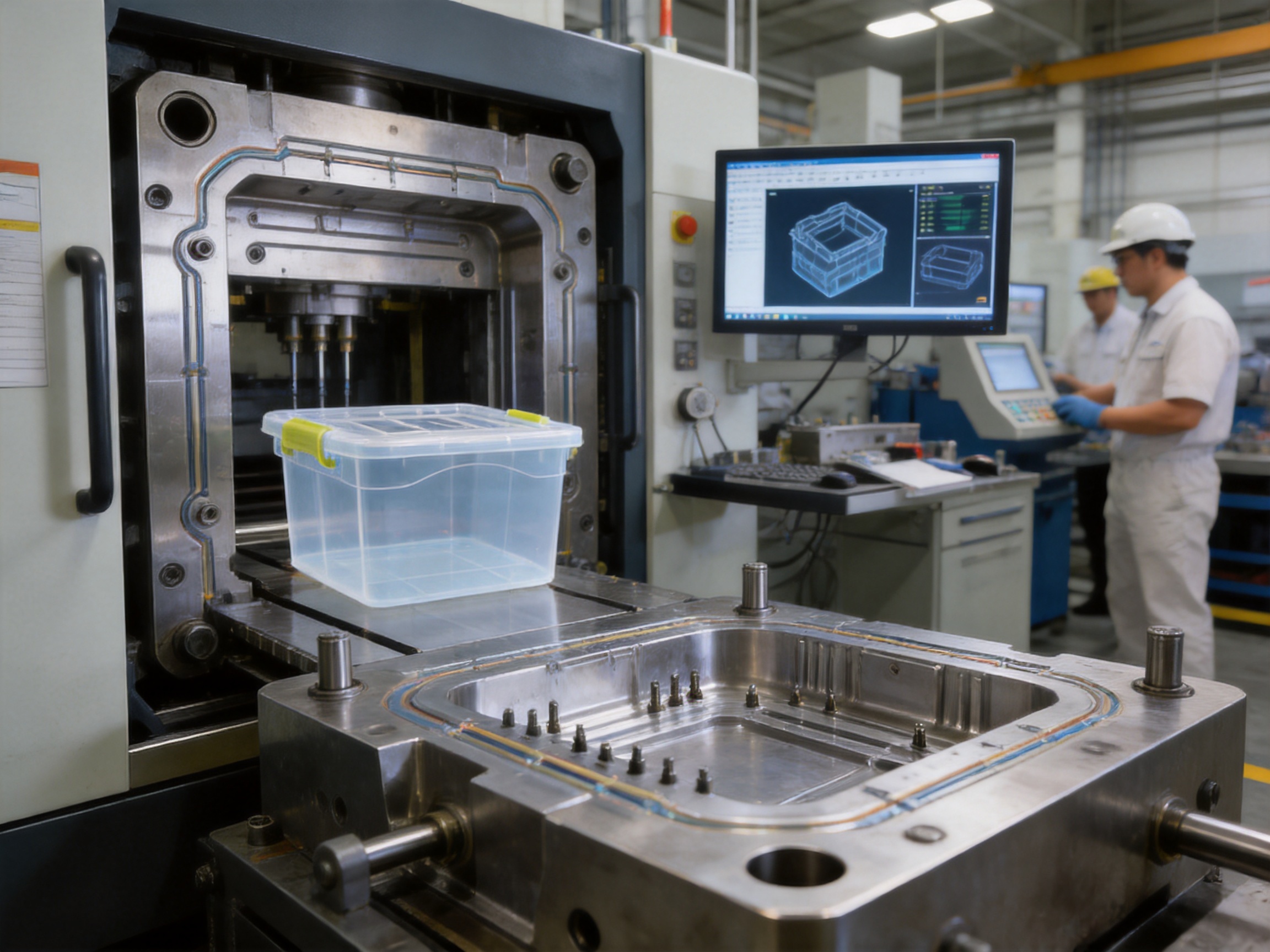
The reference product is made from high-transparency polypropylene, or PP. PP offers a practical balance of light weight, processability, durability, and cost. The exact grade should be confirmed according to transparency, impact, heat, and intended-use requirements.
Yes. The size can be customized for different drawers, cabinets, shelves, retail systems, or storage applications. Length, width, height, opening dimensions, wall thickness, and structural details should be confirmed before mould design begins.
Yes. Depending on the selected material and appearance target, the product may be produced in transparent, translucent, frosted, or solid colours. Colourant selection and processing conditions should be tested to maintain the desired visual quality.
The reference product is described for food-related storage and uses PP, but direct food-contact suitability depends on the specific material grade, additives, manufacturing conditions, and regulations in the target market. The customer should request and verify the necessary compliance documentation before making such a claim.
Available options include 1CR13, 2CR13, 3CR13, 4CR13, S136, CR16, 2316, 718H, P20, and other grades. The best selection depends on production volume, mould appearance requirements, plastic material, corrosion resistance, polishing needs, and budget.
Transparency allows users to see the contents without opening the box. This saves time, reduces unnecessary handling, and supports better classification in drawers, cabinets, offices, kitchens, and stockrooms.
The reference product is formed through a single plastic injection-moulding process. A one-piece structure can reduce assembly requirements and provide a smooth, easy-to-clean interior. Optional lids, dividers, or accessories may require separate components depending on the final design.
The mould is designed for plastic injection moulding. Molten plastic is injected into the mould cavity, cooled under controlled conditions, and ejected as a finished storage box. The mould structure is engineered to support repeatable production cycles.
Scratches can be reduced through suitable draft angles, polished mould surfaces, properly positioned ejectors, balanced ejection force, correct processing parameters, and careful handling after moulding. Packaging and transportation procedures should also prevent contact damage.
Yes, the mould structure can be planned for the expected production volume. Cavity number, steel grade, cooling system, runner design, ejection mechanism, and maintenance strategy should all be selected according to the required output.
The customer should provide product drawings or three-dimensional data, target material, dimensions, expected annual volume, cavity preference, appearance standard, moulding machine information, packaging requirements, delivery target, and any special functions such as stacking, labelling, or internal dividers.
The reference specification lists a composite wooden box for mould packaging. Additional protective measures may be discussed according to transportation distance, storage conditions, mould size, and customer requirements.
TaiZhou HuangYan YingXiang Plastic Mould Co., Ltd. is located in Huangyan, Taizhou, Zhejiang, China. The area has a long-standing mould manufacturing industry and supports access to technical labour, machining resources, and related supply chains.
The transparent storage box combines clear visibility, practical capacity, smooth access, rounded corners, reusable construction, and convenient cleaning. Made through a single injection-moulding process, it is suitable for organizing stationery, snacks, cosmetic accessories, electronic cables, toys, and other small household items. Its ability to fit common drawers and cabinet shelves gives it a strong advantage over irregular, opaque, or less durable storage solutions.
The quality of the finished box depends heavily on the mould behind it. Uniform wall thickness, balanced filling, efficient cooling, reliable ejection, polished surfaces, accurate dimensions, and appropriate steel selection are essential for stable production. A professional manufacturer must combine product engineering, mould design, precision machining, assembly, trial moulding, inspection, and customer support.
With a 7,000-square-metre plant, around 50 employees, CAD/CAE/CAM capabilities, experienced technicians, and experience in household and industrial plastic moulds, TaiZhou HuangYan YingXiang Plastic Mould Co., Ltd. is positioned to develop customized transparent storage box moulds and related container mould solutions. Its broader experience with crates, folding boxes, pallets, trays, beverage boxes, and daily-use products supports a practical understanding of injection-moulding performance and production efficiency.
For customers planning a new transparent storage product, the most effective approach is to define the product application clearly, select the material according to actual performance needs, establish appearance and dimensional standards, and involve the mould manufacturer early in the design process. This collaborative method helps control investment, reduce technical risk, and create a mould capable of delivering consistent, market-ready products.
1. General principles of plastic injection mould design, including draft, parting-line, gating, cooling, and ejection considerations.
2. Technical guidance for polypropylene processing and the relationship between material grade, transparency, shrinkage, and moulding conditions.
3. Recommended practices for household plastic product design, dimensional inspection, appearance evaluation, and safe handling.
4. General engineering references for mould steel selection, polishing, heat treatment, corrosion resistance, and service-life planning.
5. Manufacturing information supplied for the transparent storage box injection mould project and associated customized plastic mould capabilities.
6. Company-provided information concerning production facilities, engineering systems, product categories, materials, mould steels, supply capacity, and packaging methods.
If you are interested in any of our products or services, please feel free to ask and we can talk about your ideas.
 QUICK LINKSMOBILE SITE
 FACTORY ADDRESS
 CONTACT INFORMATION