

 English
 Español
Miao Shuhan — Export Business Development Executive
Home / Author / Miao Shuhan — Export Business Development Executive / Apricot Basket Mould: Precision Injection Moulding for Strong, Ventilated Fruit Packaging
Apricots, nectarines, plums, and other stone fruits require packaging that combines protection, ventilation, attractive presentation, and convenient handling. A suitable basket must support delicate fruit without causing bruising, allow air to circulate, prevent moisture accumulation, and remain stable during transport and display. The apricot basket mould is developed to produce this type of practical, shallow, and durable plastic packaging for household use, agricultural collection, retail presentation, and short-term fruit storage.
Unlike a general-purpose container, an apricot basket is shaped around the specific needs of soft and easily damaged fruit. Its low and rounded profile allows fruit to be arranged in a single layer or in a controlled shallow stack. Its ventilated base helps reduce condensation, while the smooth internal surface minimizes abrasion. Rounded edges and integrated finger loops improve handling, and the reinforced rim provides rigidity without making the basket unnecessarily heavy.
The quality of the finished basket depends largely on the design and construction of the injection mould. A well-engineered mould determines the basket’s dimensions, wall thickness, surface finish, ventilation pattern, strength, demoulding performance, cycle time, and long-term production stability. For this reason, selecting a professional mould manufacturer is essential for fruit packaging producers seeking reliable output and competitive operating costs.
TaiZhou HuangYan YingXiang Plastic Mould Co., Ltd. provides customized plastic injection mould solutions for fruit baskets, logistics crates, folding boxes, pallets, household products, chairs, stools, beverage boxes, storage containers, and other injection-moulded products. Based in Huangyan, Taizhou, Zhejiang, China, the company combines mould design, technical development, precision processing, assembly, testing, and customer service in one production system.
Apricot basket
The apricot basket mould is a custom plastic injection mould designed to manufacture shallow, dish-shaped, or low-round fruit baskets. The basket can be adapted to different fruit sizes, production requirements, packaging standards, and customer preferences. Depending on the application, the finished product may include a fine mesh bottom, corrugated support texture, ventilation openings, reinforced sidewalls, a wide rim, finger loops, or small integrated handles.
The mould is suitable for producing baskets from common thermoplastic materials such as polypropylene, polycarbonate, polystyrene, polyoxymethylene, polyethylene, polyurethane, polyvinyl chloride, acrylonitrile butadiene styrene, and polymethyl methacrylate. For direct contact with food or fresh produce, food-grade polypropylene is a particularly practical choice because it offers a useful balance of toughness, chemical resistance, low density, processability, and ease of cleaning.
Dimensions, colour, model, cavity configuration, and structural details can be customized. The mould may be designed for a compact household basket, a retail display tray, a harvest container, or a stackable commercial package. The final solution can also be coordinated with a customer’s existing injection moulding machine, production volume, material preference, and packaging line.
| Product category | Fruit basket mould |
| Product type | Plastic injection mould for apricot baskets |
| Application | Apricots, nectarines, plums, household storage, retail display, short-term fruit handling |
| Typical basket material | Food-grade polypropylene or another specified thermoplastic |
| Mould material options | 1CR13, 2CR13, 3CR13, 4CR13, S136, CR16, 2316, 718H, P20, and other suitable steels |
| Forming method | Plastic injection moulding |
| Colour | Customizable according to customer requirements |
| Size | Customizable according to fruit, capacity, and application |
| Model | Customizable |
| Packaging for mould shipment | Composite wooden box |
| Service | OEM and customized mould development |
| Production capability | Approximately 50 mould sets per month |
Stone fruits are more sensitive to compression and surface damage than many hard-skinned fruits. Apricots can bruise when they are pressed against sharp corners, rough surfaces, or excessive stacking loads. Juice leakage may occur when damaged fruit is placed in a poorly ventilated container. A suitable basket therefore needs to be more than a simple perforated box.
The shallow configuration is one of the most important design characteristics. It reduces the height of the fruit stack and helps distribute pressure across a broader surface. Retail staff can arrange the fruit neatly, while customers can see the product without removing a large number of pieces. For household use, the low form also makes the basket easy to place on a dining table, kitchen counter, refrigerator shelf, or market display stand.
The bottom surface must support fruit while allowing air movement. A fine mesh pattern can provide ventilation through many small openings, whereas a corrugated texture can create small contact areas and channels for airflow. The appropriate pattern depends on the basket’s size, expected load, material, and target production process. The mould designer must balance opening size with structural strength, cleaning requirements, tooling complexity, and the risk of fruit contact marks.
The sidewalls should be high enough to retain fruit during movement but low enough to permit convenient access. Excessively high walls can make the container difficult to fill and reduce visual presentation. Insufficient wall height may allow fruit to roll out during handling. The mould can be engineered with a gradual sidewall angle and rounded transitions to support both product stability and smooth demoulding.
The rim also has a major influence on usability. A thickened, folded, or rounded rim can improve resistance to deformation and provide a more comfortable grip. It helps protect users from sharp edges and reinforces the upper section of the basket. Since the rim is often touched during carrying, washing, stacking, and display, its surface quality must be carefully controlled during mould manufacturing.
The basket is designed to reduce direct pressure on apricots and similar stone fruits. Its shallow form helps prevent deep stacking, while the rounded internal geometry avoids concentrated contact points. A carefully designed base texture supports the fruit over multiple small areas instead of forcing it against a flat surface with limited drainage.
This approach can help reduce bruising during short-term storage and movement. Although packaging cannot eliminate all damage caused by rough handling or excessive loading, a purpose-built basket provides a more suitable environment than a deep, rigid container designed for unrelated products.
Fresh fruit releases heat and moisture after harvesting. Without suitable ventilation, moisture can remain trapped around the fruit and increase the risk of surface deterioration. The fine mesh or ventilated base of the apricot basket allows air to move beneath the fruit. Side openings may also be incorporated to improve circulation around the basket.
Ventilation is especially valuable when baskets are temporarily stored in kitchens, retail areas, collection stations, or transport preparation zones. The opening pattern can be adjusted to provide a balance between airflow, structural strength, fruit retention, and visual appearance.
Apricots are often purchased based on appearance. Colour, size, freshness, and arrangement influence the customer’s perception of quality. The low-round basket presents the fruit in a visible and organized format. A broad opening allows retailers to display the fruit attractively without hiding the lower layers.
The basket can be produced in different colours to coordinate with a retailer’s packaging identity, seasonal promotions, or fruit category. Light colours may emphasize the appearance of the fruit, while darker or stronger colours may be selected for agricultural collection and repeated handling.
Small side handles or finger loops allow the basket to be moved with one hand. These features are useful when carrying fruit from a garden, farm, market, kitchen, or refrigerated storage area. The handle design must be strong enough to support the intended load without creating excessive stress at the connection points.
During mould development, the handle area requires careful attention to wall thickness, corner radii, gate position, cooling, and ejection. A poorly balanced handle can warp, crack, or become uncomfortable. A properly engineered handle integrates strength and convenience while maintaining a clean appearance.
A smooth plastic surface is easy to rinse and clean after use. Food-grade polypropylene does not readily absorb water, and its practical chemical resistance allows it to withstand ordinary washing conditions. Rounded corners and reduced dead zones help prevent fruit residue from remaining in difficult-to-reach areas.
The mould surface finish directly influences cleaning performance. Polished or suitably textured cavity surfaces can reduce residue retention and improve the visual consistency of the finished baskets. The selected finish should match the customer’s hygiene expectations, product appearance, and production requirements.
Injection-moulded polypropylene baskets can be designed to achieve a useful balance between low weight and adequate strength. Lower product weight may reduce material consumption, handling effort, and transportation cost. At the same time, ribs, reinforced edges, and optimized wall thickness can provide the stiffness needed for everyday use.
Weight reduction must be achieved through engineering rather than simply reducing all wall sections. Excessively thin areas may cause short shots, sink marks, warpage, weak handles, or premature failure. The mould’s cooling system, gate design, material flow, and ejection arrangement must work together to produce consistent parts.
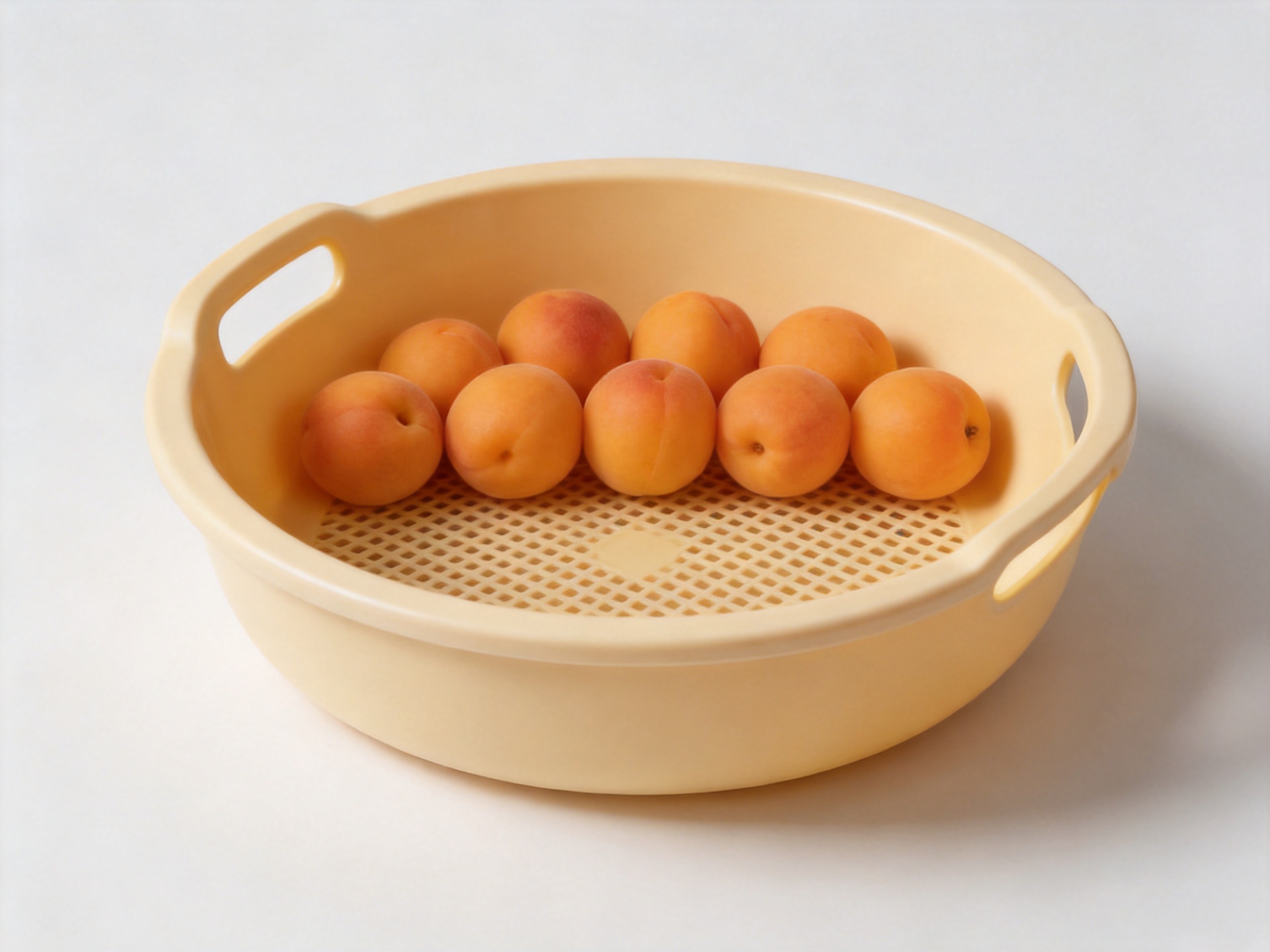
Rounded geometry is a defining characteristic of a fruit basket intended for delicate produce. Rounded corners reduce stress concentration in the plastic and minimize the possibility of sharp contact with the fruit. They also improve user safety and make the basket more pleasant to handle.
From a tooling perspective, rounded geometry can support smoother material flow and more uniform cooling. However, every transition must be evaluated carefully. The mould designer needs to ensure that the cavity can be manufactured accurately and that the finished product can be ejected without distortion or sticking.
The rim can be thickened, folded, rounded, or supported by an internal rib. This structure helps the basket maintain its shape when lifted and reduces deformation during stacking. It also creates a defined edge for holding and improves the perceived quality of the product.
Because thick sections may cool more slowly than thin walls, the rim requires detailed analysis during mould design. Uneven cooling can create sink marks or warpage. Proper steel machining, cooling channel placement, and injection parameter development are important for obtaining a clean rim with stable dimensions.
The base may use a mesh pattern, elongated slots, circular openings, or corrugated support ribs. Each configuration provides a different balance of ventilation and strength. Small openings can offer more support points for the fruit, while larger openings can increase airflow and reduce material usage.
Corrugated ribs may also raise the fruit slightly above the lowest surface and create channels for moisture movement. The rib height, pitch, and orientation can be adjusted according to the basket size and expected load. These details are not merely decorative; they contribute directly to product performance.
Integrated handles avoid the need for separate components and simplify assembly. They can be positioned on two sides for balanced carrying. Finger loops may be compact where the basket is intended for low weight, while wider handles may be selected for larger commercial formats.
The connection between handle and basket wall must be strengthened without creating an uncomfortable bulge. Mould flow analysis can help identify weld line locations and potential weak zones. If the handle geometry interrupts the natural filling pattern, the gate system may need to be adjusted to reduce visible flow marks and improve mechanical performance.
Depending on the customer’s requirements, the basket may be designed to nest when empty or stack securely when filled. Nesting can reduce warehouse volume and make return transport more efficient. Stacking features can help stabilize filled baskets during display and short-distance movement.
Stacking geometry should be carefully controlled to avoid transferring excessive load directly to the fruit. Support points may be positioned on the rim or reinforced outer sections, leaving sufficient clearance above the fruit. This is one of the areas where product design and mould engineering must be developed together.
Polypropylene is a common choice for this type of product because it is lightweight, durable, and well suited to injection moulding. It can be supplied in food-contact grades when required and can be modified with additives or colourants according to the customer’s application. Its flexibility can help the basket withstand repeated handling without becoming excessively brittle.
Other plastics may be selected when the application requires different properties. Polycarbonate can provide high impact resistance and transparency, although it may not be necessary for a standard fruit basket. Polystyrene can offer rigidity and an attractive surface but may require careful consideration of impact requirements. Acrylonitrile butadiene styrene can provide a combination of appearance and toughness for certain household product applications.
Polyethylene may be considered where flexibility and impact resistance are priorities. Polyoxymethylene is generally used for precision components rather than ordinary fruit baskets, but the material list demonstrates the broad plastic processing capability available for customized mould projects. The final material should be selected based on food-contact requirements, temperature, load, cleaning conditions, recyclability, colour, cost, and expected service life.
The mould material must also be selected according to production volume, plastic type, surface requirements, corrosion risk, and maintenance expectations. Available steel options include 1CR13, 2CR13, 3CR13, 4CR13, S136, CR16, 2316, 718H, and P20. Stainless or corrosion-resistant grades may be appropriate when the plastic contains additives, when a polished surface is required, or when the mould will operate in a humid production environment.
The mould project begins with a review of the customer’s product requirements. Important information includes basket length, width, height, capacity, wall thickness, fruit type, material, colour, annual production volume, injection machine specifications, and packaging or stacking expectations.
The design team also considers whether the basket is intended for one-time retail use, repeated household use, farm collection, food service, or commercial distribution. These applications may require different levels of impact resistance, surface quality, mould life, and production efficiency.
After the requirements are confirmed, the basket is developed in a three-dimensional computer-aided design environment. The model defines the external profile, internal cavity, ventilation openings, rim, handles, ribs, parting line, draft angles, and ejection surfaces.
Design for manufacturability is considered from the beginning. The product must not only look attractive; it must also fill consistently, cool evenly, release smoothly, and remain dimensionally stable. Early attention to these factors can reduce later modifications and shorten the path to production.
Computer-aided engineering tools can be used to evaluate how molten plastic flows through the basket cavity. Analysis may identify areas that are likely to fill slowly, weld line locations, air traps, pressure concentrations, and possible short shots. This information helps the mould designer select suitable gates, runners, vents, and injection locations.
For a basket with handles, openings, ribs, and varying wall thicknesses, flow balance is particularly important. If the material reaches one side much earlier than another, differential cooling and shrinkage may cause warpage. A balanced filling pattern can improve appearance and reduce dimensional variation.
The mould structure may include a fixed half, moving half, cavity inserts, core inserts, guide systems, cooling channels, ejection components, support plates, and a hot runner or cold runner system, depending on the design and production requirements. The parting line is positioned to support reliable mould opening and minimize visible mould marks.
Draft angles are incorporated so that the basket can be removed without damaging the sidewalls, rim, handles, or ventilation openings. Ejector pins, stripper plates, or other mechanisms may be used according to the basket’s geometry. Ejection must be evenly distributed because concentrated force can deform a thin-walled product.
Once the mould design is approved, steel components are processed using high-precision equipment. Milling, turning, drilling, electrical discharge machining, wire cutting, grinding, and polishing may all be used in different stages. The selected process depends on the geometry and the dimensional requirements of each component.
Small ventilation openings and intricate handle features may require electrical discharge machining or wire cutting to achieve accurate profiles. Critical shut-off surfaces and moving components require close coordination between machining and assembly. Precision processing helps reduce flash, mismatch, and uneven parting marks in the finished basket.
Cooling has a direct influence on cycle time and product quality. A basket with a large surface area and multiple ribs may cool unevenly if the channels are not carefully positioned. The mould cooling system is therefore designed to remove heat efficiently from both the broad walls and thicker structural sections.
Uniform cooling can help reduce warpage, shrinkage variation, and dimensional instability. It may also improve production efficiency by allowing the product to reach ejection temperature more quickly. The best cooling arrangement depends on the basket shape, steel thickness, cavity layout, material, and injection machine conditions.
After individual components are completed, the mould is assembled and inspected. Moving parts are checked for smooth operation, clearances, lubrication, alignment, and reliable return. The cavity and core surfaces are examined for machining marks, polishing quality, sharp edges, and possible interference.
Trial moulding is then performed to evaluate the actual product. Test parts are inspected for filling, appearance, wall thickness, deformation, weld lines, gate marks, flash, ejector marks, and dimensional accuracy. If required, mould adjustments are made to improve product quality and production stability.
Before delivery, the mould is cleaned, protected, and prepared for shipment. The mould is packaged in a composite wooden box to reduce the risk of damage during handling and transportation. Technical documentation, spare parts, mould instructions, or trial samples may be provided according to the project agreement.
Customers can use the trial results to confirm the product before beginning regular production. Clear communication at this stage helps ensure that the mould is compatible with the customer’s injection machine, material, cycle requirements, and operating procedures.
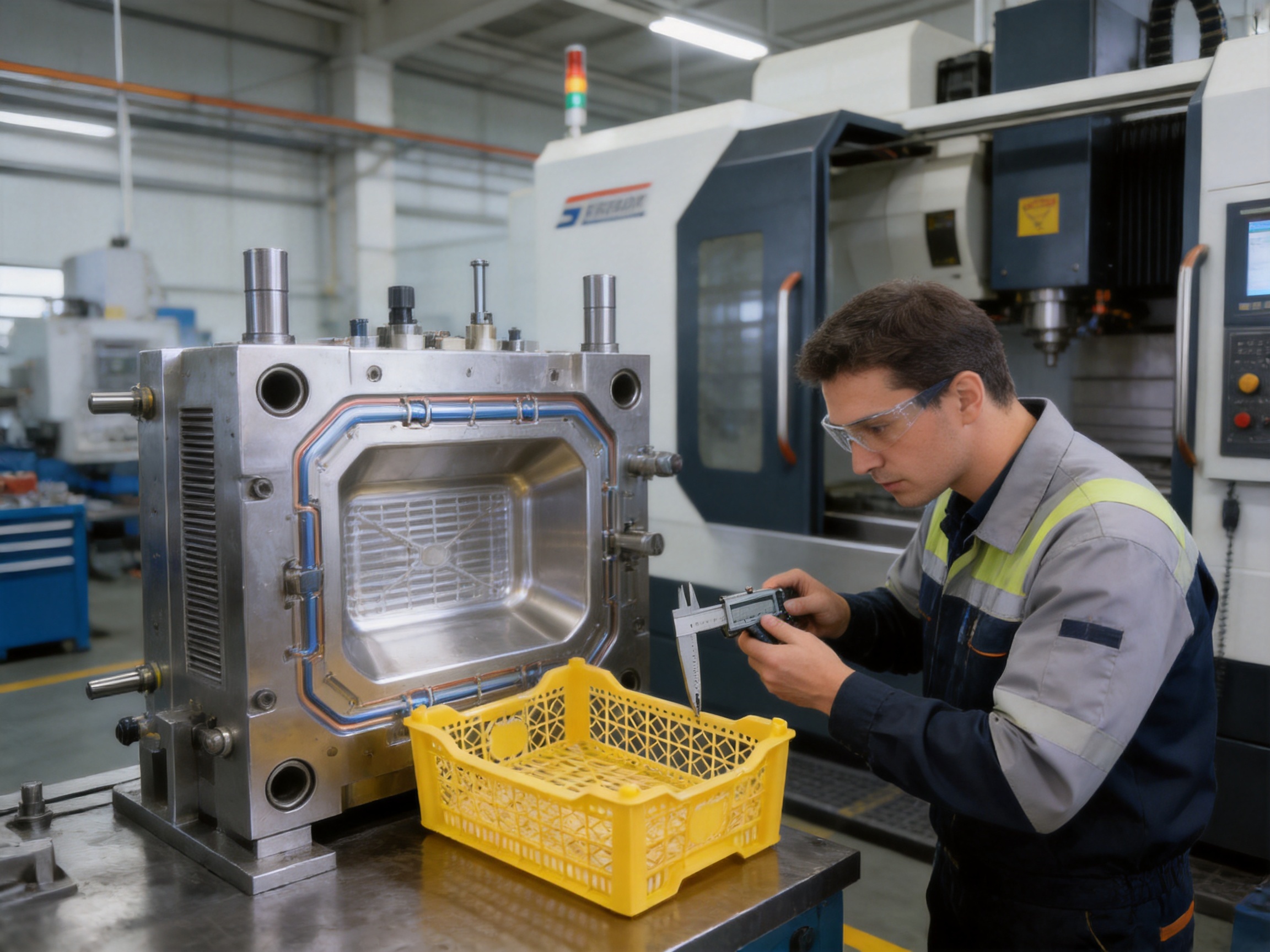
TaiZhou HuangYan YingXiang Plastic Mould Co., Ltd. was established in 2012 and is located in Huangyan, Taizhou, Zhejiang, an important mould manufacturing area in China. The company operates a plant covering approximately 7,000 square metres and has around 50 employees, including experienced technicians and production personnel.
The company uses CAD, CAE, and CAM systems to support mould development and manufacturing. These digital tools help connect product design, engineering analysis, toolpath preparation, machining, and production verification. This integrated workflow can reduce communication errors and improve the consistency between the approved product model and the completed mould.
Yingxiang focuses on customized plastic mould solutions rather than limiting its production to a single standard design. Its product range includes logistics crate moulds, folding box moulds, tray moulds, pallet moulds, beverage box moulds, fruit basket moulds, and moulds for daily household products. This broad experience is valuable because many of the engineering challenges found in fruit baskets are also relevant to crates, boxes, trays, and other thin-walled containers.
The company’s production capability is approximately 50 mould sets per month. This capacity supports both individual customized projects and repeat orders for customers requiring multiple moulds or product families. Production planning can be coordinated according to mould complexity, steel selection, cavity count, machining workload, and delivery expectations.
Yingxiang emphasizes lean manufacturing, long-life moulds, on-time delivery, competitive cost, and customer service. These priorities are important for a fruit packaging producer because the mould is a long-term production asset. A lower initial price is not necessarily the best value if the mould requires frequent repairs, produces inconsistent baskets, or causes extended machine downtime.
A general container mould may produce a box that can technically hold apricots, but it may not address the specific requirements of stone fruit. An application-specific apricot basket mould considers fruit sensitivity, shallow stacking, ventilation, display, carrying, washing, and handling. This produces a more suitable finished product and gives the customer a clearer market position.
Inconsistent wall thickness can cause weak areas, sink marks, uneven shrinkage, and deformation. A professional mould design seeks to control material distribution across the basket wall, rim, handles, ribs, and base. More consistent sections can improve appearance and reduce material waste.
A high-quality mould is designed for repeatable filling, cooling, and ejection. Stable production reduces the number of rejected baskets and makes it easier for operators to maintain consistent process settings. This is particularly important when the basket is manufactured in large quantities during harvest seasons or promotional periods.
Appropriate steel selection, accurate machining, reliable guide components, and effective cooling can extend mould service life. The best material depends on the customer’s requirements, but corrosion-resistant and hardened steels may provide advantages in demanding applications. A durable mould helps spread tooling investment across a larger number of saleable products.
Tooling cost should be considered together with cycle time, material usage, labour, maintenance, energy consumption, rejection rate, and downtime. A mould that supports efficient cooling and reliable ejection may reduce the total cost per basket even if its initial purchase price is higher than a basic alternative.
Customers can request changes to dimensions, capacity, colour, handle form, ventilation pattern, surface texture, stacking arrangement, branding area, and material. Customization allows fruit distributors, retailers, agricultural producers, and household product brands to develop a basket that matches their specific market rather than using an unsuitable standard container.
Quality control begins with verifying the product design and material requirements. The supplier and customer should confirm all critical dimensions, tolerances, surface expectations, and functional features before steel cutting. A clear specification reduces the possibility of changes after mould construction has begun.
Steel inspection is another important step. The selected steel should match the required mould life, surface finish, corrosion resistance, and production conditions. Certificates or traceability documentation may be requested for projects where material verification is important.
During machining, critical dimensions and shut-off areas should be checked at appropriate stages. Poorly aligned components can lead to flash, mismatch, uneven wear, or difficult mould opening. Inspection of cavity and core components before assembly helps identify problems while corrections are still manageable.
Trial parts should be evaluated using both visual and functional criteria. Visual inspection may include colour consistency, weld lines, gate appearance, flash, sink marks, scratches, and surface texture. Functional checks may include basket capacity, handle strength, stacking stability, ventilation, cleaning accessibility, and resistance to ordinary handling.
Dimensional inspection is especially useful for checking the rim, handle distance, basket height, base flatness, wall thickness, and nesting or stacking features. If the product is intended for a particular packing line or shipping carton, the basket should also be tested within that system.
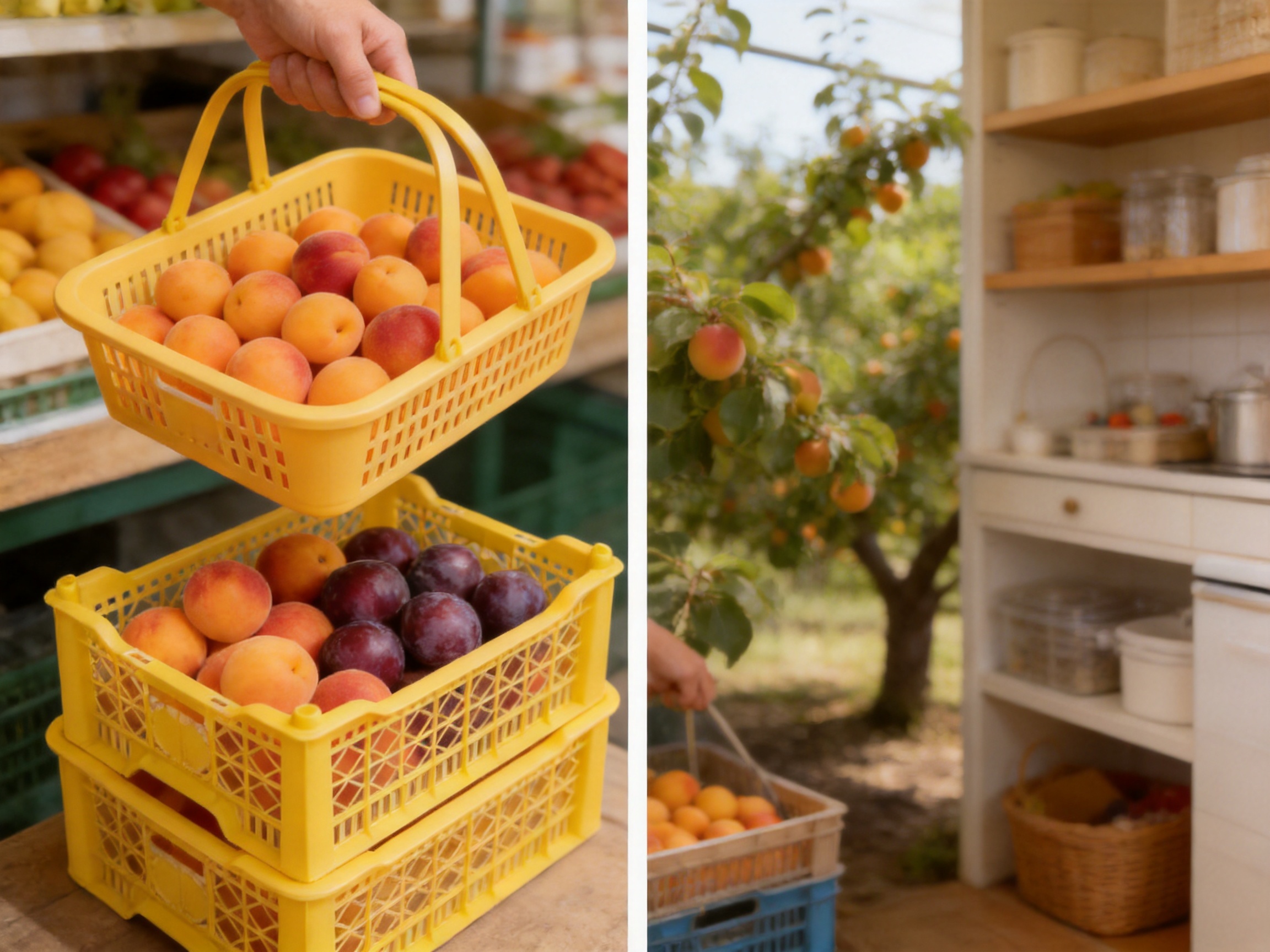
In the home, the basket can be used to hold freshly purchased or freshly picked apricots, nectarines, plums, cherries, and similar fruits. Its attractive appearance makes it suitable for dining tables, kitchen counters, refrigerators, and pantry areas. The moderate capacity supports short-term storage without encouraging excessive stacking.
Growers and small agricultural businesses can use the basket for collecting and organizing fruit after harvest. The ventilation openings allow air movement while the reinforced rim and handles support manual carrying. If the basket is designed for repeated use, impact-resistant material and durable tooling become especially important.
Fruit stores, supermarkets, farmers’ markets, and specialty food retailers can use shallow baskets to create organized displays. The open top makes the fruit visible, while the low wall allows customers to see the product clearly. Coloured plastic and custom dimensions can help retailers coordinate the basket with their display system.
Restaurants, hotels, cafés, and catering businesses may use small fruit baskets for presentation, buffet service, or temporary storage. Smooth surfaces and easy cleaning are important in these environments. The basket can be adapted to suit portion size, presentation style, and washing procedures.
Fruit producers may use a customized basket as part of seasonal packaging or promotional campaigns. A distinctive shape, colour, or surface pattern can help a product stand out in a competitive retail environment. The mould can also include a designated area for a label, insert, or compatible identification component when required.
Basket dimensions can be customized according to the size of the fruit and the desired quantity per pack. A smaller basket may be suitable for premium retail presentation, while a larger format may be used for family storage or farm handling. The height, diameter, base area, and wall angle can all influence capacity and stability.
The ventilation design can also be modified. Customers may choose a fine mesh, elongated slots, round holes, radial openings, or a ribbed base. The best option depends on the fruit size, moisture conditions, required load strength, and appearance of the final product.
Handle design is another area for customization. Finger loops can be compact and discreet, while larger handles can provide easier carrying for heavier baskets. The handle opening should accommodate the intended hand size and should be positioned to maintain balance when the basket is full.
Colour can be matched to a customer’s packaging program. Plastic colourants can be selected for retail identity, seasonal campaigns, fruit classification, or practical use. Colour consistency should be evaluated during trial production because material type, additives, processing temperature, and recycling content can influence the final appearance.
Surface finish can be smooth, matte, textured, or selectively polished. A matte texture may reduce the visibility of minor handling marks, while a smooth finish may support easy cleaning and a refined appearance. The selected finish should be applied consistently to the relevant mould surfaces.
The mould can also be adapted for different cavity numbers. A single-cavity mould may be appropriate for a new product, low-volume market, or large basket size. Multi-cavity tooling can increase output for established products with high demand. The choice depends on the required production volume, machine capacity, investment budget, and acceptable cycle time.
Injection moulding can produce large quantities of consistent baskets with relatively low unit cost after the mould has been completed. Repeatable mould geometry helps reduce variation between production batches. Efficient cooling and ejection can shorten the cycle and improve the productivity of the injection machine.
Material efficiency is supported through appropriate wall thickness, rib design, and flow analysis. The aim is to use enough plastic to meet strength requirements without creating unnecessary mass. A lighter basket can reduce material consumption and transportation weight, provided that durability and performance remain acceptable.
Polypropylene products may be suitable for recycling systems where local collection and processing infrastructure is available. Customers should select material grades, colourants, labels, and additives with the intended end-of-life route in mind. A reusable basket can also reduce the need for repeated single-use packaging in certain supply chains.
Durable tooling contributes to sustainability by extending the service life of the production asset. A mould that produces consistent parts for a long period reduces the need for premature replacement and limits the waste associated with defective or unusable tooling. Proper maintenance further supports long-term performance.
Regular mould maintenance is essential for preserving part quality. After production, the mould should be cleaned to remove plastic residue, dust, moisture, and contaminants. Moving components should be inspected and lubricated according to the mould manufacturer’s recommendations.
Cooling channels should be checked periodically because scale or contamination can reduce heat transfer. Poor cooling may increase cycle time and cause uneven shrinkage. Water quality management and appropriate cooling system maintenance can help preserve stable production conditions.
Ventilation openings and air vents should also be inspected. Blocked vents can produce burn marks, short shots, incomplete filling, or excessive injection pressure. Since fruit baskets often contain many openings and ribs, the condition of small venting features deserves particular attention.
Wear areas such as guide pillars, guide bushes, ejector components, slide mechanisms, and shut-off surfaces should be checked during scheduled maintenance. Early detection of wear can prevent larger failures and reduce unplanned downtime. Spare components can be prepared for moulds used in high-volume or seasonal production.
When stored, the mould should be dried, protected against corrosion, and kept in a clean, stable environment. The mould should be opened or positioned according to the supplier’s storage recommendations. Correct storage helps protect polished surfaces, cooling connections, and moving parts between production periods.
The first consideration is the expected annual production volume. A customer producing a limited quantity may prioritize lower initial tooling investment and a simple cavity arrangement. A customer supplying multiple retail chains may require a multi-cavity mould, automated handling, and a shorter cycle time.
The second consideration is the injection machine. The mould must be compatible with the machine’s clamping force, injection volume, platen dimensions, tie-bar spacing, nozzle position, and ejection system. Confirming this information before final design avoids unnecessary modifications and installation delays.
The third consideration is the plastic material. Different materials have different flow characteristics, shrinkage rates, processing temperatures, and cooling requirements. The mould should be engineered around the selected material, especially when the basket has thin walls, deep ribs, or complex handles.
The fourth consideration is the expected service environment. A household basket may require a refined surface and comfortable grip, while an orchard basket may need greater impact resistance and repeated-use durability. A retail display basket may emphasize appearance and colour, while a logistics-oriented version may prioritize nesting and stacking.
The fifth consideration is future product development. If a customer expects to produce multiple basket sizes or related fruit packaging, a modular mould strategy may be appropriate. Replaceable inserts or common mould components can sometimes support product variations, although this depends on the geometry and engineering requirements.
A successful project generally begins with a product brief containing drawings, three-dimensional data, sample products, photographs, or written requirements. The more clearly the customer explains capacity, fruit type, material, machine, and production volume, the more accurately the supplier can prepare the mould solution.
The supplier then reviews the product for manufacturability and identifies potential concerns. These may include insufficient draft, uneven wall thickness, difficult undercuts, weak handles, unsuitable ventilation openings, or areas likely to trap air. Resolving these points before mould construction can improve both product quality and project efficiency.
After design approval, the mould is manufactured according to the agreed specifications. Progress communication may include design confirmation, steel preparation, machining updates, assembly status, trial results, and final inspection. Clear documentation helps both sides track decisions and reduce misunderstandings.
During trial moulding, the customer should evaluate samples under realistic conditions whenever possible. Testing may include filling the basket with the intended fruit, carrying it by the handles, stacking or nesting it, washing it, and placing it in the proposed display or transport environment. These practical checks complement dimensional inspection.
Once the samples meet the agreed requirements, the mould is prepared for shipment. Installation support, operating recommendations, maintenance guidance, and after-sales communication can help the customer begin regular production more smoothly.
An apricot basket mould is a plastic injection mould used to produce shallow baskets designed for apricots and similar stone fruits. It forms the basket’s walls, base, ventilation openings, rim, handles, ribs, and other structural features in one injection-moulding process.
A specialized mould is developed around the characteristics of delicate fruit. It can provide a shallow profile, rounded internal surfaces, ventilation, gentle support, comfortable carrying, and improved display. A general container may hold fruit but may not offer the same protection, presentation, or handling performance.
Food-grade polypropylene is a practical common option. It is lightweight, durable, washable, and suitable for injection moulding. Other plastics, including polycarbonate, polystyrene, polyethylene, ABS, and other specified materials, may be considered when the application requires different properties.
Yes. The diameter, length, width, wall height, capacity, handle size, ventilation pattern, and stacking arrangement can be customized according to the customer’s fruit, packaging, machine, and market requirements.
The mould itself forms the shape, while colour is normally determined by the plastic material and approved colourant used during injection moulding. Customers can specify a colour according to their product identity or display requirements.
Available options include 1CR13, 2CR13, 3CR13, 4CR13, S136, CR16, 2316, 718H, P20, and other suitable steels. The selection depends on production volume, plastic type, surface finish, corrosion resistance, and expected mould life.
Yes. Small handles or finger loops can be integrated into the basket design. The handle geometry is developed to balance carrying comfort, strength, mouldability, and appearance.
Accurate cavity machining, balanced filling, controlled cooling, reliable ejection, and proper steel selection help produce baskets with stable dimensions and repeatable appearance. Trial moulding and inspection are used to identify and correct issues before regular production.
OEM and customized mould development are available. The customer can provide drawings, samples, three-dimensional data, or a product concept for review and engineering development.
The mould is packaged in a composite wooden box for protection during transportation and handling. Additional shipment documentation or mould accessories can be coordinated according to the project requirements.
The manufacturer specializes in many plastic injection mould categories, including integral boxes, logistics crates, folding boxes, pallets, beverage boxes, food storage containers, trash cans, hand baskets, stools, chairs, floor mats, and other household products.
TaiZhou HuangYan YingXiang Plastic Mould Co., Ltd. is located in Huangyan, Taizhou, Zhejiang, China, an area known for mould manufacturing and plastic processing expertise.
The apricot basket mould is a specialized tooling solution for producing practical, attractive, and fruit-friendly packaging. Its shallow geometry, ventilated bottom, rounded surfaces, reinforced rim, and integrated handles address the particular needs of apricots, nectarines, plums, and other delicate stone fruits. The finished basket can support household use, agricultural handling, retail display, food service, and short-term storage.
Its competitive value comes from combining product-specific design with efficient injection mould manufacturing. Proper control of wall thickness, cooling, material flow, ejection, surface finish, and steel selection can improve the basket’s strength, appearance, consistency, and production economy. Custom dimensions, materials, colours, ventilation patterns, cavity arrangements, and handles allow the mould to be adapted to different markets and production systems.
TaiZhou HuangYan YingXiang Plastic Mould Co., Ltd. supports these requirements through an approximately 7,000-square-metre facility, an experienced workforce, CAD, CAE, and CAM technology, customized engineering, and broad experience with container and household product moulds. Established in 2012, the company focuses on lean manufacturing, durable mould construction, timely delivery, competitive cost, and customer service.
For fruit packaging producers seeking a reliable alternative to generic containers, a professionally engineered apricot basket mould can provide meaningful advantages. It can help protect delicate fruit, improve presentation, simplify handling, reduce production variation, and create a reusable plastic packaging format suited to modern household and commercial applications.
1. Product specification and technical information supplied for the customized apricot basket injection mould.
2. Company information supplied for TaiZhou HuangYan YingXiang Plastic Mould Co., Ltd., including facility size, establishment year, workforce, equipment, product categories, and manufacturing capabilities.
3. General principles of plastic injection mould design, including draft angle, cooling, gating, venting, ejection, cavity machining, and mould maintenance.
4. General packaging considerations for fresh stone fruits, including ventilation, shallow stacking, handling protection, visual presentation, and short-term storage.
5. General material selection principles for polypropylene and other thermoplastics used in injection-moulded household and food-related packaging.
If you are interested in any of our products or services, please feel free to ask and we can talk about your ideas.
 QUICK LINKSMOBILE SITE
 FACTORY ADDRESS
 CONTACT INFORMATION