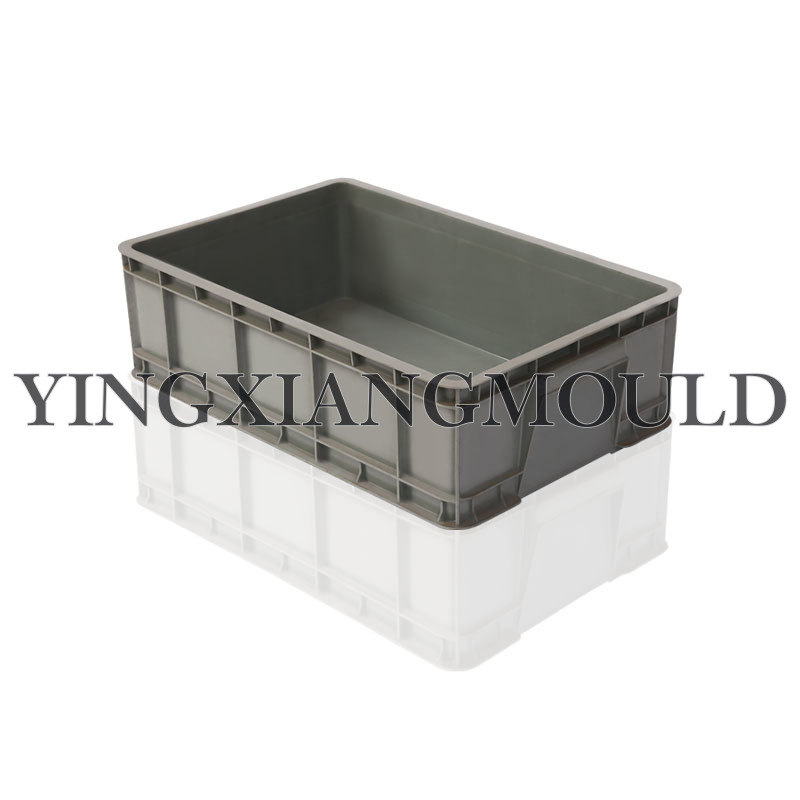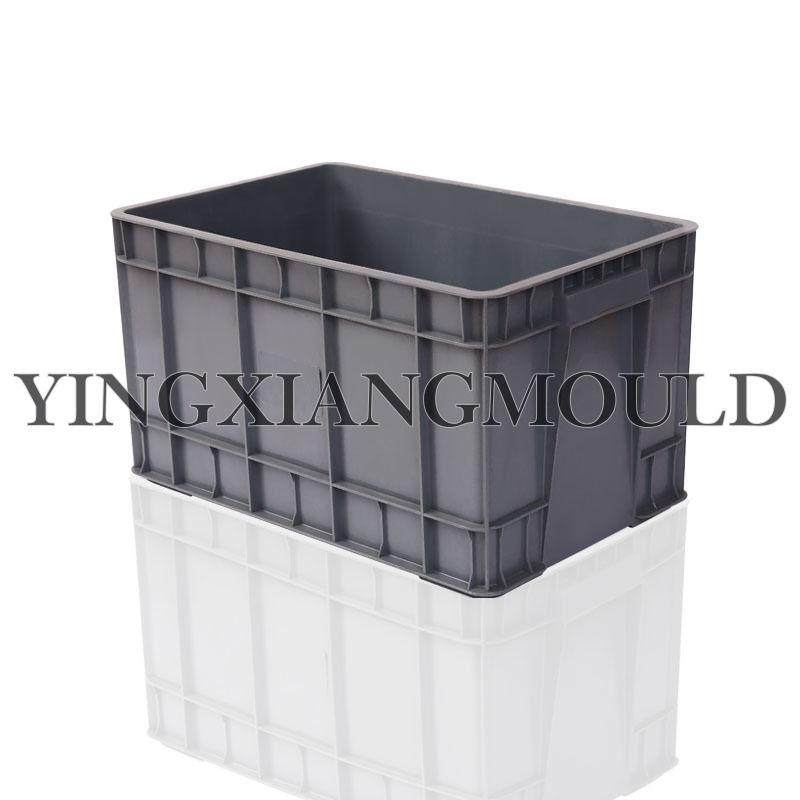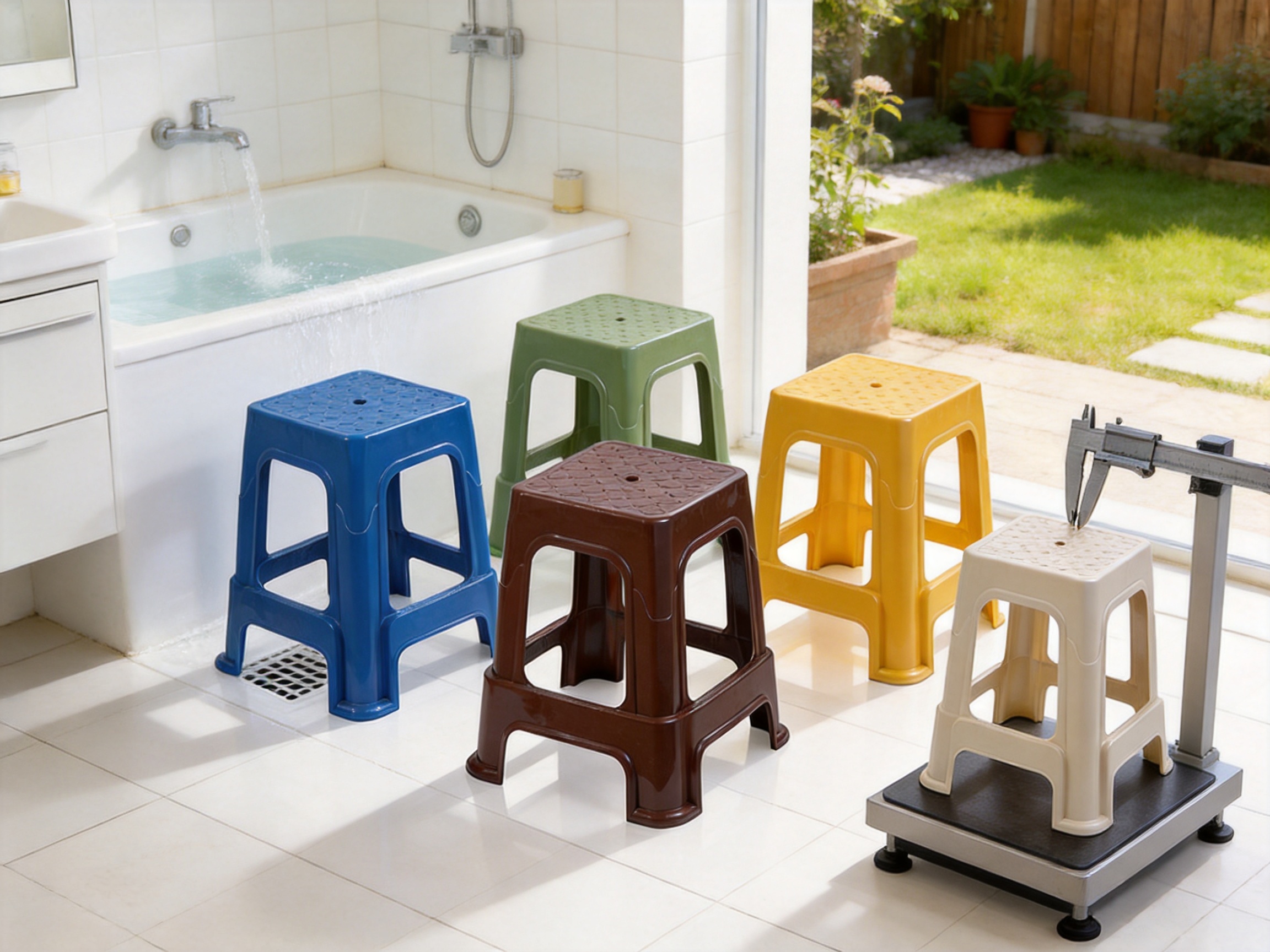
A perforated plastic stool is a practical household product designed to combine strength, comfort, easy maintenance, and dependable performance. Although its appearance is simple, producing a high-quality stool requires careful product design, accurate mold engineering, suitable material selection, and controlled injection molding. Every detail, from the spacing of the ventilation holes to the thickness of the legs, influences safety, durability, stability, and user comfort.
The perforated plastic square stool described in this article is manufactured through plastic injection molding and is designed for use in bathrooms, kitchens, utility areas, outdoor spaces, and other household environments. It is made primarily from polypropylene, a lightweight thermoplastic material known for its chemical resistance, toughness, moisture resistance, and suitability for repeated daily use.
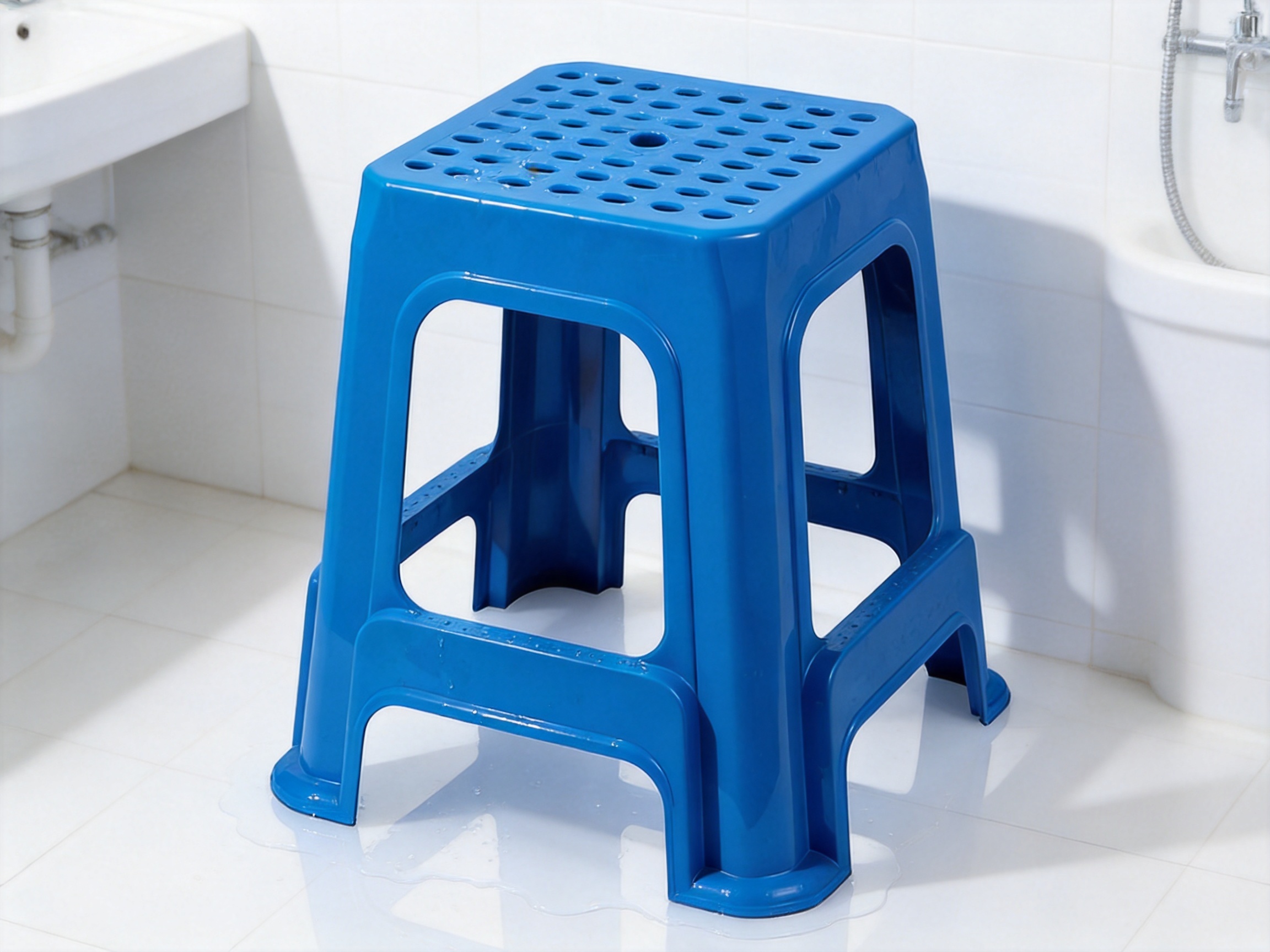
Its perforated seat improves ventilation, allows water to drain away, and helps reduce moisture accumulation. Its wide seat, rounded edges, thickened legs, and non-slip structure provide a stable seating and stepping solution for many everyday tasks. With a load capacity of up to 150 kilograms under suitable use conditions, the stool offers a practical balance between portability and strength.
Behind the finished stool is a professional plastic injection mold manufacturing process. The manufacturer supports customized sizes, colors, models, and material choices, allowing customers to develop products for different markets and applications. Advanced CAD, computer-aided engineering, computer-aided manufacturing systems, precision equipment, and experienced technicians contribute to consistent mold quality and reliable production.
The perforated plastic stool has a square profile with a broad seating surface and evenly distributed openings. These openings are not merely decorative. They reduce the amount of solid material in the seat, improve air circulation, support drainage, and help prevent water from remaining on the surface after cleaning or outdoor exposure.
The stool is injection molded from plastic, with polypropylene being a suitable material for the product because of its combination of low weight and mechanical performance. Depending on the intended application, customers may also evaluate other plastic materials, including ABS, polyethylene, polystyrene, polycarbonate, polyoxymethylene, polyurethane, polyvinyl chloride, or polymethyl methacrylate. Material selection should be based on load requirements, impact resistance, chemical exposure, temperature conditions, appearance, and cost.
The product can be customized in size, color, and model. Color options may include blue, green, and other customer-selected tones. The simple design allows the stool to fit into residential, commercial, utility, and outdoor settings without requiring complex assembly or maintenance.
The product specification is summarized below.
| Item | Specification |
|---|---|
| Product type | Perforated plastic square stool |
| Forming method | Plastic injection molding |
| Common material | Polypropylene |
| Available plastic options | PP, PC, PS, POM, PE, PU, PVC, ABS, PMMA, and other suitable materials |
| Color | Customizable |
| Size | Customizable |
| Model | Customizable |
| Approximate load capacity | Up to 150 kg under appropriate conditions |
| Primary applications | Bathrooms, kitchens, homes, utility areas, and outdoor locations |
| Surface design | Perforated, ventilated, and drainage-friendly |
| Packaging for mold shipment | Composite wooden box |
The seat is the main interface between the user and the stool, so its design directly affects comfort and usability. A wide seating area gives the user more room and reduces the feeling of instability. Rounded edges help minimize pressure points and make the product more comfortable during extended sitting or short household tasks.
The evenly spaced holes improve ventilation beneath the user and allow water to pass through the seat. This is particularly useful in bathrooms, laundry areas, kitchens, poolside environments, balconies, and gardens. A solid seat may retain water after washing or rainfall, while a perforated seat can release water more quickly.
Perforation also supports easier cleaning. Dust, water, and small particles can be removed through the openings, and the overall surface has fewer broad areas where moisture can remain trapped. When combined with a smooth plastic surface, this design helps reduce maintenance requirements.
The hole layout must be carefully engineered during mold development. If the holes are too large, the seat may lose stiffness or become uncomfortable. If they are too small, drainage and ventilation benefits may be reduced. The spacing between openings must also support uniform filling during injection molding and avoid excessive stress concentration.
Good mold design ensures that the plastic flows evenly around the perforations. Proper wall thickness, corner radii, gate placement, cooling channels, and ejection design all influence the final appearance and performance of the seat. A well-designed mold can help reduce warping, sink marks, short shots, weld line weakness, and dimensional variation.

Perforated Plastic Stool
Although the stool is lightweight, its structure is designed to provide practical strength. Thickened legs increase resistance to bending and help the stool remain stable when loaded. The connection between the seat and legs must be sufficiently reinforced to withstand repeated use, movement, and occasional impact.
The square configuration offers a broad footprint and supports stable placement on many flat surfaces. The four-legged structure distributes force toward the corners, while the thickened leg design helps prevent excessive deflection. Rounded transitions between the seat and supporting sections can reduce sharp stress concentrations and improve the visual quality of the product.
A stated load capacity of up to 150 kilograms provides a useful reference for household applications. However, actual load performance depends on several factors, including material grade, wall thickness, mold accuracy, operating temperature, floor condition, loading direction, and whether the stool is used as intended. The product should always be placed on a stable surface and should not be used for unsafe climbing or applications beyond its design purpose.
Compared with thin, poorly reinforced plastic stools, a properly engineered perforated stool can offer a better combination of weight and structural reliability. Its strength does not depend only on adding more plastic. Efficient rib placement, balanced wall thickness, strong leg geometry, and accurate molding can produce a durable product without unnecessary material consumption.
The quality of the mold is especially important for structural products. If the cavity dimensions are inconsistent, the legs may not have equal thickness, the stool may rock, or the seat may warp after cooling. Precision mold manufacturing helps ensure that the supporting components are formed consistently from one production cycle to the next.
Polypropylene is widely used for household plastic products because it is lightweight, moisture resistant, and suitable for injection molding. It can provide a good balance of stiffness and toughness while allowing manufacturers to produce complex shapes at efficient cycle times.
For a stool used in humid areas, resistance to moisture is an important advantage. Unlike metal products, polypropylene does not rust. This makes the stool suitable for bathrooms, wet utility areas, outdoor spaces, and locations where frequent washing is required.
Polypropylene also supports a wide range of color options. Color can be integrated into the plastic through masterbatch or other approved coloration methods, reducing the need for surface painting. A molded-in color can help maintain a consistent appearance and reduce the risk of surface coating damage during normal use.
The product information indicates that the stool is environmentally friendly, non-toxic, and SGS certified. Customers should request the relevant certification documents, test scope, and applicable standards for their target market before commercial distribution. Certification requirements may differ according to region, intended use, chemical composition, and customer specifications.
Other materials may be considered for specialized requirements. Polycarbonate may be selected when higher impact resistance or transparency is required. ABS can provide a balance of appearance and rigidity. Polyethylene may be suitable where flexibility and chemical resistance are priorities. Polyoxymethylene can be considered for applications requiring dimensional stability and low friction, although its cost and processing requirements may be different.
The ability to evaluate different plastic materials is a benefit of working with an experienced mold and injection molding partner. The correct material should not be selected only by price. It should be matched to the product geometry, expected service environment, loading conditions, surface requirements, and production volume.
One of the clearest advantages of the perforated design is its ability to release water. A solid plastic seat may allow water to collect on its upper surface, especially when the stool is stored outdoors or cleaned frequently. The openings reduce water retention and help the surface dry more quickly.
The holes allow air to circulate through the seat area. This can improve comfort in warm conditions and reduce the accumulation of dampness. The design is particularly practical in humid rooms and locations where the stool may be exposed to water.
Removing selected areas of material reduces product weight while retaining the main supporting structure. A lighter stool is easier to carry, move, store, and distribute. Lower weight may also reduce transportation costs when products are shipped in large quantities.
The smooth plastic surface is easy to wipe or wash. Dirt and water can pass through the openings, and the rust-free material reduces concerns associated with corrosion. The stool can therefore be used in settings where regular cleaning is necessary.
The product is designed to resist high and low temperatures and to maintain color performance in outdoor environments when the selected material and color system are appropriate. It is still advisable to evaluate ultraviolet exposure, regional climate, and long-term weathering requirements before specifying the stool for permanent outdoor use.
The wide seat and thickened leg structure provide a stable platform for everyday use. Rounded, non-slip edges can improve handling and user confidence. The final level of slip resistance depends on the surface design, floor condition, moisture, footwear, and application environment.
The square form and clean perforated pattern create a straightforward appearance that can suit homes, service areas, retail environments, and institutional spaces. Various colors can be used to match different interior styles or to distinguish product series.
The quality of an injection molded stool begins with the design of the mold. A mold for this product must reproduce the seat openings, rounded edges, structural legs, reinforcing areas, and surface details accurately. It must also support efficient filling, cooling, and ejection.
During the early design stage, engineers review the product model and assess wall thickness, draft angles, parting lines, undercuts, ribs, bosses, and potential deformation areas. The goal is to create a design that can be filled uniformly and released from the mold without damaging the product.
Draft angles are important because they allow the molded stool to separate smoothly from the cavity and core. Without adequate draft, the product may stick, develop drag marks, or require excessive ejection force. The draft must be balanced with the visual and functional requirements of the stool.
The parting line should be positioned to minimize visible marks and avoid interfering with important seating or support surfaces. A well-planned parting line can also simplify mold construction, maintenance, and product removal.
Gate design influences the way molten plastic enters the cavity. For a large, perforated product, the gate position must support balanced filling and reduce the risk of weld lines in highly stressed areas. Engineers may analyze multiple gating options before selecting the most appropriate solution.
Cooling system design is equally important. Plastic shrinks as it cools, and uneven cooling can cause warpage or dimensional instability. Cooling channels should be arranged to remove heat consistently from thicker and thinner areas of the mold. The objective is to achieve a stable cycle time and uniform product quality.
Ejection must be carefully coordinated with the stool geometry. Ejector pins, sleeves, or other mechanisms should act on areas capable of receiving the release force. Incorrect ejection placement may create marks, distortion, or stress. For a product with many holes and structural legs, the ejection system requires careful planning to avoid interference with cavity details.
The manufacturing process begins with customer requirements. These may include the target stool size, seat dimensions, leg height, load capacity, color, material, surface finish, production quantity, packaging requirements, and sales market. Clear specifications help the engineering team develop an accurate product and mold proposal.
After the product design is confirmed, three-dimensional modeling and engineering analysis are performed. Computer-aided design systems help define the part geometry and mold structure. Computer-aided engineering tools may be used to examine filling behavior, cooling performance, air traps, weld lines, pressure, and potential deformation.
Once the mold structure is approved, computer-aided manufacturing systems guide machining operations. High-precision equipment is used to produce mold plates, cavity components, core elements, sliders where necessary, cooling features, and other mechanical parts. Machining accuracy affects product dimensions, surface finish, assembly fit, and long-term mold performance.
Mold steel selection depends on the expected production volume, plastic material, surface requirements, maintenance plan, and customer budget. Available options include 1CR13, 2CR13, 3CR13, 4CR13, S136, CR16, 2316, 718H, P20, and other suitable grades. Stainless or corrosion-resistant steels may be useful for humid environments or products requiring improved mold durability and surface quality.
After machining, mold components are inspected and assembled. Engineers check alignment, parting surfaces, cavity and core fit, cooling passages, ejection movement, gate details, and surface finish. Trial molding is then carried out to evaluate the actual product.
During mold trials, technicians inspect the stool for short shots, flash, sink marks, weld lines, warpage, color consistency, dimensional accuracy, ejection marks, and stability. If necessary, adjustments are made to processing parameters or mold components. These may include modifying the gate, polishing a surface, improving venting, adjusting cooling, changing ejection timing, or correcting dimensions.
Quality control continues throughout production. Incoming materials should be checked for grade and consistency. Mold components should be inspected during manufacturing. Finished products should be evaluated according to agreed standards, including visual appearance, dimensions, weight, color, assembly condition, and functional performance.
A disciplined process reduces variation and supports repeatable production. This is especially valuable for customers who need to reorder the same stool design over a long period or who sell the product in multiple markets.
The manufacturer operates in Huangyan, Taizhou, Zhejiang, a region widely associated with mold production. Established in 2012, the company has a 7,000-square-meter plant, approximately 50 employees, advanced CAD, CAE, and CAM systems, modern equipment, and experienced technical personnel.
These resources support the complete mold development cycle, from product review and structure design to machining, assembly, testing, modification, and delivery. The company specializes in customized plastic mold solutions, including logistics crate molds, folding box molds, tray and pallet molds, beverage box molds, and molds for household products.
Experience across these product categories can be valuable when developing a stool mold. Crates, boxes, pallets, chairs, containers, and stools all require careful attention to structural strength, material flow, cooling, ejection, and long-term mold performance. Knowledge gained from one product group can support better decisions in another.
The company emphasizes lean manufacturing, long-life molds, on-time delivery, competitive costs, and customer service. Lean production principles can help reduce unnecessary processing, improve workflow, identify defects earlier, and maintain more predictable delivery schedules.
Long-life mold construction is important for customers who expect high production volumes. A mold should not only produce an acceptable first sample; it should continue to produce consistent parts after many cycles. Proper steel selection, heat treatment where appropriate, wear-resistant components, effective cooling, reliable ejection, and preventive maintenance all contribute to service life.
Production capacity is listed at approximately 50 mold sets per month. Actual capacity for an individual project depends on mold size, complexity, steel specification, number of cavities, surface requirements, customer approval speed, and the production schedule at the time of order.
Different markets may require different stool dimensions. Customers can request variations in seat width, seat depth, overall height, leg shape, hole pattern, corner radius, wall thickness, reinforcing ribs, and surface texture. The mold design should be adapted to the selected product geometry rather than treating customization as a simple cosmetic change.
Color customization is also available. Retail customers may prefer bright colors such as blue, green, red, yellow, or orange, while institutional buyers may prefer neutral tones. Color selection can help create a product family or distinguish different sizes and load ratings.
Material customization may be considered when the product will be used in unusual conditions. A stool for indoor household use may have different material requirements from one used in commercial cleaning areas, outdoor facilities, workshops, or locations exposed to chemicals.
Surface texture can be adjusted to influence appearance, touch, and slip performance. A matte surface may help reduce the visibility of minor scratches and fingerprints, while a smoother surface can simplify cleaning. Textured areas may be integrated into the seat or feet when additional grip is required.
Packaging can also be planned according to the customer’s distribution system. The mold itself is packaged in a composite wooden box for shipment. Finished stools may be packed in bulk, stacked, nested where the design permits, or prepared in retail packaging. Packaging design should protect corners, legs, and seating surfaces while using warehouse space efficiently.
In bathrooms, the perforated stool can provide a convenient seat for washing, dressing, organizing supplies, or completing routine cleaning tasks. Its moisture-resistant construction and drainage-friendly seat make it suitable for wet areas when used on a stable floor.
In kitchens, it can serve as a temporary seat or support for household activities. The easy-clean plastic surface is useful where food residue, water, or cleaning agents may be present. Users should follow appropriate safety practices and avoid standing on the stool unless the product has been specifically designed and tested for that purpose.
In utility rooms, the stool can support tasks such as sorting laundry, organizing storage, or reaching low shelves. Its lightweight construction makes it easy to move between rooms.
For outdoor use, the product can be used on balconies, patios, gardens, campsites, and recreational areas. The perforations allow rainwater to drain, while the plastic construction avoids rust. Outdoor users should consider wind, uneven ground, ultraviolet exposure, and temperature extremes.
Commercial and institutional applications may include service areas, changing rooms, cleaning facilities, dormitories, retail environments, and temporary seating areas. For these uses, buyers may request enhanced material specifications, more rigorous load testing, special colors, or identification marks.
The product’s simple construction also supports efficient storage. Multiple stools may be arranged in an organized manner, reducing handling effort in homes, warehouses, and commercial facilities.
In a competitive plastic product market, appearance alone is not enough. Buyers increasingly evaluate durability, consistency, delivery reliability, material performance, and total ownership cost. A well-made mold supports all of these factors.
A precise mold helps maintain consistent dimensions. Consistency allows products to fit packaging correctly, stack more reliably, and maintain a uniform appearance on retail shelves. It also reduces the number of rejected parts and lowers the cost of rework.
Efficient mold cooling can shorten production cycles without sacrificing quality. Shorter cycles may increase output and improve manufacturing economics. However, cycle time should be reduced only after the product has achieved sufficient cooling and dimensional stability.
Balanced filling can reduce defects and improve mechanical performance. When the plastic flows evenly, the finished stool is less likely to contain weak areas caused by incomplete filling or poorly positioned weld lines.
Reliable ejection protects both the product and the mold. Smooth ejection reduces production interruptions and helps prevent damage to thin edges, perforation walls, and structural legs.
Long-term mold reliability also protects the customer’s investment. Repeated repairs, unplanned downtime, and inconsistent replacement parts can be more expensive than selecting an experienced mold manufacturer at the beginning of the project.
The manufacturer’s focus on custom engineering, advanced production systems, experienced technicians, and service support provides a foundation for developing competitive stools and other household plastic products. Customers can receive a mold solution adapted to their product rather than relying on a generic design.
Before mass production, customers should agree on inspection criteria. These criteria may cover stool dimensions, seat flatness, leg alignment, color, surface condition, hole size, hole spacing, product weight, and overall appearance.
Load testing can be used to evaluate the stool under a specified force and duration. The test method should define the loading position, support surface, temperature, test time, and acceptance criteria. If the stool is expected to support dynamic loads, additional testing may be necessary.
Stability testing can assess whether the stool rocks or tips on a level surface. Tests may be conducted with loads placed at different positions on the seat. This is useful because real-world users do not always apply force precisely at the center.
Impact testing may be considered for products exposed to handling, transport, or accidental drops. The appropriate test depends on the material, product weight, application, and target market requirements.
Environmental testing can evaluate performance under humidity, temperature variation, ultraviolet exposure, cleaning chemicals, or other expected conditions. A product intended for outdoor use may require different testing from one intended only for dry indoor areas.
Color and material documentation should also be maintained. Resin grade, color masterbatch, additives, and processing conditions can affect the final product. Consistent records make it easier to reproduce the same appearance and performance during future orders.
Regular mold maintenance helps preserve product quality and extend service life. After production runs, the mold should be cleaned, inspected, and protected against corrosion where necessary. Cooling channels, vents, ejector systems, guide components, and parting surfaces should be checked according to a planned schedule.
Vents are especially important for a perforated stool because air must escape as plastic fills the cavity. Blocked or insufficient vents may cause burns, short shots, surface defects, or inconsistent filling. Cleaning and inspection help maintain stable molding conditions.
Ejector components should move smoothly and remain properly lubricated where appropriate. Wear or misalignment may create marks on the product or increase the risk of mold damage.
Cooling performance should be monitored over time. Scale, contamination, or restricted passages can reduce heat transfer and extend cycle times. Consistent cooling is necessary for controlling shrinkage and warpage.
Preventive maintenance is generally more economical than emergency repair. A maintenance record can include cycle counts, replacement parts, inspection results, polishing operations, dimensional checks, and corrective actions. Such documentation supports predictable production and future troubleshooting.
The perforated design can reduce the amount of plastic required compared with a completely solid structure, depending on the product’s engineering requirements. Lower material usage may reduce product weight and improve shipping efficiency. The actual environmental benefit depends on the complete product life cycle, including material selection, manufacturing energy, transportation, use, and end-of-life handling.
Plastic products can be durable and reusable, which may reduce the need for frequent replacement. A stool that remains functional for a long period can offer better value than a low-cost product that cracks, deforms, or loses stability quickly.
Polypropylene is recyclable in many recycling systems, but local collection and processing capabilities vary. Customers should confirm local requirements and consider whether a single-material design, clear labeling, or recycled content is appropriate for their market.
Efficient mold manufacturing also contributes to economic performance. Accurate machining, optimized cooling, reduced defect rates, and stable cycle times can help lower the cost per finished part. A durable mold spreads its investment across a larger production volume, making it suitable for long-term product programs.
A successful mold project requires more than machining steel. It involves communication between the customer, product designer, mold engineer, production technician, quality team, and logistics department. Clear communication helps prevent misunderstandings about dimensions, materials, colors, testing, packaging, and delivery.
OEM service is available for customers who need a product developed under their own specifications. The process may begin with a drawing, three-dimensional file, physical sample, concept sketch, or written description. Engineers can review the information and identify areas requiring modification before mold construction.
Design review is an important stage because changes made before steel cutting are generally easier and less costly than changes made after the mold is completed. Early review can identify unsuitable wall thickness, insufficient draft, difficult ejection areas, unbalanced filling, or weak structural regions.
Trial samples allow customers to evaluate the actual product rather than relying only on computer models. Sample approval should include visual inspection, dimensional review, functional assessment, and confirmation of the agreed material and color.
After approval, the mold can be prepared for shipment in a composite wooden box. Documentation may include mold specifications, maintenance recommendations, sample confirmation records, and relevant quality information.
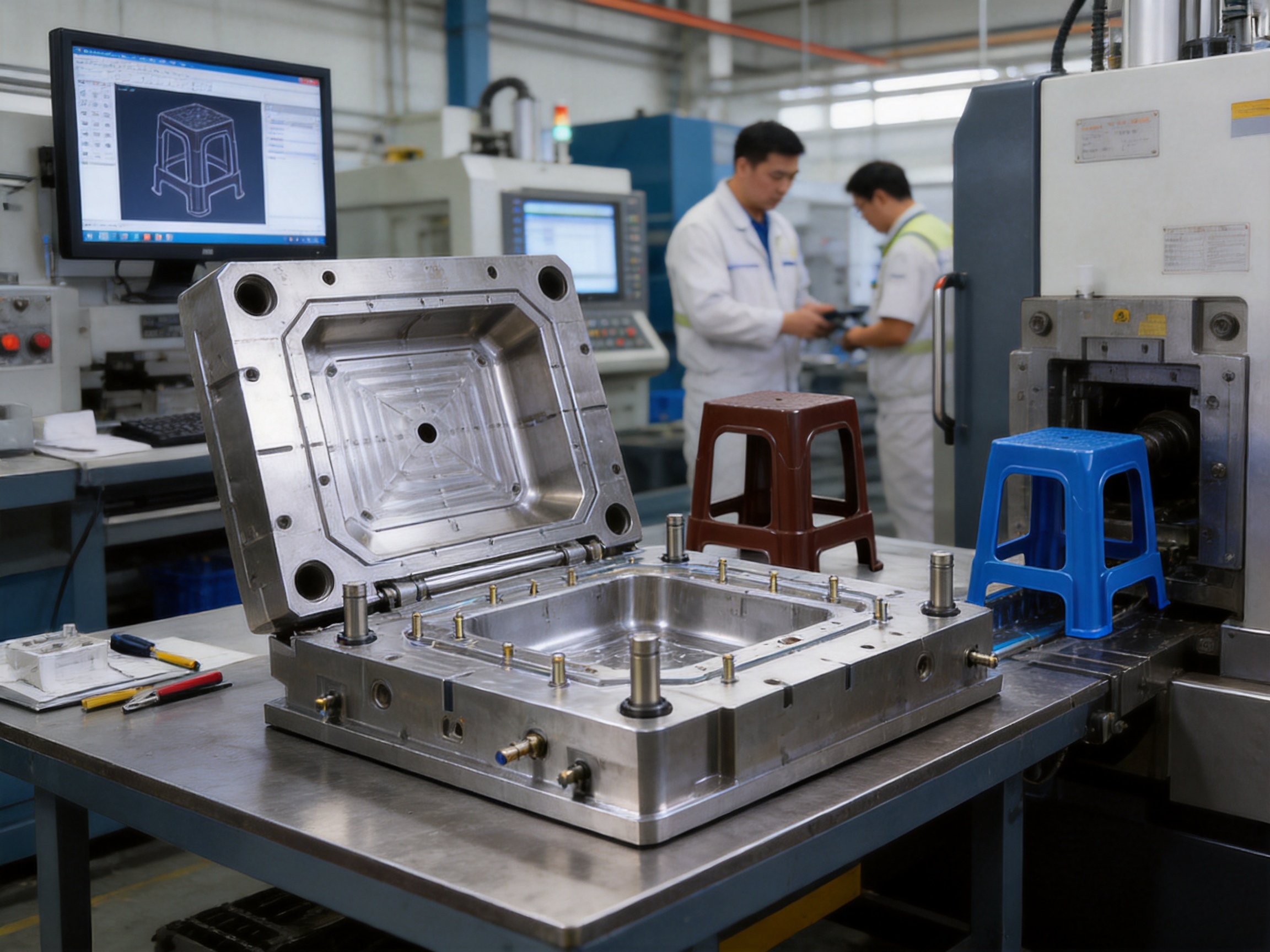
A perforated plastic stool is a molded stool with regularly spaced openings in the seating surface. The openings improve ventilation and drainage while reducing product weight. The stool described here has a square shape, a wide seat, rounded edges, and thickened legs.
Polypropylene is the common material identified for the product. It is lightweight, moisture resistant, rust-free, and suitable for injection molding. Other materials may be evaluated when the application requires different impact, temperature, chemical, or appearance performance.
The stated load capacity is up to 150 kilograms under appropriate conditions. Actual performance depends on the product design, material, temperature, surface condition, loading method, and intended use. Customers should confirm the required test method and acceptance standard before production.
Yes. The model, size, and color are customizable. Customers may also discuss changes to the seat dimensions, height, perforation pattern, structural reinforcement, surface texture, and material specification.
Yes. Its plastic construction is resistant to moisture, and the perforated seat allows water to drain. The stool should be placed on a stable, level surface, and the user should consider floor slipperiness when the area is wet.
It can be used in outdoor locations such as gardens, patios, balconies, and recreational areas. The material is rust-free and designed to resist high and low temperatures. For permanent outdoor use, customers should confirm ultraviolet resistance and weathering performance for the selected material and color.
Injection molding supports repeatable production of complex shapes, consistent dimensions, integrated structural features, smooth surfaces, and efficient high-volume manufacturing. It is suitable for forming the seat perforations, rounded edges, legs, ribs, and other details in a single molded part.
Available mold material options include 1CR13, 2CR13, 3CR13, 4CR13, S136, CR16, 2316, 718H, P20, and other suitable grades. The final selection depends on production volume, plastic material, surface requirements, corrosion considerations, and budget.
The manufacturer provides OEM support and can work from customer drawings, product models, samples, or project specifications. Engineering review, mold design, machining, assembly, trial molding, adjustment, quality inspection, and shipment preparation can be coordinated as part of the project.
Cooling controls how the plastic solidifies and shrinks. Uneven cooling may cause warpage, sink marks, or dimensional variation. A well-designed cooling system helps improve product flatness, structural consistency, cycle-time stability, and repeatability.
The holes are created by core features integrated into the injection mold. Their size, spacing, draft, and relationship to surrounding walls must be carefully engineered so that the plastic fills evenly and the finished part can be ejected without damage.
Yes. Color is customizable, and examples include blue and green. Other colors can be developed according to the customer’s requirements, market positioning, and material compatibility.
Yes. The plastic surface can generally be wiped or washed, while the perforations allow water and small particles to pass through. Cleaning methods should be selected according to the plastic material and any local hygiene requirements.
Customers should confirm the product drawings, dimensions, material, color, load requirement, surface finish, hole pattern, annual production volume, mold life, testing method, packaging, delivery schedule, and spare-part or maintenance expectations.
The manufacturer is located in Huangyan, Taizhou, Zhejiang, China, an area recognized for plastic mold production. The company has operated since 2012 and maintains a dedicated plant with engineering, manufacturing, and technical resources.
The perforated plastic stool is a practical product that combines a lightweight structure with useful strength, drainage, ventilation, and easy-care characteristics. Its broad seat, rounded edges, thickened legs, and perforated surface make it suitable for bathrooms, kitchens, utility rooms, gardens, balconies, and other household or commercial environments.
Its advantages over simpler stool designs include improved water drainage, reduced moisture retention, lower weight, easy cleaning, resistance to rust, flexible color options, and efficient production through injection molding. The structure can also be adapted to different dimensions, materials, surface textures, and market requirements.
The performance of the finished stool depends heavily on the quality of its injection mold. Accurate product analysis, appropriate steel selection, balanced filling, effective cooling, reliable ejection, precise machining, and thorough trial testing are essential to producing consistent parts. A professional mold manufacturer can help customers transform a product concept into a stable and commercially viable solution.
With a 7,000-square-meter facility, experienced personnel, advanced CAD, CAE, and CAM systems, modern equipment, and experience in household and industrial plastic molds, the manufacturer is equipped to support customized projects. Its capabilities cover product review, mold design, manufacturing, testing, adjustment, quality control, and shipment preparation.
For buyers seeking a durable, customizable, and efficiently manufactured stool, the perforated plastic design provides a strong starting point. For distributors, retailers, and product brands, the combination of practical functionality and professional mold engineering can support reliable production, competitive costs, and long-term product development.
1. Product specification and application information supplied for the perforated plastic stool.
2. Internal product and mold material information supplied by the manufacturer.
3. General principles of thermoplastic injection molding, mold design, cooling, venting, and ejection.
4. General engineering guidance for polypropylene product design and household plastic applications.
5. General quality-control practices for plastic injection molds and molded household products.
6. General considerations for load testing, stability testing, environmental testing, and product inspection.
7. Company information supplied for the plastic mold manufacturing facility in Huangyan, Taizhou, Zhejiang, China.
If you are interested in any of our products or services, please feel free to ask and we can talk about your ideas.
 QUICK LINKSMOBILE SITE
 FACTORY ADDRESS
 CONTACT INFORMATION



 English
 Español