Outdoor furniture faces a different set of demands than anything used indoors, and that difference shapes several specific decisions engineers make when developing a plastic stool mold intended for patio, garden, or commercial outdoor seating rather than standard indoor use.
Resin choice is the first major difference, since indoor stools rarely need UV-stabilized material while outdoor products degrade quickly without it. A plastic stool mold designed for outdoor production typically runs UV-stabilized polypropylene or high-density polyethylene, both of which resist the color fading and surface chalking that unstabilized resin develops after prolonged sun exposure. Does this resin difference change how the cavity itself needs to be designed? Not dramatically in terms of cavity geometry, but UV-stabilized resin can behave slightly differently during cooling, sometimes requiring adjusted mold cooling system timing to avoid warping that would not appear with standard indoor-grade resin.
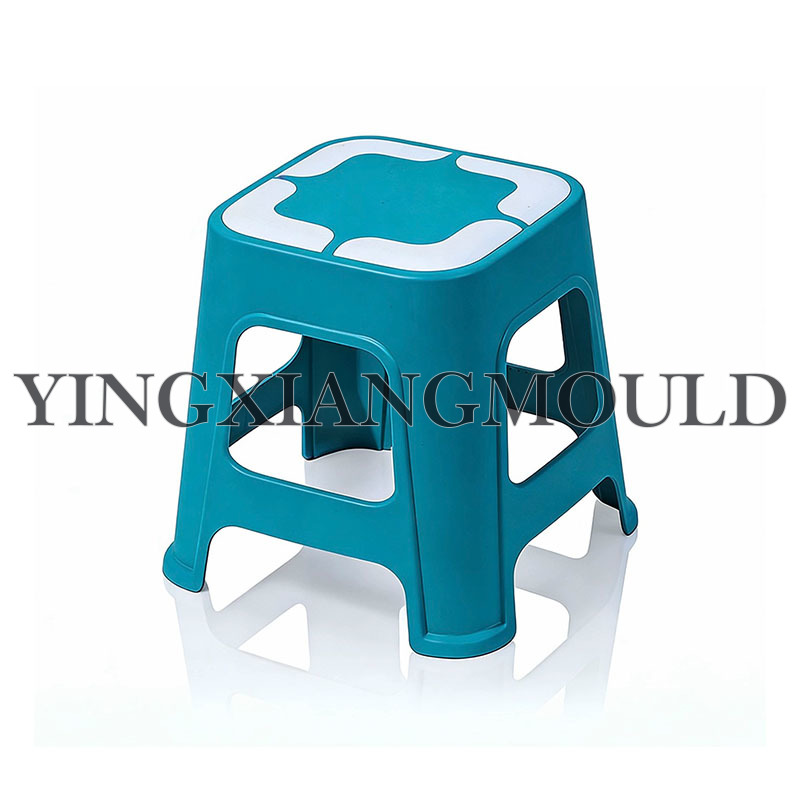
Water drainage is a structural requirement that outdoor designs cannot skip. A stool mould built for outdoor products typically includes drainage holes or channels moulded directly into the seat surface, positioned to let rainwater escape rather than pool on top. Where do these features add complexity to cavity design? Drainage holes require additional core pins within the cavity, and each pin introduces another wear point that needs monitoring over the mold's production life, since core pins tend to show wear or breakage before the surrounding cavity surface does.
Outdoor stools generally need thicker wall sections than comparable indoor products, since they face wind loading, temperature swings, and rougher handling during storage between seasons. Which parts of the design typically get reinforced first? Leg-to-seat junctions carry the most concentrated stress, so a plastic stool mold built for outdoor use often incorporates additional ribbing at these junctions, distributing load across a wider area rather than concentrating it at a single connection point. Do these reinforcement changes affect cycle time during production? Thicker sections generally require longer cooling time before ejection, since a thicker wall takes longer to solidify enough to hold its shape once the mold opens, which shops account for when scheduling production runs on outdoor-specific tooling.
Surface finish decisions differ as well. Outdoor stool designs commonly use a matte or lightly textured surface rather than a high-gloss finish, since gloss surfaces show scratches and weathering more visibly over time outdoors. Who typically drives this design preference during development? Product designers work with the mold maker early in the design phase, since surface texture needs to be built into the plastic stool mold cavity itself through bead blasting or textured plating, rather than added afterward through a secondary finishing process.
Venting strategy also shifts slightly for outdoor designs, particularly around drainage holes and reinforcement ribs, since these added features can trap air during injection if vents are not positioned carefully. Did this become a bigger consideration as outdoor stool designs grew more complex? Multi-feature designs combining drainage, reinforcement ribbing, and textured surfaces simultaneously demand more careful vent placement than a simpler indoor stool cavity, since each added geometric feature creates another potential air trap that an injection mold designer needs to account for during the venting layout, well before the tool ever reaches production.
If you are interested in any of our products or services, please feel free to ask and we can talk about your ideas.
 QUICK LINKSMOBILE SITE
 FACTORY ADDRESS
 CONTACT INFORMATION


 English
 Español