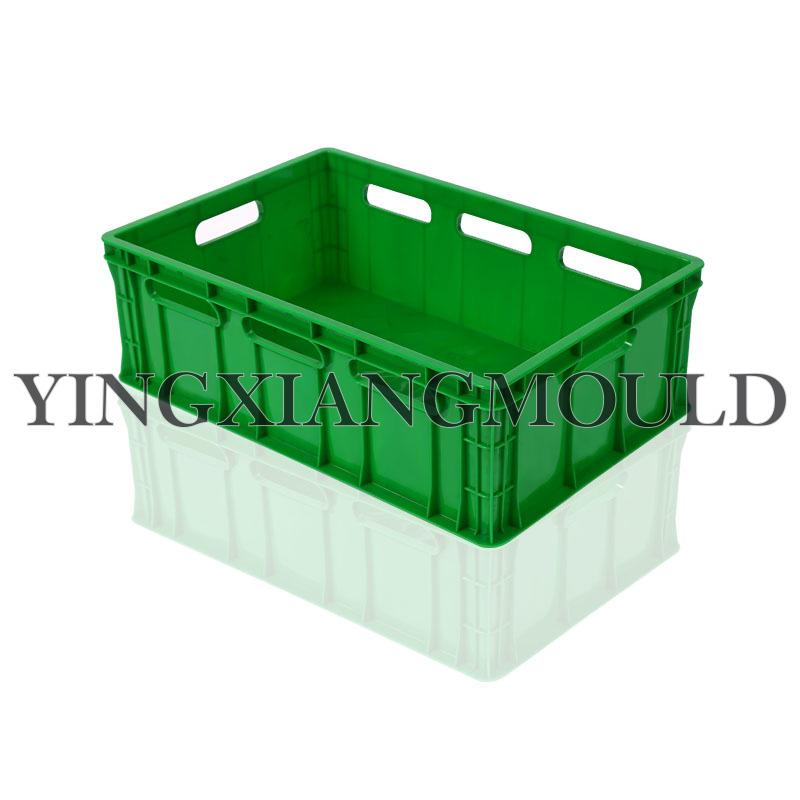
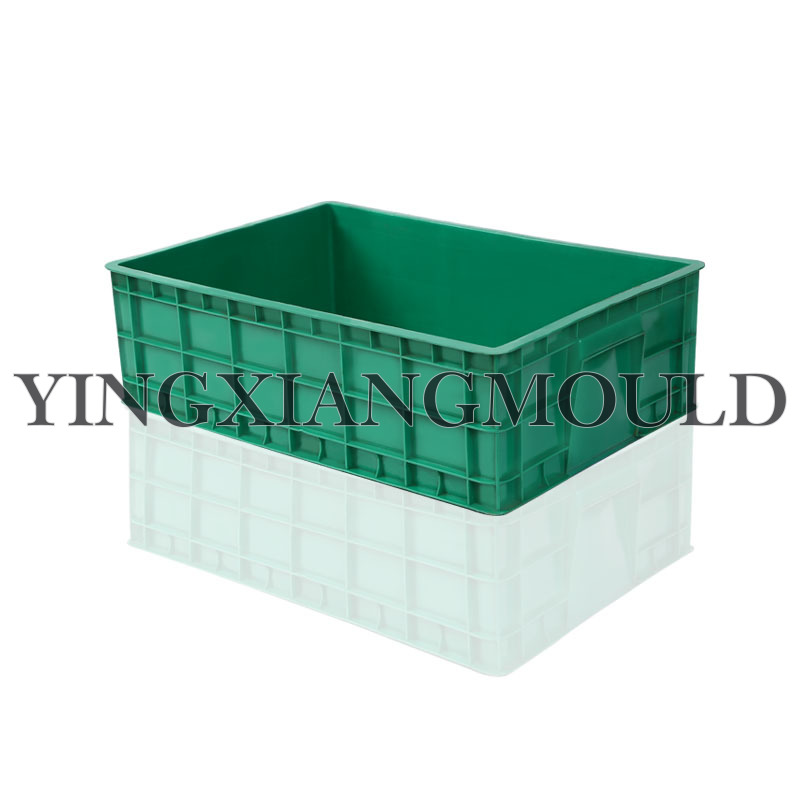
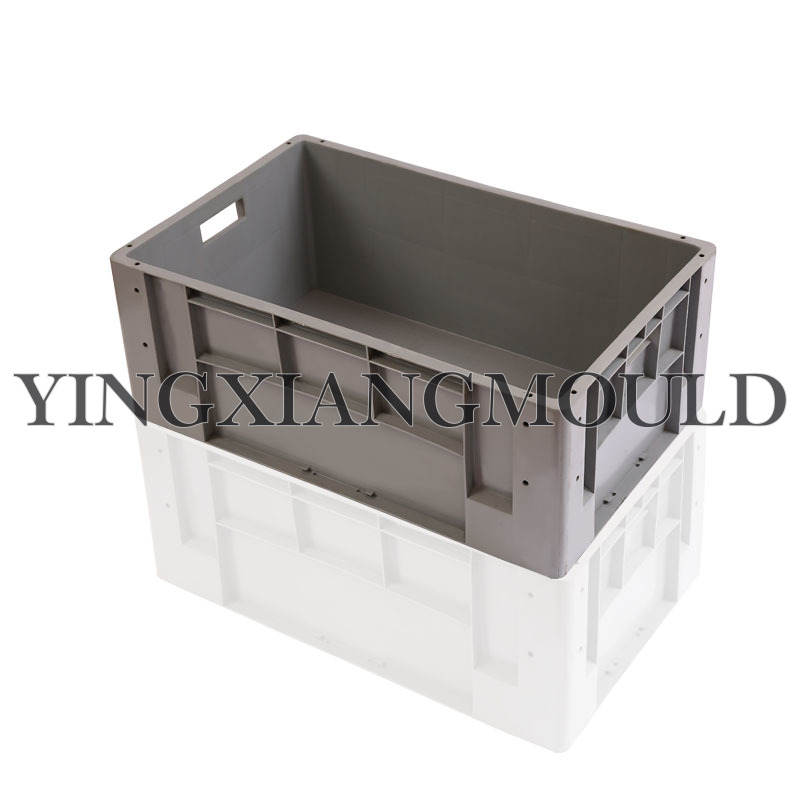
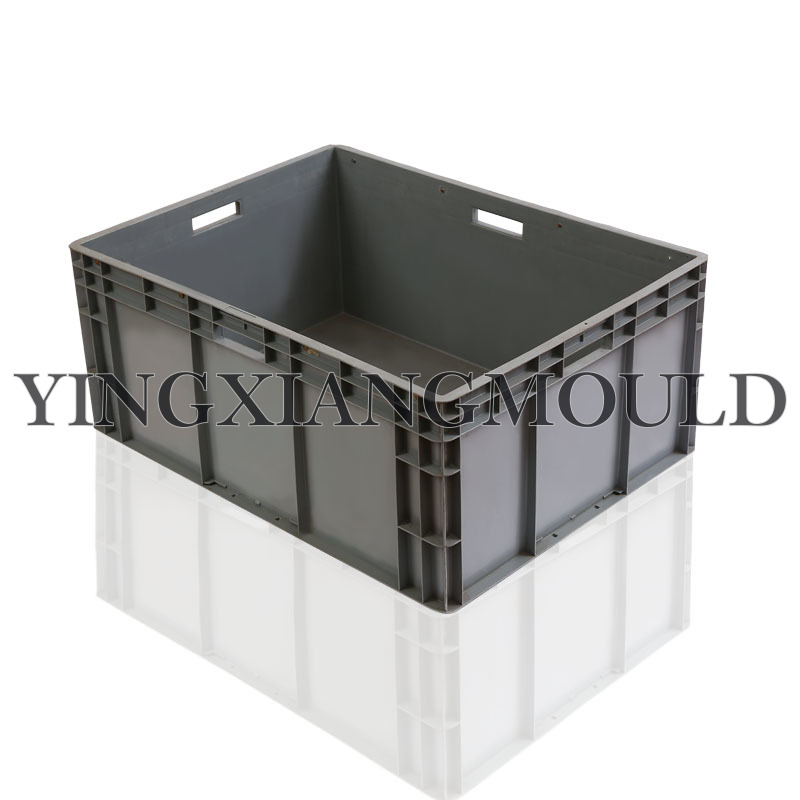
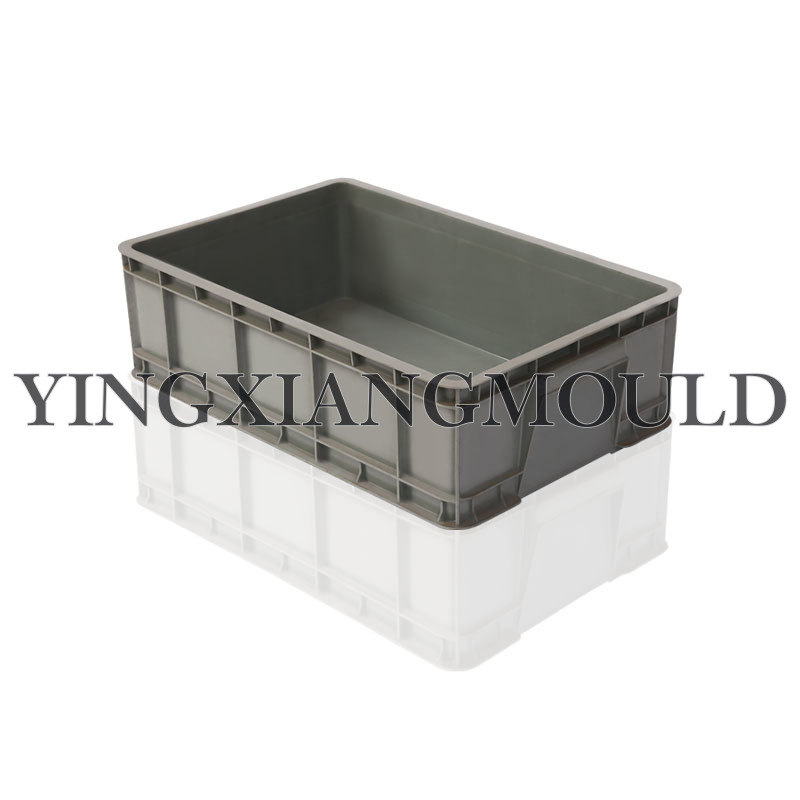
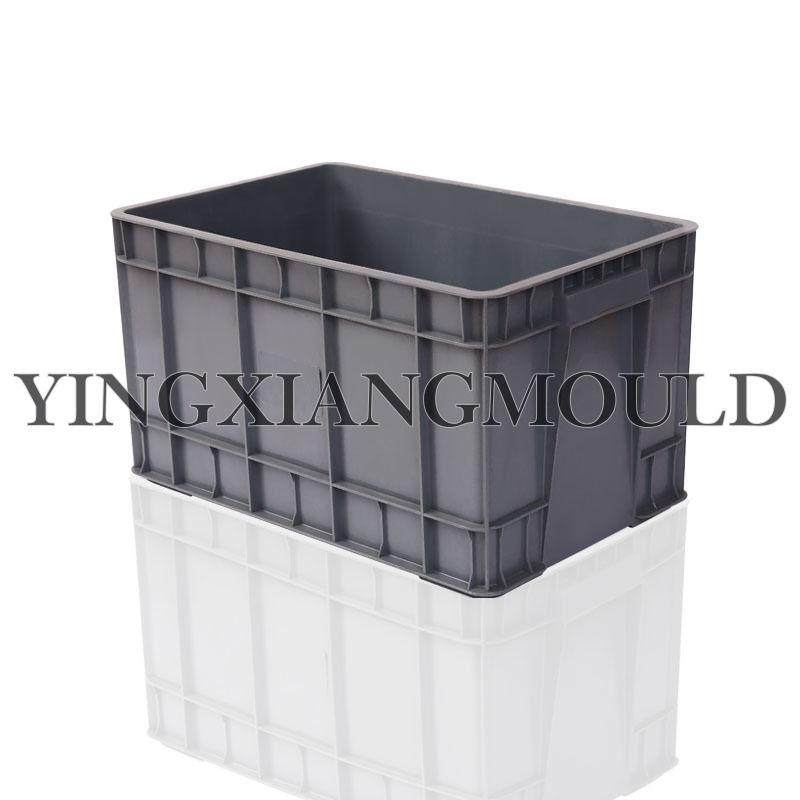
Reusable beverage crates move through breweries, bottling plants, warehouses, retail distribution and return routes. Repeated lifting, stacking and handling place demands on the crate, making the Beverage Box Mould an important production asset. It must reproduce bottle compartments, carrying areas and reinforcing structures consistently across injection cycles.
TaiZhou HuangYan YingXiang Plastic Mould Co., Ltd., based in Huangyan, Taizhou, makes beverage crate tooling alongside plastic injection moulds for logistics and household products. The company has more than 10 years of experience and uses CAD/CAE/CAM systems in mould development and manufacturing. Its range includes tooling for beer, milk and general beverage crates.
A beverage crate may pass through filling facilities, warehouses, retail locations and return routes before another use. Side walls, bottom ribs, corners and handles all contribute to its performance during lifting, stacking and movement.
The Beverage Box Mould forms these features as one plastic component. Bottle compartments hold containers in position, while the surrounding frame supports handling. Side openings provide hand access and may reduce material use, but must be balanced against wall strength.
Unlike a simple storage box, the crate combines bottle positions, carrying features and a base that may support several stacked units.
Beverage packaging does not follow one universal crate layout. Beer crates may be divided into 12 or 24 compartments, while soft-drink and bottled-water crates are arranged around the bottle sizes and quantities used by a particular producer. Milk crates can have a different opening and support arrangement to suit their handling and distribution routines.
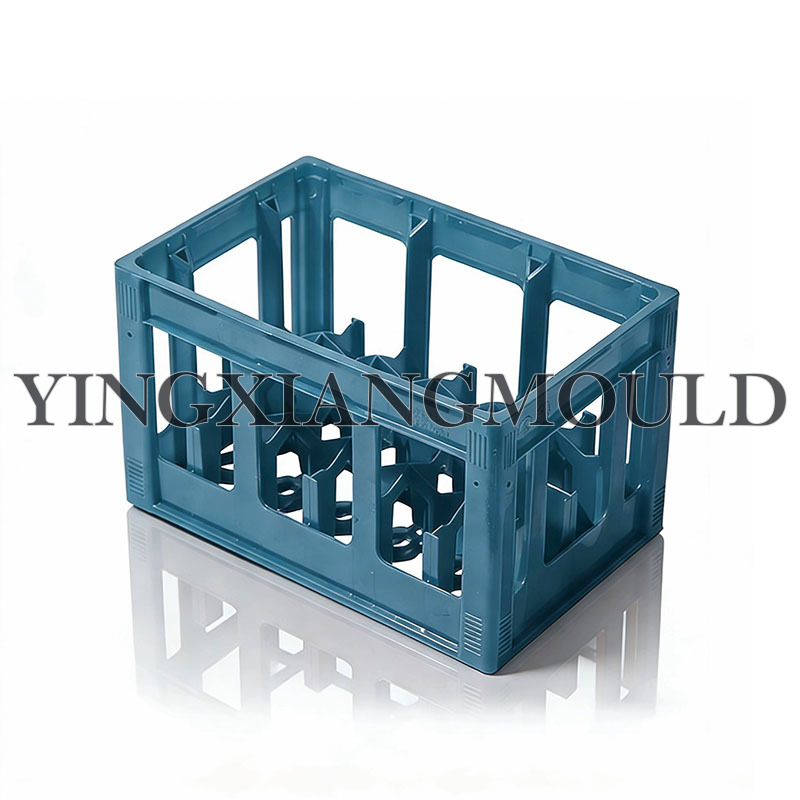
TaiZhou HuangYan YingXiang Plastic Mould Co., Ltd. lists moulds for milk crates, 24-compartment beer crates, 12-compartment beer crates, 24-compartment beverage crates and 12-compartment soda crates. This range reflects the variety of product structures that beverage packaging manufacturers may need to produce.
Bottle diameter, compartment spacing, handle position and outside dimensions all affect the mould structure. A change in bottle format may require more than a minor cavity adjustment.
Beverage crates combine broad surfaces, compartments and reinforcing ribs. During injection moulding, plastic must fill these areas and cool evenly enough to retain the part's shape. Uneven cooling can cause different shrinkage across the crate, while poor ejection can stress walls, corners and internal features.
A Beverage Box Mould needs coordinated cavity and core structures, gating, cooling channels and ejection. The configuration depends on crate dimensions, wall structure, resin and production machine. Filling, cooling and ejection work together to influence cycle stability and the condition of the finished crate.
For automated or high-volume production, these factors influence process stability and mould service life.
YingXiang lists polypropylene (PP) and high-density polyethylene (HDPE) for its beverage crate mould applications. Selection depends on crate structure, working environment, bottle load and handling conditions. Impact resistance, stiffness and wear are among the factors to assess.
The Beverage Box Mould must match the selected resin. Material flow, cooling behaviour and shrinkage affect cavity filling and finished dimensions, so changing resin calls for process evaluation.
TaiZhou HuangYan YingXiang Plastic Mould Co., Ltd. also manufactures moulds for folding boxes, logistics crates, fruit baskets, pallets and household products. Its stated setup includes high-tech equipment, CAD/CAE/CAM systems and experienced production technicians. The company identifies lean manufacturing, long-life moulds and on-time delivery as operating priorities. Its Beverage Box Mould work also sits within a broader tooling capability for reusable transport and storage products, giving the factory experience with several types of plastic containers rather than a single crate format. This wider product scope is relevant when tooling projects involve related handling requirements.
For beverage packaging producers, crate tooling connects product structure with mould manufacturing. The Beverage Box Mould must account for bottle arrangement, load-bearing features, resin behaviour, cooling and ejection in one production tool.
As reusable packaging remains part of beverage distribution, crate formats will continue to reflect bottle types, handling systems and return logistics. Matching the Beverage Box Mould to these conditions helps manufacturers produce crates for their specific packaging operations.
If you are interested in any of our products or services, please feel free to ask and we can talk about your ideas.
 QUICK LINKSMOBILE SITE
 FACTORY ADDRESS
 CONTACT INFORMATION



 English
 Español