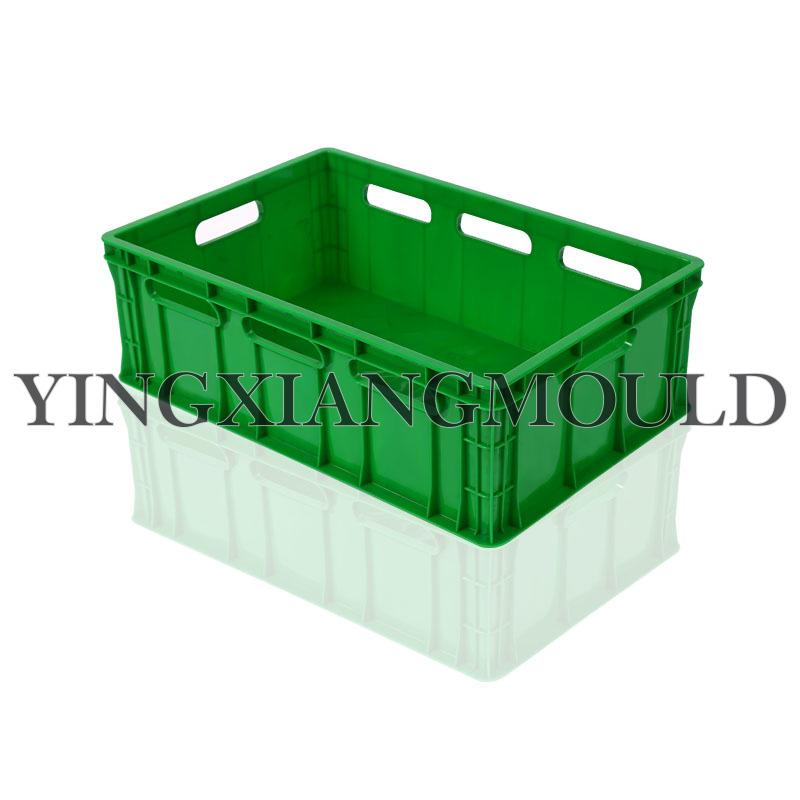
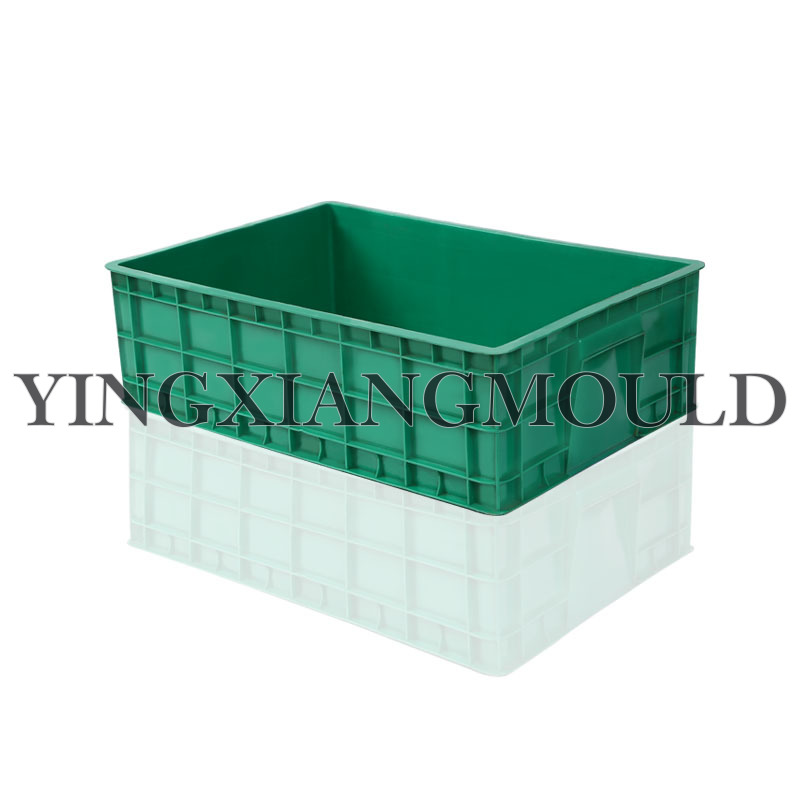
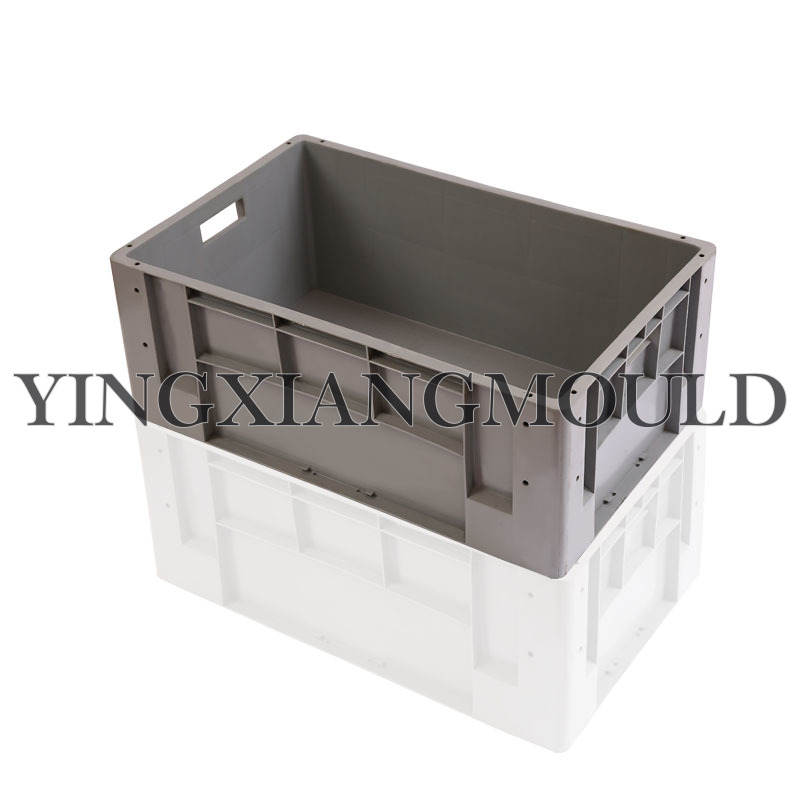
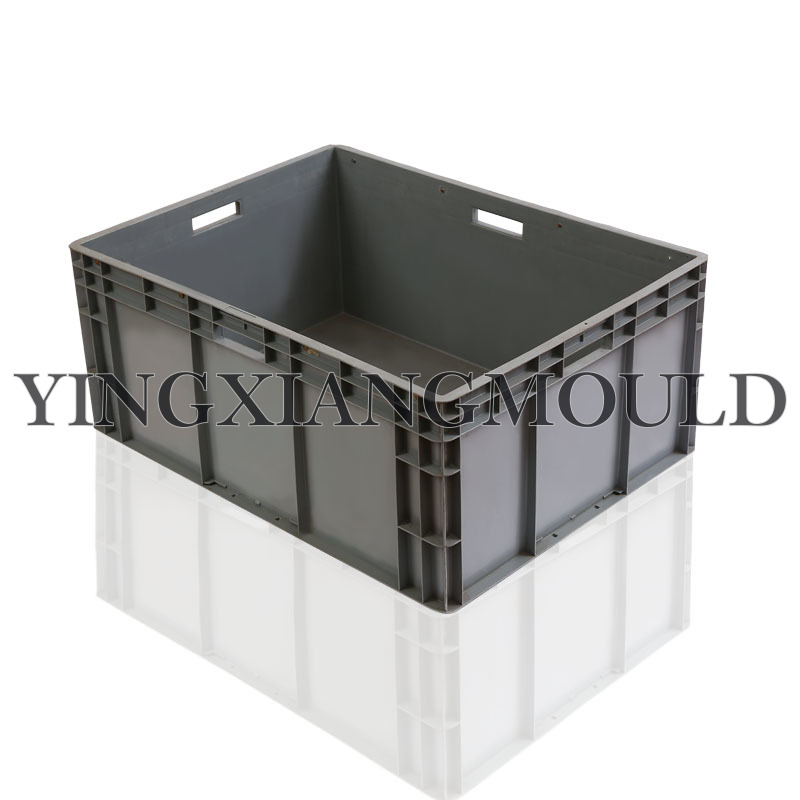
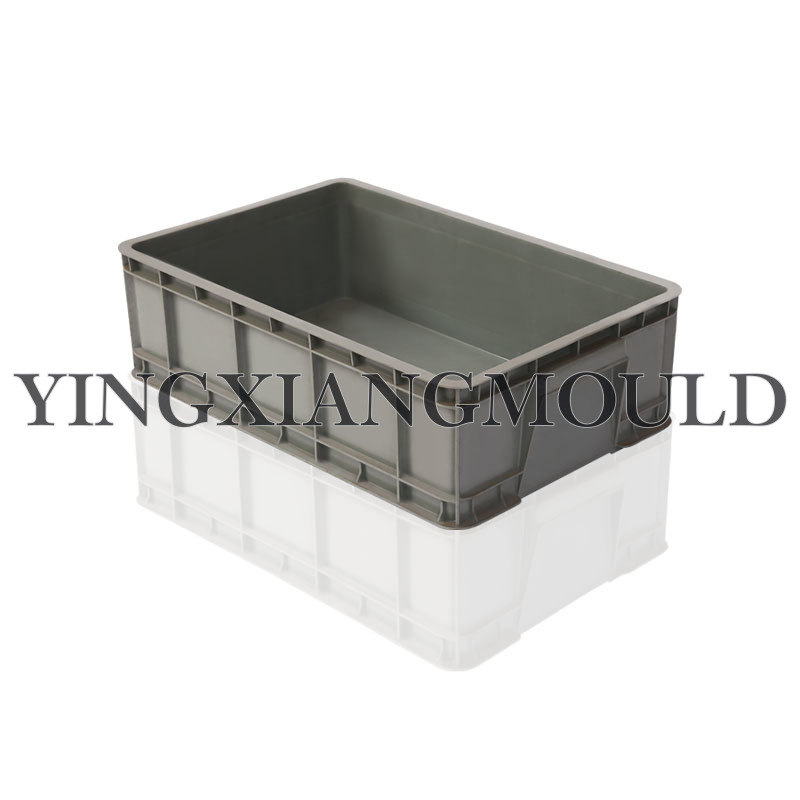
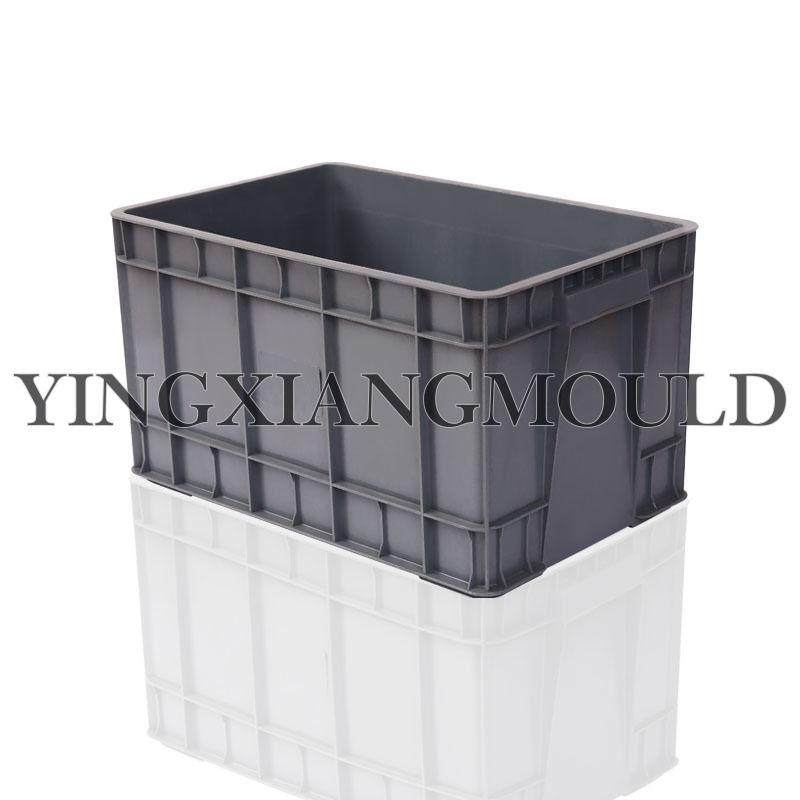
Plastic Packaged Box Mould projects tend to be judged by one small moment: the lid pressed onto the body. A box that closes with a clean snap on the sample table can loosen, rattle or fail to seal after the tool has run for a season, and the cause usually sits in the mould rather than in the resin. TaiZhou HuangYan YingXiang Plastic Mould Co., Ltd. builds injection moulds for food storage containers, finishing boxes, trays and other household boxes in Huangyan, Taizhou, and lid-to-body fit is treated as a design target from the 3D model stage instead of a setting adjusted at the end.
A lid and its body shrink differently. A lid with a wide flat top contracts in another pattern from a deep body with ribs along its base, so identical nominal dimensions do not guarantee parts that match. YingXiang works with a CAD/CAE/CAM system to model both parts together and to allow for the different shrinkage before steel is cut. In a Plastic Packaged Box Mould that carries a silicone seal ring, the groove in the lid is machined and polished to hold a lid-to-box fit within ±0.03 mm.
Snap-fit undercuts and locking clasps in a Plastic Packaged Box Mould are formed with sliders and lifters, and these are the parts that wear first. Sliders and ejector pins are laid out so they can be checked and replaced, which keeps the fit from drifting as the cycle count grows.

Thin walls cool quickly, and uneven cooling bends a lid before it leaves the tool. Food boxes are often moulded with walls in the range of 1.5 to 2.5 mm, which leaves little margin for a hot spot. In a Plastic Packaged Box Mould, water channels run close to the snap-fit edge of the lid and around the base ribs of the body, the two areas that hold heat longest.
A hot runner system keeps the flow path short and reduces runner waste. Gate position is chosen so the lid fills from the centre outward, which lets the snap-fit edge fill evenly, and vents at the lid corners and along the seal ring groove release trapped air so thin sections do not burn or short-shot.
Steel choice for a Plastic Packaged Box Mould ties to how many boxes the tool is expected to make. P20 serves moderate volumes, with a life of about 500,000 cycles. 718H and NAK80 are used for runs of 800,000 to 1,000,000 cycles, and NAK80 or S136 stainless is used for transparent boxes and lids that need a mirror finish. S136 also resists the corrosion that humid moulding halls and cooling water can cause. Matching the steel to the planned volume keeps polish and edge sharpness intact for as long as the product runs, and it keeps seal ring grooves from rounding off.
PP is the main resin for food boxes, with a working range of -20°C to 120°C and microwave-safe designs, while HDPE is used where impact or chemical resistance matters. Tritan, PET, PC and bio-based grades such as sugarcane-based PP also appear in packaged box programs, and each has its own shrinkage and flow behaviour. Cavity dimensions in a Plastic Packaged Box Mould are therefore set for the resin the customer will run, not for a generic value, so a switch from PP to a clearer copolyester does not leave the lid loose.
Simulation narrows the range, and lid fit is confirmed on real parts. Food container moulds at YingXiang usually go through two to three trial rounds, with three to five days between rounds for adjustments such as grinding the seal ring groove or reworking cooling. Development time follows structure: simple square boxes take about 35 to 45 days, threaded, snap-fit or divided designs about 50 to 60 days, and multi-cavity or two-colour moulds 60 to 80 days. Dividers, drain baskets, date scales and pouring spouts are built into the tool during this stage, so a Plastic Packaged Box Mould leaves trial with its finished features in place. Two-colour tools, which add a second injection unit and a shuttle or rotating core, sit at the long end of that range.
If you are interested in any of our products or services, please feel free to ask and we can talk about your ideas.
 QUICK LINKSMOBILE SITE
 FACTORY ADDRESS
 CONTACT INFORMATION



 English
 Español