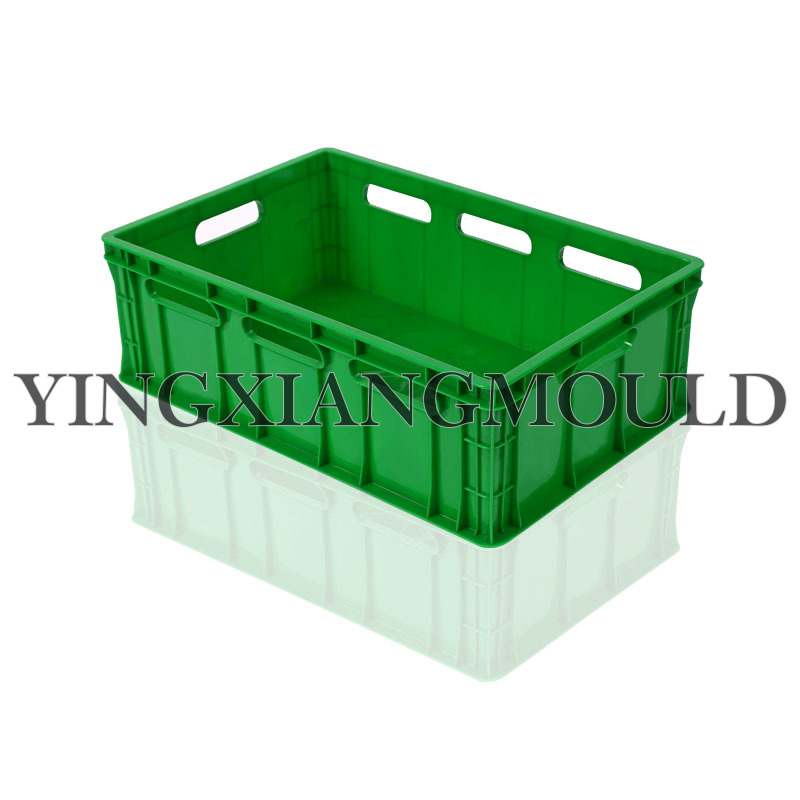
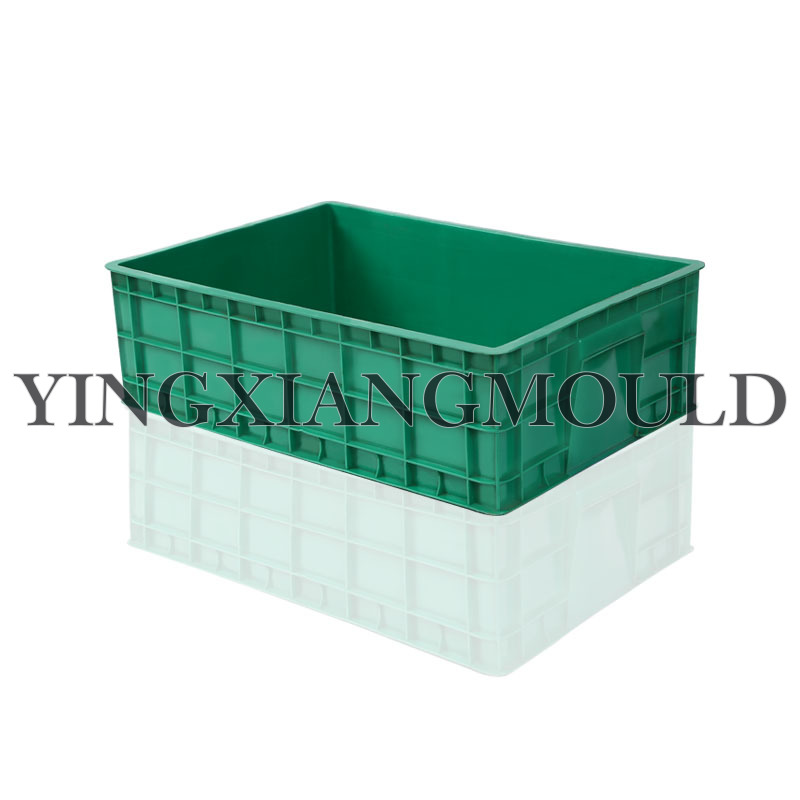
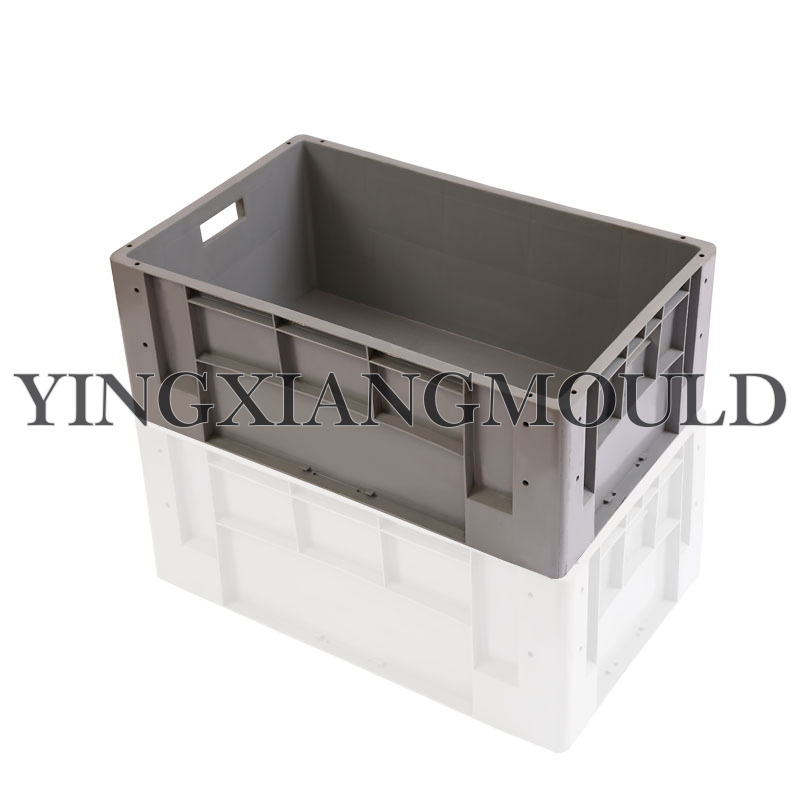
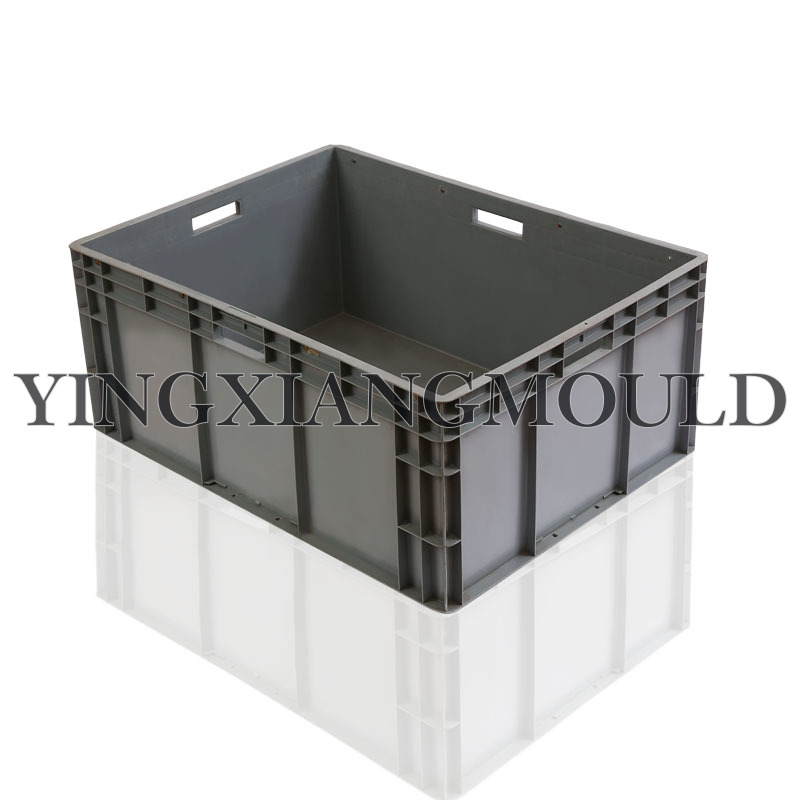
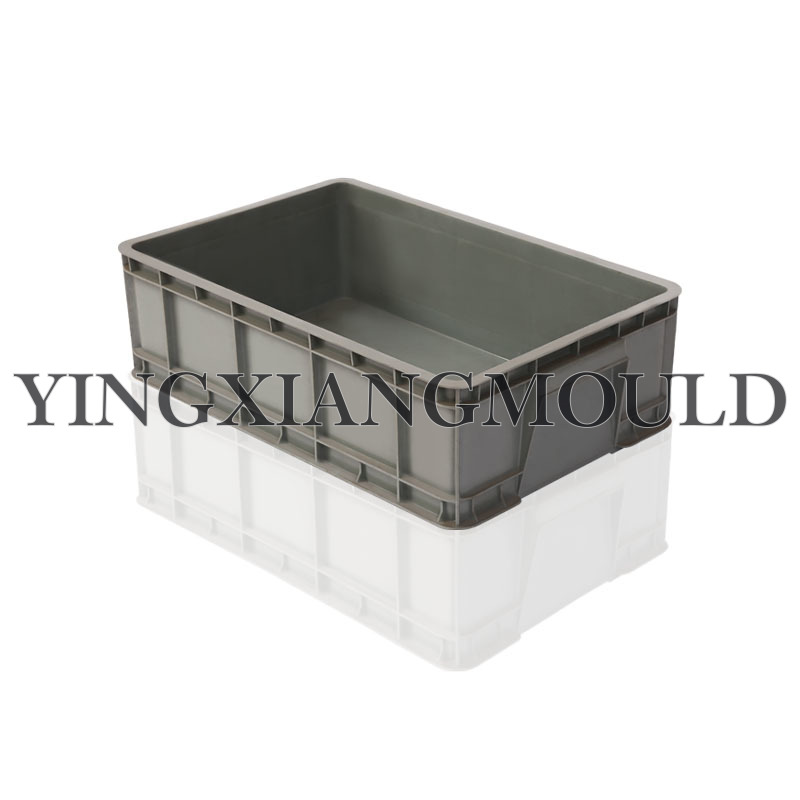
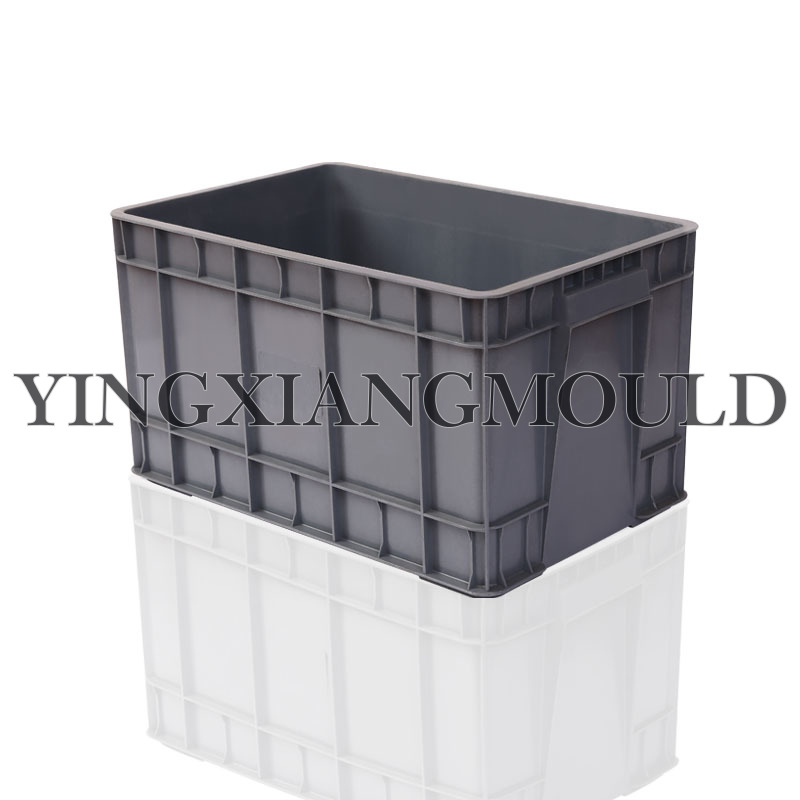
Two buyers can send the same email asking for a ventilated produce basket and still need very different tooling. One fills supermarket shelves with strawberries. The other moves cabbages from farms to a wholesale market. At YingXiang Plastic Mould in Huangyan, Taizhou, a Plastic Fruit Basket Mould quote rarely starts from the drawing. It starts from what the basket must carry, how high it will stack, and where it will travel.
Wholesalers handling cabbages, melons or root vegetables usually give us a loaded weight and a stacking height. Our engineers turn those two figures into wall thickness, rib spacing and bottom reinforcement. For farmers’ market baskets that take daily knocks, HDPE walls of 2.5 mm or more are a common starting point, and the mould steel has to hold that thickness evenly across the whole basket.
A display basket for strawberries carries far less weight, so a Plastic Fruit Basket Mould for that job puts its detail into finer ventilation openings, cleaner surfaces and quick colour changes. Both jobs are called fruit baskets in the inquiry, yet the cavity and core layouts have little in common.
When a buyer lists loaded weight, stack layers and handling method, we can settle steel size and rib layout for the Plastic Fruit Basket Mould in one round of quoting.
Hole shape is a sourcing decision, not decoration. Berries need smaller openings so fruit does not drop through. Leafy vegetables and melons tolerate larger openings that speed airflow during pre-cooling. Cold chain baskets that travel between 0 and -18 °C also need a resin grade chosen for low-temperature impact.
Each opening is formed by the mould itself, so slider travel and core pulling have to stay smooth over hundreds of thousands of cycles. E-commerce sorting centres add another request: pre-set positions for barcode scanning. We can build these into the Plastic Fruit Basket Mould drawing at the start, so the baskets need no secondary drilling after moulding.
Importers who also sell vegetable packaging often ask us to quote a plastic vegetable crate mould next to the basket. The two share resin choice, ventilation logic and stacking rules, so the same buyer brief covers both.
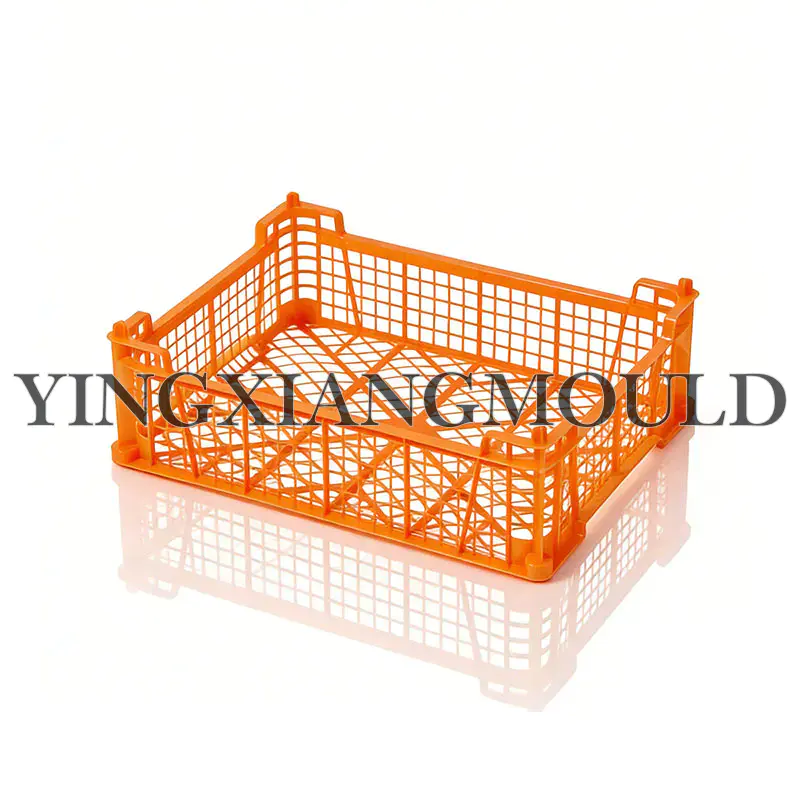
Annual demand sets the cavity count. A buyer ordering above roughly 50,000 baskets a year usually finds that owning tooling lowers the unit cost compared with buying finished baskets. From there the question is one cavity or several, and we can supply a Plastic Fruit Basket Mould in single-cavity or multi-cavity layouts.
Large PP and HDPE baskets generally run on a cold runner mould. Sprue recycling does not affect basket quality, and the tooling costs less. Hot runners suit layouts with four or more cavities, very short cycles, or surfaces that cannot show gate marks, with a tooling cost roughly 30% to 50% higher.
A turnover basket that circulates between farm, cold store and market gets rough handling every week. Durability matters more there than gate-mark appearance, so we can offer a cold runner layout with a harder steel grade for these projects.
Buyers who cannot visit Taizhou approve tooling through reports and video. For this we can provide a CMM dimensional report with critical tolerances within ±0.1 mm, and confirm that weld lines sit on non-visible surfaces and that the finished basket shows no shrinkage marks. Slider and ejector movement can be checked for smooth action on video.
We can also run a stacking test, with five fully loaded baskets standing for 24 hours, and a run of 500 consecutive injections to confirm stable moulding. We can carry out this sequence on every Plastic Fruit Basket Mould before it leaves the workshop.
We can write the steel grade into the contract. Under regular maintenance, P20 steel typically reaches about 500,000 cycles, while 718H or H13 pre-hardened steel can reach 800,000 to 1,000,000. The warranty period and major-repair terms can be listed in the same written document.
Exports to Europe and America add food contact rules. Resin selection and cavity treatment can follow FDA 21 CFR or EU 10/2011 requirements. For supermarket private-label programmes, we can add an embossed logo insert to the Plastic Fruit Basket Mould from the first trial. Overseas brand owners can also send 3D or 2D files, and we can build the tooling from them.
If you are interested in any of our products or services, please feel free to ask and we can talk about your ideas.
 QUICK LINKSMOBILE SITE
 FACTORY ADDRESS
 CONTACT INFORMATION


 English
 Español