A 12-compartment beer crate is designed to solve one of the most persistent challenges in beverage distribution: transporting multiple bottles safely, efficiently, and economically. By separating bottles into individual compartments, the crate reduces contact between containers, limits movement during handling, and supports faster loading, unloading, storage, and retail display. For breweries, beverage wholesalers, logistics companies, retailers, and event operators, a well-designed beer crate can improve the performance of the entire distribution chain.
The quality of a beer crate depends not only on its visible shape but also on the mould used to produce it. A high-performance mould determines the crate’s dimensional accuracy, wall consistency, corner strength, stacking reliability, surface finish, production cycle, and long-term service life. For this reason, choosing a capable plastic mould manufacturer is as important as selecting the correct crate design.
The 12-Compartment Beer Crate is a representative beverage box mould solution produced for reusable plastic bottle transportation. It combines practical compartment organization with injection-moulding efficiency. Its design can be developed around the requirements of different bottle sizes, bottle shapes, carrying methods, stacking patterns, warehouse systems, and production equipment. When supported by professional engineering and controlled manufacturing, the mould can help beverage manufacturers obtain stable, repeatable, and commercially competitive crate production.
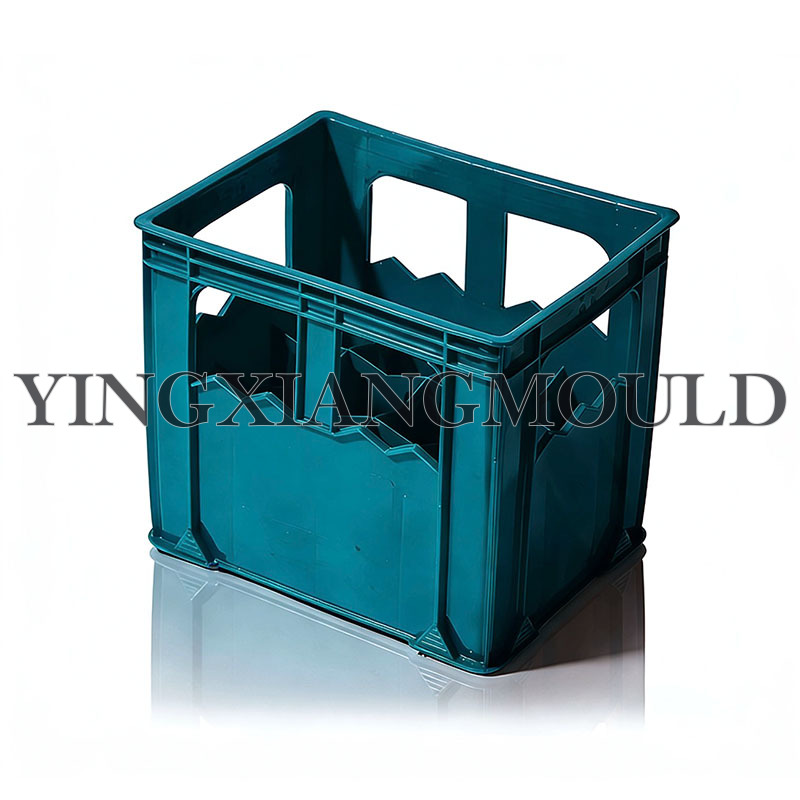
12-Compartment Beer Crate
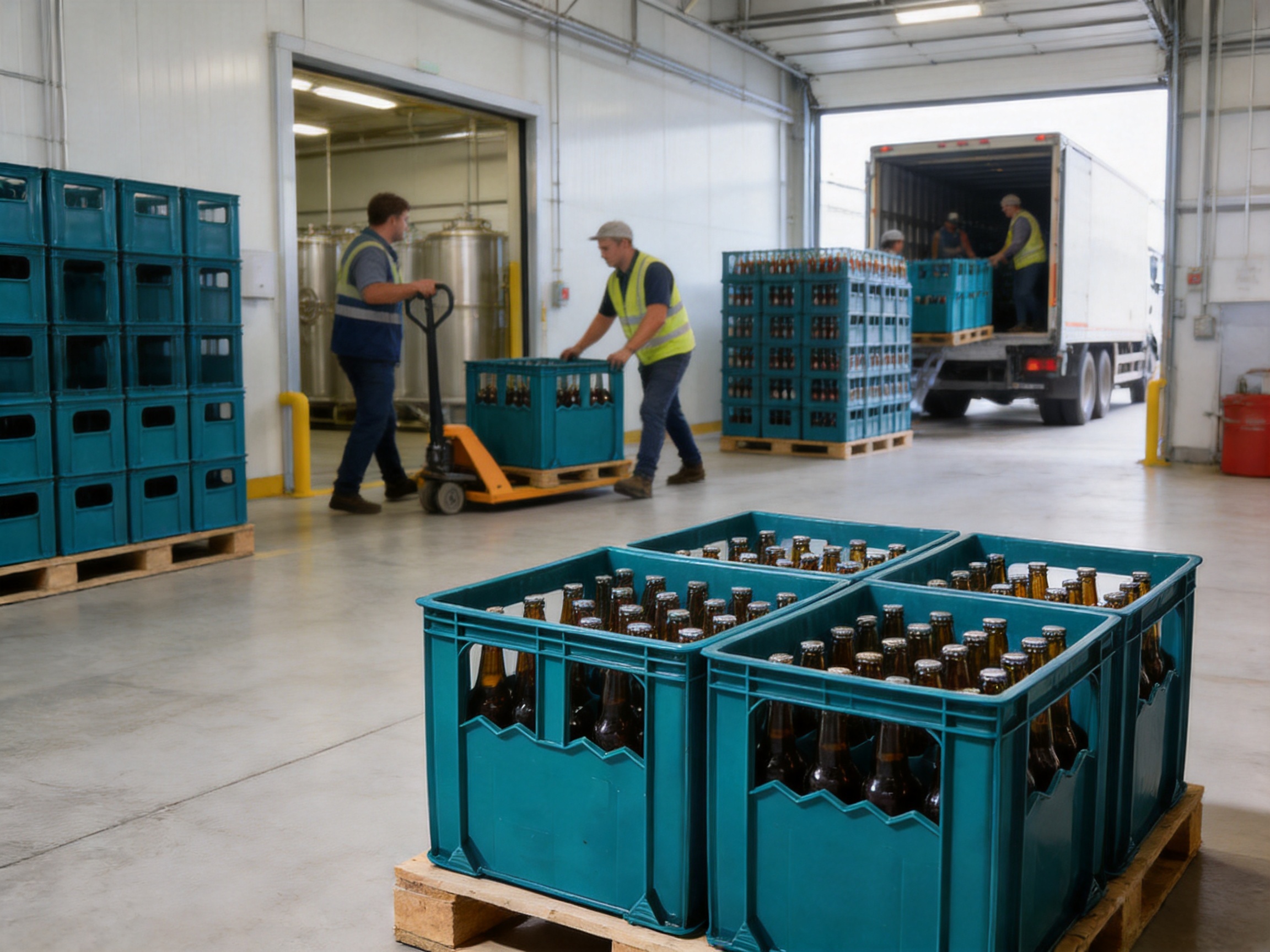
Beer and other bottled beverages move through a demanding supply chain. Products may be loaded into trucks, transferred to distribution centres, carried into retail stores, placed in cold storage, and returned to production facilities for reuse. During these operations, crates are frequently lifted, stacked, dragged, exposed to moisture, and subjected to temperature changes. A disposable package may be adequate for a single shipment, but a reusable crate must withstand repeated handling over an extended period.
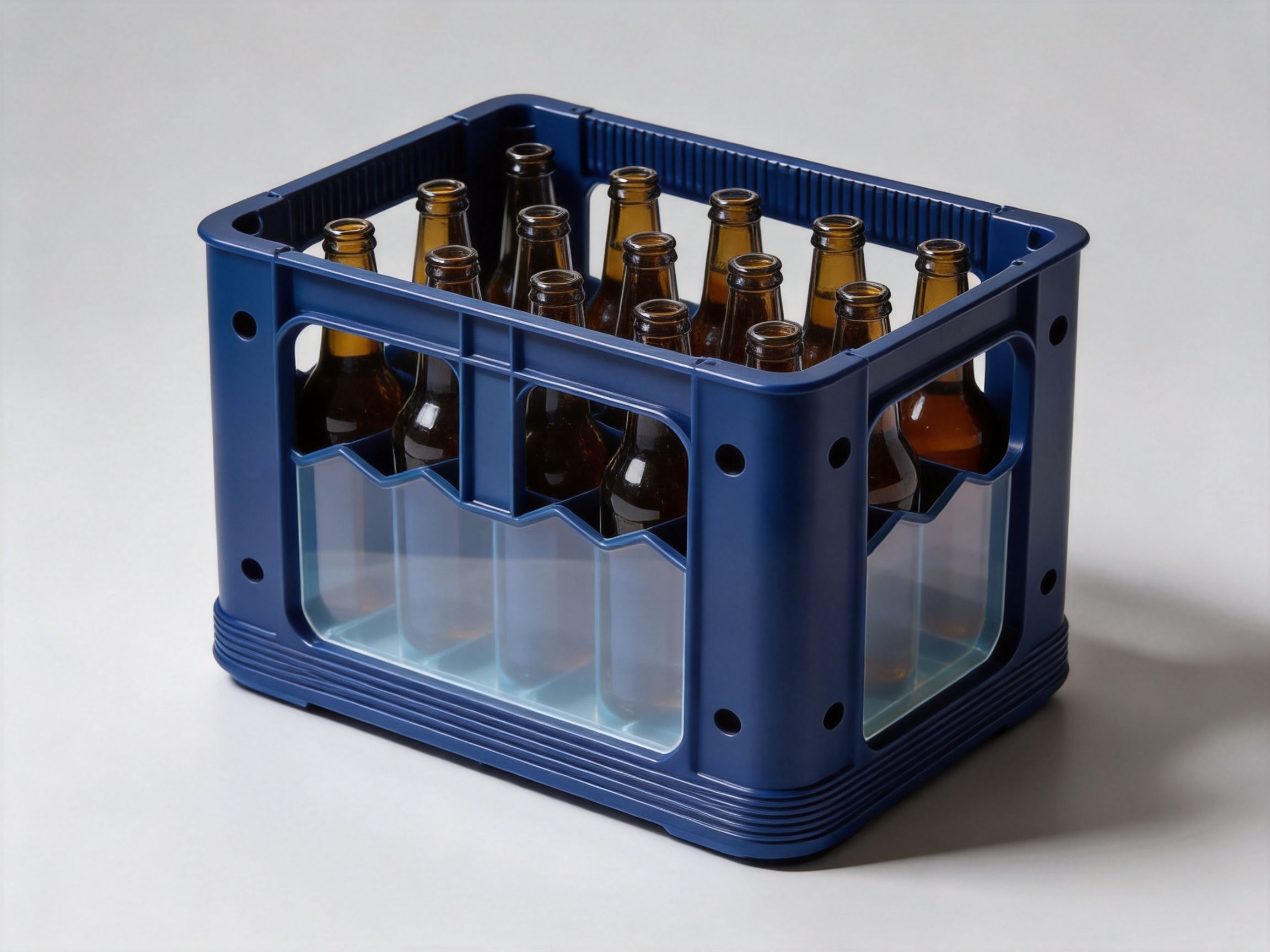
The 12-compartment configuration offers a practical balance between capacity and manageability. It allows twelve bottles to be organized in one unit while keeping the overall crate convenient for manual handling and mechanical movement. Each bottle is held in an individual cell, reducing the risk of glass-to-glass impact. The internal separators also help maintain bottle alignment, which is valuable when crates are stacked or placed on pallets.
In addition to beer, a similar crate format may be adapted for mineral water, soft drinks, juice, fermented beverages, returnable glass bottles, and other packaged liquids. The final application depends on the bottle diameter, height, base profile, neck shape, weight, and handling environment. This flexibility makes the beverage box mould a useful foundation for customized packaging projects rather than a single-purpose tool.
The primary function of the crate is to protect bottles. Individual compartments create a physical barrier between adjacent containers. If the crate is properly engineered, the separators absorb part of the impact created by movement and prevent bottles from leaning excessively. Rounded transitions and suitable clearances help reduce stress concentration around bottle bodies and bases.
A robust crate does not rely only on thick plastic. Excessive wall thickness can increase material consumption, cooling time, weight, and moulding cost. Instead, strength is achieved through a combination of ribs, reinforcing columns, corner structures, base geometry, separator design, and carefully selected material flow paths. This engineering approach can produce a crate that is strong without becoming unnecessarily heavy.
Crates are handled repeatedly, often by workers wearing gloves or moving quickly in wet environments. A practical design therefore requires comfortable hand openings, smooth edges, sufficient clearance, and balanced weight distribution. Reinforced handles should be integrated into the overall structure so that lifting loads are transferred through strong areas rather than concentrated at thin wall sections.
The outer shape should also support stable gripping from different directions. This is particularly important in beverage warehouses where workers may load crates into vehicles, remove them from pallets, or place them on shelves. A carefully designed opening can improve ergonomics while preserving the crate’s resistance to deformation.
Unlike one-time packaging, reusable beer crates must retain their shape after many operating cycles. Reusability lowers packaging waste and can improve the cost efficiency of beverage distribution over time. However, reusability creates higher requirements for mould accuracy and product consistency. Minor dimensional errors repeated across thousands of crates can lead to unstable stacking, difficult cleaning, interference between bottles, or poor compatibility with existing logistics equipment.
The 12-Compartment Beer Crate mould is therefore expected to deliver repeatable dimensions across production runs. Stable mould construction, balanced cooling, reliable ejection, and controlled processing conditions all contribute to this result.
Not every plastic beer crate provides the same level of performance. Low-cost products may appear attractive when evaluated only by initial purchase price, but they can create hidden expenses through premature breakage, dimensional instability, difficult handling, and inefficient production. A professionally engineered crate and mould can offer advantages that become more significant over the product’s complete service life.
The twelve-compartment layout provides a clear organization system for bottles. Each bottle has a defined position, reducing random movement inside the crate. This arrangement simplifies counting and inspection, since operators can quickly identify whether all compartments are filled. It also makes the unit suitable for retail transfer, return logistics, and warehouse inventory control.
Compared with open baskets or mixed containers, a compartmentalized beer crate offers better separation and more predictable bottle positioning. Compared with larger crates, the twelve-bottle format can be easier to lift, carry, and arrange in common storage configurations. The final capacity can be optimized according to market requirements without changing the basic logic of the design.
Stacking features are important because beverage crates are often stored vertically to save floor space. A crate should resist sliding, tilting, and uneven loading. The top and bottom interfaces can be designed to align with one another, allowing stacked units to remain stable while supporting a reasonable safety margin.
Stability depends on more than the outside outline. The internal load path, corner posts, base ribs, contact zones, and centre of gravity all influence stacking performance. A professional mould manufacturer can evaluate these factors through computer-aided design and engineering analysis before machining begins. This helps prevent design weaknesses that might only become visible after mass production.
A high-quality injection-moulded crate should be strong where loads are concentrated and efficient where less material is required. Rib placement can reinforce long walls without creating excessive thickness. Corner posts can improve vertical compression resistance. The base can use a grid or directional rib structure to support bottles while allowing drainage and reducing deformation.
This balanced approach offers several benefits. It reduces unnecessary raw material consumption, shortens cooling time, lowers part weight, and supports a more competitive cost per unit. At the same time, the crate remains resistant to repeated lifting and stacking. This is more effective than simply increasing the thickness of every wall.
Beer crates are exposed to liquid spills, dust, labels, condensation, and outdoor handling conditions. A design with suitable drainage openings and smooth internal transitions can be easier to wash. Reduced dirt accumulation helps improve hygiene and extends the usable life of the container.
When designing a crate mould, engineers should consider the direction of water flow, the location of drainage holes, the avoidance of unnecessary dead corners, and the effect of ejector marks on cleaning. These details may appear small, but they affect daily maintenance in breweries and distribution centres.
Reusable beverage crates are visible in warehouses, retail areas, restaurants, and public events. A clean, uniform appearance contributes to the perceived quality of the beverage brand. Injection moulding can reproduce lettering, logos, identification markings, textured surfaces, and controlled edge details with good consistency.
The mould may be developed with replaceable inserts for product codes or brand-specific elements. This can make future changes easier and reduce the need to manufacture an entirely new mould when only a marking area must be updated. Surface texture can also be selected to improve grip and reduce the appearance of minor scratches caused by normal use.
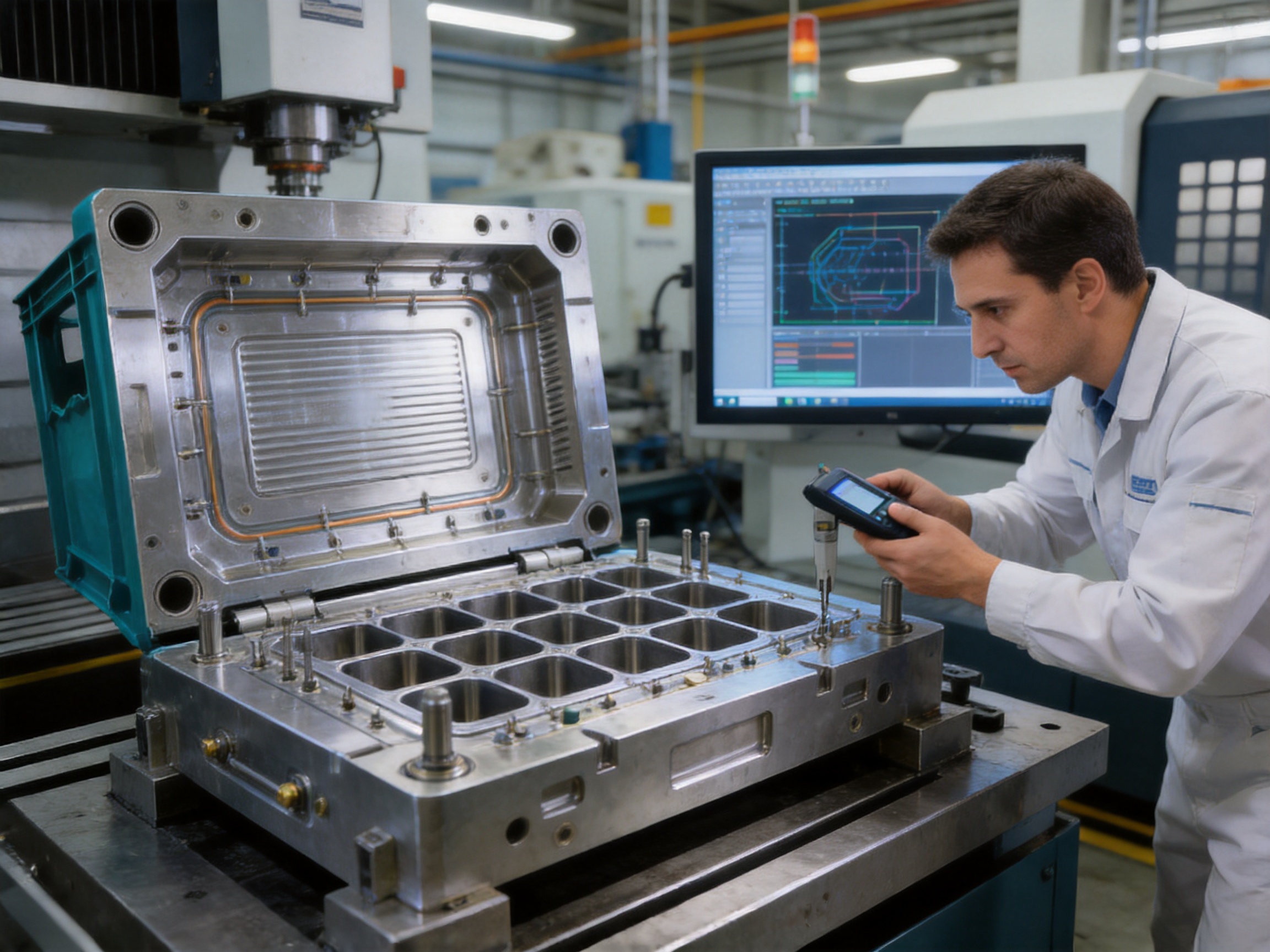
The mould is the foundation of product quality. A successful mould design begins with a clear understanding of the final crate, the intended bottle, the injection machine, the plastic material, the production volume, and the required service life. Each decision affects the others, so the design process should be coordinated rather than handled as a series of isolated tasks.
The first design question is the bottle geometry. Bottle diameter, shoulder profile, base shape, height, and neck clearance determine the dimensions of each compartment. There must be enough room for loading and unloading, but excessive clearance can allow unwanted movement. The internal separators should protect bottles without creating difficult insertion or removal conditions.
Different beverage markets use different bottle formats. A mould intended for one bottle profile may not be suitable for another. For this reason, technical communication before design approval is essential. Product drawings, sample bottles, three-dimensional data, and dimensional tolerances can help the manufacturer create a more accurate solution.
Injection-moulded crates contain deep walls, multiple compartments, ribs, and openings. Without sufficient draft, the plastic part may stick to the mould during ejection. Sticking can create scratches, deformation, incomplete ejection, or excessive stress on the mould and machine.
Draft angles must be balanced with functional requirements. Too much draft may reduce internal capacity or affect bottle positioning, while too little draft can create production problems. Professional mould designers examine each wall, separator, rib, and opening to provide an appropriate release direction.
Crate corners often experience impact during transportation and stacking. Separators are exposed to side loads when bottles are inserted at an angle or when the crate is handled roughly. These areas should be reinforced without creating overly thick sections that could cause sink marks or prolonged cooling.
Transition radii are also important. Sharp internal corners can concentrate stress and restrict plastic flow. Rounded transitions make it easier for material to fill the cavity and can improve the durability of the finished crate. At the same time, the radius must remain compatible with bottle clearance and cleaning requirements.
The injection system determines how molten plastic enters the cavity. A well-planned runner and gate layout promotes balanced filling, reduces weld-line risk in critical areas, and helps control warpage. For a large crate with many internal structures, unbalanced flow can produce uneven packing and dimensional differences between sides.
Gate locations should be selected with consideration for appearance, strength, trimming, and material flow. A gate placed near a highly loaded handle area may create a visible mark or local stress concentration. A gate placed in an unsuitable region may increase weld lines around separators. Moldflow or similar CAE analysis can help evaluate filling behaviour before steel cutting.
Cooling has a major effect on cycle time and part quality. Crates include long walls, thick corners, ribs, and areas with different heat-retention characteristics. If cooling is uneven, the part may warp, shrink inconsistently, or fail to stack correctly.
Cooling channels should be positioned to remove heat from critical regions while maintaining practical machining and maintenance requirements. Baffles, bubblers, and optimized channel layouts may be used where conventional straight channels are insufficient. A well-designed cooling system can improve productivity while reducing dimensional variation.
The ejection system must remove the crate without distortion. Ejector pins, sleeves, stripper elements, or other mechanisms can be positioned near structurally strong areas. Ejection must be balanced so that the product does not tilt or become trapped on one side of the mould.
Ejector marks should be placed where they have minimal effect on appearance and function. The arrangement should also allow convenient maintenance and replacement. Since beverage crates may be produced in high volumes, repeated ejection cycles can place significant demands on moving components.
TaiZhou HuangYan YingXiang Plastic Mould Co., Ltd. is located in Huangyan, Taizhou, Zhejiang, a region widely recognized for mould manufacturing. Established in 2012, the company operates a plant of approximately 7,000 square metres with around 50 employees. Its production capabilities include CAD, CAE, and CAM systems, high-technology equipment, and experienced technicians.
For a beverage box mould such as the 12-Compartment Beer Crate, the manufacturing process should connect product development, engineering analysis, precision machining, assembly, testing, and after-sales support. Each stage contributes to the final performance of the tool.
The process begins with an understanding of the customer’s application. Engineers may review crate dimensions, bottle specifications, expected production quantity, injection machine information, preferred plastic resin, cycle-time targets, surface requirements, and delivery conditions.
This stage is particularly important for beverage crates because the mould must work with the customer’s existing production system. Machine platen size, tie-bar spacing, injection capacity, clamping force, ejection stroke, and nozzle position may influence mould dimensions. Confirming these conditions early helps reduce later modifications.
Three-dimensional CAD modelling allows the crate structure to be examined before mould construction. Engineers can inspect compartment spacing, handle geometry, wall thickness, ribs, stacking interfaces, drainage holes, draft angles, and potential interference areas.
Digital design also makes it easier to create controlled changes. For example, the customer may request a different handle opening, an identification mark, a modified bottle clearance, or a revised stacking feature. Such changes can be evaluated within the digital model before manufacturing resources are committed.
CAE tools help predict how molten plastic may flow through the mould. Filling analysis can reveal potential short shots, weld lines, air traps, pressure peaks, and uneven filling patterns. Cooling analysis can identify hot spots and areas likely to shrink differently.
Although simulation cannot replace practical testing, it reduces uncertainty and supports better decisions. For a crate with twelve compartments and a complex separator network, flow analysis is valuable because internal walls can divide the melt into multiple paths. The results may lead to adjustments in gate position, runner size, wall thickness, venting, or cooling layout.
After design approval, mould components are manufactured using appropriate machining methods. CNC machining creates cavity and core surfaces with controlled dimensions. High-speed machining can produce complex surfaces and fine details, while other processes may be selected for deep features, hardened steel, or specialized inserts.
Machining accuracy is important for the final crate because errors in the mould may be repeated in every production cycle. The manufacturer must control alignment between mould halves, the location of inserts, separator dimensions, guide components, and the relationship between cavity and core surfaces.
Some deep, narrow, or complex mould features are difficult to produce through conventional cutting alone. Electrical discharge machining can be used to create specific details, sharp internal features, or geometries that require controlled electrode work. Additional drilling, grinding, polishing, and fitting processes help complete the tool.
Surface treatment depends on the required appearance and service conditions. A crate may require a practical texture for grip and scratch resistance rather than a highly polished finish. Functional areas, sealing surfaces, and visible surfaces should each receive an appropriate level of finishing.
After individual components are machined, the mould is assembled and checked. This includes guide systems, slides if required, ejector components, cooling circuits, inserts, fasteners, and other moving elements. Skilled fitting is necessary to ensure that the mould opens smoothly, closes accurately, and operates without unnecessary wear.
For a crate mould, assembly quality affects separator alignment and the uniformity of the product. Small mismatches may create flash, raised edges, or difficult ejection. Experienced technicians can identify and correct these conditions before the tool enters full production.
Trial moulding is used to evaluate the tool with a suitable injection machine and material. The trial process may examine filling, cooling, ejection, cycle time, part weight, appearance, flash, warpage, and stacking fit. Samples can be measured and compared with approved drawings or reference products.
If adjustments are necessary, the mould can be refined through polishing, venting changes, process optimization, or controlled dimensional correction. Trial moulding is not simply a demonstration; it is a practical verification stage that helps establish stable production conditions.
The performance of the finished crate depends on the selected plastic material and the processing conditions used during injection moulding. Common material choices for reusable logistics containers may include polypropylene or other engineering plastics selected according to impact resistance, stiffness, temperature exposure, chemical contact, and recycling objectives.
Polypropylene is often considered for reusable crates because it can offer a useful balance of low density, impact resistance, chemical resistance, and processability. However, the most suitable material depends on the application. A beverage company may require a particular grade for cold storage, repeated washing, outdoor use, food-contact considerations, or compatibility with recycled content.
Material selection should be completed together with mould design. Different plastics have different shrinkage characteristics, flow behaviour, cooling requirements, and sensitivity to processing conditions. A mould designed without considering these factors may produce excessive warpage or dimensional variation.
Uniform wall thickness supports more predictable filling and cooling. Sudden changes from thin to thick sections can create sink marks, voids, differential shrinkage, or warpage. Where structural reinforcement is required, ribs should be designed carefully so that their connection to the main wall remains practical for injection moulding.
For the 12-Compartment Beer Crate, the outer wall, internal separators, base, corners, and handle regions may require different structural treatments. The goal is not absolute uniformity in every detail but a controlled distribution of material that supports strength, appearance, and efficient production.
Stable injection parameters are necessary for consistent products. Important variables include melt temperature, mould temperature, injection speed, holding pressure, holding time, cooling time, and screw recovery. The correct settings depend on the resin, mould design, machine, and desired cycle.
A professionally manufactured mould makes process control easier by providing balanced flow, efficient cooling, suitable venting, and reliable ejection. This reduces the need for excessive pressure or unusually long cooling times. Stable production also helps reduce scrap and supports repeatable crate weight.
The value of a mould supplier is measured by more than the ability to produce a steel tool. Customers need a partner that can understand the intended product, manage engineering risks, communicate clearly, and support the mould after delivery. Yingxiang Plastic Mould combines product categories including beverage box moulds, logistics crate moulds, folding box moulds, pallet moulds, storage box moulds, household product moulds, chair moulds, stool moulds, trash can moulds, and other injection mould solutions.
Experience with crates, pallets, boxes, and household containers provides useful knowledge of large injection-moulded structures. These products share many technical challenges, including deep cavities, ribs, handles, stacking features, dimensional control, cooling, and repeated-use durability.
Knowledge gained from related mould categories can help engineers identify common failure risks. For example, a design feature that appears strong in a digital model may be difficult to fill, cool, or eject. Practical experience allows the supplier to recommend changes that improve manufacturability before the mould reaches the machining stage.
The use of CAD, CAE, and CAM systems supports a continuous workflow from design to manufacturing. CAD defines the product and mould geometry. CAE helps evaluate flow, cooling, and potential defects. CAM translates approved geometry into machining operations. Keeping these stages connected can reduce data errors and improve production efficiency.
Reusable crate production often involves high volumes, making mould durability a major commercial consideration. Tool life depends on steel selection, heat treatment, wear resistance, cooling design, component quality, maintenance access, and operating conditions.
A long-life mould can reduce the cost of replacement tools and minimize interruptions to production. It can also preserve product consistency over a larger number of cycles. The correct steel grade and treatment should be chosen according to expected output, plastic material, cycle conditions, and customer budget.
Mould delivery affects product launch schedules and production capacity. An organized manufacturer must coordinate design confirmation, material purchasing, machining, assembly, testing, correction, and final approval. Clear milestones help customers understand project progress and prepare their injection equipment in advance.
Yingxiang emphasizes lean manufacturing, on-time delivery, competitive costs, premium quality, and comprehensive customer service. These priorities are especially relevant to beverage packaging projects, where a delayed mould can affect bottle filling, crate purchasing, distribution planning, and market supply.
The 12-compartment format can be customized for different requirements. Possible modifications may include outer dimensions, bottle clearances, handle style, stacking interfaces, base structure, drainage pattern, surface texture, identification marks, colour requirements, and compatibility with automated handling equipment.
Customization should be controlled through approved drawings and samples. Excessive late-stage changes can increase cost or delay delivery, so the most efficient approach is to confirm the product concept and technical specifications before detailed mould construction.
Quality control should be applied throughout the project rather than only at the final inspection. A systematic approach checks whether the product is practical to manufacture, whether the mould components meet dimensional requirements, whether the assembled tool operates correctly, and whether trial samples satisfy the approved standard.
| Project Stage | Main Control Focus | Expected Benefit |
|---|---|---|
| Requirement confirmation | Bottle data, crate use, machine conditions, output expectations | Reduced design mismatch and clearer project scope |
| Product design | Wall thickness, draft, ribs, handles, stacking, drainage | Improved function and manufacturability |
| CAE analysis | Filling, weld lines, air traps, cooling, shrinkage | Lower risk of moulding defects |
| Steel and component preparation | Material quality, hardness, dimensions, traceability | Improved tool durability and reliability |
| Machining and assembly | Alignment, surface finish, moving parts, cooling circuits | Stable mould operation and easier maintenance |
| Trial moulding | Appearance, weight, dimensions, ejection, cycle stability | Verification before mass production |
| Final delivery | Documentation, spare parts, cleaning, maintenance guidance | Better customer operation and long-term support |
Dimensional inspection may include checking the external length and width, height, compartment spacing, wall thickness, handle dimensions, base contact points, and stacking interfaces. Functional inspection may include bottle insertion, bottle removal, lifting, stacking, cleaning, and compatibility with the customer’s handling equipment.
Appearance inspection should identify flash, short shots, burn marks, sink marks, warpage, scratches, and unacceptable weld lines. Some visual marks may be acceptable in industrial packaging, while others can interfere with safety or operation. Acceptance criteria should therefore be agreed in advance.
A reusable 12-compartment beer crate can contribute to cost control by supporting repeated circulation. The same crate may travel between a filling plant, distributor, retailer, and consumer return channel many times. The economic result depends on crate durability, loss rate, washing requirements, repairability, transport efficiency, and management systems.
A strong crate can remain in service longer than a fragile alternative. Longer service life reduces the frequency of replacement purchases and lowers the labour associated with sorting damaged containers. A durable mould is central to this benefit because consistent product quality reduces early failures caused by weak corners, thin walls, or dimensional inconsistency.
Crate dimensions can be coordinated with pallet sizes, truck interiors, warehouse racks, and filling-line equipment. Good stacking efficiency reduces unused space and may lower transportation cost per bottle. The final arrangement should consider both filled and empty-crate logistics, since empty crates may require nesting or organized stacking features.
Injection moulding generates efficient, repeatable parts when the mould and process are well controlled. Scrap from short shots, flash, warpage, and failed ejection can be reduced through proper engineering. Some thermoplastic production waste may be recycled according to material specifications and product safety requirements.
Environmental performance should be evaluated across the complete life cycle. A reusable crate may require more material than disposable packaging at the beginning, but repeated use can distribute that material impact across many delivery cycles. Durability, repairability, recycling, and efficient transport all influence the final result.
Even a well-made mould requires regular maintenance. Preventive maintenance helps preserve dimensional accuracy, reduce unexpected downtime, and extend tool life. The maintenance schedule should be adapted to production volume, material type, cycle time, and operating environment.
After production, mould surfaces should be cleaned to remove residue, dust, moisture, and corrosion-producing contamination. Vents, parting lines, ejector areas, and cooling connections deserve particular attention. Clean surfaces help maintain filling and reduce the chance of flash or sticking.
Guide pillars, bushings, ejector systems, slides, and other moving components should be lubricated with suitable products at appropriate intervals. Operators should inspect for unusual noise, uneven movement, loose fasteners, worn components, and leakage from cooling circuits.
Changes in crate weight, flash, warpage, ejection force, cycle time, or surface appearance may indicate mould wear or process drift. Recording these changes allows maintenance teams to identify problems before they cause large quantities of defective products.
High-volume production benefits from keeping critical wear parts available. Ejector components, guide elements, seals, inserts, and other replaceable items can be identified during project handover. Early spare-parts planning helps shorten downtime when replacement becomes necessary.
Purchasers evaluating a 12-compartment beer crate mould should consider the supplier’s product experience, engineering process, machine compatibility, mould materials, testing capability, delivery plan, and after-sales support. A low quotation alone does not show whether the mould will achieve the required production volume or service life.
Useful questions include:
Can the supplier review the bottle drawing and confirm compartment clearances?
Can the supplier provide a mould design for approval before manufacturing?
Will the supplier perform filling or cooling analysis for complex crate structures?
What steel and treatment are proposed for the expected output?
How will the supplier control warpage and dimensional stability?
Is trial moulding included, and how are corrections managed?
Are maintenance instructions, mould drawings, and spare-part recommendations provided?
Can the supplier adapt the crate for different bottles, machines, or logistics requirements?
A supplier that answers these questions clearly is more likely to manage the complete project responsibly. Communication quality is especially important when the customer and mould manufacturer are in different regions or when the project includes custom features.
Although the product is identified as a beer crate, the basic compartmentalized design may be adapted for other returnable beverage containers. Applications may include glass soda bottles, mineral water bottles, juice bottles, specialty drinks, fermented beverages, and selected food-service containers.
Each application requires its own technical review. Bottle diameter, weight, cap height, temperature, washing method, filling-line speed, and regulatory requirements may differ. A crate used in a cold-chain environment may require different impact and dimensional considerations from one used in a warm warehouse.
The broader product category also demonstrates the manufacturer’s ability to develop related plastic packaging products. Logistics crates, folding boxes, pallets, food storage containers, and household products all require practical injection-moulding knowledge. This wider experience can support customers seeking several packaging tools from one technical supplier.
The main purpose is to transport and store twelve bottles in separate compartments. The separators reduce bottle-to-bottle contact, while the outer structure supports lifting, stacking, and repeated logistics handling.
Yes. Compartment dimensions, clearances, separator geometry, outer dimensions, and other features can be developed according to the bottle drawing or physical sample. Customization should be confirmed before final mould design and machining.
The material depends on the application. Polypropylene is commonly considered for reusable logistics containers because of its balance of weight, impact resistance, chemical resistance, and processability. The final resin should be selected according to temperature, washing, food-contact, recycled-content, and durability requirements.
CAE analysis can help predict filling behaviour, weld-line locations, air traps, pressure distribution, cooling performance, and shrinkage-related risks. It supports better decisions before mould machining and can reduce the need for costly modifications.
A well-designed mould can reduce scrap, stabilize cycle time, lower unnecessary material use, improve product consistency, and extend tool life. These benefits may make the total operating cost lower even when the initial mould investment is not the cheapest available option.
Interlocking or locating surfaces, reinforced corners, a stable base, balanced dimensions, and controlled contact points can improve stacking. The correct design should be tested with the intended filled and empty crate conditions.
Drainage openings, smooth transitions, limited dirt traps, practical surface textures, and suitable internal clearances can support easier washing. The mould should reproduce these features consistently without creating ejection or filling problems.
Useful information includes bottle drawings or samples, target crate dimensions, material preference, estimated annual output, injection machine details, desired surface finish, colour, logo requirements, stacking method, and delivery expectations.
Yes. The company’s mould range includes integral boxes, logistics crates, folding boxes, pallets, fruit baskets, stools, food storage containers, trash cans, hand baskets, household products, floor mats, and chairs. This related experience can support broader plastic injection moulding projects.
An experienced manufacturer can identify design risks earlier, coordinate engineering and machining, select suitable mould construction methods, support trial production, and provide practical maintenance guidance. This reduces uncertainty throughout the project.
The 12-Compartment Beer Crate is a practical solution for organized, reusable beverage distribution. Its individual compartments help protect bottles, its structure can support stacking and repeated handling, and its injection-moulded construction allows consistent production at commercial volumes. Compared with basic containers, a professionally engineered crate can offer better durability, handling efficiency, cleaning potential, dimensional stability, and long-term value.
The performance of the finished product begins with the mould. Product design, bottle compatibility, draft angles, rib structure, gate placement, cooling, ejection, steel selection, machining accuracy, assembly, and trial moulding must all be managed as part of one coordinated process. The manufacturer’s CAD, CAE, CAM, machining, fitting, and testing capabilities are therefore central to the success of the project.
TaiZhou HuangYan YingXiang Plastic Mould Co., Ltd. provides customized plastic mould solutions from Huangyan, Taizhou, Zhejiang. With a 7,000-square-metre plant, approximately 50 employees, equipment supported by advanced design and manufacturing systems, and experience across beverage, logistics, household, and industrial mould categories, the company is positioned to support customers seeking durable and efficient injection moulding tools.
For breweries, beverage packaging companies, distributors, and logistics operators, the right 12-compartment crate mould can improve product protection, production consistency, handling efficiency, and total packaging value. A careful technical consultation, supported by accurate bottle information and clear performance objectives, is the best starting point for developing a reliable solution.
1. Industrial Plastic Injection Mould Design Principles, technical training reference for product design, mould flow, cooling, and ejection.
2. Reusable Transport Packaging Practices, reference material concerning logistics containers, returnable packaging, stacking, and life-cycle efficiency.
3. Polymer Processing and Injection Moulding Fundamentals, reference material concerning thermoplastic flow, shrinkage, cooling, and process stability.
4. CAD, CAE, and CAM Applications in Plastic Mould Manufacturing, engineering reference for digital design, analysis, machining, and tool development.
5. Practical Maintenance of Injection Moulds, reference material covering cleaning, lubrication, inspection, spare parts, and mould life management.
If you are interested in any of our products or services, please feel free to ask and we can talk about your ideas.
 QUICK LINKSMOBILE SITE
 FACTORY ADDRESS
 CONTACT INFORMATION



 English
 Español