A well-designed plastic back stool can provide much more than a simple place to sit. In schools, canteens, factory rest areas, public facilities, kitchens, waiting areas, and many other shared environments, stools must withstand frequent use, repeated movement, changing temperatures, moisture, cleaning routines, and occasional impact. They must also remain comfortable, stable, easy to store, and economical to purchase in volume.
The plastic back stool described in this article is developed for these practical requirements. It combines a moderately high backrest, reinforced supporting legs, non-slip feet, impact-resistant polypropylene construction, and a stackable form. The result is a seating product designed for everyday use in demanding public and household environments. Its lightweight structure makes handling and transportation easier, while its reinforced body supports a stated load-bearing capacity of up to 170 kilograms when produced and used according to the appropriate design and operating conditions.
Behind the finished stool is an injection moulding process that determines its dimensions, surface finish, strength, consistency, and production efficiency. A reliable mould is therefore just as important as the selected plastic material. The manufacturer’s experience in plastic injection mould design, steel selection, machining, assembly, testing, and production support allows customers to order customized mould solutions for stools and other household or industrial plastic products.
This article examines the product’s design advantages, material characteristics, mould engineering, manufacturing process, customization options, quality considerations, logistics benefits, and the capabilities of the company producing the mould. It also explains why a professionally developed plastic back stool can offer advantages over less carefully engineered alternatives.

Plastic back stool
The plastic back stool is a moulded seating product with an integrated backrest and a practical form intended for repeated use. Its backrest is moderately high, giving users more support than a basic backless stool while maintaining a compact overall footprint. The shape is suitable for locations where seating must be comfortable but also easy to move, clean, stack, and store.
The product is manufactured through plastic injection moulding. Polypropylene, commonly identified as PP, is the principal material described for the stool. PP is widely used in household and commercial products because it combines low density, useful impact resistance, moisture resistance, chemical practicality, and cost efficiency. The material can also be coloured during production, allowing different batches to be matched with specific environments, customer preferences, or institutional colour standards.
Several product parameters can be customized. These may include overall size, colour, surface details, branding requirements, packaging arrangements, and mould configuration. Since each project can involve different seating dimensions, production quantities, usage conditions, and target markets, customization is an important advantage for distributors, furniture manufacturers, public facility suppliers, and brand owners.
The stool is supplied with a composite wooden box for mould packaging and transportation. This type of packaging is intended to help protect the mould during long-distance shipment, handling, loading, and unloading. Proper packaging is particularly important because an injection mould is a precision production tool rather than an ordinary cargo item.
| Product Type | Plastic back stool |
| Forming Method | Plastic injection moulding |
| Recommended Main Material | Impact-resistant PP |
| Design Feature | Integrated backrest with reinforced legs |
| Stated Load-Bearing Capacity | Up to 170 kg, subject to design and use conditions |
| Surface Characteristics | Smooth, waterproof, and moisture-resistant |
| Storage Feature | Stackable structure |
| Colour | Customizable |
| Size | Customizable |
| Service | OEM mould and production support available |
| Packaging | Composite wooden box for the mould |
A backless stool may be suitable for short-duration tasks, but it provides limited support during longer periods of sitting. The integrated backrest on this design gives users a more supported seating position. Its moderately high profile is intended to balance comfort and compactness. It can support the upper body without creating the excessive height or bulk associated with larger chairs.
This balance is especially valuable in canteens, schools, staff rooms, factory rest areas, and multipurpose facilities. In these locations, furniture may need to be moved frequently, arranged in rows, stacked after use, or placed in storage at the end of the day. A stool with a backrest offers an improved user experience while preserving the operational advantages of a compact plastic product.
The form of the seat can also support easier cleaning. A smooth moulded surface has fewer joints and crevices than assembled upholstered furniture. Food particles, dust, and moisture are less likely to become trapped in complicated construction details. This makes the stool suitable for environments where routine wiping and washing are part of normal maintenance.
Comfort is influenced by more than the backrest alone. Seat dimensions, edge radii, surface texture, leg placement, and overall stability all contribute to the way the product feels in use. Injection mould design allows these features to be integrated into one consistent structure. When the mould is properly engineered, every stool in a production batch can maintain the same geometry and ergonomic proportions.
One of the main advantages of an injection-moulded PP stool is its combination of light weight and practical strength. Polypropylene has a lower density than many traditional furniture materials, which makes the finished stool easier to carry. At the same time, a correctly designed PP structure can withstand repeated ordinary use, movement, and incidental impact.
The product information identifies a load-bearing capacity of up to 170 kilograms. Actual performance depends on the final stool geometry, material grade, processing parameters, mould condition, support conditions, and method of use. Nevertheless, the stated capacity demonstrates the focus on structural reinforcement rather than purely decorative design.
Reinforced legs are particularly important. The legs transfer the user’s weight to the floor and must resist bending, spreading, twisting, and impact from sideways movement. Through suitable wall thickness, ribs, transition radii, and connection geometry, the mould can help distribute stress throughout the structure. These details are often invisible in the finished stool, but they have a major effect on service life.
The stool is also described as resistant to cracking after repeated drops. No plastic product should be dropped intentionally or used outside its design limits, but impact resistance is still valuable in commercial environments. Products may be moved quickly, stacked unevenly, or accidentally knocked over during cleaning and rearrangement. A material and mould system designed for toughness can reduce the likelihood of premature damage under normal handling conditions.
Compared with brittle materials, impact-resistant PP can provide a more forgiving solution for high-traffic seating. Compared with metal products, it can reduce weight and eliminate rust-related concerns. Compared with low-grade plastic furniture, a reinforced injection-moulded structure can offer better stability, more consistent dimensions, and improved resistance to deformation when the design and processing controls are properly maintained.
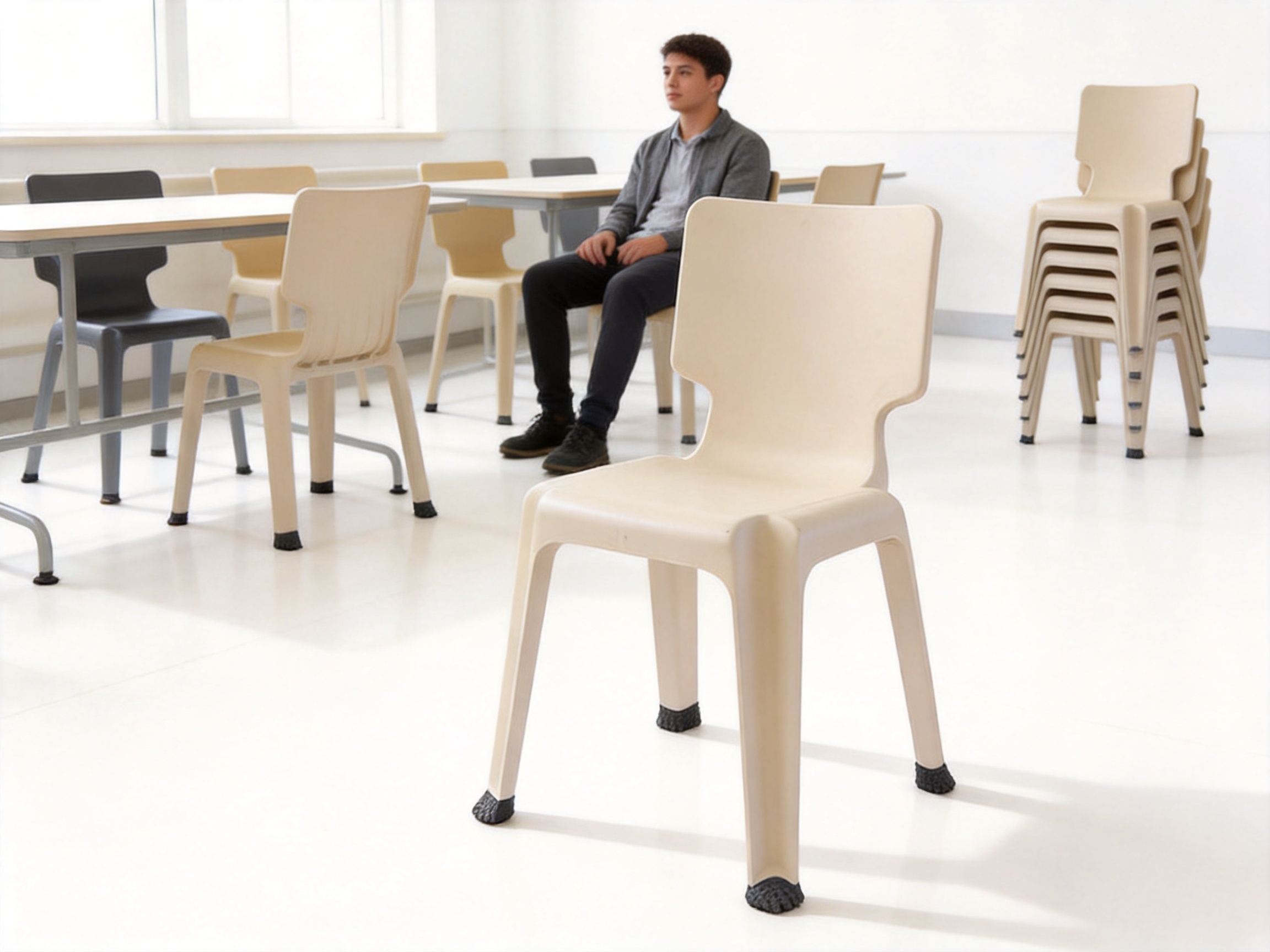
Public seating is exposed to a wide range of conditions. Food and beverage spills may occur in canteens. Humidity may be high in kitchens or storage rooms. Dust and dirt may accumulate in schools, workshops, warehouses, and factory rest areas. A stool that absorbs water or depends on delicate surface coverings can require more maintenance than a smooth moulded plastic product.
The plastic back stool has a smooth surface described as waterproof and moisture-proof. These characteristics are valuable because the material does not rely on fabric upholstery or exposed wood for its primary seating surface. Routine cleaning can generally be performed with suitable water-based cleaning methods, subject to the user’s maintenance procedures and the compatibility of any cleaning agents with the selected plastic.
The smooth surface also supports visual cleanliness. Dirt and stains are easier to identify and remove when the product has a continuous, accessible finish. This is important in schools, restaurants, canteens, healthcare-adjacent facilities, and other environments where hygiene and appearance influence user confidence.
Material selection and mould polishing both affect the surface result. A properly finished mould cavity can help produce a consistent appearance across the seat, backrest, and legs. Surface texture may be adjusted according to design requirements. A lightly textured finish can improve visual appeal and help reduce the appearance of minor handling marks, while a smoother finish may simplify wiping and support a clean, modern appearance.
Cleaning performance should always be considered together with the selected plastic grade, pigment, and cleaning chemicals. For demanding applications, customers can discuss the intended environment with the mould supplier before confirming the final material and surface specification.
Stability is essential for any stool. Users need confidence that the product will remain secure while sitting down, standing up, or shifting position. The back stool uses reinforced legs and non-slip feet to improve contact with the floor and reduce unwanted movement.
Non-slip feet can provide several practical benefits. They may help reduce sliding on smooth indoor surfaces, limit direct contact between the plastic body and the floor, and reduce the possibility of surface scuffing. In shared facilities, they can also lower noise when stools are moved or repositioned. The final result depends on the geometry, foot material, floor type, loading conditions, and maintenance environment.
The relationship between the legs and the seat frame must be carefully considered during mould development. Uneven cooling, inconsistent wall thickness, or unsuitable gate positioning may lead to dimensional variation or warpage. Such issues can affect whether all feet contact the ground evenly. Advanced mould analysis and careful process control help reduce these risks.
A stable stool should not only support a static load. It should also manage ordinary dynamic actions such as sitting down, standing up, turning slightly, and moving the stool across the floor. Corner radii, leg angles, reinforcement ribs, and the centre of gravity all contribute to the final performance.
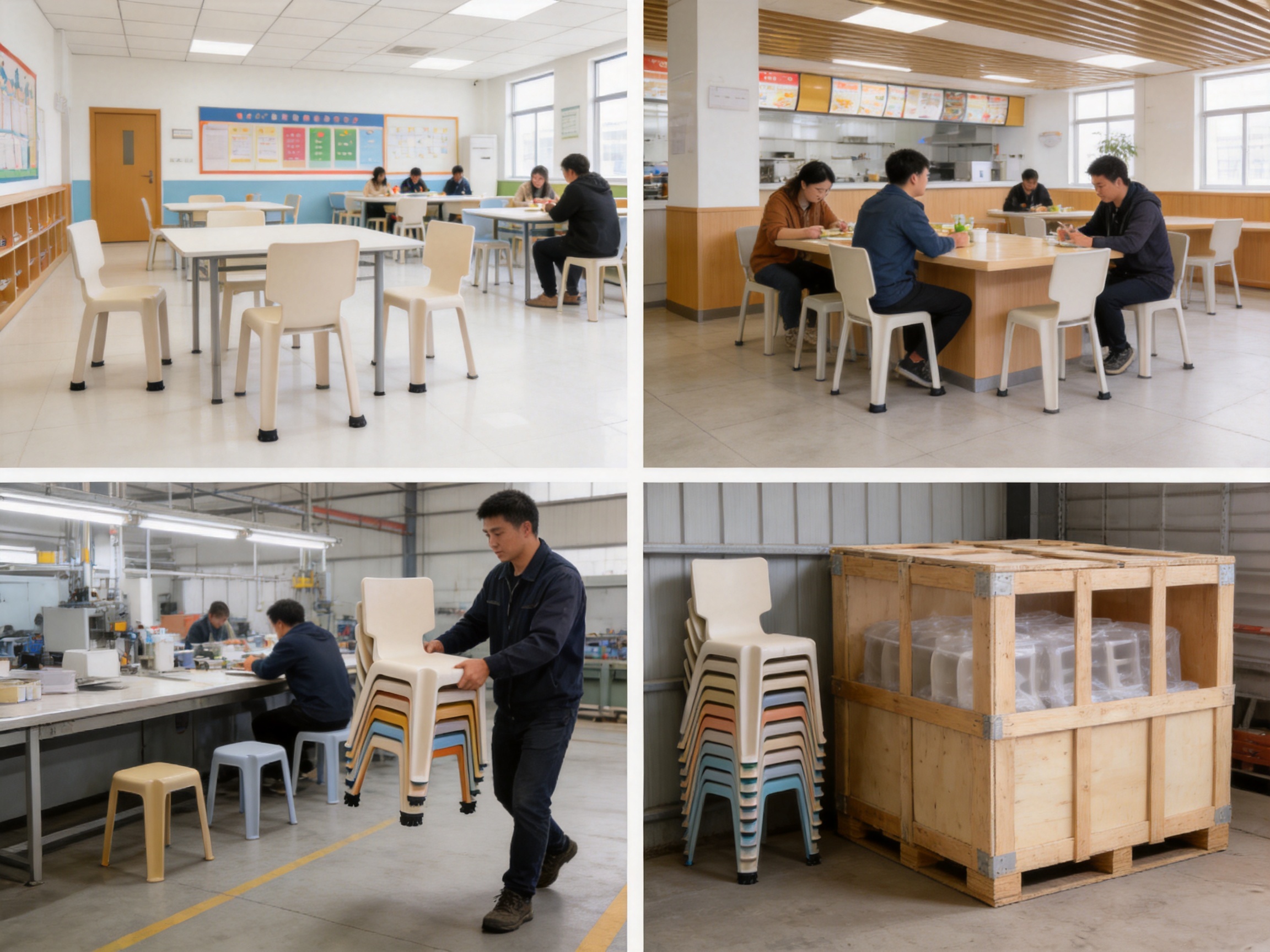
Stackable furniture offers a major operational advantage in facilities where space is limited or seating demand changes throughout the day. The plastic back stool is designed for stacking, enabling multiple units to be stored in a smaller footprint than separate non-stackable products.
Stackability is useful in schools that rearrange classrooms, canteens that clean floors after service, factories that change production layouts, and event spaces that require flexible seating. It also benefits distributors and wholesalers because more products can be organized efficiently in warehouses and delivery vehicles.
Good stackability requires precise coordination between the seat, backrest, legs, and clearance zones. The stool must nest securely without excessive friction or unstable contact. If the parts are too tight, workers may struggle to separate them. If the stack is too loose, the products may shift during storage. Mould design must therefore account for draft angles, dimensional tolerance, surface friction, and the shape of the stacking interfaces.
Efficient stacking can reduce handling time and help lower storage costs. It may also reduce packaging materials when finished products are transported in organized stacks. For large orders, these logistical benefits can influence the total cost of ownership just as much as the original unit price.
Colour is an important part of furniture customization. Different users may require different colours for branding, interior coordination, age-group identification, departmental organization, or product differentiation. The plastic back stool is available in customizable colours, allowing customers to develop a product suited to a particular market or facility.
Colour can be introduced through suitable masterbatch or plastic compound selection. The final appearance depends on the resin, pigment concentration, processing temperature, mould surface, and production consistency. Customers seeking batch-to-batch matching should confirm their colour requirements before mass production and establish an approved reference sample or colour standard.
Customization can also include dimensional adjustments. A school, factory, restaurant, or household product distributor may require different seat heights, widths, backrest shapes, or leg configurations. The mould manufacturer can evaluate whether the requirement calls for minor mould modification, interchangeable inserts, or a completely new mould structure.
Other potential customization areas include logo placement, surface texture, parting-line positioning, packaging, assembly details, and additional accessories. Every change should be evaluated from the perspectives of strength, mouldability, cooling, ejection, cycle time, and production cost. A professional engineering review helps ensure that aesthetic goals do not compromise structural performance.
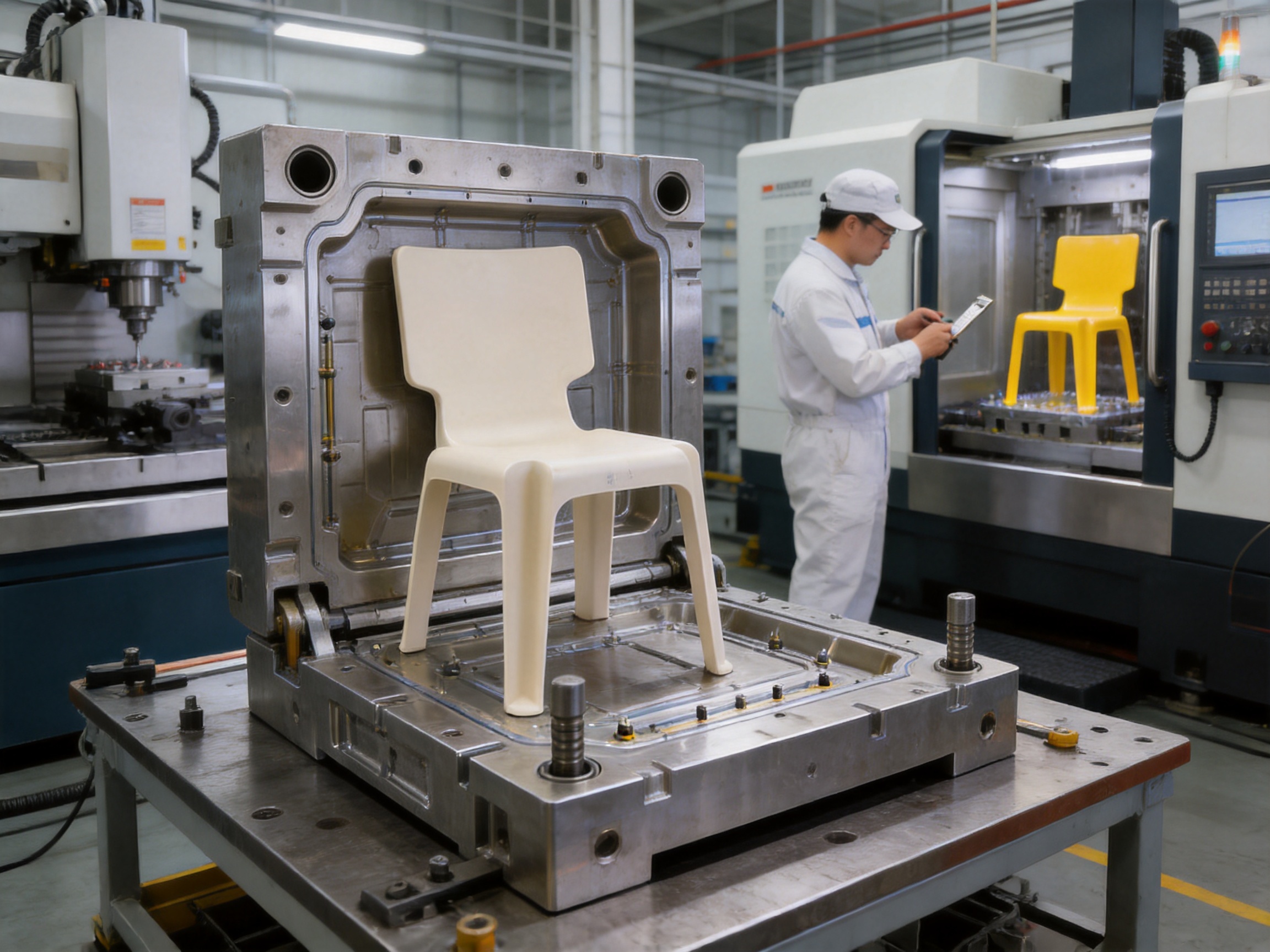
The finished stool can only be as consistent as the mould used to produce it. Injection moulds determine the shape of the product, the position of the parting line, the gate location, the cooling arrangement, the ejection system, and many details that influence production stability.
A high-quality mould can help deliver repeatable dimensions and a uniform appearance over a long production run. It can also support efficient cycle times and reduce defects such as short shots, sink marks, weld-line weakness, flash, warpage, and uneven filling. For a high-volume stool project, these factors directly affect material waste, labour requirements, delivery reliability, and customer satisfaction.
Large plastic products such as stools require careful filling analysis because the flow path may be long and the part may contain different wall thicknesses. The backrest, seat, legs, ribs, and reinforcing structures must fill adequately without creating excessive internal stress. The mould designer must balance gate design, runner configuration, injection pressure, cooling, and ejection.
Cooling is another critical consideration. Plastic contracts as it cools, and uneven cooling can cause distortion. A well-planned cooling system helps control temperature distribution and supports consistent cycle times. For a stackable stool, dimensional consistency is particularly important because small variations can affect how products nest together.
Ejection must remove the stool without damaging thin edges, support ribs, cosmetic surfaces, or structural connections. Ejector pin positions and ejection force should be distributed carefully. Where necessary, lifters, angled ejectors, or other mechanisms may be considered. The most suitable structure depends on the specific product geometry and production requirements.
The manufacturer uses CAD, CAE, and CAM systems to support mould development. These digital tools help engineers move from product concept to manufacturable mould design with greater clarity and control. Three-dimensional CAD modelling can define the stool geometry, identify interference risks, and allow design reviews before machining begins.
Computer-aided engineering can assist with mould-flow evaluation, filling behavior, weld-line prediction, air-trap identification, pressure requirements, cooling analysis, and warpage assessment. Simulation does not replace practical experience, but it can reveal potential issues at an earlier stage, when modifications are less expensive and easier to implement.
CAM systems connect the approved design with machining equipment. This supports accurate manufacturing of mould plates, cavities, cores, inserts, runners, cooling channels, and other precision components. Digital data management also helps maintain consistency between the design model, machining program, inspection records, and final mould assembly.
Engineering support is particularly valuable for customized stools. A customer may know the desired appearance and application but not the best gate location, wall thickness, rib design, or draft angle. The mould supplier can translate the product objective into a practical injection-moulding solution. This collaborative approach can improve manufacturability while preserving the intended appearance and performance.
The supplied material options for mould construction include 1CR13, 2CR13, 3CR13, 4CR13, S136, CR16, 2316, 718H, P20, and other grades. The most appropriate steel depends on the expected production volume, plastic material, surface requirements, corrosion conditions, polishing needs, budget, and maintenance plan.
Different steel grades offer different balances of hardness, toughness, corrosion resistance, polishability, machinability, and service life. For example, projects requiring a highly polished surface or improved resistance to moisture may call for a different steel strategy from a lower-volume project focused primarily on cost efficiency.
The choice of mould steel should not be made in isolation. It should correspond to the product’s production objectives. A mould intended for continuous large-scale manufacturing may justify a more durable steel and more extensive wear protection. A mould intended for limited production may use a different combination of materials and components to achieve a balanced investment.
The company’s ability to work with multiple mould steels gives customers flexibility. It allows the mould specification to be adapted to the product design, expected output, plastic formulation, and commercial plan rather than forcing every project into one standard solution.
The listed plastic material options include PP, PC, PS, POM, PE, PU, PVC, ABS, PMMA, and other materials. PP is the primary choice described for the plastic back stool because it provides a practical combination of light weight, impact resistance, moisture resistance, and cost control.
Other plastics may be considered when the application demands different performance characteristics. PC may be selected when higher impact performance or transparency is important. ABS can provide a balance of rigidity, appearance, and impact resistance for certain products. PE is known for toughness and chemical resistance. PS may be suitable for specific rigid applications, while POM is used where low friction and dimensional characteristics are required.
Not every material is suitable for every stool design. Plastic selection affects shrinkage, mould temperature, injection pressure, cooling behavior, surface appearance, weld-line strength, and cycle time. A material change may require adjustments to the mould design or production process. Customers should therefore confirm the intended resin and any additives before final mould construction.
Recycled content, flame-retardant grades, UV stabilizers, food-contact requirements, and colour additives may also affect the material specification. Where the stool is intended for a particular regulatory or institutional market, the customer should define the applicable requirements at the quotation and design stages.
The process begins with a review of the product concept, intended use, target dimensions, annual output, plastic material, colour, surface finish, packaging, and budget. The manufacturer evaluates whether the proposed shape is suitable for injection moulding and identifies design details that could affect cost or performance.
The stool model is examined for draft angles, wall thickness, ribs, corners, backrest transitions, leg geometry, stacking features, and ejection requirements. At this stage, the engineering team can recommend modifications that improve filling, cooling, demoulding, strength, and production efficiency.
Where appropriate, CAE tools are used to evaluate material flow, pressure distribution, cooling behavior, weld lines, air traps, and potential warpage. The results can guide gate location, runner design, cooling-channel placement, and reinforcement geometry.
Suitable mould steel is selected based on production volume, material characteristics, surface expectations, and service-life requirements. Standard mould components, guide systems, ejector elements, inserts, and hot-runner or cold-runner arrangements are specified according to the project.
CAM data is used to manufacture the mould components with advanced machining equipment. Rough machining removes the bulk of the steel, while finishing operations create the final cavity and core surfaces. Precision work is important for the stool’s dimensions, stacking interfaces, leg alignment, and visible appearance.
The mould surface is polished or textured according to the approved product specification. Surface treatment may be applied where needed to improve wear resistance, corrosion resistance, release behavior, or mould life. The final surface directly influences the appearance and cleaning characteristics of the moulded stool.
After individual parts are machined and inspected, the mould is assembled. Guide pillars, bushings, ejector systems, inserts, cooling circuits, runners, and other components are checked for correct fit and movement. Assembly accuracy is essential for preventing flash, uneven parting, and premature wear.
The mould is tested through trial production. Engineers review filling, part appearance, dimensions, ejection, cycle behavior, stacking performance, and any visible defects. If modifications are required, the mould can be adjusted before final approval.
Once the mould meets the agreed requirements, final inspection and documentation are completed. The mould is prepared for shipment in a composite wooden box. The customer can then install it on compatible injection moulding equipment and proceed with production using the confirmed material and process parameters.
TaiZhou HuangYan YingXiang Plastic Mould Co., Ltd. is located in Huangyan, Taizhou, Zhejiang, an area widely recognized for mould manufacturing. Established in 2012, the company operates a plant covering approximately 7,000 square metres and has around 50 employees. This scale supports a combination of specialized engineering knowledge, manufacturing resources, project coordination, and customer service.
The company specializes in customized plastic mould solutions. Its product range includes crate moulds, folding box moulds, tray moulds, pallet moulds, beverage box moulds, and moulds for daily household products. This experience is relevant to the plastic back stool because many of the same fundamental engineering principles apply across large injection-moulded products: structural reinforcement, balanced filling, controlled cooling, reliable ejection, durable mould construction, and efficient mass production.
Experience across household and logistics products can also support practical design thinking. Crates, pallets, boxes, stools, chairs, and containers all require attention to strength-to-weight ratio, handling, stacking, surface durability, and production consistency. A manufacturer familiar with these product categories can better understand the commercial importance of cycle time, dimensional repeatability, warehouse efficiency, and long-term mould performance.
The company emphasizes lean manufacturing, long-life moulds, on-time delivery, premium quality, competitive costs, and comprehensive customer service. These priorities are significant for customers who need more than a mould cavity. They need a complete project partner capable of helping with design evaluation, mould construction, trial production, corrections, delivery, and after-sales communication.
The plastic back stool offers several advantages over basic backless stools and poorly engineered plastic seating products.
The integrated backrest provides more support than a simple flat stool. This can improve comfort during meals, breaks, classroom activities, and other uses where people remain seated for more than a few minutes.
PP injection moulding allows the product to remain relatively light while incorporating reinforced legs and structural features. Users can move the stool without the heavy weight associated with some metal or wooden alternatives.
The smooth plastic surface is easy to wipe and does not depend on absorbent upholstery. This makes routine cleaning simpler and can improve suitability for busy shared environments.
The stackable design allows multiple stools to be stored together. This can save space in warehouses, classrooms, canteens, factory rest areas, and event facilities.
Customizable colours and dimensions make the product easier to adapt to different customer requirements. A supplier can develop a stool that fits a particular environment rather than relying exclusively on a fixed standard model.
A professionally manufactured injection mould can produce repeated parts with consistent shape and dimensions. This is a significant advantage over manually fabricated or assembled products, where variation may be more apparent across a large batch.
The company’s CAD, CAE, CAM, machining, and mould assembly capabilities support a more controlled development process. Customers can address potential manufacturing issues before the mould enters mass production.
The plastic back stool is suitable for many indoor applications. In canteens, its smooth surface and practical cleaning characteristics support daily food-service routines. Its stackability allows staff to clear seating areas quickly after meals or cleaning.
In schools, the stool can be used in cafeterias, activity rooms, laboratories, workshops, or temporary seating areas. Its lightweight structure makes rearrangement easier, while the backrest offers more support than a basic stool.
Factory rest areas can benefit from durable, economical seating that is easy to move and maintain. The product’s reinforced structure and impact-resistant PP are suitable for environments where furniture may experience frequent handling.
In homes, the stool can be used in kitchens, utility spaces, balconies, dining areas, workshops, and children’s activity spaces, provided that the product is used according to its intended capacity and safety requirements.
Distributors and furniture wholesalers may also find the product attractive because it can be produced in different colours and configurations. OEM service allows buyers to develop private-label or market-specific versions based on their sales strategy.
Quality control should cover both the mould and the moulded stool. For the mould, important checkpoints may include steel certification, component dimensions, cavity and core accuracy, cooling-channel integrity, ejector movement, surface finish, parting-line quality, and trial-production results.
For the finished stool, inspections may include appearance, colour consistency, dimensions, weight, stacking behavior, leg alignment, surface defects, stability, and load performance. The exact inspection plan should be agreed according to the customer’s technical specification and intended market.
Common injection moulding defects include short shots, flash, sink marks, flow lines, weld lines, burn marks, warpage, colour variation, and ejection marks. Effective mould design and process control can reduce these risks. When a defect appears during trial production, the cause should be analyzed rather than corrected only through superficial adjustments.
Material drying, temperature settings, injection speed, holding pressure, cooling time, mould temperature, and machine compatibility can all influence the final product. The mould supplier can help identify the relationship between mould design and processing conditions, while the production factory remains responsible for operating the injection moulding machine according to the agreed process.
Customers can improve project efficiency by providing as much information as possible at the beginning. Useful inputs include a 3D product file, drawings, target dimensions, annual production volume, preferred plastic, colour requirements, surface finish, expected load, application environment, packaging method, and delivery destination.
If a customer has only a sketch or physical sample, the engineering team can evaluate whether additional design development is required. It is helpful to identify which features are fixed and which features can be changed. For example, the customer may require a specific seat height but allow flexibility in the backrest contour or leg reinforcement.
Customers should also discuss whether the mould must support one colour, multiple colours, several product sizes, or future design revisions. Early communication about these objectives may influence the use of interchangeable inserts, cavity arrangements, cooling design, and mould base selection.
Production quantity is another important factor. A mould intended for a small regional market may have different cost priorities from a mould intended for continuous export production. The appropriate steel, component quality, cavity arrangement, and automation level can be selected more accurately when the expected output is known.
Regular mould maintenance helps preserve product quality and reduce unexpected downtime. After production, the mould should be cleaned according to the material and process requirements. Water should be removed from cooling circuits when appropriate, and exposed steel surfaces should receive suitable rust protection during storage.
Moving components such as ejectors, slides, guide pillars, and bushings should be inspected and lubricated according to the maintenance schedule. Wear parts should be checked for scoring, looseness, abnormal noise, or restricted movement. Cooling channels should be monitored for blockage or reduced flow, since poor cooling can affect both cycle time and product quality.
The mould should be stored in a dry, protected location. It should not be exposed unnecessarily to corrosive chemicals, uncontrolled humidity, or impact during handling. When the mould is transported, the composite wooden box and internal protections should be maintained until installation.
Proper maintenance can extend mould life and help preserve dimensional accuracy. It also supports more stable production, fewer moulding defects, and more predictable delivery performance over the life of the project.
Impact-resistant polypropylene, or PP, is the principal material described for this stool. It offers a practical combination of low weight, toughness, moisture resistance, and cost efficiency. The final grade should be selected according to the required load, application environment, colour, and production process.
The product information states a load-bearing capacity of up to 170 kilograms. Actual performance depends on the final design, material grade, processing conditions, floor support, and correct use. Customers requiring formal testing should define the test method and acceptance standard before production.
The stool is described for home and public applications and has a moisture-resistant plastic structure. However, long-term outdoor exposure may require additional consideration of ultraviolet radiation, temperature changes, wind, surface ageing, and drainage. Customers should discuss outdoor requirements so that suitable material additives and design details can be evaluated.
Yes. The colour is customizable. Customers should provide a colour reference, sample, or recognized colour standard and confirm the acceptable tolerance for mass production. Pigment selection and processing conditions may affect the final appearance.
Size and design details can be customized according to the project. The engineering team should evaluate changes to seat height, seat width, backrest shape, leg structure, stacking features, and wall thickness to ensure that the revised product remains suitable for injection moulding.
The listed options include 1CR13, 2CR13, 3CR13, 4CR13, S136, CR16, 2316, 718H, P20, and other grades. The correct steel depends on production volume, plastic material, surface requirements, corrosion exposure, expected service life, and budget.
The mould is generally checked through assembly inspection and trial moulding. Engineers can review filling, appearance, dimensions, ejection, cooling behavior, flash, warpage, stacking, and other agreed requirements. Corrections may be made before final approval and shipment.
Stackability reduces the space required for storage and can simplify transportation and handling. It is particularly useful in schools, canteens, factories, event facilities, warehouses, and homes where seating must be moved or stored regularly.
Yes. OEM service is available. Customers can discuss product dimensions, colours, branding, packaging, materials, mould specifications, and production requirements with the manufacturer.
The mould should be cleaned, dried, lubricated, inspected, and protected against corrosion according to its maintenance requirements. Cooling circuits, ejectors, guide components, parting surfaces, and wear parts should be checked regularly to maintain stable production.
The company produces moulds for logistics crates, folding boxes, trays, pallets, beverage boxes, storage products, household products, chairs, stools, and other injection-moulded items. This broader experience supports its ability to handle structural and high-volume plastic product projects.
The plastic back stool is a practical seating solution that combines comfort, strength, cleanability, mobility, and storage efficiency. Its moderately high backrest provides more support than a basic stool, while reinforced legs and non-slip feet contribute to stability. Impact-resistant PP helps keep the product lightweight and durable, and the smooth waterproof surface supports simple daily maintenance.
Its stackable construction is valuable for institutions, factories, canteens, schools, distributors, and households that need efficient storage. Customizable colour and size options allow the product to serve different markets and environments. OEM support further enables customers to create versions aligned with their own specifications and commercial objectives.
The mould is central to the product’s success. Through appropriate steel selection, CAD design, CAE analysis, CAM machining, careful assembly, trial moulding, and quality inspection, the manufacturer can help produce consistent stools at commercial scale. The company’s experience in household and logistics moulds, supported by a 7,000-square-metre facility, experienced personnel, and modern engineering systems, provides a strong foundation for customized injection mould projects.
For customers seeking a durable and economical plastic seating product, the plastic back stool offers a balanced combination of user comfort, structural performance, easy maintenance, and logistical convenience. When supported by professional mould engineering and disciplined production control, it can become a dependable solution for both public and private spaces.
1. Product specification information for the plastic back stool, including material, customization, packaging, forming method, and application details.
2. Manufacturer-provided company information concerning facility scale, establishment date, product categories, engineering systems, and mould manufacturing capabilities.
3. General principles of thermoplastic injection mould design, including parting lines, draft angles, gate selection, cooling, ejection, and mould maintenance.
4. General polypropylene material guidance concerning impact resistance, moisture resistance, density, processing, and common household product applications.
5. General engineering practices for plastic product design, structural reinforcement, dimensional control, stackability, and mass-production quality management.
If you are interested in any of our products or services, please feel free to ask and we can talk about your ideas.
 QUICK LINKSMOBILE SITE
 FACTORY ADDRESS
 CONTACT INFORMATION



 English
 Español