The 1-Cavity Square Stool Mold is designed for manufacturers seeking a reliable, efficient, and commercially practical solution for producing square plastic stools. A stool may appear to be a simple household product, but its mould must control many important factors at the same time: structural strength, dimensional stability, surface quality, cycle efficiency, material distribution, appearance, and long-term production reliability. A well-designed stool mould directly influences the quality of every finished product and the profitability of the entire manufacturing operation.
This mould belongs to the stool mould category and is suitable for plastic injection moulding applications in household goods production, furniture manufacturing, institutional supplies, retail products, and general-purpose seating products. Its single-cavity configuration allows focused control over the moulding process and provides a practical balance between tooling investment, product quality, production flexibility, and maintenance requirements.
Manufactured by TaiZhou HuangYan YingXiang Plastic Mould Co., Ltd., the mould benefits from the technical environment of Huangyan, Taizhou, Zhejiang, a well-known mould manufacturing centre in China. The company has operated since 2012 and combines experienced technicians, advanced CAD, CAE, and CAM systems, modern processing equipment, and an approximately 7,000-square-metre production plant. These capabilities support the development of moulds for stools, crates, folding boxes, pallets, trays, containers, chairs, household products, and other injection-moulded items.
The purpose of this article is to examine the product in detail, explain its potential manufacturing advantages, describe the engineering and production processes behind it, and show why a professionally produced single-cavity square stool mould can be a valuable choice for plastic product manufacturers.
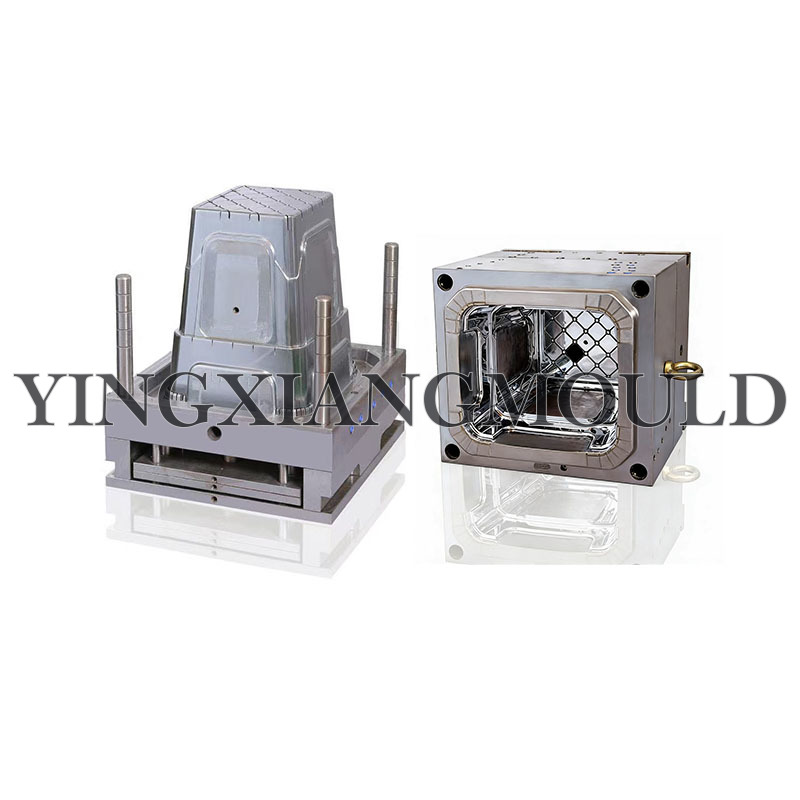
1-Cavity Square Stool Mold
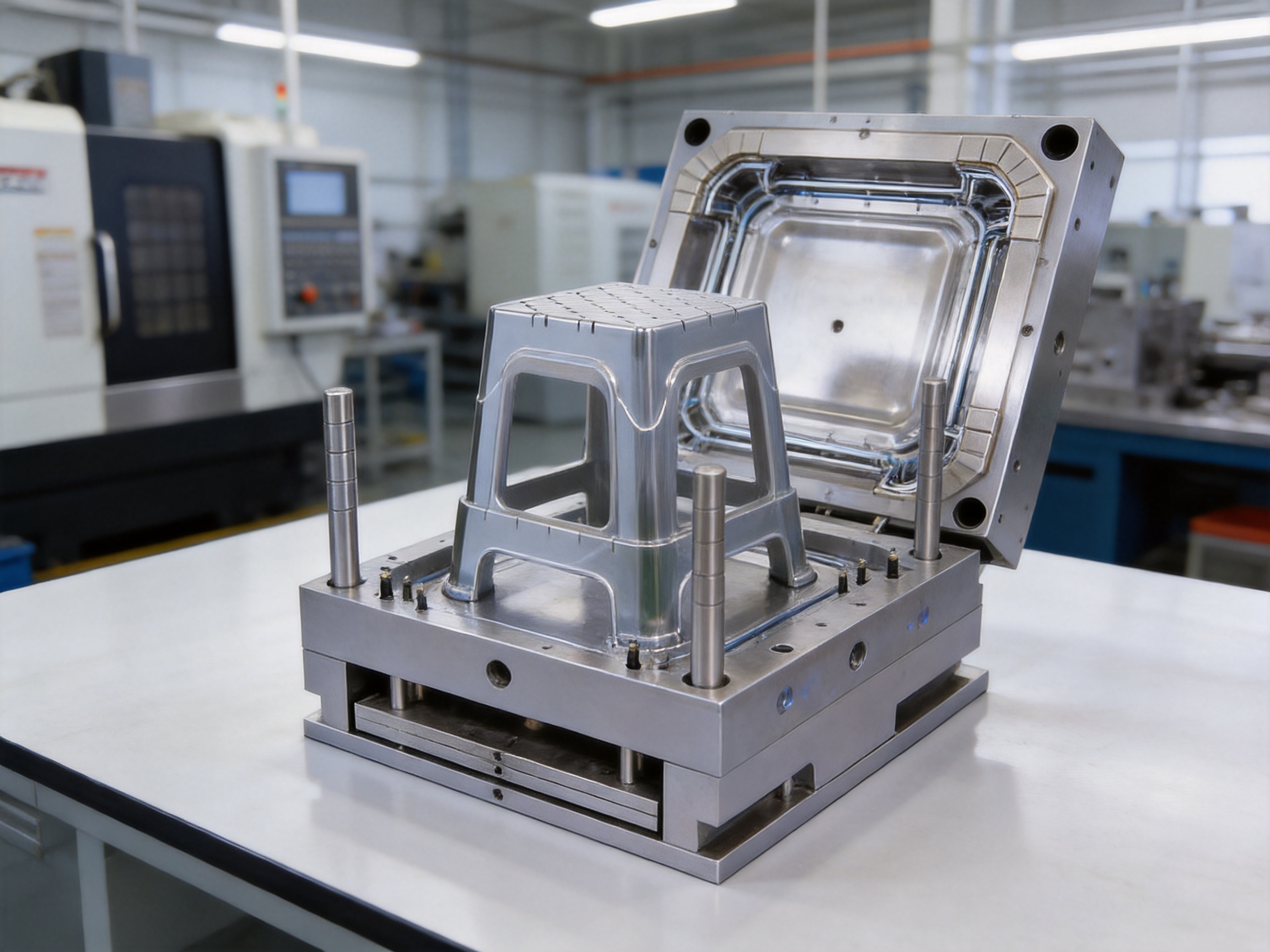
A 1-cavity square stool mould is a tooling system that forms one complete square stool during each injection cycle. The cavity reproduces the external geometry of the stool, while the core forms the internal structure, underside features, leg openings, reinforcing ribs, and other functional details. Depending on the final design, the mould may also include slides, inserts, lifters, ejector components, cooling channels, guide systems, and a carefully engineered gating arrangement.
The single-cavity layout provides a direct and controlled moulding process. Unlike a multi-cavity tool, which produces several parts at the same time, a one-cavity tool concentrates the injection pressure, cooling design, ejection system, and dimensional control on one product. This can be particularly beneficial when the stool has a relatively large projected area, deep structural features, thick support zones, or a shape that requires careful management of filling and cooling.
Square stools are commonly produced as lightweight but robust household products. They may be used as temporary seats, children’s stools, low tables, bathroom stools, shop display supports, outdoor utility products, or general domestic furniture. As a result, the mould must be capable of creating a product that is visually clean while also resisting ordinary loads, impact, repeated handling, and environmental changes.
The tooling solution can be adapted to the customer’s product design, selected resin, injection machine, expected production volume, surface requirements, and target market. This custom approach is important because no single stool structure is suitable for every application. A stool intended for indoor household use may require different wall thicknesses, surface textures, ribs, and material choices from a stool intended for commercial, outdoor, or institutional use.
The quality of a plastic stool begins long before the first production shot. It starts with the relationship between the product design and the mould design. If the product contains abrupt thickness changes, poorly positioned ribs, inadequate draft angles, or unbalanced flow paths, the mould may produce warpage, sink marks, short shots, weld lines, flash, or difficult ejection. These problems can reduce the strength and visual appeal of the finished stool and increase production costs.
A professional mould design addresses these issues during the engineering stage. The product geometry is reviewed for manufacturability, and the filling, packing, cooling, and ejection processes are considered together. This integrated approach allows potential defects to be identified before steel is cut. It also helps ensure that the mould is compatible with the intended injection moulding machine and production material.
For a square stool, the corners deserve special attention. Corners can influence filling balance, cooling behaviour, stress concentration, and external appearance. The underside of the stool is equally important because it usually includes legs, reinforcing ribs, support walls, and sometimes nesting or stacking features. These details must be formed accurately while still allowing the finished part to release smoothly from the mould.
The mould’s parting line must be positioned to reduce visible marks and simplify ejection. Draft angles should be sufficient for release without compromising the product’s appearance or functional dimensions. Gate location must be selected to promote balanced filling and minimise unwanted weld lines in highly visible or load-bearing areas. Cooling channels must be distributed in a way that limits uneven shrinkage and shortens the cycle without creating excessive thermal stress.
The most obvious characteristic of this product is its single-cavity configuration. A one-cavity mould allows the tooling designer and production team to focus on one complete stool in every cycle. This arrangement can simplify process adjustment and make it easier to identify the cause of any moulding variation. When a process change is required, the effect can be observed directly on one part rather than being complicated by differences between multiple cavities.
For manufacturers launching a new stool, serving a regional market, or producing moderate volumes, the single-cavity format can offer a sensible investment level. It avoids the higher initial cost and greater complexity associated with a multi-cavity mould while still providing dependable repeat production. It can also be suitable for customers who require several different stool models and prefer to allocate their tooling budget across multiple product styles.
Household furniture often requires product differentiation. Customers may want a special stool height, a particular seat shape, a distinctive leg structure, a logo area, a textured surface, or a customised underside. A custom-designed stool mould can incorporate these requirements into the cavity and core rather than forcing the manufacturer to rely on a generic product.
Customisation can also extend to material selection and product performance. The mould can be designed around commonly used injection moulding materials such as polypropylene, high-density polyethylene, ABS, or other suitable thermoplastics, subject to the product specification and moulding conditions. The selected material affects shrinkage, flow behaviour, impact strength, rigidity, surface finish, and cooling requirements, so the mould should be engineered with the resin in mind.
A modern plastic stool should be strong enough for its intended use without becoming unnecessarily heavy. Excessive wall thickness can increase material consumption, prolong cooling time, and create sink marks or internal stresses. Insufficient thickness, on the other hand, can reduce stiffness and load-bearing performance.
The mould can support a more efficient structural design through carefully placed ribs, support walls, curved transitions, and reinforced corners. These features allow the product designer to improve rigidity without simply adding material everywhere. When the geometry and moulding process are properly coordinated, manufacturers can achieve a practical combination of low weight, good strength, and attractive appearance.
The mould surface determines much of the appearance of the finished stool. A polished cavity can produce a smooth surface, while an etched or textured surface can help hide minor handling marks, improve visual appeal, or provide a less slippery finish. Textures may be applied selectively to the seat, side walls, legs, or other visible areas.
Consistent surface reproduction requires accurate machining, appropriate steel preparation, careful polishing or texturing, and effective control of moulding conditions. A professional mould manufacturer can coordinate these requirements so that the surface finish is not treated as an isolated cosmetic feature but as part of the complete tooling design.
Ejection is a critical part of stool mould performance. The product may contain deep legs, reinforcing ribs, internal corners, or areas that create resistance during release. If the ejection force is not distributed correctly, the stool can be deformed, marked, or damaged during removal.
A suitable ejection arrangement may include ejector pins, ejector plates, sleeves, lifters, or other mechanisms selected according to the product geometry. The goal is to release the stool evenly while protecting visible surfaces and preventing stress concentration. Proper draft design also contributes significantly to smooth ejection and stable automated production.
A mould is a long-term production asset, not a disposable tool. Its value depends not only on the first production run but also on how easily it can be inspected, cleaned, repaired, and maintained throughout its service life. A well-organised mould should provide reasonable access to wear components, cooling connections, ejector parts, inserts, and other service areas.
The single-cavity layout can simplify maintenance because the tool contains fewer replicated cavity systems than a multi-cavity alternative. Operators and maintenance personnel can inspect the key forming surfaces and moving components with a relatively direct workflow. This may reduce troubleshooting time and help manufacturers return the mould to production more quickly after routine servicing.
Not every stool mould delivers the same level of production value. Low-cost or poorly engineered tooling may appear attractive at the purchasing stage, but it can generate hidden expenses through unstable cycles, excessive flash, difficult ejection, frequent repairs, inconsistent dimensions, and premature wear. The most important comparison is therefore not simply the initial mould price but the total cost of ownership over the mould’s working life.
A specialised mould manufacturer studies the product before manufacturing begins. Design reviews, mould flow analysis, draft checks, wall-thickness evaluation, shrinkage compensation, and ejection planning can expose risks at an early stage. This is an important advantage over suppliers that move directly from a basic drawing to machining without sufficient engineering validation.
Early analysis is especially valuable for square stools because the product may combine broad flat areas with legs, ribs, corners, and thick structural transitions. These features can interact in complex ways during filling and cooling. Identifying those interactions in the digital stage helps reduce the need for expensive modifications after mould assembly.
Consistency is essential for commercial production. Retail customers expect every stool in a batch to have the same dimensions, colour, texture, leg alignment, and overall appearance. Dimensional variation can affect stacking, packaging, stability, and customer satisfaction.
Accurate CAD-based design, controlled machining, precise fitting, and functional testing support a more repeatable result. A carefully balanced mould also makes it easier for the injection moulding operator to establish a stable process window. This is a major advantage over basic tooling that may require constant manual adjustment to achieve acceptable parts.
Tooling problems can interrupt an entire production schedule. If a mould develops a cooling leak, ejector failure, serious flash, or damaged forming surface, the injection machine may remain idle until repairs are completed. Reliable design and suitable component selection reduce the likelihood of such interruptions.
Production risk is also reduced when the mould supplier understands the customer’s machine, material, production quantity, and quality expectations. The tool can be designed with those real-world conditions in mind rather than treated as an isolated steel assembly.
Custom mould projects involve numerous decisions, including product drawings, material selection, colour, surface finish, gate position, cooling requirements, mould base arrangement, delivery schedule, and acceptance standards. A capable supplier provides structured communication throughout the project and helps the customer understand the effect of each decision.
Yingxiang Plastic Mould has developed its business around customised plastic mould solutions and serves product categories that include crates, folding boxes, pallets, trays, beverage boxes, chairs, storage containers, and household products. Experience across these related applications can be useful when developing a stool because many of the same engineering principles apply: structural design, controlled flow, durable steel construction, efficient cooling, and reliable ejection.
The process begins with a detailed review of the customer’s requirements. Important information includes the 3D product file, 2D drawings, target material, expected output, injection machine specifications, product weight, surface finish, colour requirements, packaging method, and intended market.
The manufacturer also needs to understand whether the stool must be stackable, whether it will be used outdoors, whether it must meet a particular load requirement, and whether the customer expects future design variations. These details influence the cavity layout, steel selection, cooling design, ejection structure, and mould base dimensions.
During this stage, engineers examine draft angles, wall thickness, transitions, corners, ribs, parting lines, undercuts, and potential deformation areas. The goal is to ensure that the stool can be filled, cooled, and ejected efficiently.
Sharp internal corners may be modified with suitable radii to reduce stress concentration and improve material flow. Ribs may be adjusted to prevent excessive sink marks. Visible surfaces are reviewed for gate marks, ejector marks, and weld lines. If the original product design creates serious moulding risks, the manufacturer can recommend changes before tooling construction.
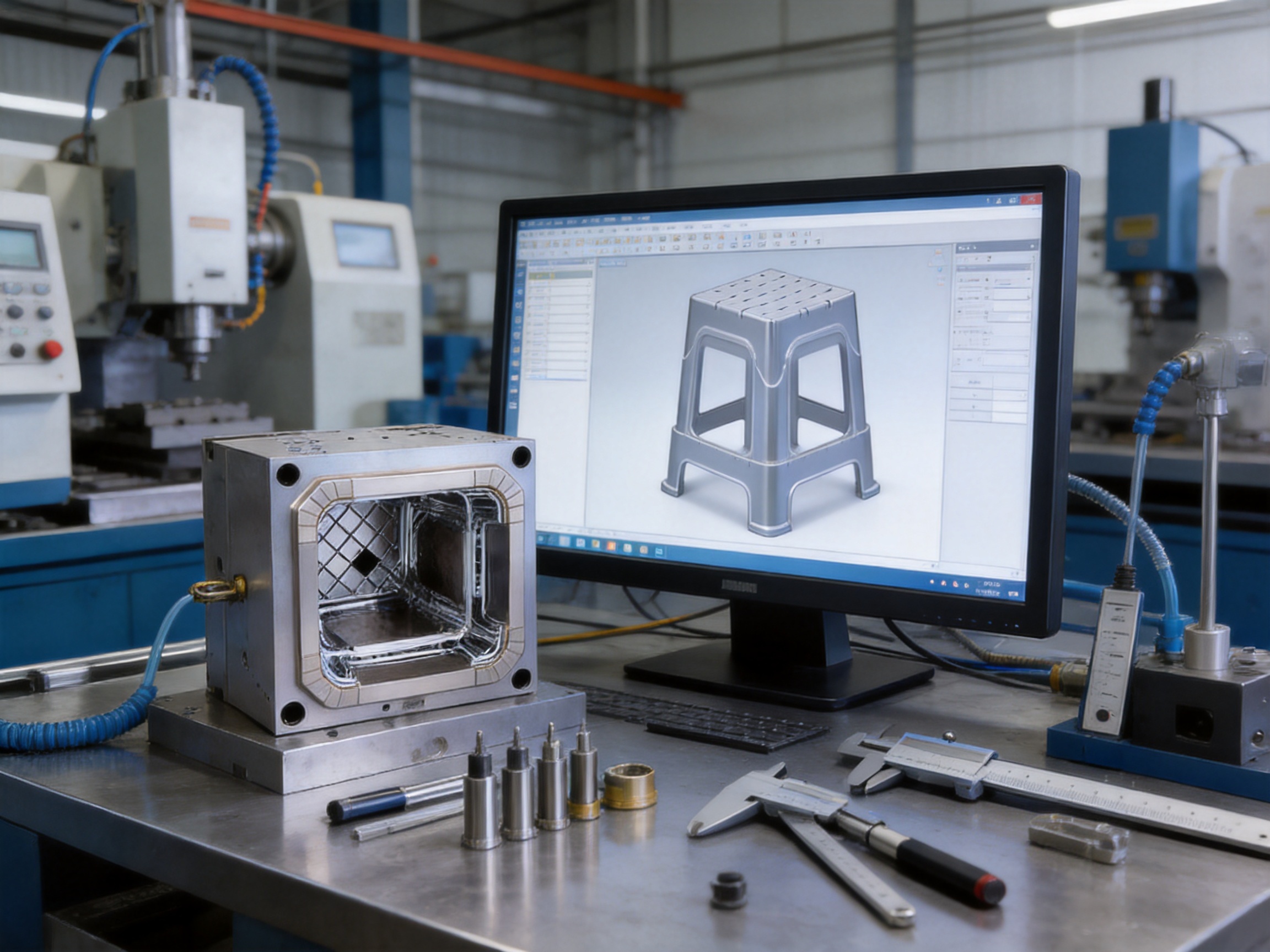
Computer-aided design systems are used to create the cavity, core, mould base, inserts, cooling circuits, ejector system, and associated components. Computer-aided engineering tools can assist with the evaluation of filling patterns, pressure requirements, cooling behaviour, and likely shrinkage or warpage.
Computer-aided manufacturing then converts the approved design into machining data. This digital connection between design and production improves dimensional control and reduces manual interpretation. It also helps preserve design information for future modifications, replacement components, or related stool models.
The selection of mould steel depends on factors such as production volume, plastic material, surface finish, expected wear, corrosion risk, and customer budget. The forming surfaces generally require a material that can be machined accurately, polished or textured effectively, and hardened or treated as needed.
Other components include the mould base, guide pillars, guide bushes, locating elements, ejector components, cooling fittings, screws, wear plates, and possible interchangeable inserts. Correct component planning contributes to mould alignment, repeatability, service life, and repairability.
Machining operations may include CNC milling, drilling, high-speed machining, electrical discharge machining, wire cutting, and other precision processes. Each process is selected according to the geometry and tolerance requirements of the component.
Complex corners, deep ribs, narrow slots, and detailed textures may require multiple machining stages. Precision measurement is performed during and after machining to verify critical dimensions. The objective is not only to create a visually accurate cavity but also to ensure that the complete mould assembly operates smoothly under injection pressure and repeated cycling.
After individual components are machined, the mould is fitted and assembled. This stage requires careful attention to parting-line contact, guide movement, insert seating, ejector travel, slide operation, and cooling circuit integrity.
Good fitting practice helps prevent flash, uneven wear, misalignment, and premature damage. The cavity and core must meet accurately without excessive interference or unnecessary clearance. Moving components should operate smoothly and remain stable under production conditions.
A trial moulding run is used to evaluate the mould with the selected or representative material. Engineers and technicians inspect filling, packing, cooling, ejection, product dimensions, surface finish, flash, sink marks, weld lines, short shots, and warpage.
If adjustments are needed, the mould may be corrected through changes to process settings, venting, cooling, gate conditions, polishing, fitting, or selected forming areas. Trial moulding is an important quality step because it connects the theoretical design with actual production behaviour.
Before shipment, the mould is inspected for operation, appearance, component completeness, cooling connections, ejector movement, and overall assembly quality. Documentation may include mould drawings, maintenance recommendations, trial records, spare-part information, and operating notes.
Proper packaging is also important. The mould must be protected against moisture, impact, corrosion, and movement during transportation. Clear identification of the mould, accessories, and connection points helps the customer install it efficiently at the production site.
The chosen plastic material should match the product’s functional requirements. Polypropylene is widely used for household products because of its low density, chemical resistance, flexibility, and practical impact performance. High-density polyethylene may be appropriate where toughness and moisture resistance are important. Other materials may be selected when the stool requires greater rigidity, enhanced appearance, or specific environmental performance.
Each resin has its own flow characteristics, shrinkage behaviour, processing temperature, and cooling requirements. The mould design should account for these properties. A gate and cooling arrangement that performs well for one resin may not provide the same result for another. Customers should therefore provide accurate material information during the design stage.
The gate introduces molten plastic into the cavity, so its location and size can strongly influence the finished part. The design must support efficient filling while controlling visible gate marks, weld lines, pressure loss, and packing behaviour.
For a broad square stool, filling balance is particularly important. An unsuitable gate position can cause one side or corner to fill earlier than another, producing uneven pressure and possible warpage. The final gate solution depends on the stool’s geometry, wall thickness, material, machine capacity, and appearance requirements.
Cooling often determines a large portion of the injection cycle. Efficient cooling removes heat from the cavity and core at a controlled rate, allowing the stool to reach sufficient rigidity before ejection. Uneven cooling can create differential shrinkage and deformation, especially in broad flat surfaces or areas connected to thick legs and ribs.
Cooling channels should be positioned with regard to the product geometry and mould steel thickness. Connections must be accessible and protected against leakage. In a professional mould, cooling is considered during the initial layout rather than added as an afterthought.
Air trapped inside the cavity can cause burn marks, incomplete filling, surface defects, or excessive injection pressure. Proper venting allows displaced air and gases to escape as the plastic fills the mould. Vent locations must be designed carefully so that they support filling without creating visible defects or flash.
The broad surfaces and corners of a square stool may require particular attention to air evacuation. Venting performance should also be checked during trial moulding, since real filling behaviour can differ from a purely theoretical prediction.
Draft angles permit the moulded stool to separate from the cavity and core with lower force. Insufficient draft can create drag marks, deformation, or difficult automatic removal. Excessive draft may alter the product’s dimensions or appearance. The correct balance depends on the surface texture, material, depth, and functional requirements.
Ejector components should be placed in areas that can tolerate their marks and forces. The ejection system must remove the stool evenly, especially if the product has a wide seat or multiple legs. A properly coordinated draft and ejection design helps protect both the product and the mould.
The value of the 1-cavity square stool mould extends beyond the physical tool. It can support a practical production strategy for businesses that need controlled investment, flexible product development, and dependable quality.
| Business or Engineering Factor | Potential Benefit of a Single-Cavity Stool Mould | Production Implication |
|---|---|---|
| Initial tooling investment | Generally more controlled than a comparable multi-cavity solution | Useful for new products, moderate volumes, and staged market entry |
| Process control | One cavity simplifies filling, cooling, and defect analysis | Operators can establish and maintain a focused process window |
| Product customisation | The cavity and core can be developed around a customer-specific design | Supports differentiated shapes, textures, logos, and structural details |
| Maintenance | Fewer replicated cavity systems require inspection | Can simplify servicing and troubleshooting |
| Quality management | One product is produced per cycle with direct dimensional monitoring | Helps maintain consistent product standards |
| Production flexibility | Suitable for manufacturers producing several product styles on different schedules | Allows tooling resources to be allocated according to actual demand |
| Product development | Suitable for testing a new stool design before investing in higher-cavity tooling | Supports phased product launches and market validation |
Although a multi-cavity mould may provide higher output per cycle, it is not automatically the best solution for every business. The correct choice depends on annual demand, available machine capacity, product selling price, tooling budget, required delivery volume, and the number of product variations. A single-cavity mould can be a strategically sound choice when flexibility and controlled investment are more important than maximum theoretical output.
Quality control should cover the entire mould manufacturing process rather than rely only on a final visual inspection. At the design stage, engineers verify the product and mould structure. During machining, critical dimensions are checked against the digital model and technical drawings. During fitting, the assembly is inspected for alignment and movement. During trial moulding, the finished stool is evaluated under real or representative conditions.
TaiZhou HuangYan YingXiang Plastic Mould Co., Ltd. operates an approximately 7,000-square-metre plant with around 50 employees. Its use of CAD, CAE, and CAM systems, high-tech equipment, and experienced technical personnel provides a foundation for structured mould production. These resources are particularly valuable for custom tools, where a product may require several design reviews and adjustments before it is ready for stable production.
Quality control should include the following areas:
• Verification of cavity and core dimensions.
• Inspection of parting-line fit and flash prevention.
• Confirmation of cooling channel integrity and connections.
• Testing of ejector stroke and smooth movement.
• Examination of surface polishing or texturing.
• Measurement of critical stool dimensions.
• Inspection for short shots, sink marks, warpage, weld lines, and burn marks.
• Review of mould opening, closing, and release performance.
• Confirmation that supplied accessories and documentation are complete.
These checks help reduce production surprises after the mould reaches the customer’s factory. They also provide useful information for future mould maintenance and process optimisation.
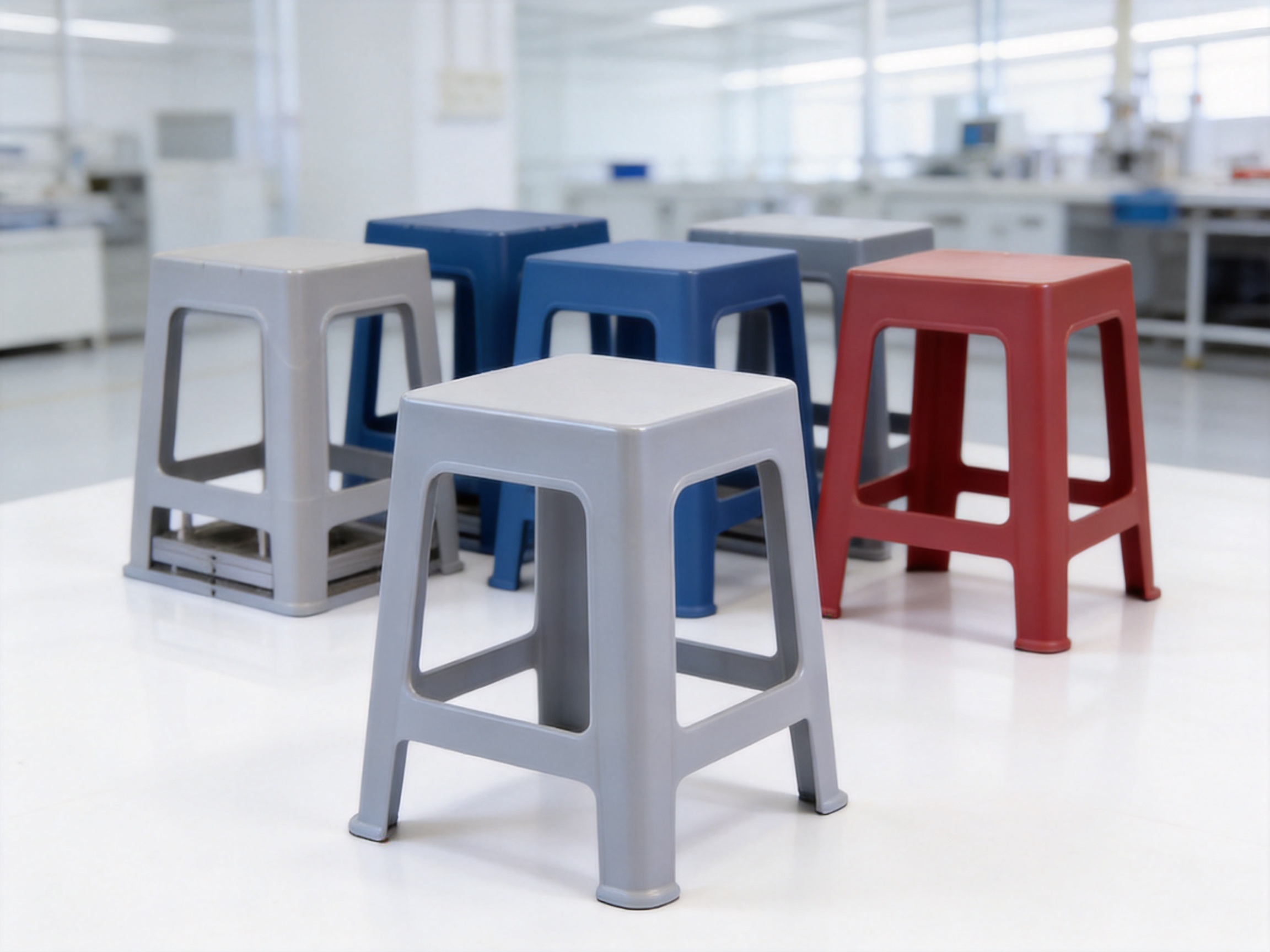
The finished plastic stool can serve multiple markets depending on its geometry, material, colour, and load specification. In household environments, it may function as a low seat, step stool, bathroom stool, children’s seat, or utility stand. In commercial settings, it may be used in shops, cafés, classrooms, waiting areas, workshops, and service facilities.
The square shape can support efficient packaging and storage. If the product is designed with suitable leg geometry, several stools may be stacked or nested to reduce warehouse space and transportation volume. This can create an important logistical advantage for distributors and retailers.
Colour and surface texture also influence market positioning. Bright colours may be suitable for children’s products or promotional retail lines, while neutral colours may appeal to household, office, or institutional buyers. Textured surfaces can provide a distinctive visual identity and may assist with scratch concealment during ordinary use.
Manufacturers can also use the mould platform as the foundation for future product development. Variations in height, seat pattern, leg structure, or surface treatment may be developed as separate models, depending on the original design strategy and the feasibility of interchangeable components.
Before installing the mould, the customer should confirm that the injection machine provides adequate clamping force, injection capacity, platen dimensions, mould height, ejector stroke, and cooling connections. The mould should be mounted securely and aligned according to the supplied technical information.
The injection unit should be cleaned and prepared for the selected resin. Initial process parameters should be established conservatively and then adjusted based on filling, packing, cooling, and ejection performance. Operators should avoid making aggressive changes without understanding their effect on part quality and mould stress.
During the first production runs, the manufacturer should record cycle time, injection pressure, holding conditions, cooling time, mould temperature, product weight, and defect observations. This information provides a baseline for future production. If the stool is used in demanding applications, functional testing should be performed to confirm stability, strength, and resistance to expected handling conditions.
Regular mould maintenance should include cleaning the parting line, checking the ejector system, inspecting guide components, monitoring cooling flow, applying suitable lubrication, and protecting the mould against corrosion during storage. Any unusual noise, resistance, flash, leakage, or dimensional change should be investigated promptly.
The manufacture of a stool mould requires more than machining a cavity that resembles the final product. It requires knowledge of plastic flow, shrinkage, structural design, mould mechanics, injection equipment, surface treatment, and production economics. An experienced supplier can connect these areas and make decisions that support both immediate quality and long-term reliability.
Yingxiang Plastic Mould was established in 2012 in Huangyan, Taizhou, Zhejiang, China, an area recognised for its mould manufacturing expertise. The company focuses on customised plastic mould solutions and produces tooling for logistics crates, folding boxes, pallets, trays, beverage boxes, chairs, storage containers, and household products in addition to stool moulds.
This product range demonstrates experience across both industrial packaging and household plastic applications. Although each mould is individually designed, knowledge gained from related products can support better decisions regarding rib structures, broad panels, repeated-use components, material flow, cooling, ejection, and long-life tooling.
The company emphasises lean manufacturing, long-life moulds, on-time delivery, premium quality, competitive costs, and comprehensive customer service. These priorities are directly relevant to buyers evaluating a stool mould because the mould must perform consistently after installation, not merely appear acceptable when delivered.
Each customer may have different expectations for product size, surface finish, output, material, automation, and delivery. A custom tooling programme should therefore include technical communication before quotation and throughout manufacturing. Product drawings and samples should be reviewed carefully, and any changes should be documented to avoid misunderstandings.
Customers may discuss the following items with the mould manufacturer:
• Stool dimensions and tolerance requirements.
• Recommended plastic resin and additives.
• Product weight and target cycle time.
• Required texture, polish, or logo area.
• Gate and ejector mark locations.
• Stacking or nesting requirements.
• Expected annual production volume.
• Injection machine model and available clamping force.
• Preferred mould base or component standards.
• Spare parts and maintenance requirements.
• Trial moulding and acceptance procedures.
Clear communication at this stage helps align the finished mould with the customer’s actual manufacturing conditions. It also makes it easier to compare quotations from different suppliers on an equal technical basis.
“1-cavity” means that the mould produces one complete stool during each injection cycle. The mould contains one main product-forming cavity and core set. This configuration can provide straightforward process control and may be suitable for moderate production volumes, new product launches, or manufacturers that need several different product moulds.
It can be suitable when the required output matches the available machine capacity and cycle time. A multi-cavity tool may be more appropriate for extremely high demand, but the decision should consider tooling cost, product size, machine capacity, quality requirements, and the number of product variations. A single-cavity mould may offer better flexibility and lower initial complexity.
Yes. A custom stool mould can be developed according to the customer’s product drawings and manufacturing requirements. Possible areas of customisation include dimensions, seat geometry, leg design, reinforcing ribs, surface texture, logo details, gate arrangement, and ejection layout.
The suitable material depends on the product’s intended use and the moulding machine. Polypropylene and high-density polyethylene are common options for household plastic products, but other thermoplastics may also be considered. The final material should be confirmed during the design stage because resin flow and shrinkage affect the mould structure.
Strength is influenced by product geometry, material selection, wall thickness, ribs, corners, transitions, and moulding conditions. The mould reproduces the structural features that give the stool rigidity and load-bearing capability. Properly designed ribs and support areas can improve performance without requiring excessive material thickness.
Yes. Depending on the customer’s requirements, the cavity surface can be polished, etched, textured, or finished with a combination of surface treatments. The selected finish should be specified before machining or final surface preparation because it affects appearance, draft requirements, and release behaviour.
The customer should provide the machine’s clamping force, platen dimensions, tie-bar spacing, maximum and minimum mould height, injection capacity, ejector stroke, nozzle details, and available cooling connections. This information helps ensure that the mould is compatible with the intended production equipment.
Regular cleaning, proper lubrication, controlled cooling water quality, correct clamping and ejection settings, corrosion protection, and timely replacement of wear components can extend mould service life. Operators should also avoid forcing the mould closed when foreign material is present and should investigate abnormal noise, flash, or resistance immediately.
A professional supplier combines product analysis, digital engineering, accurate machining, careful fitting, trial moulding, inspection, documentation, and after-sales support. A low-cost supplier may reduce the initial price but provide less design validation, less precise fitting, weaker process control, or limited support. The best comparison should consider total production value rather than purchase price alone.
The mould is manufactured by TaiZhou HuangYan YingXiang Plastic Mould Co., Ltd. in Huangyan, Taizhou, Zhejiang, China. The company operates an approximately 7,000-square-metre plant and has experience in household product moulds, logistics packaging moulds, pallet moulds, crate moulds, chair moulds, and related injection tooling.
Yes. Its product categories include integral boxes, pallets, fruit baskets, logistics crates, folding boxes, food storage containers, trash cans, beverage boxes, hand baskets, household products, floor mats, chairs, and stools. This broader experience supports customers that require multiple types of plastic moulds from one supplier.
An enquiry should include product drawings or a 3D model, material, product weight, target output, machine information, surface requirements, expected delivery schedule, and any special structural or packaging requirements. The more complete the information, the more accurately the manufacturer can recommend the mould design and production plan.
The 1-Cavity Square Stool Mold is a practical tooling solution for manufacturers that need consistent, customisable, and commercially efficient production of square plastic stools. Its single-cavity structure offers direct process control, manageable tooling complexity, and flexibility for businesses that are developing a new product or serving moderate and varied demand.
The real performance of the mould depends on the quality of its engineering. Product analysis, material consideration, gate design, cooling, venting, draft, ejection, precision machining, fitting, trial moulding, and maintenance planning must work together. When these elements are handled professionally, the mould can support reliable product quality, efficient production, and a longer service life.
Yingxiang Plastic Mould brings relevant experience from the manufacture of household product moulds, logistics crate moulds, pallet moulds, folding box moulds, chair moulds, container moulds, and other injection tooling. Its Huangyan manufacturing base, approximately 7,000-square-metre facility, experienced technical team, CAD, CAE, and CAM capabilities, and focus on customised mould solutions provide a strong foundation for developing stool tooling around customer requirements.
For manufacturers comparing mould suppliers, the most important factors are not only price and delivery time. Product quality, engineering depth, process stability, maintenance access, mould life, communication, and long-term support should all be considered. A professionally engineered 1-cavity square stool mould can provide a balanced route to dependable production and help manufacturers bring a practical, attractive, and durable plastic stool to market.
1. General principles of thermoplastic injection mould design, including cavity layout, gating, cooling, venting, draft, and ejection.
2. Standard engineering practices for plastic product manufacturability analysis and shrinkage compensation.
3. Technical guidance on injection moulding process control, product consistency, and defect prevention.
4. General references on thermoplastic material selection for household furniture and utility products.
5. Industrial recommendations for mould maintenance, corrosion prevention, lubrication, and wear-component inspection.
6. Company-provided information concerning TaiZhou HuangYan YingXiang Plastic Mould Co., Ltd., its manufacturing location, production facility, technical capabilities, product categories, and customised mould services.
If you are interested in any of our products or services, please feel free to ask and we can talk about your ideas.
 QUICK LINKSMOBILE SITE
 FACTORY ADDRESS
 CONTACT INFORMATION



 English
 Español