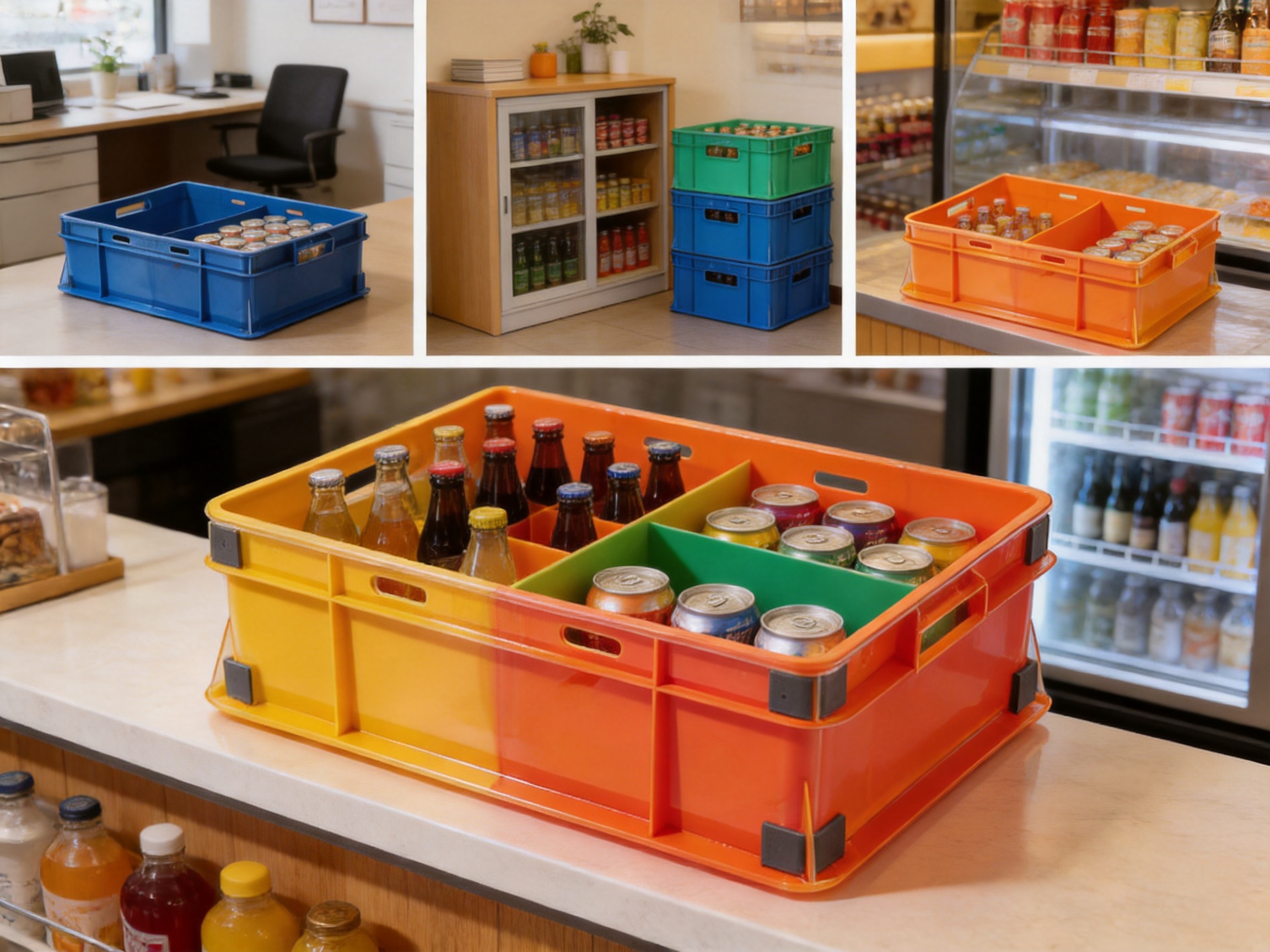
The double-compartment beverage storage crate is designed for organized beverage handling in homes, offices, hospitality areas, retail counters, and small beverage businesses. Its divided internal structure enables users to store two beverage groups in one compact container while maintaining clear separation between products. This practical configuration supports better organization, easier identification, and more efficient use of available storage space.
Unlike a single-compartment container, the double-compartment beverage crate allows beverages to be classified by type, temperature, flavor, size, or intended user. For example, chilled and room-temperature drinks can be separated, or carbonated beverages can be kept apart from juice, bottled water, or flavored drinks. The design is especially useful when users need a tidy storage solution without adding multiple independent boxes.
The crate is manufactured through plastic injection moulding and can be customized according to project requirements. Dimensions, color, plastic material, mould steel, surface finish, cavity arrangement, and structural details may be adjusted for different applications. This flexibility makes the product suitable not only as a finished storage crate but also as a development platform for customized beverage packaging and organization products.
The product uses a symmetrical double-cavity layout. A central raised partition divides the interior into two functional storage zones. This divider provides a visual boundary between beverages and contributes to the stiffness of the overall crate structure. Because the two compartments are arranged in a balanced way, the load is distributed more evenly during carrying, placement, and storage.
The outer frame has slightly curved walls. This shape improves the tactile experience and reduces sharp transitions around the handling area. The curved design also contributes to a softer visual appearance, which is suitable for household, office, and retail environments. When a user lifts or moves the crate, the rounded outer profile can provide a more comfortable grip than a completely flat-sided design.
Reinforced pads are positioned at the four lower corners. These supports help the crate remain stable when placed on a floor, shelf, tabletop, or refrigerator surface. They also reduce direct contact between the main base and the supporting surface, helping minimize abrasion during repeated movement. The reinforced corners are particularly useful when the crate is loaded with bottles or cans and must withstand frequent handling.
The crate can be produced using food-contact-suitable plastic options, depending on the application and regulatory requirements of the target market. A broad temperature-resistance range allows the design to serve both refrigerated and room-temperature storage conditions. The final plastic selection should be confirmed according to the beverage type, service environment, cleaning method, temperature range, and applicable compliance standards.
| Product item | Specification |
| Product type | Double-compartment beverage storage crate |
| Manufacturing process | Plastic injection moulding |
| Model | Customizable |
| Color | Customizable |
| Size | Customizable |
| Typical material options | PP, PC, PS, POM, PE, PU, PVC, ABS, PMMA, and other project-approved plastics |
| Mould material options | 1CR13, 2CR13, 3CR13, 4CR13, S136, CR16, 2316, 718H, P20, and other suitable mould steels |
| Packaging | Composite wooden box |
| Service | OEM and customized mould development |
| Typical applications | Home refrigerators, office pantries, beverage shops, tabletop displays, and organized storage areas |
| Supply capability | Approximately 50 mould sets per month, subject to project specifications |
Storage efficiency is one of the main advantages of a divided crate. A single container can handle two groups of beverages while occupying a limited footprint. This is valuable in refrigerators, cupboards, service counters, and compact retail spaces where every centimeter of usable area matters.
The central divider also improves product visibility. Users can quickly recognize which beverages are stored on each side without removing the entire crate from a shelf. This can reduce searching time and make restocking more systematic. In an office pantry, one section may hold bottled water while the other contains soft drinks. In a home refrigerator, one side may be used for family beverages and the other for children's drinks or special dietary products.
Another benefit is improved flavor and product separation. Different beverages can have distinct aromas, packaging conditions, or storage requirements. Separating them into two compartments reduces unnecessary contact and helps users maintain a more organized environment. Although the crate is not a sealed food barrier, its divided structure supports better household and commercial storage practices.
The symmetrical layout provides a balanced appearance and can help distribute weight across the base. This is an advantage over improvised storage baskets or uneven open containers, which may become unstable when one side is heavily loaded. A balanced crate is easier to position, remove, and return to storage.
The raised partition is more than a simple organizational feature. It functions as an internal reinforcement element. By connecting the base with the surrounding frame, the divider can help limit flexing when the crate is filled. It also maintains a visible separation between the two product groups, allowing users to identify the contents at a glance.
The height and thickness of the partition can be customized. A higher divider may be useful when users need stronger separation or when the contents are tall bottles. A lower divider may improve access for cans, small bottles, or frequently used beverages. The optimal design depends on the product dimensions, loading method, desired capacity, and moulding limitations.
Slightly curved outer walls support both usability and appearance. Rounded transitions are generally more comfortable to touch than sharp external corners. They can also make the crate easier to clean by reducing difficult-to-reach external angles. The curved profile gives the product a modern household appearance instead of an overly industrial visual character.
From a mould design perspective, curved walls can be integrated with suitable draft angles to support reliable ejection. Proper draft design reduces the risk of drag marks, deformation, and sticking during production. When the shape, wall thickness, ribs, and ejection system are considered together during the engineering stage, the finished crate can achieve a consistent appearance and stable production cycle.
The four reinforced lower corners help distribute local impact and stacking forces. These areas are often exposed to greater stress because they make contact with shelves, countertops, floors, and other containers. Reinforcement can improve stability and reduce premature wear caused by repeated placement and sliding.
The corner supports may also create a small clearance between the main bottom surface and the supporting platform. This can help limit scuffing across the broad underside of the crate. The exact geometry should be evaluated through mould-flow analysis, structural review, and practical testing because excessive reinforcement can increase material consumption or create uneven cooling.
A beverage crate must remain stable when filled with different combinations of bottles and cans. The base should resist bending while maintaining an efficient material distribution. A well-designed base can include carefully positioned ribs or support features that improve stiffness without making the part unnecessarily heavy.
Injection moulding allows these structural features to be integrated directly into the product. This eliminates the need for separate assembly in many applications, reducing component count and simplifying production. The result is a robust one-piece plastic crate with fewer loose parts and fewer potential failure points.

Double-Compartment Beverage Storage Crate
Material selection has a direct influence on strength, appearance, temperature performance, chemical resistance, weight, and cost. The appropriate resin depends on the customer’s application rather than on a single universal formula. The listed material range includes polypropylene, polycarbonate, polystyrene, polyoxymethylene, polyethylene, polyurethane, polyvinyl chloride, acrylonitrile butadiene styrene, polymethyl methacrylate, and other project-approved options.
Polypropylene is often considered for reusable storage products because of its low density, balanced toughness, chemical resistance, and practical cost. It can be suitable for household crates, refrigerator organizers, and general beverage handling applications when the design and compliance requirements are properly defined. Its relatively low weight can make finished products easier to transport and handle.
For injection moulding, polypropylene can provide good flow characteristics and support efficient cycle times. However, shrinkage and warpage must be controlled through appropriate wall-thickness design, cooling layout, gate positioning, and process parameters. The selected grade should be confirmed for the intended temperature and contact conditions.
Polyethylene may be considered where impact resistance, flexibility, and chemical resistance are important. Different grades provide different balances of stiffness and toughness. A polyethylene-based crate may be suitable for applications involving repeated handling or contact with common household substances, subject to the selected grade and relevant compliance requirements.
Polycarbonate can provide high impact strength and a premium appearance, although it may not be the most economical choice for every storage crate. Engineering plastics such as polyoxymethylene may be selected for special components or applications requiring dimensional stability and mechanical performance. These materials should be evaluated against product cost, beverage contact requirements, mould design, processing temperature, and anticipated use.
ABS can offer an attractive appearance and good general-purpose performance. Polystyrene may be considered for applications where rigidity and cost are priorities, while PVC and PMMA may be used in specific designs requiring particular flexibility, transparency, or visual effects. The material list is a starting point for technical discussion rather than a recommendation that every resin is suitable for every beverage environment.
When the crate is intended for direct or indirect food-contact use, the customer and manufacturer should confirm the resin grade, additives, colorants, processing controls, cleaning conditions, and destination-market regulations. A food-contact-suitable material must be selected and documented for the intended application. Material certificates and testing requirements should be established before mass production.
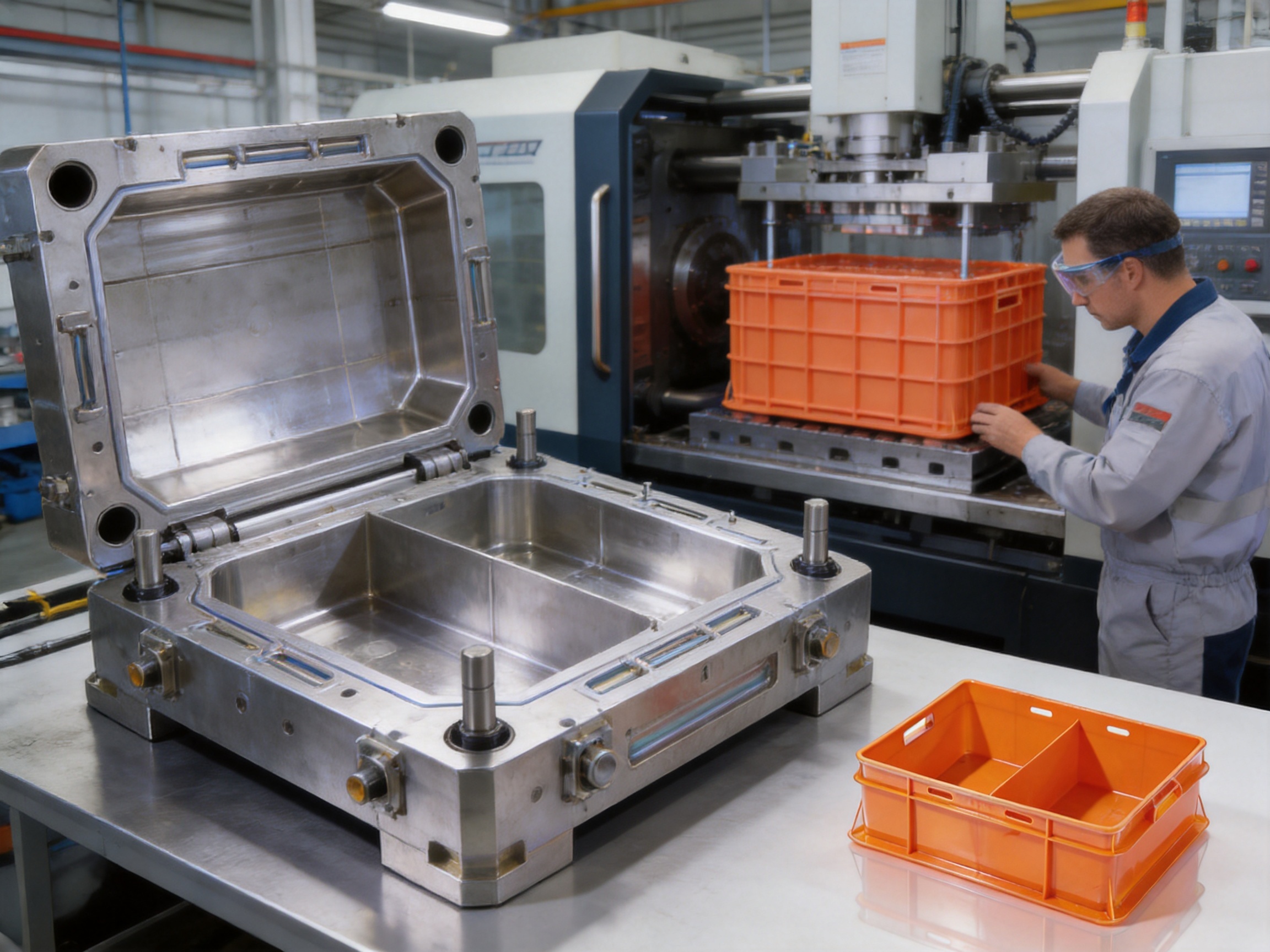
Injection moulding is well suited to beverage crates because it can produce repeatable, integrated structures at commercial volumes. The process begins with the design of the product and mould. Engineers review the external shape, internal cavities, wall thickness, draft angles, ribs, corner reinforcements, parting line, gates, cooling channels, and ejection arrangement.
The double-compartment structure creates specific moulding considerations. The central partition must fill evenly and cool consistently. If the divider is too thick compared with adjacent walls, sink marks or differential shrinkage may occur. If it is too thin, it may not provide the required strength. A balanced design uses appropriate thickness transitions and reinforcement geometry to achieve both appearance and mechanical performance.
The moulding team also evaluates how molten plastic enters and flows through the crate. Gate location affects filling balance, weld-line position, pressure requirements, appearance, and part strength. For larger or more complex crate designs, multiple gates or a carefully engineered hot runner system may be considered. The final arrangement depends on part dimensions, resin behavior, production volume, surface requirements, and customer expectations.
CAD, CAE, and CAM systems support the engineering process by allowing the product and mould to be reviewed before steel is cut. Mould-flow analysis can help identify filling imbalances, air traps, weld lines, hesitation areas, pressure concentration, cooling variations, and predicted shrinkage. Early analysis can reduce the risk of expensive mould modifications after machining.
For a crate with two internal compartments, filling analysis is especially useful because the central divider and surrounding walls may cause different flow paths. A balanced flow pattern helps produce more uniform packing and reduces the possibility of distortion. Engineers can use simulation findings to refine gate locations, vent positions, wall thicknesses, and cooling design.
Cooling is one of the most important factors in injection moulding cycle performance and dimensional stability. A mould with poorly positioned cooling channels may produce uneven cooling, causing warpage or inconsistent shrinkage. A well-planned system removes heat efficiently from thick sections, corner reinforcements, the central partition, and the base.
Cooling channel design must balance thermal performance with machining feasibility and mould strength. The goal is not simply to maximize the number of channels but to create an efficient and maintainable arrangement. Proper cooling can shorten cycle time, improve repeatability, and help the crate maintain its intended dimensions after ejection.
Air must escape as the plastic fills the cavity. Inadequate venting can result in burn marks, short shots, surface defects, or variations in filling. The ends of flow paths, ribs, partition intersections, and deep structural features should be reviewed for suitable venting. Correct vent dimensions and locations depend on the plastic resin and moulding conditions.
Good venting is particularly important for large open products because flow may travel across broad surfaces before reaching the final fill areas. During mould trials, the manufacturer can inspect the part for signs of trapped air and adjust the venting system if required.
The crate must be released from the mould without distortion or visible damage. Ejector pins, sleeves, stripper plates, or other ejection methods may be selected according to the geometry. Because the product has open compartments and reinforcing features, ejection forces should be distributed across strong areas rather than concentrated in thin walls.
Proper draft angles are essential. They help the plastic part separate from the core and cavity surfaces during ejection. Draft requirements vary with texture, resin, depth, and surface finish. An experienced mould team considers draft from the earliest design stage instead of treating it as a late adjustment.
The mould material influences durability, corrosion resistance, polishability, maintenance requirements, and expected service life. Available choices include 1CR13, 2CR13, 3CR13, 4CR13, S136, CR16, 2316, 718H, P20, and other steels suitable for the project.
P20 is commonly considered for general-purpose mould components because it offers a practical balance between machinability, strength, and cost. Pre-hardened steel can simplify machining and support efficient mould construction for many standard applications.
S136 and comparable corrosion-resistant steels may be selected where improved corrosion resistance, polishing performance, or higher surface quality is needed. This can be valuable when the mould is exposed to humid production conditions or when the product requires a refined visible finish.
Different steel grades may be used for different mould components. The cavity and core, inserts, sliders, wear plates, guide elements, and other parts do not always require identical materials. A project-specific material plan can help control cost while placing higher-performance steel in areas exposed to greater wear or corrosion.
Mould life depends on more than steel selection. Product geometry, resin abrasiveness, injection pressure, cycle frequency, maintenance quality, cooling conditions, and operating practices all influence durability. Regular cleaning, lubrication, inspection, and replacement of wear components can protect the mould and maintain product consistency over time.
The manufacturer is located in Huangyan, Taizhou, Zhejiang, a region widely recognized for mould production and plastics manufacturing. Established in 2012, the company operates from a plant of approximately 7,000 square meters and has around 50 employees. Its team includes experienced technicians and engineering personnel familiar with customized plastic mould development.
The company uses CAD, CAE, and CAM systems to support product design, analysis, tool construction, and manufacturing coordination. This digital workflow helps connect customer requirements with practical mould engineering. It also improves communication between product design, simulation, machining, assembly, and trial production.
Advanced equipment and experienced technicians support the production of moulds for crates, folding boxes, trays, pallets, beverage boxes, storage containers, and daily household products. This product range gives the company experience with large plastic parts, open containers, reinforced bases, ribs, partitions, handles, stacking structures, and other common injection-moulded features.
The company’s stated production capacity is approximately 50 mould sets per month, subject to project complexity and specifications. This capacity indicates the ability to manage multiple customized projects while maintaining a structured manufacturing schedule. Actual delivery time should be confirmed after reviewing product drawings, mould size, cavity quantity, steel selection, surface requirements, and testing expectations.
Lean manufacturing principles are used to improve production efficiency and control waste. In mould manufacturing, lean practices may include organized process planning, standardized inspections, coordinated machining, efficient material handling, and early identification of design risks. These measures can contribute to more predictable delivery and improved cost control.
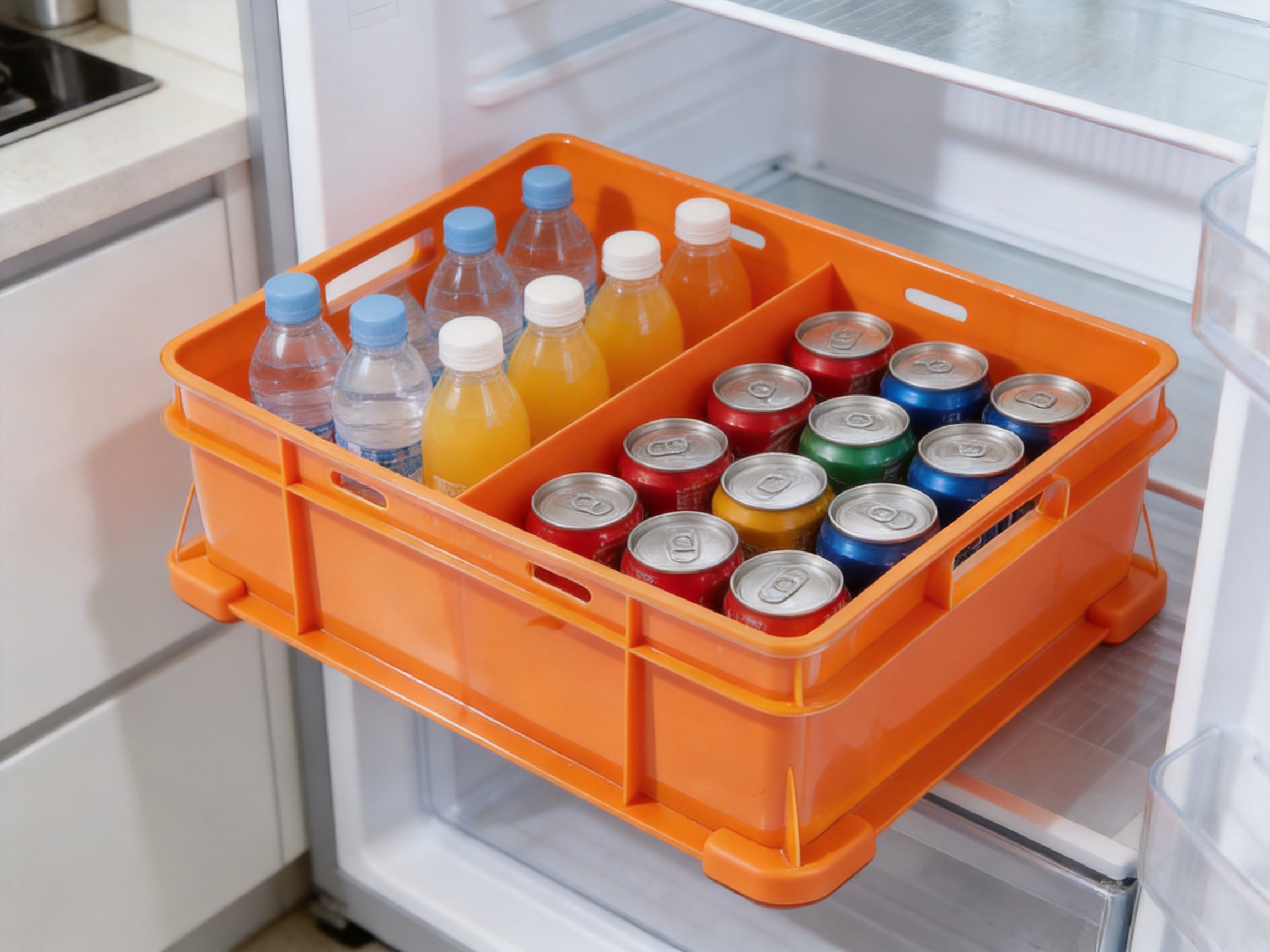
A basic single-compartment basket may offer simple storage, but it does not provide the same internal organization as a divided beverage crate. Users often need to add smaller boxes or separate containers to classify beverages, which can reduce available space and create an untidy appearance. The integrated double-compartment design performs this organizational function within one moulded product.
Compared with thin disposable packaging, the crate is intended for repeated handling and longer service. Its reinforced corners, structural divider, and balanced base are designed for practical reuse. A reusable plastic product can reduce the need to replace weak containers frequently, although actual service life depends on material grade, loading conditions, cleaning, temperature exposure, and handling practices.
Compared with rigid containers without a divider, this model offers greater flexibility for sorting. Compared with soft fabric or flexible organizers, it provides better shape retention and easier cleaning. Compared with open trays, the surrounding frame offers improved containment and clearer product grouping.
The product also provides customization advantages over standardized off-the-shelf containers. Buyers can define the dimensions, color, material, branding area, surface texture, compartment proportions, and other details to match a particular beverage format or sales channel. This is especially important for businesses that need a crate to fit a specific refrigerator shelf, display counter, bottle diameter, or packaging identity.
Length, width, height, compartment ratio, wall height, and base clearance can be adjusted according to the intended beverage package. The design may be optimized for cans, small bottles, large bottles, cups, or mixed packaging. Before mould construction, the customer should provide accurate product dimensions, tolerance ranges, loading quantities, and any clearance needed for easy removal.
Color can be customized to match a product line, retail environment, household interior, or corporate identity. Solid colors are suitable for general storage, while transparent or translucent options may improve visibility when compatible with the chosen resin and performance requirements. Surface texture can also be discussed to balance appearance, grip, scratch visibility, and mould processing requirements.
Customized lettering, symbols, recessed panels, raised marks, or label areas may be integrated into the mould design. Identification features can help users distinguish beverage groups or identify ownership in shared environments. Any logo or text should be reviewed for suitable size, draft, orientation, placement, and expected moulding definition.
The two cavities do not necessarily have to be identical. A symmetrical configuration is useful for balanced capacity and appearance, but an asymmetric design may better suit two different beverage sizes. The manufacturer can evaluate the preferred layout based on the customer’s products and the desired center of gravity.
Handling openings or integrated grip areas can be adapted to the load weight and user requirements. Openings should be large enough for comfortable access but sufficiently reinforced to prevent excessive flexing. The position of the handles can influence mould parting, ejection, structural strength, and the visual balance of the finished crate.
Quality control begins before mould machining. Product drawings should define critical dimensions, functional clearances, material expectations, surface requirements, and inspection points. A design review can identify potential problems involving wall thickness, draft, undercuts, sharp corners, ejector placement, and cooling access.
During mould manufacturing, steel certificates, component dimensions, machining accuracy, surface condition, and assembly fit can be inspected according to the project plan. Guide pillars, guide bushes, inserts, sliders, ejector components, and cooling connections should be checked before the mould enters trial production.
After assembly, mould trials help verify filling, ejection, cooling, part appearance, dimensions, and cycle behavior. Trial samples should be reviewed against the approved drawings or reference samples. If the customer requires special testing, such as load testing, impact evaluation, dimensional verification, or repeated handling assessment, these requirements should be defined before final acceptance.
For the finished crate, quality checks may include external appearance, compartment dimensions, wall integrity, base flatness, corner reinforcement, stability, fit with beverage packages, and ease of handling. Color consistency and surface uniformity may also be inspected for high-visibility applications.
Documentation can include mould specifications, material information, trial records, inspection reports, maintenance recommendations, and packaging details. Clear documentation helps customers manage future production, mould storage, and service requirements.
Moulds are packaged in composite wooden boxes for transportation. This type of packaging can provide a protective enclosure for heavy steel tools and their accessories. Before packing, the mould should be cleaned, treated against corrosion where appropriate, secured against movement, and checked for exposed components that could be damaged during handling.
Shipping preparation should include confirmation of mould weight, dimensions, lifting points, spare parts, documentation, and destination requirements. Cooling connectors, ejector components, electrical interfaces, and loose accessories should be protected and identified clearly.
Delivery planning depends on product complexity. A simple single-cavity mould may require a different schedule from a large multi-cavity tool with hot runner components, slides, special textures, or complex cooling. A realistic project schedule should include design approval, steel procurement, rough machining, heat treatment where applicable, precision machining, polishing, assembly, trial moulding, correction, final inspection, and packing.
In a home refrigerator, the crate can organize bottled water, juice, soft drinks, or other packaged beverages. The divided layout helps families separate products by type or user. The stable base and compact footprint make it suitable for shelves or lower refrigerator compartments, provided the selected dimensions match the available space.
Office pantries often contain a mixture of personal and shared beverages. A double-compartment crate can create a simple visual system for separating bottled water from flavored drinks, or employee beverages from visitor refreshments. Its reusable structure supports routine cleaning and restocking.
Small beverage shops may use the crate for countertop organization, back-room storage, or short-distance movement of drinks. The two sections can hold different categories or temperature conditions. A customized color or identification panel may improve the appearance of the service area and help staff work more efficiently.
Hotels, guesthouses, cafés, and event service areas can use divided crates to organize complementary beverages, promotional products, or different serving categories. The crate is not a substitute for specialized transport equipment in heavy-duty logistics, but it can be a convenient solution for light commercial organization and presentation.
A visually clean crate can support tabletop displays and small retail presentations. Different products can be placed on each side, allowing the display to remain organized while making inventory visible. Custom dimensions may help the crate fit a particular counter, shelf, or promotional layout.
The final design should reflect the intended load rather than relying only on appearance. Engineers should consider the total mass of beverages, how the crate will be lifted, whether it will be stacked, how often it will be moved, and whether it will be exposed to cold, heat, moisture, cleaning chemicals, or direct sunlight.
Wall thickness should be sufficiently uniform wherever possible. Sudden changes can create shrinkage differences and cosmetic defects. Where extra strength is needed, ribs, rounded transitions, and localized reinforcement are generally more effective than simply making the entire product excessively thick.
Sharp internal corners should be avoided or replaced with suitable radii. Rounded corners can reduce stress concentration, improve material flow, and make the part easier to clean. The chosen radius must still allow appropriate machining, polishing, and ejection.
Stacking requirements should be defined at the beginning of the project. If loaded crates will be stacked, the upper support areas must align with reinforced sections of the lower crate. Interlocking features may be considered, but they require careful design to prevent sticking, excessive tolerance sensitivity, or difficulty during separation.
Cleaning is another important factor. The internal compartments should not contain unnecessary recesses that trap liquid or residue. Drainage openings may be appropriate for some applications, while fully closed bases may be preferred for others. The best solution depends on the environment, hygiene expectations, and customer’s cleaning process.
A reusable storage crate can support more efficient use of plastic when it replaces repeated disposable packaging or short-lived organizers. The environmental value of the product depends on how long it remains in service, whether it can be repaired or recycled, the material used, the manufacturing energy required, and the end-of-life system available in the target market.
Designing for durability can extend service life. Reinforced corners, stable walls, and suitable material selection may reduce breakage during normal use. At the same time, unnecessary material should be avoided because overbuilt products increase weight and resource consumption. A balanced engineering approach considers strength, cycle time, material use, transportation efficiency, and expected lifespan.
Where feasible, the use of a single compatible plastic family can simplify recycling compared with a product made from multiple permanently attached materials. Labels, coatings, inserts, and mixed-material components should be evaluated according to the customer’s sustainability objectives and local recycling practices.
Colorants and additives should be selected carefully, particularly for food-related applications. The manufacturer and customer should confirm that the chosen formulation meets the applicable requirements for the intended use. Clear material identification can also support future sorting and recycling.
The process begins with a review of the customer’s product requirements. Important information includes the beverage package dimensions, expected quantity per compartment, total load, storage temperature, handling frequency, target market, desired appearance, packaging method, and estimated production volume.
Engineers convert the requirements into a three-dimensional product design. At this stage, the team considers ergonomics, capacity, compartment separation, wall thickness, reinforcement, draft, tolerance, material behavior, and mould feasibility. Design revisions are made before tool construction begins.
CAE tools can be used to assess filling, cooling, shrinkage, warpage, and structural behavior. The analysis helps identify risks that may not be visible in a basic visual review. The product and mould design can then be optimized for a more stable production process.
After design approval, the selected steel is prepared and the mould components are machined. Roughing, semi-finishing, precision machining, drilling, wire cutting, electrical discharge machining, polishing, and fitting may be used according to the structure. Each process contributes to the accuracy and performance of the final tool.
The mould is assembled and installed for testing. Trial moulding verifies the filling pattern, ejection action, surface appearance, dimensions, cooling response, and cycle conditions. Samples are evaluated and any necessary corrections are completed before final delivery.
Final acceptance may include sample approval, dimensional inspection, functional testing, mould operation review, documentation confirmation, and packaging inspection. Clear acceptance criteria reduce uncertainty for both the manufacturer and the buyer.
For an OEM buyer, the mould is an important production asset rather than a one-time container purchase. A well-designed tool can support consistent production across many batches and help the buyer maintain a stable product identity. Customization also allows the crate to be differentiated from generic storage products in shape, color, capacity, and application.
Working directly with a mould manufacturer can simplify communication between product concept and manufacturing reality. The supplier can advise on material selection, gate design, cooling, ejection, steel, maintenance, and production feasibility. This technical connection may reduce the risk of designing a product that looks attractive but is difficult or expensive to mould.
The company’s focus on crate moulds, folding box moulds, pallet moulds, beverage box moulds, and household product moulds provides relevant experience for customers developing related products. Knowledge gained from one container project can often be applied to another, particularly in areas such as rib design, large-surface filling, corner reinforcement, draft, and mould maintenance.
Competitive cost should be evaluated across the total project rather than only the initial mould price. Factors such as cycle time, material consumption, maintenance frequency, tool life, correction risk, production stability, and delivery reliability all contribute to the long-term cost of ownership. A carefully engineered mould may provide better value even if its initial construction requires more detailed analysis or higher-grade components.
Regular mould maintenance helps preserve dimensional accuracy and production efficiency. After production, the mould should be cleaned to remove plastic residue, moisture, and contaminants. Moving components should be inspected and lubricated using suitable products. Cooling channels should be monitored for blockage, corrosion, or reduced flow.
Parting surfaces should be kept clean and protected from impact. Ejector pins, guide components, sliders, lifters, and other moving elements should be checked for abnormal wear. If the mould has interchangeable inserts, the fit and sealing surfaces should be inspected during maintenance.
Storage conditions also matter. When the mould is not in use for an extended period, corrosion protection should be applied according to the steel and surface requirements. The mould should be stored in a dry, secure area with appropriate support. Detailed maintenance records can help identify recurring issues and schedule preventive service.
Its main purpose is to organize and store two groups of beverages in one reusable container. The internal partition allows users to separate drinks by type, temperature, flavor, user, or other practical categories.
Yes. The model, size, compartment proportions, wall height, base clearance, and other structural details can be customized according to the customer’s beverage packages, storage location, load requirements, and production objectives.
Potential material options include PP, PC, PS, POM, PE, PU, PVC, ABS, PMMA, and other approved plastics. The final resin should be selected according to strength, temperature, chemical exposure, appearance, food-contact requirements, cost, and processing behavior.
The design can be adapted for refrigerated and room-temperature environments. However, the selected plastic grade and final product design must be verified for the actual temperature range, loading condition, and cleaning process.
It may be possible when a suitable food-contact-compliant material and manufacturing process are selected. The customer and manufacturer should confirm the applicable regulations, resin documentation, additives, colorants, and testing requirements for the destination market.
Yes. In addition to separating the beverages, the raised divider can act as an internal reinforcement element. Its effectiveness depends on the height, thickness, connection to the base, material, loading condition, and overall crate design.
The reinforced lower corners improve stability and help distribute local forces when the crate is placed, moved, or loaded. They can also reduce wear at points that frequently contact shelves, floors, tables, or other surfaces.
Yes. Color, surface treatment, lettering, symbols, and identification areas can be discussed during product and mould design. The final result depends on the chosen resin, mould texture, marking geometry, and production requirements.
Potential mould steel choices include 1CR13, 2CR13, 3CR13, 4CR13, S136, CR16, 2316, 718H, P20, and other suitable grades. The best choice depends on expected production volume, surface requirements, corrosion exposure, resin characteristics, and budget.
The manufacturer supports product development through CAD, CAE, and CAM systems, mould engineering, machining, assembly, trial moulding, inspection, packaging, and OEM service. Customers can provide drawings, samples, product concepts, or technical requirements for evaluation.
The buyer should provide product drawings or samples, beverage package dimensions, target capacity, material preference, color requirements, expected production volume, mould cavity preference, surface finish, branding requirements, delivery destination, and any testing or compliance requirements.
The described design is primarily intended for home storage, office organization, small beverage shops, tabletop display, and similar applications. If the customer requires industrial logistics use, the structure should be redesigned and tested for heavier loads, repeated transport, stacking, impact, and handling equipment.
The mould is packaged in a composite wooden box. Appropriate preparation may include cleaning, corrosion protection, securing moving parts, protecting connectors and accessories, and confirming lifting and transportation requirements.
Normally, one mould is designed for a specific product geometry. Interchangeable inserts may support certain controlled modifications, but different sizes or substantially different structures generally require separate mould designs. This should be discussed during the initial engineering review.
The double-compartment beverage storage crate combines organization, stability, handling comfort, and customization potential in a practical injection-moulded format. Its symmetrical divided interior helps users classify beverages, while the raised partition contributes to structural stiffness. Slightly curved outer walls improve the tactile experience, and reinforced lower corners support stability and wear resistance.
The product can be adapted for refrigerators, offices, beverage shops, retail displays, and household storage areas. Custom dimensions, colors, materials, compartment proportions, and identification features allow buyers to develop a solution that fits their specific products and commercial objectives.
Its value is closely connected to the quality of the mould behind it. CAD, CAE, and CAM support, experienced technicians, suitable mould steel, controlled cooling, effective venting, reliable ejection, and systematic trial production all contribute to a stable manufacturing result. With a 7,000-square-meter facility, approximately 50 employees, relevant experience in container and household product moulds, and an estimated capacity of about 50 mould sets per month, the manufacturer is equipped to support customized OEM projects.
For buyers comparing suppliers, the most important evaluation should include engineering capability, communication, material guidance, mould durability, inspection procedures, delivery planning, and after-sales support. A well-developed double-compartment beverage crate can provide more than basic storage: it can become a durable, recognizable, and efficient product designed around the real needs of users and businesses.
1. Injection Moulding Design Guidelines, general principles for plastic part design, wall thickness, draft, ribs, cooling, and ejection.
2. Plastics Materials Selection Handbook, general comparison of thermoplastics used in household and storage products.
3. Mould Engineering and Manufacturing Practice, principles of cavity construction, mould steel selection, machining, assembly, and maintenance.
4. Food-Contact Plastic Compliance Guidance, general considerations for resin selection, additives, colorants, testing, and intended-use documentation.
5. Plastic Product Quality Control Procedures, general methods for dimensional inspection, appearance assessment, functional testing, and production approval.
6. Sustainable Reusable Packaging Design Principles, considerations for durability, material efficiency, reuse, recycling, and product life cycle performance.
7. Customer-provided product specifications and company manufacturing information for the double-compartment beverage storage crate and customized plastic injection mould services.
If you are interested in any of our products or services, please feel free to ask and we can talk about your ideas.
 QUICK LINKSMOBILE SITE
 FACTORY ADDRESS
 CONTACT INFORMATION



 English
 Español