Modern households need reliable ways to protect rice and other dry foods from humidity, insects, dust, and accidental contamination. A well-designed moisture-proof rice storage box provides a practical answer by combining a durable plastic body, a secure lid, an effective sealing system, and a form that is easy to use in everyday kitchen environments. Behind this apparently simple household product is a carefully engineered plastic injection mould. The quality of that mould directly influences the container’s dimensional accuracy, surface finish, sealing performance, structural strength, production efficiency, and service life.
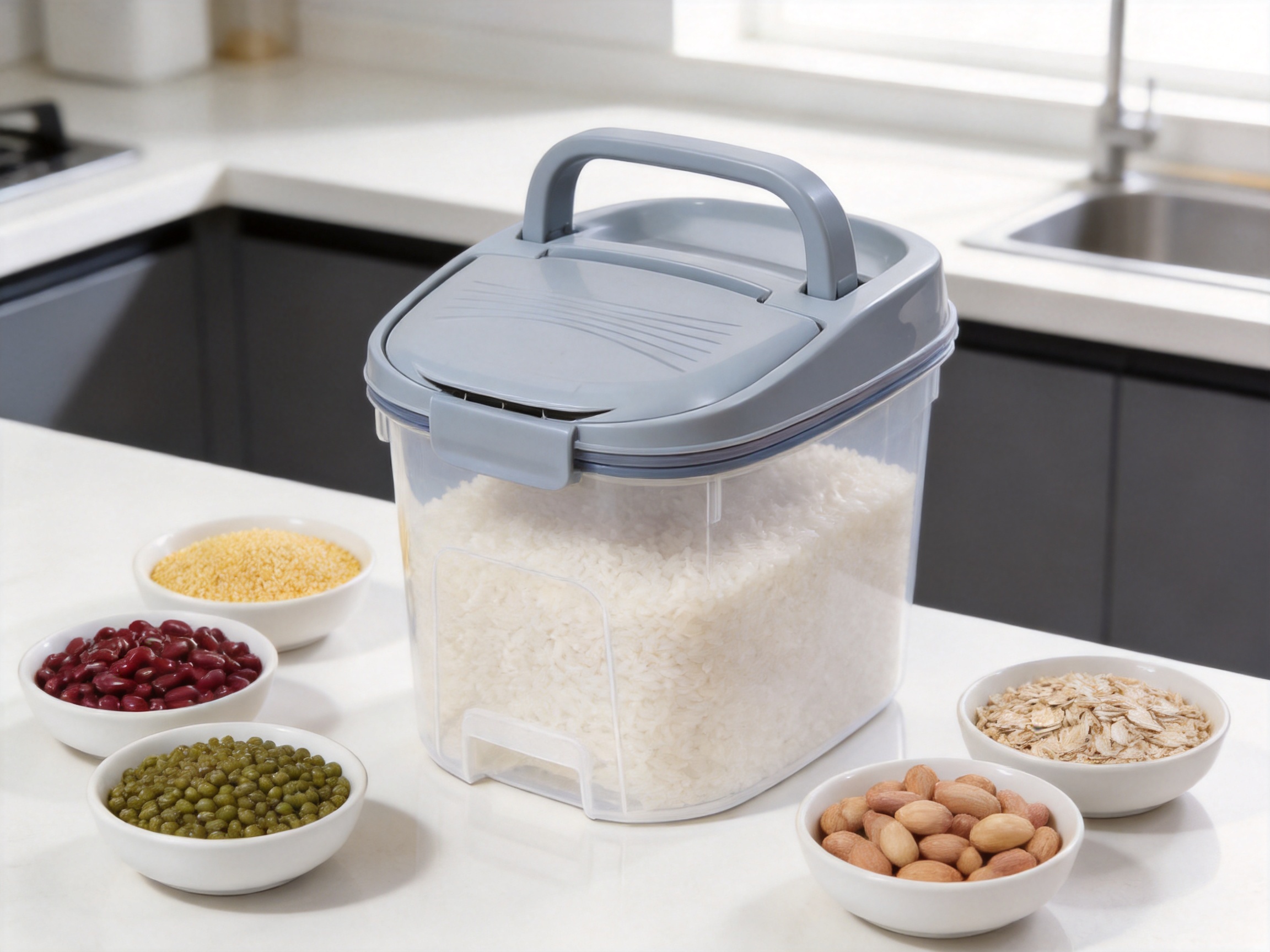
The kitchen moisture-proof rice storage box described in this article is intended for storing rice, millet, red beans, mung beans, peanuts, and other dry foods. It is produced through plastic injection moulding and can be customized in size, colour, structure, and material according to the customer’s requirements. Its high-sealing polypropylene construction, silicone sealing strip, knob-type locking mechanism, top handle, flat base, and smooth internal walls make it suitable for regular family use. At the same time, its moulding solution is designed for manufacturers seeking stable mass production, attractive appearance, dependable assembly, and competitive total production costs.
For buyers comparing different mould suppliers, the container itself is only one part of the evaluation. The mould manufacturer must also demonstrate strong design capability, appropriate steel selection, modern CAD, CAE, and CAM systems, precise machining, controlled mould assembly, reliable testing, and responsive technical service. These factors help determine whether the final rice storage box will consistently meet its intended requirements throughout a long production cycle.
The kitchen moisture-proof rice storage box is a household dry-food container developed for convenient storage in kitchens, pantries, cabinets, and utility areas. Its primary purpose is to keep grains dry and protected during normal domestic use. The container can be designed with a moderate capacity suitable for a family of approximately three to five people, although the final capacity can be adjusted to suit market preferences, package sizes, and regional consumption habits.
The box is generally formed from polypropylene, commonly known as PP. PP is widely used for household storage products because it offers a useful combination of low density, chemical resistance, toughness, processability, and cost efficiency. When the material grade is selected correctly and the injection mould is properly designed, PP can produce a lightweight container with sufficient rigidity for repeated handling. It can also support a clean, smooth appearance that is suitable for modern kitchen products.
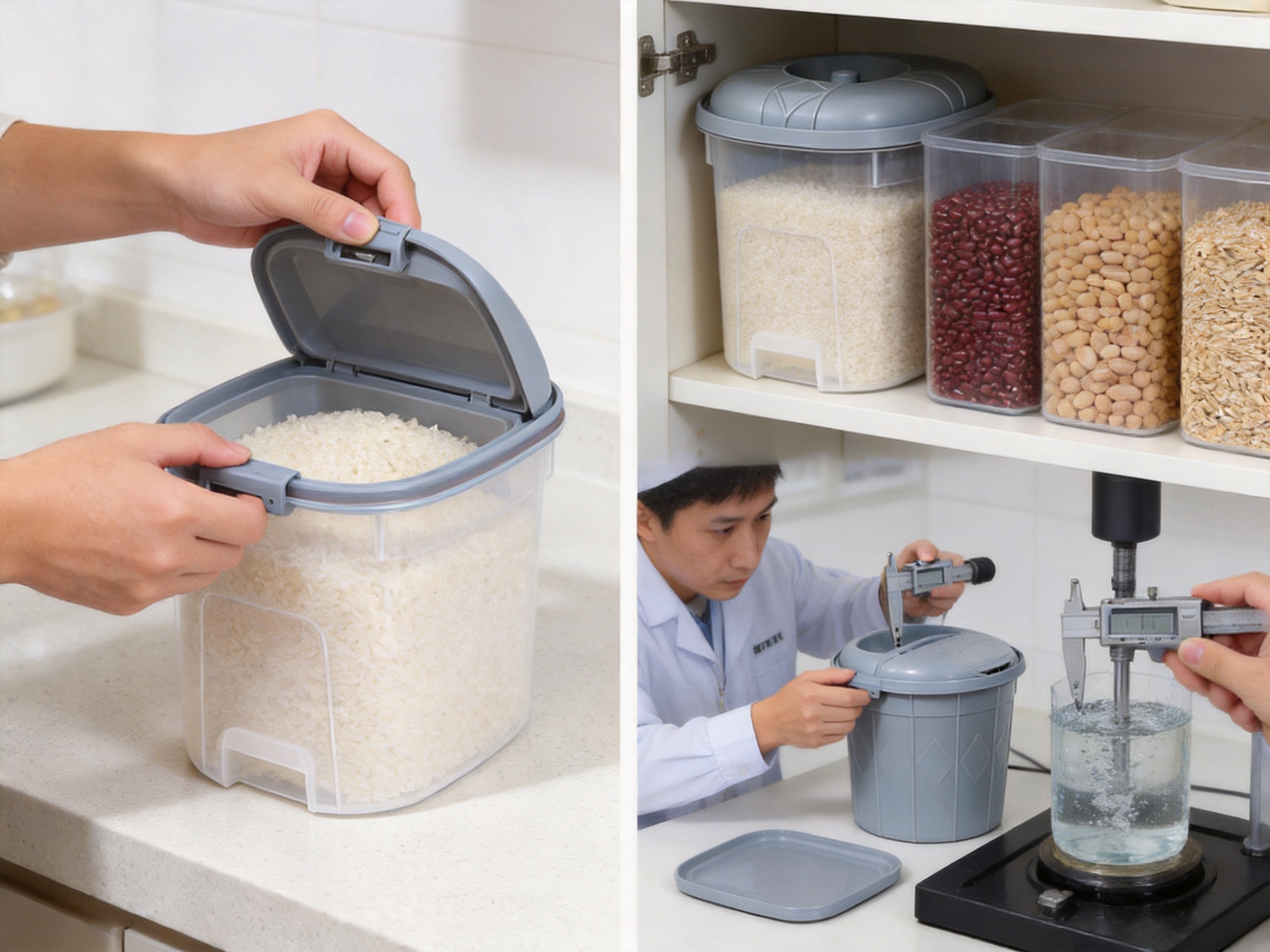
The lid is an important functional component. A silicone sealing strip can be positioned around the lid’s sealing perimeter to reduce the passage of air and moisture when the lid is closed. A knob-type locking mechanism gives the user a simple way to secure the lid. The locking action must be balanced: it should create sufficient compression on the sealing strip without requiring excessive force. The related mould components therefore need accurate dimensions and controlled tolerances to ensure consistent interaction among the lid, body, sealing strip, and locking parts.
A top handle improves portability. Users can move the container from a cabinet to a countertop, pour rice into a cooker, or empty the container for cleaning without gripping the body awkwardly. The handle must be strong enough for the filled container’s expected weight. Its connection to the lid or upper structure should be supported by appropriate geometry, sufficient wall thickness, and carefully designed transition areas that reduce stress concentration.
The flat bottom helps the box remain stable on a countertop, shelf, or floor. Stability is particularly important when the container is filled with a dense material such as rice. A stable base reduces rocking and lowers the chance of tipping during opening, closing, filling, or pouring. The internal walls should remain smooth and free from unnecessary recesses so that rice and other grains do not become trapped and cleaning can be completed quickly.
Dry foods can deteriorate when exposed to moisture, warm air, insects, dust, and repeated handling. Rice may lose its desired texture, develop an unpleasant smell, or become vulnerable to infestation if it is stored in an unsuitable container. A dedicated storage box cannot control every environmental condition, but its design can significantly reduce exposure during ordinary use.
The first protective feature is the enclosure created by the container body and lid. A suitable body design limits open surfaces and provides a defined seating area for the lid. The second feature is the sealing strip. When the lid is pressed or locked into position, the silicone strip should make continuous contact with the corresponding sealing surface. This contact helps reduce air exchange and limits the entry of external humidity.
The locking mechanism provides the closing force needed to maintain contact between the lid and the seal. A knob-type mechanism can be intuitive for users and can contribute to a clean visual appearance. Its moulded features must be strong enough to tolerate repeated opening and closing. Sharp corners, thin unsupported tabs, or poorly balanced hinge areas can lead to premature damage, so these zones deserve special attention during product and mould development.
Moisture protection also depends on the quality of the moulded surfaces. Warpage, sink marks, flash, uneven parting lines, or distortion around the sealing area may prevent the lid from closing uniformly. A high-quality injection mould helps maintain the dimensional consistency required for a reliable seal. It also reduces the risk that a container will pass visual inspection but fail during practical use because of a small gap or uneven contact area.
Users should still store the box in a reasonably dry and clean location, close the lid correctly, and ensure that the container is dry before filling it. The product is intended to reduce everyday exposure to humidity and contaminants, not to replace proper food-handling practices.

Kitchen Moisture-Proof Rice Storage Box
Many basic storage containers offer only a body and a loose-fitting lid. The moisture-proof rice storage box combines several functions in one coordinated design: a rigid PP body, a sealing strip, a locking mechanism, a carrying handle, a flat base, and smooth internal surfaces. This integrated approach improves convenience and gives the product a stronger value proposition than a simple open bowl, fabric sack, or loosely covered bucket.
The user does not need a separate clip, rope, or external cover to keep the lid in place. The locking structure is incorporated into the product, reducing the number of loose accessories that could be misplaced. The handle also makes the box easier to move than a large bag of rice. These details are especially valuable in busy kitchens where the product may be opened and closed every day.
Open containers provide little protection against airborne dust, kitchen vapour, insects, and accidental splashes. Loose-fitting covers may reduce exposure but often leave gaps around the rim. A fitted lid with a silicone sealing strip creates a more controlled storage environment. This can help preserve the dryness and freshness of grains during routine household storage.
Compared with ordinary non-sealed plastic boxes, the locking lid provides a more dependable closure. Compared with disposable bags, the rigid box is easier to stack, clean, carry, and reuse. Compared with metal or glass alternatives, a PP box can be lighter and less likely to shatter if dropped. These advantages make the product suitable for consumers who want a reusable and practical storage solution.
A filled grain container can become heavy, so handling design has a direct effect on user satisfaction. The top handle allows the container to be lifted without squeezing the side walls. A stable bottom helps users place it safely on a surface. The moderate-capacity format can reduce the difficulty of lifting and emptying the box compared with very large bulk containers.
The product can also be developed in several sizes. A smaller version may suit compact apartments or occasional grain storage, while a larger version may serve families with higher consumption. Since the mould and product parameters are customizable, manufacturers can adapt the dimensions to target markets without abandoning the basic moisture-proof concept.
Food storage products must be simple to clean. Smooth inner walls reduce the number of corners and recesses where grains, dust, or residue may collect. PP is also suitable for routine washing when an appropriate material grade and product design are used. The user can empty the container, wash or wipe the body and lid, allow them to dry, and refill the box when clean.
A cleanable design is an important advantage over woven sacks, cardboard cartons, and porous storage materials. It also supports better long-term hygiene. The sealing strip should be removable or accessible for inspection when the design permits, because the seal can collect dust if it is not cleaned periodically.
The box has a simple and functional appearance that can blend with kitchen countertops, cabinets, pantry shelves, and utility storage areas. Injection moulding allows manufacturers to produce consistent surfaces and repeatable details across a large production run. Colour can be customized to match a brand identity, retail collection, or interior design preference.
Appearance is not merely a decorative concern. Smooth surfaces, even walls, clean parting lines, and consistent colour communicate product quality. A well-made container is more likely to remain visible and accessible in the kitchen instead of being hidden away because it looks unfinished or difficult to use.
The container body is usually the largest moulded component and may require careful control of wall thickness, shrinkage, cooling, ejection, and warpage. A body that appears simple can be challenging because it often includes a deep cavity, a wide opening, a defined rim, a flat base, and external surfaces that must remain visually uniform.
Wall thickness should be planned as consistently as practical. Large variations can create uneven cooling and differential shrinkage, which may result in distortion or sink marks. If ribs or reinforcing structures are needed, they should be designed with suitable proportions and connected to the wall through gradual transitions. Excessively thick sections can increase cycle time and may produce visible defects, while excessively thin sections may reduce strength and complicate filling.
The mould cavity and core must maintain accurate alignment throughout the injection cycle. This is particularly important around the upper rim, where the body meets the lid. A distorted opening can affect the fit of the lid and reduce sealing performance. Guide pillars, guide bushes, support structures, and a stable mould base contribute to reliable alignment during repeated production.
Gate location should be selected after considering the body’s geometry, appearance requirements, filling balance, weld-line position, and ease of trimming. For a wide household container, the flow pattern should be evaluated so that the melt reaches all relevant areas without excessive pressure loss or visible flow defects. CAE filling analysis can assist in reviewing filling time, pressure, temperature distribution, weld lines, air traps, and potential short shots before steel machining begins.
Cooling design has a strong influence on productivity and part quality. The mould should provide cooling channels that remove heat from the cavity and core as evenly as possible. If one side of the container cools much faster than another, the product may warp or develop dimensional differences. Well-planned cooling can shorten cycle time while improving repeatability, which is important for a product intended for high-volume household sales.
Ejection must be designed around the container’s depth and surface geometry. Ejector pins, ejector plates, stripper structures, or other suitable systems may be used depending on the mould design. Ejection force should be distributed to prevent white marks, deformation, or damage to the rim. Draft angles on vertical surfaces help the product release smoothly from the core and reduce the risk of scratches.
The lid is a precision-sensitive component because it must provide both appearance and functional sealing. Its perimeter needs to correspond accurately with the container opening. The seating region for the silicone strip should be dimensionally controlled so that the strip remains in position and receives consistent compression when the lid is locked.
The locking mechanism may include a knob, cam, clip, rotating feature, or other customer-selected structure. Each variation requires a specific analysis of load, movement, clearance, and mould release. Moving components, sliders, lifters, or inserts may be used where undercuts cannot be released directly. These mechanisms increase mould complexity, making design experience and assembly accuracy particularly important.
The lid should be strong enough for repeated operation without becoming unnecessarily heavy. Ribs can increase stiffness while allowing a reasonable wall thickness. However, ribs that are too thick or poorly positioned may create sink marks on the visible surface. A balanced design uses reinforcement where it contributes to rigidity and avoids excessive material accumulation.
Attention should also be paid to the area where the top handle connects to the lid. The handle must withstand lifting loads and should not create excessive stress at the connection points. Rounded transitions, suitable support ribs, and adequate material distribution can improve durability. The mould must reproduce these features cleanly so that no sharp flash or weak knit-line region interferes with use.
For a successful seal, the lid and body must be evaluated as a complete system rather than as independent parts. The mould supplier should inspect the assembled product, verify lid alignment, check locking force, and test whether the sealing strip contacts the intended surface continuously. If the container is supplied in several sizes, each size should receive separate dimensional and functional validation.
PP is the principal material identified for this storage box because it is lightweight, durable, and suitable for injection moulding. Different PP grades can offer different balances of stiffness, impact resistance, clarity, flow behaviour, and temperature performance. The final grade should be selected according to the container dimensions, wall thickness, expected load, appearance requirements, food-contact regulations in the target market, and processing conditions.
Material selection should not be based only on the lowest resin price. A low-cost grade that produces excessive warpage, poor impact performance, or an inconsistent surface may increase waste and customer complaints. A suitable grade can improve the stability of the production process and reduce the need for corrective moulding adjustments.
Other plastic materials listed for the manufacturer’s general moulding capability include PC, PS, POM, PE, PU, PVC, ABS, and PMMA. These materials are not automatically interchangeable for this rice storage box. Each has different shrinkage, flow, thermal, chemical, and food-contact characteristics. PP remains the natural starting point for this particular application, but the moulding team can review alternatives when a customer has special requirements.
For food storage applications, resin traceability and compliance documentation should be considered. Customers may request information about the material grade, additives, colourants, and intended contact conditions. The mould manufacturer and product producer should coordinate with the resin supplier and the applicable regulatory requirements of the destination market.
Colour can be customized through masterbatch or pre-coloured resin. The colour system should be compatible with the selected polymer and processing conditions. Consistent dosing, drying where required, and stable machine settings help maintain colour uniformity across production batches. If the lid, body, and locking parts use different colours, the appearance should be reviewed after assembly.
The manufacturing process begins with a clear understanding of the product brief. The mould supplier reviews the desired capacity, external dimensions, material, colour, closing method, handle structure, surface finish, packaging expectations, target output, and market requirements. Questions about storage conditions, cleaning, stacking, transportation, and expected service life should be addressed before detailed design begins.
A technical review can identify potential problems at an early stage. For example, a very thin handle may be difficult to fill and may not withstand the expected load. A deep body with insufficient draft may be hard to eject. A decorative recess near the sealing area may create a leakage path. Early collaboration allows these issues to be solved digitally before they become costly steel modifications.
Three-dimensional CAD systems are used to develop the product and mould structure. The design team can inspect wall thickness, draft angles, ribs, locking features, parting lines, ejection zones, and assembly clearances. The digital model also provides the basis for manufacturing drawings and CNC programming.
CAE analysis can be applied to evaluate filling and cooling behaviour. Moldflow studies may identify areas of hesitation, air entrapment, weld-line formation, excessive injection pressure, or uneven temperature. For the container body, analysis can help determine whether a selected gate arrangement will fill the cavity effectively. For the lid, it can help assess the flow around the handle, locking features, and sealing perimeter.
Simulation does not replace practical moulding experience, but it improves decision-making. It allows the team to compare alternatives before committing to machining. This can reduce the number of physical trials and help shorten the path from approved product design to stable mass production.
The mould material should match the expected production volume, plastic material, surface requirements, and maintenance plan. Available options include 1Cr13, 2Cr13, 3Cr13, 4Cr13, S136, CR16, 2316, 718H, P20, and other customer-specified grades. The final selection should be made according to performance requirements rather than by choosing a grade in isolation.
For components exposed to moisture, corrosion resistance may be valuable. Stainless mould steels can help protect the mould surface when appropriate maintenance conditions are difficult or when the product requires a high-quality polished appearance. P20 and similar pre-hardened steels may be suitable for certain mould structures and production requirements. Hardened steels may be selected for wear resistance in high-cycle or demanding applications.
Steel selection also influences machining, polishing, repair, and service life. A reliable supplier should explain the proposed steel grade, hardness condition, treatment method where applicable, and expected maintenance requirements. Clear documentation helps the customer compare quotations on a more meaningful basis than price alone.
After design approval, mould components are manufactured using appropriate machining equipment. CNC milling creates cavity and core geometries, while drilling and other processes produce cooling channels, ejector holes, guide features, and mounting details. Precision machining is essential around the container rim, lid sealing area, handle supports, and locking mechanism.
Complex surfaces may require high-speed machining, multi-axis processing, or carefully planned electrode work. Electrical discharge machining can be used for details that are difficult to produce through conventional cutting. Grinding and polishing then refine critical surfaces and achieve the requested appearance. The quality of these operations affects not only the first production run but also the mould’s ability to remain stable after many cycles.
The manufacturer described in the supplied information operates with advanced CAD, CAE, and CAM systems, high-tech equipment, and experienced technicians. This combination supports the transition from digital product data to physical mould components. Experienced personnel are particularly valuable when a project includes difficult parting lines, moving mechanisms, tight assembly clearances, or late-stage design adjustments.
Mould assembly requires more than simply placing components into a mould base. The core, cavity, inserts, sliders, ejector system, cooling circuits, guide components, and moving mechanisms must work together smoothly. Fitters inspect contact areas, check movement, verify clearances, and correct minor mismatches before trial production.
Inspection equipment can be used to verify key dimensions and geometric relationships. The sealing perimeter, body opening, lid interface, handle connection, and locking features deserve special attention. Good assembly practice helps prevent flash, parting-line mismatch, uneven ejection, and premature wear.
Before delivery or production release, the mould should be tested under conditions representative of the intended plastic material and machine. Trial parts are inspected for dimensions, appearance, fit, function, and stability. Where necessary, the moulding parameters or mould details are adjusted. A well-managed trial process provides useful information about filling, cooling, ejection, cycle time, and assembly performance.
Quality control should cover both the mould and the finished product. Mould inspection confirms that the tool has been manufactured according to approved drawings and specifications. Product inspection confirms that the mould produces parts that meet practical requirements.
Visual inspection may check for flash, short shots, burn marks, flow lines, sink marks, weld-line weakness, scratches, colour variation, deformation, and contamination. These defects can influence the product’s appearance and may also indicate deeper process problems. For example, flash around the sealing area can interfere with lid closure, while warpage near the rim can create a moisture path.
Dimensional inspection should focus on the body opening, lid perimeter, seal groove, handle position, base flatness, and locking components. The purpose is not merely to confirm isolated dimensions but to ensure that the components assemble correctly as a complete product. A container can have individual parts that appear acceptable yet fail when the lid is fitted if the tolerance stack is not properly controlled.
Functional testing can include repeated opening and closing, locking and unlocking, handle loading, base stability, and practical sealing checks. A simple moisture or leakage evaluation may help identify gaps or inconsistent compression, although the exact test method should reflect the intended product claims and market standards.
Capacity and usability should also be reviewed. The box should hold the advertised amount without excessive deformation. The lid should be manageable for the intended users. The handle should be comfortable enough for routine movement, and the box should be easy to empty without creating unnecessary spillage.
Quality records, inspection reports, material information, and mould maintenance documentation provide traceability. They are especially useful for customers planning long-term production or selling the storage box in multiple markets.
One of the most important advantages of an engineered injection mould is its ability to support repeatable mass production. Once the mould has been properly tested and the processing conditions are established, each cycle can produce consistent parts with limited manual intervention. This is more efficient than manufacturing individual containers through labour-intensive forming or assembly methods.
Cycle time depends on the product design, mould size, plastic material, cooling performance, machine capacity, and part thickness. Efficient cooling is often a major factor. A mould that removes heat evenly can reduce waiting time between injection and ejection while helping maintain dimensional stability. Shorter, stable cycles can improve output and reduce the cost per part.
Material efficiency is another consideration. A well-designed runner system, suitable gate arrangement, and controlled wall thickness can reduce unnecessary resin consumption. Depending on the final design and production requirements, a hot runner or cold runner system may be evaluated. The selection should consider project volume, maintenance, colour changes, mould complexity, and budget.
Durability also affects total cost. A low-priced mould that requires frequent repair, produces inconsistent parts, or has a short service life may become more expensive over time than a better-engineered tool. Appropriate steel, robust support, replaceable wear parts, and accessible maintenance points can extend the useful life of the mould.
The supplier’s reported capacity of approximately 50 mould sets per month indicates an established ability to manage multiple mould projects. Capacity alone is not a guarantee of performance, but it can be a positive sign when supported by a structured engineering process, skilled technicians, inspection controls, and clear project communication.
| Feature | Product or Mould Benefit | Customer Value |
|---|---|---|
| High-sealing PP body | Lightweight, reusable structure with good everyday durability | Convenient dry-food storage and reduced replacement frequency |
| Silicone sealing strip | More continuous contact around the lid perimeter | Improved protection against air and moisture exposure |
| Knob-type locking mechanism | Secure and intuitive closure | Easy opening and closing during daily use |
| Top handle | Supports lifting and movement of a filled container | Better handling and pouring convenience |
| Flat bottom | Improves stability on shelves and countertops | Lower risk of tipping during use |
| Smooth inner walls | Reduces areas where grains and residue can collect | Faster cleaning and improved household hygiene |
| Customizable injection mould | Allows changes in size, colour, material, and structure | Flexible product development for different markets |
| Professional mould engineering | Supports accurate, repeatable production | Lower production risk and more consistent product quality |
The product can be customized in several ways. Size is one of the most important options because storage habits differ between families, regions, retailers, and distribution channels. A compact box may be intended for small households, while a larger model may be designed for bulk purchasing or pantry organization.
Colour customization allows the storage box to match a product line or retailer identity. Neutral colours may support a minimalist kitchen collection, while stronger colours can make the product easier to identify on a shelf. Surface texture can also be considered. A polished surface may emphasize cleanliness, whereas a fine texture can improve grip and reduce the visibility of minor handling marks.
The handle, lid, locking mechanism, and body proportions can be adapted to suit user research or market positioning. Some markets may prioritize compact stacking, while others may prefer a wider opening for scooping rice. The opening should be large enough for filling, measuring, and cleaning, but the body should remain structurally stable.
Packaging can be supplied in a composite wooden box for mould transportation and protection. During a mould project, packaging should protect precision components, moving mechanisms, and polished surfaces from impact, moisture, and contamination. Clear identification of spare parts, accessories, drawings, and maintenance tools can simplify installation at the customer’s facility.
OEM service is available for customers who want to develop a private-label product or a customized container design. The scope of OEM cooperation may include product development, mould design, mould manufacture, trial moulding, material consultation, and technical support. The exact arrangement should be established in the project agreement.
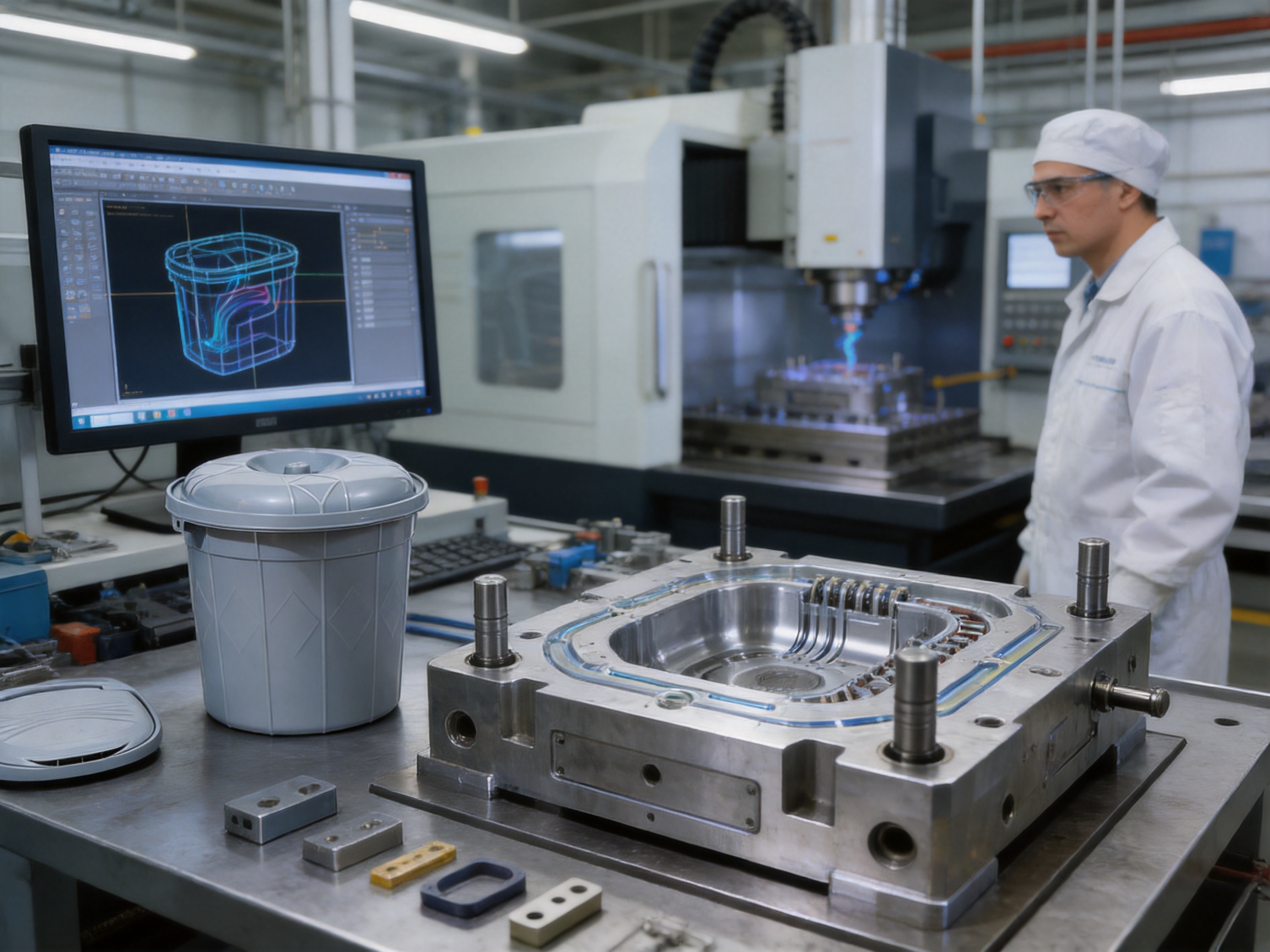
A household container mould requires a combination of product understanding, precision manufacturing, and practical production experience. A supplier that only provides machining may not fully evaluate sealing performance, ejection behaviour, handle strength, or assembly tolerances. A more complete mould partner can participate from the first product concept through final testing.
The company associated with this project is located in Huangyan, Taizhou, Zhejiang, an established mould-manufacturing region in China. It was established in 2012 and operates a plant of approximately 7,000 square metres with around 50 employees. Its capabilities include advanced CAD, CAE, and CAM systems, high-tech equipment, and experienced technical personnel.
The company specializes in customized plastic mould solutions. Its product range includes crate and folding box moulds, tray and pallet moulds, beverage box moulds, and moulds for daily household products. This range is relevant to the rice storage box because many of the same engineering principles apply across large injection-moulded containers: structural strength, balanced filling, controlled cooling, reliable ejection, clean surfaces, and long-term production stability.
Experience with logistics crates, pallets, folding boxes, and household products also indicates familiarity with different scales of mould design. Some products prioritize load-bearing strength, some require folding or moving mechanisms, and others emphasize appearance and ergonomic handling. A supplier with exposure to these requirements can compare design options and recommend a practical approach.
The company emphasizes lean manufacturing, long-life moulds, on-time delivery, premium quality, competitive costs, and comprehensive customer service. These priorities are valuable because mould projects involve more than the initial quotation. Design revisions, steel confirmation, trial samples, production parameter support, maintenance advice, and spare-part planning can all affect the customer’s final result.
The customer provides product drawings, three-dimensional files, reference samples, capacity targets, material preferences, annual output expectations, and market requirements. If drawings are not complete, the mould supplier can help identify missing information and organize the product requirements into a technical specification.
Engineers review the product for draft, wall thickness, ribs, parting lines, undercuts, sealing features, handle strength, and mould-opening direction. Potential manufacturing risks are discussed before design approval. Changes at this stage are generally faster and less expensive than changes after steel has been cut.
The mould structure is developed using CAD tools. CAE analysis can be used to examine filling and cooling behaviour. The number of cavities, runner system, gate arrangement, cooling layout, ejection system, and moving mechanisms are selected according to output requirements and machine conditions.
After approval, steel and purchased components are prepared. Cavity and core components are machined, heat-treated or pre-hardened as required, polished, and inspected. Cooling circuits and ejection components are manufactured according to the approved mould design.
The mould is assembled and tested. Trial parts are produced using a suitable plastic grade. Engineers inspect the body, lid, locking system, handle, and sealing interface. If adjustments are needed, they are recorded and completed before final release.
After the mould meets the agreed requirements, the tool is cleaned, protected, documented, and packed in a suitable composite wooden box. Drawings, inspection information, moulding recommendations, and maintenance guidance can be supplied according to the project agreement.
Even a well-manufactured mould requires regular care. Operators should clean the mould after production, remove plastic residue, inspect the parting line, lubricate moving components where appropriate, and check cooling circuits for blockage or leakage. The exact maintenance schedule depends on the plastic material, production volume, mould structure, and operating environment.
The sealing region of the mould should receive particular attention because small damage or contamination can affect the final lid fit. Ejector pins, sliders, lifters, and guide components should be inspected for wear. If the mould includes replaceable inserts or wear plates, these components can simplify future repair.
Proper storage is also important. When the mould is not in use, it should be cleaned, dried, protected against corrosion, and stored in a stable environment. Cooling water should be drained when necessary. Moving parts should be left in a safe position, and mould identification records should be kept with the tool.
Maintenance is not only a repair activity. Preventive maintenance can protect product quality, reduce unexpected downtime, and extend mould life. Customers planning substantial production should establish a maintenance record that includes cycle counts, inspections, repairs, polishing, component replacement, and trial results.
The storage box can be used for white rice, brown rice, millet, red beans, mung beans, peanuts, corn kernels, oats, and other dry ingredients. It can support organized pantry management by keeping different grains in dedicated containers. The transparent or semi-transparent material option, if selected, may allow users to view the remaining contents without opening the lid, while opaque colours can provide a more uniform appearance.
The container can be placed on a countertop for frequent use or inside a cabinet for a cleaner visual arrangement. Its flat base supports stable placement, and the top handle allows it to be removed from a shelf more easily. The smooth interior helps users empty the remaining grains and wipe the container before changing contents.
For best results, users should avoid filling the box with wet or warm food unless the product and material are specifically designed for that purpose. The container should be cleaned and fully dried before new grains are added. The silicone seal should be checked regularly, and the locking mechanism should be closed correctly rather than forced.
Moisture-proof rice storage boxes can be positioned as practical kitchen organization products, reusable food storage solutions, pantry accessories, or household gift items. Their value is easy for consumers to understand because the product addresses common problems: messy grain bags, limited protection, difficult handling, and poor kitchen organization.
Retailers may offer the box as a single unit or as part of a coordinated storage series. Different sizes can create a product family for various household requirements. Matching containers for rice, flour, beans, cereals, and pet food can increase shelf appeal and encourage multiple-unit purchases.
Customization helps manufacturers distinguish their products from generic containers. Changes in colour, handle style, lid design, surface texture, capacity, and packaging can support different price levels and market identities. A high-quality mould is essential for maintaining the consistent appearance expected from a coordinated product series.
For overseas buyers, the supplier’s ability to provide OEM service and customized injection moulds can reduce the need to coordinate separately with a product designer, mould shop, and production consultant. Consolidated technical communication may simplify the development process and improve responsibility clarity.
The main purpose is to store rice, grains, and other dry foods in a cleaner and more moisture-resistant environment. The fitted lid, silicone sealing strip, and locking mechanism help reduce exposure to air and humidity during normal household use.
PP is the primary material identified for this product. It is lightweight, durable, suitable for injection moulding, and commonly used for reusable household containers. The final resin grade should be selected according to the product design, market regulations, load requirements, and appearance expectations.
Yes. The model, size, colour, and other product details can be customized. Customization should be confirmed during the design stage because changes in size or structure may affect cavity dimensions, mould layout, cooling, ejection, cycle time, and production cost.
Yes. The lid, knob-type locking mechanism, sealing-strip location, handle, and external appearance can be developed according to the customer’s requirements. Any change should be checked for sealing performance, strength, mould release, and repeated-use durability.
The described moderate-capacity design is intended to suit daily use by a family of approximately three to five people. The actual capacity can be adjusted according to consumption habits, available storage space, and target-market preferences.
The silicone strip creates contact between the lid and the container around the sealing perimeter. When the lid is properly closed and locked, this contact helps reduce air and moisture exchange. The seal should be kept clean and inspected regularly for damage or displacement.
Mould precision affects the dimensions and alignment of the body, lid, sealing groove, and locking features. Warpage, flash, or uneven surfaces can prevent continuous contact around the seal. Accurate mould design and inspection help produce parts that close consistently.
Available options include 1Cr13, 2Cr13, 3Cr13, 4Cr13, S136, CR16, 2316, 718H, P20, and other grades selected according to the customer’s requirements. The recommended steel depends on production volume, corrosion conditions, surface finish, plastic material, and maintenance expectations.
The supplied information lists PP, PC, PS, POM, PE, PU, PVC, ABS, PMMA, and other plastics. The correct material for a rice storage box must be evaluated separately because each material has different processing and performance characteristics.
OEM cooperation may include product review, customized mould design, mould manufacturing, trial moulding, material consultation, inspection, and technical support. The precise scope, documentation, sampling process, and delivery terms should be agreed upon for each project.
The listed package is a composite wooden box. This type of packaging helps protect the mould during transportation. Precision areas, moving mechanisms, and polished surfaces should also be cleaned and protected before packing.
The reported supply capacity is approximately 50 mould sets per month. Actual delivery time depends on the mould size, cavity number, steel grade, product complexity, design approval speed, machining schedule, and trial requirements.
The manufacturer is located in Huangyan, Taizhou, Zhejiang, China, a region known for plastic mould production. The company operates a plant of approximately 7,000 square metres and has around 50 employees.
The box should be emptied, washed or wiped using a suitable household cleaning method, and dried completely before refilling. The inner walls, lid, sealing strip, and locking area should be checked for residue. Cleaning instructions should follow the final material and product specifications.
The kitchen moisture-proof rice storage box combines practical household functionality with the advantages of precision plastic injection moulding. Its PP body, sealing strip, locking lid, top handle, flat bottom, and smooth internal walls address the everyday requirements of dry-food storage. Compared with loose bags, open containers, and ordinary non-sealed boxes, it offers better organization, easier handling, improved protection from environmental exposure, and more convenient cleaning.
The product’s performance depends heavily on the quality of the mould. Accurate dimensions around the lid and body interface, balanced filling, effective cooling, controlled ejection, strong handle connections, and reliable locking features are all necessary for a successful result. A professional mould supplier can reduce development risk by combining product engineering, CAE analysis, suitable steel selection, advanced CAD and CAM systems, precision machining, experienced assembly, and systematic trial moulding.
With customizable dimensions, colours, materials, and structures, the storage box can be adapted for different household needs and commercial markets. The manufacturer’s experience in household product moulds, logistics crates, folding boxes, trays, pallets, beverage boxes, and other injection-moulded products provides a broad technical foundation for developing durable and efficient container tools.
For customers seeking a long-life mould and a practical moisture-resistant kitchen container, the project should be evaluated through the complete production cycle: product concept, mould design, material selection, machining, trial production, inspection, delivery, and maintenance. This comprehensive approach helps ensure that the final storage box is not only attractive at the point of sale but also dependable throughout repeated daily use.
1. Injection Molding Handbook, technical principles of polymer processing, mould design, filling, cooling, and ejection.
2. Plastics Design Guide, guidance on wall thickness, ribs, draft angles, shrinkage, and injection-moulded product development.
3. Polypropylene Processing and Applications, general information on PP properties, household products, and processing considerations.
4. Mold Engineering Practice, principles of cavity and core design, runner systems, cooling circuits, steel selection, and mould maintenance.
5. Food Storage Container Design Guidance, general considerations for sealing, cleanability, material suitability, and household usability.
6. Plastic Product Quality Control Procedures, methods for visual inspection, dimensional verification, assembly testing, and production consistency.
7. Preventive Maintenance for Injection Moulds, recommendations for cleaning, lubrication, corrosion protection, wear inspection, and service-life management.
If you are interested in any of our products or services, please feel free to ask and we can talk about your ideas.
 QUICK LINKSMOBILE SITE
 FACTORY ADDRESS
 CONTACT INFORMATION



 English
 Español