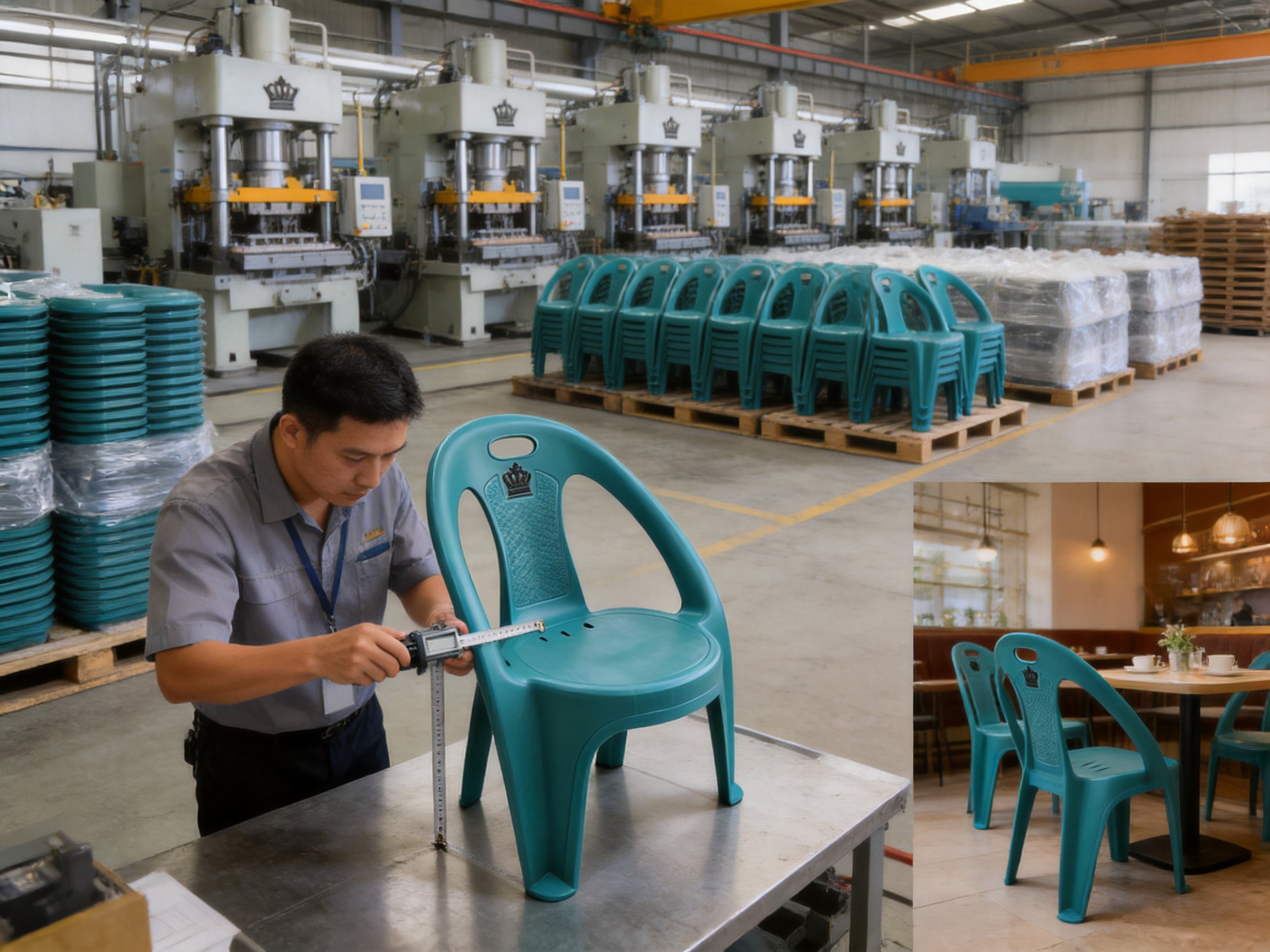
The crown-back chair is a distinctive plastic seating product designed to combine visual appeal, practical comfort and dependable everyday performance. Its defining crown-shaped backrest gives the chair a memorable silhouette, while its injection-moulded construction supports consistent dimensions, efficient mass production and flexible colour options. Behind every successful crown-back chair is a carefully engineered mould capable of reproducing fine structural details, maintaining balance across the entire part and supporting stable production cycles.
A high-quality crown-back chair mould is more than a shaped cavity in a block of steel. It is an integrated production system that must manage resin flow, cooling, ejection, dimensional control, surface finish and long-term durability. The mould must also accommodate the chair’s broad backrest, slender legs, reinforcing ribs, seat contours and decorative crown profile without creating excessive warpage, sink marks, weld lines or difficult ejection conditions.
For manufacturers serving furniture distributors, hospitality projects, household markets and institutional buyers, mould quality has a direct effect on product competitiveness. A reliable mould reduces production interruptions, minimises scrap, improves visual consistency and helps maintain a stable unit cost. It also gives manufacturers greater freedom to offer multiple colours, surface textures and product variations from the same basic design platform.
YingXiang Plastic Mould, located in Huangyan, Taizhou, Zhejiang, China, develops customised plastic injection mould solutions for household products and other high-volume applications. With experience in chair moulds, storage products, logistics products, crate moulds, pallet moulds and folding box moulds, the company provides manufacturing knowledge that is particularly valuable when developing a large, structural injection-moulded chair.
The crown-back chair mould is designed for customers seeking a combination of attractive styling, structural reliability, efficient processing and long service life. Through systematic design analysis, modern CAD, CAE and CAM technology, precision machining and practical mould-testing experience, the mould can be developed to support dependable production rather than merely create an attractive prototype.
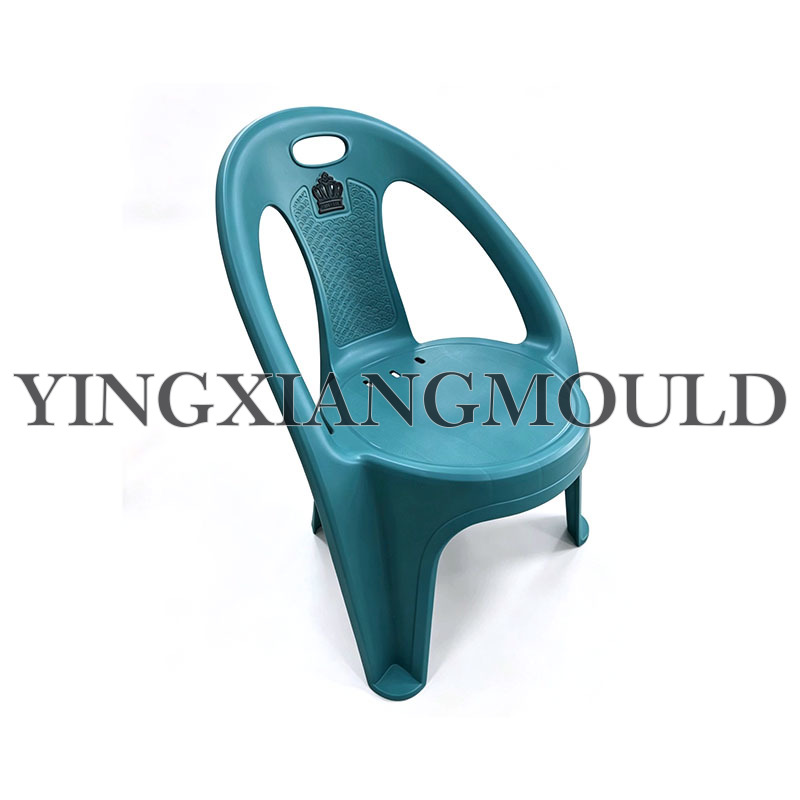
Crown-Back Chair
The crown-back chair takes its name from the upper portion of its backrest, which may resemble a crown, arch or gently elevated decorative crest. This feature creates a strong visual identity and allows the chair to stand apart from ordinary flat-back or rectangular-back plastic seating. The design can be suitable for homes, dining areas, cafés, restaurants, event venues, schools, waiting areas and other commercial environments where appearance and easy maintenance are important.
Plastic injection moulding allows the chair to be produced as a consistent, integrated structure. Depending on the design concept, the seat, backrest and legs may be moulded as one complete part or produced using a multi-part construction. An integrated chair can reduce assembly requirements and eliminate certain fasteners, while a modular construction can provide greater flexibility for replacement, colour combinations and product customisation.
The chair’s backrest is one of its most important visual and functional areas. It must provide sufficient support while remaining visually light. The crown form should be reproduced sharply and evenly across every production cycle. Any mismatch between the mould halves, inconsistent wall thickness or poor venting can become highly visible on this broad surface.
The seat also requires careful engineering. It needs a comfortable contour, suitable drainage or cleaning characteristics where necessary, adequate support beneath the sitting area and a surface that can be produced without visible sink marks. The transition between the seat and backrest must be strong enough for repeated use while remaining smooth and attractive.
The legs and lower frame carry a substantial portion of the chair’s structural load. Their design must balance strength, material consumption and mouldability. Excessively thick areas may lead to internal voids, sink marks and longer cooling times. Excessively thin sections may reduce stiffness or create filling difficulties. The mould designer must therefore work closely with the product designer to establish practical wall sections, ribs and corner radii.
The crown-back profile gives the chair a recognisable identity. In competitive furniture markets, a distinctive outline can be as important as basic function. Retailers and project buyers often prefer products that offer a clear visual difference from standard utility chairs. A properly designed mould can reproduce the decorative crown detail with a clean, balanced appearance across the complete production volume.
Injection moulding also supports a broad range of colours. Manufacturers may produce neutral shades for commercial interiors, bright colours for hospitality or event applications, pastel colours for residential markets and darker tones for premium collections. Colour changes can be managed through appropriate material preparation and production procedures without changing the fundamental mould structure.
Compared with manual fabrication or low-volume forming processes, injection moulding provides stronger control over product repeatability. Once the mould, material and process parameters are properly validated, each chair can be produced within a controlled dimensional range. This consistency is valuable for stacking, packaging, transportation, showroom presentation and project installation.
Repeatable dimensions are especially important for the legs and floor contact points. If one leg varies significantly from another, the chair may rock or sit unevenly. A well-engineered mould helps maintain the relationship between the seat plane, leg geometry and floor-contact areas. It also reduces the amount of manual correction required after moulding.
A crown-back chair is typically intended for repeated production rather than one-off manufacture. A suitable mould can support efficient cycle times, practical cooling and automated or semi-automated ejection. When mould construction and processing conditions are aligned, manufacturers can achieve a stable output rate while controlling labour and material costs.
The mould’s cooling system has an important influence on cycle time. A chair is a relatively large plastic part with different wall thicknesses and long structural sections. Cooling channels must be positioned to remove heat effectively from the seat, backrest, crown section and leg areas. Uneven cooling can create distortion, so the cooling design must focus not only on speed but also on balanced temperature control.
Plastic seating is often selected because it is easy to wipe, wash and maintain. A smooth, well-finished mould surface helps produce a chair that does not contain unnecessary recesses or rough areas where dirt can accumulate. The crown detail should be designed with practical transitions and radii rather than sharp, inaccessible pockets.
For restaurants, schools, event venues and public facilities, easy cleaning is a major product advantage. The mould should therefore support a consistent surface finish and accurate reproduction of all accessible areas. Where drainage holes, textured surfaces or special cleaning features are included, these must be integrated into the mould design without creating ejection or filling problems.
A plastic chair must withstand repeated loading, movement, stacking and occasional impact. Strength is influenced by resin selection, wall thickness, rib configuration, gate position, fibre orientation where reinforced materials are used and cooling conditions. The mould must reproduce these design features accurately and consistently.
Structural ribs can reinforce the underside of the seat and the rear of the backrest without requiring excessive material thickness. Carefully positioned ribs also help guide material flow and reduce the risk of deformation. However, ribs that are too thick or too close to outer walls may cause sink marks. Mould design and product design must therefore be developed together.
Many commercial chairs are required to stack efficiently when not in use. A crown-back chair can be developed with stacking clearances that allow multiple units to be nested while reducing storage volume. This can lower transportation costs and improve warehouse efficiency.
Stacking features must be carefully considered in the mould. Contact points should be strong enough to resist repeated loading and should not create excessive stress concentrations. The crown-shaped backrest must also be protected from damage during stacking. Appropriate clearances and smooth transitions can help prevent scratching, bending or localised impact.
The backrest and seat create a relatively broad projected area, which affects injection pressure, clamping force and material flow. A mould designer must evaluate the projected area before selecting the appropriate mould base and production machine. Insufficient clamping capacity can cause flash, while excessive pressure may increase machine wear and energy consumption.
The large backrest area also increases the importance of venting. Air trapped at the end of the flow path can cause burn marks, short shots, surface blemishes or incomplete filling. Venting locations should be selected according to the flow analysis and the shape of the cavity. Proper vents must allow air to escape while preventing unwanted plastic leakage.
The crown profile may include curved peaks, ornamental transitions, recessed details or openings. These areas require accurate machining and a logical parting-line strategy. If the parting line passes through a highly visible surface, even a small mismatch may be noticeable. The mould should be arranged to place parting lines in less visible or structurally appropriate locations whenever possible.
Sharp decorative corners can create stress concentrations in the plastic part and may be difficult to polish or release from the cavity. Proper radii improve both mould life and product strength. A refined crown shape can remain visually distinctive while using smooth transitions that are more suitable for injection moulding.
Uniform wall thickness is one of the most important principles in injection-moulded furniture. Large differences in thickness cause uneven shrinkage, which may result in warpage, sink marks and internal stress. The crown-back chair mould should therefore be designed around practical wall sections supported by ribs or local reinforcement where additional strength is required.
The seat-to-back transition, leg junctions, crown peaks and underside ribs deserve particular attention. These areas often accumulate material or create abrupt flow changes. Computer-aided analysis can help identify high-risk zones before steel machining begins, reducing the need for expensive modifications later.
Warpage occurs when different areas of the part shrink or cool at different rates. A chair may be especially sensitive to warpage because it contains long legs, a broad backrest and a large seating plane. Even moderate distortion can cause rocking, poor stacking or an unattractive appearance.
Warpage control begins with product geometry and continues through gate placement, cooling design, mould balance and processing parameters. The cavity should allow material to flow in a controlled manner, while cooling channels should be arranged to maintain a more even temperature distribution. Mould trials provide important evidence for further adjustment.
After cooling, the moulded chair must be removed without deformation or surface damage. The ejection system must distribute force across suitable structural areas. Ejector pins positioned only on thin surfaces may leave visible marks or cause local distortion. A large chair may require a combination of ejector pins, sleeves, lifters or other mechanisms depending on its geometry.
Draft angles are essential for reliable release. Vertical or near-vertical surfaces should include sufficient draft to reduce friction between the plastic part and the cavity. Textured surfaces generally require additional draft because the texture can act like a mechanical lock. The crown profile, leg pockets and underside ribs must all be checked for potential interference during ejection.
The mould manufacturing process begins with a detailed review of the chair design. The manufacturer examines the three-dimensional product model, expected resin, required surface finish, production quantity, machine conditions, tolerance expectations and packaging needs. This stage is important because mould performance depends on the relationship between the product, the material and the processing equipment.
Engineering communication also helps identify opportunities for design improvement. A product feature that looks attractive on a screen may create a filling, ejection or machining problem in practice. Experienced mould engineers can suggest changes to wall thickness, draft, rib placement, corner radii, parting lines and gate locations before the design is frozen.
Computer-aided design systems are used to build the mould structure, cavity and core, mould base, cooling layout, ejection system and auxiliary components. CAD development allows engineers to inspect interference, verify clearances and study how the product will be separated from the mould.
For a crown-back chair, the CAD stage must accommodate the complete three-dimensional shape rather than treating the backrest, seat and legs as isolated areas. The mould design must maintain alignment across the full chair while also allowing practical machining access. Components such as sliders, inserts or lifters may be considered when undercuts or complex details cannot be released directly.
Computer-aided engineering can be used to simulate filling, packing, cooling and possible deformation. Flow analysis helps engineers evaluate gate locations, filling sequence, weld-line positions, air-trap risks and pressure requirements. This is particularly helpful for a chair with a broad backrest and multiple long flow paths.
Cooling analysis supports the development of balanced cooling channels. The objective is not simply to cool the mould as quickly as possible. The system must remove heat in a controlled way so that the chair maintains its intended geometry. Analysis results can guide changes to channel diameter, spacing, location and circuit arrangement.
Simulation does not replace physical mould testing, but it can reduce uncertainty and prevent avoidable design errors. It allows the engineering team to identify potential issues while modifications are still digital and relatively economical.
Once the mould design has been validated, CAM systems convert engineering data into machining instructions. High-speed milling, CNC machining, drilling, wire cutting and electrical discharge machining may be used according to the requirements of each component. The combination of these processes allows complex cavity forms, deep ribs, cooling channels and precise shut-off surfaces to be manufactured accurately.
Precision machining is essential for the crown profile and other visible surfaces. Poor toolpath planning can create uneven marks, inaccurate transitions or excessive manual polishing. Carefully planned machining helps preserve the intended geometry and reduces the amount of corrective work during fitting.
Electrical discharge machining is useful for details that are difficult to produce with conventional cutting tools. It can be applied to narrow grooves, deep corners, intricate shut-offs and other areas requiring controlled material removal. Electrode design and positioning must be carefully managed to avoid unnecessary EDM marks on visible surfaces.
Where the crown detail contains recessed or complicated features, EDM may support accurate reproduction while maintaining the required geometry. Subsequent finishing and polishing procedures can then improve the appearance of the cavity and the surface quality of the moulded chair.
Mould fitting involves checking the interaction between cavity components, inserts, slides, ejectors, guide systems and shut-off surfaces. Correct fitting helps prevent flash, leakage, misalignment and uneven wear. The mould must open and close smoothly while maintaining accurate registration during repeated cycles.
Polishing requirements depend on the desired chair surface. A high-gloss finish may be appropriate for certain furniture styles, while a fine matte or textured finish may provide a more contemporary appearance and help reduce the visibility of minor handling marks. The selected finish should be applied consistently to the relevant cavity areas.
During assembly, cooling circuits, hydraulic or mechanical components, ejector systems and safety features are checked. The final mould should be practical to operate, maintain and inspect. Clear identification of cooling lines, replaceable inserts and wear components can simplify future servicing.
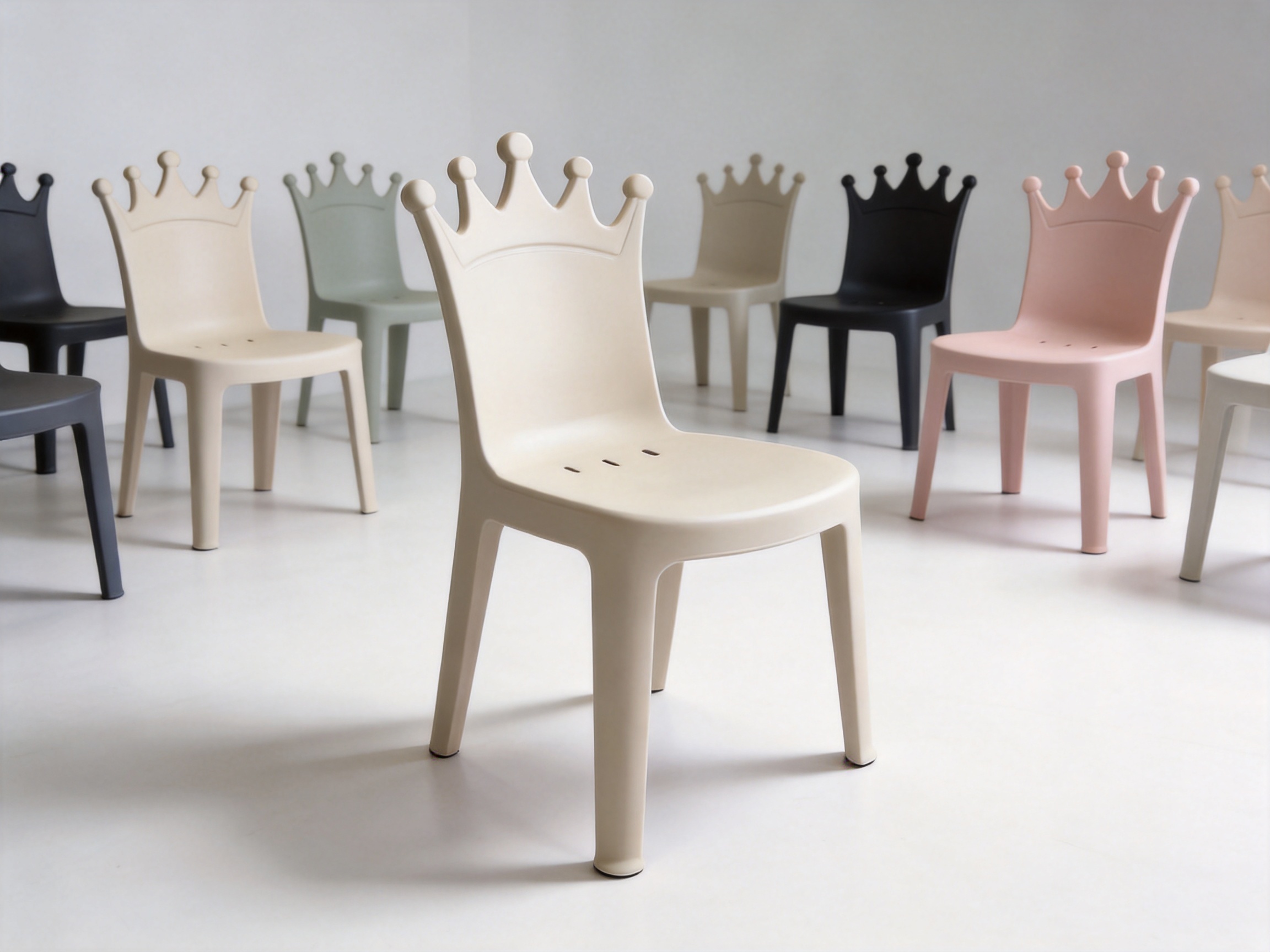
Quality control is most effective when it is integrated into every stage of mould development. Waiting until the final trial to discover dimensional or functional problems can lead to delays and costly modifications. A disciplined process includes design reviews, material verification, machining inspections, component measurement, assembly checks and mould trials.
The mould’s steel or other selected materials should be verified according to the intended production requirements. A high-volume chair mould must withstand repeated thermal cycles, injection pressure, clamping forces and mechanical movement. Material properties, hardness requirements and heat-treatment conditions should be appropriate for the expected service life.
Critical components such as guide pillars, bushes, ejector plates, inserts and sliders should be inspected for dimensional accuracy. Proper alignment reduces wear and supports stable mould operation. Replaceable wear parts can be designed into areas likely to require future maintenance.
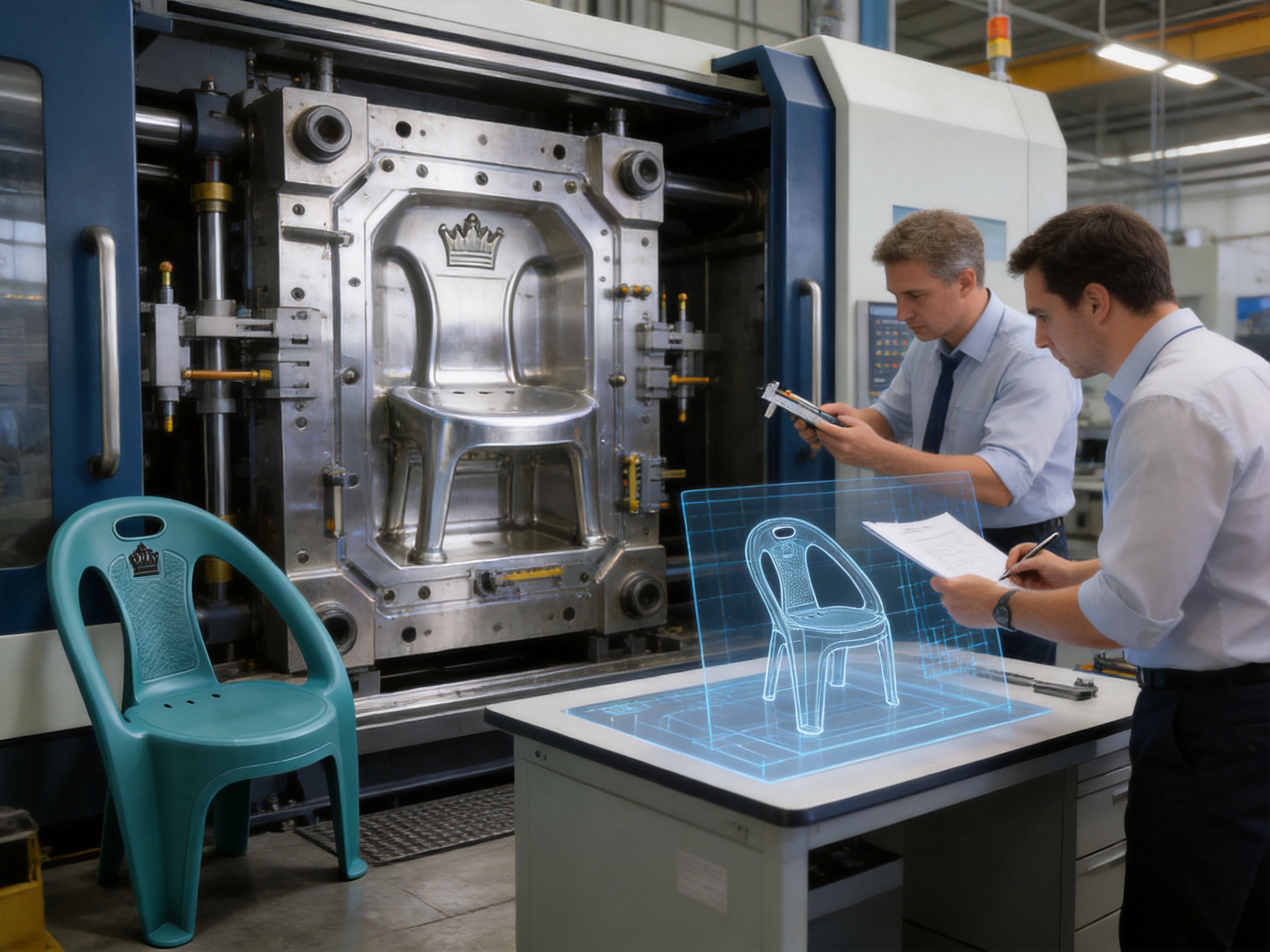
Precision measurement equipment can be used to inspect cavity dimensions, parting surfaces, cooling locations and critical assembly features. The final plastic chair can also be measured during trials to verify seat height, leg spacing, backrest geometry, stacking clearances and other important dimensions.
Dimensional inspection is especially important for products intended to be used in sets. Chairs supplied to hotels, restaurants or event companies should have a consistent appearance and should sit evenly on the floor. Stable dimensions also help with packaging and palletisation.
The first mould trial provides practical information that cannot always be obtained from digital analysis. Engineers observe filling behaviour, ejection performance, surface quality, cycle time and part deformation. Trial results may lead to adjustments in processing parameters, gate conditions, cooling balance or local mould details.
Trial production should evaluate more than whether the chair can be filled. It should also consider the production cycle, part weight, visual appearance, structural behaviour, ease of demoulding and repeatability. A mould that produces one acceptable sample but varies during continuous operation requires further refinement.
Lower-quality moulds may appear attractive because of a lower initial price, but they can generate higher costs through flash, short shots, warpage, frequent maintenance and inconsistent cycle times. A professionally engineered mould is developed with production stability in mind. The result is a better opportunity to maintain consistent output over extended manufacturing runs.
Stable production also reduces the burden on operators. When the mould opens smoothly, the chair ejects reliably and the process window is sufficiently broad, fewer manual interventions are required. This is particularly important for manufacturers producing several colours or operating multiple shifts.
Visible chair surfaces strongly influence customer perception. Uneven polishing, mismatch, weld lines, burn marks and ejector damage can reduce the perceived value of the product. A refined mould design combines controlled flow, effective venting, accurate fitting and appropriate surface finishing to support a cleaner appearance.
The crown-back design includes a large visible backrest, making surface quality especially important. A smooth, symmetrical crown profile helps create a premium impression and gives furniture brands greater confidence when presenting the chair to distributors and end users.
The initial mould investment is only one part of the total cost of ownership. Energy consumption, cycle time, scrap rate, maintenance frequency, replacement parts and production downtime all influence the long-term economics. A mould that lasts longer and runs more consistently can provide better value even if its initial manufacturing cost is not the lowest available.
Efficient cooling may shorten the production cycle and reduce energy used for heating and cooling. Good ejection design may minimise damaged parts. Replaceable components may reduce the cost of future repairs. These advantages support a lower cost per usable chair over the mould’s operating life.
A customised mould can be developed around the buyer’s target market rather than forcing the buyer to accept a generic shape. The crown height, backrest opening, seat contour, leg angle, decorative profile and surface texture can be evaluated according to the intended application.
Design flexibility also makes it possible to create related models. For example, a basic chair platform may be adapted with different crown details, colours, seat patterns or backrest treatments. Modular inserts and carefully planned mould structures can sometimes support controlled variations without requiring a completely new mould.
International furniture buyers often require dependable delivery, stable quality and clear technical communication. A mould manufacturer experienced in customised projects can support these needs through engineering documentation, trial reports, production recommendations and after-sales assistance.
For project orders, consistency is critical because a large number of chairs may be delivered to one location. Differences in colour, dimensions or stability can create complaints and replacement costs. A carefully built mould helps manufacturers fulfil larger orders with greater confidence.
The appropriate plastic resin depends on the chair’s use, required strength, appearance, weather exposure and cost target. Common considerations may include impact resistance, stiffness, ultraviolet stability, colourability, chemical resistance and processing temperature. The mould must be compatible with the selected material and the expected injection conditions.
Polypropylene is often considered for furniture applications because of its balance of processability, toughness and cost. Other materials may be selected when higher stiffness, weather resistance or premium surface quality is required. If reinforced materials are used, the mould designer should consider fibre orientation, increased wear and possible changes in shrinkage behaviour.
Material drying requirements should be reviewed before production. Certain engineering plastics are sensitive to moisture and may produce surface defects or reduced mechanical properties if processing preparation is inadequate. A complete production solution therefore includes not only the mould but also suitable material handling and process control.
Gate design influences both filling performance and appearance. The gate should deliver material into the cavity in a way that supports balanced filling and limits undesirable weld lines in visible or highly loaded areas. Gate size and type also influence vestige appearance, trimming requirements and cycle efficiency.
Processing conditions should be established through controlled trials. Injection speed, pressure, holding time, cooling time and mould temperature all influence the finished chair. Excessive injection speed may create burn marks or high shear, while insufficient speed may lead to hesitation or short shots. The correct process window should be documented for repeat production.
A chair mould should be designed for practical maintenance from the beginning. Operators need access to cooling connections, ejector components, guide systems and areas where resin deposits may accumulate. Regular cleaning and lubrication help maintain smooth operation and reduce unexpected downtime.
Cooling channels should be monitored for blockage, corrosion or scale, particularly when water quality is poor. Inadequate cooling flow can increase cycle time and create inconsistent part quality. Maintenance schedules should include inspection of hoses, connectors, seals and temperature-control equipment.
Parting surfaces must be kept clean to prevent flash and mould damage. Operators should avoid using tools or cleaning methods that scratch critical surfaces. If a mould includes interchangeable inserts, these should be removed and inspected according to an established maintenance procedure.
Ejector pins, sleeves, lifters and slides experience repeated mechanical movement. Wear may eventually cause sticking, marks or misalignment. Routine inspection allows worn components to be replaced before they damage the cavity or interrupt production.
Storage conditions also influence mould life. When the mould is not in use, it should be cleaned, dried and protected against corrosion. Cooling circuits may require appropriate draining or treatment. The mould should be stored in a safe position with moving components secured and maintenance records retained.
TaiZhou HuangYan YingXiang Plastic Mould Co., Ltd. was established in 2012 in Huangyan, Taizhou, Zhejiang, a region widely recognised for mould manufacturing. The company operates a plant of approximately 7,000 square metres and has around 50 employees, including experienced technicians and production personnel.
The company uses CAD, CAE and CAM systems to support mould design, analysis and manufacturing. This digital engineering foundation allows product concepts to be evaluated before machining and helps connect design information with production equipment. For a complex chair mould, the ability to coordinate product geometry, flow behaviour, cooling and machining is an important advantage.
YingXiang focuses on customised plastic mould solutions rather than limiting its work to one product category. Its portfolio includes crate moulds, folding box moulds, tray and pallet moulds, beverage box moulds, household product moulds, storage box moulds, trash can moulds, floor mat moulds and chair moulds. Experience across these categories provides useful knowledge of large plastic parts, structural ribs, nesting requirements, high-volume production and practical mould maintenance.
The company’s manufacturing philosophy emphasises lean production, long-life moulds, on-time delivery, competitive cost and comprehensive customer service. These priorities are relevant to crown-back chair production because the buyer needs a mould that performs reliably after delivery, not simply a mould that passes an initial inspection.
Experienced technicians can help identify manufacturing risks that may not be obvious during early product development. They can also support mould correction, trial adjustment and process recommendations. This practical knowledge is particularly useful when the chair design includes a large crown-shaped backrest, complex underside reinforcement or special stacking features.
Located in a major mould-manufacturing region, YingXiang can draw on an established industrial environment for materials, components, machining services and technical cooperation. At the same time, its focused company structure can support direct communication between customers, designers and production personnel. Clear communication helps reduce misunderstandings concerning product dimensions, surface finish, mould structure, delivery timing and future modifications.
In homes, the crown-back chair can serve as a dining chair, occasional chair, balcony seat or decorative seating product. Its distinctive backrest can complement traditional, modern or eclectic interiors depending on colour and surface finish. Plastic construction also makes it practical for households that value easy cleaning and lightweight movement.
Hospitality businesses often need chairs that are attractive, easy to maintain and suitable for frequent use. A crown-back design can contribute to the visual theme of a restaurant or café while remaining practical for daily cleaning and rearrangement. Multiple colour options can help operators coordinate furniture with branding or interior decoration.
Event seating is frequently moved, stored and arranged in large quantities. Stackable plastic chairs can reduce storage requirements and support faster venue preparation. The crown-back profile may provide a more decorative appearance than a basic utility chair, making it suitable for celebrations, ceremonies and formal functions.
Educational environments require furniture that is durable, easy to clean and manageable for staff. Lightweight plastic chairs can be moved between rooms, while a carefully designed structure can withstand repeated daily use. Rounded surfaces and a practical crown shape can improve safety and simplify maintenance.
Clinics, offices, reception areas and community facilities may use crown-back chairs to create a welcoming appearance. Consistent moulding quality supports a professional environment, while plastic construction offers advantages in cleaning, colour selection and replacement availability.
Before ordering a crown-back chair mould, buyers should define the target product clearly. Important information includes the chair’s overall dimensions, intended user weight range, stacking quantity, seat height, material type, colour requirements, surface finish, estimated annual volume and injection machine capability.
The buyer should also clarify whether the chair is intended for indoor use, outdoor use or both. Outdoor applications may require ultraviolet stabilisation, weather-resistant materials and appropriate design consideration for temperature changes. The mould itself must accommodate the selected material and any expected shrinkage behaviour.
| Consideration | Why It Matters | Recommended Engineering Focus |
|---|---|---|
| Chair dimensions | Influence machine size, mould layout, packaging and user comfort | Confirm critical dimensions and tolerances before mould construction |
| Material selection | Affects strength, shrinkage, surface quality and mould wear | Match cavity design, cooling and processing conditions to the resin |
| Crown profile | Defines product identity and visible appearance | Use smooth transitions, accurate machining and suitable parting lines |
| Wall thickness | Influences filling, cooling, strength and warpage | Maintain balanced sections and use ribs where reinforcement is needed |
| Gate arrangement | Controls filling balance and visible weld lines | Evaluate flow paths through CAE and physical trials |
| Cooling system | Influences cycle time and dimensional stability | Design balanced circuits around the seat, backrest and legs |
| Ejection system | Determines release reliability and surface quality | Distribute force through strong areas and provide adequate draft |
| Stacking design | Affects warehouse efficiency and transport cost | Confirm clearances, contact points and protection of the crown area |
| Surface finish | Influences appearance, cleaning and perceived value | Define gloss, texture and polishing standards in advance |
| Expected production volume | Determines mould steel, component selection and maintenance planning | Design for the required service life and future repair access |
A clear specification reduces design changes and helps the mould manufacturer recommend an appropriate structure. It is also useful to provide reference samples, sketches or digital models showing the desired crown shape, seat contour and surface effect.
There is no single mould configuration that is ideal for every crown-back chair. A chair intended for occasional residential use may have different material and cost priorities from a chair intended for commercial event rental. Similarly, a model designed for outdoor use may require different material preparation and surface considerations from an indoor dining chair.
Custom engineering allows the mould to be matched to the buyer’s manufacturing equipment and sales market. The injection machine’s maximum shot size, clamping force, tie-bar spacing and automation configuration should be considered. A mould that is technically functional but poorly matched to the available machine may create unnecessary production limitations.
Customisation can also improve brand differentiation. The crown profile, backrest opening, seat pattern and colour system may be adjusted to create a product family with a consistent visual language. The mould manufacturer can help assess whether each proposed feature is suitable for efficient injection moulding.
When the mould supplier is involved early, design-for-manufacturing recommendations can reduce future modifications. Early cooperation is often more economical than attempting to correct serious filling or ejection problems after the steel has been completed.
A professional mould project should include clear technical communication throughout the development process. Relevant documents may include product drawings, mould layout drawings, steel specifications, cooling diagrams, ejection information, trial records, inspection reports and recommended processing conditions.
Before shipment, the mould should be checked for opening and closing operation, cooling circuit performance, ejection movement, component identification and protective treatment. Trial samples can help the customer evaluate appearance, dimensions, stacking performance and assembly or packaging requirements.
After delivery, technical support may be needed for machine setup, process adjustment, mould maintenance or future product modifications. A supplier with experience in household and industrial plastic moulds can provide practical guidance based on similar production challenges.
YingXiang Plastic Mould places emphasis on customer service as part of its overall manufacturing approach. Its technical team can communicate with customers regarding product development, mould design, production trials and improvement requirements. This service-oriented approach helps transform the mould from a purchased tool into a more complete production solution.
A crown-back chair mould is an injection mould designed to produce a plastic chair with a crown-shaped or arched upper backrest. It includes the cavity, core, cooling system, injection interface, ejection system and guiding components required to form the chair repeatedly and consistently.
Its main difference is the distinctive crown-shaped backrest, which gives the product a stronger decorative identity. It can also be engineered with specific seat contours, stacking features, surface textures and colour options to suit residential, hospitality, event or institutional markets.
The chair has a large backrest, seat and long structural sections that may cool at different rates. A balanced cooling system helps control cycle time, shrinkage and warpage. Poor cooling can lead to distortion, rocking legs, stacking problems and inconsistent dimensions.
Defects can be reduced through suitable wall thickness, correct gate positioning, effective venting, appropriate draft, accurate cavity machining, balanced cooling and controlled processing conditions. CAE analysis and physical mould trials help identify and correct potential problems.
Yes. The same mould can generally be used for different colours when the selected plastic materials and processing conditions are compatible. Colour changes require proper material preparation, cleaning and process control to prevent contamination or colour variation.
Yes. Stacking capability can be incorporated into the chair geometry and mould design. The design must provide suitable clearances, strong contact points and protection for the crown-shaped backrest. Stacking should be evaluated through physical samples before mass production.
Material selection depends on strength, stiffness, impact resistance, weather exposure, surface requirements and cost. Polypropylene is one possible option for many furniture applications, while other materials may be considered for special performance requirements. The resin should be confirmed during the engineering stage.
Service life depends on mould steel, material abrasiveness, production volume, processing conditions, maintenance and design quality. A mould built for the expected production level with suitable components and regular maintenance can provide reliable long-term service. The precise life should be evaluated according to the project requirements.
The buyer should provide the product drawing or three-dimensional model, material information, expected annual quantity, chair dimensions, machine details, surface finish, colour requirements, stacking expectations and delivery target. Reference samples or sketches are also helpful when the crown profile is highly customised.
CAE analysis can help predict filling sequence, pressure demand, weld lines, air traps, cooling behaviour and possible deformation. It does not eliminate the need for physical trials, but it allows the engineering team to address many risks before steel is machined.
Common causes include unbalanced wall thickness, inadequate draft, poor gate placement, insufficient venting, uneven cooling, weak ejection support, inaccurate mould fitting and unsuitable processing parameters. Early design review and experienced mould engineering can reduce these risks.
Some variations may be possible through interchangeable inserts or planned modifications, but this depends on the original mould structure and the extent of the design change. If future variations are expected, they should be discussed before mould construction so that modular options can be considered.
The crown-back chair combines practical plastic furniture performance with a distinctive decorative profile. Its crown-shaped backrest can help manufacturers offer a product that is more memorable than a basic utility chair, while injection moulding supports consistent dimensions, efficient production, easy cleaning, colour flexibility and scalable supply.
The quality of the finished chair depends heavily on the quality of its mould. The mould must manage broad surfaces, structural legs, seat transitions, crown details, cooling balance, filling behaviour and reliable ejection. It must also be designed for the customer’s material, machine, production quantity and target market.
Compared with less advanced mould solutions, a professionally engineered crown-back chair mould can provide stronger production stability, better appearance, lower long-term operating costs, improved stacking potential and greater flexibility for product development. CAD, CAE and CAM systems support the process, while precision machining, careful fitting, controlled polishing and systematic trials help turn the digital design into a reliable production tool.
TaiZhou HuangYan YingXiang Plastic Mould Co., Ltd. brings experience from a broad range of plastic mould applications, including chair moulds, household product moulds, logistics products, crates, pallets, folding boxes and storage containers. Its Huangyan manufacturing base, approximately 7,000 square metre plant, experienced technical team and focus on customised solutions provide a strong foundation for developing crown-back chair moulds.
For buyers seeking a dependable plastic chair mould, the most valuable approach is to consider the entire production system rather than the mould price alone. Product design, resin selection, machine compatibility, cooling, ejection, surface finish, quality control, maintenance and after-sales support all contribute to final performance. With careful engineering and close cooperation between customer and mould manufacturer, the crown-back chair can become an efficient, attractive and commercially competitive seating product.
1. Injection Molding Handbook, principles of polymer flow, mould design, cooling and ejection.
2. Plastics Engineering Fundamentals, material selection, shrinkage, warpage and structural design for injection-moulded products.
3. Design for Manufacturability in Plastic Injection Moulding, guidelines for wall thickness, ribs, draft angles and parting lines.
4. Computer-Aided Engineering for Polymer Processing, methods for analysing filling, packing, cooling and deformation.
5. Practical Mould Maintenance and Toolroom Management, recommendations for cleaning, lubrication, inspection and service-life planning.
6. Product Development Principles for Plastic Furniture, considerations for ergonomics, structural performance, stacking and commercial production.
7. International best-practice guidance for injection mould construction, dimensional inspection, process validation and quality management.
If you are interested in any of our products or services, please feel free to ask and we can talk about your ideas.
 QUICK LINKSMOBILE SITE
 FACTORY ADDRESS
 CONTACT INFORMATION



 English
 Español