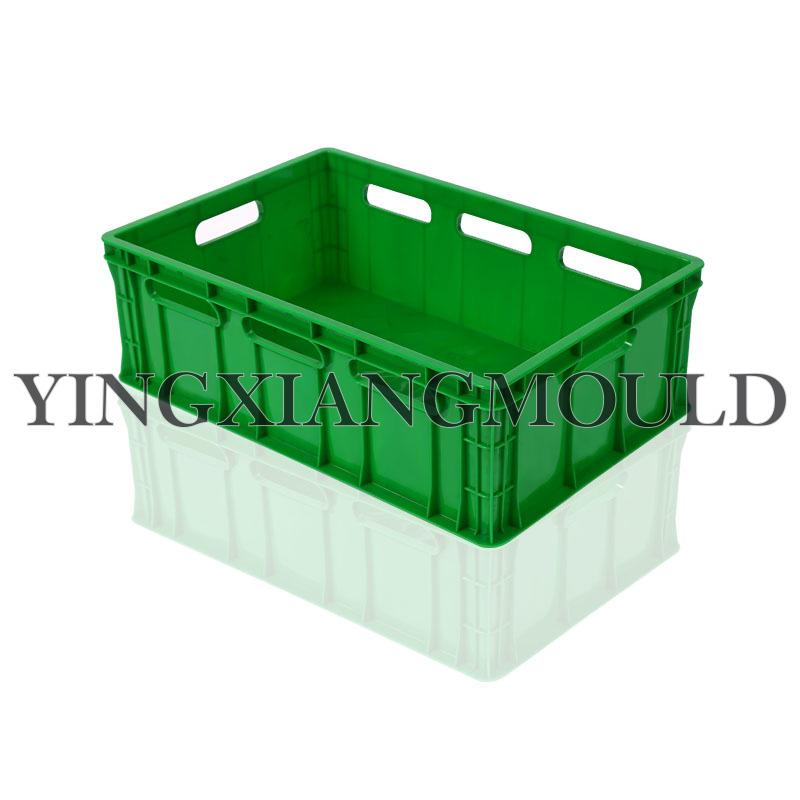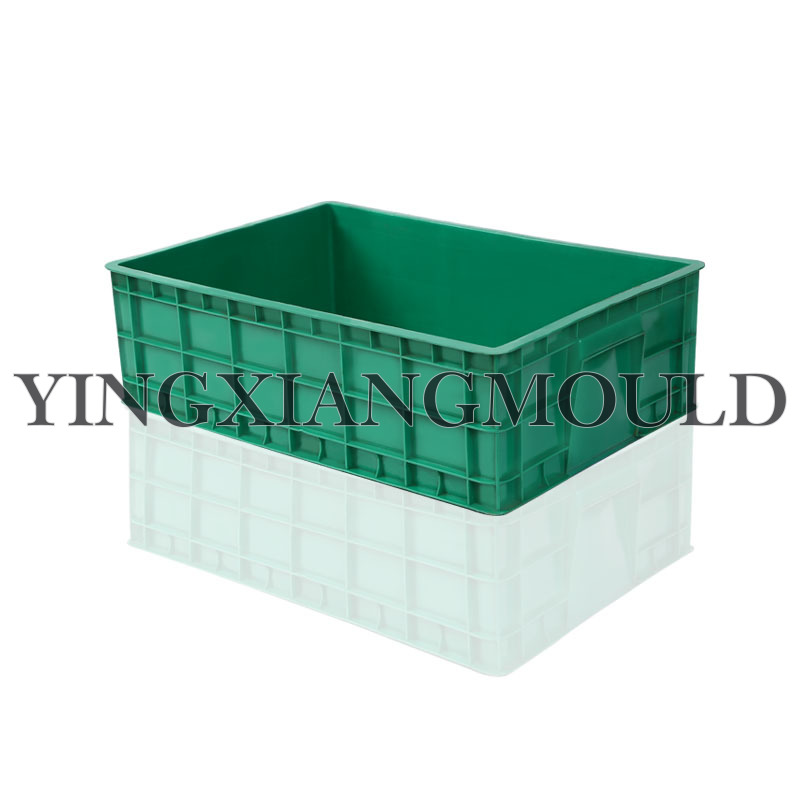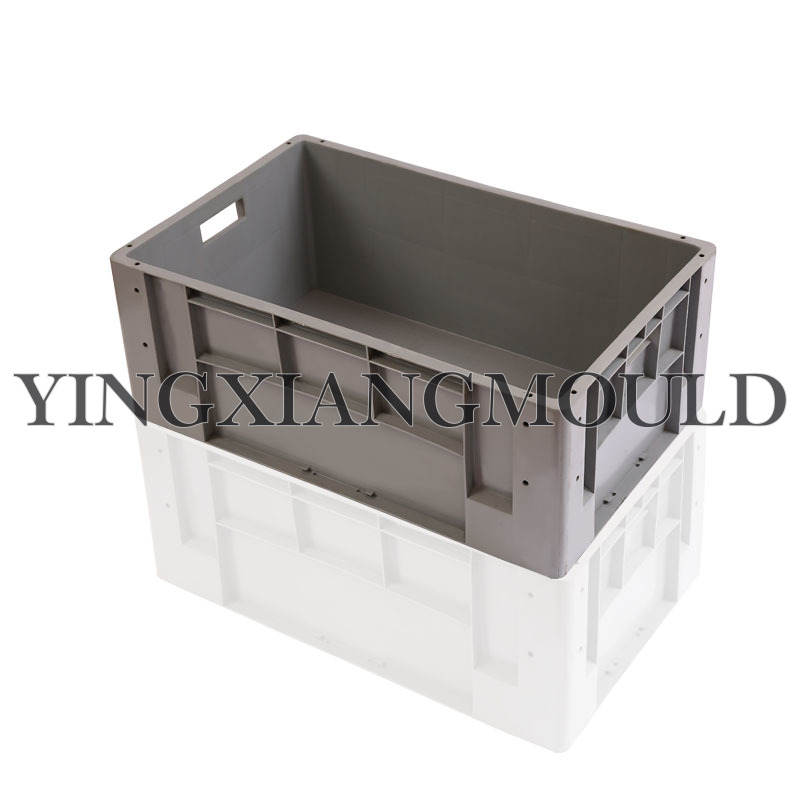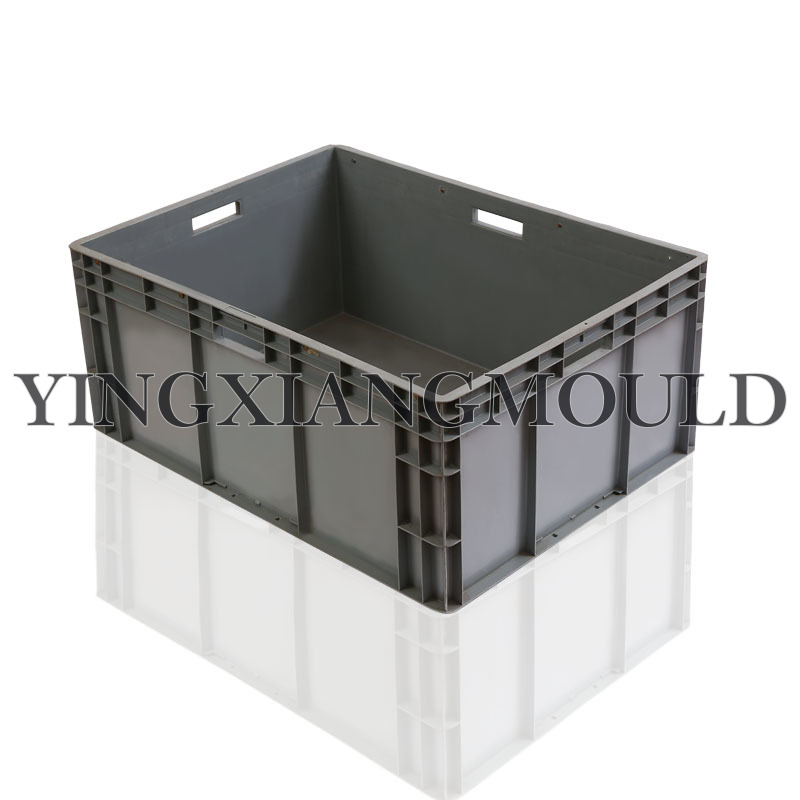
An airtight food storage container is more than a simple household box. It is a carefully engineered packaging product designed to protect food from moisture, air exchange, dust, odours, and accidental leakage. Its performance depends on the complete interaction of the container body, lid, sealing structure, locking mechanism, material selection, and injection moulding process. When these elements are designed and manufactured correctly, the result is a practical storage solution for kitchens, restaurants, food processors, supermarkets, and household organization.
The quality of the mould is one of the most important factors determining the final performance of an airtight food storage container. A well-designed mould helps create accurate sealing surfaces, stable wall thickness, smooth corners, reliable locking features, and consistent dimensions from one production cycle to the next. By contrast, a poorly engineered mould can cause flash, warpage, uneven walls, difficult demoulding, lid mismatch, and inconsistent sealing.
YingXiang Plastic Mould is a professional plastic injection mould manufacturer based in Huangyan, Taizhou, Zhejiang, China, a region widely recognized for its mould-making industry. Established in 2012, the company operates a 7,000 m² plant with approximately 50 employees. Its production capabilities cover household product moulds, food storage container moulds, logistics crate moulds, folding box moulds, beverage box moulds, pallet moulds, trays, chairs, stools, baskets, trash cans, floor mats, and other customized plastic injection mould solutions.
This article explains the product advantages of airtight food storage containers, the essential mould technologies behind them, the manufacturing strengths of an experienced mould supplier, and the reasons buyers should evaluate both the finished product and the production process before selecting a long-term manufacturing partner.
Airtight Food Storage Container
A conventional plastic box may hold food, but it does not necessarily protect the contents from air, moisture, or leakage. An airtight food storage container is designed with a controlled sealing system. The container rim, lid, sealing groove, flexible gasket or sealing lip, and closure points must work together to reduce unwanted air movement and prevent liquid from escaping during normal use.
The fundamental difference lies in dimensional precision. The lid must fit the container body with enough accuracy to create a continuous seal without becoming excessively difficult to remove. If the lid is too loose, the product may leak or allow air into the interior. If it is too tight, consumers may struggle to open it, and repeated use may damage the lid, gasket, or locking tabs.
The container must also maintain its shape during filling, stacking, washing, transport, and storage. Food storage products are frequently exposed to temperature changes, repeated handling, condensation, and contact with oils or sauces. Therefore, a successful design must balance rigidity, flexibility, impact resistance, cleaning convenience, and visual appearance.
For manufacturers, these requirements create several moulding challenges. The container body may include deep cavities, rounded corners, reinforced ribs, stacking features, or side handles. The lid may require thin sealing edges, snap-fit details, hinges, clips, or integrated flexible zones. Each feature influences mould flow, cooling, ejection, cycle time, and product quality.
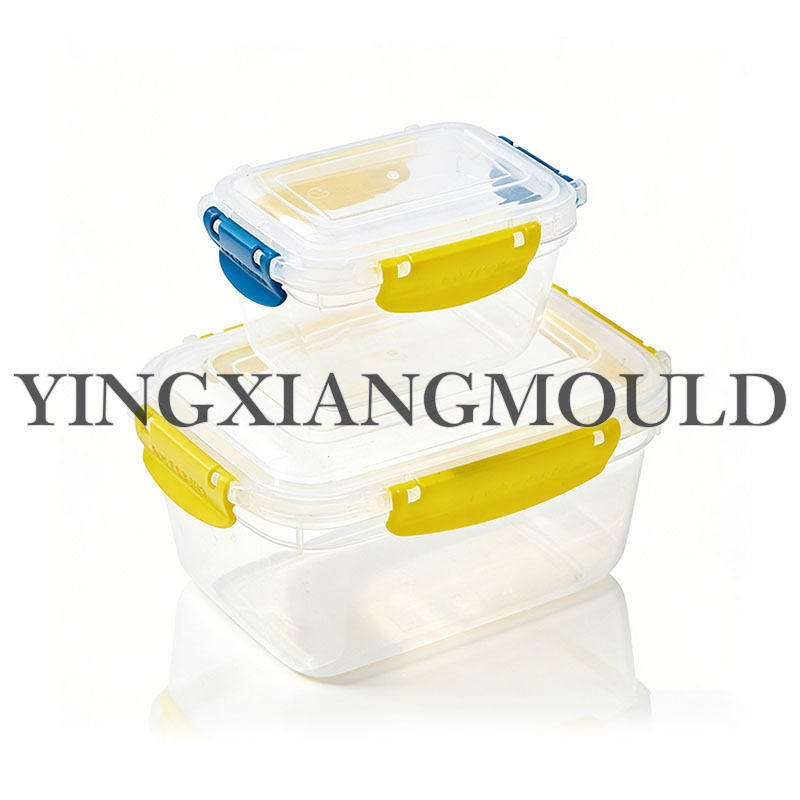
An airtight food storage container commonly consists of the following functional areas:
Container body: The main cavity holds the food and provides the structural foundation of the product. Its wall thickness must be sufficiently uniform to reduce shrinkage and distortion.
Sealing rim: The upper edge of the container contacts the lid or gasket. It must be flat, continuous, and free from visible moulding defects.
Lid: The lid closes the container and may include a sealing groove, pressure-fit surface, locking tabs, or a flexible sealing lip.
Gasket or sealing ring: Some designs use a separate silicone or elastomer gasket, while others use a moulded plastic sealing structure. The selected system depends on the required level of airtightness, cost target, cleaning requirements, and product positioning.
Locking mechanism: Clips, corners, snap-fit arms, or a rotating closure can apply pressure to the sealing area. Their geometry must be carefully controlled to avoid breakage during repeated operation.
Reinforcing features: Ribs, rounded corners, base supports, and stacking ledges improve strength while helping the product maintain its shape.
Identification and appearance details: Text, logos, capacity markings, transparent windows, colour zones, and surface textures can be incorporated into the product and mould design.
Each of these components must be considered as part of a single system. Improving one feature without evaluating the others can lead to problems. For example, increasing the locking force may improve initial sealing but make the container uncomfortable to open. Adding thick reinforcing ribs may improve rigidity but create uneven cooling and visible sink marks. A professional mould development process examines these relationships before steel machining begins.
Airtight food storage containers offer several advantages over ordinary open-top boxes, loosely fitted lids, disposable bags, and low-precision plastic containers. These advantages can be important for both consumers and commercial users.
Many dry foods lose quality when exposed to humid air. Cereals, flour, biscuits, coffee, spices, nuts, and powdered ingredients may soften, clump, or lose aroma. An airtight container helps limit exposure to the surrounding environment. Although the exact level of protection depends on the design, material, gasket, closure, and usage conditions, a properly engineered seal can provide a significant improvement over an ordinary loose lid.
For refrigerated food, reducing air exchange can help limit odour transfer between different products. Strong-smelling foods can be stored more conveniently when the container is designed to close securely. This is useful in homes, commercial kitchens, catering facilities, and meal preparation environments.
A container with a reliable sealing structure is easier to transport. Users can place it in a lunch bag, refrigerator, cabinet, or delivery box with greater confidence. The product is especially useful for soups, sauces, cooked vegetables, prepared meals, and other foods that contain liquid.
Leak resistance depends on more than the presence of a lid. The sealing path must be continuous, the locking points must apply balanced pressure, and the container body must not deform excessively. The mould must therefore produce accurate mating surfaces and repeatable dimensions.
Uniform containers can be stacked, nested, labelled, and arranged efficiently. A consistent product family may include different capacities while maintaining the same basic lid or closure system. This helps households and commercial kitchens use storage space more effectively.
Stacking features must be designed carefully. Excessive contact between containers can make them difficult to separate, while insufficient guidance can cause unstable stacks. Proper mould engineering can create controlled stacking ledges, locating points, and reinforced bases without adding unnecessary material.
Reusable plastic containers can reduce dependence on single-use packaging for everyday storage. Their long-term value depends on material quality, wall design, resistance to repeated handling, and the durability of the closure system. A well-designed container should remain functional after frequent opening, closing, washing, and repositioning.
For brands and distributors, durability can improve customer satisfaction and reduce product returns. The mould should support robust features rather than delicate details that fail during normal use. Locking tabs, hinges, corners, and sealing lips deserve particular attention because these areas commonly experience repeated stress.
Transparent or translucent containers allow users to identify contents without opening the lid. This can help reduce food waste and improve inventory control. A smooth surface also makes printed labels, capacity markings, and decorative elements easier to apply.
Appearance quality is especially important in retail products. Flow lines, weld marks, ejector marks, scratches, and uneven gloss can affect the perceived value of the container. A high-quality mould and a stable injection process help produce a cleaner, more consistent appearance.
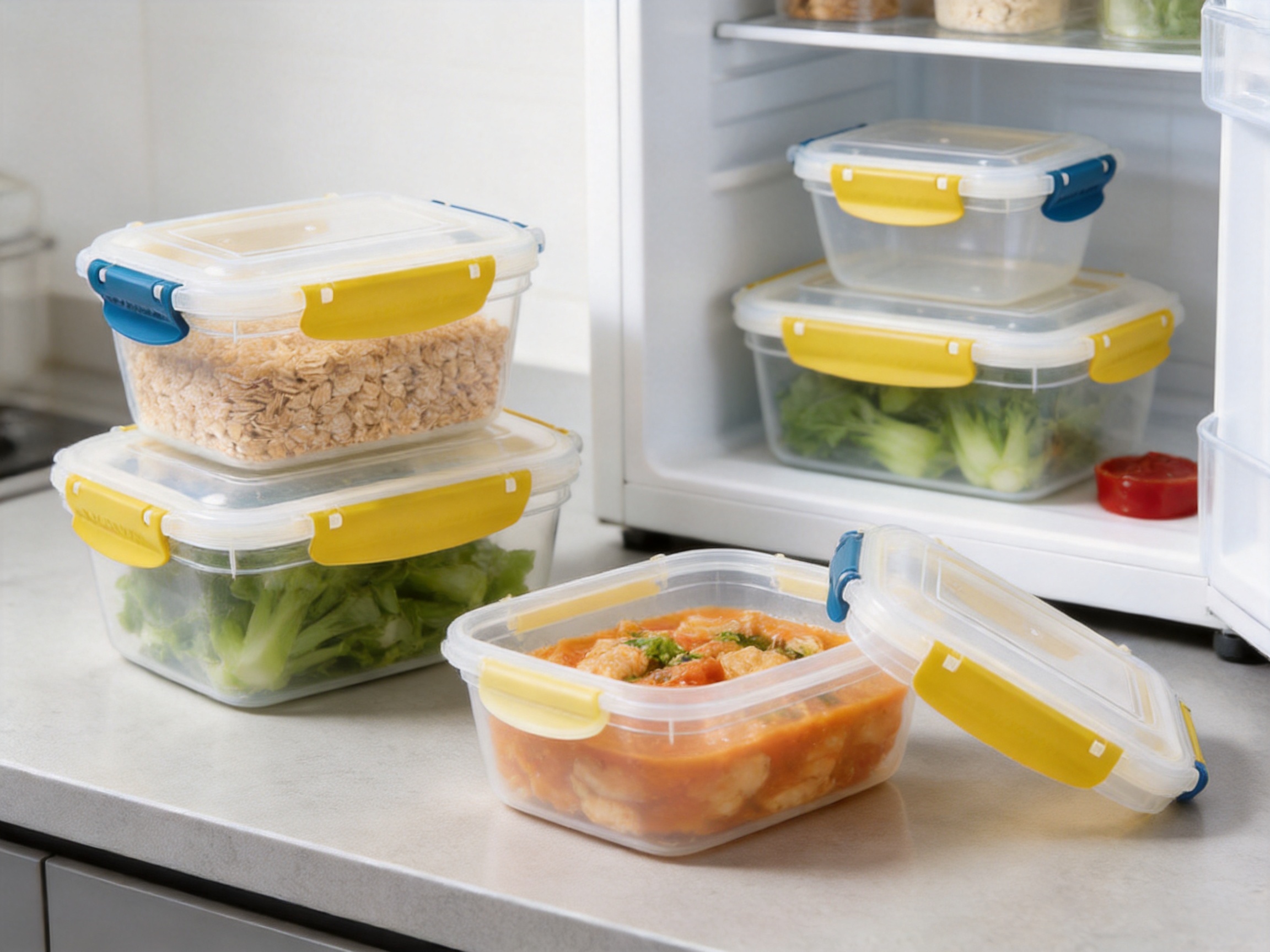
Competition in the food storage market is strong. Many products may look similar at first glance, but their performance can differ considerably. An airtight food storage container supported by professional mould engineering can offer meaningful advantages over low-cost alternatives.
| Evaluation Area | Professional Airtight Container | Low-Precision Alternative |
|---|---|---|
| Sealing performance | Designed sealing rim, controlled gasket compression, and accurate lid fit | Uneven contact, loose fit, or inconsistent closure |
| Dimensional consistency | Stable mould dimensions and controlled production parameters | Greater variation between batches or cavities |
| Leak resistance | Balanced locking points and continuous sealing path | Potential leakage around corners or distorted areas |
| Durability | Reinforced stress areas and moulded features designed for repeated use | Weak clips, thin corners, or brittle hinges |
| Appearance | Controlled surfaces, polished or textured cavities, and reduced moulding defects | More visible flow marks, flash, sink marks, or scratches |
| Stacking efficiency | Purpose-designed locating and stacking details | Unstable stacking or difficult separation |
| Production support | Engineering review, mould testing, adjustment, and after-sales service | Limited technical response after delivery |
The sealing edge is one of the most sensitive regions of the product. Even a small dimensional deviation can affect the contact pressure between the lid and container. Professional mould design considers flatness, parallelism, corner transitions, shrinkage, and the material’s expected behaviour during cooling.
Rounded corners are common in food storage containers because they are easier to clean and more comfortable to handle. However, corners can also become weak points in the sealing path. The mould must maintain a smooth and controlled transition between straight sections and curved sections so that the gasket or lid does not lose contact.
A container with only one strong locking point may seal unevenly. Multi-point closures can distribute force around the lid, but they require accurate alignment and appropriate flexibility. The moulding design must consider the direction in which clips deflect, the stress concentration at their roots, and the number of times they are expected to be opened and closed.
For mass production, even small differences in clip dimensions can cause variations in user experience. A professional mould supplier can improve consistency through precise machining, suitable steel selection, controlled polishing, and trial-based adjustments.
The product should be strong enough for daily use without becoming unnecessarily heavy or expensive. Excessively thick areas increase material consumption and may create sink marks or longer cooling times. Excessively thin areas may warp, deform, or fail under impact.
Uniform wall thickness is therefore a key design principle. Where additional strength is needed, ribs and carefully positioned supports are usually more efficient than simply increasing the thickness of the entire product. The mould flow analysis and engineering review should identify potential filling, air-trap, weld-line, and cooling concerns before finalizing the mould structure.
Food containers should be easy to clean. Deep narrow grooves, sharp internal corners, and inaccessible cavities can retain food residue. A well-developed product uses generous radii, smooth internal surfaces, and a sealing system that can be removed or cleaned effectively when appropriate.
The mould cavity finish influences the final surface. Polished surfaces may support a smooth appearance, while controlled textures can improve grip and hide minor handling marks. The correct finish depends on the product specification, material, colour, and intended market.
The mould is the foundation of product consistency. Injection moulding can produce thousands or millions of parts, but only when the mould structure is designed for stable filling, cooling, ejection, and repeatable operation.
The parting line separates the mould halves and leaves a potential witness line on the product. Its location should be selected to support reliable demoulding and minimize visible marks on important surfaces. For a container body, the parting line is often positioned around the upper perimeter or another practical transition. For a lid, the choice depends on the closure details, sealing groove, clips, and any flexible structures.
A poorly positioned parting line can create flash in the sealing region or make the lid difficult to fit. Professional design evaluates the product’s functional surfaces before determining the best mould split.
The core forms the inside of the container, while the cavity forms the outside. Their relationship determines wall thickness, dimensions, corner geometry, and the fit between the body and lid. Precision machining is essential, particularly around sealing rims, snap-fit details, and alignment features.
Dimensional accuracy must be balanced with expected material shrinkage. Different plastics shrink at different rates, and shrinkage may vary with flow direction, wall thickness, cooling conditions, and reinforcement. Experienced mould engineers account for these factors during design and trial production.
The gate introduces molten plastic into the mould. Its location affects filling pattern, weld lines, pressure distribution, packing, appearance, and cycle stability. A gate placed in an unsuitable location may produce visible marks on the product, uneven filling, or a weld line in a high-stress area.
For larger containers or complex lids, multiple gates may be considered. The flow must be balanced so that different regions fill at appropriate times. The use of CAD, CAE, and CAM systems supports this development process by allowing engineers to assess the expected flow and identify potential problems before steel is cut.
Air trapped inside the cavity can cause burn marks, short shots, surface defects, and filling instability. Venting is particularly important near the ends of flow paths, corners, ribs, and thin sealing structures. The vent design must release air while preventing excessive flash.
Small sealing features may be especially sensitive to incomplete filling. Appropriate venting, gate selection, and process adjustment help ensure that the sealing geometry is formed accurately.
Cooling influences cycle time, dimensional stability, productivity, and warpage. Containers with broad flat surfaces can be vulnerable to distortion if cooling is uneven. The mould should include cooling channels positioned to remove heat effectively from both thick and thin regions.
Uniform cooling is important for lids because a warped lid may not sit evenly on the container body. It is also important for long, thin clips and sealing edges, where small distortions can change the closing force or leak resistance.
The product must be removed from the mould without deformation, whitening, scratches, or damage to the sealing features. Ejector pins, stripper plates, lifters, and other mechanisms should be positioned according to the product’s structural strength and draft angles.
For deep container bodies, ejection can be challenging. The mould may need suitable draft, polished surfaces, balanced ejection force, and careful control of vacuum effects. The design should avoid placing ejector marks on visible or functional areas whenever possible.
The quality of an airtight food storage container is closely connected to the capabilities of the mould manufacturer. YingXiang Plastic Mould combines engineering software, production equipment, experienced technicians, and a structured manufacturing process to support customized plastic mould projects.
Computer-aided design systems help develop the product and mould structure with accurate three-dimensional data. Engineers can inspect wall thickness, draft angles, parting lines, inserts, sliders, cooling channels, ejector systems, and assembly relationships before manufacturing begins.
Computer-aided engineering can support mould flow evaluation. This is useful for predicting filling behaviour, weld lines, air traps, pressure requirements, cooling trends, and possible deformation. Although simulation is not a replacement for practical mould trials, it helps reduce avoidable design risks.
Computer-aided manufacturing transfers approved geometry to machining equipment. This improves repeatability and supports the production of complex cavity details, precise inserts, and coordinated mould components.
Modern mould production requires reliable machining, measuring, polishing, fitting, and testing capabilities. Advanced equipment can improve dimensional accuracy and reduce variation between components. This is especially important for products with multiple mating parts, such as a container body and a sealing lid.
Equipment alone does not guarantee quality. It must be supported by skilled technicians who understand material behaviour, machining allowances, assembly tolerances, polishing requirements, and injection trial results. YingXiang’s experienced technical team contributes practical knowledge to the transition from product concept to finished mould.
Mould steel should be selected according to production volume, material characteristics, product geometry, surface requirements, and maintenance expectations. A high-use food storage container mould may require wear-resistant components in areas exposed to repeated sliding, such as lifters, sliders, clips, or interchangeable inserts.
Appropriate treatment and finishing can improve resistance to wear, corrosion, and deformation. The mould structure should also allow maintenance access so that replaceable parts can be serviced without unnecessary downtime.
Mould trials are an essential stage of development. The first trial provides information about filling, parting line quality, ejection, surface appearance, dimensions, fit, and closure performance. Engineers can then make adjustments to steel, vents, gates, cooling, polishing, or process settings.
A container mould may require several rounds of optimization before it achieves the desired balance between airtightness, opening force, appearance, and cycle efficiency. An experienced manufacturer treats trial feedback as an engineering tool rather than viewing it as a final formality.
Quality control should begin with design review and continue through material preparation, machining, component inspection, mould assembly, trial production, and final acceptance. Critical dimensions should be identified early, especially those related to the sealing path, clips, hinges, stacking surfaces, and interchangeable components.
Inspection records, trial samples, and technical communication help ensure that the mould matches the customer’s requirements. Clear documentation can also support future modifications, replacement parts, and maintenance.
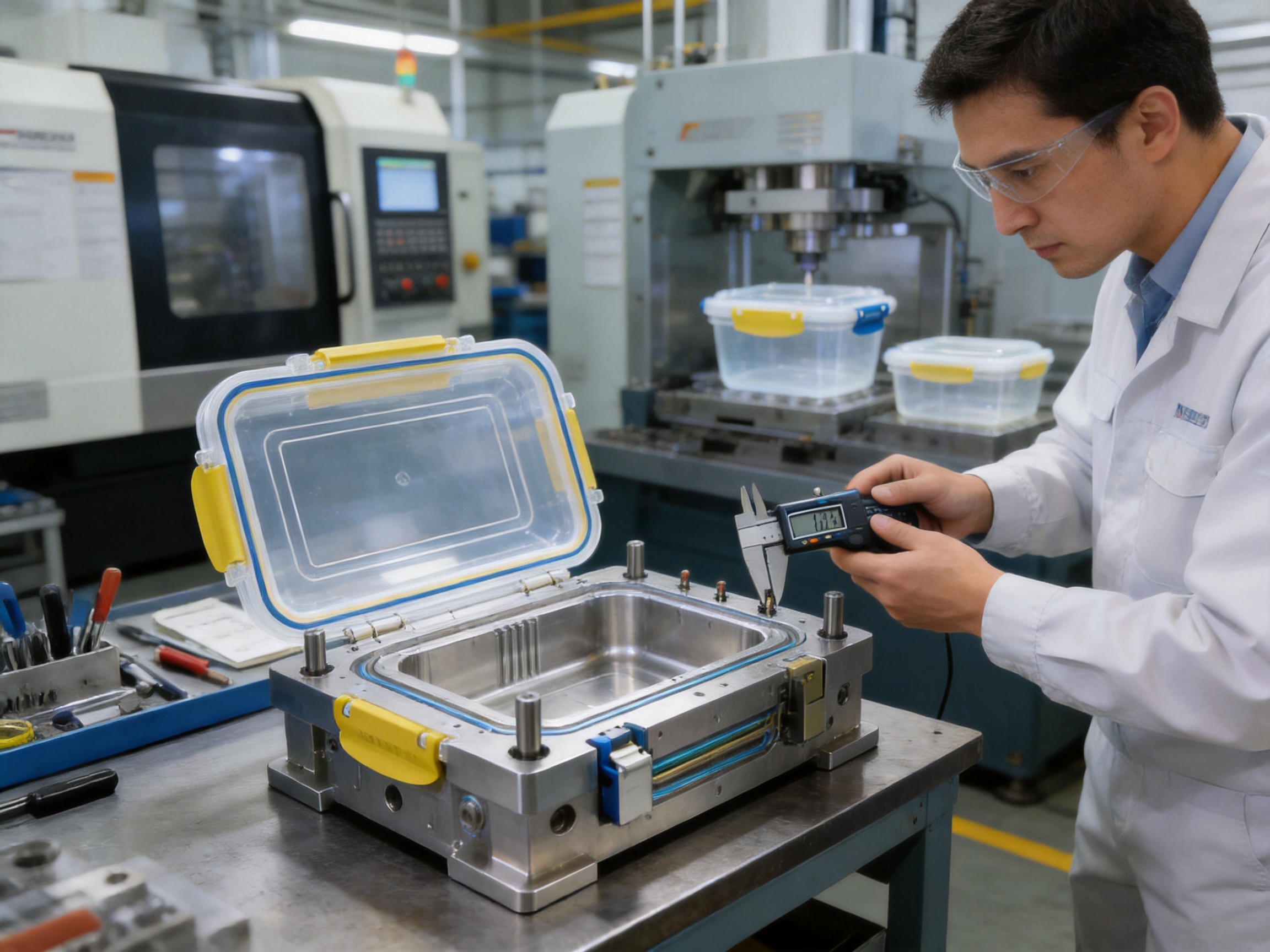
A professional manufacturing workflow reduces risk and makes responsibilities clear. The exact process may vary according to the product, but a typical project follows several connected stages.
The process begins with a review of the customer’s product concept. Important information includes container capacity, overall dimensions, material, transparency or colour requirements, closure type, target production volume, expected service life, packaging method, and available injection machine.
The manufacturer should also understand whether the container is intended for home use, food service, retail sales, industrial meal preparation, or another application. These details influence the mould design, steel choice, cavity number, cycle expectations, and surface finish.
Engineers examine the product for draft, wall thickness, undercuts, sharp transitions, filling challenges, sealing surfaces, and ejection requirements. If the design contains a flexible clip or living hinge, its geometry should be reviewed for material suitability and repeated-use performance.
At this stage, improvements can be made at relatively low cost. Changing a radius, moving a rib, adjusting a clip root, or refining a sealing groove before mould construction is usually easier than making the same change after steel machining.
The mould structure includes the core, cavity, inserts, sliders, lifters, ejectors, cooling channels, runners, gates, vents, guide systems, and support plates. The design must consider not only the first production run but also maintenance, replacement, and long-term operation.
For a product family with several sizes, interchangeable inserts may be considered. This approach can reduce development costs and maintain common design features, although its suitability depends on the product geometry and production requirements.
Approved mould data is used to machine the cavity and structural components. Rough machining removes most of the material, while finishing operations create the required dimensions and surface quality. Small sealing grooves, clip details, and corner transitions may require specialized tools and careful control.
Machining allowances must be planned for polishing and final fitting. If too much material is removed during polishing, critical dimensions may change. Skilled technicians coordinate machining, measurement, and finishing to protect the design intent.
After individual components are produced, the mould is assembled and checked. The core and cavity must align accurately, moving parts must operate smoothly, and the ejector system must return correctly. Parting surfaces are inspected for contact and potential flash.
Fitting is particularly important for multi-component lids. Sliders, lifters, inserts, and locking details must work together without excessive friction or interference. Small adjustments at this stage can significantly improve production reliability.
The assembled mould is tested using the intended or an appropriate plastic material. Trial samples are checked for filling, warpage, sink marks, flash, weld lines, ejector marks, dimensions, fit, and closure performance.
The body and lid should be tested together. A lid that appears acceptable by itself may not seal correctly when paired with the container body. Practical testing should include repeated opening and closing, liquid leakage checks when appropriate, stacking evaluation, and visual inspection.
After trial evaluation, necessary corrections are completed. The final mould is cleaned, inspected, documented, and prepared for delivery or production installation. The manufacturer may provide samples and technical information for the customer’s approval.
Post-delivery communication remains important. Customers may need assistance with mould installation, injection parameters, maintenance schedules, spare parts, or future product modifications. Comprehensive service helps protect the customer’s investment over the mould’s working life.
Material selection must be made according to the intended application and applicable regulations in the target market. Common injection moulding materials for food storage products may include polypropylene and other food-contact plastics, subject to the customer’s specification and compliance requirements.
Material properties influence shrinkage, flexibility, impact resistance, transparency, chemical resistance, heat performance, and moulding conditions. A material with greater flexibility may be suitable for a snap-fit lid, while a more rigid grade may be preferred for a stackable container body.
Customers should confirm food-contact requirements, temperature conditions, cleaning methods, and regional regulatory expectations with qualified material suppliers and testing organizations. The mould manufacturer can design around the selected material, but material compliance must be verified for the intended market and application.
Transparent containers require careful attention to cavity polishing, flow marks, weld lines, and gate placement. Any visible defect may be more noticeable in clear plastic than in an opaque product. Consistent processing conditions are also important for maintaining colour and clarity.
Coloured containers can provide branding flexibility and product differentiation. However, colour changes may influence processing behaviour and may require appropriate cleaning and material transition procedures during production.
Internal geometry should avoid unnecessary pockets where food can accumulate. Smooth transitions and suitable radii support cleaning. The sealing structure should provide reliable performance without creating difficult-to-access channels.
The mould surface finish should match the cleaning and appearance requirements. Highly polished surfaces can produce a smooth interior, while textures may improve grip or reduce the visibility of minor scratches on external areas.
The container should be comfortable to hold, open, close, stack, and carry. Side clips need enough flexibility for operation without requiring excessive force. The lid should provide a practical grip area, especially when the container is used directly from a refrigerator.
Ergonomic details should be developed alongside mould feasibility. A visually attractive handle or clip may become difficult to mould if it contains deep undercuts or insufficient draft. Early technical cooperation helps preserve both appearance and manufacturability.
Choosing a mould supplier is a long-term decision. The mould affects product quality, production efficiency, maintenance cost, and the ability to make future improvements. A supplier with experience in household products and storage containers can identify common risks before they become expensive production problems.
YingXiang Plastic Mould has focused on customized plastic mould solutions since 2012. Its product range includes food storage container moulds as well as crate, folding box, pallet, beverage box, tray, basket, chair, stool, trash can, floor mat, and other household and industrial moulds. This broad experience is valuable because many moulding principles are shared across products: balanced flow, durable moving parts, efficient cooling, stable ejection, and controlled surface quality.
The company’s 7,000 m² facility provides space for design, machining, assembly, testing, and project coordination. Its team of approximately 50 employees combines technical personnel and production staff. The company emphasizes lean manufacturing, long-life moulds, on-time delivery, competitive costs, premium quality, and comprehensive customer service.
Airtight food storage containers vary widely in size, closure type, capacity, material, and target market. A mould should be developed around the actual product rather than copied from a generic structure. Custom engineering allows the manufacturer to optimize the sealing system, wall thickness, gate location, cooling design, and ejection method for the specific part.
Clear communication reduces misunderstandings about dimensions, tolerances, material, packaging, machine compatibility, and acceptance criteria. A professional supplier should discuss important technical questions before manufacturing begins and provide feedback when the product design may create moulding or performance risks.
Successful storage products often develop into product families. A customer may later require different capacities, colours, lid styles, or packaging formats. A manufacturer familiar with the original mould can help evaluate modifications, new inserts, replacement components, or related product designs.
The lowest initial mould price does not always represent the lowest total cost. A mould that produces inconsistent parts may increase scrap, inspection time, machine downtime, rework, and customer complaints. It may also require frequent repairs or premature replacement.
A well-engineered mould can support more stable production. Efficient cooling may reduce cycle time, balanced filling can lower defect rates, and durable moving components can reduce maintenance interruptions. These benefits contribute to the total return on investment over the mould’s operating life.
Cavity number is another important consideration. A single-cavity mould may be appropriate for product development, smaller production volumes, or large containers. Multi-cavity moulds can increase output but require higher initial investment and more demanding flow balance. The correct choice depends on forecast volume, machine capacity, product dimensions, and business plans.
Customers should evaluate the complete project cost, including mould design, steel, machining, trials, modifications, transportation, spare parts, maintenance, and production efficiency. A transparent quotation and clear technical scope help prevent unexpected costs.
Even a high-quality mould requires proper maintenance. Regular cleaning removes plastic residue, dust, and moisture that could affect parting surfaces or moving components. Lubrication should be applied according to the manufacturer’s recommendations, especially for sliders, lifters, guide systems, and ejector components.
Cooling channels should be monitored because deposits or restricted flow can reduce cooling efficiency. Sealing areas, vents, inserts, and clips should be inspected for wear. Early detection of small problems can prevent larger damage and reduce unplanned downtime.
After production, the mould should be cleaned, dried, protected against corrosion where appropriate, and stored in a suitable condition. Moving parts should be returned to safe positions, and maintenance records should be kept for future reference.
Interchangeable inserts and wear components can simplify repairs. During mould design, customers should discuss which components may require replacement and whether spare parts should be supplied with the mould.
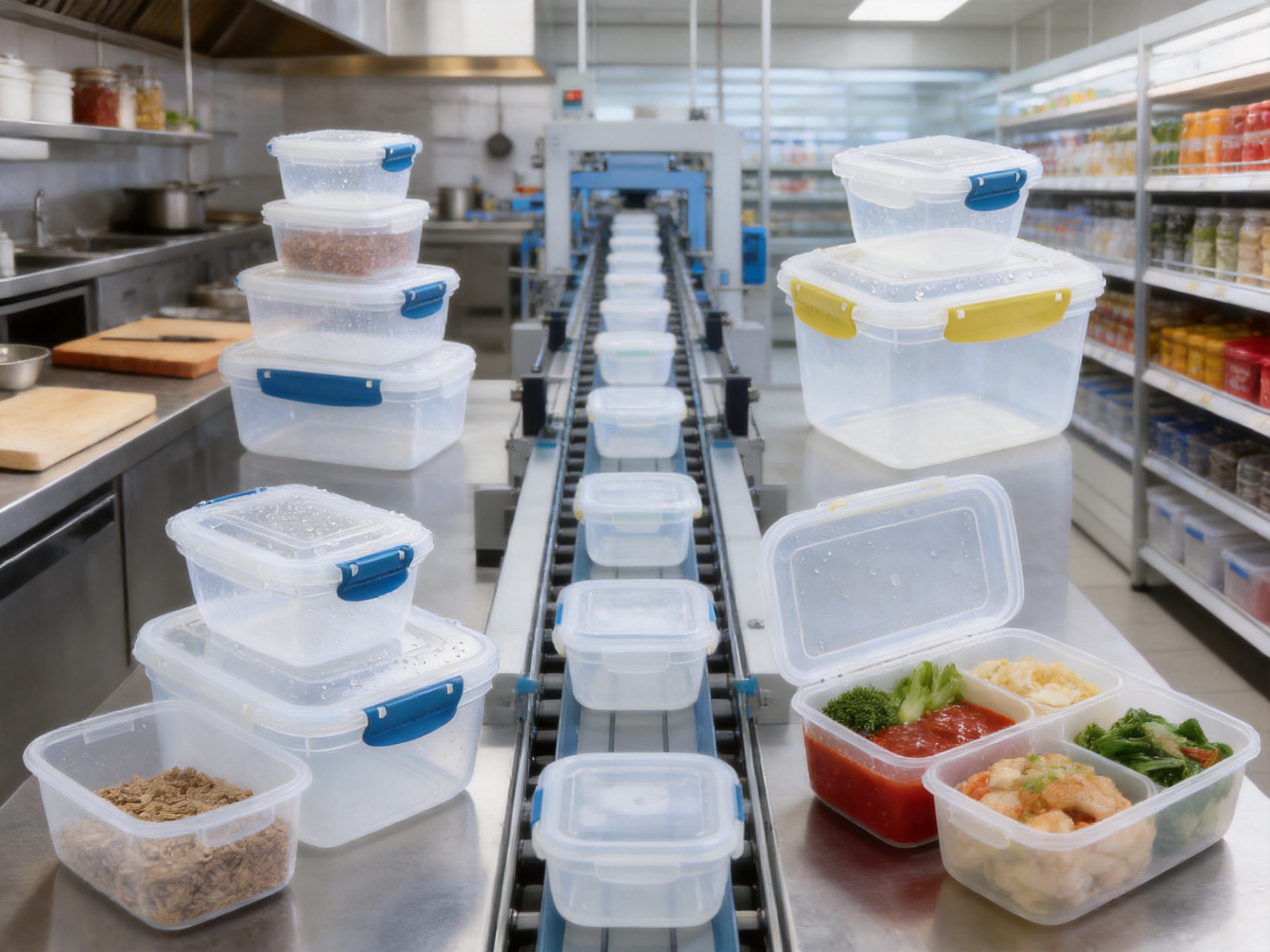
Airtight food storage containers are suitable for a wide range of applications. In homes, they are used for dry goods, leftovers, meal preparation, refrigerated foods, snacks, and pantry organization. In restaurants and catering operations, they support ingredient separation, preparation control, and storage efficiency.
Food processors may use reusable containers for internal handling or portion management, subject to their hygiene and regulatory procedures. Retail brands may develop container series with coordinated capacities, colours, and packaging. Commercial kitchens often value stackability, durability, easy identification, and resistance to frequent washing.
The product can also be adapted for different user groups. A household design may emphasize appearance and convenience, while a professional food-service design may prioritize impact resistance, high cycle durability, standardized stacking, and rapid cleaning.
The main purpose is to store food while reducing air exchange and helping prevent leakage, moisture exposure, dust contamination, and odour transfer. Actual performance depends on the product design, sealing system, material, and correct use.
Airtightness depends on accurate mating surfaces between the container body and lid. If the mould produces dimensional variation, warpage, flash, or an uneven rim, the lid may not apply consistent sealing pressure. Precision moulding supports repeatable fit and closure performance.
The sealing rim, lid groove, gasket seat, locking clips, hinges, corner transitions, parting surfaces, and ejection areas are especially important. These features influence leakage, opening force, durability, appearance, and production stability.
In some cases, interchangeable inserts or a modular mould structure may support related sizes. However, the suitability depends on the product geometry, capacity differences, production volume, and required investment. Each proposal should be evaluated by an experienced mould engineer.
Warpage can be addressed through balanced wall thickness, proper rib design, suitable gate placement, uniform cooling, correct material shrinkage compensation, appropriate processing conditions, and stable ejection. Simulation and mould trials can help identify the most likely causes.
The buyer should provide product drawings or samples, three-dimensional data if available, dimensions, material, container capacity, closure type, target production quantity, preferred cavity number, colour or transparency requirements, surface finish, injection machine information, and delivery expectations.
The answer depends on annual demand, product size, machine capacity, cycle time, investment budget, and production planning. A lower cavity count may suit development or moderate output, while a higher cavity count may be appropriate for large-scale production.
Durability depends on suitable material, correct thickness, generous transition radii, controlled flexibility, proper draft, balanced mould filling, and avoidance of sharp stress concentrations. Repeated opening and closing should be considered during product development and validation.
Not always. A polished finish can be appropriate for clear or smooth products, but a controlled texture may improve grip, reduce the visibility of scratches, or support a particular appearance. The surface finish should match the product’s functional and visual requirements.
Maintenance affects the mould’s service life, product consistency, and production availability. Designing accessible wear parts, suitable cooling channels, replaceable inserts, and clear maintenance procedures makes future servicing easier and less expensive.
An experienced supplier understands common problems such as uneven filling, sealing mismatch, clip breakage, warpage, difficult ejection, and cosmetic defects. This practical knowledge can improve design decisions, shorten troubleshooting time, and support more reliable mass production.
A supplier experienced in food storage container moulds may also support related household and industrial products. YingXiang’s product scope includes logistics crates, folding boxes, pallets, beverage boxes, trays, baskets, chairs, stools, trash cans, floor mats, and other customized plastic injection moulds.
When comparing mould manufacturers, buyers should look beyond price. Important evaluation factors include technical experience, design capability, machining resources, trial procedures, quality control, communication, delivery planning, maintenance support, and the supplier’s understanding of the intended application.
A suitable partner should be able to explain how the proposed mould will manage sealing surfaces, cooling, ejection, clips, parting lines, and dimensional control. The supplier should also be willing to review the product design and identify improvements that support both performance and manufacturability.
For an airtight food storage container, the finished mould should be assessed through actual samples rather than appearance alone. Buyers should examine body-to-lid fit, closure force, leakage resistance, stacking, surface quality, repeated operation, and dimensional consistency. These checks provide a clearer understanding of whether the mould is ready for reliable production.
An airtight food storage container combines practical household value with demanding mould engineering. Its success depends on a continuous sealing path, accurate dimensions, suitable material, durable closure components, efficient cooling, controlled ejection, and stable injection production. The product must be convenient for users while remaining economical and reliable for manufacturers.
Compared with low-precision alternatives, a professionally designed container can provide better leak resistance, improved protection from air and moisture, stronger clips, more consistent appearance, easier stacking, and longer service life. These advantages begin with the mould and continue through every stage of manufacturing.
YingXiang Plastic Mould offers customized plastic injection mould solutions from its facility in Huangyan, Taizhou, Zhejiang. Since 2012, the company has developed moulds for food storage containers, household products, logistics crates, folding boxes, pallets, trays, beverage boxes, baskets, chairs, stools, trash cans, floor mats, and other applications. Its 7,000 m² plant, CAD/CAE/CAM systems, advanced equipment, experienced technicians, and focus on lean manufacturing support the development of long-life moulds with stable production performance.
For buyers seeking an airtight food storage container mould, the best approach is to define the product requirements clearly, review the design early, evaluate sealing and durability in practical trials, and select a mould manufacturer capable of providing technical support throughout the project. With the right engineering process and manufacturing partner, an airtight food storage container can achieve strong market appeal, dependable daily performance, and efficient long-term production.
1. Injection Molding Handbook, selected principles of mould design, material flow, cooling, and ejection.
2. Plastics Engineering Fundamentals, guidance on polymer processing, shrinkage, warpage, and product development.
3. Packaging Design and Performance Evaluation, general considerations for closures, sealing systems, stacking, and storage containers.
4. Plastic Product Design for Injection Molding, principles of draft, wall thickness, ribs, radii, parting lines, and manufacturability.
5. Industrial Mould Maintenance Practices, recommendations for cleaning, lubrication, inspection, corrosion prevention, and wear-part replacement.
6. Food Packaging Materials and Applications, general considerations for selecting plastics for food storage products and confirming application-specific compliance.
If you are interested in any of our products or services, please feel free to ask and we can talk about your ideas.
 QUICK LINKSMOBILE SITE
 FACTORY ADDRESS
 CONTACT INFORMATION



 English
 Español