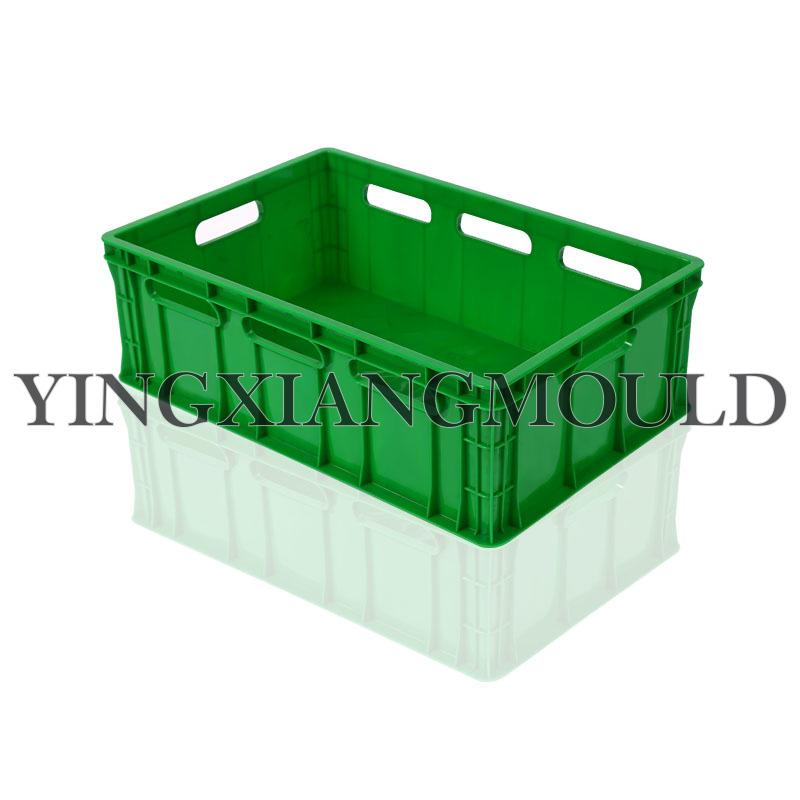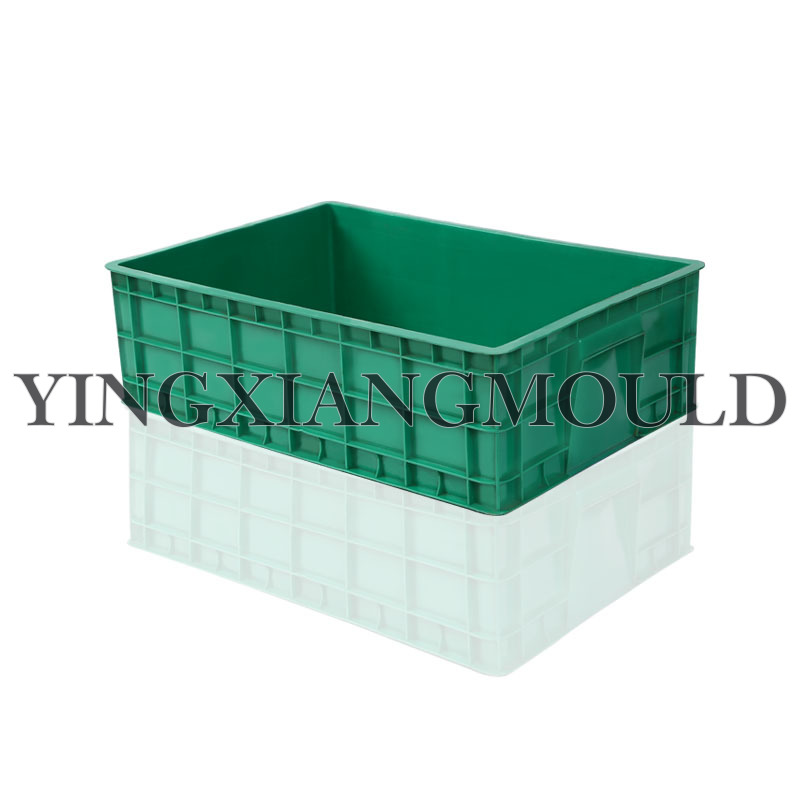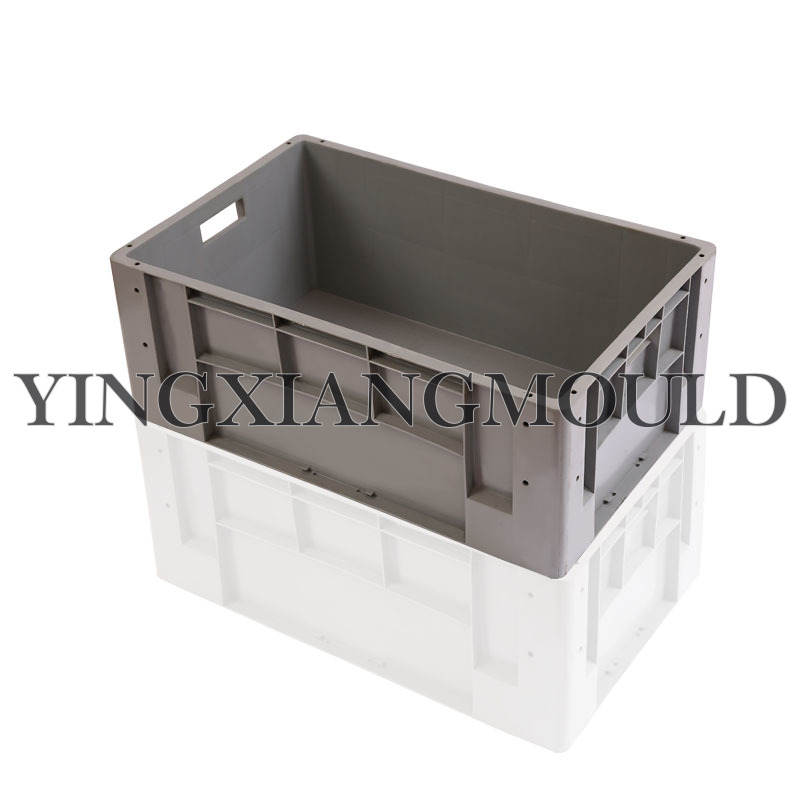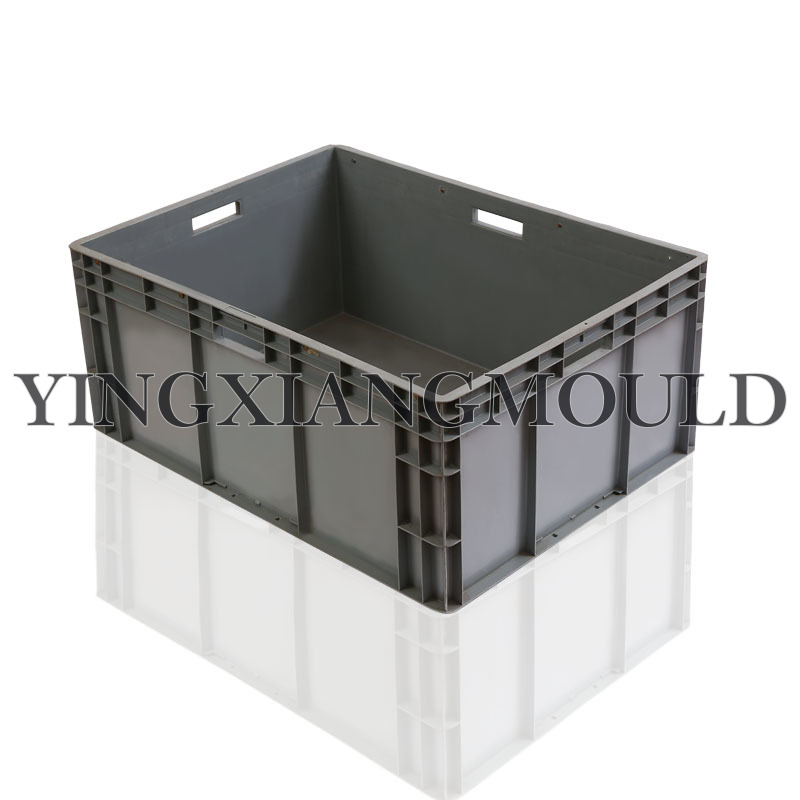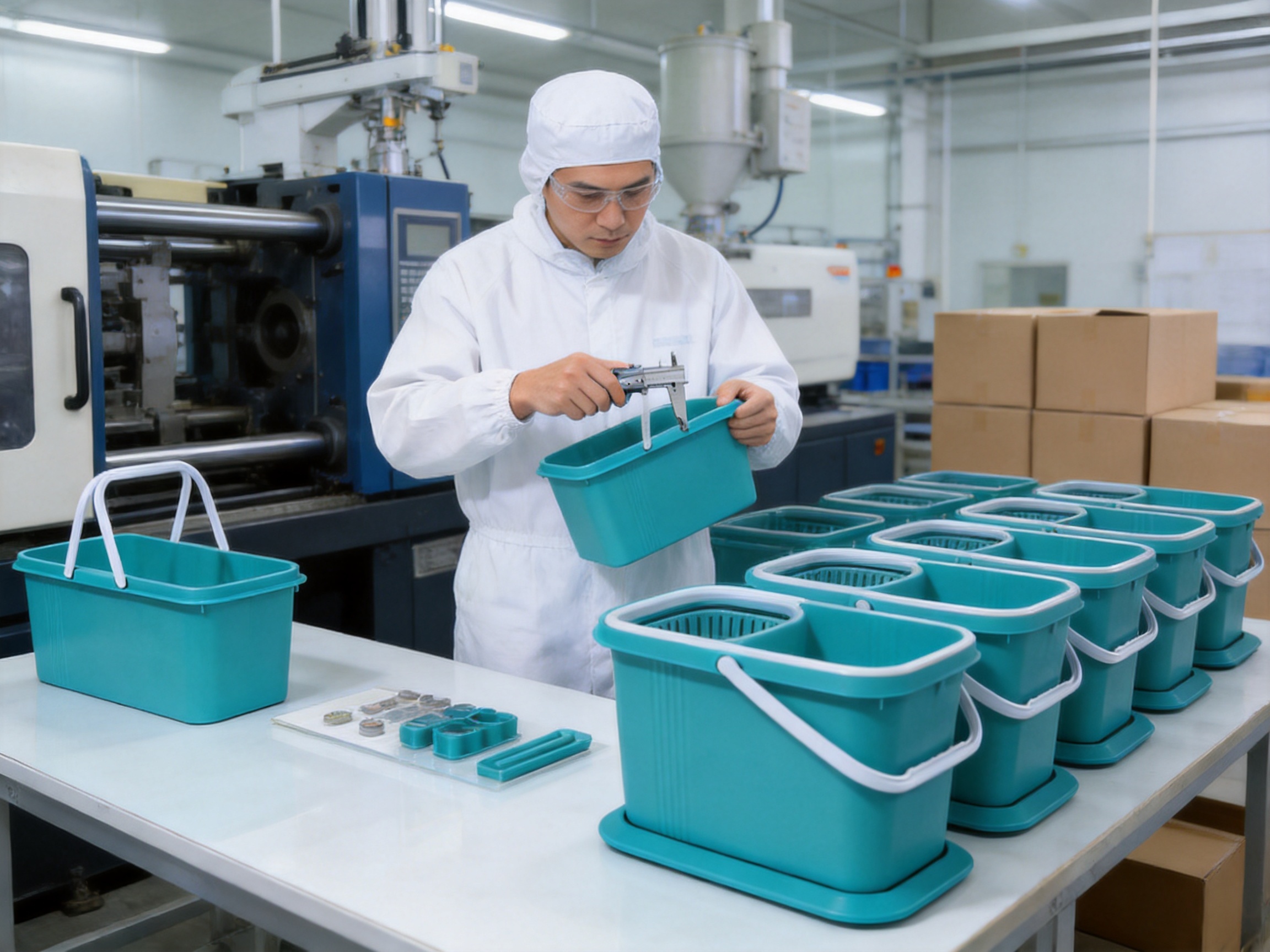
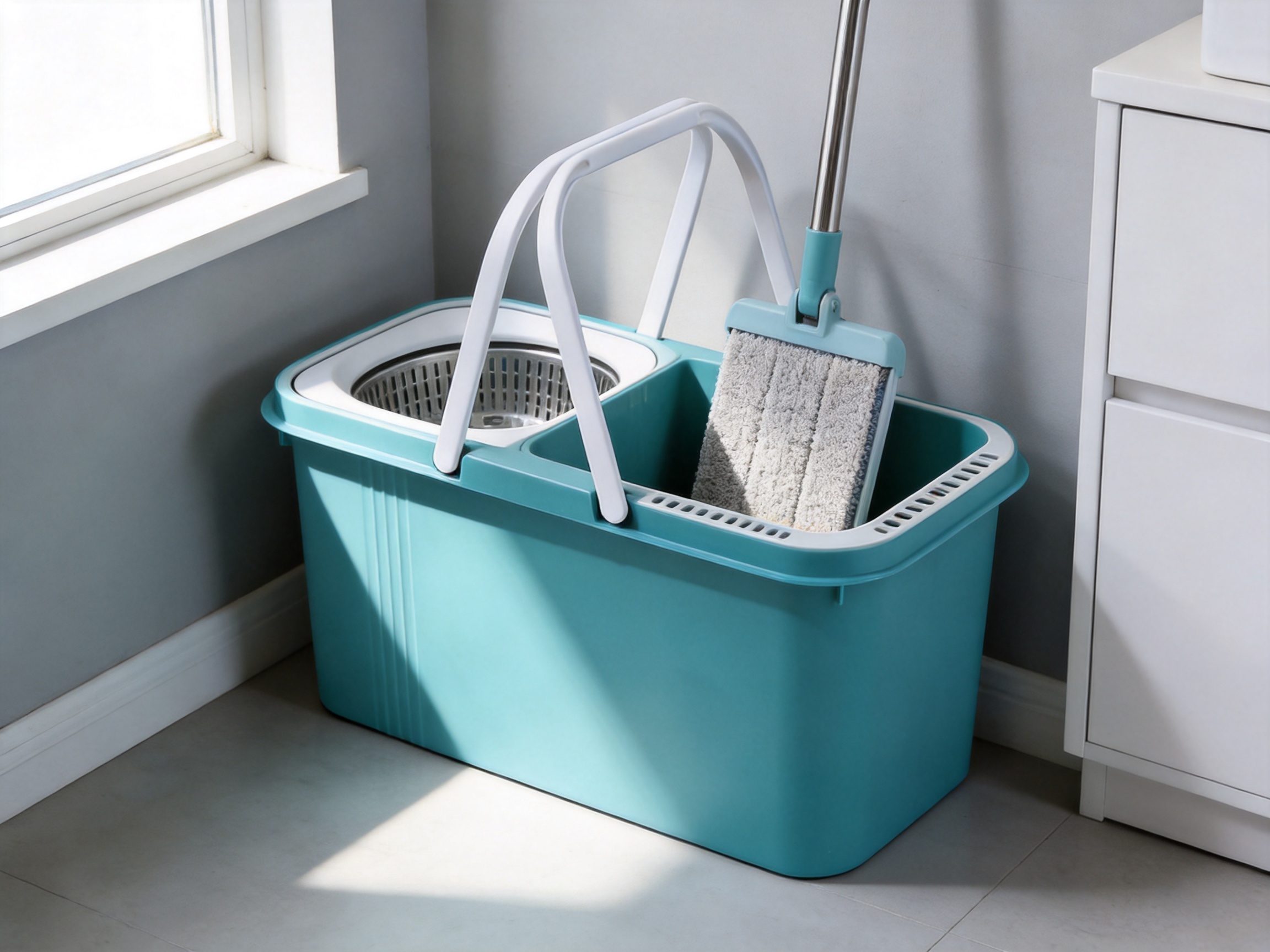
A rectangular mop bucket is a practical household cleaning product designed to make mopping faster, tidier, and more convenient. Its elongated shape provides enough space for a mop head while maintaining a compact footprint that can fit beside a wall, under a utility sink, or in a narrow storage area. For manufacturers, however, producing a dependable rectangular mop bucket requires more than a basic plastic container design. The mould must deliver accurate dimensions, stable walls, smooth surfaces, reliable drainage features, comfortable handling, and consistent performance over a large production volume.
The rectangular mop bucket mould supplied by TaiZhou HuangYan YingXiang Plastic Mould Co., Ltd. is developed for manufacturers seeking a dependable injection moulding solution for household cleaning products. The mould is designed around practical user requirements, efficient plastic processing, and long-term production stability. It can support the manufacture of buckets with an elongated body, integrated carrying features, reinforced corners, smooth internal surfaces, and functional wringing or drainage areas, depending on the final product specification.
Yingxiang Plastic Mould is a professional plastic mould manufacturer located in Huangyan, Taizhou, Zhejiang, China, an area widely recognized for its mould-making expertise. Established in 2012, the company operates a plant covering approximately 7,000 square metres and employs around 50 people. Its technical resources include CAD, CAE, and CAM systems, advanced production equipment, experienced technicians, and a manufacturing approach focused on precision, durability, competitive cost, and delivery reliability.
For buyers comparing mould suppliers, the value of a rectangular mop bucket mould is determined by more than its appearance. The mould must be easy to install, efficient to run, resistant to wear, suitable for the selected plastic material, and capable of producing parts with minimal variation. A well-engineered mould also reduces production waste, simplifies maintenance, supports stable cycle times, and helps the finished product compete in demanding household goods markets.
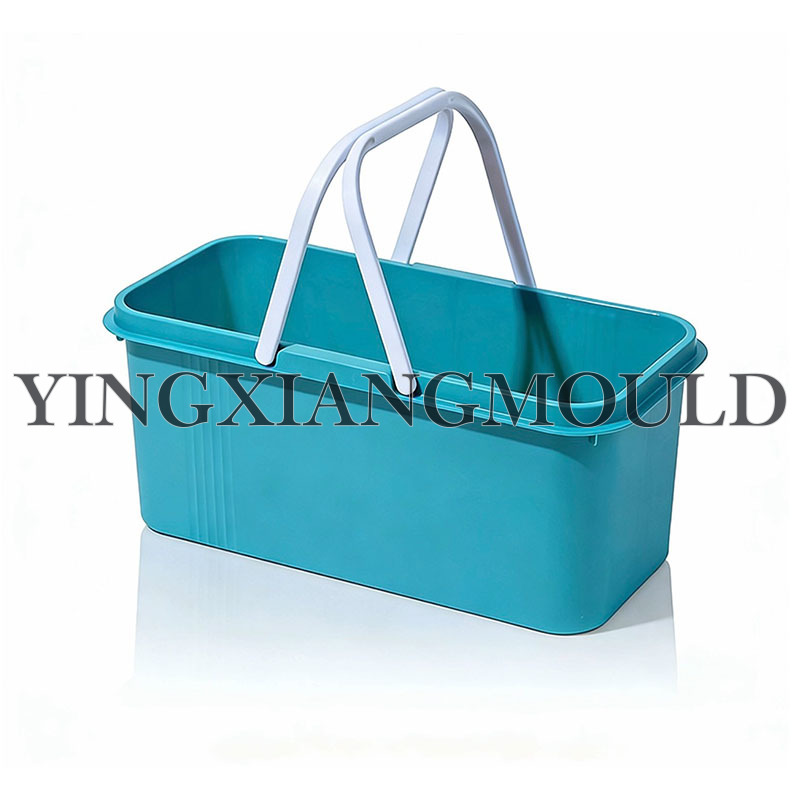
Rectangular Mop Bucket
The rectangular mop bucket is generally produced as a reusable household cleaning container. Its main body may include a water compartment, a mop wringing section, a handle, a pouring edge, and optional wheels or accessories. The exact structure can be customized according to the target market, cleaning method, capacity requirement, and customer brand specifications.
Compared with a conventional round bucket, a rectangular mop bucket makes more effective use of floor and storage space. Straight sidewalls allow several units to be arranged closely during packaging, transportation, and retail display. The elongated shape can also accommodate a flat mop head more naturally than a narrow circular bucket. This makes the product attractive for consumers who use flat mops, microfiber mops, spray mops, or other modern cleaning tools.
The product may be manufactured in different capacities for apartments, offices, hotels, schools, commercial facilities, and general household use. A compact version can be intended for small homes and limited storage areas, while a larger version can provide additional water volume and a more spacious wringing compartment. The mould structure can be adjusted to meet different dimensions, wall thicknesses, handle locations, and functional requirements.
Typical design elements of a rectangular mop bucket include:
• A wide opening that allows convenient filling, emptying, and cleaning.
• Reinforced corners that help maintain shape and reduce deformation.
• A smooth inner surface that is easy to rinse and less likely to retain dirt.
• A stable base that reduces the risk of tipping during mopping or wringing.
• An ergonomic handle or integrated grip for safer carrying.
• A pouring lip or controlled drainage structure for easier water disposal.
• Optional wheels for moving a filled bucket with less effort.
• A dedicated wringing area designed around the selected mop type.
• Surface geometry suitable for attractive colour, texture, logo, and packaging requirements.
These features must be accurately formed by the injection mould. Even small deviations in the bucket rim, handle connection, corner radius, or base geometry can affect assembly, usability, stacking, and product appearance. For this reason, mould design and manufacturing quality directly influence the commercial success of the final household product.
The rectangular footprint is one of the most important competitive advantages of this product. A round bucket leaves unused spaces when placed beside walls or other objects. A rectangular body can be positioned closely against a wall, inside a cabinet, or next to a washing machine. This is especially valuable for customers living in apartments or using compact utility rooms.
Retailers also benefit from the efficient footprint. Rectangular buckets can be arranged in rows with less wasted shelf and warehouse space. During shipment, the products may be nested or stacked according to the design, improving carton utilization and lowering logistics costs. For distributors handling large quantities, even a small improvement in packing efficiency can create a meaningful reduction in transportation expenses.
Many modern cleaning systems use flat mop heads rather than traditional round or string mop heads. A rectangular bucket can provide a longer and more suitable wringing zone for these products. The design may be developed with a divided compartment, rollers, a press plate, or another mechanism that helps remove excess water from the mop head.
The mould must form the wringing section with accurate clearances. If the opening is too narrow, the mop may not pass through smoothly. If it is too wide, water removal may be insufficient and the mop may move unpredictably. Proper dimensional control helps the bucket deliver a better user experience and reduces the risk of complaints related to splashing, jamming, or ineffective wringing.
A rectangular mop bucket can be designed with a broad base and a low centre of gravity. These characteristics improve stability when the user presses a mop into the wringing area. Reinforced bottom ribs and corner structures can increase stiffness without requiring excessive material thickness.
The handle can also be positioned to distribute the weight of water more evenly. A balanced carrying structure reduces strain and helps the user move the bucket safely. For larger models, integrated wheels or a pull handle may be added. Such features create opportunities for product differentiation in a competitive household goods market.
Consumers expect a cleaning product to remain hygienic and easy to wash. The inner surfaces of the bucket should therefore be smooth and free from unnecessary deep recesses. Proper mould design helps create clean transitions, controlled corner radii, and drainage paths that reduce the accumulation of dirty water or detergent residue.
A smooth surface also supports attractive product appearance. High-quality polishing, controlled texture, and careful mould parting-line planning can reduce visible defects. When the bucket is manufactured in bright or transparent colours, surface quality becomes particularly important because scratches, flow marks, weld lines, and sink marks may be more noticeable.
Plastic injection moulding is a repeatable process, but repeatability depends on mould quality. The mould controls the external dimensions, internal cavities, wall thickness, parting lines, ejection marks, cooling behaviour, and surface finish of every bucket. If the mould is poorly designed, the injection machine and material cannot fully correct the resulting defects.
A rectangular product presents several engineering challenges. Long sidewalls can warp if cooling is uneven. Large flat surfaces may develop sink marks or visible flow patterns. Thick corners can retain heat and create dimensional instability. Handles and reinforcing ribs can make filling more complicated. If the moulding system is not properly balanced, some regions may fill earlier than others, causing weld lines, air traps, or inconsistent packing pressure.
Yingxiang approaches these challenges through a combination of digital design, engineering analysis, machining accuracy, and production experience. CAD systems are used to establish the product geometry and mould structure. CAE tools can assist with flow analysis, filling evaluation, cooling considerations, and potential deformation risks. CAM systems help translate the approved design into controlled machining instructions for high-precision equipment.
The result is a mould intended to support stable production rather than simply create an acceptable first sample. This distinction is important for manufacturers that need thousands or millions of cycles over the service life of the mould. A production mould should maintain performance through repeated heating, cooling, clamping, injection, packing, and ejection.
The first stage of mould development is the evaluation of the bucket design. Engineers consider the product’s overall length, width, height, wall thickness, handle position, internal partitions, drainage structures, and expected plastic material. They also evaluate how the part will be removed from the mould and where the parting line can be placed without harming appearance or function.
For a household product, the parting line should be positioned carefully. A visible flash line on a handle, pouring lip, or user contact area can reduce perceived quality. The parting line should preferably follow a natural edge or less noticeable surface while still allowing practical mould construction and easy maintenance.
Draft angles are another important consideration. Sufficient draft allows the plastic bucket to release from the cavity without scuffing, sticking, or excessive ejection force. However, too much draft may change the appearance or reduce the useful internal volume. Engineers therefore balance release performance with product requirements.
A rectangular mop bucket needs enough stiffness to remain stable when filled with water, but unnecessary thickness increases material consumption, cooling time, product weight, and production cost. The mould must support an efficient wall-thickness strategy in which structural strength is created through geometry rather than excessive plastic mass.
Ribs, bosses, corner reinforcements, and base supports can increase rigidity. These features must be designed with appropriate proportions to minimize sink marks and uneven shrinkage. Rib thickness is often controlled relative to the main wall thickness, and transitions are formed with suitable radii to improve melt flow and reduce stress concentration.
Long flat surfaces may require carefully positioned ribs or slight design compensation to reduce warpage. The exact solution depends on the selected polymer, product dimensions, filling pattern, cooling layout, and expected operating conditions. Engineering analysis before machining can help identify risks earlier, when changes are less costly.
The gate system controls how molten plastic enters the cavity. For a large household container, the gate location must support balanced filling and acceptable surface appearance. An unsuitable gate position may create weld lines in visible areas, uneven packing, air entrapment, or excessive flow length.
Depending on the product design and production requirements, the mould may use a hot runner system, cold runner system, edge gate, fan gate, valve gate, or another suitable configuration. The selected solution should consider the plastic material, injection machine, cycle time, colour changes, maintenance requirements, and customer production strategy.
A balanced runner design can reduce pressure loss and improve filling consistency. It may also help reduce material waste when compared with an inefficient runner arrangement. For manufacturers focused on high-volume production, the choice of gating system can influence both operating cost and product quality over the entire mould life.
Cooling is especially important for a rectangular mop bucket because the product may contain long walls, thick corners, a broad bottom, and integrated functional structures. Uneven cooling can cause warpage, twisting, dimensional variation, and difficulty during demoulding.
The mould cooling channels should be arranged to remove heat as evenly as practical. Engineers may consider independent circuits for different regions, baffles or bubblers for difficult areas, and appropriate channel distances from the cavity surface. Good cooling design helps shorten the cycle time while maintaining consistent product dimensions.
Efficient cooling also improves production economics. A shorter and more stable cycle allows the injection machine to manufacture more units during a shift. At the same time, reliable cooling reduces the need for repeated process adjustments and lowers the risk of rejected products caused by thermal deformation.
The ejection system must remove the bucket without damaging its walls, rim, base, handle, or internal features. Large household containers generally require a carefully distributed ejection force. If force is concentrated in a small area, the part may deform, leave visible marks, or become stuck in the cavity.
Depending on the design, the mould may use ejector pins, ejector plates, sleeve ejectors, lifters, or other mechanisms. Ejection positions are selected according to the product’s structural strength and appearance requirements. The system should operate smoothly and return accurately before the next injection cycle.
For moulds with deep sections or complex handles, mould-opening sequence and release angle must be checked carefully. An effective ejection design reduces cycle interruptions and helps protect both the mould and the finished product.
Before manufacturing begins, the product drawing or three-dimensional model is reviewed for mouldability. Engineers assess wall thickness, draft, ribs, undercuts, functional clearances, shrinkage, ejection, and assembly interfaces. If the customer provides only a concept or sample, the design can be developed into a production-oriented structure through technical communication.
This early review is valuable because design changes are easier to make before steel cutting. It also helps identify potential conflicts between appearance and manufacturing. For example, a very sharp internal corner may look attractive in a computer model but create stress concentration, difficult polishing, uneven filling, or poor release performance in the finished mould.
CAD systems support precise product modelling, mould layout, component design, and drawing creation. CAE analysis can help evaluate filling behaviour, pressure distribution, cooling conditions, weld-line locations, air traps, and deformation risks. CAM software then assists with the programming of machining operations.
The integration of these systems improves communication between design, engineering, machining, and inspection teams. It also creates a more controlled record of the mould structure. When modifications are required, digital data can be updated and reviewed systematically rather than relying on uncertain manual adjustments.
For a rectangular mop bucket mould, digital analysis is particularly useful because of the product’s relatively large surface area and elongated geometry. The tools can help compare gate locations, identify areas of uneven filling, and estimate where additional support or cooling may be beneficial.
Mould steel selection depends on the expected production volume, plastic material, surface requirements, corrosion exposure, and customer budget. A high-volume mould may require a more wear-resistant steel grade or hardened inserts in areas exposed to repeated friction. A product made with glass-filled or mineral-filled plastic may also require stronger wear resistance than a product made with standard polypropylene.
Core components, cavity plates, inserts, sliders, lifters, and other mould parts are prepared according to the approved design. Critical dimensions are machined with controlled tolerances. Replaceable inserts can be used in areas that may experience higher wear or require future modification, helping improve long-term maintainability.
Modern machining equipment supports the production of accurate cavity and core surfaces. Milling, drilling, electrical discharge machining, grinding, and polishing may be used according to the geometry and surface requirements of each component. Complex details may require multiple machining stages followed by careful bench work and fitting.
The surface finish of a household bucket mould influences the appearance and release behaviour of the final product. A polished surface can support a smooth glossy finish, while controlled texturing can provide a matte appearance or help conceal minor handling marks. The selected finish should be consistent across the intended visible regions.
Attention is also given to corners, transitions, sealing areas, shut-offs, and parting surfaces. These locations must fit accurately to reduce flash and maintain product consistency. Skilled fitting remains important even when advanced equipment is used because mould components must operate together as a complete mechanical system.
After machining and surface treatment, the mould is assembled and checked for movement, alignment, cooling connections, ejection action, and component fit. The mould is then tested through trial moulding. The first samples are evaluated for dimensions, appearance, filling quality, deformation, flash, ejection marks, and functional performance.
Trial results may lead to controlled modifications. These can include polishing, adjustment of venting, alteration of an ejection location, correction of a shut-off, improvement of cooling, or refinement of a gate and runner area. The goal is to achieve stable production conditions rather than simply obtain one visually acceptable sample.
A professional mould manufacturer documents these adjustments and communicates them with the customer. Clear communication helps ensure that the approved sample accurately represents the production intent and that the final mould meets the customer’s machine, material, and cycle-time expectations.
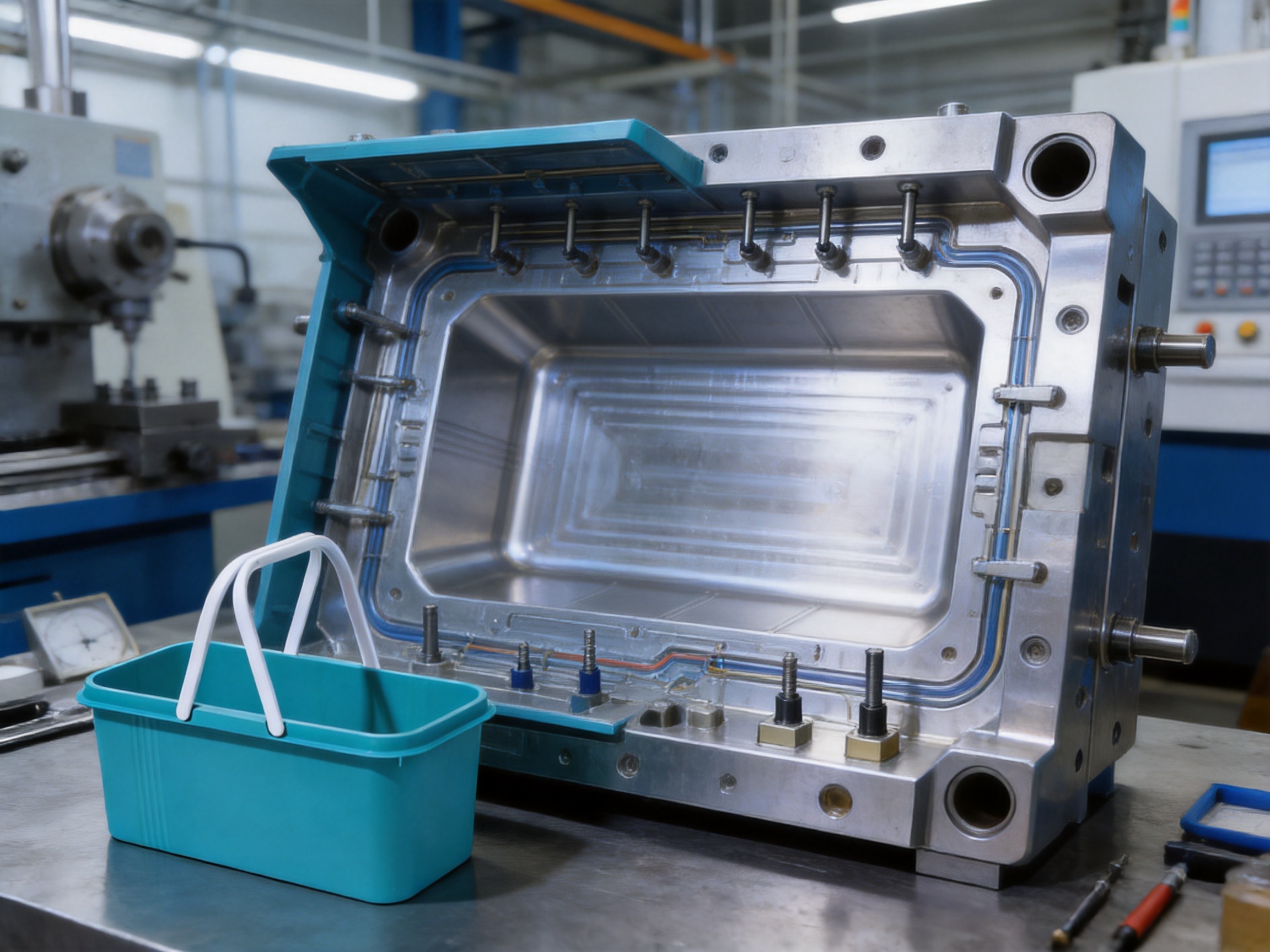
A major advantage of a professionally engineered rectangular mop bucket mould is dependable operation over an extended production period. Household cleaning products are often sold in high volumes, and manufacturers need moulds that can operate repeatedly without frequent breakdowns or unstable product quality.
Reliable mould construction helps reduce unexpected downtime. Stable guiding systems, strong mould plates, accurate inserts, effective cooling, and properly designed ejection components all contribute to this objective. Regular maintenance remains necessary, but a sound initial design makes routine maintenance more straightforward and predictable.
Retail products must maintain consistent dimensions so that handles, accessories, lids, wheels, wringers, or packaging components fit correctly. Dimensional variation can lead to assembly problems, uneven stacking, unstable packaging, and customer dissatisfaction.
Precision machining and inspection help control the critical areas of the mould. These may include the rim, base, handle connection, wheel mounting points, internal compartment, wringing opening, and stacking surfaces. Consistency also improves the appearance of products displayed together in stores or online product photography.
An efficient mould can support material savings through appropriate wall thickness, balanced filling, optimized runners, and reduced rejection rates. The objective is not simply to use less plastic, but to use it where it creates the greatest structural and functional benefit.
Lower waste also contributes to more sustainable production. Plastic manufacturers are increasingly expected to control scrap, reduce energy consumption, and improve resource efficiency. A mould that fills consistently and releases parts smoothly can support these goals while lowering manufacturing costs.
Different markets may require different bucket sizes, colours, handle styles, compartments, drainage systems, surface textures, and accessory arrangements. A mould manufacturer with experience in household product moulds can adapt the design to these requirements.
Customization may include changes to length, width, height, capacity, corner radius, grip shape, logo area, or internal wringing structure. The mould may also be designed with replaceable inserts when future product revisions are expected. This can provide a practical balance between product flexibility and tooling investment.
Product appearance strongly influences household goods purchasing decisions. A bucket with clean edges, smooth surfaces, attractive proportions, and a practical handle can appear more valuable than a product with rough flash, uneven walls, or poor finishing.
The rectangular form itself provides a modern appearance and communicates organized storage. With colour options, textured surfaces, printed branding, and coordinated accessories, the product can be positioned for different market segments, from economical household use to premium cleaning systems.
Polypropylene is commonly considered for household buckets because it offers a useful balance of toughness, chemical resistance, lightweight performance, and cost. It can also provide suitable flexibility for handles and certain snap-fit features. The mould design must take the specific grade and shrinkage behaviour into account.
High-density polyethylene may be selected when impact resistance, flexibility, and chemical durability are priorities. Other engineering or modified polymers may be considered for special performance requirements, although material cost and processing conditions must be evaluated carefully.
The selected plastic affects injection pressure, cooling time, shrinkage, surface appearance, gate design, and mould wear. Filled materials can improve rigidity but may increase abrasive wear on mould components. Recycled or reprocessed material may reduce cost and support sustainability objectives, but its consistency, colour, odour, contamination level, and mechanical properties should be controlled.
Colour masterbatch compatibility is also important. A well-designed mould should produce an even appearance without excessive flow marks or colour streaking. Dark colours may conceal some surface variation, while light or bright colours can make weld lines and gloss differences more visible. Product designers and mould engineers should therefore consider appearance expectations from the beginning.
Quality control begins with the review of product data and continues through design, machining, assembly, trial moulding, and final acceptance. Each stage provides an opportunity to prevent defects before they become more expensive to correct.
Important inspection activities may include:
• Verification of steel material and component specifications.
• Dimensional inspection of cavity, core, inserts, and critical mould features.
• Checking of parting surfaces and shut-off accuracy.
• Testing of cooling circuits for leakage and flow continuity.
• Inspection of ejector movement and return action.
• Trial production using the specified or agreed plastic material.
• Measurement of finished bucket dimensions and weight.
• Visual inspection for flash, sink marks, weld lines, scratches, warpage, and ejection marks.
• Functional testing of handles, drainage features, wringing structures, and accessories.
• Confirmation that the mould is compatible with the customer’s injection machine and operating conditions.
For a rectangular mop bucket, dimensional inspection should pay particular attention to the base flatness, rim alignment, sidewall straightness, handle position, internal compartment dimensions, and stacking interfaces. These areas directly influence product stability and usability.
Trial samples should be assessed under realistic conditions. A bucket that looks acceptable when empty may become unstable when filled with water. A handle that appears strong during visual inspection may require additional testing under load. A wringing section must be evaluated with the intended mop rather than judged only by its moulded dimensions.
The rectangular mop bucket can be manufactured for a wide range of users and distribution channels. Household consumers are the primary market, but the product may also be suitable for offices, hotels, restaurants, schools, hospitals, property management companies, and professional cleaning services.
For households, compact dimensions, easy storage, simple drainage, and comfortable carrying are often decisive. For commercial users, capacity, durability, mobility, chemical resistance, and fast cleaning may be more important. A customized mould can support different versions for these segments.
Private-label retailers and cleaning product brands may use the mould to develop a product that matches their brand identity. The bucket can be manufactured in a selected colour, include a logo area, and coordinate with a particular mop handle or refill system. The ability to create a distinct shape can help a brand compete beyond price.
Export manufacturers may also benefit from a design that nests efficiently and uses packaging space effectively. Since logistics costs can influence the final selling price, the mould and product should be considered together with carton dimensions, container loading, warehouse storage, and retail presentation.
TaiZhou HuangYan YingXiang Plastic Mould Co., Ltd. focuses on customized plastic mould solutions for household and industrial products. Its product experience includes crate moulds, folding box moulds, tray and pallet moulds, beverage box moulds, storage box moulds, chair moulds, and other daily-use plastic product moulds.
This range of experience is relevant to rectangular mop bucket mould development because many of the same engineering principles apply. Large plastic products require control of wall thickness, shrinkage, cooling, structural reinforcement, ejection, material flow, and long-term production reliability. Experience across different product categories can help engineers identify practical solutions for new designs.
The company’s approximately 7,000-square-metre plant provides space for design, machining, assembly, trial moulding, inspection, and related operations. A team of around 50 employees combines engineering, technical, production, fitting, and customer service responsibilities. This structure supports communication throughout the project rather than separating each stage without coordination.
CAD, CAE, and CAM capabilities help connect design intent with machining and production results. Advanced equipment supports the manufacture of precision mould components, while experienced technicians provide the practical knowledge needed for fitting, polishing, debugging, and modification.
Yingxiang emphasizes lean manufacturing, long-life moulds, on-time delivery, premium quality, competitive cost, and comprehensive customer service. These priorities are important for customers purchasing a mould as a long-term production asset. A lower initial price is not necessarily economical if the mould requires frequent repairs, produces inconsistent parts, or causes extended commissioning delays.
Customer cooperation is also important during the project. Product drawings, plastic information, injection machine data, expected production volume, target cycle time, and quality standards should be shared as early as possible. Clear technical information helps the mould manufacturer recommend suitable steel, cooling, gating, ejection, and surface solutions.
To develop an accurate quotation and technical proposal, a customer should prepare as much product information as possible. This may include a three-dimensional product drawing, two-dimensional dimensions, reference samples, target capacity, intended plastic material, annual production volume, preferred injection machine, and required delivery schedule.
The customer should also identify whether the mop bucket will include a separate wringer, wheels, handle, lid, drainage plug, or other accessories. These details affect the product structure and may require additional moulds or inserts. If the product is part of a coordinated cleaning system, the dimensions of the mop head and handle should be confirmed before the bucket design is finalized.
Appearance requirements should be documented as well. Important questions include whether the surface should be glossy or textured, whether the parting line may be visible, whether a logo will be moulded directly into the plastic, and which areas require a high cosmetic standard. Clear specifications reduce misunderstandings during sample approval.
Production targets should be realistic. A high-volume customer may require a multi-cavity mould, hot runner system, automated demoulding, or a more durable steel selection. A small or medium production program may prioritize lower initial tooling cost and simpler maintenance. The most suitable mould is the one that matches the customer’s actual business plan.
Even a high-quality mould requires appropriate operation and maintenance. The injection machine should be correctly set for clamping force, injection pressure, melt temperature, cooling time, and ejection speed. Excessive pressure or incorrect temperature can create flash, stress, deformation, or premature mould wear.
Cooling water should be clean and regularly monitored. Blocked or scaled cooling channels can reduce heat transfer and increase cycle time. Temperature differences between circuits may lead to uneven product shrinkage. Periodic cleaning and flow checks help protect mould performance.
The parting surfaces should be cleaned after production, and appropriate mould-preserving materials should be applied during storage. Ejector pins, guide components, sliders, and moving mechanisms should be lubricated according to the mould manufacturer’s recommendations. Any unusual noise, resistance, leakage, or change in product quality should be investigated promptly.
At the end of a production run, remaining plastic should be removed from the runner and cavity areas as appropriate. The mould should be dried, protected from corrosion, and stored in a stable environment. Maintenance records can help identify wear trends and schedule preventive service before a major failure occurs.
| Evaluation Area | Rectangular Mop Bucket Mould | Conventional Basic Bucket Mould |
|---|---|---|
| Space efficiency | Uses floor, shelf, carton, and storage space efficiently | Round geometry may leave unused spaces |
| Mop compatibility | Suitable for elongated or flat mop heads | May be less convenient for wide flat mops |
| Product differentiation | Supports divided compartments, wringers, handles, wheels, and modern styling | Often limited to a simple container shape |
| Storage convenience | Can fit closely against walls and inside narrow spaces | May require more clearance around the product |
| Mould engineering | Requires careful control of warpage, cooling, filling, and ejection | May have fewer structural and functional challenges |
| Retail appeal | Modern form can support premium positioning | Basic appearance may compete mainly on price |
| Customization potential | High potential for compartments, textures, colours, and accessories | Usually more limited unless the mould is redesigned |
The comparison shows why a rectangular mop bucket is more than a simple alternative shape. It can provide practical user benefits and create additional commercial value. At the same time, the design demands more careful mould engineering. A manufacturer should therefore work with a supplier capable of managing both functional complexity and production durability.
Manufacturers are increasingly evaluating plastic products according to their complete production and use cycle. A durable bucket that remains functional for a long period may reduce replacement frequency. Lightweight but sufficiently strong construction can reduce material consumption and transportation weight. Efficient nesting and packaging can further lower logistics impact.
The mould contributes to these goals by supporting optimized part design and stable processing. Controlled wall thickness, reliable filling, reduced scrap, and efficient cooling can improve the overall resource efficiency of production. Where suitable, the product may also be designed for mono-material construction or easier separation of components at the end of its service life.
Material selection should be made carefully. Recycled content may be appropriate for some versions, but the finished product must still meet strength, appearance, odour, and safety expectations. If the bucket is intended for use with cleaning chemicals, resistance to the selected detergents should be verified.
Economic performance includes more than mould purchase price. Buyers should consider cycle time, material consumption, rejection rate, maintenance cost, expected mould life, labour requirements, packaging efficiency, and delivery reliability. A mould with a slightly higher initial investment may provide a lower total cost of ownership if it operates more consistently and requires fewer repairs.
It is used to manufacture plastic rectangular mop buckets through injection moulding. Depending on the design, the mould can form the bucket body, internal compartments, wringing structures, handle features, pouring edges, drainage areas, and other integrated details.
Yes. The length, width, height, capacity, wall thickness, base design, and internal arrangement can be developed according to the customer’s product requirements. Customization should be confirmed before mould construction so that the cavity, core, cooling, and ejection systems are designed correctly.
Polypropylene and high-density polyethylene are common choices for household buckets, although the final material depends on strength, flexibility, chemical resistance, appearance, cost, and processing requirements. The selected resin should be confirmed during the engineering review because it affects shrinkage, gating, cooling, and mould wear.
Yes. A wringing compartment, press structure, roller system, or other mop-related feature can be included when required. The design should be based on the mop head dimensions and the intended water-removal method.
Yes. The product can be designed with integrated wheel mounting points, a pull handle, a lifting handle, or other carrying features. The mould must provide adequate strength around these areas and maintain the required assembly dimensions.
Warpage can be controlled through balanced filling, uniform wall design, suitable ribs, proper cooling circuit placement, appropriate mould temperature, and process adjustment. CAE analysis and trial moulding can help identify risks before final production.
The rectangular mop bucket mould is designed around space efficiency, flat mop compatibility, integrated functionality, and modern household use. It may include more complex internal structures and therefore requires more detailed control of flow, cooling, ejection, and dimensional accuracy than a basic round container.
It can be engineered for high-volume production when the expected output, machine conditions, material, and service-life requirements are defined at the beginning. Steel grade, runner system, cooling, component strength, and maintenance access should all be selected according to the expected production volume.
Mould life depends on steel selection, plastic material, production conditions, maintenance, cycle frequency, and product design. A well-built mould operated within its recommended parameters and maintained correctly can provide long-term service. Filled or abrasive materials may require additional wear protection.
Useful information includes product drawings or samples, target dimensions, capacity, material, annual output, preferred machine, expected cycle time, appearance requirements, accessory details, surface finish, and delivery expectations. The more complete the information, the more accurately the mould structure and cost can be evaluated.
TaiZhou HuangYan YingXiang Plastic Mould Co., Ltd. is located at No. 2 Chaoyuan Road, North City Street, Huangyan, Taizhou, Zhejiang, China. The company serves customers seeking customized household and industrial plastic injection mould solutions.
Customers can contact the company by telephone at +86 17858690885, +86 13566828762, or +86 19957608921. Email communication is available at Chinayingxiang88@sina.com for technical discussions, drawings, quotations, and project information.
The rectangular mop bucket is a practical and commercially attractive household product that combines efficient storage, flat-mop compatibility, stable handling, and modern appearance. Its success depends heavily on the quality of the injection mould. Accurate geometry, controlled wall thickness, balanced filling, efficient cooling, reliable ejection, and durable mould components are all necessary for consistent production.
A professionally developed rectangular mop bucket mould can help manufacturers reduce waste, improve cycle stability, maintain product dimensions, and create differentiated cleaning products for household and commercial markets. Custom features such as wringing areas, drainage systems, wheels, ergonomic handles, textures, logos, and multiple capacities can be incorporated when they are considered during the engineering stage.
TaiZhou HuangYan YingXiang Plastic Mould Co., Ltd. combines experience in household and industrial plastic moulds with CAD, CAE, and CAM capabilities, advanced equipment, experienced technicians, and a plant designed to support mould development and production. Its focus on long-life moulds, lean manufacturing, competitive cost, on-time delivery, and customer service makes it a suitable partner for companies seeking a customized plastic container mould solution.
For buyers, the best mould selection should be based on total production performance rather than purchase price alone. A reliable mould protects product quality, supports efficient injection moulding, simplifies maintenance, and creates a foundation for long-term market growth. With the right design and manufacturing process, the rectangular mop bucket can become a durable, functional, and competitive addition to a household cleaning product portfolio.
1. Injection Molding Handbook, practical principles of mould design, polymer processing, cooling, gating, and ejection.
2. Plastics Design Guide, recommendations for wall thickness, ribs, draft angles, shrinkage control, and injection-moulded product development.
3. International guidance on plastics processing, product quality management, dimensional inspection, and mould maintenance practices.
4. General engineering principles for household plastic containers, ergonomic product design, material selection, and manufacturing efficiency.
5. Technical information provided for the rectangular mop bucket mould project and the manufacturing capabilities of TaiZhou HuangYan YingXiang Plastic Mould Co., Ltd.
If you are interested in any of our products or services, please feel free to ask and we can talk about your ideas.
 QUICK LINKSMOBILE SITE
 FACTORY ADDRESS
 CONTACT INFORMATION



 English
 Español