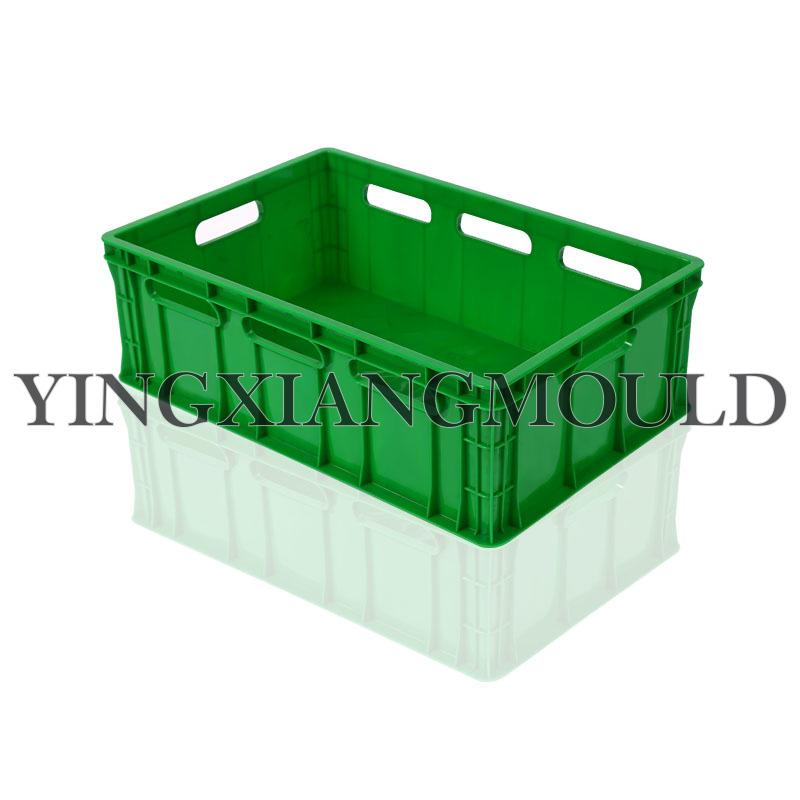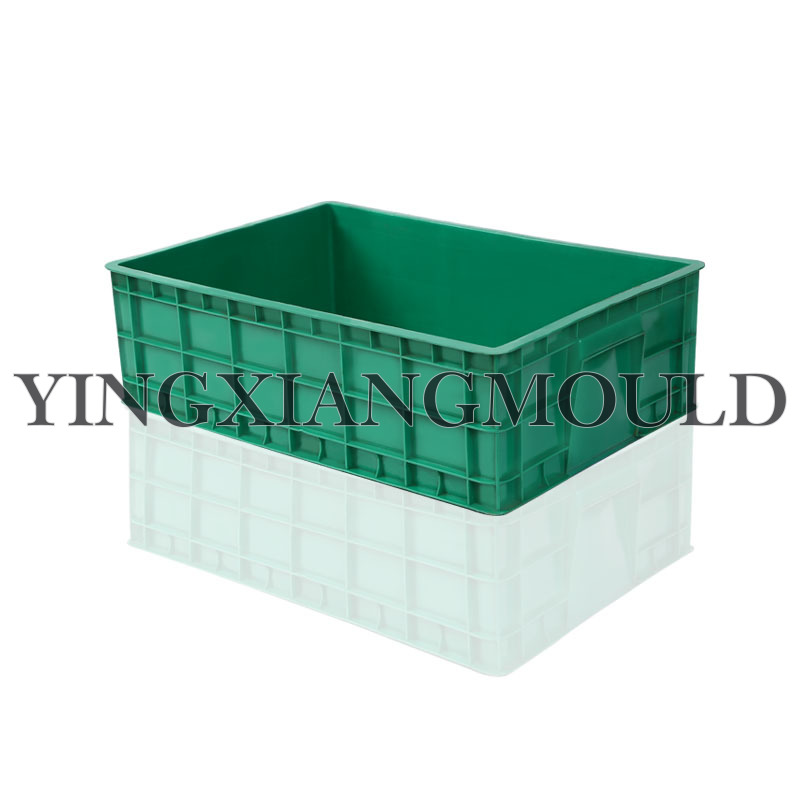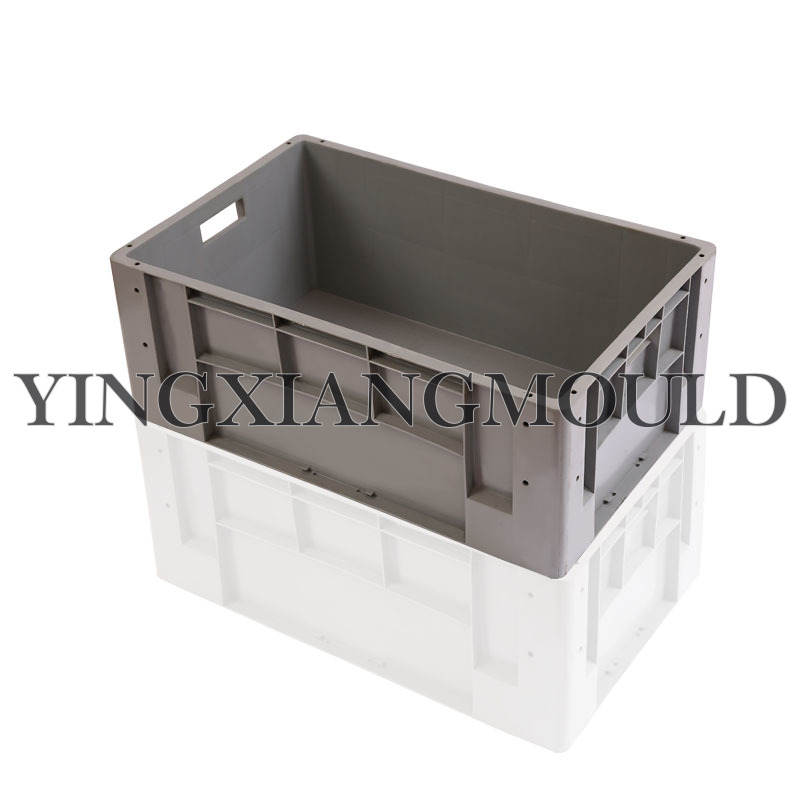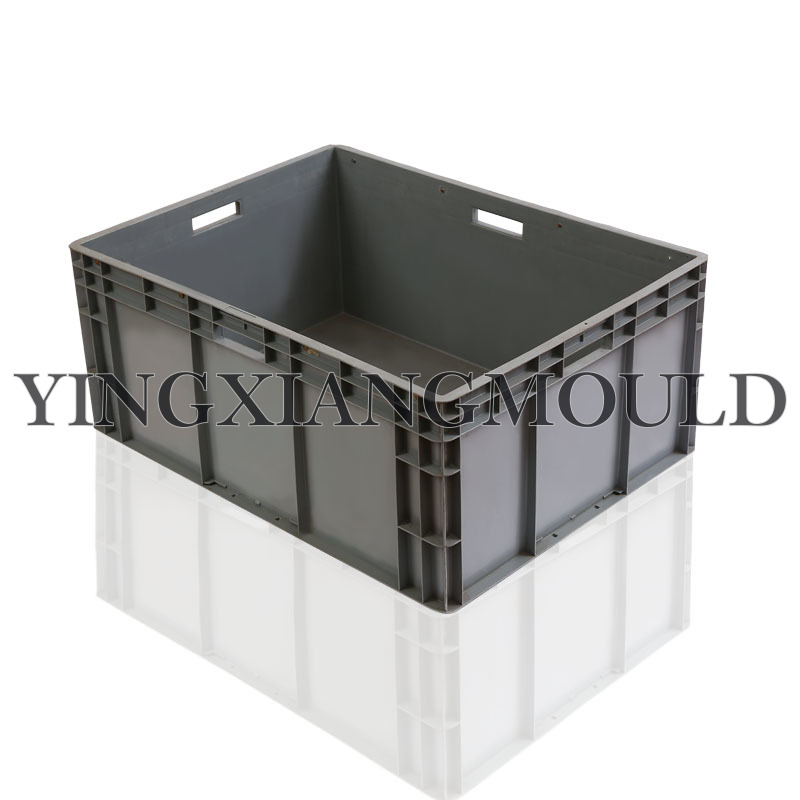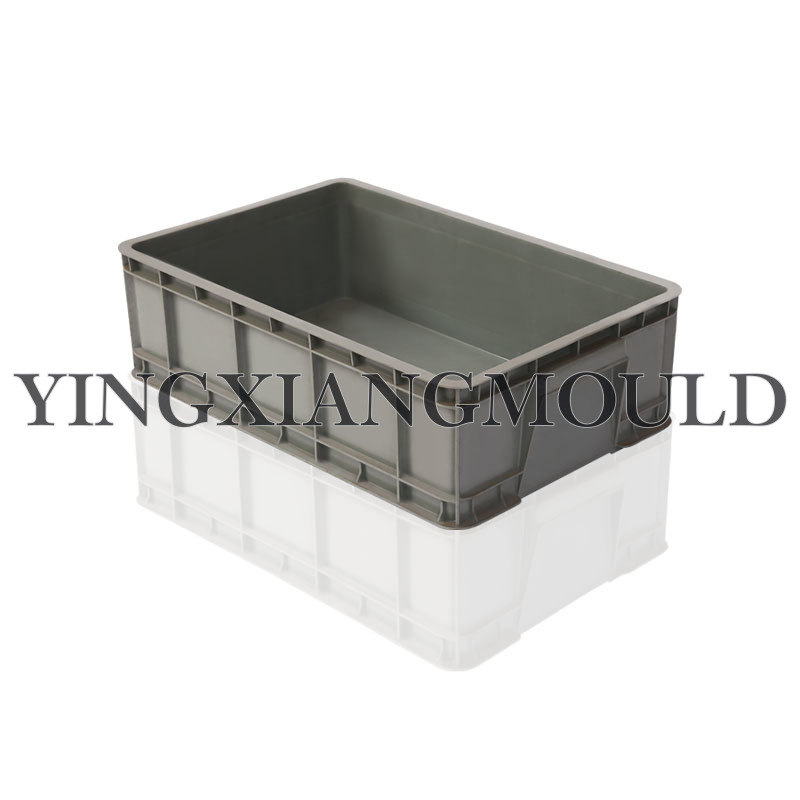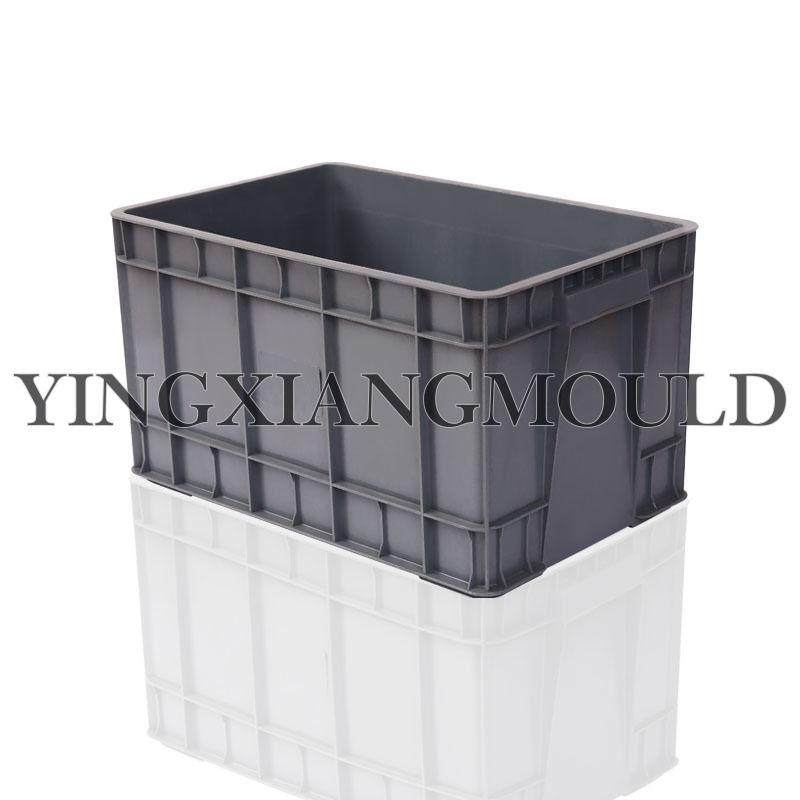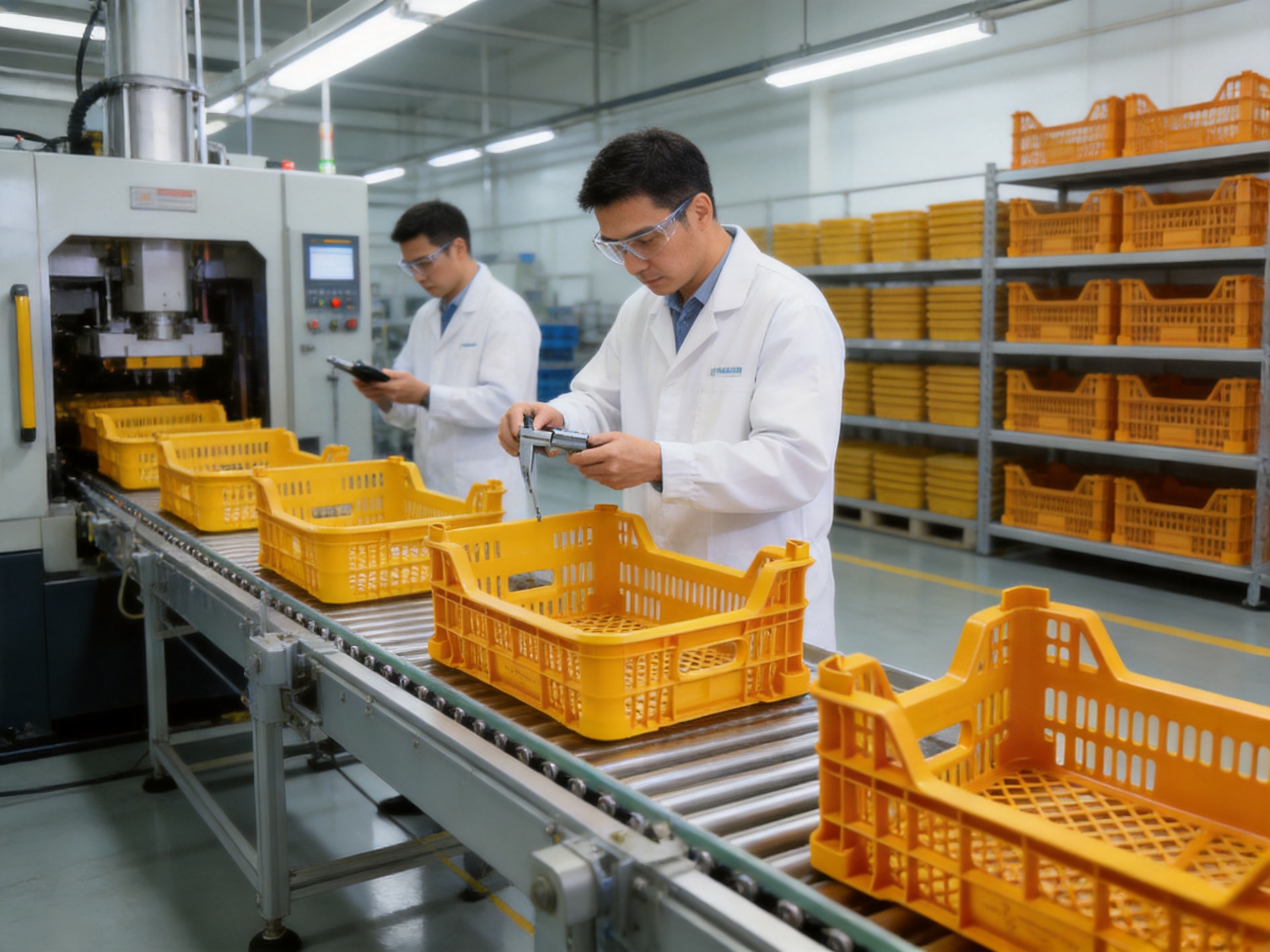
A banana basket is more than a simple household container. It must protect delicate fruit, allow air circulation, remain stable on a kitchen counter, and withstand repeated handling, washing, and storage. For manufacturers, these requirements create a demanding moulding challenge. The basket needs a carefully balanced structure, attractive appearance, consistent dimensions, and a production process that supports efficient cycle times and dependable long-term output.
A well-designed banana basket mould is therefore essential to the commercial success of the finished product. The mould determines the basket’s wall thickness, rib strength, ventilation pattern, surface finish, stacking behavior, parting-line quality, and ease of ejection. It also influences production cost, material efficiency, product weight, and the ability to maintain stable quality over thousands or millions of injection cycles.
TaiZhou HuangYan YingXiang Plastic Mould Co., Ltd. provides customized plastic injection mould solutions for fruit baskets and other household and industrial plastic products. Located in Huangyan, Taizhou, Zhejiang, China, the company operates in one of the world’s recognized mould-making regions. Since its establishment in 2012, it has developed experience in crate moulds, folding box moulds, pallet moulds, beverage box moulds, storage container moulds, and moulds for daily household products.
The banana basket belongs to the fruit basket mould category and reflects the company’s ability to combine practical product design with precision manufacturing. By using CAD, CAE, and CAM systems, modern machining equipment, and experienced technicians, the manufacturer can transform a product concept into a production-ready mould designed for repeatability, durability, and efficient maintenance.
A banana basket is generally designed to store bananas and other fruit in a clean, ventilated, and accessible container. Unlike a closed food-storage box, a fruit basket normally requires open areas or perforations that allow air to circulate around the contents. This ventilation helps reduce moisture accumulation and supports more suitable short-term storage conditions for fresh produce.
The basket may be used in homes, supermarkets, restaurants, hotels, offices, cafés, and food-service environments. Its appearance can range from a simple utility design to a decorative household product. Depending on the intended market, the basket may include integrated handles, reinforced rims, raised feet, nesting features, or a base designed to keep fruit away from a wet countertop.
Although the product looks relatively simple, its geometry contains many details that must be managed during mould development. The walls need sufficient strength without making the basket unnecessarily heavy. Openings must be large enough to improve ventilation while remaining safe and structurally reliable. Corners should be smooth and easy to clean. Handles must be comfortable and resistant to cracking. The base must support the load without excessive deformation.
These requirements make mould engineering a decisive factor. If the mould is poorly designed, the finished basket may show uneven wall thickness, sink marks, short shots, flash, difficult ejection, warped edges, or inconsistent alignment between the basket and its handle. A precision mould helps reduce these issues at the source rather than relying on excessive post-processing or inspection.
A commercial banana basket should offer an effective balance between strength, ventilation, hygiene, portability, and visual appeal. These characteristics are closely connected. For example, increasing the size of ventilation openings may reduce material consumption but can also weaken the sidewall. Adding reinforcement can improve strength but may create thicker sections that are more difficult to fill and cool evenly.
The product design must also consider the expected contents. Bananas are relatively soft and can be damaged by sharp edges, rough surfaces, or narrow structural members. A suitable basket should provide broad contact areas and rounded transitions. The inner surfaces should be smooth enough to avoid unnecessary abrasion and simple enough to clean without trapping food residue.
For retailers and distributors, consistent appearance is especially important. Customers often compare baskets directly on shelves, so variations in color, gloss, handle alignment, or rim shape can affect purchase decisions. Stable mould performance helps manufacturers produce a uniform product across multiple production batches.
Depending on customer requirements, a banana basket may include a reinforced upper rim, an integrated carrying handle, side openings, a ventilated bottom, anti-slip feet, and a shape that permits convenient placement on a table or shelf. Some designs may also be nestable to reduce shipping volume when empty.
An integrated handle can make the basket easier to carry, but it adds complexity to the mould. The handle must be filled completely, cooled evenly, and ejected without distortion. Its connection to the basket body must be strong enough to resist repeated lifting. Rounded transitions at the handle junction can help reduce stress concentration and improve mould filling.
A reinforced rim improves rigidity and gives the product a finished appearance. However, rim thickness must be controlled carefully. Excessively thick areas can cause sink marks or longer cooling times, while an overly thin rim may feel weak and lose its shape during use.
The bottom structure also requires careful engineering. A flat, solid base may offer stability but can increase material use and reduce ventilation. A ribbed or perforated base can reduce weight and improve airflow, but it must still support fruit and resist bending. The mould must reproduce these features accurately while allowing reliable ejection.

Banana Basket
Injection moulding is a repeatable manufacturing process, but repeatability depends heavily on the mould. The mould establishes the cavity shape, cooling layout, gate position, parting line, draft angles, ejection method, and surface texture. Every one of these decisions influences the final banana basket.
A mould with balanced filling behavior can help reduce weld-line weakness and uneven filling. A suitable gate design allows molten plastic to enter the cavity effectively while limiting visible gate marks in important areas. Proper venting allows trapped air to escape, reducing burn marks and incomplete filling around thin ribs or deep corners.
Cooling is equally important. Plastic shrinks as it cools, and uneven cooling can produce warpage. A banana basket with an irregular or open structure may cool differently in the rim, handle, sidewalls, and base. The mould designer must consider these differences and position cooling channels to promote a more uniform thermal balance.
Ejection is another critical stage. The product must be removed from the cavity without deformation, whitening, scratches, or damage to thin structures. Ejector pins, stripper systems, slides, or other mechanisms may be selected according to the product geometry. The best solution is not necessarily the most complicated one; it is the system that provides reliable release while maintaining product appearance and mould serviceability.
Dimensional consistency matters when baskets must fit packaging, display shelves, storage areas, or secondary containers. It is also important when multiple baskets are designed to nest together. Variations in rim size, handle position, or base geometry can prevent smooth nesting and increase transportation costs.
Precise cavity machining and careful assembly help control these dimensions. During mould trials, the manufacturer can evaluate the product against the approved design and identify areas requiring adjustment. This trial-and-correction process is valuable because plastic behavior can vary according to resin type, colorant, processing temperature, pressure, cooling conditions, and machine capability.
A production mould should not only produce one acceptable sample. It should be capable of producing stable parts during continuous operation. This requires attention to steel selection, machining accuracy, cooling, ejection, wear areas, and maintenance access. These factors distinguish a professional mould from a basic prototype tool.
The basket’s surface finish affects both appearance and user experience. A smooth finish may create a clean, contemporary appearance and make the product easy to wipe. A textured finish can improve visual appeal, reduce the visibility of minor marks, and provide a more secure grip. The selected texture must be reproduced consistently across the cavity and core.
Surface treatment may also influence mould durability. Areas exposed to repeated sliding, friction, or polishing require suitable preparation and protection. When the product includes fine details, the mould maker must preserve those details without creating sharp edges or fragile steel features.
For household products, visual quality is closely connected with perceived value. A well-formed rim, uniform ribs, clean openings, and an accurately positioned handle can make a simple basket appear more refined. These details are created through mould design and manufacturing accuracy rather than through finishing work after moulding.
A professionally engineered mould can provide several advantages over low-cost or poorly planned alternatives. These advantages are not limited to the first production sample. They continue throughout the mould’s service life and affect productivity, operating cost, customer satisfaction, and delivery reliability.
Stable production performance allows manufacturers to maintain consistent output without frequent machine stoppages or manual adjustments. A balanced mould design, suitable cooling, effective venting, and dependable ejection all contribute to this stability.
When a mould requires constant correction, the manufacturer may experience longer cycles, increased scrap, inconsistent part weight, and reduced production capacity. A better mould can reduce these disruptions and help the production team operate with more predictable parameters.
Material efficiency is important for plastic fruit baskets because the product is often produced in large quantities. A correctly engineered mould supports controlled wall thickness and efficient runner design. Although the exact material-saving potential depends on the design and resin, accurate mould development can help avoid unnecessary thickness and reduce defective parts.
Waste reduction also includes preventing short shots, flash, warpage, burn marks, and ejection damage. Each rejected basket represents wasted plastic, machine time, labor, electricity, and packaging resources. Improving mould reliability therefore contributes to both economic and environmental performance.
A mould is a production asset. Its value depends not only on the initial purchase price but also on how many acceptable parts it can produce and how easily it can be maintained. Appropriate mould steel, accurate fitting, suitable surface treatment, and sensible wear-part design can improve service life.
High-wear components should be designed for inspection and replacement where practical. A mould that can be repaired efficiently may deliver a lower total cost of ownership than a cheaper mould that is difficult to service or requires premature replacement.
A fruit basket should not have sharp flash, exposed defects, unstable feet, or weak handles. Accurate mould construction helps produce smooth edges and well-defined transitions. This is important because the product may be handled frequently by adults and children and may come into contact with food or food packaging.
While the mould manufacturer does not determine every aspect of material compliance or food-contact certification, the mould should support a clean and consistent product surface. The final material, additives, processing conditions, and intended market must be evaluated separately by the product manufacturer.
Different markets may require different basket sizes, colors, handles, ventilation patterns, or branding features. A professional mould supplier can assess the proposed product and recommend changes that improve manufacturability without compromising the visual concept.
Design flexibility is especially useful when a customer wants to create a product family. Several related basket sizes may share design language, structural details, or production principles. Early engineering support can help determine whether separate moulds, interchangeable inserts, or other approaches are suitable for the project.
The quality of a banana basket mould depends on a controlled manufacturing process from initial concept to final delivery. TaiZhou HuangYan YingXiang Plastic Mould Co., Ltd. uses CAD, CAE, and CAM systems together with modern equipment and experienced technicians to support this process.
The project begins with a review of the product concept, drawings, samples, or three-dimensional data. At this stage, the engineering team evaluates wall thickness, draft angles, ribs, openings, handle geometry, parting-line options, ejection direction, and likely moulding challenges.
A design review can identify problems before steel is cut. For example, a deep undercut may require a slide or lifter. A narrow rib may be difficult to fill or may be too fragile. A sharp corner may concentrate stress and complicate polishing. A handle that appears attractive in a digital model may need a stronger connection to withstand actual use.
Early communication between the customer and mould manufacturer helps ensure that the final tool is aligned with production objectives. Important questions include the target material, machine size, expected output, number of cavities, acceptable cycle time, product weight, surface finish, and packaging method.
Computer-aided design systems allow the mould team to develop the cavity, core, inserts, slides, cooling channels, ejector system, and mould base with accurate digital references. The product model can be checked for interference, thickness transitions, draft, and assembly relationships.
CAD data also supports design revisions. If the customer changes the basket handle, increases the base strength, modifies the openings, or adds a logo, the design team can evaluate the impact on the complete mould structure. This helps reduce errors caused by disconnected or outdated drawings.
Computer-aided engineering can be used to study filling, packing, cooling, shrinkage, and possible warpage. Analysis does not replace practical mould-making experience, but it provides useful information before manufacturing begins.
For a ventilated basket, CAE analysis may help examine how molten material travels through the rim, ribs, handle, sidewalls, and base. It can reveal potential weld-line locations, air traps, hesitation areas, or regions likely to fill unevenly. The engineering team can then consider changes to gate placement, wall thickness, runner balance, venting, or cooling.
Analysis is particularly valuable for products with complex open patterns. Thin ribs and narrow intersections can create filling challenges that are not always obvious from the external appearance. Identifying these issues early can reduce the number of physical trial adjustments required later.
Computer-aided manufacturing systems convert approved mould designs into machining strategies. CNC equipment can then produce cavity and core components with controlled accuracy. The machining approach depends on the geometry, steel type, surface requirements, and required production volume.
Rough machining removes the majority of excess steel, while semi-finishing and finishing operations establish the final geometry. Fine details, ribs, openings, and curved transitions require careful tool selection and stable machining conditions. Accurate machining reduces the amount of manual correction needed during fitting and polishing.
Modern machining is especially important for a banana basket mould because the basket may contain many repeated openings and structural members. Small differences between corresponding features can create visible inconsistencies in the finished product. Consistent tool paths and accurate reference systems help maintain uniformity.
Where geometry is difficult to cut mechanically, electrical discharge machining may be used for specific areas. EDM can help form narrow slots, deep details, sharp internal features, or hardened steel sections that are difficult to process with conventional cutting tools.
The use of EDM must be coordinated with polishing and surface treatment requirements. The final surface should match the approved product specification. Areas requiring a polished appearance need different finishing treatment from areas requiring a controlled texture.
After individual components are machined, they must be inspected, fitted, and assembled. The cavity, core, inserts, slides, lifters, ejector components, and mould base must work together accurately. Proper fitting helps prevent flash and ensures that moving mechanisms operate smoothly.
Assembly quality is critical at parting lines and around thin product features. Even a small mismatch can leave a visible step or flash on the basket. Careful fitting also supports mould longevity because components that are aligned correctly experience less unnecessary wear.
Polishing is selected according to the intended product finish. A high-gloss surface requires progressive polishing and careful protection of edges and details. A matte or textured surface requires uniform treatment so that the finished basket has a consistent appearance.
Surface treatment may be used to improve hardness, corrosion resistance, or wear resistance in suitable areas. The selection depends on the mould steel, production requirements, resin, and expected maintenance conditions. The objective is to provide a durable cavity surface that continues to reproduce the approved basket appearance.
Trial moulding is an essential step before final acceptance. The mould is tested under practical injection conditions, and the produced samples are evaluated for filling, dimensions, appearance, ejection, cycle behavior, and overall function.
Trial results may lead to adjustments in processing conditions or minor mould corrections. Examples include improving venting, refining a gate area, adjusting an ejector position, polishing a mark, or correcting a dimensional deviation. A professional trial process focuses on resolving the root cause rather than simply accepting a visually acceptable sample.
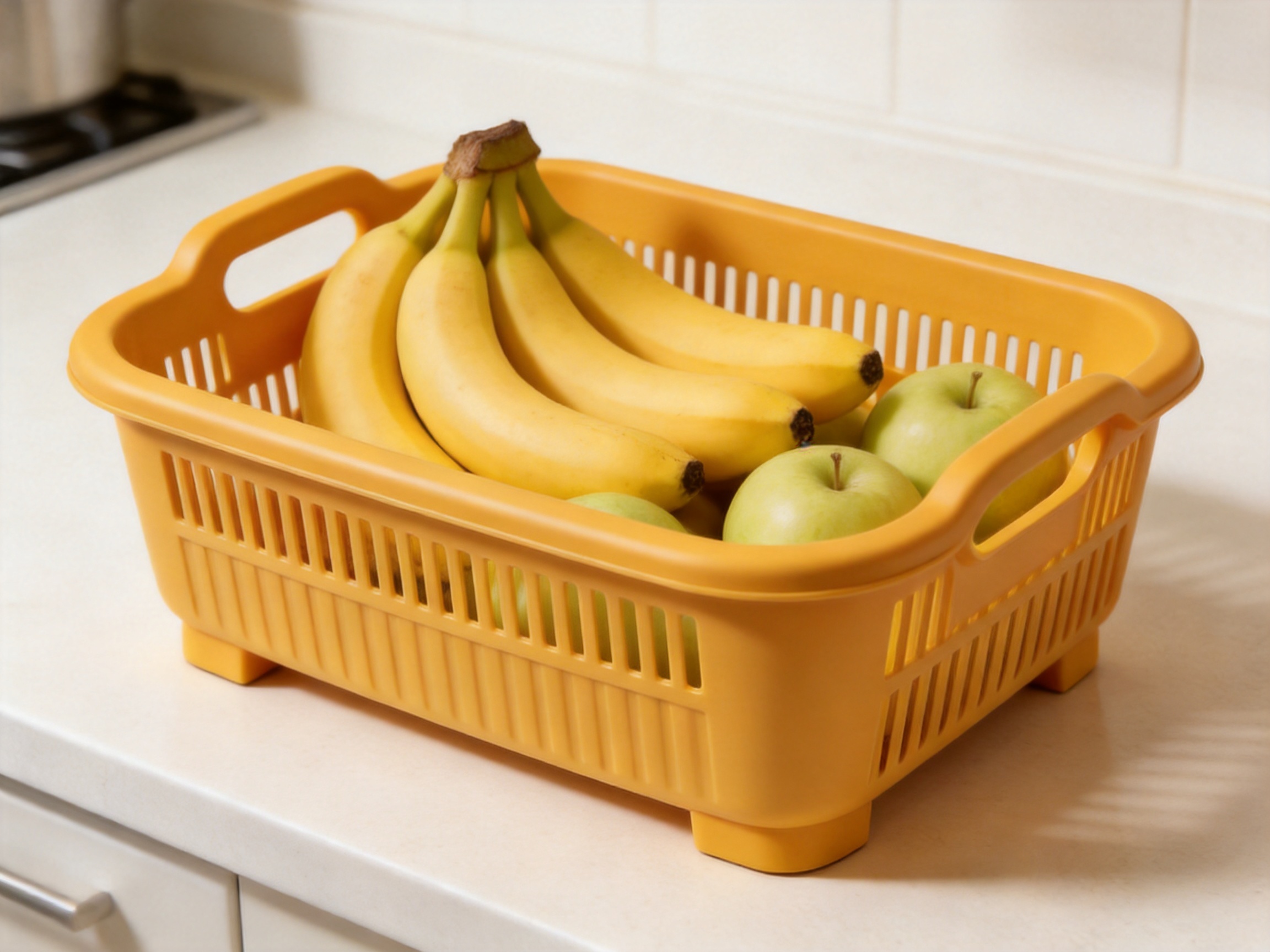
TaiZhou HuangYan YingXiang Plastic Mould Co., Ltd. is based in Huangyan, Taizhou, Zhejiang, a region widely associated with mould manufacturing and plastic processing. The company was established in 2012 and operates a plant of approximately 7,000 square meters with around 50 employees.
The combination of a dedicated facility, engineering systems, production equipment, and experienced technicians supports the development of customized plastic moulds. The company’s product range includes crate and folding box moulds, tray and pallet moulds, beverage box moulds, fruit basket moulds, and moulds for daily household products.
This range is relevant to banana basket production because many design principles are shared across reusable plastic containers. Logistics crates, storage boxes, and household baskets all require attention to ribs, handles, stacking, wall thickness, impact resistance, ejection, and long-term mould reliability.
Structural products often contain open grids, reinforced corners, handles, feet, ribs, and interlocking features. These details must be balanced between functional performance and injection moulding feasibility. Experience with crates, folding boxes, and household containers gives the engineering team a practical basis for addressing similar challenges in fruit basket projects.
The company’s focus on customized solutions means that the mould can be developed around the customer’s actual product rather than forcing the design into a standard pattern. This is important for manufacturers seeking a distinctive basket shape, special ventilation layout, unique handle, or product family configuration.
A lean manufacturing approach aims to reduce unnecessary steps, prevent avoidable errors, improve communication, and control production flow. In mould manufacturing, lean methods may include organized project planning, clear drawing control, efficient machining sequences, inspection checkpoints, and structured trial feedback.
These practices can support more predictable delivery and reduce the risk of late-stage changes. They also help ensure that the mould is manufactured according to the approved design rather than informal or outdated instructions.
Long service life is a central consideration for a commercial banana basket mould. The tool must withstand repeated clamping, injection pressure, cooling cycles, ejection, cleaning, and maintenance. A long-life mould can support a manufacturer’s growth by reducing downtime and spreading tooling investment across a larger production volume.
Long life depends on multiple factors, including steel quality, heat treatment where applicable, machining accuracy, surface condition, cooling design, moving-part alignment, and maintenance procedures. No single feature can guarantee service life, but a complete engineering approach can significantly improve reliability.
Customized mould projects require communication throughout the development process. Product data, material information, target output, packaging requirements, and quality expectations should be clarified before final design approval. During trials, sample evaluation and feedback should be recorded accurately.
Yingxiang emphasizes on-time delivery, quality, competitive costs, and comprehensive customer service. These priorities are important for overseas buyers because mould delivery affects machine scheduling, product launches, packaging preparation, and market commitments.
When comparing suppliers, buyers should consider more than the initial quotation. A low-priced mould may appear attractive, but its total cost can increase if it produces excessive scrap, requires frequent adjustments, has poor cooling, or becomes difficult to repair.
| Evaluation Area | Professionally Engineered Mould | Basic or Poorly Planned Mould |
|---|---|---|
| Product consistency | Designed for repeatable dimensions and appearance | Greater variation between cycles or batches |
| Filling behavior | Gate, runner, and venting decisions are reviewed systematically | Filling problems may be discovered only after production begins |
| Cooling performance | Cooling is considered in relation to wall thickness and warpage | Uneven cooling can lead to distortion and long cycles |
| Ejection | Planned to protect handles, ribs, rims, and visible surfaces | May cause whitening, scratches, deformation, or sticking |
| Service life | Materials, fitting, and wear areas are selected for repeated use | Premature wear or difficult repairs may occur |
| Maintenance | Components and access points are considered during design | Maintenance may require extensive disassembly |
| Product development | Design-for-manufacturing feedback is available | Customer may receive limited engineering support |
| Total cost | Higher focus on lifetime productivity and reduced waste | Lower initial cost may be offset by downtime and rejects |
The comparison demonstrates why mould selection should be based on total performance. A reliable banana basket mould can support better production planning, more stable quality, and lower operating risk. The most suitable supplier is not necessarily the one offering the lowest initial price, but the one able to deliver the required product consistently and support the mould throughout its useful life.
The final resin should be selected according to the basket’s intended application. Common plastic choices for household containers may include polypropylene or other suitable injection-moulding materials, but the correct selection depends on strength, flexibility, impact resistance, appearance, temperature exposure, regulatory requirements, and cost.
Material selection influences mould design. Different resins have different shrinkage behavior, flow characteristics, cooling requirements, and sensitivity to processing conditions. The mould manufacturer should receive accurate material information so that filling, cooling, draft, and dimensional expectations can be evaluated appropriately.
Colorants and additives can also affect processing. A basket intended for food-related use may require specific material and additive documentation. The product manufacturer is responsible for confirming compliance with the regulations of the target market, while the mould maker can support the design of a clean, consistent, and manufacturable product.
Injection speed, pressure, temperature, holding pressure, cooling time, and mould temperature all influence the finished basket. Thin ribs and narrow passages may require adequate filling speed, while excessive speed can increase shear or create appearance issues. Holding conditions affect shrinkage and dimensional stability, particularly in thicker areas such as the rim or handle connections.
Cooling time is often a major part of the cycle. Excessive cooling increases cycle cost, but insufficient cooling can lead to deformation during ejection. A well-designed cooling system gives the processor a stronger starting point for optimizing this balance.
Machine selection also matters. The injection unit must provide sufficient shot size and pressure, while the clamping unit must accommodate the mould size and projected area. The mould manufacturer and product producer should confirm machine compatibility before production.
Many manufacturers are considering recycled content or more sustainable material strategies. These options may be appropriate in some banana basket applications, but they require careful evaluation. Recycled material can vary in flow behavior, color, moisture, contamination, and mechanical performance.
If recycled content is planned, the product design and moulding process should be validated using the intended material grade. The manufacturer should confirm that the basket maintains acceptable strength, appearance, dimensional stability, and safety characteristics. Material efficiency, lightweighting, reduced scrap, and long service life can all contribute to a more sustainable product approach.
Quality control should be applied throughout the mould project rather than only at the final inspection. Incoming steel and components, machining accuracy, assembly fit, surface condition, cooling passages, and trial samples should all be reviewed.
Before machining, the product and mould design should be checked for draft, undercuts, wall transitions, parting lines, ejection, cooling, and interference. Confirming these items early can prevent expensive corrections after the mould base and cavity components have been manufactured.
Critical mould components should be inspected against drawings or three-dimensional data. Dimensional inspection may include cavity dimensions, core dimensions, insert positions, ejector locations, slide travel, and alignment features. The exact inspection method depends on the component and project requirements.
Trial baskets should be checked for short shots, flash, sink marks, burn marks, weld lines, warpage, scratches, ejection marks, and dimensional variation. Functional testing may include handle strength, basket stability, nesting behavior, ventilation, and resistance to ordinary handling.
Samples should also be reviewed visually under suitable lighting. Subtle differences in gloss, texture, color distribution, and gate appearance can be important for household products. A sample approval process should define which characteristics are critical and which minor variations are acceptable.
Good documentation supports future production and maintenance. Useful records may include approved product drawings, mould assembly drawings, material information, trial parameters, inspection results, spare-part details, and maintenance recommendations.
Clear documentation helps the customer repeat production more efficiently, especially when the mould is moved between machines, production sites, or operating teams. It also makes troubleshooting easier if a quality issue appears after an extended period of use.
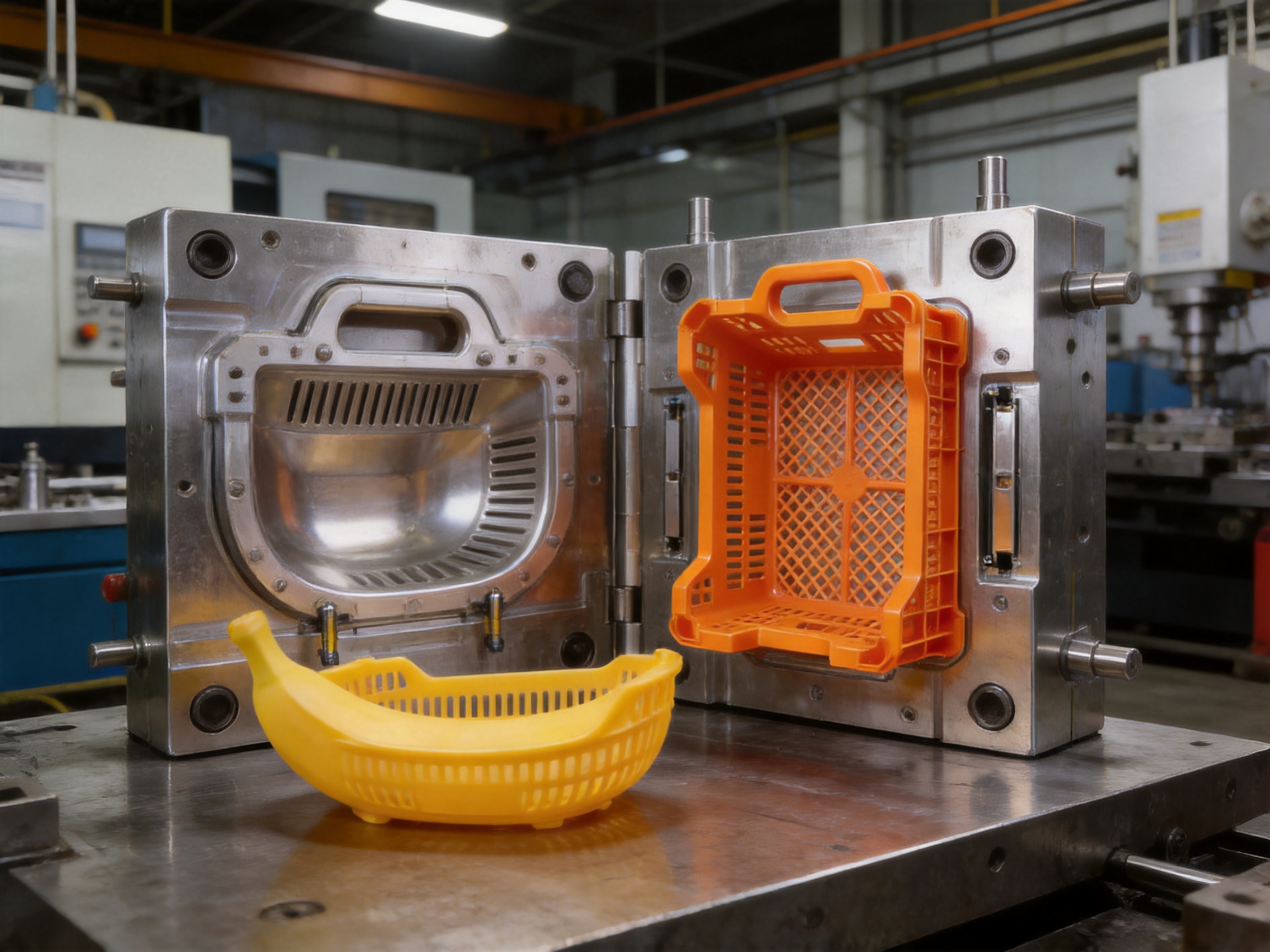
A banana basket can serve several market segments. In the household sector, consumers may use it for bananas, apples, citrus fruit, bread, snacks, or general kitchen organization. In commercial environments, the product may be used for buffet presentation, café service, hotel breakfast areas, retail displays, or produce storage.
The design can be adapted for different market positions. A lightweight basket with bright colors may target mass retail. A thicker, more decorative version may be suitable for premium homeware channels. A reinforced design with a strong handle may appeal to restaurants, caterers, or hospitality buyers.
Retailers often value products that are easy to display and package. A nestable basket can reduce shipping volume, while a stable base can improve shelf presentation. A product with a recognizable shape and consistent color can support a broader household product range.
Export manufacturers may also require several versions for different regional preferences. Handle dimensions, basket depth, color, ventilation, and surface texture can be adjusted as part of a customized mould development project.
Even a high-quality mould requires regular maintenance. Preventive maintenance helps preserve product quality and reduces the chance of unexpected downtime. The maintenance schedule should reflect production volume, material characteristics, mould complexity, and operating environment.
Routine tasks may include cleaning the cavity and core, checking vents, lubricating moving components, inspecting ejector systems, examining slides and lifters, and confirming that cooling circuits remain functional. Water quality should also be considered because deposits or corrosion can reduce cooling performance.
Operators should monitor changes in the moulded basket. New flash, increased sticking, dimensional drift, unusual marks, or longer cycles may indicate wear, blocked vents, cooling problems, or alignment issues. Early intervention is generally more effective than waiting until a major failure occurs.
When the mould is not in use for an extended period, it should be cleaned, dried, protected against corrosion, and stored appropriately. Moving components should be secured, and maintenance records should be updated after service work.
Critical wear parts should be identified during mould design. Depending on the structure, these may include ejector components, guide elements, inserts, slides, lifters, or other replaceable pieces. Keeping suitable spares can reduce downtime when replacement becomes necessary.
Repair planning is also important for overseas customers. Clear component identification, drawings, and technical communication help ensure that replacement parts are produced correctly. A mould designed with practical access and replaceable wear components is easier to maintain throughout its service life.
A specialized mould manufacturer understands that the tool is part of a complete production system. The supplier must consider the product, material, injection machine, cycle target, quality requirements, maintenance plan, and commercial schedule together.
For a banana basket, specialization in household products and container moulds is particularly useful. The manufacturer can draw on experience with ventilation, handles, open grids, stackability, food-related applications, and ergonomic details. This practical knowledge can help transform an attractive product concept into a reliable moulding solution.
TaiZhou HuangYan YingXiang Plastic Mould Co., Ltd. combines regional mould-making experience with modern CAD, CAE, and CAM systems, a 7,000 square meter facility, advanced equipment, and an experienced technical team. Its broader capabilities across crate, folding box, pallet, tray, beverage box, storage container, and household moulds support a practical understanding of structural plastic products.
The company’s stated focus on lean manufacturing, long-life moulds, on-time delivery, premium quality, competitive costs, and comprehensive service provides a useful foundation for international buyers seeking a dependable tooling partner.
A successful banana basket mould project benefits from a clear workflow. The customer should first provide the product concept, dimensions, target material, expected output, machine information, surface requirements, and market expectations.
The mould manufacturer can then conduct a design-for-manufacturing review. At this stage, both parties should discuss wall thickness, draft, handle strength, ventilation, base structure, parting line, gates, ejection, cooling, and expected cycle time.
After design approval, the mould team prepares detailed mould data and begins material procurement and machining. Progress should be monitored through defined checkpoints. Any proposed design change should be reviewed for its effect on cost, delivery, product appearance, and tooling performance.
Following assembly, trial moulding is carried out. Samples are evaluated against agreed criteria, and necessary corrections are completed. Final acceptance should be based on both sample quality and mould operation, including ejection, cooling, filling, and repeatability.
Before shipment or production transfer, the customer should receive appropriate mould documentation, sample parts, maintenance guidance, and information about recommended operating conditions. This preparation helps the production team begin with fewer uncertainties.
A banana basket mould is an injection moulding tool used to produce plastic baskets designed for bananas and other fruit. It forms the basket’s walls, base, openings, rim, handle, ribs, and other product details in a controlled and repeatable process.
Yes. The product can be customized in dimensions, shape, handle style, ventilation pattern, base design, surface texture, logo area, color strategy, and stacking or nesting features. Each change should be reviewed for strength, filling, cooling, ejection, and production feasibility.
The suitable material depends on the intended application and market requirements. Polypropylene and other injection-moulding materials may be considered, but the final selection should account for strength, flexibility, impact resistance, appearance, food-related requirements, recycled content, and cost.
Ventilation openings allow air to circulate around the fruit and can help reduce moisture accumulation. They also reduce product weight and material use. However, opening size and layout must be balanced against structural strength, safety, filling behavior, and ease of cleaning.
The mould determines the handle’s shape, thickness, surface finish, connection to the basket, and ejection method. A well-designed handle should fill completely, cool evenly, resist deformation, and withstand repeated lifting during normal use.
Flash may result from parting-line mismatch, excessive injection pressure, insufficient clamping force, mould wear, damaged shut-off surfaces, or unsuitable processing conditions. Accurate fitting and regular maintenance help reduce the risk.
Warpage can be influenced by wall-thickness differences, uneven cooling, material shrinkage, packing conditions, ejection timing, and mould temperature. Balanced cooling and product design, suitable processing parameters, and accurate mould construction can help control it.
The need for analysis depends on product complexity, production volume, material, number of cavities, and risk level. CAE can be especially useful for baskets with thin ribs, complex handles, irregular openings, long flow paths, or demanding dimensional requirements.
Buyers should compare engineering capability, relevant product experience, design review procedures, machining resources, quality control, trial support, delivery planning, maintenance assistance, communication, and total cost of ownership rather than quotation price alone.
Mould life depends on steel, design, material, cycle conditions, maintenance, production volume, and operating practices. A long-life mould requires suitable materials, accurate machining, reliable cooling and ejection, proper surface treatment, and preventive maintenance.
That depends on the design strategy. Separate moulds, interchangeable inserts, or other modular approaches may be considered. The best solution depends on the differences between products, expected volumes, changeover requirements, budget, and dimensional relationships.
Yes. The company specializes in several categories, including integral box moulds, pallet moulds, fruit basket moulds, logistics crate moulds, folding box moulds, stool moulds, food storage container moulds, trash can moulds, beverage box moulds, hand basket moulds, household product moulds, floor mat moulds, and chair moulds.
A banana basket may be a compact household product, but its mould requires careful engineering. Ventilation, strength, handle reliability, dimensional stability, surface appearance, ejection, and cooling must all work together. The right mould can help manufacturers reduce waste, improve productivity, maintain consistent quality, and build a product that performs well in both household and commercial markets.
TaiZhou HuangYan YingXiang Plastic Mould Co., Ltd. offers customized plastic injection mould solutions supported by experience in structural containers, household products, logistics crates, folding boxes, pallets, trays, beverage boxes, and fruit baskets. Its approximately 7,000 square meter facility, experienced team, CAD/CAE/CAM capabilities, modern equipment, and focus on long-life moulds provide a strong basis for banana basket mould development.
For buyers, the most important decision is to select a mould partner that understands the complete production process. A successful project should begin with product analysis, continue through precise engineering and controlled machining, and conclude with practical trial validation and maintenance support. With this approach, a banana basket mould becomes more than a tooling purchase: it becomes a foundation for stable production, dependable product quality, and long-term commercial value.
1. General principles of plastic injection mould design, including gating, cooling, venting, draft, ejection, and parting-line planning.
2. Standard engineering practices for designing reusable household plastic containers and ventilated storage products.
3. General guidelines for computer-aided design, computer-aided engineering, and computer-aided manufacturing in injection mould production.
4. Manufacturing principles for CNC machining, electrical discharge machining, mould fitting, polishing, and surface treatment.
5. General quality-control practices for injection mould trials, dimensional inspection, product approval, and preventive mould maintenance.
6. Material-selection considerations for polypropylene and other injection-moulding plastics used in household and food-related container products.
7. General design-for-manufacturing principles for ribs, handles, ventilation openings, reinforced rims, bases, and nesting features.
If you are interested in any of our products or services, please feel free to ask and we can talk about your ideas.
 QUICK LINKSMOBILE SITE
 FACTORY ADDRESS
 CONTACT INFORMATION



 English
 Español