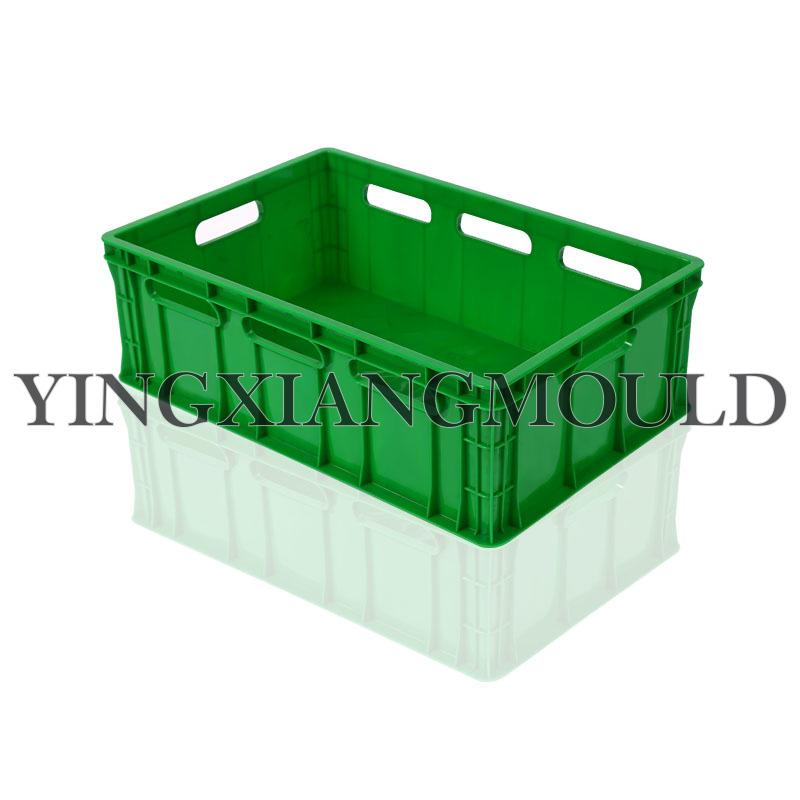
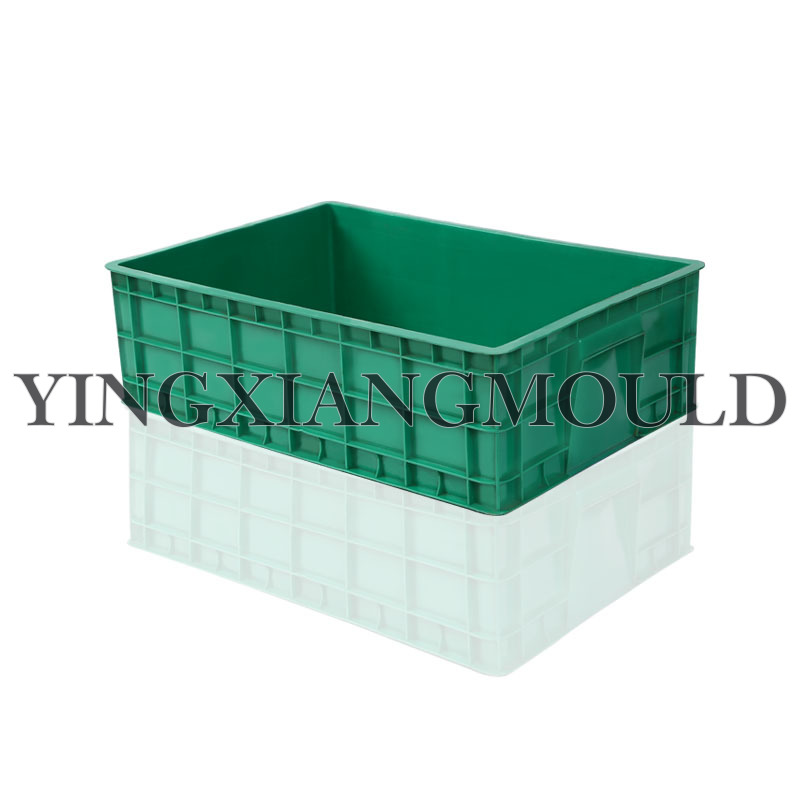
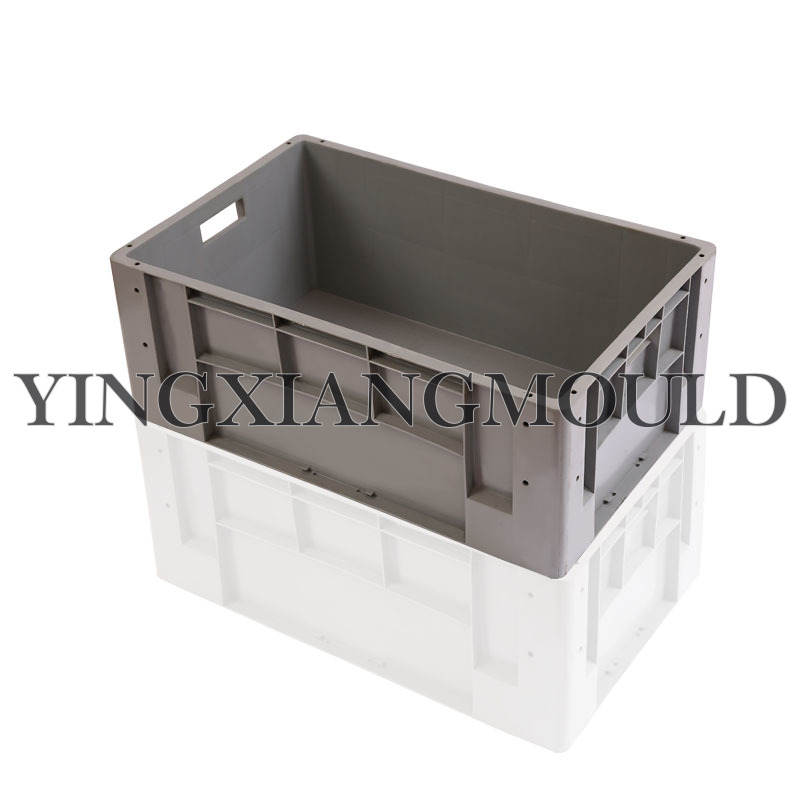
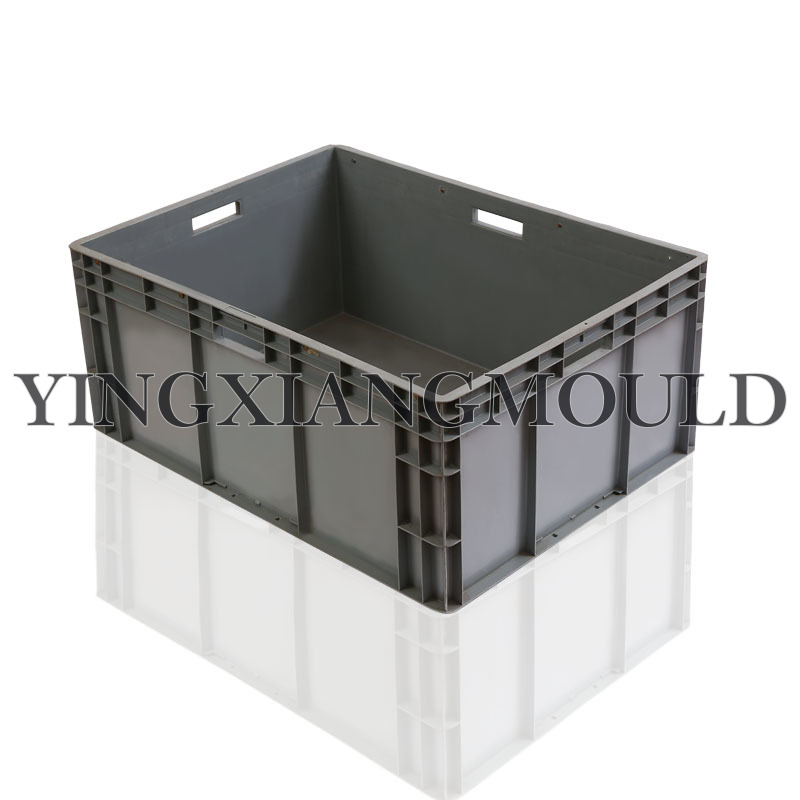
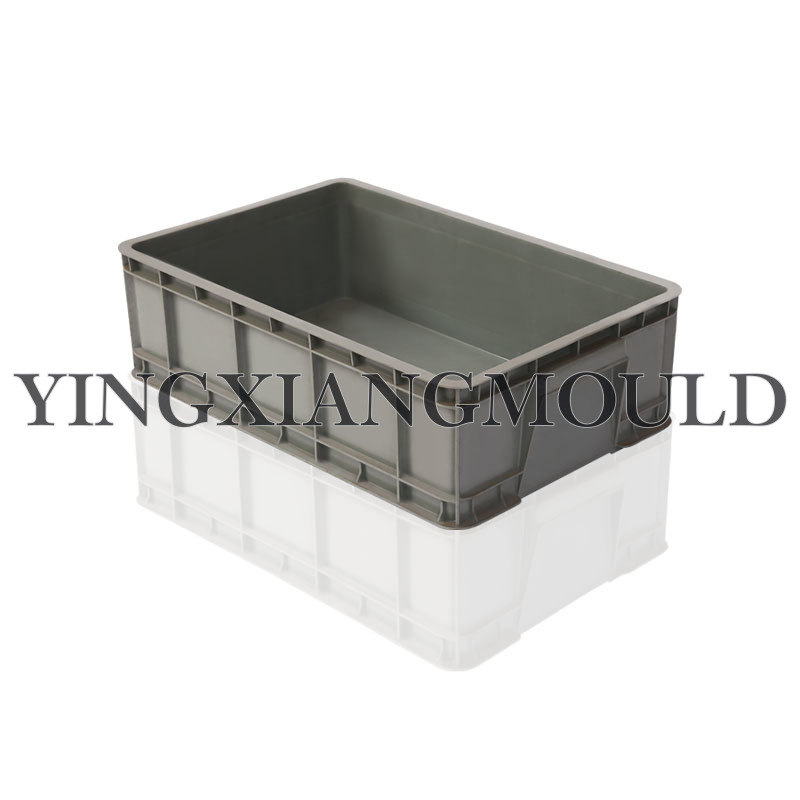
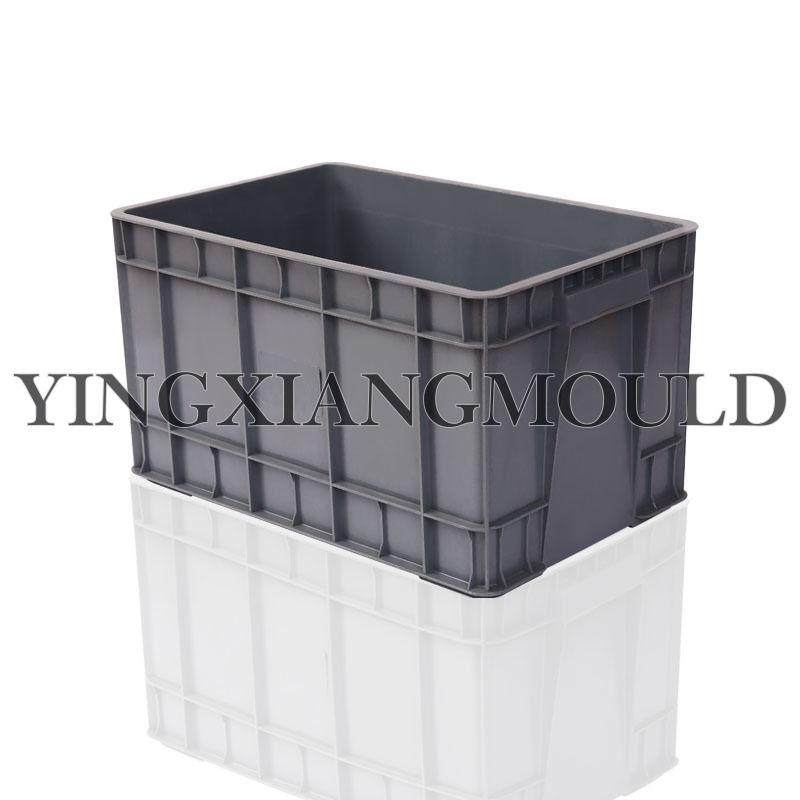
The apricot basket is a specialized plastic packaging product developed for the careful handling, presentation, storage, and transportation of delicate stone fruits. Unlike deep general-purpose crates, this basket is designed around the particular needs of apricots, nectarines, plums, and similar fruits that can bruise easily when subjected to stacking pressure, vibration, impact, or poor ventilation. Its shallow profile, rounded form, smooth surface, ventilation structure, and convenient side grips create a practical solution for households, fruit retailers, growers, packing stations, and food distribution businesses.
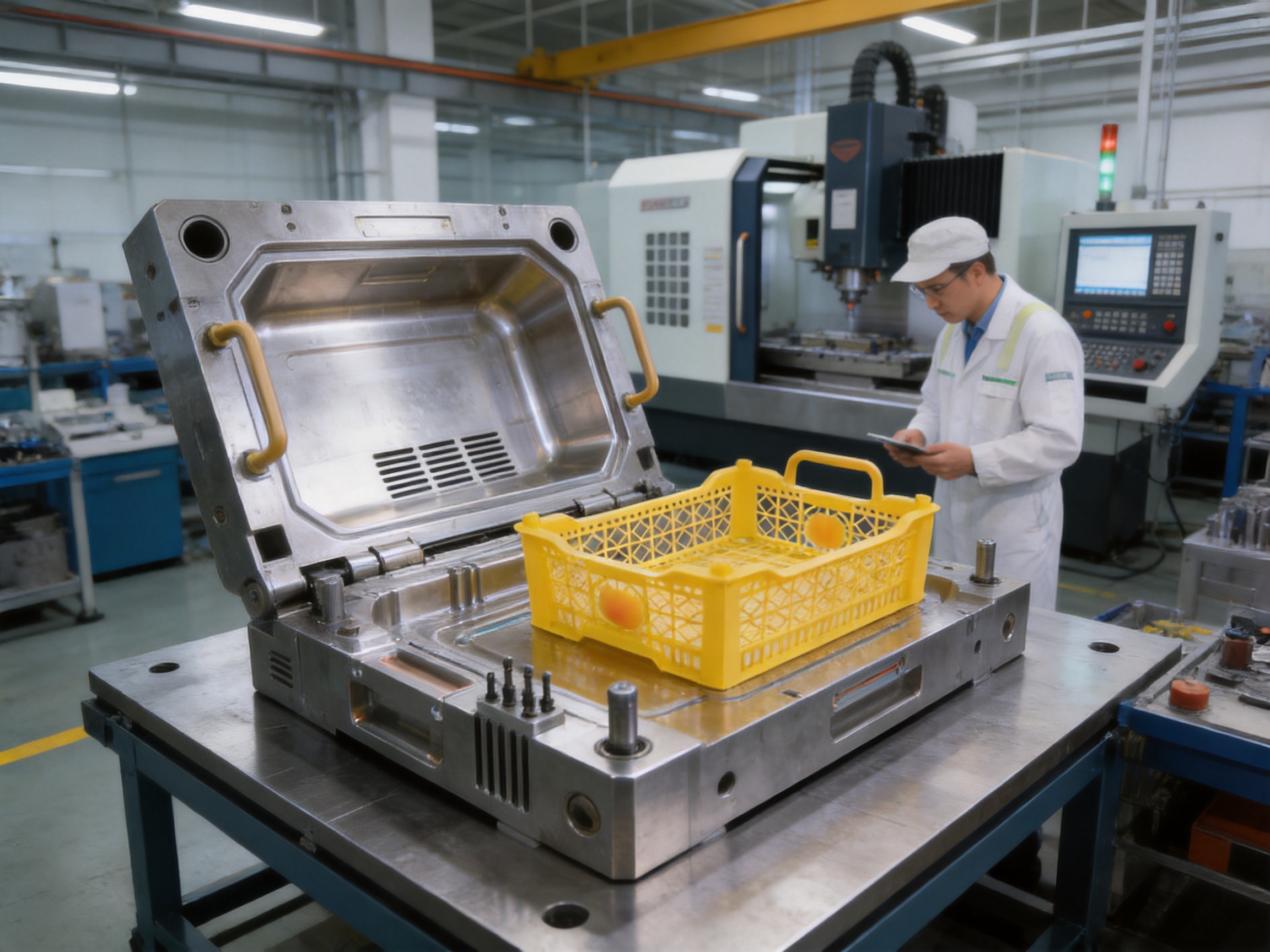
Behind the finished basket is a carefully engineered plastic injection mould. The quality of this mould affects nearly every aspect of the final product, including dimensional accuracy, surface finish, wall consistency, ventilation, stacking stability, handle strength, production efficiency, and service life. A well-designed mould helps manufacturers produce baskets that are attractive, repeatable, easy to clean, economical to manufacture, and suitable for contact with food when the correct food-grade plastic is selected.
The apricot basket mould described in this article is a customizable injection mould solution manufactured by TaiZhou HuangYan YingXiang Plastic Mould Co., Ltd. The company provides moulds for fruit baskets, logistics crates, folding boxes, pallets, household products, chairs, stools, floor mats, trash cans, beverage boxes, and other plastic products. Its experience in customized plastic mould production enables the apricot basket to be developed according to a customer’s required capacity, dimensions, plastic material, colour, structure, production volume, and application environment.
This article examines the product concept, structural advantages, mould design principles, material options, manufacturing process, quality considerations, customization possibilities, production benefits, and selection criteria associated with an apricot basket mould.
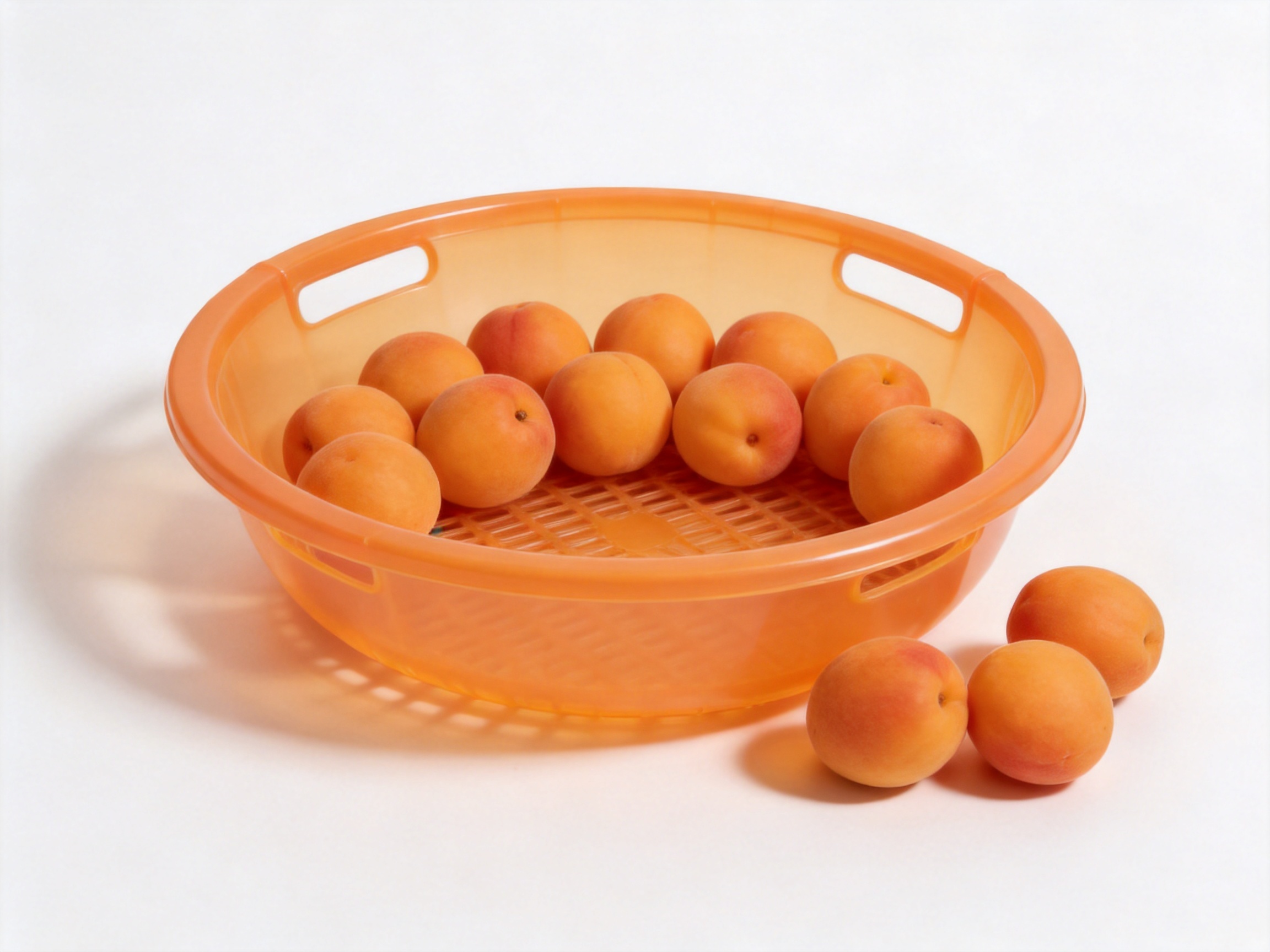
The apricot basket is a low-profile fruit container with a shallow, dish-shaped, or gently rounded body. Its geometry is intended to keep stone fruits arranged in a relatively stable single layer or low stack. This reduces the pressure applied to the lower fruit and helps limit bruising, skin damage, juice leakage, and deformation during short-term storage and display.
The basket can be produced from plastic materials such as polypropylene, commonly known as PP, depending on the required performance and application. PP is widely used for reusable food containers because it can provide a useful combination of low weight, toughness, chemical resistance, moisture resistance, and ease of cleaning. When an appropriate food-contact grade is chosen and the product is manufactured under suitable conditions, the material is well suited to fruit storage and presentation.
The main product features include a moderate wall height, a ventilated base, rounded edges, a strengthened rim, integrated finger loops or side handles, and a smooth interior. These features are not merely decorative. Each one addresses a practical handling or preservation requirement.
| Product Element | Primary Function | Benefit in Use |
|---|---|---|
| Shallow body | Limits excessive fruit stacking | Helps reduce compression and bruising |
| Ventilated base | Allows air movement and drainage | Supports freshness and easier cleaning |
| Rounded corners | Eliminates sharp contact points | Protects fruit and improves handling comfort |
| Reinforced rim | Improves structural rigidity | Supports repeated carrying and stacking |
| Side handles | Provides a convenient grip | Enables one-handed movement when properly loaded |
| Smooth inner surface | Minimizes residue retention | Makes washing and sanitation easier |
| Customizable dimensions | Adapts the basket to different fruit sizes | Allows application-specific product development |
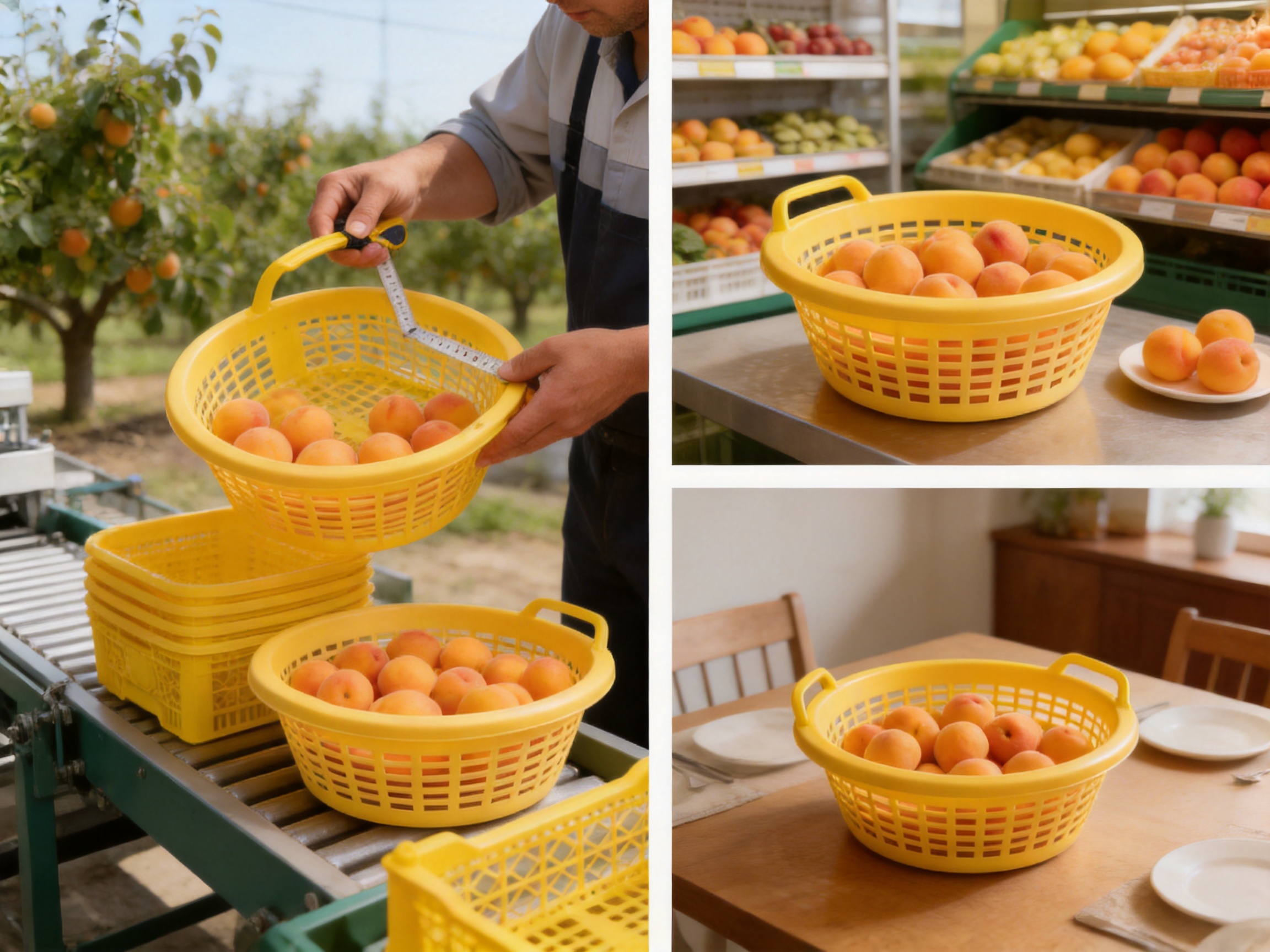
The basket may be used on a family dining table, in a home refrigerator or pantry, at a farm packing station, in a fruit and vegetable shop, or as a retail display container. The same basic design can be adjusted for different capacities, colours, vent patterns, handle shapes, branding areas, and stacking requirements.
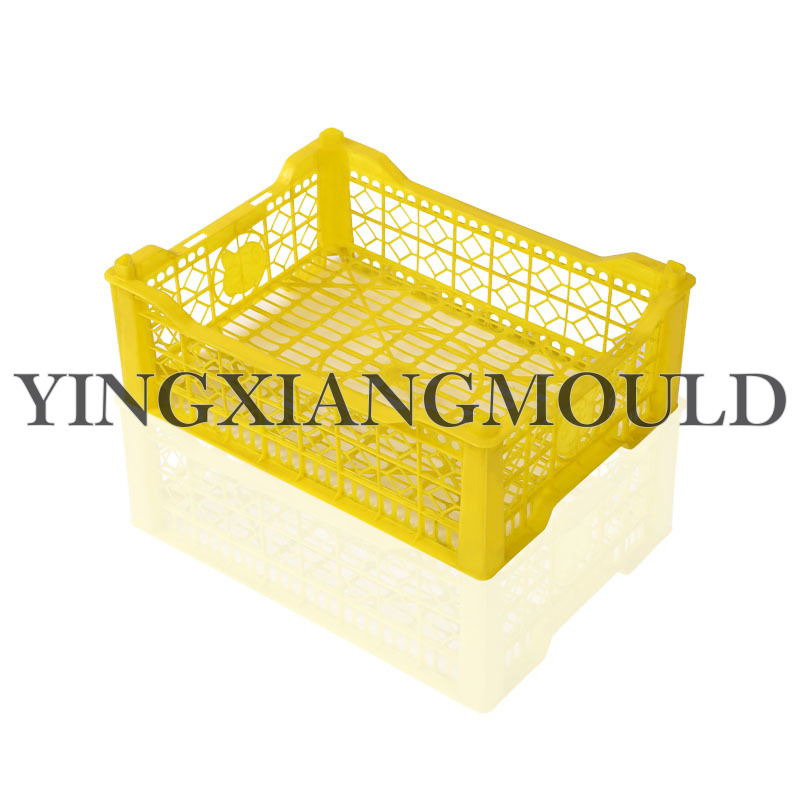
Apricot basket
Apricots are attractive but delicate fruits. Their thin skin and relatively soft flesh can be damaged by rough surfaces, concentrated pressure, or excessive movement. A general-purpose crate may be too deep, too rigid in the wrong locations, or too heavily ventilated in a way that allows the fruit to shift. A dedicated apricot basket addresses these weaknesses by controlling the fruit environment more carefully.
Deep containers encourage fruit to form multiple layers. The weight of upper layers can press against fruit at the bottom, especially when the container is moved or stacked. A shallow basket reduces this vertical pressure. It also makes the contents more visible, which is valuable for retail display and household serving. Customers can inspect the fruit without removing several items from the container.
A low and rounded body can also reduce movement during handling. When the sides are shaped appropriately, apricots remain within the central area instead of repeatedly striking sharp corners. The interior transition between the base and wall should be smooth, and the mould should be designed to avoid sudden changes in wall thickness that could create weak areas or unwanted cosmetic marks.
Ventilation is another important consideration. Fresh fruit continues to exchange moisture and heat after harvest. A ventilated base and carefully positioned openings can help air circulate around the fruit. Ventilation must be balanced, however. Openings that are too large may reduce support or permit fruit to protrude, while openings that are too small may provide limited airflow and create cleaning challenges. The mould design should therefore consider opening size, spacing, edge radii, and the expected fruit dimensions.
The strengthened rim contributes to both protection and handling. A thin, unfinished edge may flex excessively, feel uncomfortable, or become damaged after repeated use. A rolled, folded, or thickened rim can improve rigidity and create a smoother contact surface. It also provides a practical location for a label, colour band, or product identification mark if required.
Side handles or finger loops make the basket easier to move. Their design must balance convenience with strength. A handle opening that is too narrow may be difficult to use, while an opening that is too large can weaken the side wall. The mould must incorporate suitable reinforcement around the handle area so that carrying forces are distributed instead of concentrated at a single thin section.
The most important advantage of a specialized apricot basket is its ability to protect delicate produce. The shallow body reduces the height of the fruit load, and the rounded interior reduces hard contact points. Compared with a deep universal crate, the basket can provide better control over the arrangement of apricots and lower the risk of compression damage.
The fine mesh or corrugated base can also provide limited cushioning. A textured surface prevents fruit from sitting on a completely flat plane and may improve airflow beneath the product. When designed correctly, the texture can help stabilize the fruit without creating aggressive ridges that mark the skin.
Retail presentation directly affects how customers evaluate fresh fruit. A shallow basket displays more of the product surface and allows the colour, size, and condition of apricots to be seen immediately. The rounded form gives the package a friendly and attractive appearance, while a clean smooth surface supports a premium visual impression.
Compared with ordinary perforated crates, the apricot basket can be positioned as a more purpose-built presentation container. It may be used in specialty produce stores, farm shops, farmers’ markets, gift fruit packaging, and home dining environments. Its appearance can be adapted through colour selection, surface texture, branding panels, and decorative but functional structural details.
Integrated finger loops or side handles improve portability. Consumers can carry the basket from a market counter to a vehicle, from a kitchen to a dining table, or from a harvest area to a packing point. The mould can be engineered to provide a comfortable grip while maintaining adequate strength around the handle opening.
For commercial users, handling efficiency is equally important. Workers can move filled baskets more easily when the grip is clear and consistent. A well-designed handle also reduces the need to hold the basket from the bottom, which can be inconvenient when multiple containers must be moved quickly.
The smooth plastic surface is easy to wash and allows less residue to remain after use. This is especially important for reusable fruit packaging. Juice, dust, soil, and small particles can collect in poorly designed corners, narrow slots, or rough moulded areas. Rounded transitions and appropriately sized openings make the basket easier to rinse and inspect.
A reusable basket can reduce the need for single-use packaging in suitable applications. Its actual service life depends on the material, wall thickness, usage conditions, cleaning method, stacking load, and mould quality. Nevertheless, the durable injection-moulded structure gives the product a strong foundation for repeated handling.
Different markets require different container capacities and fruit arrangements. A household basket may be compact, while a commercial basket may need additional volume or stacking capability. The mould can be customized for length, width, height, base pattern, handle configuration, colour, branding area, and nesting or stacking features.
Customization provides an advantage over standard off-the-shelf packaging because the final container can be matched to a customer’s fruit size, production line, transport method, and retail strategy. A customized design may also improve warehouse utilization by optimizing the external dimensions for cartons, shelves, pallets, or delivery vehicles.
The quality of an apricot basket depends heavily on the mould structure. Because the basket contains thin walls, openings, handles, rounded edges, and possibly a textured base, the mould must be designed with attention to filling, cooling, ejection, shrinkage, and long-term wear.
The product design should begin with a clear understanding of its intended load, fruit size, stacking method, and production material. Wall thickness should be sufficiently robust for handling while remaining suitable for efficient injection moulding. Excessively thick areas may increase cycle time, cause sink marks, and create uneven shrinkage. Excessively thin areas may result in short shots, weak handles, or deformation.
A balanced wall design helps plastic flow more evenly through the cavity. Ribs may be added to reinforce the rim, side walls, base, and handle zones. However, ribs should be proportioned carefully. Overly thick ribs can create cosmetic defects, while poorly positioned ribs can interfere with ejection or produce stress concentrations.
The base may use a mesh pattern, slots, perforations, or shallow corrugations. The selected pattern depends on the required ventilation, fruit support, cleaning performance, and tooling complexity. Each opening must be evaluated for mould filling and ejection. Very narrow openings may be difficult to fill consistently, while sharp internal corners may increase stress and make polishing more difficult.
A textured base can be created through machined features, surface treatment, or suitable mould finishing. The surface should support the fruit without damaging it. For a food-oriented product, the texture should also be easy to clean and should not contain inaccessible cavities where moisture or residue can accumulate.
The rim is one of the most frequently touched parts of the basket. It should feel smooth and comfortable while providing enough stiffness to retain the basket shape. A rounded rim can be formed through suitable cavity and core geometry, with adequate attention to parting lines and polishing.
Handle areas require special reinforcement. The mould may include a thicker surrounding frame, radiused corners, and transition ribs. These details distribute force and reduce the likelihood of cracking during carrying. The handle opening should also be designed to prevent sharp edges or uncomfortable contact with the user’s fingers.
Draft angles allow the moulded basket to release from the cavity and core without excessive friction. The draft must be considered on the side walls, handles, ribs, openings, and textured surfaces. Insufficient draft can cause scuffing, deformation, sticking, or difficult ejection. Excessive draft may affect the product appearance or reduce usable internal capacity.
Ejection can be achieved through ejector pins, sleeves, stripper systems, or a combination of methods. For a basket with visible surfaces, ejector locations should be positioned carefully to reduce marks in prominent areas. The ejection system must apply force evenly so that the product is not twisted or distorted during release.
The gate location influences filling behavior, weld lines, pressure distribution, and visible surface quality. A balanced gating strategy helps plastic reach thin walls, handles, rims, and base features with consistent pressure. The mould designer may consider hot runner or cold runner systems according to the product size, production volume, material, machine capability, and customer requirements.
For a basket with multiple openings, ribs, and thin sections, mould flow analysis can help predict filling patterns and identify areas that may require design adjustment. CAE analysis can assist with evaluating weld lines, air traps, filling time, pressure, cooling, and warpage before steel machining begins.
The provided product specification identifies a range of plastic materials that may be used for different moulded products, including PP, PC, PS, POM, PE, PU, PVC, ABS, and PMMA. The appropriate material for an apricot basket should be selected according to the required flexibility, impact resistance, appearance, temperature conditions, food-contact requirements, cleaning method, and cost target.
PP is a logical option for many fruit basket applications because it is lightweight, moisture resistant, and capable of providing useful toughness. It can also be produced in a broad range of colours and is generally suitable for reusable consumer and commercial products when the correct grade is selected.
PE may be considered when additional flexibility or impact resistance is required. Depending on the selected grade, it can be useful for products exposed to rough handling. ABS can provide a good appearance and stiffness, although the suitability of a specific grade for food-related use must be verified carefully. PS can offer attractive surface quality but may not be the first choice where repeated impact resistance is important.
PC provides high impact performance and transparency options, but it may be more costly than common commodity plastics. POM is valued for low friction and dimensional performance but is generally more specialized than required for a basic fruit basket. PVC, PU, PMMA, and other materials may be appropriate for different product categories or special applications, but their suitability must be assessed by the buyer and moulding processor.
| Plastic Material | Potential Characteristics | Considerations for Basket Applications |
|---|---|---|
| PP | Lightweight, moisture resistant, versatile | Common choice for reusable fruit containers when an appropriate grade is used |
| PE | Flexible and impact resistant | Useful where toughness and flexibility are priorities |
| ABS | Good appearance and rigidity | Food-contact suitability and impact requirements must be checked |
| PC | High impact performance and possible transparency | May provide premium performance at a higher material cost |
| PS | Good rigidity and surface finish | Requires careful evaluation for repeated handling and impact |
| POM | Low friction and dimensional stability | Usually a specialized option rather than a standard basket material |
The mould material is also important. The available mould steel options include 1CR13, 2CR13, 3CR13, 4CR13, S136, CR16, 2316, 718H, P20, and other grades. The choice depends on production volume, corrosion resistance, polishing requirements, expected tool life, plastic material, and budget.
For a product that may use moisture-sensitive processing conditions, textured surfaces, or demanding polishing requirements, a corrosion-resistant steel may provide useful protection. P20 and 718H are commonly used mould steels for a range of injection moulding applications, while stainless tool steels such as S136 or suitable CR-series grades may be considered when corrosion resistance and surface quality are important.
TaiZhou HuangYan YingXiang Plastic Mould Co., Ltd. is located in Huangyan, Taizhou, Zhejiang, an area widely recognized for mould manufacturing. Established in 2012, the company operates a plant covering approximately 7,000 square metres and has around 50 employees. Its production capability is supported by CAD, CAE, and CAM systems, modern processing equipment, and experienced technical personnel.
These capabilities are important because a successful fruit basket mould requires more than basic cavity machining. The entire project must connect product development, structural analysis, mould design, steel selection, CNC machining, electrical discharge machining where required, polishing, assembly, testing, and mould trial. Each stage affects the consistency of the final basket.
The process typically begins with customer requirements. These may include basket capacity, external dimensions, fruit type, expected load, stacking method, colour, material, surface appearance, annual output, machine size, and packaging method. The design team can convert these requirements into a three-dimensional product model and identify areas that may require adjustment.
Design review is particularly important for handles, ventilation openings, corner radii, nesting features, and wall transitions. A small change at this stage can improve mould filling, reduce manufacturing risk, simplify ejection, or make the finished product more comfortable.
CAD systems support accurate product and mould modelling. CAE tools can be used to examine plastic flow, cooling, pressure, weld lines, air traps, and possible deformation. Analysis does not replace practical engineering judgment, but it can help identify risks before material is cut.
For a shallow fruit basket, analysis may focus on filling thin peripheral walls, reaching the handle regions, maintaining balance around the base, and reducing warpage. The results can guide gate placement, cooling channel layout, venting, wall thickness, and reinforcement design.
After design approval, selected mould steel is prepared and machined. CNC equipment creates the main cavity and core geometry, while other operations form ribs, openings, slots, handle details, and functional surfaces. Precision is necessary because inaccuracies in the mould can appear as uneven walls, mismatched parting lines, inconsistent openings, or unstable stacking dimensions.
Fine details may require additional machining or electrical discharge machining. Polishing and surface finishing are selected according to the required appearance. A smooth inner basket surface may require careful finishing, while a functional base texture may require a controlled matte or patterned treatment.
After the main components are machined and finished, the mould is assembled. The team checks alignment, guide systems, sliders or lifters if present, ejector movement, cooling channels, runner components, inserts, and safety clearances. A trial moulding run is then performed to evaluate the actual product.
The first trial can reveal issues that are difficult to predict entirely through digital analysis. These may include filling hesitation, flash, sink marks, ejection resistance, warpage, uneven texture, short shots, or handle distortion. Corrective work may involve polishing, vent adjustment, gate modification, steel refinement, cooling improvement, or process parameter changes.
Before delivery, the mould should be inspected against the approved design and trial sample. Important checks may include dimensions, appearance, opening sizes, parting line quality, ejection performance, cooling connections, and mould operation. The mould is packaged in a composite wooden box to protect it during transport.
The company indicates a supply capacity of approximately 50 mould sets per month. Actual delivery time depends on mould complexity, size, steel selection, design approval speed, order quantity, trial requirements, and requested modifications. Clear technical communication between the buyer and mould manufacturer is essential for meeting project schedules.
Consistent dimensions allow baskets to stack, nest, display, and fit into transport packaging as intended. Variations in height, rim size, or base shape can cause instability or interfere with automated handling. The mould should therefore be produced and inspected with suitable dimensional tolerances.
The surface should be free from sharp flash, excessive weld marks, deep scratches, burn marks, and rough areas that may contact the fruit. A smooth interior improves cleaning and supports a higher-quality appearance. If the product includes a textured base, the texture should be uniform and intentional.
The basket should withstand ordinary carrying, loading, unloading, and short-term stacking. Strength must be evaluated around the rim, base, corners, and handles. Some controlled flexibility can be beneficial because it helps absorb minor impacts, but excessive flexibility may lead to deformation or unstable stacking.
When the basket is intended for direct contact with fruit, the buyer and moulding producer should select a suitable food-contact plastic grade and comply with the regulations applicable to the destination market. Material certification, colourant suitability, production hygiene, and cleaning procedures should be reviewed as part of the complete product program.
The mould itself should also be maintained appropriately. Clean cooling channels, properly lubricated moving components, and controlled storage conditions help reduce contamination and protect mould performance. A clean and well-maintained mould supports consistent production over time.
Reusable baskets should be tested under realistic conditions. Relevant tests may include repeated carrying, drop resistance, stacking, handle loading, washing, exposure to moisture, and temperature variation. The final test plan should reflect the customer’s actual use environment rather than relying only on laboratory assumptions.
One of the main advantages of an OEM mould program is the ability to develop a basket around a specific commercial purpose. Yingxiang offers customizable model, colour, and size options, allowing customers to create a product that matches their market positioning.
Capacity can be changed by adjusting the basket length, width, and wall height. A compact model may be suitable for household serving or premium retail presentation, while a larger version may be designed for orchard collection or short-distance distribution. The design should always maintain an appropriate relationship between capacity, fruit weight, handle strength, and ventilation.
Colour can be selected to support a brand identity, seasonal campaign, fruit category, or retail environment. Light colours may emphasize cleanliness and freshness, while darker colours may conceal minor stains during commercial use. Colour consistency should be controlled through suitable material preparation and moulding parameters.
The base pattern can also be customized. A fine mesh may prioritize ventilation, while a more structured corrugated design may provide additional support. Slot direction and spacing can be adjusted to reduce fruit movement or to improve drainage. The selected design must remain practical to mould, clean, and inspect.
Handles may be formed as side loops, recessed grips, or integrated openings. Their dimensions can be adapted to the expected user, load, and carrying method. Additional ribs may be added around the handle zones when the basket is intended for heavier fruit or repeated commercial handling.
Branding areas can be incorporated into the rim or side wall if required. A recessed panel, raised lettering area, or smooth label zone can provide a location for product identification. The design should avoid creating sharp projections or deep cavities that reduce cleanability.
Stacking and nesting features can improve warehouse and transport efficiency. If empty baskets are intended to nest, the side walls and base should be shaped to release without sticking. If filled baskets are intended to stack, the upper and lower contact zones should provide stability without applying excessive pressure to the fruit.
For households, the apricot basket offers a neat way to store and serve fruit. Its moderate capacity can fit on a kitchen counter, dining table, pantry shelf, or refrigerator shelf, depending on the selected dimensions. The smooth surface can be washed after use, and the handles make movement convenient.
Growers may use a purpose-designed basket for short-distance movement from harvesting areas to sorting or packing stations. The low profile allows workers to inspect fruit quickly, while the ventilated base can help reduce moisture accumulation. The correct design must be matched to the handling system and load requirements of the farm.
Fruit shops and supermarkets can use the basket to create a visually organized display. Apricots remain visible, and the basket can help separate different grades, sizes, or varieties. A consistent basket format also supports a cleaner and more uniform presentation across multiple product displays.
At farmers’ markets and specialty food events, packaging can contribute to product differentiation. A carefully finished basket communicates attention to quality and can be used as part of a reusable or returnable packaging strategy. Colour, shape, and capacity can be tailored to the seller’s presentation concept.
A refined shallow basket may also be used for gift fruit arrangements. In this application, surface appearance, rim quality, colour, and branding space become especially important. Additional inserts or sleeves may be developed separately, provided they do not interfere with the basket’s ventilation and cleaning characteristics.
Selecting a mould supplier is a strategic decision because the mould affects production cost and product quality for many years. An experienced supplier can help reduce design risks, identify manufacturing limitations, and recommend practical solutions before the tooling stage.
Yingxiang’s product range includes fruit basket moulds, logistics crate moulds, pallet moulds, folding box moulds, beverage box moulds, household product moulds, chair moulds, stool moulds, floor mat moulds, trash can moulds, and other injection moulds. This broad experience may be useful when customers require several related products or want to develop a complete packaging family.
The company emphasizes lean manufacturing, long-life moulds, on-time delivery, competitive costs, and customer service. These objectives are particularly relevant to customers who need repeatable production and predictable project management. The company’s use of CAD, CAE, and CAM systems supports communication between design, analysis, and machining activities.
Customization is another important strength. Rather than forcing every customer to use one standard basket, the mould can be developed around a defined product requirement. The manufacturer can work with the customer on material selection, mould steel, product dimensions, surface finish, production quantity, and packaging arrangements.
A complete mould project should include technical discussion, design confirmation, material review, trial sampling, inspection, modification where needed, and delivery protection. When these stages are managed systematically, the buyer receives more than a metal tool; the buyer receives a production solution designed to support a reliable moulding process.
Customers should begin by defining the intended use. A basket for household display has different requirements from one used in orchard handling or commercial transport. Important questions include how many fruits the basket should hold, whether the fruit will be arranged in one layer or several, whether the basket will be washed repeatedly, and whether filled baskets will be stacked.
The target plastic material should be selected before finalizing the mould design. Different materials have different shrinkage, flow, cooling, impact, and surface characteristics. A mould designed for one material may require adjustment when another material is introduced, especially if the new material has substantially different processing behavior.
The injection moulding machine should also be considered. Clamping force, injection volume, mould dimensions, tie-bar spacing, ejection stroke, and cooling connections all affect mould compatibility. Providing accurate machine information to the mould manufacturer helps avoid unnecessary redesign.
Buyers should specify the expected production volume and desired mould life. A low-volume project may use a different steel and cavity configuration from a high-volume commercial program. Multi-cavity tooling may increase output, but it also increases mould complexity and initial investment. The best solution depends on annual demand, product value, machine capacity, and delivery expectations.
Quality expectations should be agreed in advance. These may include acceptable flash, surface finish, dimensional tolerance, colour consistency, handle strength, base flatness, and sample approval criteria. Clear standards help both parties evaluate the trial samples objectively.
Packaging and shipping should not be overlooked. The mould is supplied in a composite wooden box, which helps protect the tool during transportation. The buyer should also prepare suitable storage conditions after arrival, including protection from moisture, contamination, impact, and unauthorized operation.
A practical development workflow begins with a product brief. The brief should identify fruit type, basket dimensions, capacity, material, application, expected output, colour, surface finish, and required delivery schedule.
The next step is concept design. Several options may be compared for base ventilation, side wall shape, handle style, rim structure, and nesting or stacking. The selected concept should balance appearance, usability, mouldability, cost, and durability.
After design review, the product model and mould structure can be analyzed using CAD and CAE tools. Potential filling, cooling, ejection, and warpage problems should be considered before steel machining. Revisions at this stage are generally more efficient than changes after mould completion.
The mould is then manufactured from the selected steel. Machining, finishing, assembly, and inspection are performed according to the approved design. Trial moulding produces samples for dimensional and functional evaluation.
Sample approval should include more than a visual check. The buyer should examine handle comfort, fruit contact areas, basket stability, ventilation, cleaning access, stacking or nesting, and resistance to ordinary handling. If modifications are necessary, they should be documented and verified in a subsequent trial.
Once the sample is approved, the mould can be prepared for shipment. The buyer should receive relevant technical information, maintenance recommendations, and operating guidance. Ongoing communication remains valuable after delivery because mould performance depends on correct machine setup, material processing, cleaning, lubrication, and storage.
Routine maintenance helps preserve mould accuracy and reduce unexpected downtime. After production, residual plastic should be removed from accessible areas, and the mould should be inspected for flash, wear, corrosion, or damage. Cooling channels should be checked periodically because restricted water flow can increase cycle time and cause uneven product quality.
Moving components such as guide pillars, ejector systems, sliders, and lifters should receive suitable maintenance according to the mould manufacturer’s recommendations. Lubricants must be selected carefully so that they do not contaminate areas associated with food-contact products.
Storage is also important. The mould should be cleaned, dried, protected against corrosion, and stored in a stable environment. The cavity and core surfaces should be protected from impact and unnecessary contact. Good storage practice extends mould life and makes the tool easier to restart after a production interval.
Manufacturers should keep records of mould cycles, maintenance dates, repairs, sample inspections, and processing conditions. These records help identify gradual wear and support preventive maintenance rather than emergency repair.
An apricot basket mould is a plastic injection mould used to produce shallow, ventilated baskets designed for apricots and other delicate stone fruits. It forms the basket body, rim, handles, base texture, openings, and other structural features.
PP is a common option because it is lightweight, moisture resistant, versatile, and suitable for many reusable container applications. The final selection should be based on the intended use, required strength, food-contact regulations, cleaning conditions, and processing requirements.
Yes. The model, size, capacity, colour, handle configuration, base pattern, and other details can be customized according to the customer’s requirements and production conditions.
A shallow basket helps reduce the height of the fruit load and limits the pressure placed on lower fruit. It also improves visibility and presentation, making it suitable for retail display and household serving.
The ventilated base supports air circulation and drainage. It may also help reduce moisture accumulation and provide a lightly textured support surface for the fruit.
It can be designed for repeated use, provided that the selected plastic, wall thickness, structure, and cleaning method are appropriate. Actual service life depends on handling conditions, stacking loads, washing practices, and maintenance.
Available options include 1CR13, 2CR13, 3CR13, 4CR13, S136, CR16, 2316, 718H, P20, and other suitable mould steels. The best choice depends on production volume, corrosion resistance, polishing requirements, plastic material, and budget.
Branding areas such as recessed panels, raised lettering, or smooth label zones can be considered during product and mould design. The branding method should preserve safe handling and cleanability.
The mould is packaged in a composite wooden box for protection during transportation. Delivery timing depends on design complexity, material selection, approval speed, production schedule, and trial requirements.
The buyer should provide the basket drawing or concept, target dimensions, capacity, plastic material, annual output, machine specifications, preferred colour, surface finish, mould life expectation, stacking or nesting requirements, and delivery destination.
Yes. The company produces moulds for fruit baskets, logistics crates, pallets, folding boxes, beverage boxes, household products, chairs, stools, floor mats, trash cans, and other customized injection-moulded products.
CAE analysis can help evaluate plastic flow, pressure, cooling, weld lines, air traps, and deformation before machining. This is useful for a basket with thin walls, ventilation openings, handles, ribs, and multiple functional surfaces.
The apricot basket is more than a simple plastic container. Its shallow profile, rounded interior, ventilated base, strengthened rim, smooth surface, and convenient handles are designed to address the special handling needs of delicate stone fruits. These features can help reduce bruising, improve presentation, simplify cleaning, and make carrying more convenient than with a standard deep crate.
The performance of the finished basket depends on the quality of the injection mould. Accurate geometry, suitable draft, balanced filling, effective cooling, reliable ejection, appropriate steel, and careful surface finishing are all necessary for consistent production. A well-engineered mould also creates opportunities for customization, allowing the basket to match different capacities, fruit sizes, transport methods, retail concepts, and production volumes.
TaiZhou HuangYan YingXiang Plastic Mould Co., Ltd. combines mould-industry experience in Huangyan with CAD, CAE, and CAM systems, modern equipment, experienced technicians, and a broad product portfolio. Its ability to provide customized plastic injection mould solutions makes it a suitable manufacturing partner for buyers seeking an apricot basket mould and related packaging tools.
For customers planning a new fruit packaging project, the recommended approach is to define the use case clearly, select a suitable plastic, confirm machine and output requirements, review the basket structure carefully, and work through design analysis, mould trial, sample approval, and maintenance planning. With the right combination of product design and mould engineering, the apricot basket can become a durable, hygienic, attractive, and commercially effective solution for home, retail, farm, and food distribution applications.
For project consultations and customized mould requirements, the manufacturer can be contacted through its sales team by telephone or email. The company address is No. 2 Chaoyuan Road, North City Street, Huangyan, Taizhou, Zhejiang, China 318020.
1. General principles of plastic injection mould design, including draft, gating, cooling, ejection, and mould maintenance.
2. Technical guidance on polypropylene processing and the use of plastic materials in reusable food and produce containers.
3. Packaging design principles for fresh fruit, including ventilation, load distribution, product visibility, and handling protection.
4. Standard engineering practices for CAD, CAE, and CAM-assisted mould development.
5. General quality-control practices for injection-moulded products, including dimensional inspection, surface evaluation, trial moulding, and functional testing.
6. Product and company information supplied for the apricot basket mould project by TaiZhou HuangYan YingXiang Plastic Mould Co., Ltd.
If you are interested in any of our products or services, please feel free to ask and we can talk about your ideas.
 QUICK LINKSMOBILE SITE
 FACTORY ADDRESS
 CONTACT INFORMATION



 English
 Español