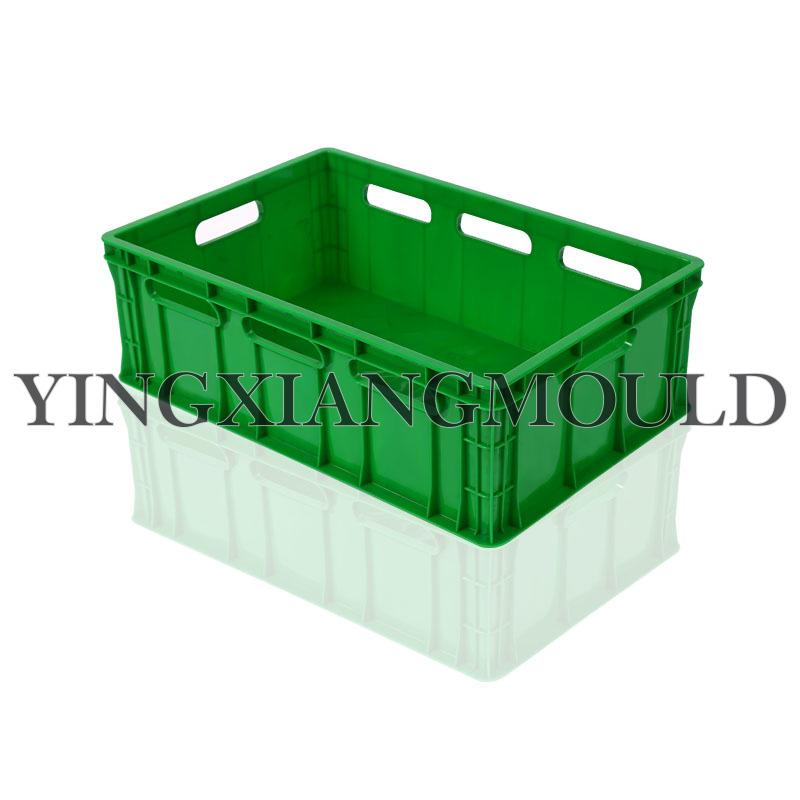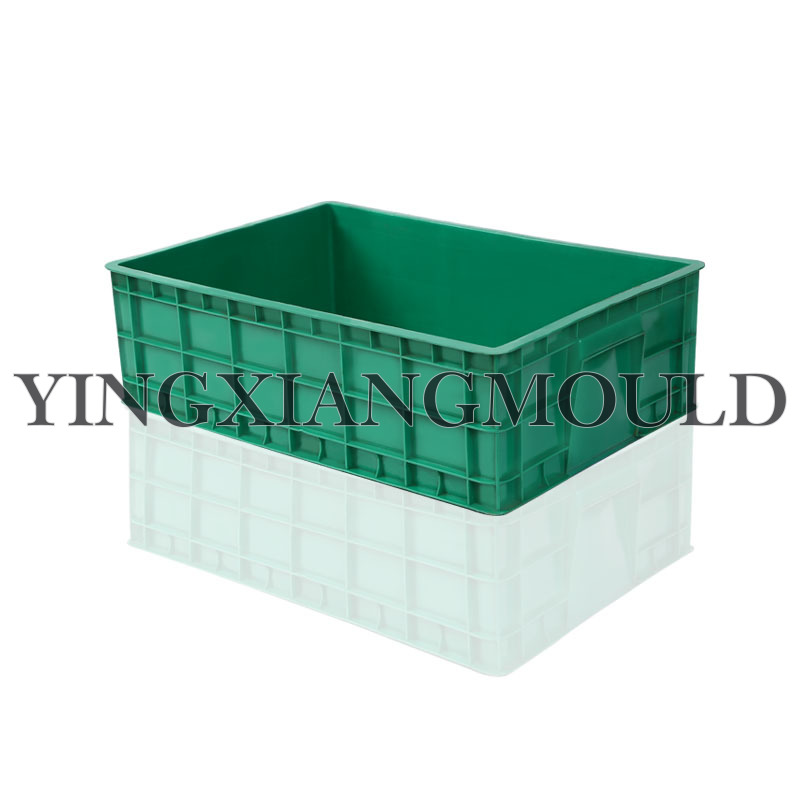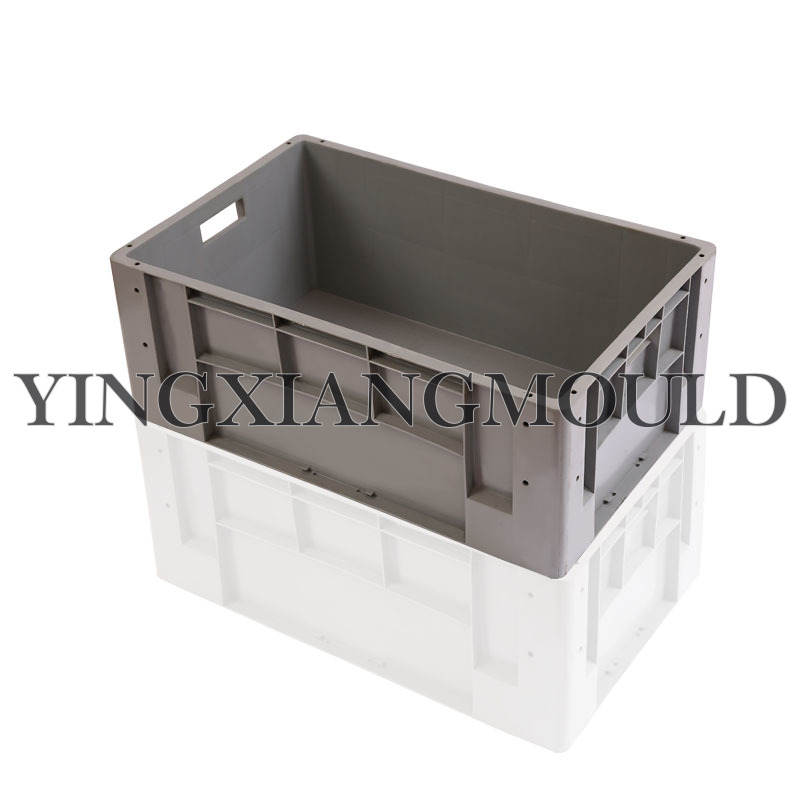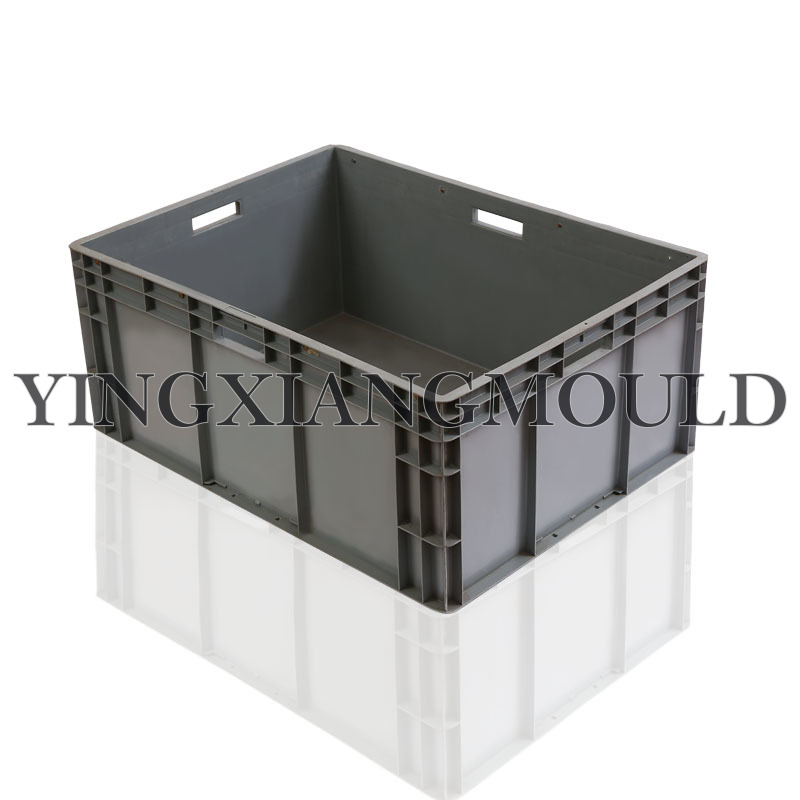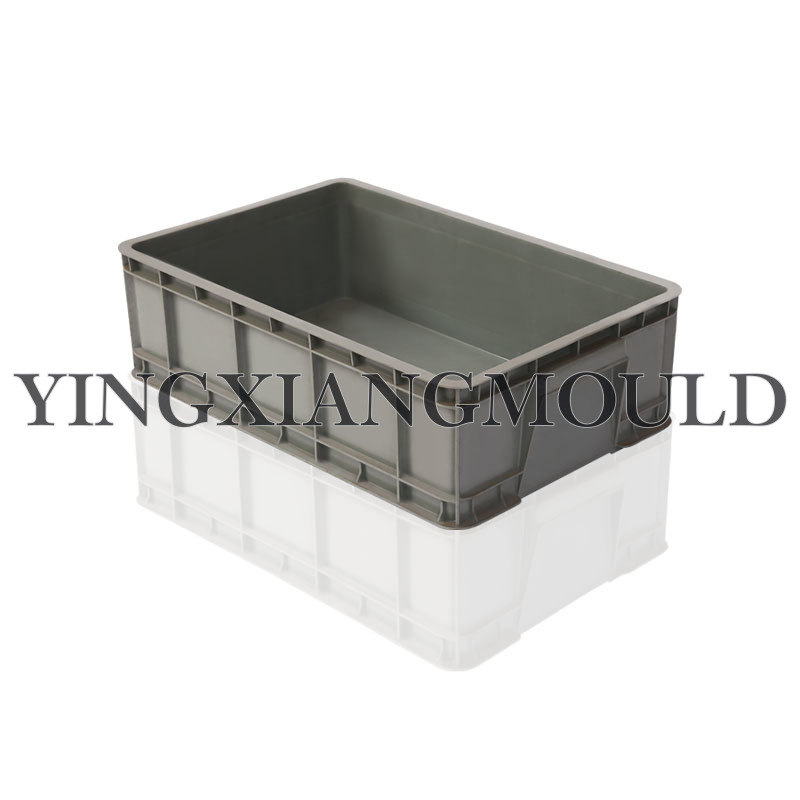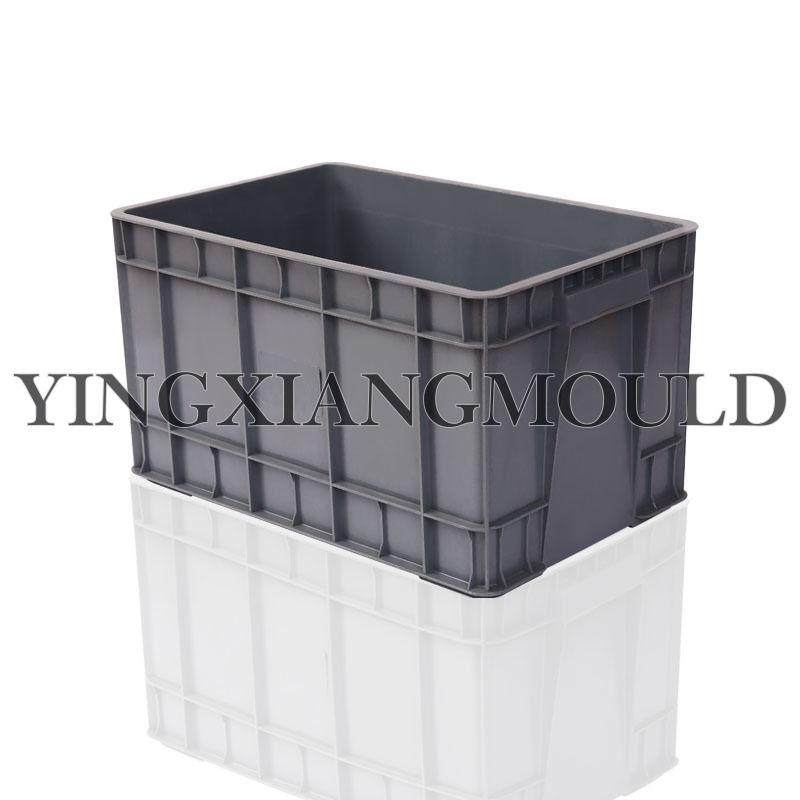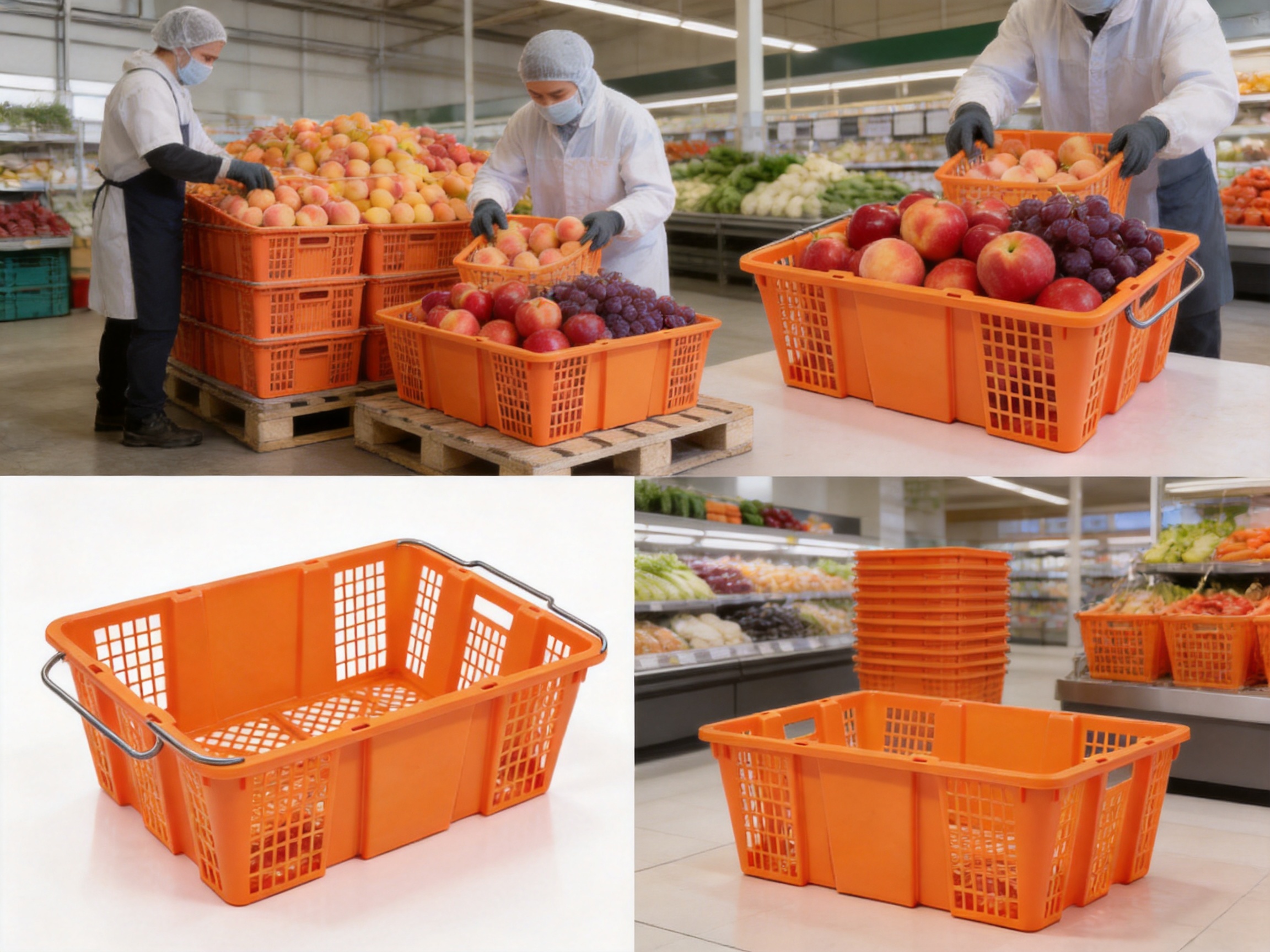
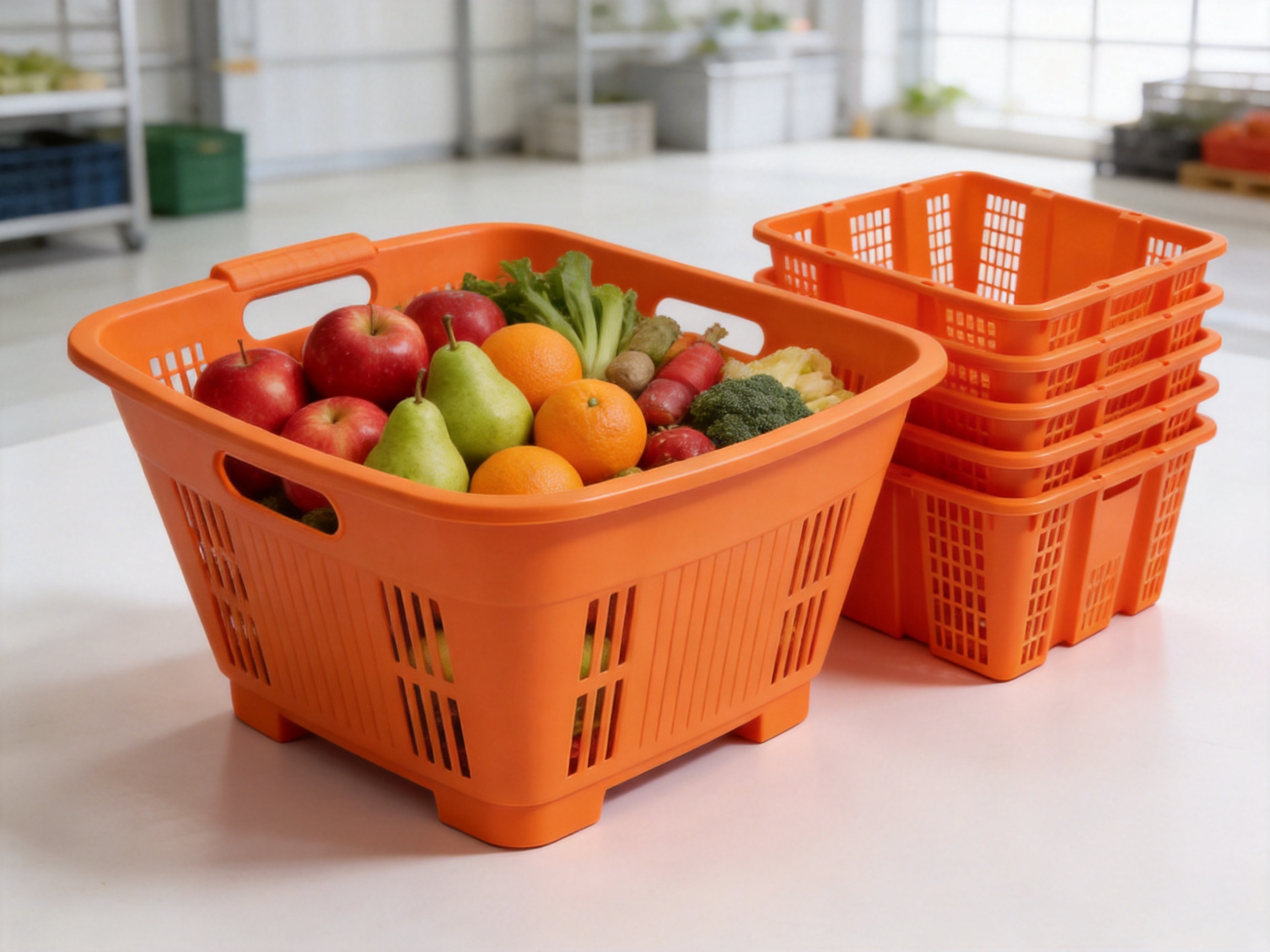
The trapezoidal fruit basket is a practical packaging and storage solution designed for the movement, display, and handling of fresh produce. Its tapered geometry gives the basket a wider upper opening and a narrower lower footprint, creating a useful balance between capacity, accessibility, stackability, and structural stability. For growers, wholesalers, retailers, food distributors, and household users, this form can provide a reliable alternative to ordinary rectangular containers and less rigid woven baskets.
A high-quality trapezoidal fruit basket is more than a simple plastic container. Its performance depends on the relationship between the product design, material selection, mould engineering, injection-moulding process, cooling system, ejection structure, quality inspection, and final application. A precisely engineered mould helps ensure that every basket has consistent dimensions, smooth surfaces, properly formed ventilation openings, durable handles, and dependable stacking features.
TaiZhou HuangYan YingXiang Plastic Mould Co., Ltd. develops and manufactures plastic moulds for fruit baskets, logistics crates, folding boxes, pallets, beverage boxes, household products, and other injection-moulded containers. Located in Huangyan, Taizhou, Zhejiang, China, the company operates in one of the world’s recognised mould manufacturing centres. Established in 2012, Yingxiang has built its production capability around customised mould solutions, modern design systems, experienced technicians, and a practical understanding of high-volume plastic packaging applications.
This article examines the trapezoidal fruit basket as a product concept and explains how advanced mould manufacturing can improve its functionality, appearance, service life, and production efficiency. It also considers the advantages of the trapezoidal form compared with common competing basket designs, the technical features that influence performance, and the reasons a specialised mould manufacturer is important when developing a new fruit basket project.
A trapezoidal fruit basket normally has side walls that slope inward from the top rim toward the base. The upper opening may be wider than the bottom, allowing users to reach the contents more easily. The lower footprint can help reduce the space occupied by each unit during storage or transportation. Depending on the application, the basket may include integrated handles, reinforcing ribs, ventilation holes, nesting steps, stacking lugs, identification areas, and a strengthened bottom panel.
The shape is suitable for many types of produce, including apples, pears, oranges, peaches, plums, grapes, tomatoes, strawberries, vegetables, and packaged food items. The exact design should be selected according to the dimensions, weight, fragility, moisture level, and handling method associated with the produce. A basket intended for delicate peaches may require different corner radii and ventilation patterns from one intended for dense root vegetables.
Plastic injection moulding makes it possible to produce a basket with repeatable dimensions and integrated functional details. Unlike containers assembled from several parts, an injection-moulded basket can often be produced as a single component. This reduces assembly requirements and supports a cleaner, more uniform appearance. Properly designed polypropylene or another suitable plastic material can also provide a balance of impact resistance, low weight, moisture resistance, and ease of cleaning.
The basket’s geometry affects not only its appearance but also its entire operating cycle. The top opening determines filling and unloading efficiency. The bottom footprint affects stability and warehouse density. The side-wall angle influences nesting depth. The handle design affects lifting comfort and load transfer. Ventilation openings influence airflow and cooling. Every feature should therefore be considered as part of one integrated packaging system rather than as an isolated detail.
The wider upper opening of a trapezoidal basket gives workers and consumers better access to the contents. Produce can be placed into the basket with less obstruction, and individual items can be removed without reaching deeply into a narrow container. This is particularly valuable in retail environments, where visibility and convenient product access influence customer interaction.
A broad top rim can also provide room for a stronger perimeter structure. When correctly designed, the rim resists deformation during lifting and stacking while creating a comfortable contact area for handling. The opening can be adapted to different loading systems, whether filling is performed manually, through a semi-automatic line, or by a more specialised packing process.
The inward-sloping walls can enable empty baskets to nest inside one another. Nesting reduces the volume required for return transport, warehouse storage, and delivery to farms or distributors. Lower empty-volume requirements can contribute to better vehicle utilisation and simplified inventory management.
Nesting performance depends on accurate control of the wall angle, bottom dimensions, rim clearance, and internal protrusions. If these elements are not coordinated, baskets may become difficult to separate or may bind together. A precision mould helps maintain the dimensional consistency required for smooth nesting across large production quantities.
The tapered profile can distribute loads through the side walls toward the bottom structure. Reinforcing ribs, corner transitions, and the base pattern can be designed to control flexing when the basket is filled. A well-balanced structure helps limit excessive deformation and can protect the contents from uneven pressure.
Compared with a very wide container with thin unsupported walls, a carefully engineered trapezoidal design can provide useful rigidity without requiring excessive material. This supports a lighter product while preserving the strength needed for repeated handling. The final result depends on the resin, wall thickness, rib layout, mould cooling, and intended load rating.
Fruit and vegetables are often sold according to visual appeal. The open top and outward-facing side surfaces of the trapezoidal basket can make the contents easier to see. Ventilation holes may also improve visibility while allowing customers to identify the size, colour, and condition of the produce.
For retailers, the basket can serve both as a transport container and as a display unit. This reduces the need to transfer produce into a separate presentation tray. Fewer handling steps may help reduce bruising, labour requirements, and product loss, provided that the basket is matched to the produce and used within its designed capacity.
Fresh produce requires suitable airflow. A fruit basket can incorporate openings in the side walls, base, or both, allowing air to circulate around the contents. Better airflow may support faster cooling, reduce localised heat accumulation, and help manage moisture during storage and distribution.
Ventilation patterns must be engineered carefully. Openings that are too small may restrict airflow, while openings that are too large or poorly positioned may reduce strength or create pressure points on the fruit. Rounded edges and smooth transitions are preferred because they reduce the chance of snagging packaging, damaging produce, or creating stress concentrations in the plastic.
Compared with many single-use packaging options, a durable plastic basket can be cleaned and reused. This makes it suitable for closed-loop distribution systems in which baskets travel between farms, packing houses, distribution centres, and retailers. The service life of the basket depends on material grade, ultraviolet exposure, temperature, impact frequency, load conditions, and cleaning practices.
A smooth moulded surface is easier to wash than a rough or heavily textured surface. Correctly designed drainage areas can help prevent water retention after cleaning. The absence of unnecessary recesses also reduces the possibility of dirt accumulation. These considerations should be included during mould design rather than added after production begins.
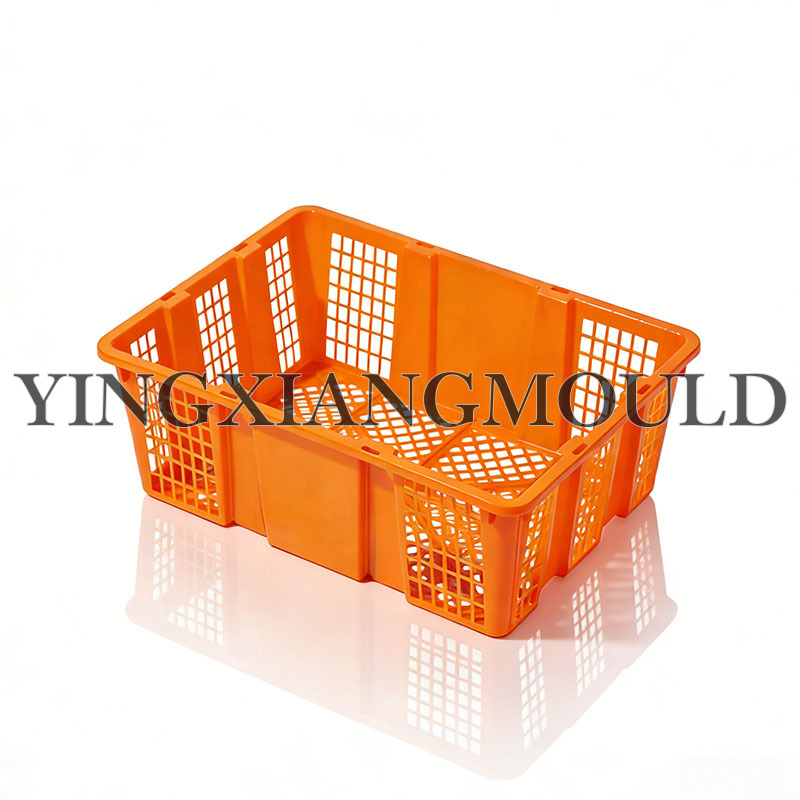
Trapezoidal Fruit Basket
Fruit baskets are available in many shapes, including rectangular crates, square baskets, round tubs, open trays, and collapsible containers. Each design has its own application. The trapezoidal basket is attractive because it combines several useful properties: a generous upper opening, a reduced lower footprint, potential nesting efficiency, good display visibility, and adaptable structural reinforcement.
| Design factor | Trapezoidal fruit basket | Rectangular crate | Round basket | Open tray |
|---|---|---|---|---|
| Upper access | Wide and convenient for filling and unloading | Generally convenient, depending on wall height | Accessible but may use space inefficiently | Very accessible |
| Empty nesting | Can be designed for efficient nesting | May require dedicated nesting steps | Often leaves unused spaces between units | Usually stacks rather than nests |
| Warehouse efficiency | Good when taper and footprint are optimised | Good for regular pallet patterns | Less efficient in rectangular storage areas | Good for low-height applications |
| Display visibility | High, with open top and sloped sides | Moderate to high | High from the top | Very high |
| Protection from side pressure | Good with reinforced walls and corners | Good when ribs are correctly placed | Depends strongly on wall design | Lower for tall loads |
| Cleaning potential | High with smooth surfaces and drainage | High with open construction | High if recesses are minimised | High |
| Application flexibility | Suitable for handling, storage, and display | Strong for logistics and bulk movement | Suitable for selected retail and household uses | Suitable for short-distance display and transport |
The comparison does not mean that one design is ideal for every application. A rectangular logistics crate may be better for standard palletisation, while a low tray may be preferable for delicate products that should remain in a single layer. The trapezoidal fruit basket is particularly valuable when the customer needs a combination of easy access, flexible presentation, compact empty storage, and reusable construction.
Against low-cost baskets with minimal structural design, a purpose-engineered trapezoidal basket can offer better dimensional stability, stronger handling points, more controlled ventilation, and improved moulded finish. These advantages are not produced by the shape alone. They result from detailed engineering and careful control of the injection-moulding process.
The top rim is one of the most important load-bearing areas of a basket. It must resist impact during handling, support contact with other baskets, and remain comfortable when lifted. A reinforced rim can be formed through increased local thickness, an internal return, a tubular profile, or a combination of structural features.
The rim must also be designed for mould filling and cooling. Excessive thickness can lead to sink marks, internal voids, or extended cycle times. A balanced design uses suitable transitions and consistent wall sections to achieve strength without creating avoidable moulding defects.
Handles should be positioned according to the basket’s centre of gravity and expected load. They need enough opening for the user’s hand while maintaining sufficient material around the handle cut-out. Rounded edges improve comfort and reduce the risk of cutting or abrasion during repeated lifting.
Handle geometry also affects mould complexity. Deep undercuts may require sliders or other specialised mechanisms. A mould designer must consider whether the handle can be formed and released efficiently, whether the moving components will withstand production cycles, and whether the final basket can be ejected without distortion.
Ventilation holes may be arranged in horizontal rows, vertical patterns, grids, slots, or application-specific layouts. The pattern can be selected to balance airflow, visibility, wall strength, and protection of the produce. Rounded openings are generally preferable to sharp internal corners because they reduce stress concentration.
The position of the openings also affects tooling. Narrow slots, closely spaced holes, or complex decorative patterns require careful attention to steel strength, cooling, polishing, and maintenance. The mould should be designed so that the openings remain clean and fully formed after repeated production cycles.
The base must support the load and provide stability on pallets, shelves, conveyor systems, and retail floors. A raised foot structure can improve drainage and reduce direct contact with contaminated surfaces. Cross ribs or a grid base can add stiffness while controlling material consumption.
Base design should also account for nesting and cleaning. If the underside contains deep pockets, water and debris may collect. If the feet are too narrow, the basket may rock under load. If the base is too flat and flexible, it may sag during transport. These trade-offs are resolved through product testing and mould-flow-informed design.
Some fruit baskets are intended to nest when empty and stack when full. This requires carefully positioned stacking lugs, shoulders, or ledges. The features must guide one basket into the correct position without damaging the rim or obstructing the contents.
Stacking features are especially important when baskets are transported through multiple handling stages. A basket that shifts under vibration can cause load instability and product bruising. Positive location points help create a more secure column and can improve the use of pallet space.
The surface finish influences both appearance and practical use. A moderately textured surface can hide minor handling marks and provide grip, while a smoother finish can be easier to clean and more suitable for printed labels. The correct choice depends on the brand owner’s requirements, cleaning system, and visual expectations.
Identification areas may include flat panels for labels, embossed marks, moulded-in symbols, recycling information, or product codes. These features should be positioned where they remain visible but do not interfere with stacking, washing, or contact with the contents.
Material selection should be based on load requirements, impact conditions, temperature range, cleaning method, food-contact expectations, colour, service life, and cost. Polypropylene is commonly considered for reusable crates and baskets because it can provide a useful balance of light weight, toughness, chemical resistance, and mouldability. Other polymers may be appropriate for specialised performance requirements.
The selected material grade should be evaluated through the intended use rather than chosen only by price. A basket used in cold storage may need impact performance at low temperatures. A basket exposed to sunlight may require ultraviolet stabilisation. A basket cleaned with strong detergents may require suitable chemical resistance. A food-related application may also require compliance with relevant regional regulations and customer specifications.
Recycled content can be considered where the application permits it. The decision should account for colour consistency, odour, contamination control, mechanical performance, traceability, and customer requirements. For closed-loop systems, durable baskets may provide value over multiple usage cycles, but the product must be designed and maintained for that operating model.
Material flow behaviour affects mould design. Melt viscosity, shrinkage, cooling rate, and warpage tendency all influence gate selection, runner layout, wall thickness, and cooling-channel placement. A mould manufacturer with experience in plastic containers can identify these factors at an early stage, reducing the risk of expensive modifications after tooling begins.
Computer-aided design allows the basket and mould to be developed as a coordinated system. Engineers can define wall angles, handle dimensions, rib positions, opening patterns, draft angles, parting lines, and ejection areas before machining begins. Three-dimensional models also make it easier for customers to review the product and request changes at an early stage.
For a trapezoidal basket, CAD design is especially useful because the tapered walls, nesting clearances, and stacking features must work together. Small dimensional errors can result in baskets that bind, wobble, or fail to nest correctly. Digital modelling helps identify interference and clearance problems before they become physical tooling issues.
Computer-aided engineering can be used to evaluate filling behaviour, weld-line locations, pressure distribution, cooling, shrinkage, and possible warpage. A basket with multiple openings and variable structural features may have a complex flow path. Analysis helps guide the selection of injection points and the arrangement of the runner system.
Although simulation cannot replace practical testing, it can reduce trial-and-error during mould development. Potential problems such as hesitation near thin walls, air entrapment around ribs, uneven filling between handles, or excessive deformation at the base can be considered before steel is cut.
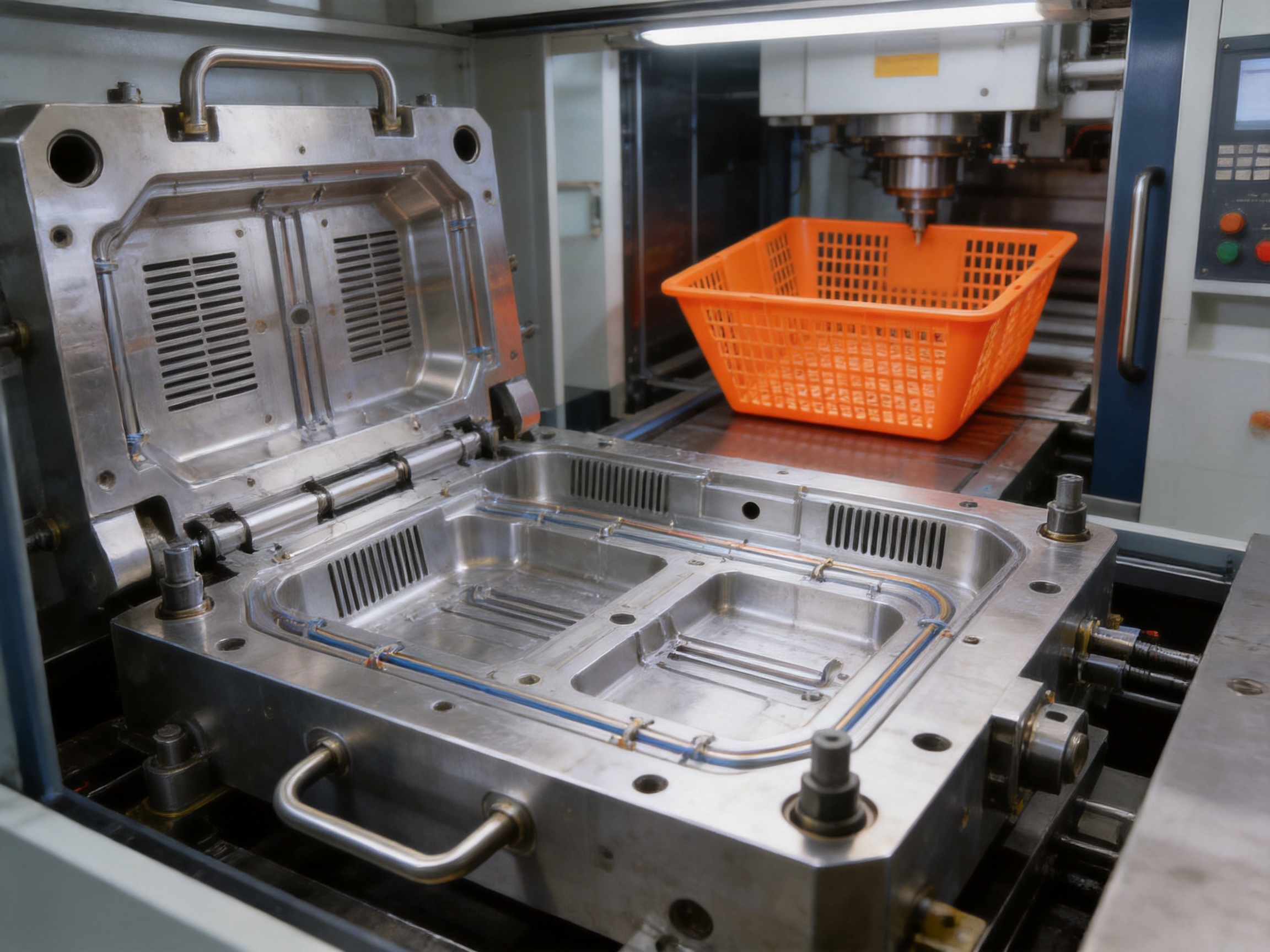
Computer-aided manufacturing supports the accurate machining of mould components. CNC milling, high-speed machining, electrical discharge machining, drilling, grinding, and related processes may be used depending on the geometry and required surface finish. Accurate machining is essential for ventilation openings, corner transitions, ribs, parting surfaces, and moving mechanisms.
Precision machining also contributes to mould longevity. Properly fitted components reduce wear, leakage, flash, and alignment problems. A mould that is manufactured with suitable tolerances can maintain product consistency over a greater number of production cycles, provided that it is operated and maintained correctly.
The choice of mould steel should reflect the expected production volume, plastic material, surface requirements, and maintenance plan. High-volume fruit basket moulds may require durable steel grades and wear-resistant components. Areas exposed to repeated sliding, impact, or abrasive recycled material deserve particular attention.
Replaceable inserts can be valuable in regions that are likely to wear or that may require future design changes. This approach can simplify maintenance and reduce the cost of modifying a local feature. Standardised components may also make servicing more efficient and improve spare-parts availability.
Cooling has a major influence on cycle time, dimensional stability, and mould life. Large container products often have broad walls and reinforced sections that can cool unevenly. An effective cooling layout places channels close enough to critical areas to remove heat consistently while preserving the strength of the mould components.
Uneven cooling can cause warpage, distortion, and inconsistent nesting dimensions. It may also lengthen the cycle time because the part must remain in the mould until it is sufficiently rigid for ejection. A well-planned cooling system can improve production efficiency and reduce the number of rejected baskets.
The basket must be released from the mould without marks, deformation, or damage to the handles and ventilation openings. Ejector pins, stripper systems, air assistance, or combinations of these methods may be considered. The ejection force should be distributed across strong areas of the part rather than concentrated in thin walls.
A trapezoidal shape can create release challenges because the side walls may tend to grip the mould surface if draft is insufficient. Adequate draft angles, suitable surface finishes, and balanced ejection help prevent sticking. These issues are evaluated during product and mould design, not only after the first trial.
TaiZhou HuangYan YingXiang Plastic Mould Co., Ltd. is located in Huangyan, Taizhou, Zhejiang, an area widely associated with mould production and plastic processing expertise. The company was established in 2012 and operates a plant covering approximately 7,000 square metres, with around 50 employees. Its organisation combines design capability, production equipment, technical experience, and project coordination for customised plastic moulds.
The company uses CAD, CAE, and CAM systems to support the development of injection moulds. These tools help connect the customer’s product concept with the final tooling structure. For a fruit basket, this means that product dimensions, material flow, cooling, ejection, nesting, and mould maintenance can be reviewed as part of a coordinated development process.
Experienced technicians are important because container moulds often contain many functional details. A basket may look simple from the outside, but its mould can include complex parting surfaces, core and cavity sections, cooling channels, sliders, inserts, lifters, ejector systems, and interchangeable wear components. Technical judgement is required to balance performance, manufacturability, cost, and long-term reliability.
Yingxiang focuses on customised plastic mould solutions rather than relying only on standard designs. This is valuable for customers who need a particular capacity, footprint, handle style, stacking arrangement, ventilation pattern, colour requirement, or packaging system. Customisation allows the mould to be developed around the actual supply chain instead of forcing the application into an unsuitable generic container.
The company’s product range includes crate and folding box moulds, tray and pallet moulds, beverage box moulds, and moulds for daily household products. This broad experience can support fruit basket projects because many design principles are shared across injection-moulded containers. Structural reinforcement, stacking, nesting, handles, drainage, material flow, and high-cycle durability are relevant to several product categories.
Lean manufacturing principles can help reduce unnecessary waste in the mould production process. Clear project planning, organised machining, controlled assembly, systematic testing, and timely communication contribute to predictable delivery. For a customer preparing a new packaging programme, schedule reliability is often as important as the initial tooling quotation.
The company also emphasises long-life moulds, on-time delivery, quality, competitive costs, and comprehensive customer service. These priorities are particularly relevant to fruit basket moulds because the customer may require sustained production over many years. A mould designed only for the first trial may not provide the same value as a mould developed for repeatable high-volume operation.
The project begins with a clear understanding of the intended basket. Important information includes overall dimensions, capacity, target weight, maximum load, material, colour, handle requirements, nesting depth, stacking method, ventilation percentage, surface texture, production quantity, injection machine capability, and expected operating environment.
Customers should also explain how the basket will be filled, transported, washed, stored, displayed, and returned. A design that performs well in a farm packing house may require changes if it will be used in automated distribution centres or refrigerated retail environments. Early information reduces later changes and makes the tooling proposal more accurate.
Engineers review the concept for wall thickness, draft, corner radii, ribs, openings, handles, base structure, and potential moulding difficulties. They may recommend changes that improve filling, reduce weight, strengthen the basket, simplify ejection, or reduce mould complexity.
This review is also the appropriate time to consider cleaning and hygiene. Avoiding unnecessary deep pockets, sharp internal corners, and inaccessible recesses can make the final product more practical. If the basket will be used for food-related logistics, cleaning and inspection requirements should influence the geometry from the beginning.
After the product model is accepted, the mould structure is developed. The team determines the parting line, gate positions, runner system, cooling circuits, ejection method, mould base, slide mechanisms, inserts, and maintenance access. CAE analysis may be used to evaluate filling and cooling behaviour.
The tooling design should consider the injection machine available to the customer. Mould size, shot capacity, clamping force, injection pressure, ejector configuration, and cycle requirements must be compatible with the machine. A technically excellent mould is not commercially useful if it cannot run efficiently on the customer’s production equipment.
Selected steel components are machined according to the approved drawings. Critical surfaces receive the appropriate finishing process, and moving components are fitted with attention to alignment and wear. Cooling channels are checked for cleanliness and flow, while ejector systems are inspected for smooth movement.
Assembly quality influences the first trial and the mould’s future service life. Poor alignment can create flash, uneven wear, or difficult ejection. Accurate fitting helps ensure that the basket’s rim, openings, handles, and base are formed consistently during injection.
The initial trial produces sample baskets for dimensional, visual, and functional evaluation. Engineers inspect filling, short shots, weld lines, flash, sink marks, warpage, ejection marks, surface finish, and colour distribution. The basket may also be tested for nesting, stacking, handle strength, base stability, and compatibility with the intended handling process.
Trial results should be documented and compared with the approved product requirements. If adjustments are needed, they can involve processing parameters, venting, polishing, local steel correction, gate modification, cooling changes, or product revisions. A structured trial process helps distinguish mould issues from machine or material issues.
After the mould meets the agreed requirements, final samples and technical records can be prepared for customer approval. Production support may include mould operation guidance, maintenance recommendations, spare-part information, and advice on processing conditions.
Long-term support is important because a mould is a production asset rather than a one-time purchase. Regular cleaning, lubrication, inspection, cooling-channel maintenance, and timely replacement of worn components can preserve product quality and reduce unexpected downtime.
Quality control should cover both the mould and the moulded product. Dimensional inspection verifies key measurements such as overall height, top opening, bottom footprint, wall angle, handle position, rim thickness, and nesting clearance. These dimensions affect the basket’s usability and compatibility with other equipment.
Visual inspection identifies surface defects, incomplete openings, flash, sink marks, burn marks, weld-line concerns, uneven colour, and ejection marks. Some defects may be cosmetic, while others may indicate a structural or process problem. Inspection criteria should be agreed before mass production begins.
Functional checks can include empty nesting, full stacking, handle lifting, base stability, drainage, conveyor movement, pallet compatibility, and resistance to ordinary handling impacts. When the basket is intended for a specific type of fruit, practical loading trials can reveal pressure points or movement that may not be visible during dimensional inspection.
Quality control should also consider repeatability. One acceptable sample does not prove that every basket will meet the requirement. Process stability, mould temperature balance, injection parameters, material drying or blending procedures, and routine sampling all influence ongoing consistency.
| Inspection area | Typical evaluation | Reason for evaluation |
|---|---|---|
| Overall dimensions | Height, width, length, opening, and footprint | Confirms compatibility with storage, transport, and display systems |
| Wall and rim | Thickness, uniformity, flash, and deformation | Supports structural strength and safe handling |
| Ventilation | Opening size, position, cleanliness, and edge condition | Balances airflow, visibility, and product protection |
| Handles | Position, comfort, moulding completeness, and load response | Improves lifting safety and handling efficiency |
| Base | Flatness, ribs, feet, drainage, and stability | Prevents rocking and supports loaded stacking |
| Nesting and stacking | Separation force, alignment, and load stability | Improves warehouse and transport performance |
| Surface finish | Texture, smoothness, marks, and label area | Supports appearance, cleaning, and identification |
| Material and colour | Grade, consistency, colour, and visible contamination | Ensures suitability for the intended application |
Working directly with an experienced mould manufacturer can shorten the communication path between product requirements and tooling decisions. The manufacturer can identify whether a proposed feature is easy to mould, likely to increase cycle time, difficult to eject, or prone to deformation. This practical feedback is often more valuable when provided before the design is frozen.
A specialised supplier can also help customers balance unit cost and tooling investment. A low-cost mould may appear attractive at the quotation stage, but insufficient cooling, weak components, difficult maintenance, or poor dimensional control may increase the total cost of ownership. Conversely, unnecessary complexity can make a mould more expensive than the application requires. The right solution matches the mould construction to production volume and performance expectations.
Experience with related crates, pallets, trays, folding boxes, and household products provides a broader technical base. Lessons from one container project can often be applied to another. For example, a reliable approach to reinforcing a pallet corner may inform a fruit basket base, while knowledge of folding-box hinges may help evaluate a collapsible basket concept.
Custom engineering is also important for market differentiation. A customer may want a particular footprint that fits an existing pallet, an opening pattern associated with a product line, a special handle, a nesting ratio that reduces return freight, or a display shape that improves retail presentation. A custom mould enables these requirements to become integrated product features rather than afterthoughts.
At the farm or orchard, the basket can be used for initial collection and movement from the harvest area to a packing location. The open structure supports visibility and airflow, while handles can make repeated lifting more convenient. The basket should be sized so that workers can carry a practical load without excessive strain.
In packing houses, baskets may be filled, weighed, sorted, labelled, stacked, washed, and returned. Consistent dimensions are important when baskets move through conveyors, weighing stations, or palletising systems. A stable base and controlled rim geometry can improve the reliability of these operations.
Wholesalers often need packaging that can withstand repeated handling and variable transport conditions. A reusable trapezoidal basket may support the movement of produce between suppliers, distribution centres, markets, and retailers. Its nesting capability can reduce the volume of empty baskets returning to a central location.
In retail environments, the basket can act as both packaging and merchandising equipment. Customers can see the produce from above and from the sides, while staff can replenish the display without transferring all contents to another container. Colour, finish, label areas, and rim design can be selected to support a clean and organised presentation.
Restaurants, catering operations, schools, and institutional kitchens may use reusable baskets to receive and organise fruits and vegetables. Washability, drainage, identification, and stackability are useful in environments where containers are repeatedly handled and cleaned.
Although designed for fruit handling, a durable basket may also be used for home storage, market shopping, laundry organisation, garden collection, or general household transport. The manufacturer’s experience with household product moulds can support design decisions related to ergonomics, appearance, and easy cleaning.
Sustainability should be considered across the complete service life of the basket. A reusable basket can reduce reliance on disposable packaging when it survives multiple trips and is operated within a suitable return system. Its value depends on durability, repairability, cleaning efficiency, transport distance, and the recovery or recycling route available at the end of its life.
Lightweighting can reduce material consumption and transport weight, but excessive weight reduction may shorten service life. The best design uses structural analysis, rib optimisation, suitable resin selection, and practical testing to remove unnecessary material without weakening critical areas. A basket that fails early may have a higher environmental and financial cost than a slightly heavier basket that remains in service for many cycles.
Efficient nesting of empty baskets can reduce the volume of return transport. This may lower the number of vehicle trips or increase the number of empty units moved per load. Mould accuracy is important because small dimensional variations can affect nesting depth and create wasted space.
At the end of service, material identification can support sorting and recycling. Moulded-in recycling marks and controlled material selection may help downstream processing. Customers should check applicable regulations and local recycling capabilities before specifying recycled content or a particular polymer.
Customers should provide a clear technical brief before requesting a mould quotation. The brief should include a drawing or concept model, target dimensions, capacity, material preference, annual production volume, expected mould life, injection machine information, colour requirements, surface finish, and delivery target.
Application details are equally important. The manufacturer should know the type of produce, typical load weight, stacking height, storage temperature, cleaning method, transport conditions, and whether the basket will be used for direct food contact. Information about automation, conveyors, pallet size, and existing containers can reveal important compatibility requirements.
It is helpful to define which requirements are mandatory and which are open to engineering recommendations. For example, the customer may require a specific external footprint but allow the manufacturer to recommend the wall angle, rib layout, or cooling strategy. This creates room for the mould specialist to improve manufacturability while protecting the commercial objective.
Customers should also discuss documentation and acceptance criteria. These may include approved drawings, material declarations, trial samples, dimensional reports, functional test results, mould maintenance instructions, spare-part lists, and production support. Clear acceptance criteria reduce uncertainty at the final approval stage.
Keep wall thickness as uniform as possible, especially in broad side panels and around the base. Where reinforcement is needed, use ribs and transitions rather than creating isolated areas of excessive thickness. This supports more even filling and cooling and can reduce sink marks and warpage.
Provide suitable draft on all mould-release surfaces. The exact amount depends on the texture and material, but insufficient draft can increase ejection force and cause scuffing or distortion. Draft should be reviewed together with nesting requirements because a basket needs to release from the mould while still fitting correctly inside another basket.
Use generous radii at corners and around openings. Rounded transitions improve impact behaviour, reduce stress concentration, help plastic flow, and make cleaning easier. Sharp corners should be avoided unless they are required for a specific functional or visual reason.
Place handles where they support the natural lifting position and the centre of gravity. The surrounding structure should be strong enough to transfer the load into the rim and side walls. Handle openings should be comfortable, easy to mould, and free from sharp edges.
Design ventilation openings according to the produce and operating conditions. Consider the size of the fruit, the possibility of pressure damage, airflow needs, washing, and the structural effect of removing material from the wall. A uniform pattern is not always the best pattern; local reinforcement may be needed around heavily perforated areas.
Plan for mould maintenance from the beginning. Cooling channels, ejector components, sliders, inserts, and wear areas should be accessible for inspection and service. Replaceable components can reduce downtime and extend the useful life of the mould.
The trapezoidal fruit basket normally has sloped side walls, a wider top opening, and a smaller lower footprint. This can improve access to the contents, support nesting when empty, and create an attractive display profile. A rectangular basket may provide more efficient use of standard pallet space, so the best choice depends on the supply chain and storage system.
Yes. A suitable design can nest when empty and stack securely when full by using tapered walls, nesting clearances, stacking shoulders, lugs, or locating features. These functions must be coordinated carefully because excessive taper or poorly positioned features may reduce stability.
Polypropylene is commonly considered for reusable baskets because of its balance of weight, toughness, chemical resistance, and mouldability. The final material should be selected according to temperature, impact, cleaning, ultraviolet exposure, food-contact requirements, recycled content, and customer specifications.
Mould design affects filling, cooling, ejection, wall thickness, surface finish, dimensional accuracy, warpage, ventilation openings, handles, and cycle time. A well-designed mould produces more consistent baskets and can reduce defects, maintenance needs, and production interruptions.
CAD supports accurate product and mould modelling. CAE can help evaluate filling, cooling, shrinkage, and possible deformation. CAM connects approved designs with precision machining. Together, these systems reduce design uncertainty and improve coordination between the product concept and the physical mould.
Yes. The external footprint, base pattern, stacking features, handle position, and overall height can be developed around existing pallets, shelves, conveyors, or display equipment. Compatibility information should be provided at the beginning of the project.
Testing should include dimensions, appearance, ventilation openings, handle performance, base stability, nesting, stacking, washing or drainage behaviour, and compatibility with the intended handling system. Loaded transport trials may also be useful for products that will experience vibration or repeated movement.
A reusable basket can support sustainability by completing multiple service cycles, reducing the need for disposable packaging, and allowing efficient empty nesting during return transport. Its environmental value depends on actual reuse, durability, cleaning practices, transport distance, material selection, and end-of-life recovery.
The customer should provide the product drawing or concept, dimensions, capacity, material preference, annual quantity, mould-life expectation, machine information, surface requirements, colour, handle style, stacking and nesting needs, and delivery schedule. Details about produce type, load weight, cleaning, temperature, and transport are also valuable.
Regular cleaning, correct lubrication, inspection of moving parts, cooling-channel maintenance, proper storage, and timely replacement of worn components can extend mould service life. Using the correct processing conditions and avoiding excessive injection pressure or improper ejection also helps protect the tooling.
It can be suitable when the basket is designed with smooth surfaces, rounded openings, appropriate ventilation, controlled stacking pressure, and a capacity suitable for the fruit. Delicate produce may require smaller loading heights, softer handling procedures, or internal packaging to prevent bruising.
Yes. Yingxiang’s stated product range includes integral boxes, pallets, fruit baskets, logistics crates, folding boxes, stools, food storage containers, trash cans, beverage boxes, hand baskets, household products, floor mats, and chairs. This breadth provides relevant experience across many injection-moulded product categories.
The trapezoidal fruit basket offers a strong combination of accessibility, ventilation, visibility, nesting potential, handling convenience, and reusable construction. Its tapered form can help reduce empty storage volume while maintaining a broad opening for filling, unloading, and retail presentation. With the correct base, rim, handle, rib, and stacking design, it can serve a wide range of fresh produce and general storage applications.
However, product performance depends on more than the visible shape. Material selection, wall thickness, mould-flow behaviour, cooling balance, ejection, dimensional control, and quality inspection all contribute to the final result. A reliable fruit basket requires a mould that is engineered for the customer’s production equipment, expected quantity, operating environment, and supply-chain requirements.
TaiZhou HuangYan YingXiang Plastic Mould Co., Ltd. brings experience in customised plastic injection moulds, container products, logistics packaging, household products, crates, trays, pallets, and folding boxes. Its Huangyan manufacturing location, approximately 7,000 square metre facility, team of around 50 employees, CAD, CAE, and CAM capabilities, and focus on long-life tooling provide a practical foundation for developing custom trapezoidal fruit basket moulds.
For customers seeking a durable and efficient packaging solution, the most effective approach is to define the complete use cycle first and then develop the basket and mould together. When product design, tooling engineering, production planning, and quality control are aligned, the trapezoidal fruit basket can deliver dependable performance from harvest and packing through transport, retail display, cleaning, reuse, and long-term service.
1. General principles of thermoplastic injection mould design, including draft, gating, cooling, ejection, and dimensional control.
2. Packaging engineering practices for reusable produce crates, agricultural containers, and logistics handling systems.
3. Polymer processing considerations for polypropylene and other thermoplastics used in rigid reusable packaging.
4. Fresh produce handling principles concerning ventilation, loading, stacking, cooling, and reduction of mechanical damage.
5. Quality management practices for injection-moulded products, including dimensional inspection, visual inspection, functional testing, and process repeatability.
6. Product and company information supplied for TaiZhou HuangYan YingXiang Plastic Mould Co., Ltd., including manufacturing capabilities, product categories, facility information, and customised moulding services.
If you are interested in any of our products or services, please feel free to ask and we can talk about your ideas.
 QUICK LINKSMOBILE SITE
 FACTORY ADDRESS
 CONTACT INFORMATION



 English
 Español