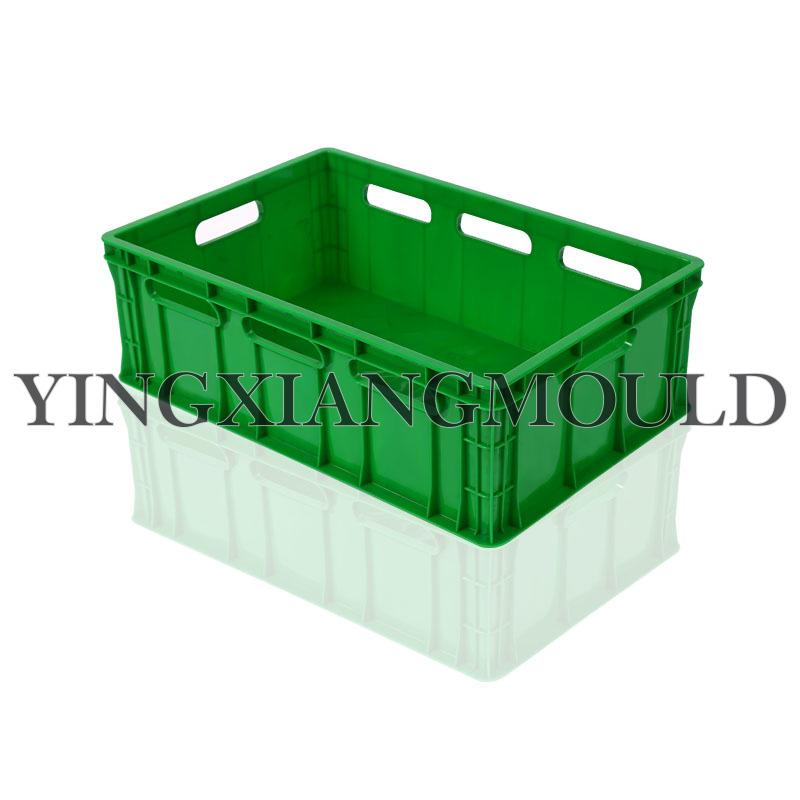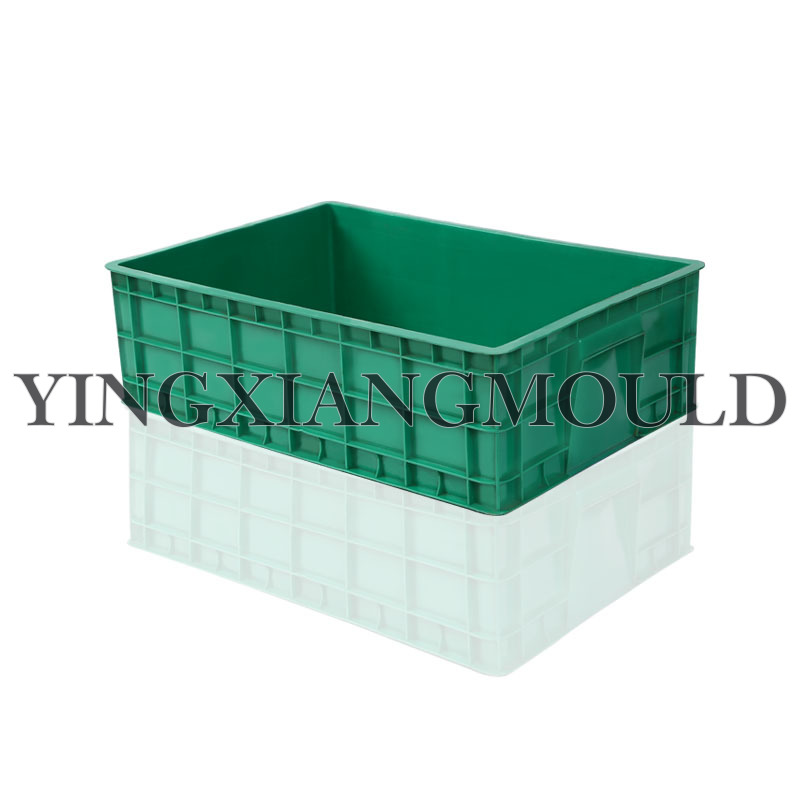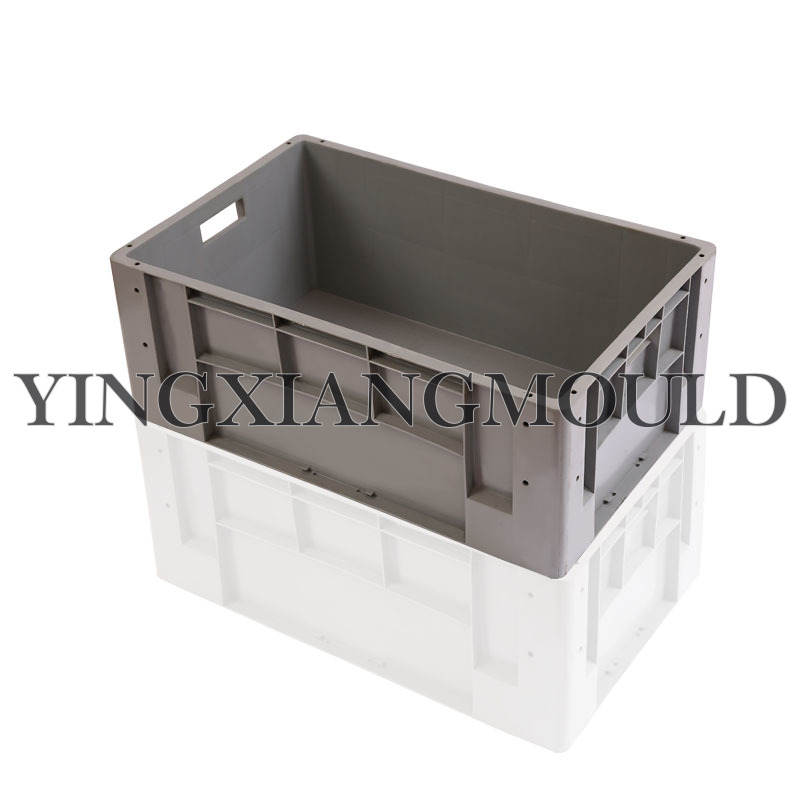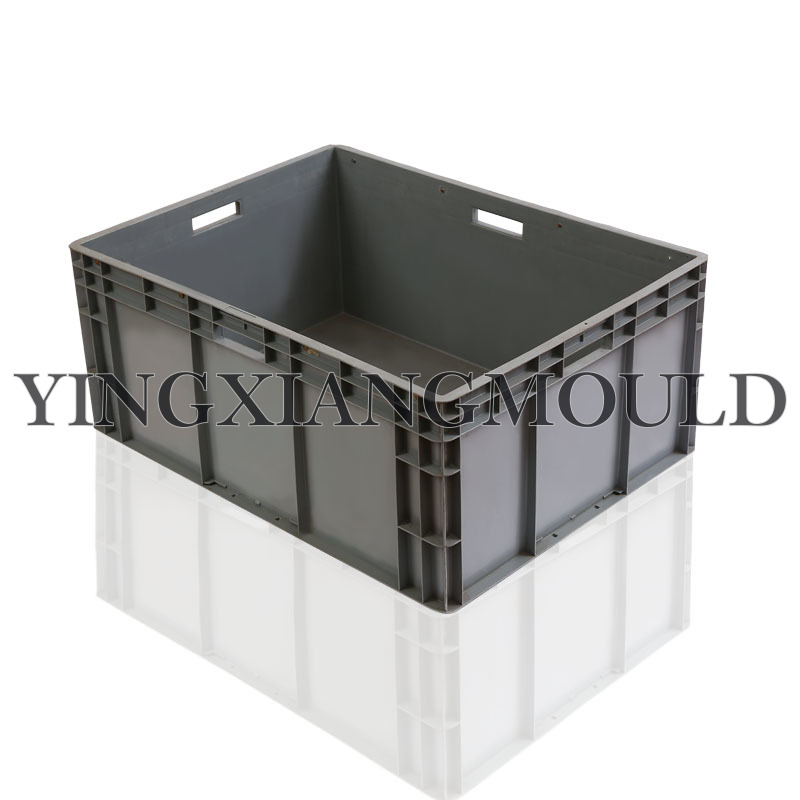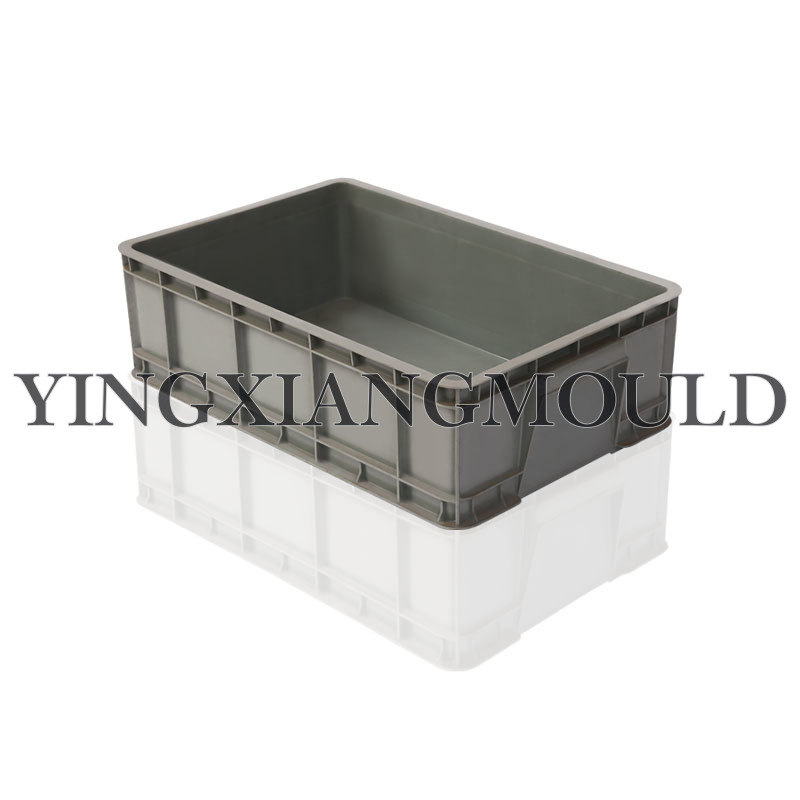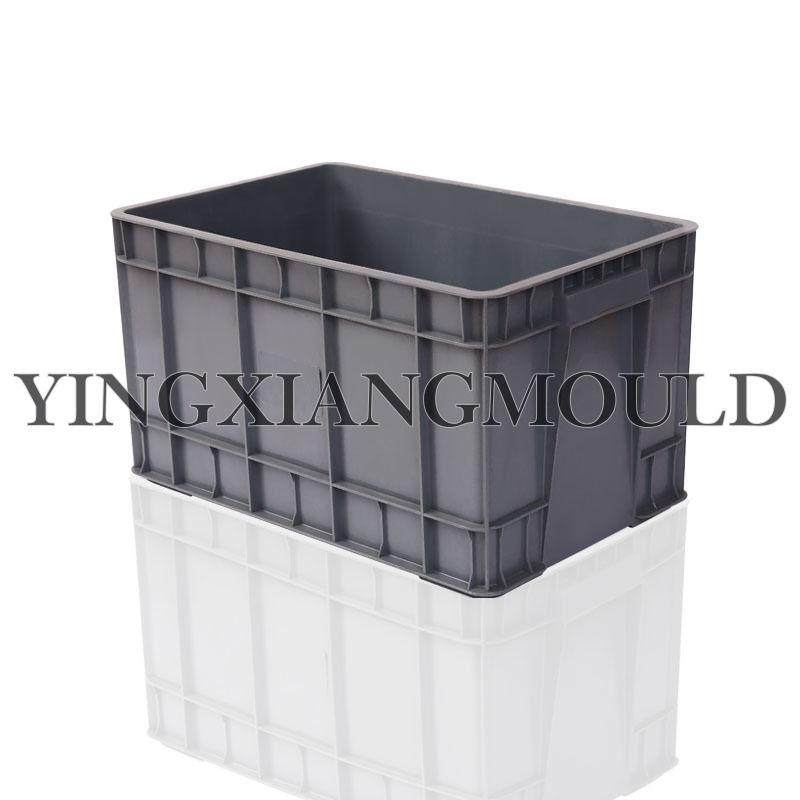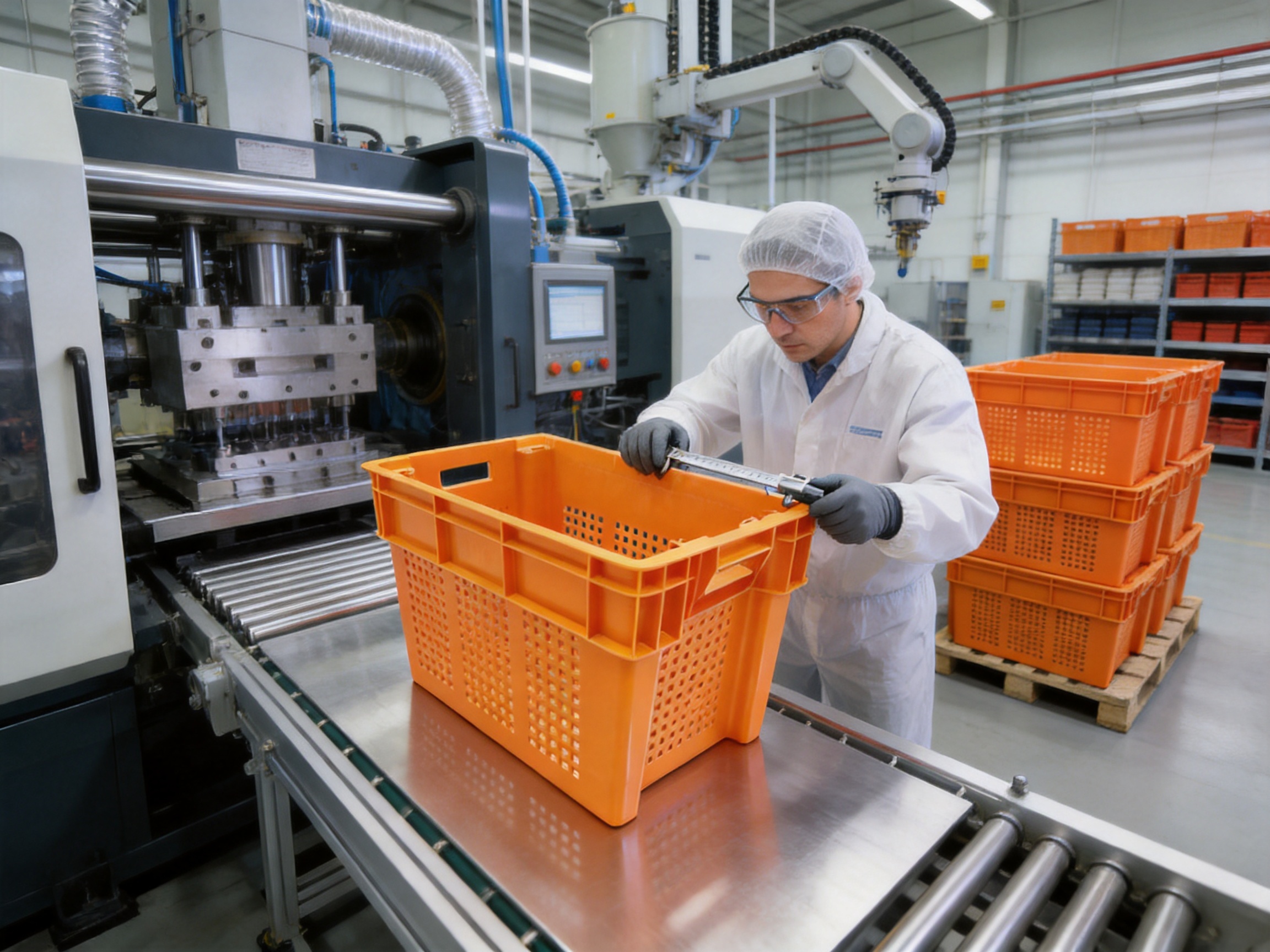
Breeding crates are essential plastic containers used in agricultural production, livestock management, hatchery operations, poultry transportation, nursery applications, and other controlled breeding environments. Although a breeding crate may appear to be a simple container, its performance depends heavily on the quality of its injection mould. A well-designed mould determines the crate’s dimensional accuracy, wall strength, ventilation pattern, stacking stability, surface finish, service life, and production efficiency.
For manufacturers of breeding crates, selecting the right mould partner is therefore a strategic decision rather than a simple purchasing task. The mould must support consistent high-volume production while meeting practical requirements such as easy cleaning, resistance to impact, safe handling, reliable stacking, and compatibility with automated logistics systems. It must also remain stable during repeated injection cycles and maintain product quality over a long operating period.
TaiZhou HuangYan YingXiang Plastic Mould Co., Ltd. is a professional plastic injection mould manufacturer based in Huangyan, Taizhou, Zhejiang, China, a region widely recognized for its mould-making expertise. Established in 2012, the company has developed experience in customized plastic mould solutions for logistics crates, folding boxes, pallets, trays, beverage boxes, storage products, and other household and industrial applications.
Its breeding crate mould solutions are developed around the practical requirements of modern logistics and breeding operations. Through computer-aided design, engineering analysis, precision machining, experienced technical supervision, and structured quality control, the company aims to produce moulds that deliver stable output, long service life, and competitive production costs.

Breeding Crate
A breeding crate is a reusable plastic container designed for the movement, housing, storage, or handling of animals, agricultural materials, breeding supplies, or related products. Depending on the application, the crate may be used for poultry, young livestock, eggs, seedlings, feed-related operations, or other environments requiring cleanable and ventilated containment.
Most breeding crates are manufactured from durable thermoplastic materials through injection moulding. The mould creates the crate’s overall geometry, including its side walls, base, ventilation openings, handles, stacking features, corner supports, ribs, and connection details. Every one of these elements must be correctly integrated into the mould design.
Unlike ordinary storage boxes, breeding crates often operate in demanding environments. They may be exposed to repeated loading and unloading, impact from conveyor systems, outdoor temperature variation, moisture, cleaning agents, ultraviolet radiation, and frequent stacking. Crates can also be subject to concentrated loads at the corners and base when they are stacked in high columns.
These operating conditions make mould quality especially important. If the mould has poor cooling balance, inadequate venting, weak components, or inaccurate dimensions, the finished crates may warp, crack, flash, deform, or fail to stack correctly. A professional breeding crate mould must therefore combine structural design, manufacturing precision, production reliability, and maintainability.
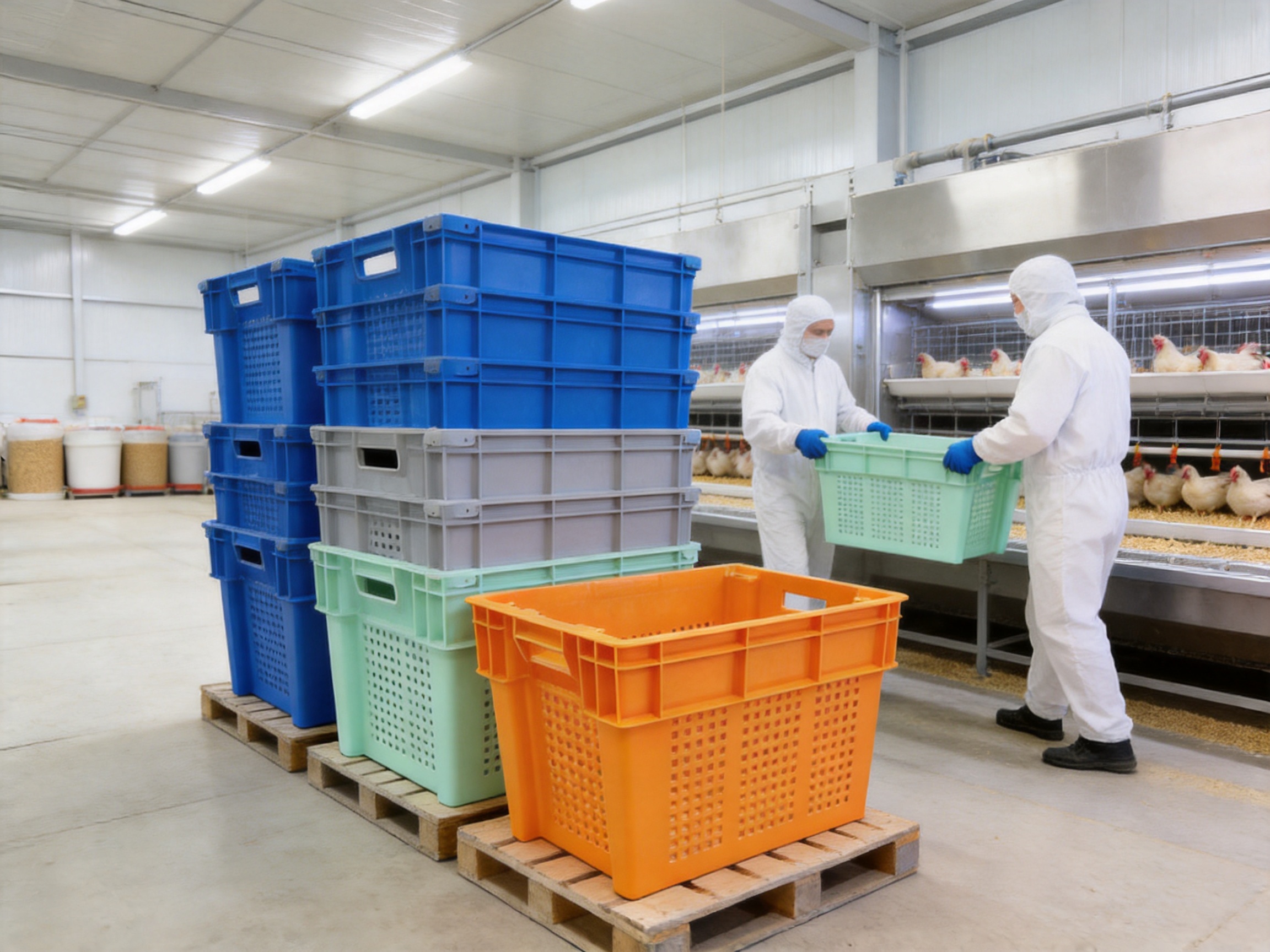
Breeding crates are widely used in poultry production and hatchery logistics. Their ventilation openings help support airflow, while their reusable construction allows them to be cleaned and returned to service. A well-designed crate can help operators organize animals or materials during transfer between farms, hatcheries, processing facilities, and distribution centers.
For poultry-related applications, smooth internal surfaces are valuable because they reduce dirt accumulation and simplify washing. Rounded corners and carefully designed transitions can also minimize areas where debris may remain trapped. These details should be considered during both product design and mould development.
In agricultural environments, crates may be used for young animals, feed-related materials, breeding accessories, or temporary transportation. The crate must offer adequate strength without becoming unnecessarily heavy. A balanced design can reduce material consumption while preserving the structural performance needed for repeated handling.
Reinforced ribs, stable base structures, and strong corner sections can help the product withstand impact and stacking loads. At the same time, the mould must be designed to fill these structural areas consistently so that the finished product does not contain weak weld lines, sink marks, or uneven wall sections.
Many breeding crates operate within returnable transport systems. They may move through farms, warehouses, cleaning stations, transport vehicles, and automated distribution facilities. In such systems, dimensional consistency is critical. Crates need to stack, nest, convey, and store in a predictable manner.
A high-quality mould supports the production of uniform parts. When crate dimensions remain stable from one production batch to another, customers can organize storage space more effectively, improve vehicle loading, and reduce interruptions caused by misaligned or unstable containers.
The first design priority is structural strength. A breeding crate should be able to tolerate the loads generated by the contents, manual handling, stacking, transport vibration, and occasional impact. The mould must reproduce ribs, reinforced corners, base supports, and side-wall structures accurately.
Strength should not depend only on increasing the overall wall thickness. Excessive thickness can raise material costs, increase cooling time, create sink marks, and produce differential shrinkage. Instead, effective mould and product engineering uses strategically positioned ribs, curved transitions, support columns, and load-bearing edges.
Computer-aided engineering can help evaluate how forces move through the crate. Areas exposed to high stress can be reinforced, while low-stress regions may be optimized to reduce unnecessary material. This approach supports a more efficient balance between durability, weight, and production cost.
Ventilation openings are often central to breeding crate performance. The openings must provide sufficient airflow while preserving the strength of the side walls. Their shape, spacing, and position influence both the product’s function and the mould’s manufacturing complexity.
Openings that are too large may reduce structural stability. Openings that are too small or poorly arranged may restrict airflow and make cleaning more difficult. The design must also consider the possibility of stress concentration around sharp corners. Rounded opening profiles and smooth transitions can help reduce crack initiation during repeated use.
From a mould-making perspective, opening geometry affects core design, machining access, cooling layout, ejection, and maintenance. A professional mould manufacturer evaluates these factors together rather than treating ventilation as an isolated product feature.
Breeding crates are frequently stacked during storage and transportation. The mould must reproduce accurate stacking feet, locating points, guide edges, and upper-rim features. Small dimensional errors in these areas can accumulate when several crates are stacked together.
Stable stacking reduces the risk of toppling and improves the use of warehouse and vehicle space. It can also protect the contents from excessive movement. If the crate design supports nesting when empty, the mould must maintain the correct clearances so that nested units can be separated without excessive force.
The relationship between the upper and lower sections of the crate should be checked carefully. Draft angles, corner radii, rim thickness, and support locations all affect how smoothly crates stack or nest. These characteristics should be verified during design review and trial production.
Breeding crates may be exposed to dirt, moisture, organic residue, and cleaning chemicals. Smooth surfaces and well-controlled corners make cleaning more efficient. The mould should be manufactured with suitable surface quality so that the finished crate does not contain unnecessary roughness, machining marks, or irregular transitions.
Parting lines should be positioned thoughtfully. If a parting line crosses a frequently cleaned surface or an area that contacts the contents, it should be controlled to reduce flash and uneven edges. Ejection marks should also be placed in areas where they do not interfere with handling, cleaning, or appearance.
Hygienic design is not limited to surface finish. It also includes drainage, open geometry, access for washing equipment, and the reduction of deep recesses. When these factors are incorporated during mould development, the final crate can be easier to maintain throughout its working life.
Handles and hand-access openings must be comfortable and strong. Operators may lift crates while wearing gloves or while working in wet conditions. Sharp edges, excessive flash, or poorly positioned grip areas can create safety and productivity problems.
The mould must form handle sections with consistent thickness and sufficient reinforcement. If a handle connects to a side wall through a narrow transition, that area may become vulnerable to stress. Rounded transitions and appropriate support ribs can improve durability while reducing discomfort during use.
The manufacturing process begins with a detailed review of the breeding crate design. Engineers examine the parting line, draft angles, wall thickness, ribs, openings, undercuts, gate position, ejection requirements, cooling channels, and expected mould cycle.
This review helps identify potential production problems before steel machining begins. For example, a deep rib may be difficult to cool, a narrow opening may complicate core manufacturing, or an uneven wall may cause distortion after ejection. Early identification allows the design to be improved while changes are still economical.
A feasibility review also considers the customer’s injection machine, preferred material, annual production volume, cycle-time target, and quality expectations. These factors influence the mould base, cavity arrangement, runner system, cooling strategy, and component selection.
Three-dimensional CAD systems are used to develop the mould structure and examine the relationship between the product and its tooling. The design process may include cavity and core modelling, mould-base selection, insert layout, slide or lifter planning, cooling-channel design, ejection-system development, and assembly analysis.
CAD design allows engineers to inspect difficult areas from multiple directions. It also helps ensure that mould components can be manufactured, assembled, adjusted, and replaced. For large crate moulds, the ability to manage complex surfaces and numerous openings is particularly important.
Clear and organized design documentation supports communication between engineering, machining, assembly, and the customer. It can also simplify future modifications if the product is later revised for a new size, material, handle configuration, or ventilation pattern.
Computer-aided engineering analysis can be used to evaluate injection filling, pressure distribution, cooling behavior, shrinkage, and potential warpage. Although analysis results should always be confirmed through physical trials, they provide valuable guidance during the development stage.
For a large breeding crate, filling balance is a major concern. If the melt reaches different sections at significantly different times, weld lines, air traps, short shots, or uneven packing may occur. Gate locations and runner dimensions should therefore be selected to support balanced filling and effective pressure transmission.
Cooling analysis is equally important. Thick ribs, corners, and base supports may retain heat longer than thin walls. If cooling is not balanced, the product may warp after ejection. A carefully arranged cooling system can help reduce cycle time while improving dimensional stability.
After the design is approved, mould components are produced using precision machining equipment. CNC milling is used to create cavity and core surfaces, inserts, ribs, openings, and other complex features. The machining strategy must account for material hardness, tool access, surface requirements, and the final accuracy needed by the crate.
Large logistics crate moulds often contain broad surfaces combined with detailed local features. Maintaining accuracy across the full mould size requires careful fixturing, tool selection, machining sequence control, and inspection. Experience is important because a small error in one structural feature may affect assembly, ejection, or the final stacking relationship.
In areas requiring fine detail or difficult internal geometry, additional processes may be used. These can include drilling, electrical discharge machining, grinding, polishing, and manual fitting. Each process contributes to the final performance of the mould.
Mould steel selection should reflect the intended production volume, material type, cycle conditions, and maintenance plan. A high-output breeding crate mould must resist wear, repeated thermal cycling, corrosion risks, and mechanical stress.
Important components may include guide pillars, guide bushes, ejector pins, wear plates, inserts, sliders, cooling fittings, and hydraulic or mechanical elements. Selecting reliable components helps reduce downtime and simplifies future maintenance.
Steel treatment and surface preparation are also important. Depending on the design and application, mould components may require hardening, pre-hardening, nitriding, polishing, or other treatments. The appropriate choice should be made according to the expected service conditions rather than by using the same solution for every project.
After machining, the mould is assembled and fitted by experienced technicians. During this stage, engineers check alignment, parting surfaces, inserts, ejection movement, slides, cooling connections, and other operating features.
Large moulds require careful coordination because the cavity and core must meet accurately over a broad area. Any mismatch can cause flash, uneven product edges, premature wear, or difficulties during injection. Skilled fitting helps correct small variations before the mould enters production trials.
Trial moulding is used to verify the actual performance of the mould. The trial process evaluates filling, packing, cooling, ejection, part appearance, dimensions, stacking behavior, and cycle time. Trial samples can reveal issues that are difficult to identify through computer models alone.
Potential adjustments may include modifying process parameters, polishing selected areas, improving venting, adjusting ejection timing, changing cooling flow, or refining a local mould feature. The aim is to deliver a mould that can be transferred into stable production with minimal disruption.
For customers, trial documentation and sample approval provide confidence that the mould is not only complete but also suitable for the intended injection process. A well-managed trial stage can reduce the risk of expensive changes after delivery.
One of the main advantages of a professionally engineered breeding crate mould is dimensional consistency. Low-quality moulds may produce parts that vary in height, width, rim alignment, or stacking features. Such variation can cause unstable stacks and poor compatibility with automated equipment.
Accurate machining, controlled assembly, balanced cooling, and appropriate process optimization help reduce these variations. Consistent dimensions make it easier for operators to use the crates in standardized logistics systems and reduce the need for manual sorting.
A mould designed around real loading conditions can produce crates with better strength distribution. Instead of relying on excessive material thickness, the design can use effective ribs, reinforced corners, and smooth transitions. This can improve durability while keeping the product practical to manufacture and handle.
Competitor moulds with insufficient analysis may create weak areas around openings, handles, corners, or weld lines. These defects may not be visible immediately but can become serious after repeated use. Professional analysis and trial verification help reduce such risks.
The initial mould price is only one part of the total cost. A mould that requires frequent repairs, produces high scrap rates, or causes long cycle times may become more expensive over its service life.
A well-built mould can support stable production, lower rejection rates, more predictable maintenance, and improved cycle efficiency. These benefits may reduce the cost per crate over many production cycles. Durable mould components also reduce the frequency of unplanned shutdowns.
Mould maintenance becomes easier when the design includes replaceable inserts, accessible cooling connections, organized ejector systems, and serviceable wear components. This is particularly useful for high-volume breeding crate production, where even a short stoppage can affect delivery schedules.
A mould manufacturer with experience in logistics products can anticipate common maintenance requirements. The design can be prepared so that damaged or worn components are easier to inspect, remove, repair, or replace.
Customers purchasing a breeding crate mould typically need more than a steel tool. They also need communication, engineering coordination, trial support, documentation, and after-sales assistance. A manufacturer with an established project process can provide support from the initial concept through final acceptance.
Technical communication is especially important when the customer supplies an existing crate design or requests a customized structure. Clear discussions about material, machine conditions, annual output, packaging, and quality standards help prevent misunderstandings.
Common materials for injection-moulded crates include polypropylene and high-density polyethylene, although the final choice depends on the product design and operating conditions. Material selection affects shrinkage, stiffness, impact resistance, chemical resistance, weight, surface finish, and processing temperature.
Polypropylene may be selected for its balance of stiffness, chemical resistance, and processability. High-density polyethylene can offer useful impact performance and resistance to moisture and many chemicals. Recycled or reprocessed material may also be considered where regulations, appearance requirements, and performance targets allow.
The mould should be designed with the selected material in mind. Different materials may have different shrinkage behavior and filling characteristics. The gate, cooling system, draft angles, ejection system, and dimensional compensation may need to be adjusted accordingly.
Material additives can also influence mould performance. Glass fiber, mineral fillers, colorants, ultraviolet stabilizers, and other additives may increase wear or change flow behavior. Customers should inform the mould manufacturer about the planned material formulation so that steel, surface treatment, and processing recommendations can be selected appropriately.
Quality control should be maintained throughout the complete project rather than performed only at the end. Incoming steel and component checks help confirm that the mould is being built from suitable materials. In-process inspection helps verify critical dimensions before errors move into later stages.
During assembly, technicians should inspect parting surfaces, alignment, movement, cooling connections, and ejector operation. Trial samples should be measured against the approved product drawings or agreed specifications. Functional checks should also include stacking, nesting, handle strength, and visual appearance where relevant.
A practical quality-control program may include the following activities:
| Control Stage | Main Inspection Focus | Customer Benefit |
|---|---|---|
| Design review | Draft, parting line, wall thickness, filling, cooling, ejection | Fewer design changes and lower development risk |
| Steel and component inspection | Material grade, dimensions, certificates, standard parts | Improved mould reliability and traceability |
| Machining inspection | Cavity dimensions, openings, ribs, inserts, surface accuracy | More consistent crate production |
| Assembly inspection | Alignment, parting surfaces, movement, cooling, ejection | Reduced flash, wear, and operating problems |
| Trial moulding | Filling, appearance, warpage, dimensions, cycle performance | Verified production readiness |
| Final acceptance | Samples, documentation, maintenance points, shipping condition | Clear handover and easier future operation |
Documented inspection results can also support future maintenance. If the mould requires repair or modification later, original dimensional records make it easier to identify changes and restore the intended performance.
TaiZhou HuangYan YingXiang Plastic Mould Co., Ltd. operates from a 7,000-square-meter plant and has approximately 50 employees. Its location in Huangyan, Taizhou, Zhejiang provides access to an established mould manufacturing environment, experienced technicians, specialized suppliers, and supporting industrial services.
The company was established in 2012 and has focused on customized plastic mould solutions. Its product experience includes crate moulds, folding box moulds, tray moulds, pallet moulds, beverage box moulds, and moulds for household products. This range is relevant to breeding crate projects because many of the same engineering principles apply to reusable logistics containers.
Advanced CAD, CAE, and CAM systems support the company’s design and manufacturing activities. These systems help connect product development with machining and analysis. The use of digital tools can improve communication, reduce avoidable errors, and support more accurate development of complex crate geometries.
The company also emphasizes lean manufacturing, long-life moulds, on-time delivery, competitive costs, and comprehensive customer service. These priorities are important for customers who need dependable mould performance rather than a short-term tooling solution.
Breeding crates can be customized according to the expected contents, handling method, transport space, and stacking requirements. Size changes may affect the mould base, cooling layout, structural ribs, injection pressure, and ejection force. These elements should be reviewed together to ensure that the final mould remains practical.
The number, size, and layout of ventilation openings can be adjusted for different applications. A customer may require increased airflow, improved visibility, easier washing, or greater wall strength. The mould design should maintain appropriate support around the openings while preserving an efficient machining and maintenance structure.
Handle openings can be developed for manual lifting, glove use, side access, or automated handling. The design should account for ergonomic clearance, load transfer, wall strength, and the possibility of repeated impact. Mould inserts may be useful when a customer expects future handle modifications.
Some customers require crates that stack securely when full and nest compactly when empty. Others may need a one-way stacking structure for a specialized transport system. These requirements can be integrated into the crate geometry and reproduced through the mould with suitable clearances and draft.
Product identification may include embossed or recessed logos, numbers, recycling symbols, batch marks, or customer-specific codes. These details should be positioned so they do not interfere with cleaning, handling, structural strength, or mould release.
Although color is primarily determined by the plastic compound, the mould surface and design can influence the final appearance. Customers should specify whether the crate requires a smooth, textured, matte, or polished finish. Material and color requirements should be communicated before mould construction begins.
Production efficiency depends on more than injection speed. A mould must fill reliably, cool uniformly, eject smoothly, and allow the machine operator to maintain stable conditions. If any of these areas is poorly designed, cycle time may increase and product quality may become inconsistent.
An effective cooling system is especially important for large crates. Faster and more uniform cooling can shorten the time needed before ejection while reducing deformation. However, cooling must be designed without weakening the mould or creating difficult-to-maintain channels.
Efficient ejection also protects the finished crate. Excessive ejection force can leave marks, deform the base, or damage thin sections. A balanced ejector layout distributes force across suitable areas and supports reliable automated production.
Venting contributes to both appearance and filling performance. Proper vents allow trapped air and gases to escape as the melt fills the cavity. Insufficient venting may create burn marks, incomplete filling, or excessive injection pressure.
By combining these features, a professional mould can help the customer achieve more stable cycles, lower waste, and better overall equipment utilization.
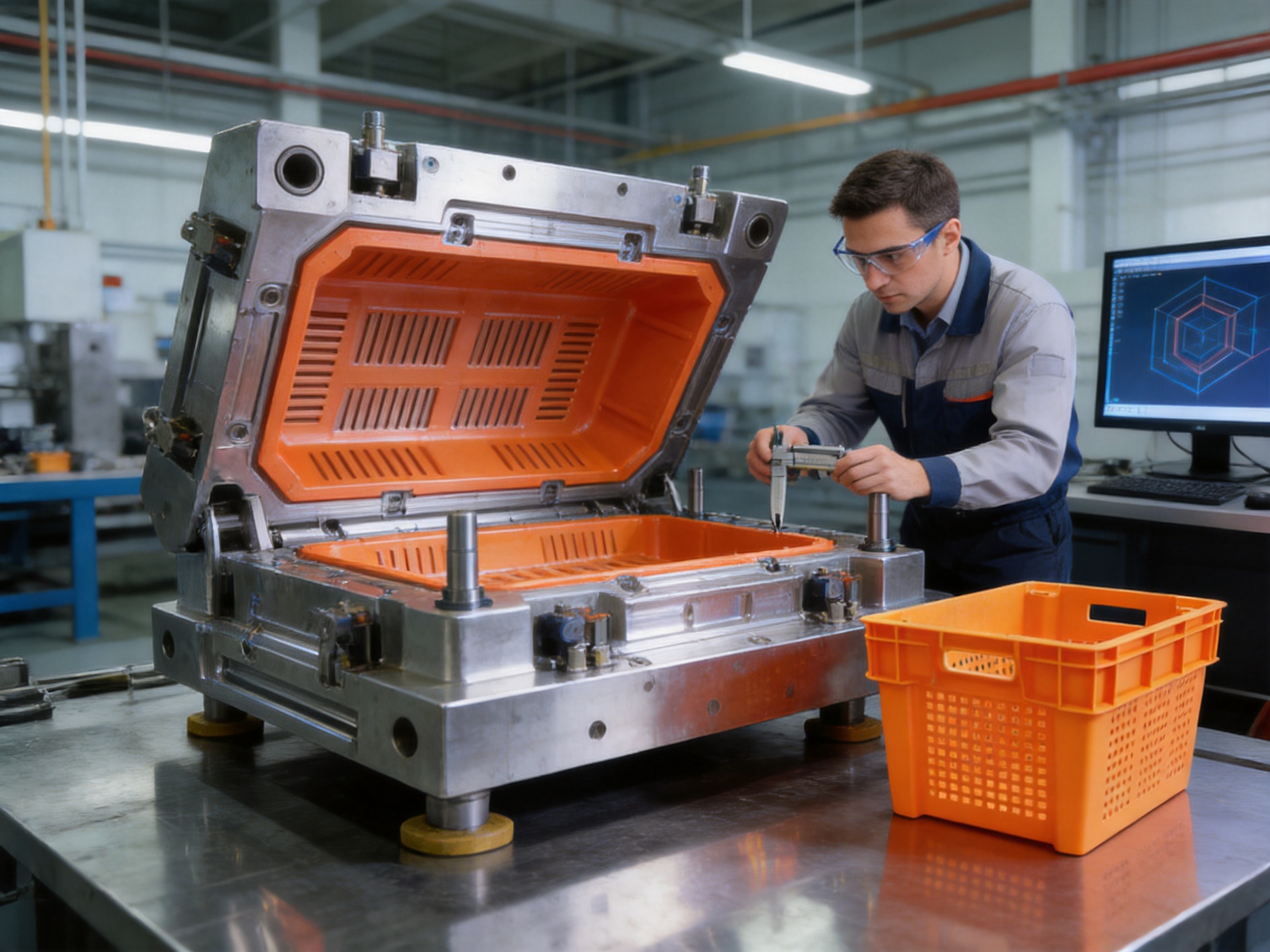
Even a high-quality breeding crate mould requires regular maintenance. The frequency depends on production volume, material formulation, cycle conditions, and cleaning practices. Preventive maintenance is generally more economical than waiting for a failure to stop production.
Routine maintenance may include cleaning the parting surfaces, checking ejector movement, inspecting guide components, verifying cooling flow, removing residue, lubricating suitable moving parts, and examining areas exposed to wear. Venting channels should also be kept clear so that air evacuation remains effective.
If the mould processes abrasive or filled materials, wear should be monitored more closely. Gate areas, sliders, inserts, and other high-contact surfaces may need periodic inspection. Replacing a small wear component at the correct time can prevent damage to a larger and more expensive mould section.
Storage conditions are also important. When a mould is not in use, it should be cleaned, dried, protected against corrosion, and stored in a safe position. Cooling channels may need to be drained, and moving components should be secured according to the mould’s maintenance instructions.
A well-maintained mould can support a long production life. Its actual service life depends on many factors, but thoughtful design, suitable steel, precision manufacturing, correct processing, and regular care all contribute to reliable performance.
The customer provides the crate drawings, three-dimensional files, photographs, target material, expected production volume, injection machine information, and special quality requirements. If the product is still in the concept stage, the customer can discuss intended use and operating conditions with the engineering team.
Engineers review the product structure and identify possible risks. They may recommend changes to wall thickness, draft, rib layout, openings, corners, stacking details, or ejection areas. The goal is to make the design easier to mould while protecting the desired product performance.
After design adjustments, the mould structure is prepared for customer review. The customer can confirm the parting line, gate arrangement, ejection plan, cooling concept, and other major details before manufacturing begins.
Machining, component production, fitting, assembly, and inspection are completed according to the approved design. Progress communication helps the customer understand the project status and coordinate future production arrangements.
The mould is tested through injection trials. Samples are evaluated for appearance, dimensions, warpage, stacking behavior, and other agreed requirements. If necessary, the mould or process is adjusted before final acceptance.
After approval, the mould is prepared for shipment with relevant documentation and maintenance information. Technical support can continue through installation, production start-up, troubleshooting, and future service requirements.
Logistics crates have a different engineering profile from small household containers or simple disposable packaging. Their large dimensions, repeated-use conditions, structural ribs, ventilation patterns, stacking functions, and high production volumes require specialized knowledge.
A manufacturer experienced in logistics crate moulds is more likely to recognize the practical relationship between product design and production performance. It can evaluate not only whether a crate can be moulded, but also whether the mould can operate efficiently and remain maintainable over time.
Experience with pallets, folding boxes, beverage boxes, trays, and storage containers can further strengthen this capability. These products share requirements related to strength, nesting, stacking, handling, cooling, and large-area dimensional control.
For customers, this specialized experience can shorten the development process and reduce the risk of design decisions that create future production difficulties. It can also improve the quality of technical communication between the mould supplier and the injection molding factory.
Polypropylene and high-density polyethylene are commonly considered for reusable crates, but the best choice depends on impact requirements, stiffness, temperature, chemical exposure, hygiene expectations, and cost. The mould design should be developed after the material has been selected or at least clearly defined.
Yes. The mould can be developed according to customized dimensions, ventilation openings, handles, stacking features, nesting requirements, wall structures, identification marks, and material conditions. Customization should be discussed during the technical review so that all changes are reflected in the mould design.
Mould design affects filling balance, cooling, ejection, surface finish, dimensional accuracy, wall strength, and warpage. A well-designed mould helps produce crates that stack reliably, resist repeated handling, and maintain consistent dimensions across production batches.
Large crates often contain different wall thicknesses, ribs, corners, and reinforced sections. These areas do not cool at the same rate. Balanced cooling helps reduce cycle time and warpage while improving dimensional stability.
The production capacity depends on the mould structure, injection machine, material, cycle time, product size, and expected annual output. The mould can be engineered with suitable steel, cooling, ejection, and wear components for repeated production cycles.
Useful information includes product drawings or three-dimensional files, dimensions, material, estimated annual quantity, injection machine details, surface requirements, color, ventilation design, stacking or nesting expectations, number of cavities, and delivery target. More complete information allows the manufacturer to prepare a more accurate technical and commercial proposal.
Maintenance requirements can be reduced through suitable steel selection, correct surface treatment, replaceable wear parts, accessible cooling channels, effective venting, proper lubrication, and regular inspection. Correct injection molding conditions also help prevent unnecessary stress and wear.
Trial moulding and sample evaluation are important parts of professional mould development. The mould should be tested to check filling, appearance, dimensions, ejection, warpage, stacking, and production stability before final acceptance.
Yes. In addition to breeding crate moulds, the company produces moulds for logistics crates, folding boxes, pallets, trays, beverage boxes, food storage containers, household products, chairs, stools, trash cans, hand baskets, and floor mats. This product experience can be useful when a customer needs several related moulds.
Customers can contact the manufacturer by telephone or email to discuss drawings, project requirements, technical feasibility, estimated costs, production schedules, and after-sales support. The company’s contact numbers include +86 17858690885, +86 13566828762, and +86 19957608921. The listed email address is Chinayingxiang88@sina.com.
A breeding crate mould must do much more than form the basic outline of a plastic box. It must support structural strength, ventilation, safe handling, hygiene, stable stacking, efficient production, and long-term reuse. Every feature of the crate is influenced by the quality of the mould, from the smallest opening to the largest base section.
TaiZhou HuangYan YingXiang Plastic Mould Co., Ltd. combines experience in logistics container moulds with CAD, CAE, and CAM systems, precision manufacturing, experienced technicians, and a structured trial process. Its 7,000-square-meter facility and established production team support customized mould development for customers seeking dependable plastic injection solutions.
Compared with lower-quality tooling, a professionally engineered breeding crate mould can offer more consistent dimensions, better durability, improved maintenance access, lower long-term production costs, and more reliable output. These advantages are especially valuable for farms, hatcheries, agricultural logistics providers, packaging manufacturers, and injection molding companies operating at high volume.
By working with an experienced mould manufacturer from the earliest design stage, customers can improve product performance and reduce production risk. A carefully developed mould provides the foundation for breeding crates that are durable, hygienic, stackable, easy to handle, and suitable for demanding reusable logistics systems.
1. General principles of plastic injection mould design, including draft angles, parting lines, cooling, venting, and ejection.
2. Engineering guidelines for reusable plastic logistics containers and stackable agricultural crates.
3. Technical literature on polypropylene and high-density polyethylene injection molding.
4. Industrial practices for computer-aided design, computer-aided engineering, and computer-aided manufacturing in mould production.
5. General quality-control methods for precision mould components, trial injection, dimensional inspection, and preventive mould maintenance.
6. Product and company information supplied for TaiZhou HuangYan YingXiang Plastic Mould Co., Ltd., including manufacturing capabilities, facility information, product categories, and contact details.
If you are interested in any of our products or services, please feel free to ask and we can talk about your ideas.
 QUICK LINKSMOBILE SITE
 FACTORY ADDRESS
 CONTACT INFORMATION



 English
 Español