A wastepaper basket is a familiar household product, but producing a high-quality basket consistently requires much more than a simple hollow cavity. The mould must support accurate dimensions, smooth surfaces, stable wall thickness, dependable ejection, efficient cycle times, and reliable long-term operation. When the basket includes a retaining ring, the moulding challenge becomes more demanding because the ring must remain firmly integrated with the basket structure while also providing an attractive appearance and practical functionality.
The Wastepaper Basket with Retaining Ring Mould is developed for manufacturers seeking a dependable injection moulding solution for household wastepaper baskets and similar plastic containers. Its design focuses on product stability, clean appearance, easy handling, and efficient mass production. The mould can be adapted to different basket capacities, shapes, colours, materials, surface finishes, and branding requirements, making it suitable for a broad range of household product programmes.
Modern plastic product manufacturers face constant pressure to reduce production costs without sacrificing quality. A mould that produces inconsistent dimensions, visible weld marks, difficult ejection, or excessive flash can create significant losses during production. In contrast, a carefully engineered mould helps improve output, reduce rejection rates, simplify processing, and extend service life. These benefits are especially important for wastepaper baskets, which are often manufactured in large quantities for homes, offices, hotels, schools, commercial buildings, and institutional facilities.
YingXiang Plastic Mould is an experienced mould manufacturer based in Huangyan, Taizhou, Zhejiang, China, a region widely recognised for its plastic moulding industry. Established in 2012, the company operates from a plant covering approximately 7,000 square metres and employs around 50 people. Its manufacturing capabilities include household product moulds, trash can moulds, logistics crate moulds, folding box moulds, pallet moulds, beverage box moulds, storage container moulds, chair moulds, and other customised plastic injection moulds.
Through the integration of design engineering, computer-aided analysis, precision machining, mould assembly, testing, and technical support, the company provides complete moulding solutions rather than only individual steel components. This integrated approach allows each mould to be considered as part of the customer’s full production process, from initial product concept to stable mass production.

Wastepaper Basket with Retaining Ring
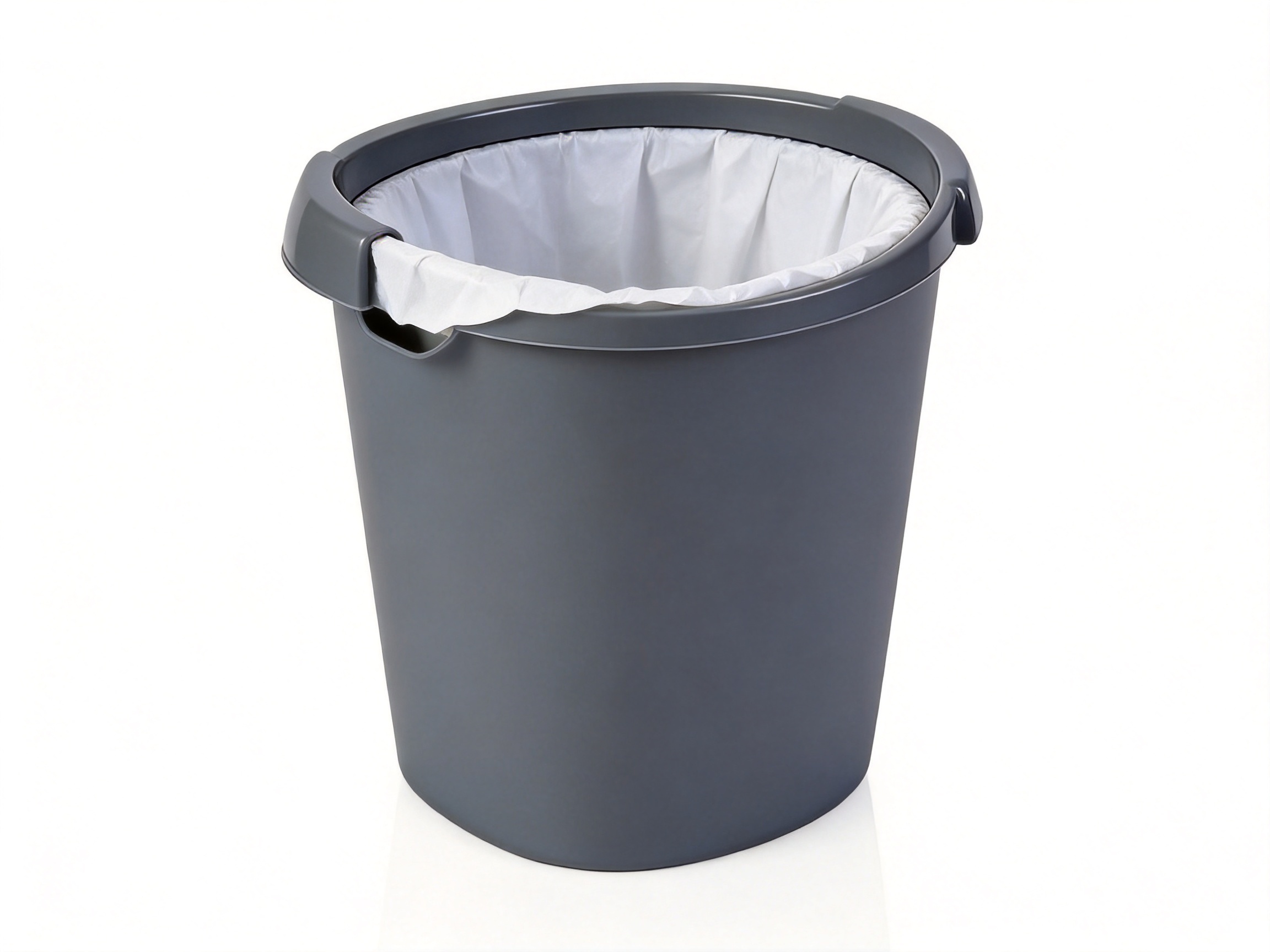
The wastepaper basket with retaining ring is designed as a practical container for collecting paper waste and other light refuse. The basket typically includes an open upper section, a tapered or straight-sided body, a reinforced rim, and a retaining ring that supports a disposable liner or plastic bag. Depending on the customer’s design, the retaining ring may also help hold the bag in position, conceal the folded edge of the liner, and improve the overall appearance of the finished product.
The retaining ring is an important functional feature. Without an effective retention structure, the liner may slip into the basket when waste is added. It may also become visible around the exterior, creating an untidy appearance. A well-designed ring keeps the bag securely positioned and gives the product a more finished appearance. For offices, hotels, schools, and public facilities, this feature improves daily convenience and helps maintain a clean environment.
The mould must therefore produce two connected functional areas with different requirements. The basket body needs to be light but sufficiently rigid, while the retaining ring needs accurate geometry and adequate strength. The transition between the body and the ring should be smooth, dimensionally stable, and free from excessive stress concentration. These details influence both product performance and user perception.
The product may be manufactured using polypropylene, high-density polyethylene, recycled polypropylene blends, or other suitable thermoplastic materials. Material selection depends on the required impact resistance, stiffness, surface appearance, colour, cost target, and environmental objectives. The mould design should be reviewed together with the chosen material because shrinkage, flow behaviour, cooling performance, and ejection conditions can vary considerably between resins.
The finished wastepaper basket can serve a wide range of markets. In homes, it can be used in bedrooms, bathrooms, kitchens, studies, and living rooms. In offices, it provides a convenient container for paper and light packaging waste. Hotels and serviced apartments may use it in guest rooms, reception areas, and meeting rooms. Schools, hospitals, retail facilities, and public buildings can also use baskets of this type as part of their indoor waste collection systems.
Because the product is relatively simple to transport and store, it can be manufactured for domestic distribution or export. Stackable designs are particularly useful because they reduce packaging volume and improve warehouse efficiency. The mould can be developed to support nesting features while preserving a clean external appearance.
Manufacturers may request different versions of the product according to market requirements. Variations may include round, square, rectangular, oval, or tapered body shapes. The upper rim may be narrow and discreet or wide and heavily reinforced. The retaining ring may be removable, hinged, clipped, or integrated into the basket structure. The internal cavity may be smooth or include vertical ribs for additional stiffness.
Surface treatments can also be customised. A matte texture can reduce the visibility of fingerprints and minor scratches, while a polished surface may create a bright and contemporary appearance. Fine grain textures can improve the visual quality of dark colours and support premium household product positioning. Logos, recycling marks, capacity markings, and other identification features can be added directly to the mould or applied through secondary decoration.
The retaining ring provides several advantages over a basic open wastepaper basket. Its primary benefit is improved liner management. The ring holds the bag in the intended position and prevents it from slipping into the container. This is particularly helpful when users dispose of paper, packaging, tissues, and other lightweight materials that may disturb an unsecured liner.
The ring also contributes to product appearance. A loose bag can make even a high-quality basket look untidy. By concealing or controlling the liner edge, the retaining ring creates a cleaner visual profile. This is valuable in professional environments where product presentation and interior appearance are important.
Another advantage is improved rim rigidity. Depending on the design, the retaining ring can strengthen the upper section of the basket and reduce deformation during handling. The rim is one of the most frequently contacted areas of a wastepaper basket, so adequate reinforcement helps the product retain its shape over time.
The design can also improve user convenience. A removable ring may allow the liner to be changed quickly, while an integrated ring can reduce the risk of losing separate components. The preferred solution depends on the intended market, assembly requirements, product price, and cleaning expectations.
| Design Feature | Functional Benefit | Production Consideration |
|---|---|---|
| Retaining ring | Secures and controls the liner | Requires accurate fit and stable dimensions |
| Reinforced upper rim | Improves rigidity and handling strength | Needs balanced filling and effective cooling |
| Tapered basket body | Supports nesting and efficient storage | Requires suitable draft angles for ejection |
| Textured external surface | Reduces visible marks and enhances appearance | Texture depth must be controlled during machining |
| Rounded corners | Improves safety and simplifies cleaning | Corner flow and cooling should be analysed |
| Custom branding area | Supports product identification and marketing | Logo position must be coordinated with parting and ejection |
A successful wastepaper basket mould begins with a clear understanding of the finished product. Before design work starts, engineers should review the product drawings, three-dimensional model, material specification, expected annual volume, injection machine information, surface requirements, and target cycle time. These factors influence the mould layout, steel selection, gate design, cooling arrangement, ejection system, and required level of automation.
The basket body normally has a relatively large projected area compared with its weight. This means the injection machine must provide sufficient clamping force to prevent flash, while the mould must support even material distribution. If the product is too thin, filling may become difficult and short shots may occur. If it is too thick, material consumption, cooling time, and sink mark risk may increase.
Uniform wall thickness is one of the most important design objectives. Significant differences in wall thickness can cause uneven shrinkage, warpage, sink marks, or dimensional variation. The basket wall should be designed with a practical thickness that balances stiffness, weight, material cost, and filling performance.
Ribs may be added to improve rigidity without making the entire wall excessively thick. However, ribs should be proportioned carefully. Overly thick ribs can create sink marks on the visible surface, while sharp rib intersections can produce stress concentration. Rounded transitions and suitable rib thickness help improve mould filling and product durability.
The retaining ring requires particular attention because it may be thicker or more complex than the main basket wall. Its connection to the body should avoid abrupt changes in section. A gradual transition improves material flow and reduces the risk of visible defects. If the ring is a separate moulded component, the mating surfaces should be designed to provide secure engagement without excessive assembly force.
Draft angles allow the moulded basket to release from the cavity and core without scuffing, sticking, or distortion. The required draft depends on the material, surface texture, depth of the cavity, and product geometry. Textured surfaces generally require more draft than polished surfaces because the texture can increase resistance during ejection.
A tapered basket naturally supports easier removal, but the taper must be balanced with the desired appearance and nesting requirements. If the side walls are too steep, the product may be difficult to eject. If the taper is excessive, usable internal capacity may be reduced. Careful design analysis helps achieve an appropriate compromise.
The ejection system may use ejector pins, ejector plates, stripper plates, or a combination of these methods. For a basket with a visible exterior surface, ejector marks should be placed in concealed or non-critical areas whenever possible. A stripper plate may be advantageous for certain shapes because it applies a more evenly distributed force and reduces local deformation.
The parting line should be positioned to support reliable mould construction and minimise visible witness marks. For many basket designs, the parting line is located around the upper rim or along a carefully selected transition. The retaining ring may require a special parting arrangement if it includes undercuts, clips, or interlocking features.
Good parting line planning reduces flash risk and simplifies maintenance. It also helps determine the location of cooling channels, ejector components, inserts, and gate systems. During design review, engineers should consider not only how the mould will produce the first sample but also how it will be cleaned, repaired, and serviced throughout its working life.
The manufacturing process begins with product data evaluation and mould feasibility analysis. The engineering team reviews the product geometry, identifies potential filling challenges, and recommends modifications where necessary. Early cooperation between the mould maker and product manufacturer can prevent expensive changes after machining has started.
Three-dimensional CAD systems are used to create the mould structure, including the cavity, core, parting surfaces, inserts, cooling circuits, ejector system, guide components, and external plates. The design is developed around the customer’s product data while considering practical machining and assembly requirements.
During this stage, engineers evaluate the location of the gate, the direction of ejection, the position of the parting line, and the accessibility of components for maintenance. The mould design should provide sufficient strength around the cavity while leaving enough space for effective cooling and reliable movement of the mould components.
CAD data also supports design communication. Customers can review the proposed mould structure before production begins, allowing questions about the product, surface appearance, logo placement, or assembly features to be resolved early. This reduces the risk of misunderstanding and helps create a more efficient project workflow.
Computer-aided engineering tools can be used to assess filling behaviour, pressure distribution, cooling, weld line locations, air traps, and potential warpage. For a large open container such as a wastepaper basket, flow analysis is valuable because the product may contain long flow paths and broad surfaces.
Simulation can help determine whether a single gate, multiple gates, hot runner system, or cold runner arrangement is appropriate. It can also help identify areas that may fill last or require additional venting. When the retaining ring is connected to the basket body, analysis may reveal whether the material reaches the ring evenly and whether the transition requires geometric adjustment.
Although simulation does not replace practical moulding experience, it improves decision-making. It allows potential problems to be considered before steel is cut. This can shorten development time, reduce trial adjustments, and support a more predictable launch into mass production.
Mould steel must be selected according to production volume, material characteristics, surface requirements, expected maintenance conditions, and customer budget. A high-volume household product may require robust cavity and core materials capable of maintaining dimensions over many production cycles. Standard mould steels can be suitable for some applications, while pre-hardened or hardened steels may be preferred for demanding production conditions.
Steel selection also affects polishing, texturing, corrosion resistance, repairability, and machining time. The best solution is not always the most expensive steel. Instead, the material should be matched to the actual production conditions and expected service life. A professional mould manufacturer can recommend a balanced configuration that supports quality and cost control.
After the design is approved, mould components are manufactured using CNC machining, electrical discharge machining where necessary, drilling, grinding, and other precision processes. Modern machining equipment helps maintain accurate cavity dimensions and consistent alignment between mould components.
Large basket cavities require careful control of flatness, curvature, corner radii, and surface transitions. Errors in these areas can appear as uneven wall thickness, mismatched parting lines, or visible surface differences. Precision machining reduces these risks and supports repeatable production.
Deep or complex areas may require specialised machining strategies. Electrodes can be used for features that are difficult to produce by conventional cutting. Fine finishing and polishing are then carried out according to the customer’s required surface standard. If the product includes a texture, the mould surface must be prepared appropriately before texturing so that the final pattern is consistent.
Once individual components are machined, the mould is assembled and fitted. This stage involves checking alignment, shut-off surfaces, slide movement, ejector operation, guide systems, inserts, cooling channels, and component clearances. Skilled technicians examine the mould manually and use measurement tools to confirm critical dimensions.
Proper fitting is essential for preventing flash and ensuring smooth mould movement. The cavity and core must close evenly, while moving components such as slides or lifters must operate without excessive resistance. The cooling connections, water seals, and hydraulic or pneumatic features should also be checked before mould trials.
Trial moulding verifies the performance of the completed mould. Samples are produced using the intended or representative material, and engineers inspect filling, appearance, ejection, dimensions, cycle behaviour, and assembly performance. The sample basket is checked for sink marks, warpage, short shots, flash, weld lines, colour variation, and surface defects.
If adjustment is needed, the mould may undergo controlled corrections. These could include gate optimisation, venting improvement, polishing, steel removal, local fitting, cooling adjustments, or ejection balancing. The objective is to solve the root cause rather than simply hide a visible defect.
Trial results should be documented and reviewed with the customer. Sample approval is an important milestone because it confirms that the mould and product meet the agreed requirements before shipment or final production release.
YingXiang Plastic Mould combines product development experience with mould manufacturing capability. Its location in Huangyan provides access to a mature mould-making supply chain, skilled technicians, machining resources, and supporting industrial services. This regional environment helps the company manage complex projects and respond to different customer requirements.
The company has a plant of approximately 7,000 square metres and a team of around 50 employees. Its use of CAD, CAE, and CAM systems supports a structured workflow from design through machining and testing. Experienced technicians contribute practical knowledge in mould fitting, polishing, trial moulding, correction, and production support.
The company’s product range covers both household and industrial plastic moulds. This includes trash can moulds, food storage container moulds, hand basket moulds, floor mat moulds, chair moulds, stool moulds, logistics crate moulds, folding box moulds, beverage box moulds, pallet moulds, and other container-related products. Experience across these categories helps the engineering team understand different requirements for strength, stacking, nesting, handling, surface quality, and production efficiency.
Lean manufacturing focuses on reducing unnecessary operations, preventing avoidable errors, and improving the movement of materials and information. In mould manufacturing, this can involve standardised design practices, clear machining procedures, controlled inspection points, organised assembly, and systematic trial documentation.
For customers, lean production can provide more predictable delivery and better cost control. It also supports consistency between similar moulds and makes future modifications easier. A well-organised manufacturing process reduces the risk that a project depends solely on individual memory or informal communication.
Quality control should be applied throughout the mould project rather than only at the final inspection. Design reviews, material verification, machining checks, component measurement, assembly inspection, and sample evaluation each contribute to the final result.
Critical areas of a wastepaper basket mould may include cavity dimensions, ring fit, side-wall taper, parting surfaces, ejector locations, cooling connections, and surface finish. Inspection of these areas helps ensure that the mould can produce a stable product over repeated cycles.
Quality also includes practical serviceability. A mould that produces good samples but is difficult to maintain may create problems later. Accessible components, replaceable wear parts, clear water connections, and logical assembly design can improve the mould’s useful life and reduce downtime.
Mould projects involve multiple stages, including product confirmation, design approval, steel preparation, rough machining, finishing, assembly, trial moulding, correction, and shipment. Clear scheduling and communication help keep these stages coordinated.
Technical communication is particularly important when a customer supplies a product concept rather than a complete mould-ready design. The mould manufacturer may recommend changes to wall thickness, draft, rib structure, gate position, or assembly details. Early communication avoids delays and improves the chance of first-trial success.
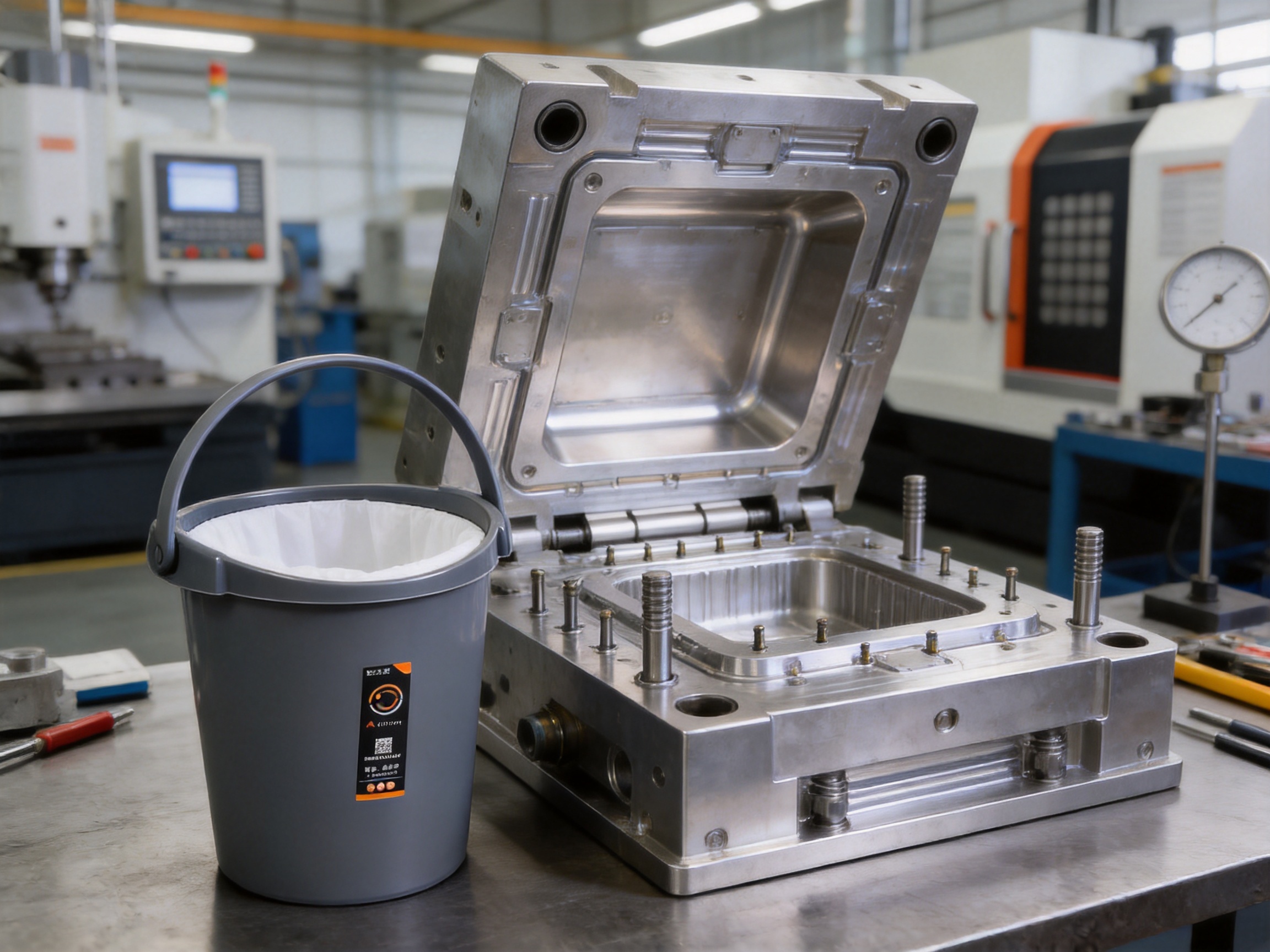
The Wastepaper Basket with Retaining Ring Mould offers several advantages compared with a basic or poorly engineered mould. These advantages relate not only to the finished product but also to the customer’s overall manufacturing operation.
The retaining ring gives the basket a more refined appearance by controlling the liner and reinforcing the upper edge. A clean rim and stable ring fit help the product appear more attractive on retail shelves and in commercial interiors. The mould can support carefully controlled textures and surface finishes that strengthen the product’s visual identity.
Accurate cavity machining, balanced mould construction, and controlled fitting help produce baskets with consistent dimensions. Repeatability is important when the product must be nested, packaged, stacked, or matched with a specific liner size. It is also essential when the retaining ring is designed as a separate component or requires a precise snap-fit connection.
A well-designed cooling system, suitable gate arrangement, and effective ejection system can shorten cycle times and improve output. The actual cycle time depends on material, wall thickness, machine capability, cooling conditions, and product design, but good mould engineering creates the foundation for efficient production.
Balanced product thickness and appropriate runner design help reduce unnecessary material consumption. If a hot runner system is suitable, it may reduce runner waste and support automated operation. If a cold runner is more appropriate for the project, the system can still be designed for efficient material use and straightforward recycling of clean runners.
The mould can be developed for different sizes, capacities, colours, surface textures, logo locations, ring structures, and product geometries. This flexibility allows manufacturers to serve multiple market segments using a coordinated product family. A common design platform can also help simplify future development of related containers.
Practical maintenance design helps protect the customer’s investment. Wear components should be replaceable where appropriate, cooling passages should be accessible for cleaning, and moving parts should be designed for inspection and lubrication. A serviceable mould is more likely to maintain stable production performance over a long period.
| Customer Priority | How the Mould Addresses It | Expected Production Benefit |
|---|---|---|
| Clean product appearance | Controlled surface finish, suitable parting line, and stable retaining ring | Improved market presentation |
| High output | Optimised cooling, filling, and ejection systems | More efficient production cycles |
| Low rejection rate | Flow analysis, dimensional control, and sample correction | Less scrap and rework |
| Long mould life | Appropriate steel selection and maintainable construction | Lower long-term tooling cost |
| Product differentiation | Custom textures, colours, shapes, and branding features | Stronger product identity |
| Easy liner replacement | Functional retaining ring configuration | Better user convenience |
Material selection should be made together with the mould design. Polypropylene is commonly considered for lightweight household containers because it can provide a useful balance of stiffness, impact resistance, processability, and cost. High-density polyethylene may be selected when toughness and flexibility are important. Recycled content may be incorporated where the customer’s performance and appearance requirements permit.
The selected resin influences shrinkage and therefore affects cavity dimensions. It also affects the required processing temperature, cooling time, ejection behaviour, and surface appearance. Material suppliers should provide reliable technical data, but actual trials remain important because processing conditions can change the final result.
Colour concentrate and additives should be dispersed consistently to avoid streaks or shade variation. Dark colours may highlight weld lines or surface unevenness, while light colours may reveal contamination. A suitable mould texture can help reduce the visibility of minor marks, but texture should not be used to compensate for fundamental moulding problems.
Surface finish should reflect the target market. A fine matte finish is often practical for household products because it provides a soft visual effect and can reduce the appearance of fingerprints. A polished surface may be preferred for a modern or premium design. Textured surfaces also require careful control of draft and ejection conditions.
Correct mould operation is essential for achieving the expected service life. The injection machine should be properly aligned, and the mould should be installed according to the recommended clamping and connection procedures. Cooling water lines should be checked for leakage and adequate flow before production begins.
Operators should monitor filling pressure, injection speed, holding pressure, cooling time, mould temperature, and ejection performance. Sudden changes in product appearance or dimensions may indicate a process issue, material variation, blocked cooling channel, worn component, or incorrect mould setting.
After production, the mould should be cleaned and dried. Residual material, dust, moisture, and processing residue can affect parting surfaces and moving components. Anti-rust treatment may be required when the mould is stored for an extended period, especially in humid environments.
Regular maintenance should include inspection of guide pins, bushings, ejector components, slides, lifters, seals, cooling connectors, and shut-off surfaces. Lubrication should be applied using suitable products and in appropriate quantities. Excessive lubricant can contaminate the product or attract dust.
If the retaining ring includes moving or interlocking features, these areas deserve special attention. Repeated movement can cause wear, and a small change in fit may affect liner retention or assembly. Replacing a wear insert at the appropriate time can prevent more extensive mould damage.
The finished wastepaper basket should be inspected against approved drawings, samples, and functional criteria. Important checks may include overall dimensions, capacity, wall thickness, ring fit, flatness, nesting performance, appearance, and liner retention.
The basket should stand securely on a flat surface without excessive rocking. The upper rim should remain even and should not show unacceptable distortion. If the retaining ring is removable, it should be easy to install and remove while remaining secure during normal use. If the ring is integrated, its connection should withstand ordinary handling and liner replacement.
Visual inspection should cover flash, short shots, sink marks, burn marks, scratches, flow lines, weld lines, colour variation, and mould marks. The acceptable level depends on the agreed product standard and the intended market. Products for premium retail channels may require stricter cosmetic control than products intended for industrial or institutional use.
Functional testing may include repeated ring assembly, liner insertion and removal, stacking or nesting tests, light impact tests, and dimensional checks after conditioning. These evaluations help confirm that the mould produces a product suitable for actual use rather than only an attractive first sample.
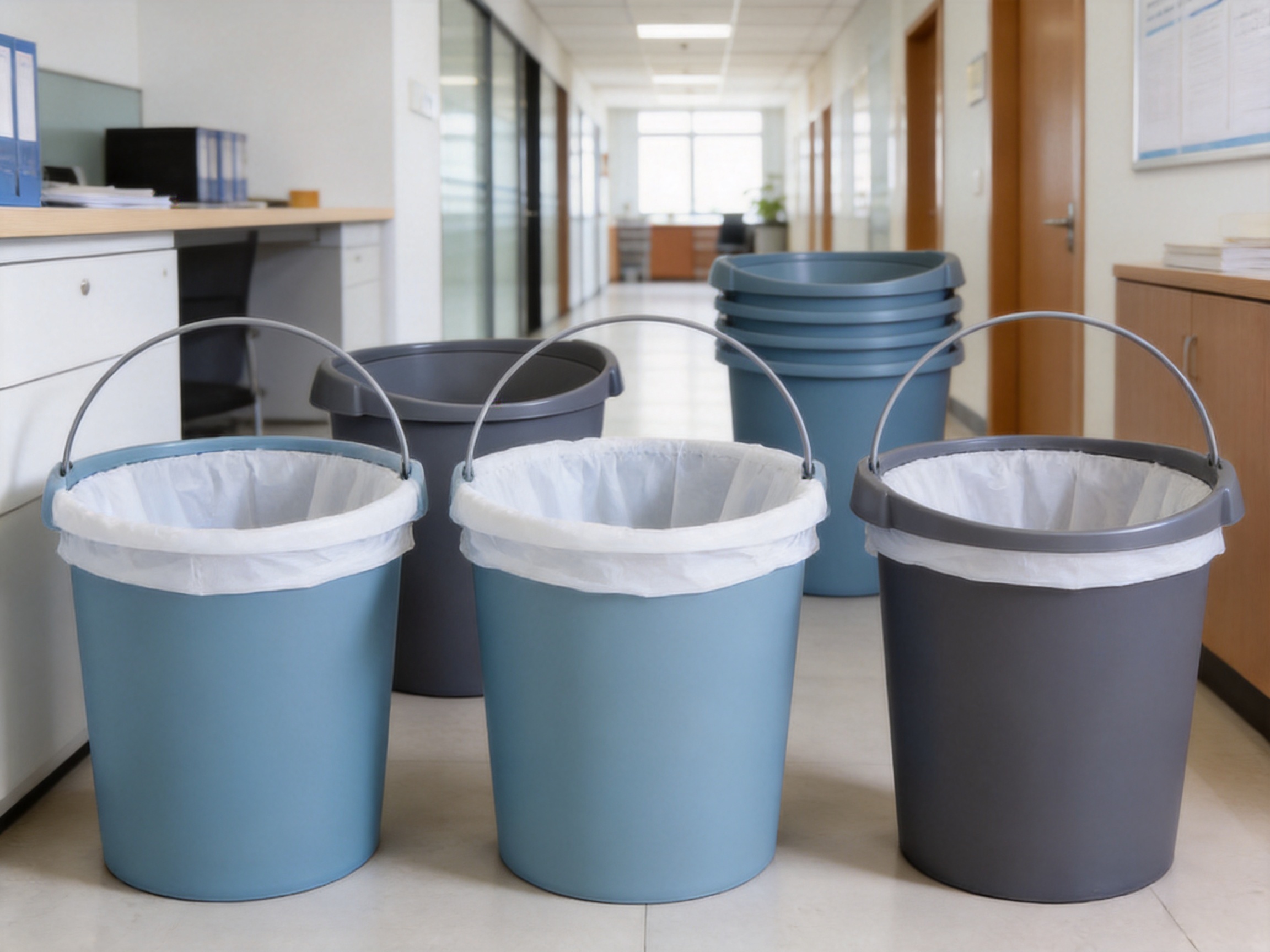
Manufacturers may use the same basic wastepaper basket concept for several market segments. A compact version may be suitable for bedrooms or bathrooms, while a larger version may be used in offices or commercial facilities. Different heights, widths, capacities, and ring designs can be developed according to local demand.
Brand owners may request a logo, product name, recycling symbol, capacity mark, or manufacturing code. These details can be integrated into the mould when the location and appearance have been confirmed. Embossed branding is durable and does not require an additional printing process, while removable inserts can provide greater flexibility for product variations.
Colour customisation can help distinguish product sizes or support a brand identity. Neutral colours may be preferred for offices and hotels, while brighter colours may appeal to households, schools, or children’s environments. The mould itself does not determine the colour, but its surface quality and texture influence how the final colour is perceived.
Packaging and logistics should also be considered during product development. Nesting height, ring position, carton dimensions, and protection against surface damage all affect shipping efficiency. Early coordination between product design and packaging design can reduce transport costs and prevent unnecessary packaging material.
A typical project begins with the customer providing product drawings, three-dimensional files, reference samples, target material, expected quantity, and any known machine limitations. If the product is still at the concept stage, photographs, sketches, or basic dimensions can be used as a starting point for engineering discussion.
The mould manufacturer then reviews the product and prepares recommendations concerning draft angle, wall thickness, ribs, retaining ring structure, gate position, ejection, surface finish, and mould layout. Any potential risks should be discussed before design approval.
After technical confirmation, the mould design is completed and submitted for review. Once the design is approved, steel and standard components are ordered, machining begins, and the project progresses through assembly and trial moulding. Sample results are evaluated, corrections are made if necessary, and the final mould is prepared for delivery.
Clear communication at every stage helps prevent delays. Customers should provide consolidated feedback where possible, while the mould manufacturer should record approved changes and maintain accurate revision control. This is particularly important when the product includes several versions or when the retaining ring is subject to repeated design changes.
Choosing a mould supplier based only on initial price can lead to higher costs later if the mould requires repeated correction, produces excessive scrap, or fails to maintain dimensions. An experienced manufacturer considers the complete lifecycle of the tooling, including design, production, trial moulding, maintenance, and technical support.
For a wastepaper basket with retaining ring, experience is valuable because the product combines a broad container body with a functional rim component. The mould must achieve good filling and cooling while maintaining the dimensional relationship between the basket and ring. Practical knowledge of household product moulds helps engineers anticipate common issues and create more robust solutions.
A professional manufacturer can also provide realistic advice about material choice, mould complexity, production volume, machine compatibility, and expected cost. This allows the customer to make informed decisions rather than selecting features that may not provide meaningful value.
YingXiang Plastic Mould’s experience in household and industrial plastic moulds supports projects that require both standardised production methods and customised engineering. Its capabilities in CAD, CAE, CAM, machining, mould assembly, and trial evaluation create a connected process from concept to finished tooling.
The Wastepaper Basket with Retaining Ring Mould is a practical tooling solution for manufacturers that require a clean, functional, and commercially attractive household waste container. The retaining ring improves liner retention, appearance, rim stability, and user convenience. When supported by accurate mould design, balanced filling, effective cooling, reliable ejection, and appropriate steel selection, the product can be manufactured efficiently and consistently.
The mould’s competitive value comes from more than its basic ability to form plastic. A well-engineered solution helps reduce defects, shorten production cycles, control material use, simplify maintenance, and support future product variations. These benefits can improve the customer’s total manufacturing economics and strengthen the position of the finished basket in different markets.
YingXiang Plastic Mould provides customised plastic injection mould solutions from its facility in Huangyan, Taizhou, Zhejiang, China. With a 7,000-square-metre plant, approximately 50 employees, CAD, CAE, and CAM systems, modern equipment, and experienced technicians, the company is equipped to support household product mould projects from initial design through trial production and delivery.
For buyers seeking a reliable trash can mould supplier, the key considerations should include product functionality, mould accuracy, production efficiency, serviceability, communication, and long-term support. By evaluating all these factors together, manufacturers can obtain tooling that supports stable production and delivers a finished wastepaper basket with the appearance and performance expected by modern users.
The retaining ring holds the waste liner in position and helps prevent it from slipping into the basket. It can also conceal the folded edge of the liner and improve the appearance of the finished product. Depending on the design, the ring may be removable, hinged, clipped, or integrated into the basket.
Common options may include polypropylene, high-density polyethylene, and selected recycled material blends. The final choice depends on required stiffness, impact resistance, flexibility, appearance, cost, and sustainability objectives. The material should be confirmed before final mould design because shrinkage and processing behaviour affect tooling dimensions.
Yes. The mould can be developed for different capacities, heights, widths, body shapes, rim structures, surface textures, colours, and branding requirements. Customers should provide product drawings or reference information so the mould design can be matched to the intended market.
Efficient production is supported through suitable gate planning, balanced filling, effective cooling, stable mould alignment, and reliable ejection. The actual cycle time depends on the material, wall thickness, machine, mould temperature, and product design, but careful engineering creates the conditions for high and consistent output.
Mould marks can be managed through appropriate parting line placement, gate positioning, ejector layout, surface finishing, and process control. Ejectors should be located in less visible areas where possible. Surface texture can also help reduce the visibility of minor marks, although it cannot replace accurate mould design and proper processing.
Useful information includes product drawings or three-dimensional files, product dimensions, target material, expected annual quantity, surface finish, colour, logo requirements, retaining ring structure, injection machine information, and delivery expectations. If some information is not yet available, a product sample or concept sketch may still support an initial feasibility review.
The mould is checked through design review, component inspection, assembly fitting, movement testing, cooling checks, trial moulding, and sample evaluation. The finished product is reviewed for dimensions, appearance, ejection performance, ring fit, and other agreed requirements. Corrections can be completed before the mould is released for production.
Routine maintenance includes cleaning, drying, rust prevention during storage, lubrication of suitable moving components, inspection of ejectors and guides, checking cooling channels, and monitoring parting surfaces for wear. Regular maintenance helps preserve product quality and extend mould service life.
In some cases, interchangeable inserts or modular components can support product variations. The feasibility depends on the differences between the versions, the required production volume, the surface design, and the mould structure. This possibility should be evaluated during the initial design stage.
CAE analysis can help predict filling behaviour, pressure distribution, cooling performance, weld lines, air traps, and possible warpage. A wastepaper basket has broad surfaces and may contain long flow paths, so simulation can help engineers identify risks before machining begins. It is a support tool that works together with practical mould-making experience.
1. General principles of plastic injection mould design, including draft, parting lines, ejection, cooling, and gate selection.
2. Technical guidance for thermoplastic material selection, shrinkage control, processing conditions, and dimensional stability.
3. Standard practices for computer-aided design, computer-aided engineering, and computer-aided manufacturing in mould production.
4. Industrial recommendations for mould steel selection, machining, polishing, texturing, assembly, and preventive maintenance.
5. Quality control principles for injection-moulded household containers and reusable plastic products.
6. Product development practices for household waste containers, liner-retention systems, nesting products, and commercial storage solutions.
If you are interested in any of our products or services, please feel free to ask and we can talk about your ideas.
 QUICK LINKSMOBILE SITE
 FACTORY ADDRESS
 CONTACT INFORMATION



 English
 Español