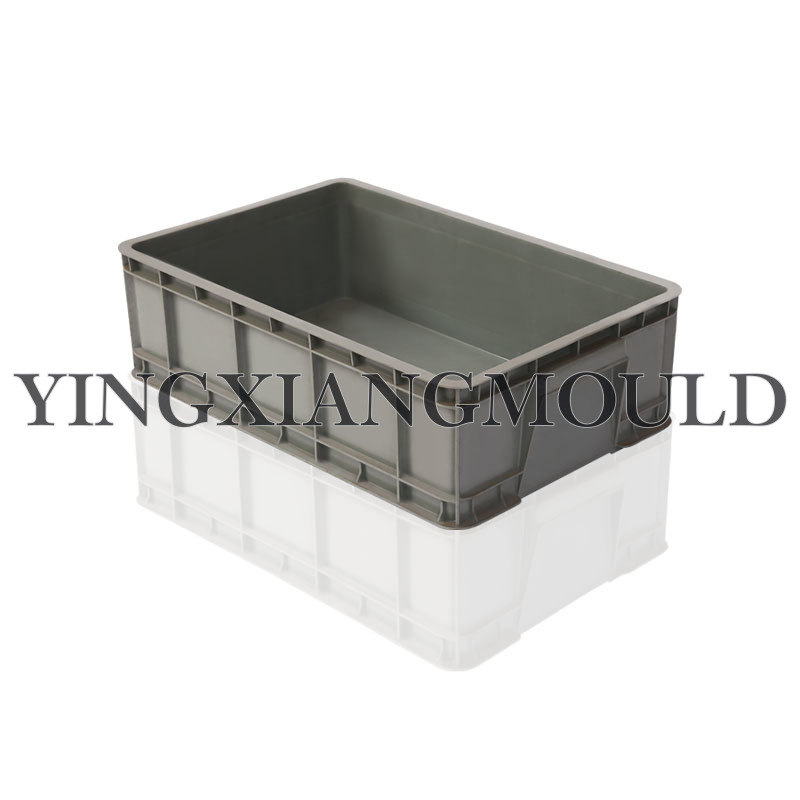
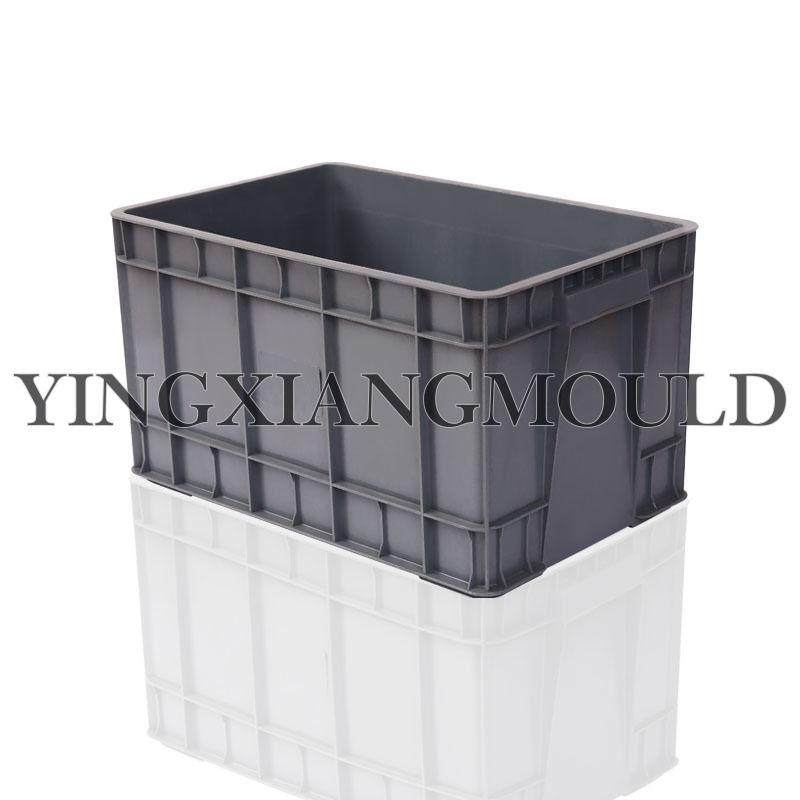
A children’s chair must do much more than provide a place to sit. It should support a child’s posture, remain stable during daily use, withstand repeated cleaning, and offer smooth surfaces without sharp edges or exposed defects. For manufacturers, retailers, schools, nurseries, restaurants, and family-oriented facilities, the quality of the chair mould is just as important as the appearance of the finished product. A well-designed mould helps ensure dimensional consistency, efficient production, reliable assembly, and a durable service life.
The Children’s Non-Slip Chair is designed around these practical requirements. Its concept combines a child-friendly form with a stable base, rounded details, and an injection-moulded plastic structure suitable for frequent use. The product can be developed for homes, kindergartens, classrooms, play areas, waiting rooms, activity centres, and other environments where safety and easy maintenance are essential.
Behind a dependable chair is a complete manufacturing process. Product design, material selection, mould-flow analysis, steel preparation, CNC machining, polishing, trial moulding, quality inspection, and after-sales support all influence the final result. TaiZhou HuangYan YingXiang Plastic Mould Co., Ltd. provides customized plastic mould solutions from Huangyan, Taizhou, Zhejiang, China, a region widely recognized for its concentration of mould-making expertise. Established in 2012, the company operates a 7,000-square-metre plant with approximately 50 employees, advanced CAD, CAE, and CAM systems, modern production equipment, and experienced technicians.
This article examines the design value of a Children’s Non-Slip Chair, the manufacturing advantages of injection moulding, the role of mould engineering, and the production strengths available to customers seeking a professional plastic chair mould manufacturer.
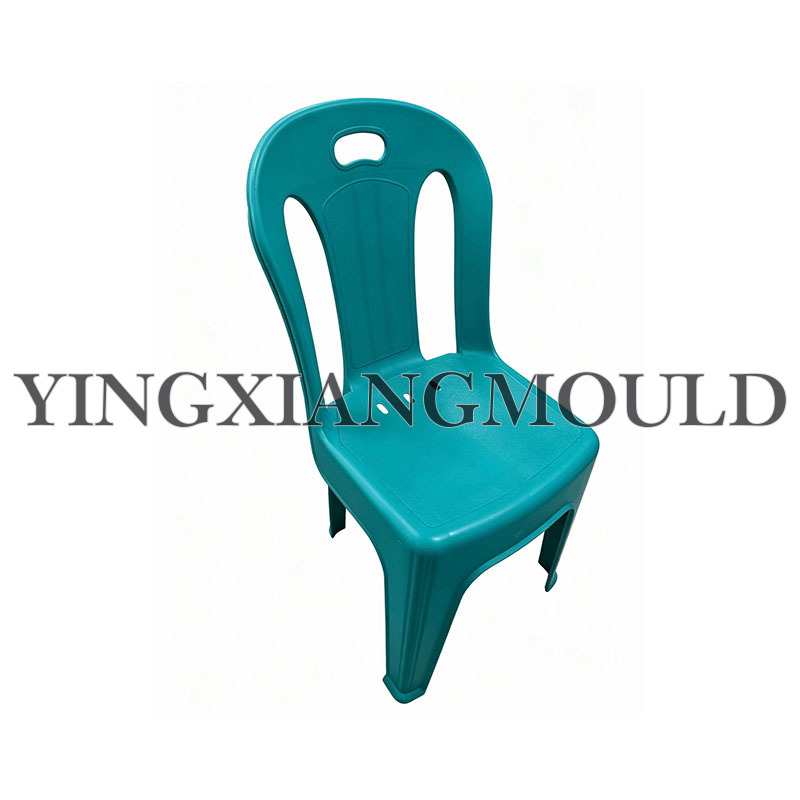
Children's Non-Slip Chair
The Children’s Non-Slip Chair is a compact seating product intended for young users. Its principal design objective is to provide a stable, comfortable, and easy-to-clean chair that can tolerate active daily use. Children frequently move, lean, turn, and climb onto furniture in ways that place greater demands on stability than ordinary adult seating. A suitable chair therefore requires careful attention to the relationship between height, base width, centre of gravity, leg geometry, seat shape, and surface finish.
In a plastic injection-moulded chair, these details are integrated into the product geometry. The seat, backrest, legs, reinforcing ribs, foot-contact areas, and other structural zones can be designed as a coordinated system. This allows the manufacturer to control the chair’s visual appearance and functional performance through the mould design rather than relying on extensive secondary assembly.
The non-slip concept may be implemented through several design approaches, depending on the customer’s requirements. These may include enlarged foot-contact areas, textured or shaped contact zones, rubber or elastomer inserts, anti-skid pads, or a carefully engineered plastic foot structure. The final method should be selected according to the intended floor type, expected load, cleaning conditions, production budget, and applicable safety requirements.
A professional mould supplier can help convert the initial product concept into a manufacturable design. During this stage, the supplier reviews wall thickness, draft angles, parting lines, gate locations, ejection areas, cooling channels, shrinkage allowances, and potential deformation risks. These engineering decisions have a direct influence on chair quality, cycle time, mould maintenance, and production cost.
Children’s furniture is used in dynamic environments. A child may sit down quickly, push backward with the feet, shift weight to one side, or use the chair while participating in games and classroom activities. A chair that slides too easily can create discomfort, distraction, or a risk of falling. A stable non-slip design helps reduce unwanted movement and gives children a more secure seating experience.
Stability does not depend on one feature alone. The chair’s overall geometry is important. A broad and balanced base can distribute force more effectively than a narrow base. Properly positioned legs can improve resistance to side loads. A low centre of gravity can support stability during ordinary movement. Rounded transitions can reduce the chance of uncomfortable contact, while a sufficiently supportive backrest can encourage more controlled posture.
Floor conditions also influence performance. Smooth tile, polished wood, vinyl, rubber flooring, and carpet provide different levels of friction. A product intended for multiple environments should be evaluated under representative conditions rather than judged only by appearance. Customers can work with the mould manufacturer to determine whether integrated plastic feet, replaceable pads, or separate anti-slip components are most suitable.
For nurseries and schools, stability is also connected to operational efficiency. Furniture that remains in position is easier for staff to arrange and easier for children to use independently. A consistent chair design allows spaces to be organized quickly, while stackable or lightweight construction can simplify storage and cleaning. These practical advantages can make a product more attractive to institutional buyers than a chair designed only for visual appeal.
The Children’s Non-Slip Chair can be developed with a proportionally wide support base and carefully placed legs to improve balance. The structural design should be adapted to the intended age group and seating height. A chair for toddlers will have different dimensional priorities from a chair for older children, so product development should begin with a clear target user profile.
Rounded corners and smooth transitions are particularly valuable in children’s products. They support a friendly appearance and help reduce sharp contact points. The mould must reproduce these curves consistently across the entire production run. Poorly controlled machining or polishing can result in uneven radii, visible parting lines, or local imperfections that affect both appearance and user comfort.
The product’s non-slip function can provide an advantage over basic plastic chairs that use small, smooth feet. By designing the contact area specifically for stability, manufacturers can create a chair that feels more secure during everyday use. This is especially useful in classrooms, playrooms, dining areas, and activity spaces where children may move frequently.
Non-slip performance should be balanced with practical movement. A chair that grips the floor too aggressively may be difficult for staff to move or reposition. The ideal design provides sufficient resistance against unintended sliding while still allowing adults to clean, rearrange, and store the chairs efficiently. This balance can be achieved through product geometry, material selection, surface texture, or a combination of these factors.
Plastic injection moulding supports smooth, continuous surfaces with minimal joints. This can reduce areas where dust, crumbs, or liquid can collect. In childcare and food-related environments, easy cleaning is an important product benefit. The chair may be wiped down repeatedly, so the material and surface finish should be selected for resistance to ordinary cleaning procedures.
A mould with well-controlled polishing and properly positioned ejector marks can help create a cleaner appearance. The design should avoid unnecessary deep recesses and narrow channels that are difficult to reach. Where decorative textures are required, they should be chosen with maintenance in mind.
Compared with many wooden or metal alternatives, an injection-moulded plastic chair can be relatively lightweight. This makes it easier for adults to move and allows older children to develop independent handling habits under supervision. Lower weight can also reduce transport and storage demands.
Lightweight construction does not mean weak construction. The chair must use suitable wall thicknesses, ribs, corner transitions, and material distribution to maintain rigidity. CAE analysis and mould-flow simulation can help identify areas that may require reinforcement without adding unnecessary material throughout the entire part.
A high-quality chair mould is capable of producing repeated parts with consistent colour, dimensions, texture, and surface quality. This is particularly important for retailers and institutional projects that require many chairs in the same space. Consistency supports a professional visual presentation and reduces sorting or rework during assembly and packaging.
Customers may select different colours for age groups, classrooms, brand programmes, or interior design schemes. The base chair geometry can remain consistent while colour, surface texture, logo placement, or selected components are customized according to the project.
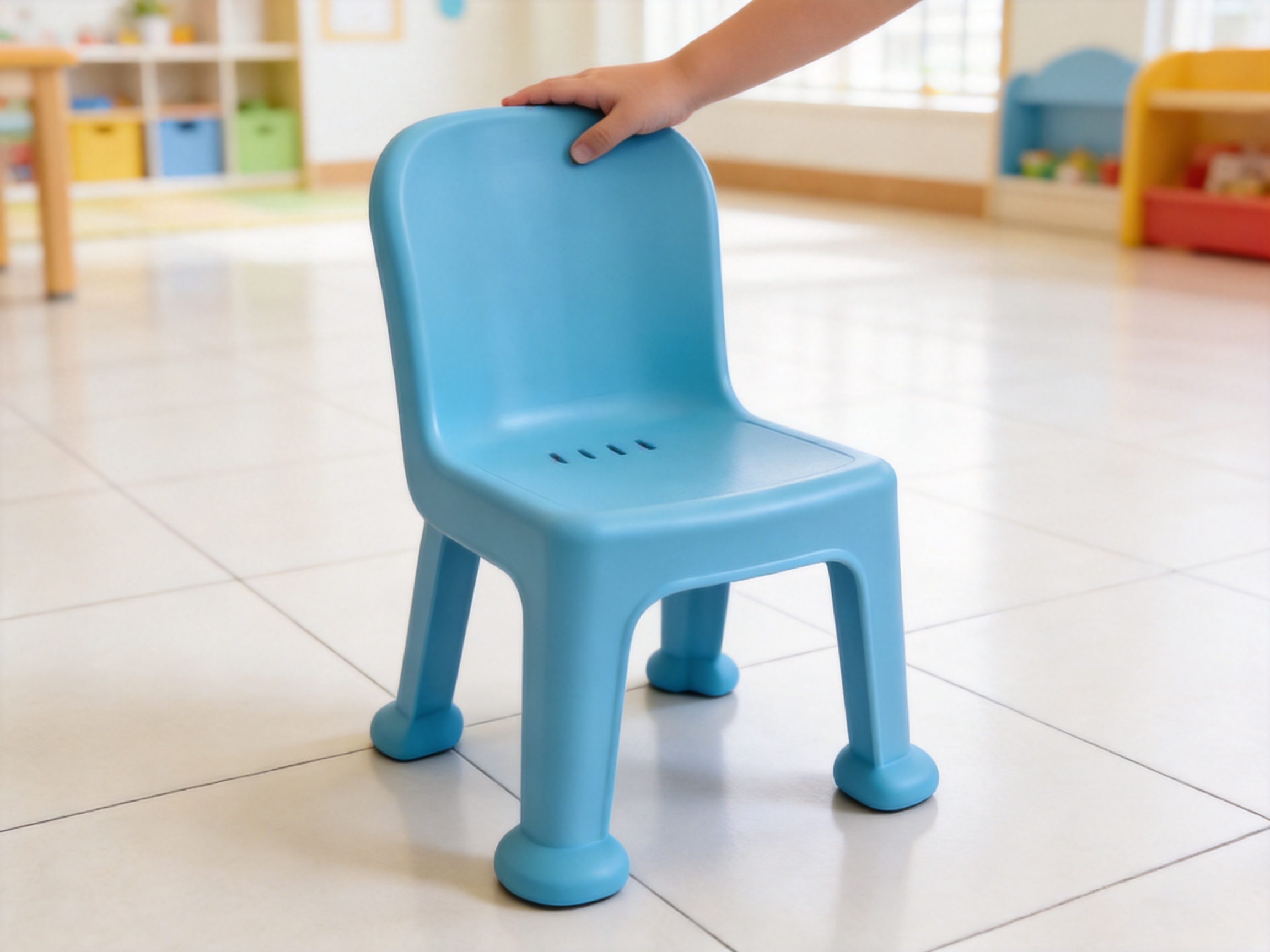
Many low-cost children’s chairs compete primarily on purchase price. However, a lower initial price may not represent the lowest total cost if the chair slides easily, develops cracks, has inconsistent dimensions, is difficult to clean, or requires frequent replacement. A professionally engineered non-slip chair can offer greater value through better stability, longer service life, and lower maintenance requirements.
One potential advantage is the integration of functional design into the mould itself. Basic products may use generic chair geometry with limited attention to floor contact, load distribution, or child-specific proportions. A customized mould allows these features to be developed around the intended application. This can help differentiate the product in a crowded market.
Another advantage is production consistency. A carefully built mould can reduce variation between batches. Consistent parts are easier to assemble, package, inspect, and sell. They also support more predictable performance during product testing and customer use.
Surface quality is another important distinction. Inexpensive moulds may produce flash, sink marks, weld lines, uneven gloss, or visible machining defects. These issues can affect the appearance and may create areas that are uncomfortable to touch or difficult to clean. Advanced machining, accurate fitting, suitable venting, and controlled polishing can improve the finished chair’s quality.
Durability also depends heavily on mould construction. A mould manufactured from appropriate steel, with efficient cooling and replaceable wear components where necessary, can support a longer production life. This is particularly valuable for high-volume products supplied to distributors, schools, childcare groups, and large retailers.
It is important to define competitor advantages through measurable criteria rather than general claims. Buyers should compare chair stability, load testing, dimensional tolerance, material traceability, cycle time, mould life, maintenance requirements, packaging efficiency, and technical support. A professional supplier should be prepared to discuss these factors during the quotation and design review process.
| Evaluation Area | Basic Generic Chair | Engineered Children’s Non-Slip Chair | Customer Benefit |
|---|---|---|---|
| Base stability | May use standard smooth feet | Designed around balanced geometry and floor contact | More secure everyday seating |
| Surface design | May include unnecessary recesses or rough areas | Planned for smooth transitions and practical cleaning | Faster maintenance and improved comfort |
| Dimensional consistency | May vary between production batches | Supported by controlled mould design and inspection | Reliable assembly and uniform appearance |
| Mould service life | May be limited by unsuitable steel or weak construction | Can be engineered for repeated production and maintenance | Lower long-term replacement risk |
| Customization | Often limited to colour | Can include geometry, texture, logos, and functional details | Stronger market differentiation |
| Technical support | May be focused only on delivery | Can include design review, trials, adjustments, and service | More controlled project execution |
The quality of the Children’s Non-Slip Chair begins before steel is cut. Product engineers and mould specialists should review the 3D design to ensure that the part can be filled, cooled, ejected, and produced efficiently. Early collaboration can prevent expensive redesigns after mould manufacturing has started.
Uniform wall thickness generally supports more stable filling and cooling. Sudden changes in thickness can produce sink marks, voids, warpage, or uneven shrinkage. However, a children’s chair may require different structural zones, including thicker connection areas and thinner cosmetic surfaces. A balanced design uses transitions, ribs, and fillets to manage these changes.
Excessive thickness increases material consumption and cooling time. Insufficient thickness may reduce rigidity or create moulding difficulties. CAE analysis can help engineers identify an appropriate balance based on the selected resin, expected load, gate arrangement, and production conditions.
Ribs can improve stiffness without making the entire chair solid and heavy. They may be positioned beneath the seat, around leg connections, or along the backrest. Rib thickness and height must be controlled to reduce the risk of sink marks on visible surfaces. The transition between a rib and the main wall should be smooth enough to support reliable filling and avoid stress concentration.
Draft angles allow the moulded chair to release from the core and cavity without scuffing or deformation. They are especially important for textured surfaces. A texture generally requires greater draft than a polished surface. If draft is insufficient, the part may stick, causing ejection marks, cycle delays, or damage to the mould and product.
The parting line should be placed where it has the least effect on appearance, comfort, and function. On a children’s chair, it should not create an uncomfortable ridge on a hand-contact area or an easily visible mismatch across the front surface. Proper fitting and mould alignment help control flash along the parting line.
Gate location influences filling pattern, weld-line position, pressure requirements, and cosmetic quality. A large chair component may require one or more carefully positioned gates to achieve balanced filling. The selected gate type should suit the part geometry, resin, expected cycle time, and required appearance.
Flow simulation can help predict hesitation, air traps, weld lines, and uneven filling before production. This gives the engineering team an opportunity to adjust the gate, wall thickness, venting, or cooling layout during the design stage.
A chair with broad curved surfaces requires a well-planned ejection system. Ejector pins, sleeves, lifters, or other mechanisms must apply force in a balanced manner. Concentrated ejection force can leave marks or distort the part. Ejector locations should preferably be placed on structurally strong and visually discreet areas.
Cooling is one of the most important factors affecting injection-moulding cycle time and dimensional stability. Poorly arranged cooling channels can produce hot spots, uneven shrinkage, or warpage. A mould designed with effective cooling can improve productivity and help maintain consistent chair dimensions over long production runs.
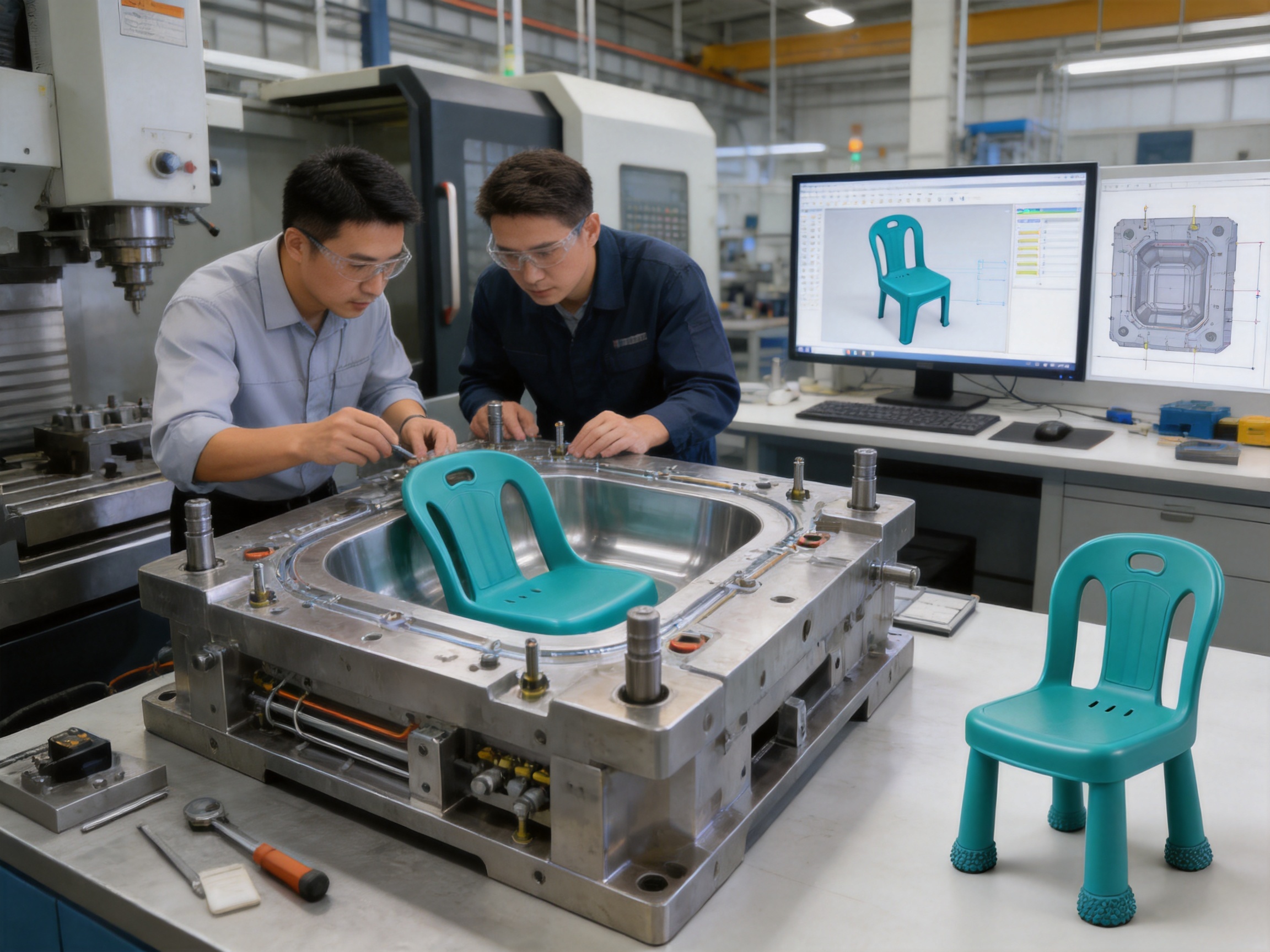
TaiZhou HuangYan YingXiang Plastic Mould Co., Ltd. combines digital design systems, experienced personnel, and specialized equipment to develop plastic injection moulds for household and industrial products. Its process is structured to move from concept evaluation to final mould delivery with controlled technical review at each stage.
Each project begins with an understanding of the customer’s product objectives. Important information includes the chair’s overall dimensions, target age group, resin preference, expected production quantity, surface finish, colour requirements, anti-slip method, packaging plan, production machine, and destination market.
Customers may provide a concept drawing, a 3D model, a sample, or only a general product idea. The engineering team can review the available information and identify details that may require clarification. This early stage is valuable because a product that looks attractive in a rendering may still need changes to become suitable for injection moulding.
CAD systems are used to develop and refine the product and mould structure. The design team considers cavity layout, mould base dimensions, inserts, sliders, lifters, ejectors, cooling channels, gates, vents, and maintenance access. For larger chair components, the mould may require careful planning to control weight, movement, and machine compatibility.
Digital design also makes it easier to review clearances and potential interference before machining begins. A detailed design review can reduce production interruptions and help the customer understand how functional and cosmetic requirements affect the mould structure.
CAE tools can be used to examine filling behaviour, pressure distribution, cooling, shrinkage, and likely deformation. Analysis is particularly useful for a chair with complex curves, varying wall thicknesses, ribs, and multiple structural zones.
Simulation does not replace practical moulding trials, but it provides valuable information during planning. It can help the team compare gate locations, predict weld lines, and optimize cooling. Early problem identification may reduce the number of physical modifications required after the first trial.
CAM systems convert approved mould designs into machining strategies. CNC equipment then produces cavities, cores, inserts, and other precision components. Accurate machining is essential for matching surfaces, controlling dimensions, reproducing textures, and achieving reliable mould closure.
The use of modern equipment allows complex chair contours to be processed with greater repeatability than traditional manual methods alone. Skilled technicians remain essential because they interpret machining results, manage tool selection, inspect critical areas, and make practical decisions during fitting and adjustment.
Electrical discharge machining can be used for deep, narrow, or intricate mould features that are difficult to produce with conventional cutting tools. It may support the creation of detailed corners, ribs, slots, or other geometries associated with the chair structure.
EDM parameters and electrode quality influence surface texture and dimensional accuracy. These details must be coordinated with polishing and the required appearance of the final plastic product.
Surface finish is selected according to the product’s visual and functional requirements. Smooth areas may require controlled polishing, while textured areas can improve tactile appeal or help mask minor flow marks. A children’s chair commonly benefits from a clean, soft-looking finish rather than an excessively glossy or harsh surface.
Any texture must be compatible with draft angles and cleaning requirements. The mould surface should be inspected carefully to ensure that texture depth, transition zones, and logo details are consistent.
After machining and surface treatment, mould components are assembled and checked for movement, alignment, cooling flow, ejection action, and safe operation. The first moulding trial provides practical information about filling, part release, flash, sink marks, warpage, surface quality, and cycle time.
Trial samples should be assessed against approved drawings and customer requirements. If adjustments are needed, the supplier can modify gates, vents, cooling, ejection, polishing, or selected steel areas. This iterative process is normal in professional mould development and should be managed through clear records and sample approval procedures.
Before delivery, the mould should undergo a final inspection covering dimensions, moving components, water connections, ejector operation, parting-line condition, cavity quality, spare parts, and documentation. A completed mould package may include drawings, maintenance instructions, trial reports, and recommended processing conditions.
Clear documentation helps the customer install and operate the mould more efficiently. It also provides a reference for future maintenance and replacement components.
The selection of plastic resin should be made according to performance, appearance, processing, and market requirements. Common engineering considerations include impact resistance, stiffness, chemical resistance, ultraviolet exposure, temperature, colour stability, and recyclability. The exact resin should be confirmed through product testing and compatibility with the customer’s injection-moulding equipment.
For a children’s chair, impact resistance is generally important because the product may be dropped, pushed, or handled roughly. Stiffness is also necessary to limit excessive flexing. If the chair will be used outdoors, weather and ultraviolet resistance may require additional attention.
Colour masterbatch and additive selection can affect both appearance and moulding performance. Strong colours, pastel colours, and neutral colours may require different pigment concentrations. The customer should also consider whether the chair will be sold as a single colour or as a coordinated series.
Where non-slip pads or soft components are added, the connection between the plastic chair and the secondary component should be carefully designed. Mechanical retention, snap-fit geometry, adhesive bonding, or insert moulding may be considered. The correct option depends on production volume, cost, replaceability, and required durability.
A reliable chair mould manufacturer should treat quality control as a process rather than a final inspection only. Quality begins with material and design review, continues through machining and assembly, and extends to mould trials and customer approval.
Dimensional inspection confirms that critical product features match the approved design. These features may include seat height, seat width, backrest angle, leg spacing, foot geometry, wall thickness, and assembly interfaces. Consistent dimensions are important for stability, packaging, stacking, and compatibility with accessories.
Visual inspection checks for flash, burn marks, short shots, weld-line concerns, sink marks, scratches, uneven texture, colour variation, and ejector marks. Not all moulding marks can be eliminated entirely, but they should be controlled according to the agreed quality standard.
Functional testing may include static load testing, repeated loading, impact evaluation, tipping assessment, slip evaluation, and environmental exposure. The appropriate tests depend on the intended market and relevant safety standards. Customers should identify certification or compliance requirements at the beginning of the project so that the product and mould can be designed accordingly.
Quality records are useful for both the mould supplier and the buyer. They can include inspection reports, steel certificates, sample approval records, mould trial parameters, dimensional results, and corrective-action notes. Such information supports traceability and makes future maintenance more efficient.
TaiZhou HuangYan YingXiang Plastic Mould Co., Ltd. focuses on customized plastic mould solutions for household and industrial products. Its product experience includes crate and folding box moulds, tray and pallet moulds, beverage box moulds, storage box moulds, and moulds for daily-use products. This range demonstrates experience with both structural plastic components and high-volume injection-moulded products.
The company’s location in Huangyan, Taizhou, Zhejiang, provides access to a mature mould-making supply chain and a regional base of skilled technical workers. The company was established in 2012 and has developed a 7,000-square-metre plant with around 50 employees. Its production resources include CAD, CAE, and CAM systems, high-tech equipment, and experienced technicians.
One of the company’s stated priorities is lean manufacturing. For a chair mould project, lean production can help reduce unnecessary processing, improve workflow, identify defects earlier, and support more predictable delivery. Efficient planning is especially important when a customer requires a mould for a scheduled product launch or seasonal sales programme.
Long-life mould construction is another important strength. A chair mould may be used for many production cycles, so the design should account for wear, maintenance, cooling performance, and replacement access. Durable mould construction can lower the risk of unplanned downtime and help maintain consistent part quality throughout the mould’s service life.
On-time delivery depends on more than machining speed. It requires accurate project scheduling, prompt design confirmation, coordinated procurement, controlled processing, trial planning, and effective communication. YingXiang’s manufacturing process is intended to support these stages as part of a complete customer service system.
Competitive cost is achieved through a balance of engineering, material selection, machining efficiency, mould design, and production planning. The lowest quotation is not always the most economical choice if it results in frequent modifications or short mould life. A well-planned mould can provide better value over the full production cycle.
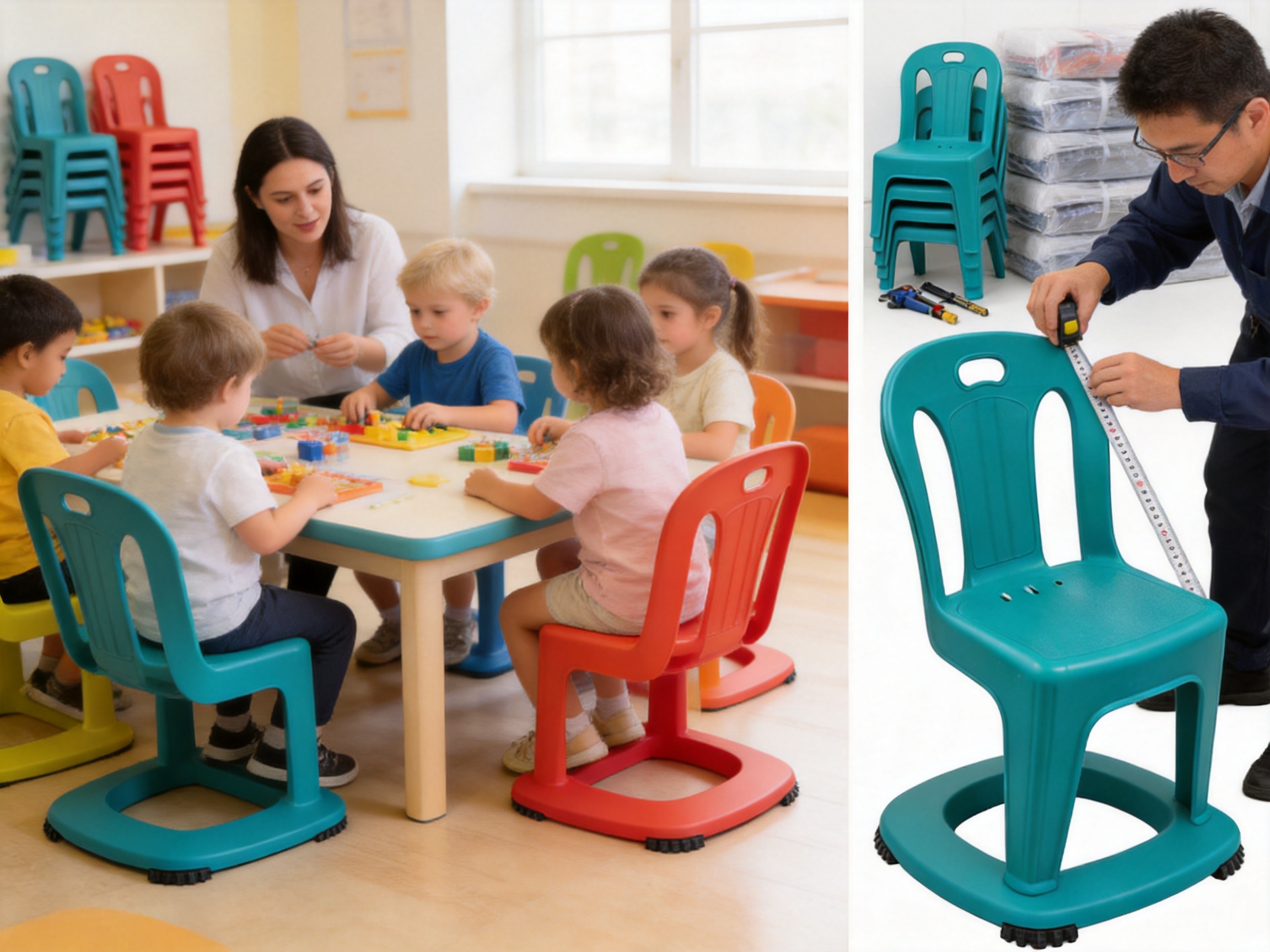
Although the Children’s Non-Slip Chair has a defined product concept, customers may adapt it to different markets and user groups. Customization can begin with the overall silhouette. A customer may prefer a more compact chair for toddlers, a deeper seat for older children, a higher backrest, integrated arm supports, or a design that coordinates with a larger furniture collection.
Colour customization is one of the simplest ways to create product variety. Bright colours may be suitable for play areas, while soft or neutral colours may be preferred for homes, clinics, or educational spaces. Multiple colours can also help organizations assign chairs to different rooms or age groups.
Surface texture can be customized to create a matte, satin, patterned, or lightly textured appearance. Logos, symbols, and recessed or raised marks may be incorporated where appropriate. Such details should be reviewed for moulding feasibility, cleaning, and long-term visual quality.
Functional customization may include stacking features, chair-linking features, improved foot contact, reinforced load zones, storage-friendly geometry, or compatibility with separate cushions. These options should be evaluated carefully because they can affect mould complexity, cost, cycle time, and maintenance.
Packaging should also be considered during design. A chair that nests or stacks efficiently can reduce carton volume and transport cost. However, stacking features must not create excessive pressure on visible surfaces or cause scratches during storage. The mould and product design teams can work together to balance packaging efficiency with product protection.
The Children’s Non-Slip Chair is suitable for a range of environments, provided that its final design and testing match the intended application.
In homes, the chair can be used in children’s bedrooms, playrooms, dining areas, and study corners. Parents generally value easy cleaning, low weight, stability, and a design that can fit comfortably into limited space.
In kindergartens and schools, chairs are often used continuously by many children. Durability, batch consistency, easy cleaning, and storage efficiency become especially important. The furniture may also need to withstand frequent movement by teachers and cleaning staff.
In libraries, waiting rooms, clinics, and indoor activity centres, visual appearance and low-maintenance surfaces may be major purchasing considerations. A coordinated range of colours and sizes can help organizations create a welcoming interior.
In restaurants, family dining areas, and commercial play spaces, the chair may be exposed to food, drink, frequent wiping, and high turnover. Material compatibility with cleaning agents and resistance to surface deterioration should be evaluated before mass production.
For outdoor or semi-outdoor use, customers should request appropriate material and weathering considerations. Standard indoor plastic may not provide sufficient ultraviolet or temperature resistance for extended exposure to sunlight and changing weather conditions.
A specialized mould manufacturer contributes more than the physical steel tool. It brings experience in turning a product concept into a stable and repeatable manufacturing process. This experience can help customers avoid design choices that appear inexpensive at the beginning but create problems during production.
For example, an unsuitable parting line may create visible flash in a high-contact area. An unbalanced gate may cause warpage across the seat. Insufficient draft may lead to difficult ejection. Poor cooling may lengthen the cycle and increase deformation. A weak mould base may reduce alignment reliability. Professional review can identify these risks before they become expensive production issues.
Specialization also supports communication between product design and manufacturing. The supplier can explain how a requested feature affects tooling cost, machining time, mould size, material consumption, and future maintenance. This gives the buyer a clearer basis for making commercial decisions.
YingXiang’s experience in household products, logistics crates, pallets, trays, folding boxes, beverage boxes, and storage products provides a broad understanding of injection-moulded plastic manufacturing. This background is relevant to children’s chair projects because many of the same principles apply: structural strength, repeated production, dimensional control, ergonomic surfaces, and efficient mould maintenance.
A successful Children’s Non-Slip Chair project should follow a structured workflow.
First, the customer should define the target market, user age range, expected annual quantity, production location, resin preference, and required certifications. This information determines the product dimensions and mould configuration.
Second, the customer and supplier should review the product design for manufacturability. The review should cover wall thickness, ribs, draft, parting line, gates, ejection, cooling, texture, non-slip elements, and packaging.
Third, CAE analysis may be performed to study filling, cooling, pressure, and shrinkage. The results can guide design changes before mould machining.
Fourth, the mould design should be confirmed in detail, including cavity numbers, mould base, steel selection, hot runner or cold runner arrangement, cooling layout, ejection system, and expected cycle time.
Fifth, machining, assembly, polishing, and trial production should be carried out according to the approved schedule. Trial samples should be measured and reviewed against the customer’s requirements.
Sixth, any required modifications should be documented and completed before final approval. The final mould should be delivered with appropriate drawings, inspection information, and maintenance guidance.
This workflow supports transparency and reduces the possibility of misunderstandings. It also allows the customer to make informed decisions about cost, performance, and production timing.
Even a well-made mould requires proper maintenance. Regular cleaning can prevent residue from affecting venting, parting surfaces, and cosmetic areas. Cooling channels should be monitored for blockage or reduced flow. Moving components should be lubricated according to the supplier’s recommendations.
Operators should also inspect ejector pins, slides, lifters, guide components, and locking surfaces. Unusual noise, increased ejection force, flash, dimensional drift, or longer cycle time may indicate that maintenance is required. Early intervention can prevent damage to both the mould and the chair.
Storage conditions are important when the mould is not in production. The mould should be cleaned, dried, protected against corrosion, and stored in a suitable environment. Water should be removed from cooling circuits where necessary, and moving parts should be positioned safely.
A professional supplier can provide maintenance instructions and recommend spare parts for wear components. This support helps the customer preserve mould performance and reduce unexpected interruptions. Long-term value depends on both mould construction and disciplined operation.
For a buyer, the value of a Children’s Non-Slip Chair mould should be assessed over the entire product life cycle. Initial tooling cost is only one part of the investment. Other factors include production cycle time, material use, reject rate, labour requirements, maintenance, packaging, transport, and expected mould life.
A mould that produces stable parts with limited adjustment can reduce hidden costs. Consistent dimensions may reduce manual sorting. Smooth surfaces can reduce finishing work. Efficient cooling can improve output. A reliable ejection system can reduce cycle interruptions. A durable mould can spread tooling investment across a larger number of products.
Product differentiation can also improve commercial value. A chair with a clear non-slip function, child-friendly proportions, attractive colours, and easy cleaning may be easier to position than an undifferentiated generic chair. Retailers and institutional buyers often look for a combination of safety, practicality, appearance, and dependable supply.
Custom tooling allows customers to establish their own product identity rather than competing only on price. A unique silhouette, integrated functional detail, or coordinated furniture range can support stronger market recognition.
Children’s furniture must be developed with safety in mind. The exact requirements vary according to the destination market, product classification, age range, and intended environment. Customers should identify applicable standards and testing obligations before finalizing the product.
Potential evaluation areas may include stability, strength, sharp edges, pinch points, small detachable parts, flammability, chemical composition, surface durability, and material safety. A mould manufacturer can support the physical product design, but the buyer remains responsible for confirming market-specific compliance, lab testing, labelling, and certification requirements.
The non-slip function should also be evaluated realistically. It should not be described as an absolute guarantee under every floor condition. Testing should reflect normal use and foreseeable misuse, including different floor materials, moisture levels, cleaning residues, and loading directions.
Clear product instructions can help users operate the chair safely. These may include recommended age or size range, maximum load, indoor or outdoor use, cleaning instructions, stacking limits, and warnings against standing on the chair.
The Children’s Non-Slip Chair is a practical injection-moulded product that combines child-oriented proportions, stable support, smooth surfaces, and efficient maintenance. Its value comes from the relationship between product design and mould engineering. A successful chair must not only look attractive; it must be dimensionally consistent, comfortable to handle, resistant to everyday use, and suitable for reliable mass production.
Compared with basic generic chairs, an engineered non-slip model can offer stronger differentiation through improved floor contact, balanced structure, easy-clean surfaces, consistent appearance, and customization potential. These advantages can benefit households, schools, nurseries, retailers, and commercial facilities.
The manufacturing process behind the product is equally important. CAD, CAE, and CAM systems, CNC machining, careful mould fitting, effective cooling, controlled ejection, professional polishing, trial moulding, and final inspection all contribute to the finished result. With a 7,000-square-metre plant, approximately 50 employees, modern equipment, and experienced technicians, TaiZhou HuangYan YingXiang Plastic Mould Co., Ltd. is positioned to provide customized plastic injection mould solutions for chair projects and a broad range of household and industrial products.
Customers seeking a dependable Children’s Non-Slip Chair mould should evaluate the complete supplier capability: design support, engineering communication, mould quality, production consistency, delivery planning, maintenance guidance, and after-sales service. A carefully developed mould is not simply a production tool. It is a long-term asset that supports product quality, manufacturing efficiency, and market competitiveness.
The main purpose is to provide young users with stable, comfortable, and easy-to-clean seating. Its design can include balanced geometry and specialized floor-contact features intended to reduce unwanted sliding during ordinary use.
Yes. The seat height, seat depth, backrest shape, leg geometry, overall dimensions, and structural reinforcement can be adapted for different age groups. The target user should be defined before the product and mould designs are finalized.
The material depends on the required impact resistance, stiffness, appearance, weather resistance, chemical resistance, cost, and destination-market requirements. The customer and moulding partner should select and test the resin according to the intended application.
It may be created through enlarged or shaped plastic feet, surface texture, elastomer pads, rubber components, or other anti-skid solutions. The best option depends on the floor type, cleaning conditions, production volume, and required durability.
Mould-flow analysis can help predict filling behaviour, pressure, weld lines, air traps, cooling performance, shrinkage, and warpage. This information allows the engineering team to improve the product or mould design before physical production begins.
Important features include balanced gating, effective cooling, suitable draft angles, accurate parting-line control, stable ejection, appropriate steel selection, smooth cavity surfaces, and access for maintenance. These features influence quality, cycle time, mould life, and production reliability.
Yes. Injection-moulded plastic chairs can generally be produced in different colours by changing the masterbatch or resin colour. Colour requirements should be confirmed during product development so that appearance and material compatibility can be evaluated.
Outdoor suitability depends on the selected material, additives, design, drainage, temperature exposure, ultraviolet radiation, and testing requirements. A standard indoor design should not automatically be marketed for prolonged outdoor use without suitable evaluation.
The buyer should provide drawings or samples, target dimensions, estimated production quantity, preferred resin, chair application, non-slip expectations, surface finish, colour, moulding machine information, destination market, certification requirements, and desired delivery schedule.
Regular cleaning, lubrication, cooling-system maintenance, inspection of moving components, proper storage, and correct processing conditions can help protect the mould. Maintenance records and timely replacement of wear parts are also recommended.
The manufacturer specializes in a wide range of plastic moulds, including integral boxes, pallets, fruit baskets, logistics crates, folding boxes, stools, food storage containers, trash cans, beverage boxes, hand baskets, household products, floor mats, chairs, trays, and related packaging or daily-use products.
Customers may contact TaiZhou HuangYan YingXiang Plastic Mould Co., Ltd. by telephone at +86 17858690885, +86 13566828762, or +86 19957608921. Email enquiries can be sent to Chinayingxiang88@sina.com. The company address is No. 2 Chaoyuan Road, North City Street, Huangyan, Taizhou, Zhejiang, China 318020.
1. General principles of plastic injection mould design, including draft, gating, cooling, ejection, and parting-line planning.
2. Common engineering practices for thermoplastic product development, dimensional control, shrinkage management, and mould-flow analysis.
3. General guidance for the design and evaluation of children’s seating, including stability, strength, edge treatment, and foreseeable-use considerations.
4. Manufacturing information supplied for TaiZhou HuangYan YingXiang Plastic Mould Co., Ltd., including company history, plant size, equipment capabilities, product categories, and service priorities.
5. Standard quality-control practices for injection moulds, including dimensional inspection, visual inspection, mould trials, maintenance documentation, and sample approval.
If you are interested in any of our products or services, please feel free to ask and we can talk about your ideas.
 QUICK LINKSMOBILE SITE
 FACTORY ADDRESS
 CONTACT INFORMATION



 English
 Español