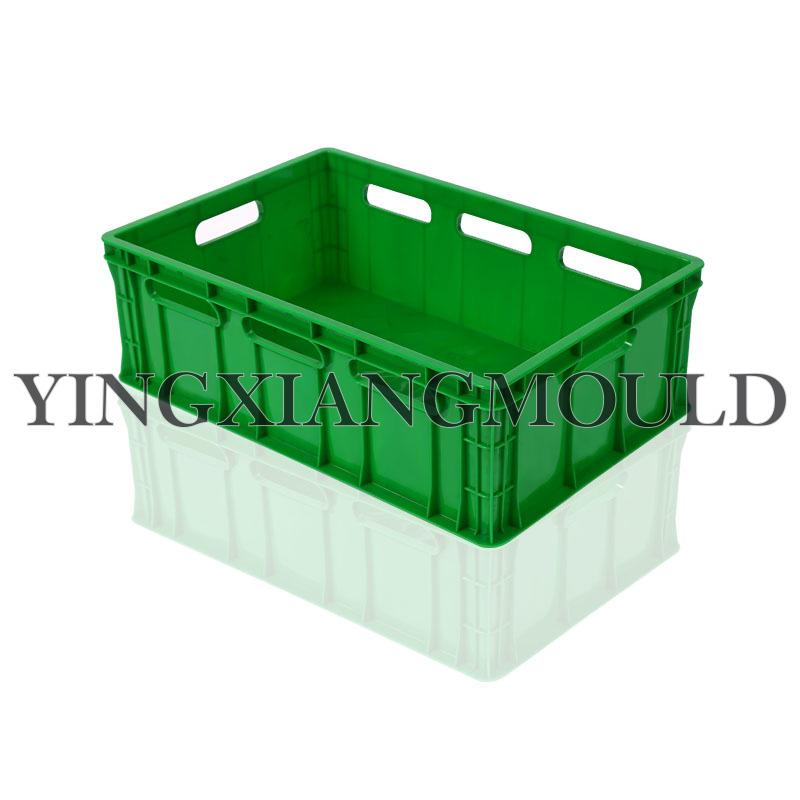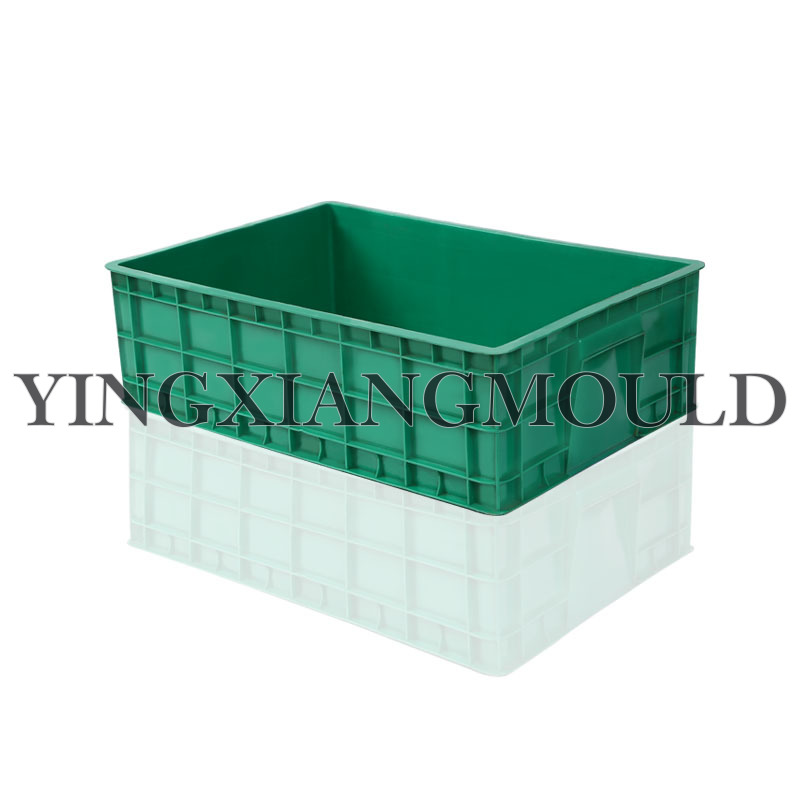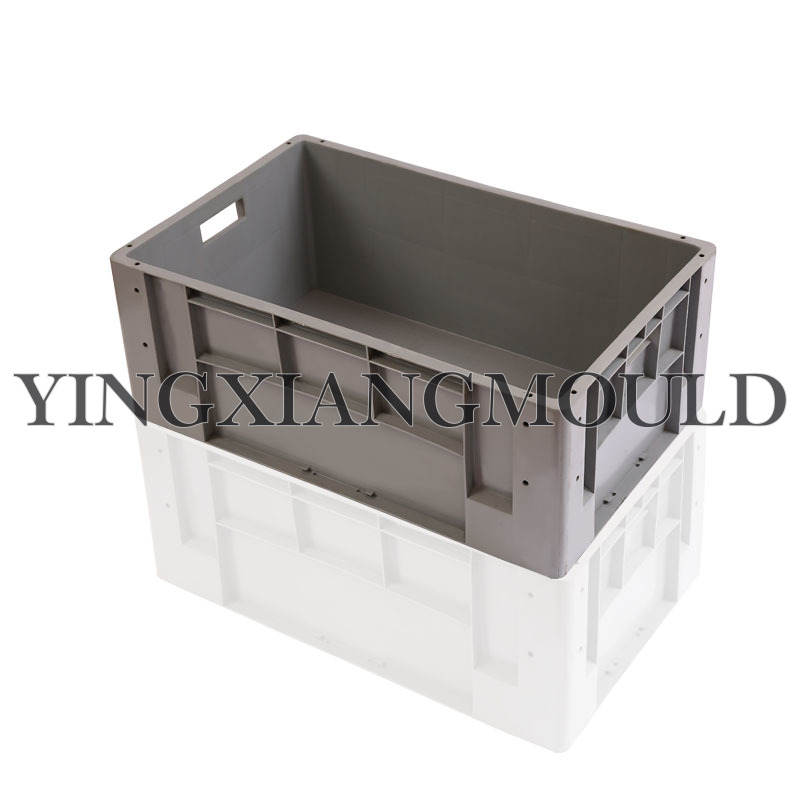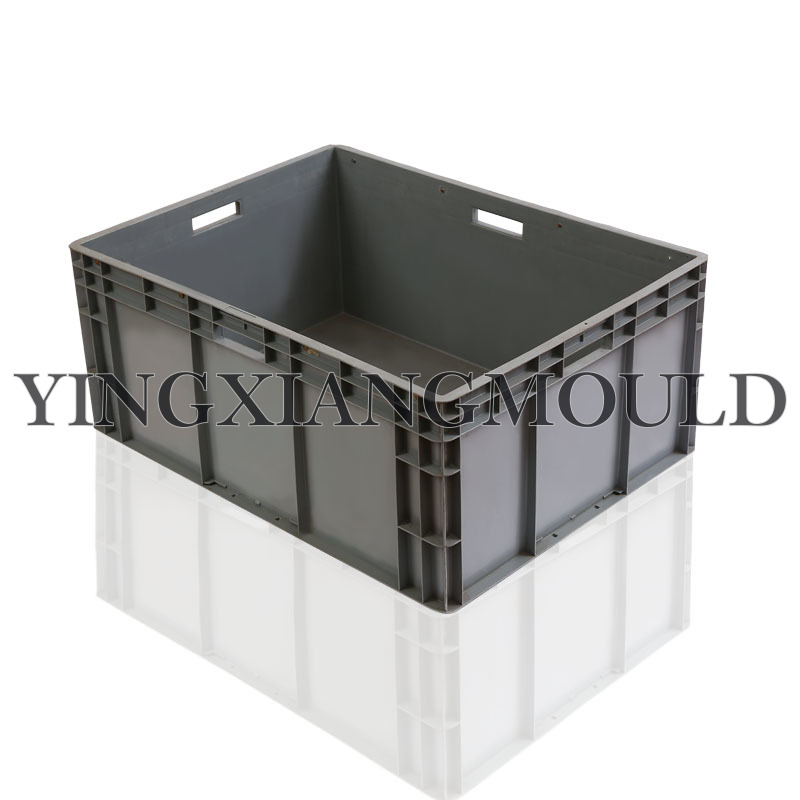
The dual-purpose food container is designed to support modern food storage requirements while providing manufacturers with an efficient, reliable, and commercially attractive packaging solution. In a market where consumers expect convenience, hygiene, reusability, and space efficiency, a well-designed food container can serve more than one daily purpose. It may be used for storing prepared meals, organizing ingredients, transporting food, reheating suitable products, or preserving freshness in domestic and commercial environments.
Behind every dependable food container is a carefully engineered injection mould. The mould determines the container’s dimensional accuracy, wall consistency, surface quality, lid fit, stacking performance, and production efficiency. For this reason, selecting an experienced food storage container mould manufacturer is just as important as selecting the plastic material or final product design.
TaiZhou HuangYan YingXiang Plastic Mould Co., Ltd. provides customized plastic injection mould solutions for food containers and a wide range of household and industrial products. Located in Huangyan, Taizhou, Zhejiang, China, the company combines practical mould-making experience, advanced CAD, CAE, and CAM systems, modern manufacturing equipment, and experienced technicians to develop moulds that support stable mass production.
This article explains the product value of a dual-purpose food container, the main advantages of its mould design, the manufacturing process used to create a high-performance mould, and the reasons a professional mould partner can help improve quality, efficiency, and long-term production results.
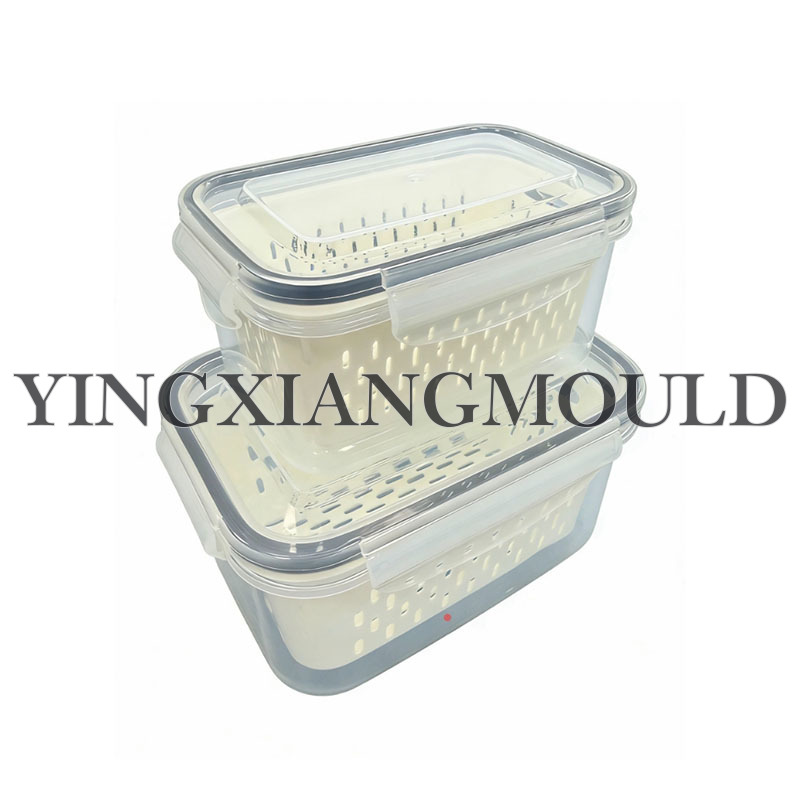
Dual-Purpose Food Container
A dual-purpose food container is a storage product developed to perform two closely related functions rather than serving only one narrow application. Depending on the product concept, the two functions may include food storage and food transport, dry ingredient organization and prepared meal storage, or refrigeration and serving. This multifunctional approach allows one container to replace several single-purpose products in the kitchen, workplace, restaurant, or household storage area.
The product must therefore balance several design requirements. It should be sufficiently strong for repeated handling, sufficiently light for economical distribution, and sufficiently stable for daily use. It also needs a secure closure system, practical internal capacity, smooth surfaces, and a shape that is easy to clean. When the product is designed for stacking or nesting, the body geometry must also support efficient storage before and after use.
From a manufacturing perspective, the container may appear simple, but its mould involves many technical details. The mould must reproduce the opening, corners, base, sidewalls, ribs, handles, lid interface, and any locking or sealing features consistently. Even a minor dimensional deviation can affect how the lid closes or how several containers stack together.
A high-quality dual-purpose food container mould is therefore not simply a cavity that creates the general shape of the product. It is a complete production tool engineered around material flow, cooling, ejection, cycle time, maintenance, and the final customer experience.
Food storage products are used frequently and often under demanding conditions. Consumers may fill them with hot or cold food, place them inside refrigerators, carry them in bags, wash them repeatedly, or stack them in confined spaces. Commercial users may handle hundreds or thousands of units each day. A container that looks attractive but lacks dimensional stability or closure reliability will quickly create dissatisfaction.
Dual-purpose functionality improves product value because it gives users more flexibility. A single container may help organize ingredients in a refrigerator and later transport a prepared meal. It may be used at home and in office environments. It may also support food preparation, portion control, or kitchen organization without requiring multiple packaging formats.
The container’s shape should make the intended functions intuitive. A broad opening can make filling and cleaning easier. A stable base can reduce tipping. Rounded internal corners can reduce food residue accumulation. A well-designed rim can improve sealing performance. External ribs or reinforced areas can increase stiffness without requiring excessive wall thickness.
These features must be considered during mould development rather than added after production begins. The mould structure must allow the product designer’s geometry to be manufactured repeatedly and economically. This is why early communication between the product owner and mould manufacturer is essential.
Dimensional consistency is one of the most important characteristics of an injection mould. The container body and lid must match within the intended tolerance range. If the opening is too large, the lid may be loose. If it is too small, the lid may be difficult to install or may deform during assembly.
Professional mould engineering reduces these risks through accurate 3D modelling, practical tolerance allocation, mould-flow evaluation, precision machining, and trial production. Critical features such as sealing rims, snap-fit points, hinge areas, and stacking surfaces require special attention because they directly influence product functionality.
Many food containers depend on a secure lid to reduce leakage, protect food from external contamination, and preserve freshness. Although the final sealing result depends on the product material and lid design, mould accuracy provides the foundation for reliable performance.
The mould must reproduce the contact surfaces cleanly and consistently. Draft angles, parting lines, ejector locations, and shrinkage allowances must be planned to avoid unwanted deformation. If the product includes a snap-fit or locking structure, the mould must also balance flexibility with strength.
A well-developed mould can help create a closure system that is easy for the user to operate while remaining secure during transport. This combination is especially valuable because closures that are too tight may frustrate users, while closures that are too loose may reduce confidence in the product.
Material efficiency is a major competitive consideration in plastic container production. Excessive wall thickness can increase material consumption, product weight, cooling time, and cost. Insufficient wall thickness can result in warping, sink marks, weak corners, or poor impact resistance.
Experienced mould engineers study the product geometry and injection conditions to achieve a balanced design. Uniform wall sections, properly positioned ribs, suitable transitions, and optimized gate locations can help distribute material more effectively. This can reduce unnecessary plastic consumption while maintaining the strength required for daily use.
Food storage containers are highly visible consumer products. Their surfaces should be clean, smooth, and free from obvious flow marks, weld lines, burn marks, short shots, or ejector damage. Product appearance affects perceived quality, especially when containers are sold through retail channels.
Mould surface treatment, polishing, texturing, venting, and injection-point planning all influence the final appearance. The correct finish may vary according to the product concept. A smooth surface may be preferred for easy cleaning, while a controlled texture may reduce visible scratches or improve grip.
A food container mould is a long-term production asset. Its value is not limited to the first production order. A durable mould can support repeated manufacturing cycles, future production planning, and consistent product quality over an extended period.
Service life depends on steel selection, heat treatment, structural design, cooling management, machining quality, component selection, maintenance access, and operating conditions. A professional manufacturer considers these elements together instead of focusing only on the initial mould price.
Cycle time affects the number of products that can be produced during a working shift. Cooling is often a major part of the injection moulding cycle, particularly for containers with broad surfaces or thicker structural areas. Efficient cooling channels can remove heat more uniformly and reduce the risk of deformation.
The mould designer must place cooling circuits close enough to the product surface for effective heat transfer while maintaining adequate steel strength. Poor cooling design can lead to uneven shrinkage, longer cycles, warping, and difficult process control.
The overall geometry should support the intended use while remaining suitable for injection moulding. Straight or gently tapered walls generally improve ejection and stacking. Sharp internal corners may create stress concentration and material-flow challenges, so rounded transitions are often more practical.
The base should provide sufficient stability on tables, shelves, and production lines. If the container will be nested before filling, the design must include an appropriate release angle and clearance. If it will be stacked after filling, the top and bottom structures must work together to prevent sliding or collapse.
The rim is a critical functional area because it may interact with a lid, sealing film, clip, or other closure component. It must be strong enough to resist deformation while remaining compatible with the chosen assembly process.
For food containers with removable lids, the rim should support repeatable opening and closing. For snap-fit designs, the mould must reproduce flexible engagement features without creating excessive stress. For seal-oriented products, the contact surfaces should be carefully controlled to prevent leakage and inconsistent closure force.
Uniform wall thickness is desirable because it helps reduce uneven cooling and shrinkage. However, real products often require local reinforcement around handles, corners, bases, or locking points. Ribs can increase stiffness without adding material across the entire product.
Ribs should be designed with suitable thickness and height in relation to the surrounding wall. If they are too thick, sink marks may appear on the external surface. If they are too deep or poorly connected, filling and ejection may become more difficult. CAE analysis and mould-flow evaluation can help identify these risks before steel machining begins.
If the dual-purpose container includes handles or grip areas, these features must support both user comfort and mould manufacturability. Handles may be integrated into the body or created as part of a separate lid or accessory. Their geometry should distribute loads smoothly rather than creating abrupt stress points.
Grip surfaces should be easy to hold when the container is full. At the same time, the mould should provide sufficient draft and appropriate parting arrangements so that the product can be ejected without distortion or damage.
Food-contact products should be designed with cleanliness in mind. Deep cavities, sharp internal corners, and difficult-to-reach recesses can trap food particles. Smooth transitions and accessible surfaces generally make cleaning easier.
The mould should reproduce these details accurately. Polishing quality is especially important for interior surfaces where the product must be smooth and easy to wash. The mould-making process must also control burrs, mismatched surfaces, and other conditions that could affect product hygiene or user safety.
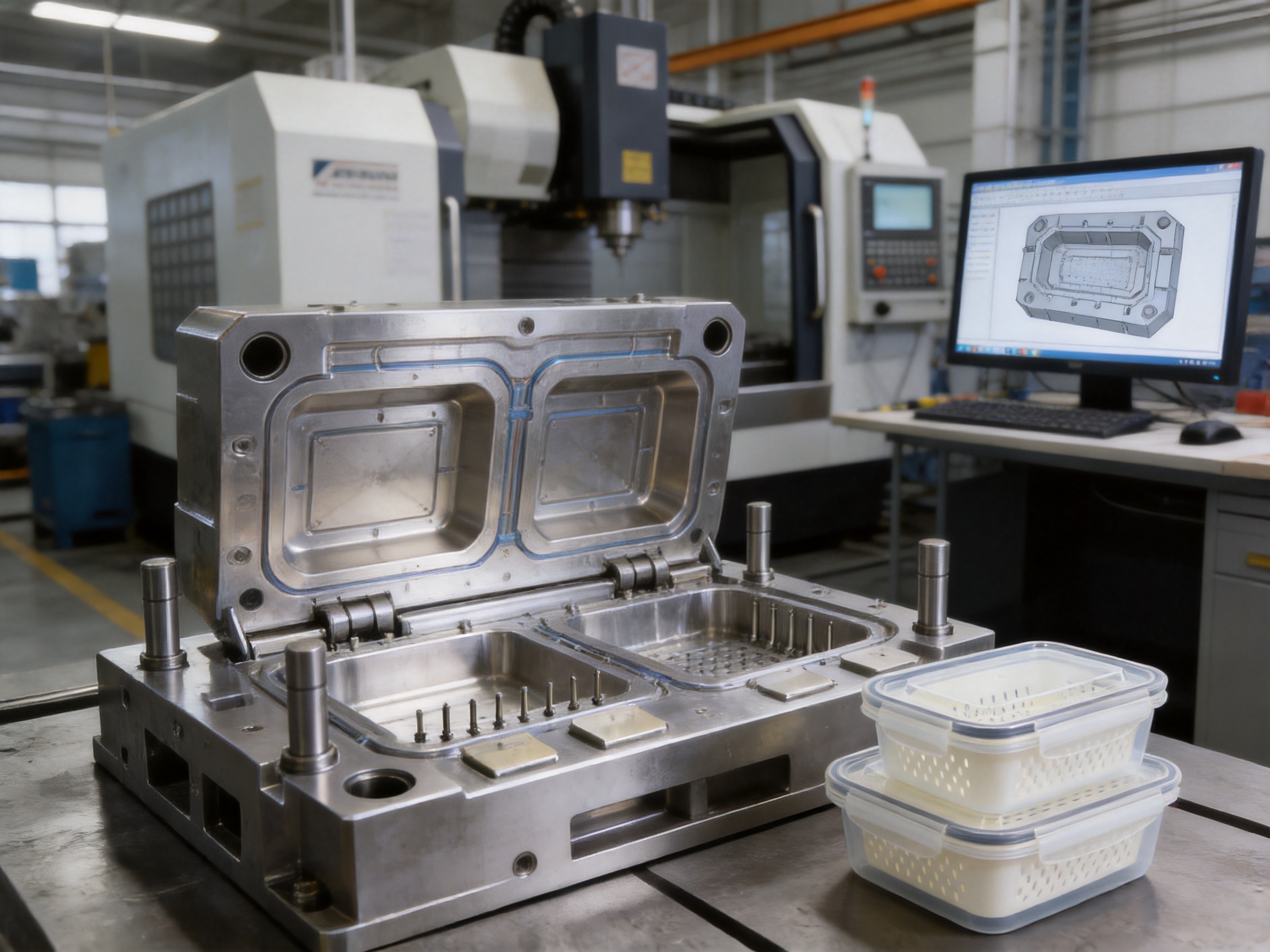
The process begins with a review of the customer’s product concept, drawings, three-dimensional data, sample, or functional requirements. At this stage, the mould manufacturer evaluates the proposed geometry and identifies potential concerns related to filling, shrinkage, ejection, cooling, parting, and assembly.
A feasibility review may recommend changes to wall thickness, draft angle, rib proportions, gate position, or parting-line location. These recommendations are not intended to restrict the product concept. They are designed to improve manufacturability and reduce later production problems.
For a dual-purpose food container, the review should also examine the relationship between the body and lid. Their dimensions must be considered together, especially when the product includes a sealing structure, snap-fit connection, or stacking function.
After the product requirements are confirmed, engineers develop the mould structure using CAD software. The design normally includes cavity and core components, sliders or lifters where necessary, cooling channels, ejector systems, guide components, locating features, and maintenance access.
CAE tools can be used to study material filling, pressure development, weld-line locations, air traps, cooling balance, and potential warpage. This analysis is valuable because it allows engineers to address problems digitally before the mould is manufactured.
For complex food containers, a balanced filling strategy is especially important. The injection system must deliver molten plastic to the cavity without creating excessive pressure differences or undesirable flow marks. The chosen gate type and location depend on the product size, material, appearance requirements, and expected production volume.
Mould steel must be selected according to production requirements and product characteristics. Factors may include expected shot count, plastic material, surface finish, corrosion resistance, strength, hardness, and ease of repair.
Areas exposed to repeated wear may require harder or more durable steel. Components that contact moisture or materials with corrosive additives may benefit from corrosion-resistant solutions. The correct choice should reflect the complete operating environment rather than only the initial budget.
After design approval, steel components are produced through machining processes such as CNC milling, turning, drilling, wire cutting, and electrical discharge machining. Each operation contributes to dimensional accuracy and final mould performance.
Precision machining is particularly important for sealing surfaces, interchangeable inserts, cavity details, ejector holes, and alignment features. Modern equipment helps manufacturers maintain repeatability, while experienced technicians interpret drawings and inspect parts throughout the process.
Yingxiang operates with advanced CAD, CAE, and CAM systems supported by high-tech equipment and experienced mould technicians. This combination allows digital engineering data to be transferred more effectively into practical manufacturing operations.
Some mould components require heat treatment to achieve the necessary hardness, wear resistance, or dimensional stability. After heat treatment, additional grinding or machining may be required to meet final specifications.
Surface finishing may include polishing, texturing, or other treatments selected according to the product’s appearance and functional needs. Food container surfaces should be finished carefully because surface defects in the mould can be transferred to every product made from it.
During assembly, the cavity, core, inserts, guide systems, ejector components, cooling circuits, and other parts are fitted together. The assembly team checks movement, alignment, clearances, and component interaction.
Correct assembly is essential for preventing flash, mismatch, sticking, uneven ejection, and premature wear. It also affects maintenance because a mould with accessible and replaceable components is easier to service during its production life.
The first mould trial provides practical information about filling, cooling, ejection, product dimensions, surface appearance, and cycle performance. Engineers inspect the trial parts and compare them with the approved product requirements.
If adjustments are needed, the mould may be modified through polishing, fitting, vent improvement, gate optimization, cooling changes, or dimensional correction. Several trial stages may be appropriate for products with demanding closure, sealing, or stacking requirements.
The purpose of trial moulding is not only to confirm that the mould produces a part. It is to establish a stable production condition that can be repeated by the customer’s injection moulding team.
An experienced mould company can manage the process from product assessment through design, machining, assembly, trial production, and final delivery. This integrated approach reduces communication gaps between separate suppliers.
When engineering and production teams work closely together, design decisions can be evaluated against real machining and moulding conditions. This helps prevent designs that look acceptable on a computer screen but are difficult to manufacture or maintain.
Yingxiang specializes in a broad range of plastic moulds, including crate and folding box moulds, tray and pallet moulds, beverage box moulds, storage box moulds, and moulds for daily household products. This product diversity provides useful experience in structural strength, stacking, handles, hinges, large surfaces, and repeated-use applications.
Knowledge gained from logistics crates and pallets can support the development of strong container bases and stacking structures. Experience with household moulds can contribute to better ergonomics, surface quality, and appearance. This cross-category knowledge is valuable when a product combines several functions.
Established in 2012, the company has developed practical experience in customized plastic mould solutions. Its approximately 7,000-square-metre plant and team of around 50 employees provide a production environment capable of handling design, processing, assembly, and project coordination.
Practical experience is important because mould production involves many decisions that are not fully explained by standard drawings. Technicians must understand how steel behaves during machining, how components fit after treatment, how cooling channels affect production, and how small adjustments influence the finished product.
For product manufacturers, delivery time can influence launch schedules, seasonal sales, and customer commitments. A professional mould supplier therefore needs organized project management as well as technical ability.
Clear communication about design approval, material selection, machining progress, trial results, modifications, and shipment helps reduce uncertainty. Yingxiang emphasizes on-time delivery, comprehensive customer service, and efficient coordination throughout customized mould projects.
The lowest initial mould quotation does not always provide the lowest total cost. A mould that requires frequent repairs, produces high scrap rates, or runs with a long cycle may become expensive over time.
Engineering value comes from balancing mould investment with production requirements. Appropriate steel, cooling, cavity arrangement, component design, and maintenance planning can help control both initial and long-term costs. A well-made mould can reduce rejected products, unplanned downtime, and unnecessary material consumption.
Basic moulds may produce acceptable samples but fail to maintain performance during extended production. Wear can increase flash, dimensional variation, or closure problems. A professionally engineered mould is designed with service life and production stability in mind.
Durable components, accurate alignment, suitable steel, and effective cooling contribute to more consistent output over time. This is especially important for food containers because the body and lid must continue to work together after large production volumes.
Low-cost moulds may rely on simplified cooling or insufficiently considered gate locations. This can produce warpage, sink marks, inconsistent wall thickness, or visible flow defects. Professional analysis and trial optimization improve the manufacturer’s ability to control these issues.
Better quality control also helps customers maintain consistent packaging dimensions across production batches. This is useful for retail packaging, automated filling, warehousing, and distribution.
Standard moulds may force a customer to accept a fixed size, shape, closure, or surface finish. A customized mould allows the container to reflect the intended market and application.
Customization may include multiple capacities, special stacking requirements, branding areas, ergonomic features, lid structures, transparent sections, color separation, or particular surface textures. The mould manufacturer must assess each request for both appearance and manufacturing feasibility.
A mould designed for maintenance can reduce downtime when wear parts require replacement. Interchangeable inserts, accessible cooling connections, organized ejector systems, and clear component identification all support easier servicing.
Preventive maintenance can preserve product quality and extend mould life. It may include cleaning, lubrication, inspection of guide components, checking cooling circuits, polishing selected surfaces, and examining wear areas.
The final plastic material should be selected according to the container’s intended use, temperature range, strength requirements, appearance, chemical resistance, and applicable food-contact regulations. Common food container materials may include different grades of polypropylene or other approved polymers, but the correct choice must be confirmed by the product owner and material supplier.
Material selection affects mould design. Different plastics have different shrinkage behavior, flow characteristics, cooling requirements, stiffness, and surface performance. These properties influence cavity dimensions, gate design, cooling layout, ejection force, and expected warpage.
Where transparency or semi-transparency is required, mould polishing and flow control become especially important. Where impact strength and repeated use are priorities, the design may require reinforced areas, appropriate radii, or a carefully selected material grade.
Where microwave, freezer, dishwasher, or hot-fill applications are proposed, the product owner must validate the material and final container through suitable testing. The mould manufacturer can support dimensional and manufacturability requirements, but application-specific safety and performance claims should be verified through testing and regulatory review.
Inspection should focus on critical dimensions such as overall length and width, container height, opening size, base geometry, rim thickness, lid interface, locking points, and stacking features. Measuring equipment and inspection methods should be selected according to the required accuracy.
Trial parts should be examined for short shots, flash, sink marks, weld lines, burn marks, warpage, ejector marks, scratches, and surface inconsistencies. Functional checks should include lid fit, closure force, stacking, nesting, handling, and basic leakage evaluation where relevant.
A successful mould should not only produce one good sample. It should support repeatable production under defined injection conditions. Trial records should document material, temperature, pressure, speed, cooling time, cycle time, and other relevant parameters.
Repeatability reduces the risk of quality changes when the mould is moved into regular production. It also helps the customer’s operators establish a practical processing reference.
Clear documentation supports future maintenance and production management. It may include mould drawings, component information, trial reports, inspection results, spare-part recommendations, and operating notes.
Effective customer communication is particularly important for custom moulds because requirements may evolve during design and trial stages. A responsive supplier can explain the technical consequences of proposed changes and help the customer select an appropriate solution.
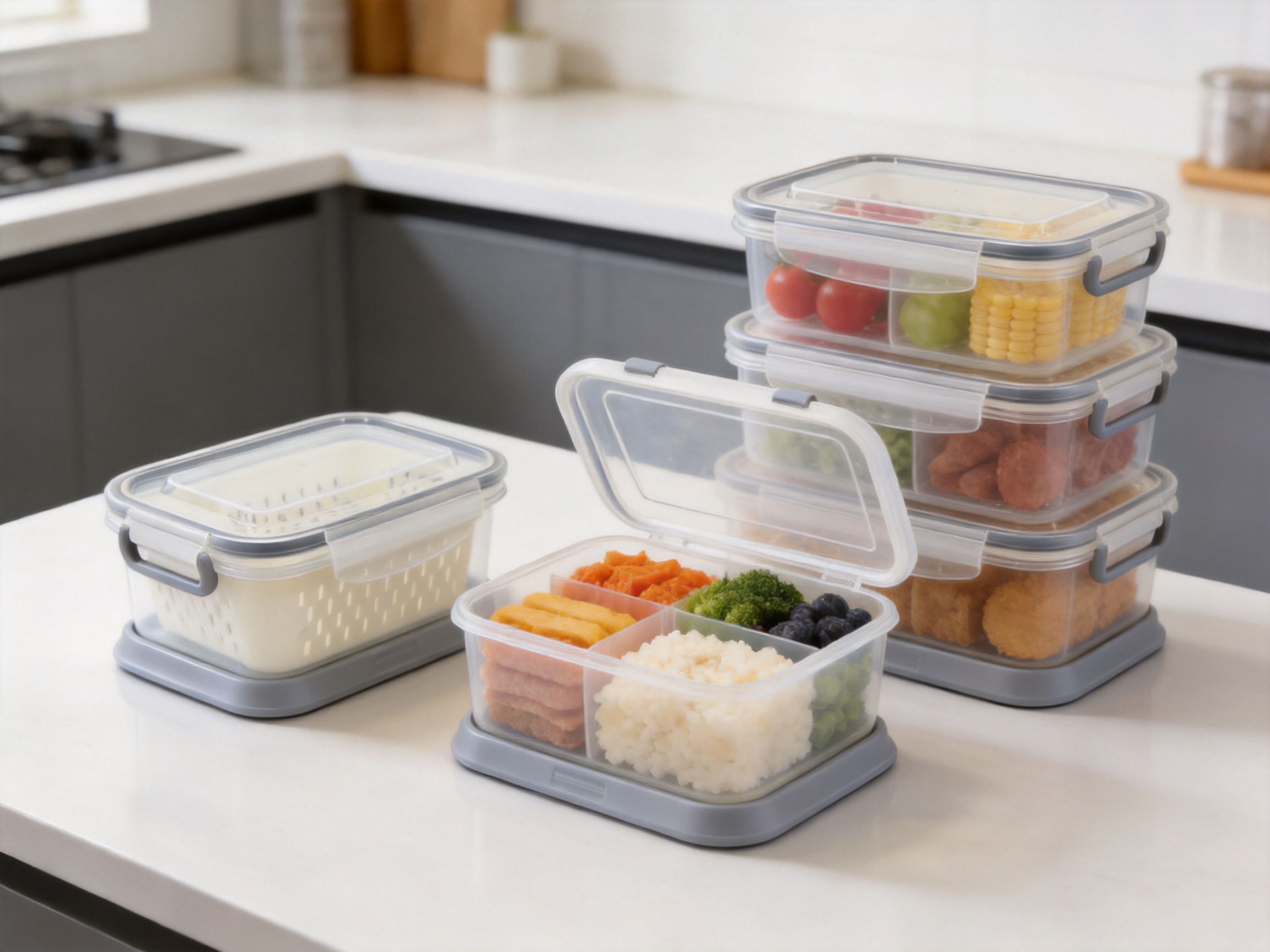
The container can serve a variety of household and commercial applications. In domestic kitchens, it may be used for storing leftovers, organizing ingredients, preparing portions, and carrying meals. Its dual-purpose design can reduce the number of separate products required in a kitchen cabinet or refrigerator.
In offices and schools, the container may support meal transport and temporary food storage. In catering and food service environments, it may be used for portion preparation, ingredient organization, or delivery-related handling, provided that the selected product and material meet the application requirements.
For retailers, the product’s multifunctional value can improve shelf appeal. Customers are often attracted to products that offer more than one practical use, particularly when the container is easy to clean, stack, and store.
For manufacturers, a carefully designed mould can support product differentiation. Variations in capacity, color, lid style, surface finish, or accessory compatibility can create a product family from a common design platform.
Competition in the food storage market is not based only on price. Consumers compare convenience, appearance, durability, cleanliness, closure performance, storage efficiency, and perceived safety. A customized product can respond more directly to the needs of a target market.
A restaurant supplier may need containers that stack efficiently and tolerate repeated handling. A household brand may prioritize attractive appearance, compact nesting, and easy opening. A meal-preparation product may require portion control and reliable transport. Each application can benefit from a different mould and product strategy.
Customization also allows the product owner to develop a consistent brand family without placing brand-related content on the mould or product in a way that compromises design. Marking areas, logos, symbols, measurement graduations, and identification features can be considered during the engineering stage.
The best results come from treating customization as a complete product-development process. The customer should define market requirements, user expectations, production quantity, target material, packaging method, and cost objectives. The mould manufacturer can then translate these objectives into practical tooling recommendations.
Efficient mould design can contribute to more responsible plastic manufacturing by reducing scrap, shortening cycles, and controlling material use. Better filling balance reduces the likelihood of defective parts. Effective cooling can reduce energy consumption associated with unnecessarily long cycles. Durable moulds can also support longer production life and fewer replacement tools.
Product design influences environmental performance as well. A reusable food container may reduce reliance on certain single-use packaging formats when it is properly used and maintained. Lightweighting can reduce material consumption, although it must not compromise durability or safety.
End-of-life considerations should be addressed by the product owner through appropriate material selection, labeling, recycling guidance, and market-specific compliance. A mould manufacturer can support the physical design and production process, while broader environmental claims should be based on verified product data and recognized assessment methods.
Because environmental expectations are increasing, manufacturers should consider efficiency from the beginning rather than treating it as a final-stage adjustment. A well-designed tool can help align product performance, cost control, and responsible resource use.
A specialized plastic mould manufacturer understands that the mould is central to the entire injection production system. The supplier must consider not only whether a cavity can be machined, but also how the tool will operate on the customer’s injection machine, how parts will be removed, how cooling will be controlled, and how the mould will be maintained.
TaiZhou HuangYan YingXiang Plastic Mould Co., Ltd. focuses on customized mould solutions for household and industrial plastic products. Its capabilities cover food storage container moulds as well as logistics crates, folding boxes, pallets, trays, beverage boxes, chairs, stools, hand baskets, trash cans, floor mats, and other daily-use products.
This broad experience supports a practical understanding of different product structures and production challenges. The company’s location in Huangyan, known as a mould-manufacturing center, also places it within an established industrial environment with access to technical resources and supply-chain support.
With a plant of approximately 7,000 square metres, around 50 employees, advanced digital design systems, high-tech equipment, and experienced technicians, Yingxiang is positioned to manage custom mould projects from concept evaluation to final production support.
The company emphasizes lean manufacturing, long-life moulds, on-time delivery, premium quality, competitive costs, and comprehensive customer service. These strengths are relevant to food container manufacturers seeking a reliable partner rather than a short-term tooling transaction.
Customers planning a dual-purpose food container should prepare as much product information as possible before requesting a quotation. Useful information includes product drawings or samples, three-dimensional files, target dimensions, expected annual output, material preference, injection machine information, lid requirements, surface finish, packaging method, and target market.
The first stage should be a technical discussion. The mould supplier reviews the product and identifies design risks. The customer and supplier then confirm the product concept, mould structure, estimated cycle, expected production volume, and quality requirements.
The second stage is design approval. The supplier prepares mould drawings and confirms details such as parting line, gate position, ejection, cooling, steel, cavity count, and standard components. The customer should review the product interface carefully before steel is ordered.
The third stage is manufacturing and progress control. Machining, heat treatment, fitting, polishing, assembly, and trial preparation are completed according to the approved design. Regular updates can help the customer coordinate related packaging, materials, and production planning.
The fourth stage is trial evaluation. The supplier produces trial samples and records relevant observations. The customer reviews dimensions, appearance, function, and assembly. If modifications are required, they should be documented clearly and prioritized according to production importance.
The final stage is acceptance and production support. After the mould meets the agreed requirements, it can be delivered with suitable documentation and maintenance recommendations. Continued communication is beneficial when the customer begins mass production and needs support with processing conditions or future modifications.
A dual-purpose food container is designed to provide two related functions, such as storing and transporting food, or organizing ingredients and carrying prepared meals. The exact functions depend on the product design and target application.
The mould controls the container’s dimensions, wall thickness, surface finish, lid fit, stacking geometry, and production repeatability. A well-engineered mould helps reduce defects and supports consistent mass production.
Yes. A custom mould can be developed for specific dimensions, capacity, lid structures, handles, stacking requirements, surface textures, marking areas, and material conditions. Customization should be reviewed for both user value and injection manufacturability.
Customers should provide product drawings or samples, three-dimensional files if available, material preferences, expected production quantity, product dimensions, closure requirements, surface finish, injection machine details, and any special quality or regulatory requirements.
CAE analysis can help evaluate material flow, pressure, weld lines, air traps, cooling balance, and possible warpage before the mould is manufactured. It allows engineers to identify and correct potential problems earlier in the project.
The appropriate plastic depends on the required strength, flexibility, temperature resistance, transparency, chemical resistance, repeated-use conditions, and food-contact requirements. The product owner and material supplier should confirm the suitable approved grade for the intended market.
Efficient mould design can reduce costs through balanced filling, shorter cooling cycles, appropriate material use, lower scrap rates, durable components, and easier maintenance. The lowest initial tool price should not be the only factor considered.
Mould life depends on steel, production volume, plastic material, injection conditions, maintenance, cooling-water quality, and product geometry. A properly designed and maintained mould can support long-term production, but the expected service life should be discussed according to the actual project requirements.
A mould may be designed with interchangeable inserts or as part of a product family, depending on the customer’s requirements. Producing multiple sizes from one tooling system requires careful evaluation of cost, changeover time, dimensional control, and production volume.
An experienced manufacturer combines product feasibility review, digital design, engineering analysis, precision machining, trial optimization, inspection, maintenance planning, and customer communication. This integrated capability can improve production stability and reduce the risks associated with custom tooling.
The dual-purpose food container responds to the growing demand for practical, reusable, and versatile food storage products. Its value comes from the combination of functional design, reliable closure, easy cleaning, efficient storage, attractive appearance, and durable performance.
The injection mould is the foundation of these characteristics. Accurate mould engineering supports consistent dimensions, stable production, controlled material use, improved surface quality, shorter cycles, and longer tooling life. For products involving both a container body and a matching lid, precision and coordination are especially important.
TaiZhou HuangYan YingXiang Plastic Mould Co., Ltd. offers customized plastic injection mould solutions supported by CAD, CAE, and CAM systems, high-tech equipment, experienced technicians, and practical experience across household and industrial products. Its capabilities in food storage container moulds, storage boxes, logistics crates, pallets, trays, folding boxes, beverage boxes, and other plastic products provide a broad technical foundation for customized projects.
For manufacturers developing a new dual-purpose food container, the most effective approach is to involve the mould supplier early. Clear requirements, feasibility analysis, careful mould design, accurate machining, controlled trials, and reliable after-sales communication can transform a product concept into an efficient and competitive production solution.
1. International Organization for Standardization. General principles for plastics injection mould design and manufacturing practice.
2. Society of Plastics Engineers. Injection Molding Handbook and technical guidance on polymer processing.
3. Plastics Industry Association. General guidance on plastic product design, processing efficiency, and responsible manufacturing.
4. International Organization for Standardization. Quality management principles for manufacturing organizations.
5. Technical literature on polymer shrinkage, mould cooling, warpage control, gate design, and injection moulding process optimization.
6. Manufacturer-provided company information concerning customized plastic injection mould production, engineering systems, facilities, product categories, and customer service capabilities.
If you are interested in any of our products or services, please feel free to ask and we can talk about your ideas.
 QUICK LINKSMOBILE SITE
 FACTORY ADDRESS
 CONTACT INFORMATION



 English
 Español