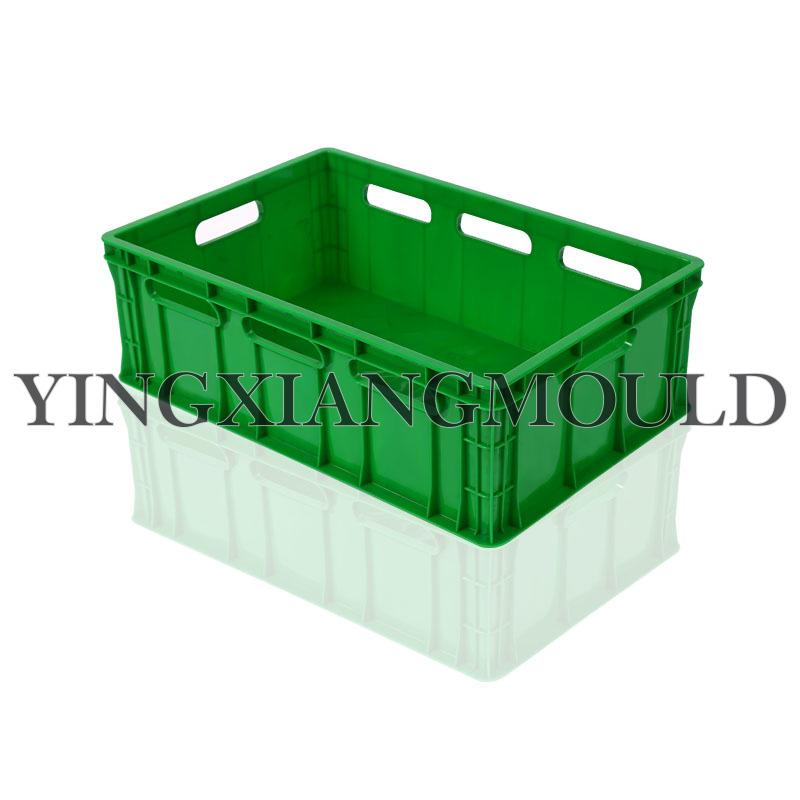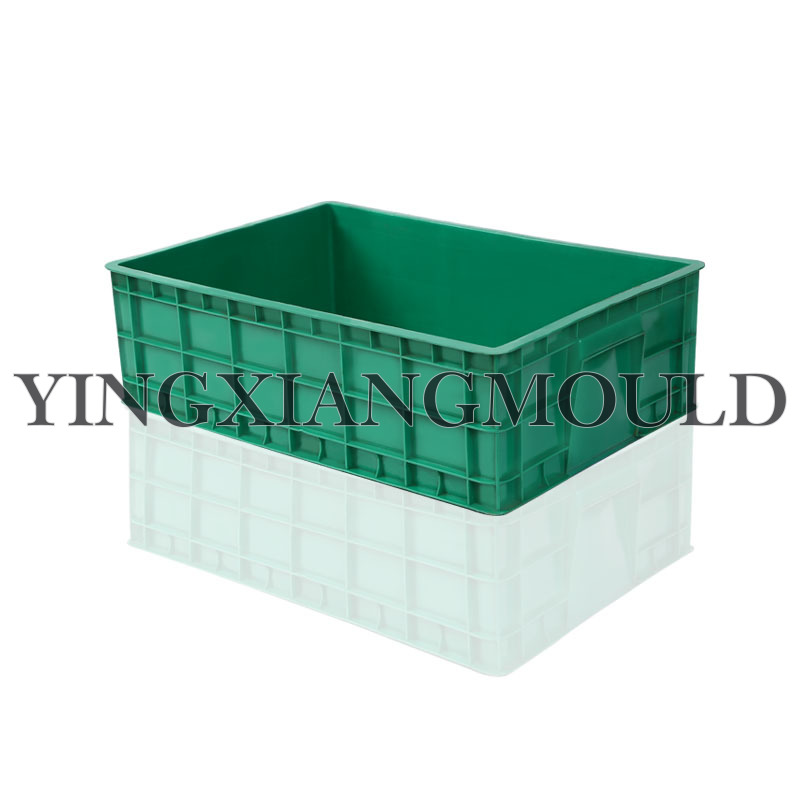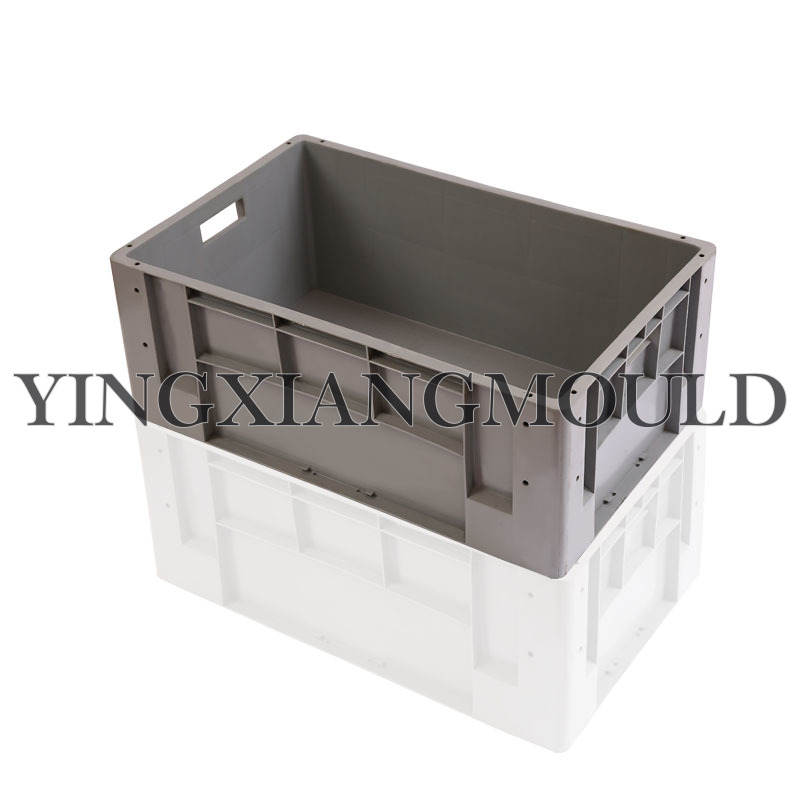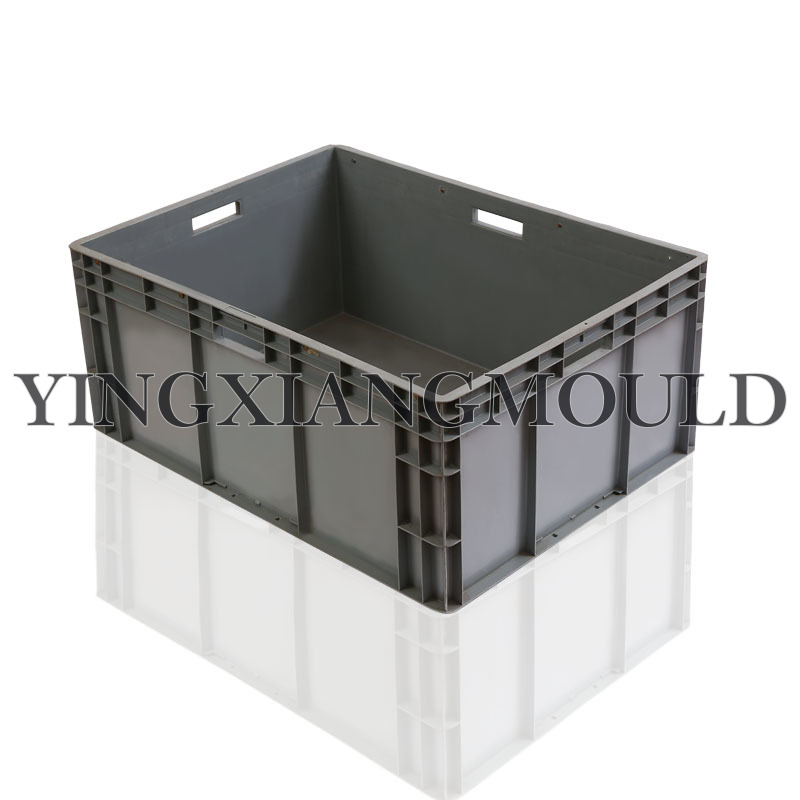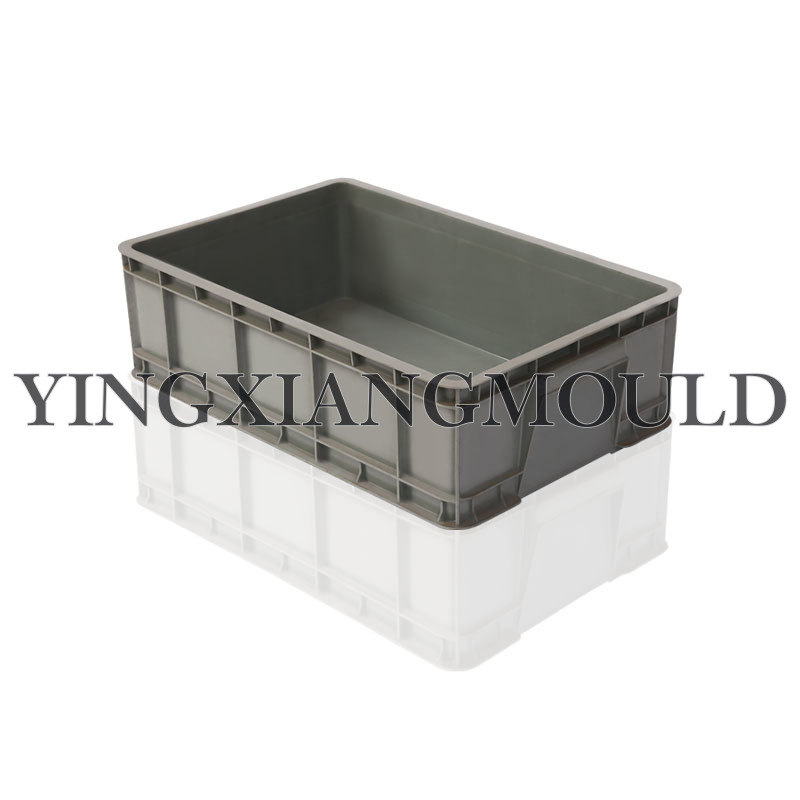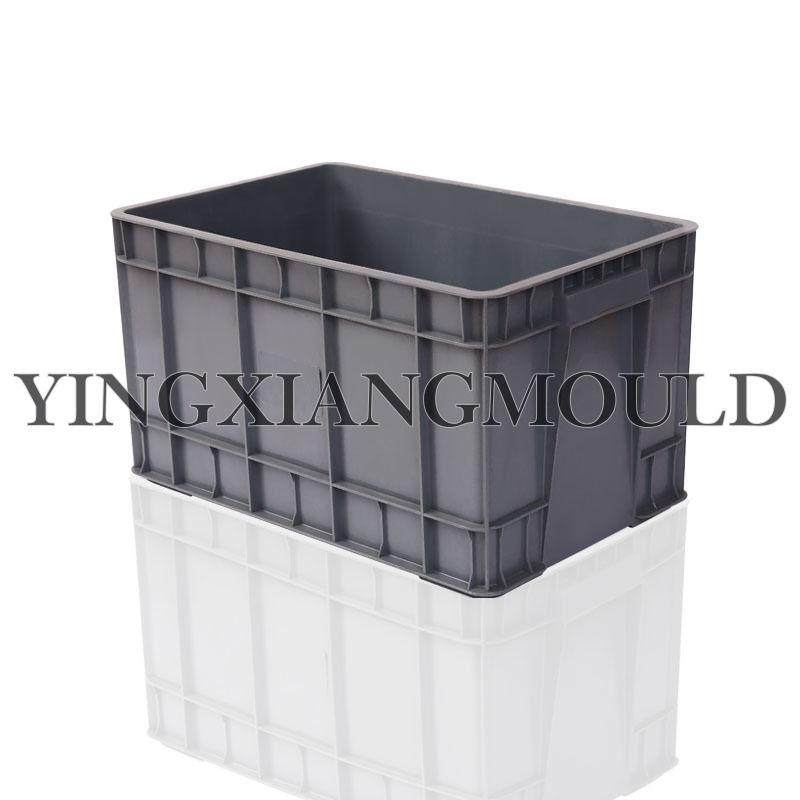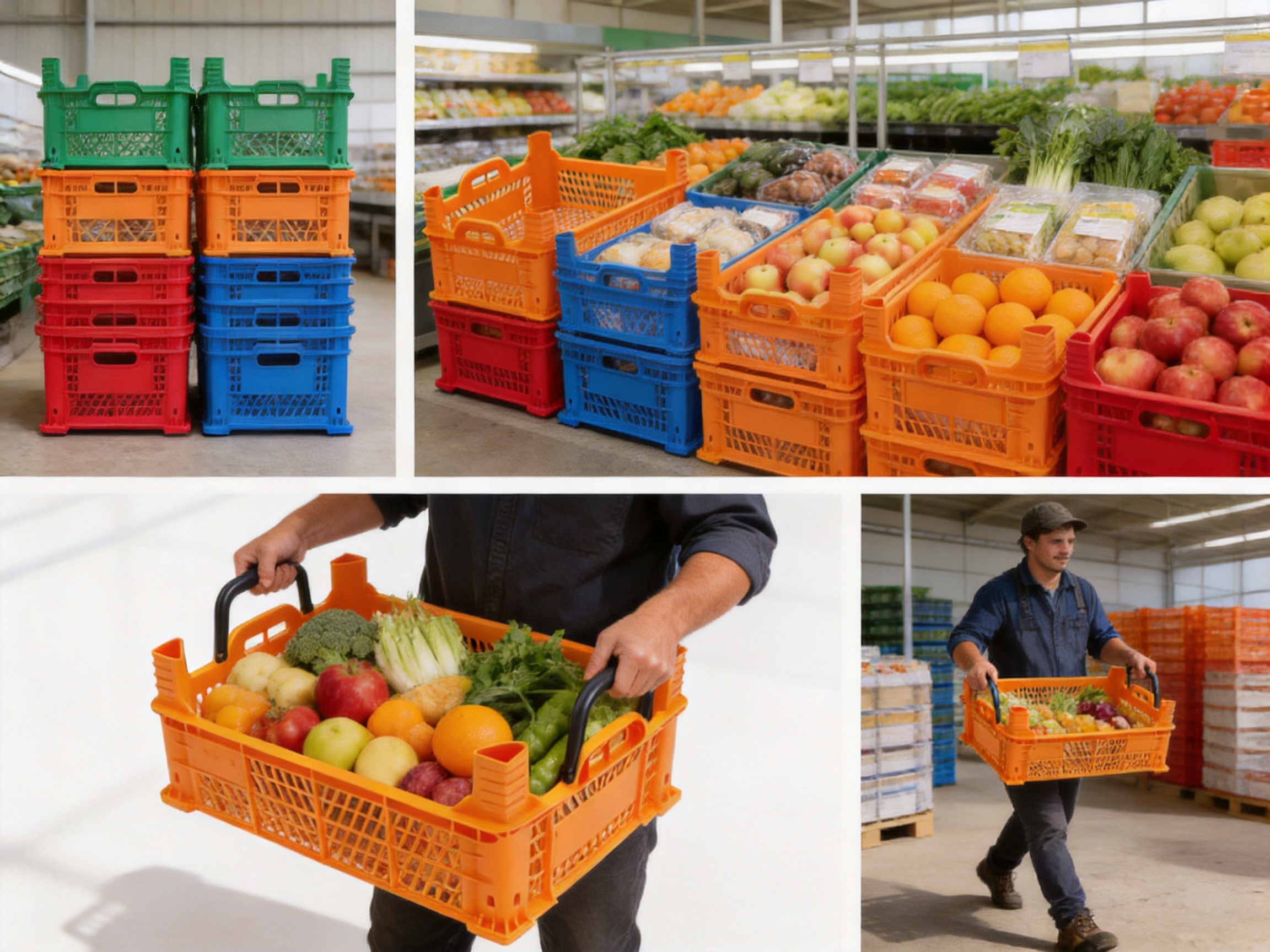
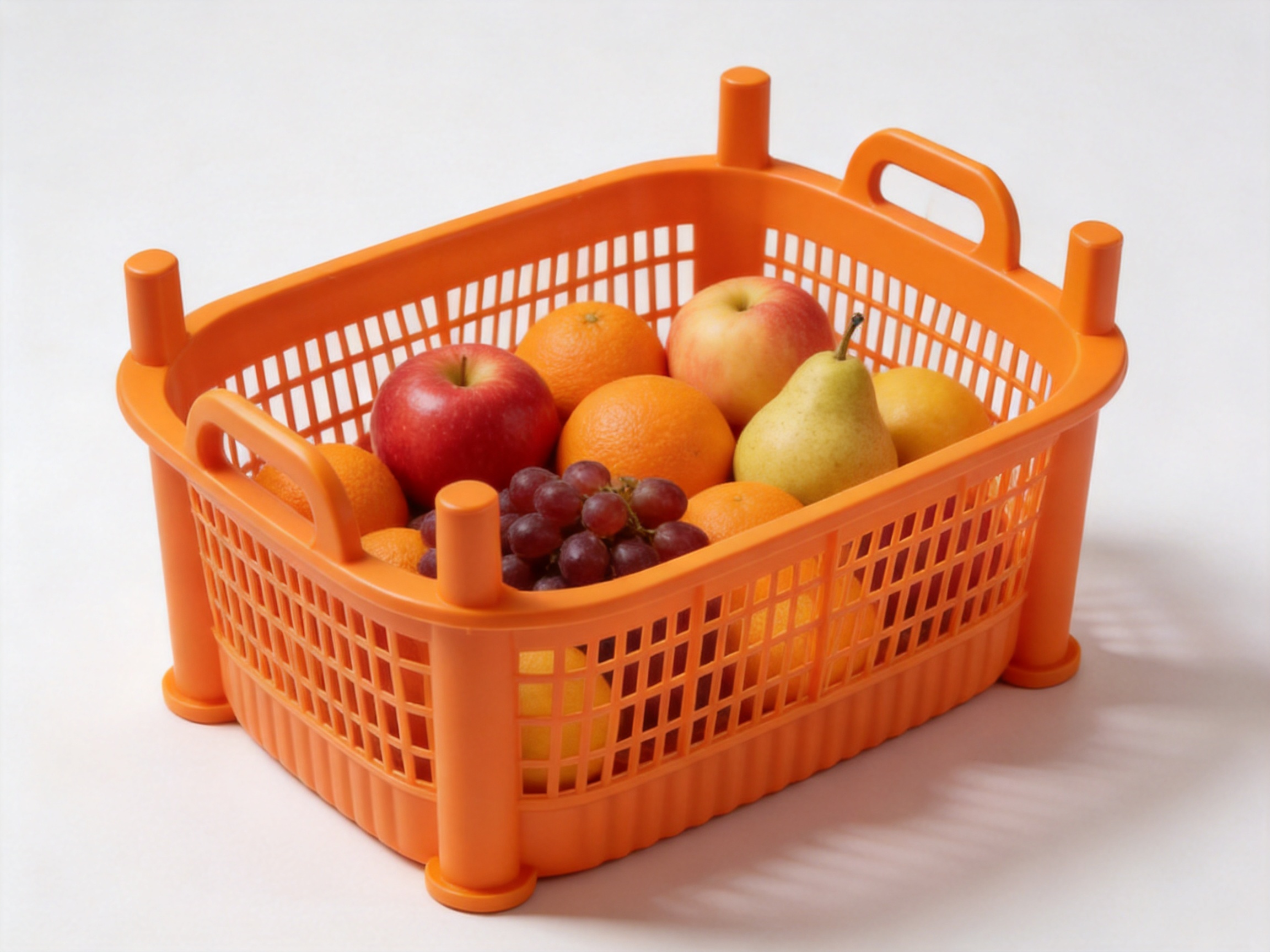
Fruit baskets are no longer limited to simple open containers used for displaying apples, oranges, or household goods. In modern homes, supermarkets, restaurants, food-processing facilities, and distribution environments, a fruit basket must provide safe storage, easy handling, reliable ventilation, attractive appearance, and long-term durability. The high-post fruit basket with handles is designed to meet these requirements through a practical structure that combines raised side posts, comfortable carrying points, and an efficient open-grid body.
This product is manufactured through precision plastic injection moulding and is intended for repeated daily use. Its elevated posts help define the basket profile, reinforce the upper rim, and provide additional protection for contents. Integrated handles make lifting and transporting more convenient, while the ventilated body supports airflow around fruit and other food products. The result is a reusable container that can serve households, retailers, agricultural suppliers, catering operations, and logistics applications.
A successful fruit basket mould must achieve much more than an attractive external shape. It must support consistent wall thickness, balanced filling, reliable ejection, clean surface quality, accurate assembly, and stable performance after many production cycles. The mould must also be suitable for efficient mass production, because commercial users often require thousands or millions of identical baskets. These demands make mould design, steel selection, cooling layout, machining accuracy, and quality control essential factors in the finished product.
The high-post fruit basket with handles offers a strong combination of usability and manufacturing efficiency. Its design can be adapted to different capacities, colors, handle forms, stacking requirements, and branding needs. It may be produced from commonly used food-contact-compatible plastic materials, subject to the customer’s application and regulatory requirements. With the correct material, mould structure, and processing parameters, the basket can deliver dependable service while reducing the need for disposable packaging.
The high-post fruit basket with handles is a reusable plastic container developed for the organized storage, presentation, and movement of fruit and similar products. It generally consists of a ventilated basket body, a reinforced upper rim, raised corner or side posts, and one or more integrated carrying handles. Depending on the required application, the base may include feet, stacking ribs, drainage openings, or an interlocking structure.
The basket body is normally designed with a series of openings or ribs. These openings reduce material consumption, lower product weight, and improve airflow. Ventilation is especially important for fresh fruit because trapped heat and moisture can accelerate quality loss. A properly designed open structure helps create circulation while maintaining enough support for the stored products.
The high-post structure gives the basket a distinctive functional advantage. Raised posts can protect the contents from contact with upper surfaces when baskets are placed in a stack or used with a matching cover. They can also improve resistance to deformation around the upper perimeter. In retail environments, the posts help create a visible, structured presentation and provide natural locations for handles or identification labels.
Handles transform the basket from a static storage container into a convenient portable product. Users can move fruit from a kitchen counter to a dining area, transfer harvested produce from a field to a vehicle, or carry merchandise from a storage room to a retail display. A well-designed handle should distribute load comfortably, resist cracking at its attachment points, and remain easy to grip even when the basket is full.
Because the basket is manufactured as a single injection-moulded plastic product, it can avoid separate assembly operations in many designs. Integrated features reduce the number of loose parts, simplify cleaning, and minimize the possibility of component loss. This is particularly valuable for high-volume commercial production, where every additional assembly step adds time and labor cost.
Raised posts help create a protective framework around the fruit. They can reduce the possibility of direct contact between the contents and an upper basket, shelf, or handling surface. This is useful when the basket is stacked or transported with other containers. The posts also contribute to the rigidity of the upper rim, which helps the basket maintain its shape under normal loading conditions.
The design can be adjusted to accommodate different fruit sizes. For small fruit, a tighter opening pattern may help prevent products from passing through the side walls. For larger fruit, wider openings and greater internal clearance may improve access and ventilation. The high-post structure can be combined with a deeper body when additional volume is required.
Handles make the product easier to lift, move, and organize. They are particularly valuable for users who regularly carry several baskets during harvesting, stocking, food preparation, or household cleaning. Handle geometry can be optimized for finger clearance, hand comfort, and load distribution.
Integrated handles also help retailers and distributors present the basket as a multipurpose product. A customer may purchase it for fruit storage but later use it for vegetables, packaged food, toys, laundry accessories, or household organization. This broader usability can increase the product’s perceived value compared with a container designed for only one application.
Ventilation is one of the most important features of a fruit basket. Air openings allow heat and moisture to escape and can help reduce condensation. Although a basket alone cannot guarantee food freshness, a well-designed ventilated structure supports better storage conditions than a fully closed container in suitable applications.
The opening ratio must be carefully balanced. Excessively large openings can weaken the body, allow small products to fall out, or expose contents to unnecessary impact. Openings that are too small may reduce airflow and increase material usage. Precision mould design enables the manufacturer to maintain consistent ribs, openings, and corner transitions across every production cycle.
Plastic injection moulding allows the basket to be designed with strategically positioned ribs and reinforcements rather than relying on excessive wall thickness. This approach can reduce weight while maintaining stiffness. Lower weight decreases material consumption, transportation costs, and handling effort.
Durability is supported by rounded corners, reinforced handle connections, controlled wall thickness, and suitable material selection. The product can be manufactured from materials chosen for impact resistance, temperature tolerance, rigidity, or appearance. The best material depends on whether the basket will be used in a household, retail, agricultural, food-service, or logistics environment.
A reusable basket can replace some forms of disposable packaging and may remain in service through many handling cycles. Its long-term cost is influenced by purchase price, useful life, cleaning requirements, storage efficiency, and repair or replacement frequency. A durable moulded basket can offer favorable total ownership cost when it is used repeatedly.
For professional users, the cost advantage also comes from consistent dimensions. Identical baskets can be stacked, grouped, labeled, and stored efficiently. Standardized dimensions support smoother warehouse operations and make it easier to plan shelving, transportation, and display areas.
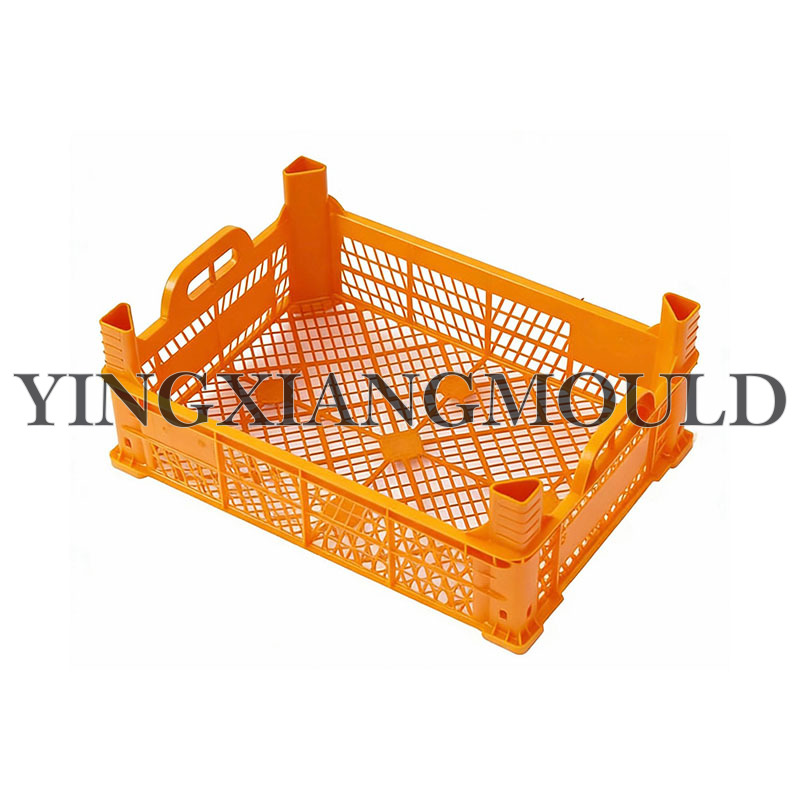
High-Post Fruit Basket with Handles
The main body provides the storage volume and supports the fruit from the base. Its geometry should provide sufficient internal space while avoiding unnecessary dead zones that make cleaning difficult. Smooth transitions between ribs and panels can reduce dirt accumulation and improve washability.
The side openings may be arranged in vertical, horizontal, diagonal, or patterned configurations. Each pattern produces a different balance of strength, appearance, airflow, and mould complexity. A carefully engineered pattern can create a recognizable product identity while remaining suitable for efficient machining and ejection.
The upper rim influences the basket’s rigidity, appearance, and handling comfort. A strong rim helps prevent the body from spreading under load and provides a stable area for stacking or carrying. The rim may be rounded to improve comfort and reduce sharp edges.
From a moulding perspective, the rim must be designed to fill reliably without creating excessive sink marks or weld-line weakness. Its thickness should be coordinated with the rest of the basket body. If the rim is significantly thicker than adjacent areas, cooling and shrinkage must be carefully controlled to prevent distortion.
High posts can function as structural columns. They support the rim, protect the corners, and may provide stacking guidance. Their height and shape can be modified according to whether the basket is intended for open display, nesting, stacking, or use with a cover.
Corner areas are often exposed to impact during transportation and daily handling. Reinforcing these locations can improve durability, but reinforcement must be designed without creating unnecessary material concentration. Proper radii, gradual transitions, and balanced cooling help reduce stress and deformation.
Handle design should consider grip width, finger space, surface texture, and load transfer. A handle that is too narrow may be uncomfortable when the basket is heavy. A handle that is too wide may increase material usage and mould complexity. The connection between the handle and basket body is especially important because it receives concentrated stress during lifting.
Handles may be fixed, foldable, side-mounted, or integrated into the high-post structure. The appropriate design depends on whether the product is intended for personal use, retail presentation, agricultural collection, or commercial transport. Prototype testing can help confirm comfort and strength before mass production.
A stable base allows the basket to stand securely on counters, shelves, tables, and vehicle floors. The bottom surface may include reinforcing ribs to reduce flexing and distribute weight. Drainage openings can be included when washing or wet produce is expected.
If the product is intended to be stacked, nesting and stacking features should be developed together. A nesting basket fits partially inside another basket to save space when empty. A stacking basket uses posts, feet, or rim features to maintain a defined distance between units. The mould must accurately reproduce these features so that all baskets align consistently.
Compared with low-profile baskets without handles, the high-post fruit basket offers improved portability and perimeter protection. A conventional shallow basket may be suitable for display but can be less convenient to carry and less effective when several units are stacked. The high-post model is designed to combine presentation with practical movement.
Compared with fully enclosed plastic containers, the ventilated basket supports better airflow and may use less material. It is also easier to inspect visually, which benefits retailers and consumers who need to check product condition quickly. The open design can simplify loading and unloading while reducing the need to open a lid.
Compared with thin disposable trays, the injection-moulded basket is better suited to repeated use. Its structural ribs, reinforced rim, and integrated handles can provide greater resistance to ordinary handling. Reusability may also help commercial customers reduce packaging waste and lower the frequency of replacement purchases.
Compared with poorly balanced baskets, a precision-designed product can offer more stable weight distribution. This is important when the basket is filled with dense fruit. A well-positioned handle and strong base help the user maintain control during carrying, reducing the chance of tipping or dropping the contents.
Compared with products made using inconsistent tooling, a professionally engineered mould supports more uniform dimensions and appearance. Consistency matters when baskets must be nested, stacked, transported, or displayed in large quantities. It also reduces production problems such as flash, short shots, warpage, uneven color, and difficult demoulding.
| Feature | High-Post Fruit Basket with Handles | Basic Open Basket | Closed Plastic Container |
|---|---|---|---|
| Portability | Integrated handles support convenient carrying | May require two-handed lifting | Usually portable but may be heavier |
| Ventilation | Open structure supports airflow | Usually provides airflow | Limited unless ventilation is added |
| Protection | High posts reinforce the perimeter and help protect contents | Limited perimeter protection | Higher enclosure but reduced visibility |
| Reusable operation | Designed for repeated handling and cleaning | Depends on construction quality | Normally reusable |
| Visual inspection | Easy access and visibility | Easy access and visibility | May require opening the container |
| Stacking potential | Can be engineered for stacking or nesting | May be unstable when stacked | Often stacks efficiently |
| Product customization | Color, dimensions, openings, handles, and logos can be customized | Usually limited | Can be customized but may require more material |
The quality of the finished fruit basket begins with product development and continues through every stage of mould manufacturing. A professional process connects customer requirements, three-dimensional design, engineering analysis, steel preparation, precision machining, trial moulding, inspection, and final production support.
The first stage is to understand the basket’s intended application. Important questions include the required capacity, overall dimensions, material, loading weight, stacking method, handle design, color, surface finish, production quantity, and expected service life. Food-contact applications may also require material documentation and specific compliance considerations.
Manufacturing requirements should be discussed at the beginning rather than after the mould has been completed. For example, a customer may want a highly detailed opening pattern, but the pattern must still support reliable filling and ejection. Early communication helps balance appearance, performance, production speed, tooling cost, and maintenance needs.
Three-dimensional CAD software is used to create the basket model and evaluate its geometry. Designers examine wall thickness, draft angles, corner radii, handle connections, rib placement, and potential undercuts. The model can also be checked for nesting, stacking, accessibility, and cleaning.
Draft angles are essential for smooth ejection. Without adequate draft, the plastic part may stick to the mould core or develop scratches during removal. The required draft depends on the surface texture, material, depth of the feature, and ejection strategy. A professional design team considers these factors before manufacturing begins.
Computer-aided engineering can help predict how molten plastic will flow through the cavity. Mould-flow analysis may identify filling imbalance, weld-line locations, air traps, pressure requirements, and potential shrinkage. This information supports better decisions about gate positions, runner layout, venting, cooling, and wall design.
Fruit baskets often contain many openings and ribs, which can create complex flow paths. The material must reach all areas before freezing. If the filling pattern is not balanced, some sections may be incomplete or weaker than others. Engineering analysis helps reduce trial-and-error adjustments and improves the probability of achieving a stable first moulding result.
The mould structure includes the cavity, core, parting line, runner system, gate, cooling channels, ejector system, guide components, and supporting plates. These elements must work together to produce the basket efficiently and repeatedly.
Parting-line placement is particularly important for an open basket with high posts and handles. The parting line should minimize visible mismatch, simplify ejection, and reduce the possibility of flash in critical areas. If the handle geometry creates an undercut, the mould may require slides, lifters, collapsible components, or a redesigned product feature.
The gate location affects filling, weld lines, appearance, and residual stress. A gate placed too close to a handle or thin rib may create visible marks or weak areas. Multiple gates may be considered for larger baskets, but their positions must be balanced to avoid undesirable weld lines and uneven filling.
Mould steel must be selected according to production volume, plastic material, surface requirements, expected wear, and maintenance conditions. Pre-hardened steels may be suitable for certain medium-volume applications, while hardened tool steels can provide longer life for high-volume production or abrasive materials.
Steel quality affects machining stability, polishing performance, dimensional retention, and resistance to corrosion or wear. Consistent steel properties are important for large cavity surfaces and thin rib features. The correct material selection helps the mould remain accurate through repeated thermal and mechanical cycles.
Computer numerical control machining is used to create the cavity, core, inserts, and other mould components. Modern machining equipment can produce complex contours, narrow ribs, rounded transitions, and detailed surface features with high repeatability.
High-speed machining may be used for suitable areas to improve surface quality and reduce finishing work. Electrical discharge machining can support the creation of narrow slots, deep details, or geometries that are difficult to produce by conventional cutting. Wire electrical discharge machining may be used for precise profiles and replaceable inserts.
Machining quality must be supported by accurate workholding, tool management, temperature control, and inspection. Small errors in a mould component can be reproduced in every basket, so dimensional control at the tooling stage is more efficient than correcting large quantities of finished products later.
The mould surface determines the appearance and release characteristics of the basket. Depending on the product specification, the surface may be polished, textured, etched, or treated with a special finish. A lightly textured surface can improve visual quality and help conceal minor handling marks, while a polished area may provide a smooth, glossy appearance.
Surface treatment must be coordinated with draft angles and ejection. Fine textures increase friction and may require additional draft. Skilled finishing technicians inspect transitions, corners, rib surfaces, and handle areas to ensure that the final product has a consistent appearance.
Cooling is one of the most important factors in injection moulding cycle time and dimensional stability. Channels should be positioned to remove heat evenly from thick and thin sections. Poor cooling balance may lead to warpage, uneven shrinkage, sink marks, or extended cycle times.
The high posts, rim, handle connections, and base ribs may require special attention because they can contain different material concentrations. Conformal or strategically arranged cooling solutions may improve temperature uniformity in complex areas. Effective cooling allows the basket to be released sooner while maintaining its designed shape.
The ejection system must remove the basket without damaging ribs, openings, handles, or visible surfaces. Ejector pins, sleeves, stripper plates, or combinations of these systems may be selected according to the product geometry.
For an open basket, balanced ejection is essential. If force is applied unevenly, the part may distort or become stuck. Ejector locations should be placed on structurally strong areas and distributed to support the whole product. Ejection marks should be positioned where they will have minimal visual or functional impact.
After assembly, the mould is tested on an injection moulding machine. Trial production checks filling, appearance, demoulding, cooling, cycle time, dimensions, and product weight. Samples are examined for short shots, flash, weld lines, air marks, sink marks, warpage, color variation, and handle strength.
Trial results may lead to adjustments in processing parameters or mould components. These changes can include gate polishing, vent improvement, ejector balancing, cooling adjustment, surface finishing, or minor dimensional correction. A structured trial process helps ensure that the mould is ready for stable production rather than merely producing one acceptable sample.
The manufacturer behind this product is based in Huangyan, Taizhou, Zhejiang, a region widely recognized for its mould-making industry. Established in 2012, the company operates a plant of approximately 7,000 square meters and has a team of around 50 employees. Its organization combines experienced technicians, engineering personnel, production workers, and quality-control staff.
The company uses CAD, CAE, and CAM systems to connect product design with mould engineering and machining. This digital workflow helps reduce communication errors and supports better control of complex basket geometries. Three-dimensional data can be reviewed before steel cutting, allowing the team to identify potential issues with draft, wall thickness, ejection, and cooling.
Advanced equipment supports the manufacture of moulds for crates, folding boxes, pallets, trays, beverage boxes, and household products. Experience across these product categories is valuable because many of the same technical challenges appear in fruit basket moulds: thin walls, repeated ribs, large projected areas, complex openings, high-volume production, and the need for reliable demoulding.
A company experienced in both industrial and household moulds can evaluate a fruit basket from more than one perspective. It can consider the user’s requirements, the injection moulding process, warehouse handling, transport efficiency, surface appearance, and long-term tooling maintenance. This broader approach helps create a mould that is practical to produce and useful in real operating environments.
Lean manufacturing aims to reduce unnecessary movement, waiting, rework, material waste, and process variation. In mould production, this may involve organized project planning, standardized inspection procedures, clear production records, and coordinated machining operations.
For customers, the value of a lean process is reflected in more predictable delivery, stable quality, and better cost control. A mould that is planned carefully from the beginning is less likely to require extensive late-stage corrections. This can shorten the path from approved design to mass production.
A low initial tooling price is not the only measure of mould value. Long service life, low maintenance requirements, stable cycle performance, and easy replacement of wear components can have a greater effect on total cost. The mould should be designed for the customer’s expected production volume rather than simply optimized for the lowest purchase price.
Durability can be supported through appropriate steel, replaceable inserts, hardened wear components, reliable guide systems, effective cooling, and controlled machining tolerances. Maintenance access should also be considered so that cleaning, lubrication, and component replacement can be completed efficiently.
Mould projects involve multiple stages, including design approval, material confirmation, mould construction, trial production, sample evaluation, modification, and shipment. Clear communication at each stage helps prevent misunderstandings and keeps the project aligned with the customer’s schedule.
Experience with different plastic products enables the engineering team to identify common production risks early. This is particularly important for baskets with unusual handles, deep posts, decorative patterns, or special stacking functions. Practical project coordination contributes to on-time delivery and a smoother transition into production.
Customer service for an injection mould project should continue after the mould leaves the factory. Technical support may include advice on injection parameters, cooling settings, material selection, maintenance routines, spare parts, and troubleshooting. Such support helps the customer achieve stable production and protect the value of the mould investment.
When a customer requires product customization, the manufacturer can work with the customer to adjust dimensions, openings, logos, handle styles, and stacking features. The aim is not simply to copy a sample but to develop a manufacturable product that performs effectively under the intended conditions.
The choice of plastic material affects basket strength, flexibility, appearance, temperature resistance, chemical resistance, and cost. Polypropylene is commonly considered for lightweight reusable containers because it can offer a useful balance of toughness, chemical resistance, and processability. Other materials may be selected when higher rigidity, impact performance, transparency, or temperature resistance is required.
For products used with food, the material and color masterbatch should be selected according to applicable food-contact requirements in the target market. The customer should confirm the intended regulations and application conditions before production. Material documentation, traceability, and processing recommendations can support a more controlled supply chain.
Recycled content may be considered for applications where regulatory and performance requirements permit it. However, recycled material can affect color consistency, odor, mechanical properties, and processing stability. A material strategy should balance environmental goals with the required service performance of the basket.
Color is an important commercial feature. Bright colors can support retail visibility, while neutral colors may suit household or logistics applications. Consistent color depends on resin quality, masterbatch dosage, machine cleanliness, temperature control, and stable processing conditions. A professional mould with balanced filling can also help reduce visible variation across the product.
Production parameters should be developed according to the chosen material and basket geometry. Injection speed, pressure, holding pressure, mould temperature, barrel temperature, cooling time, and screw settings all influence the finished result. The correct settings should be confirmed through trial production rather than copied without evaluation from another product.
Quality control begins with incoming mould components and continues through injection moulding, inspection, packaging, and shipment. The objective is to ensure that the basket meets agreed requirements for dimensions, appearance, strength, function, and consistency.
Important dimensions may include length, width, height, rim size, post height, handle opening, base footprint, wall thickness, and stacking clearance. These measurements confirm that baskets will fit the intended display, storage, or transportation system.
Visual inspection checks for flash, short shots, burn marks, sink marks, scratches, color differences, weld-line defects, and surface contamination. Critical areas include the handle connections, high posts, upper rim, base corners, and visible front surfaces.
Practical tests may include loaded carrying, handle pull testing, drop testing, stacking tests, and repeated-use evaluation. The exact test method depends on the intended application. A household basket may require different performance criteria from a commercial harvesting basket used in a distribution center.
For food-related use, the basket should have surfaces that can be cleaned effectively. Excessively deep recesses, sharp internal corners, and inaccessible cavities can make sanitation more difficult. Product design should therefore consider both appearance and cleaning access.
One successful sample is not enough to demonstrate production stability. Multiple samples from continuous production should be compared for weight, dimensions, color, appearance, and function. Consistent results indicate that the mould and process are operating within controlled limits.
In households, the basket can be used for fruit, vegetables, snacks, bread, kitchen supplies, or general organization. The handles make it easy to move between rooms, while the ventilated structure helps keep contents visible and accessible.
In supermarkets and grocery stores, the product can support attractive display arrangements. Its open body allows customers to see the contents, and its color or shape can contribute to visual merchandising. High posts may help create organized product zones and provide a framework for stacking.
In agricultural operations, baskets can be used during harvesting, sorting, temporary storage, and transport. Ventilation helps reduce heat accumulation, while handles support movement between fields, collection points, and packing areas. The basket’s dimensions can be customized to suit specific crops and handling systems.
In restaurants, hotels, and catering operations, the basket may be used for ingredient storage, buffet presentation, bread service, or back-of-house organization. Easy cleaning and repeated use are important in these environments.
In warehouses and distribution centers, a customized version may be integrated into picking, sorting, or short-distance transport processes. Although the product is designed as a fruit basket, its reusable structure can make it useful for a range of lightweight goods.
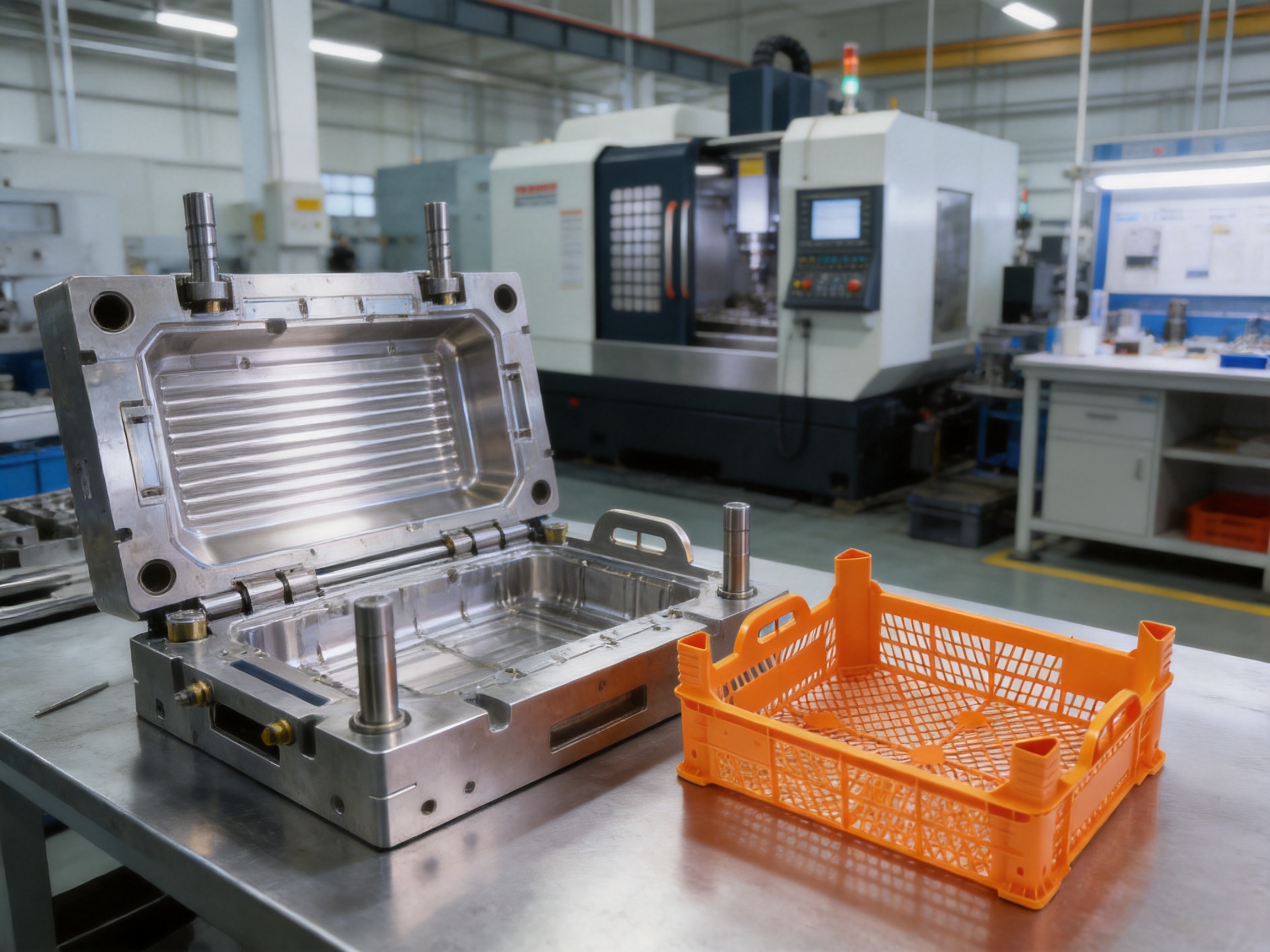
Customers may request modifications to the basket’s length, width, height, capacity, opening pattern, handle form, post height, base structure, and stacking features. Customization should be evaluated through a complete engineering review because changing one feature can affect filling, cooling, ejection, strength, and mould cost.
A smaller basket may be appropriate for home use or premium retail presentation, while a larger basket may be preferred for harvesting or wholesale distribution. The design should maintain comfortable carrying weight and stable balance at the intended capacity.
Logos, raised lettering, recessed marks, symbols, and label areas can be included in the mould. Branding details should be designed with suitable draft and depth so that they can be filled cleanly and released without damage.
Customers may select glossy, matte, textured, or combination finishes. The finish should match the intended market and practical requirements. A textured surface may improve grip and reduce the visibility of minor scratches, while a polished finish can create a brighter retail appearance.
Different handle forms can support different use cases. A wide side handle may be comfortable for heavy loads, while a compact integrated opening may support nesting and storage efficiency. Foldable handles can reduce empty storage volume, but they may add mould complexity and require additional testing.
For professional customers, stacking height and empty return volume may be important cost factors. The mould can be developed with locating posts, feet, nesting stops, or interlocking features. These details should be tested under realistic loading conditions to confirm stability.
Regular mould maintenance helps preserve product quality and extend tooling life. Cleaning should remove plastic residue, dust, grease, and deposits from cavity surfaces, vents, ejector areas, and cooling connections. Special attention should be given to narrow ribs and small openings where residue may accumulate.
Moving components such as slides, lifters, guide pins, and ejector systems should be lubricated according to the tooling supplier’s recommendations. Excess lubricant should be avoided because it can contaminate the product or attract dust.
Cooling channels should be monitored for blockage, corrosion, or poor water flow. Reduced cooling performance can increase cycle time and cause dimensional instability. Water treatment and regular inspection are particularly important when the mould operates continuously.
Wear components should be inspected at planned intervals. Replacing a small insert, guide component, or ejector part before failure can prevent more serious damage and reduce unplanned downtime. Maintenance records should include production cycles, repairs, observations, and replacement dates.
A fruit basket may appear simple because it contains open spaces and relatively thin walls. In reality, its geometry can create significant moulding challenges. Large projected surfaces may require balanced filling and adequate clamping force. Thin ribs can freeze quickly. High posts and handles can create undercuts. Uneven material distribution can lead to warpage. Multiple openings require reliable venting and accurate machining.
Professional mould engineering addresses these problems before they become production failures. It considers how the plastic will flow, cool, shrink, release, and perform after moulding. It also considers how the mould will be maintained over thousands of cycles.
The manufacturer’s experience with household moulds, logistics crates, pallets, folding boxes, beverage boxes, trays, chairs, and other plastic products provides a broad technical foundation. Each product category contributes knowledge about load-bearing ribs, stacking, ventilation, ergonomic handling, thin-wall moulding, and high-volume production.
For buyers, this experience reduces risk. Instead of treating the fruit basket as an isolated design, the engineering team can draw on established methods for material selection, cavity layout, cooling, ejection, trial production, and quality control.
Buyers should define the intended application before requesting a mould quotation. Important information includes the target market, annual production volume, material preference, basket capacity, loading weight, stacking method, color requirements, surface finish, and packaging method.
The buyer should also clarify whether the mould is intended for one specific injection machine or must be compatible with several machines. Machine size, injection volume, clamping force, tie-bar spacing, and ejection system can affect the mould design.
Expected mould life should be discussed openly. A low-volume customer may not need the same steel grade or spare-part strategy as a large distribution business. Conversely, a high-volume customer should avoid selecting a mould structure that cannot maintain accuracy over the required production period.
Sample approval should include both visual and functional evaluation. The buyer should test actual fruit or representative loads, carry the basket by its handles, inspect stacking behavior, and check cleaning access. Testing the real use case can reveal improvements that are not obvious from a computer model.
After-sales support is another important consideration. Technical assistance, maintenance guidance, spare parts, process recommendations, and communication during production can significantly affect the long-term success of the project.
The basket is designed for storing, displaying, and transporting fruit and similar products. Its high posts provide additional perimeter structure and protection, while integrated handles improve portability. The ventilated body supports airflow and product visibility.
Yes. Depending on its dimensions and material, it may also be used for vegetables, bread, snacks, household items, toys, laundry accessories, and other lightweight goods. The final application should be reviewed to confirm that the basket meets the required load, hygiene, and temperature conditions.
Yes. Length, width, height, capacity, post height, handle dimensions, opening pattern, and base structure can be customized. Each change should be assessed by an engineer because it may influence mould filling, cooling, ejection, strength, and cost.
Material selection depends on the required rigidity, impact resistance, temperature range, appearance, cost, and food-contact requirements. Polypropylene is commonly considered for reusable containers, but other materials may be appropriate for specific applications. The material should be confirmed before mould construction.
It can be designed for food-related use when the selected plastic, colorants, moulding process, cleaning method, and finished-product requirements are suitable for the target market. Buyers should identify applicable food-contact standards and request the appropriate material documentation.
Yes. The mould can be designed for stacking, nesting, or both. High posts, feet, locating features, and nesting stops can help improve stability and storage efficiency. These functions should be tested with loaded and empty baskets.
Quality is controlled through product design review, CAD and CAE analysis, precision machining, mould inspection, trial moulding, dimensional checks, appearance inspection, and functional testing. Production samples should be evaluated for consistency, not only for one-time appearance.
Cooling channels remove heat from the mould and influence cycle time, shrinkage, warpage, and dimensional stability. A balanced cooling design is especially important for baskets with high posts, thick rims, ribs, and handle connections.
Yes. Logos, symbols, lettering, and identification marks can be incorporated into suitable mould surfaces. The details must be designed with proper depth, draft, and location so they fill correctly and release without damaging the product.
Technical support may include mould maintenance advice, injection parameter recommendations, troubleshooting assistance, spare-part guidance, and production consultation. The exact service arrangement should be confirmed during the project discussion.
A fruit basket often contains many openings, thin ribs, large surfaces, high posts, and integrated handles. These features require careful control of filling, venting, cooling, ejection, and warpage. The mould must also support efficient high-volume production and consistent appearance.
Early design communication, realistic product requirements, suitable material selection, balanced mould complexity, and clear production-volume planning can help control cost. It is also important to consider service life and maintenance, because a durable mould may provide better total value than a lower-priced mould with limited production capability.
The high-post fruit basket with handles is a versatile reusable container that combines ventilation, portability, structural reinforcement, and practical storage. Its raised posts help protect and organize the contents, while its integrated handles make carrying more convenient. The open body supports visibility and airflow, and the moulded plastic structure can be adapted to household, retail, agricultural, food-service, and logistics applications.
The real performance of the product depends on the quality of its injection mould. Accurate product design, CAE evaluation, suitable steel, precision machining, balanced cooling, reliable ejection, and thorough trial production are all essential. A professionally manufactured mould helps deliver consistent baskets, lower defect rates, dependable cycle times, and longer tooling life.
With a 7,000-square-meter facility, experienced technicians, CAD/CAE/CAM capabilities, and experience in household and industrial plastic moulds, Yingxiang Plastic Mould provides an integrated approach to customized mould development. Its manufacturing strengths include lean production, long-life tooling, quality control, on-time project coordination, competitive costs, and customer-focused technical support.
For buyers seeking a practical and customizable fruit basket solution, the high-post design provides a strong balance between user convenience and production efficiency. When the product design and mould engineering are developed together, the result can support reliable manufacturing, attractive presentation, efficient handling, and durable everyday use.
1. General principles of plastic injection mould design and thermoplastic processing.
2. Standard practices for reusable plastic containers used in storage, transport, and food-related applications.
3. Technical guidelines for mould-flow analysis, cooling-system design, and injection moulding process optimization.
4. Manufacturing principles for CNC machining, electrical discharge machining, mould polishing, and tool-steel selection.
5. Quality-control methods for injection-moulded household and logistics products.
6. Design considerations for ergonomic handles, ventilated containers, stacking systems, and reusable packaging.
If you are interested in any of our products or services, please feel free to ask and we can talk about your ideas.
 QUICK LINKSMOBILE SITE
 FACTORY ADDRESS
 CONTACT INFORMATION



 English
 Español