The horn-back chair is a distinctive plastic chair design recognized for its supportive backrest, practical shape, strong visual identity, and suitability for homes, restaurants, commercial venues, event spaces, and outdoor applications. Behind every successful horn-back chair is a carefully engineered injection mould. The mould determines the chair’s dimensions, surface quality, structural performance, production efficiency, and long-term consistency.
For manufacturers seeking to produce reliable horn-back chairs at competitive cost, selecting the right chair mould supplier is as important as selecting the correct plastic material or injection moulding machine. A well-designed mould can support fast cycle times, stable part quality, smooth demoulding, low maintenance requirements, and a long production life. By contrast, a poorly designed mould may cause warpage, uneven wall thickness, visible weld lines, difficult ejection, flash, short service life, and inconsistent assembly or stacking performance.
TaiZhou HuangYan YingXiang Plastic Mould Co., Ltd. specializes in customized plastic injection mould solutions for household and industrial products. Based in Huangyan, Taizhou, Zhejiang, China, the company operates in one of the world’s most recognized mould manufacturing regions. Its product range includes chair moulds, crate moulds, folding box moulds, pallet moulds, beverage box moulds, storage container moulds, household product moulds, and other plastic injection moulds.
The horn-back chair mould combines structural engineering, appearance design, cooling technology, precision machining, and production experience. This article explains the product’s main characteristics, manufacturing advantages, quality control methods, application value, and the reasons a professionally engineered mould can provide better results than lower-cost alternatives.
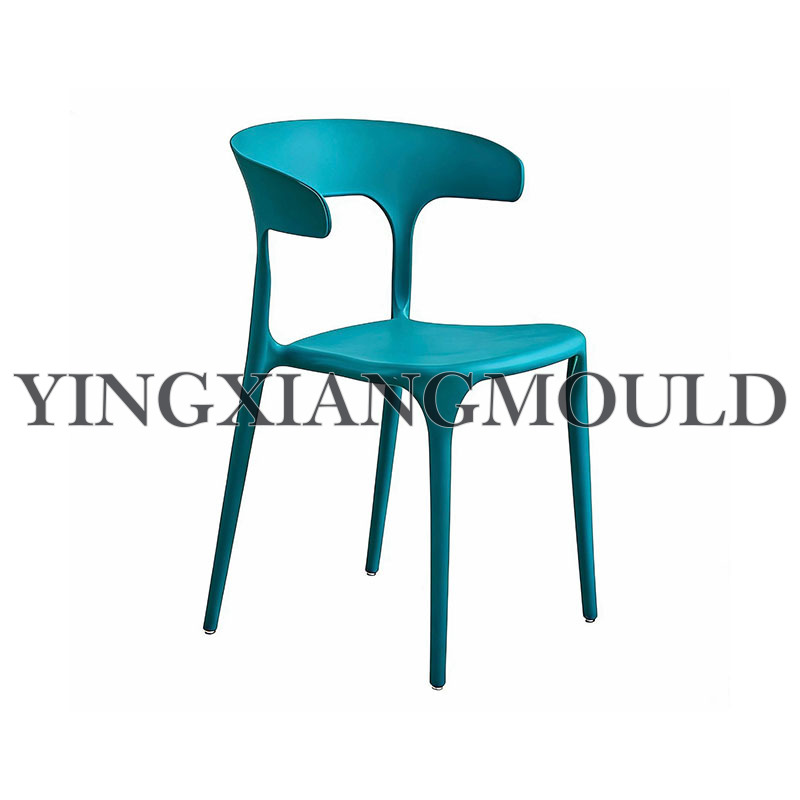
Horn-Back Chair
A horn-back chair normally features a shaped backrest with raised or extended side sections that create a horn-like profile. This design can provide a stronger visual silhouette while helping support the upper back and shoulders. Depending on the final chair concept, the back may be integrated with the seat and legs as a one-piece moulded structure, or it may be combined with separately moulded components.
Plastic injection moulding is especially suitable for this product because it allows manufacturers to create complex curves, integrated reinforcement ribs, ergonomic contours, decorative surfaces, and repeatable dimensions in a single production process. The final chair can be designed for indoor or outdoor use, with different material formulations, surface textures, colours, and reinforcement strategies.
The mould must reproduce every important feature of the chair. These features may include the front and rear contours of the backrest, arm or horn sections, seat curvature, leg geometry, foot contact areas, stacking locations, drainage openings, reinforcing ribs, logos, and decorative details. A small dimensional error in any of these areas can affect chair stability, appearance, comfort, or packaging efficiency.
Because chairs are load-bearing products, the mould design must also support consistent material distribution. The chair should not have excessively thin sections that may crack during use or overly thick zones that may shrink, sink, or extend the cooling cycle. This makes flow analysis, gate placement, cooling design, and ejection planning essential parts of the mould development process.
A horn-back chair is expected to perform several functions at the same time. It must support the user safely, remain stable on the floor, resist impact during normal handling, maintain its appearance after repeated use, and be suitable for efficient mass production. Commercial buyers may also require the chairs to be stackable, easy to clean, lightweight, and economical to transport.
The mould therefore needs to produce a chair with balanced wall thickness, accurate leg alignment, sufficient corner radii, strong load-bearing transitions, and carefully positioned ribs. The tool must also allow the chair to be removed from the cavity without damaging the backrest, legs, seat edges, or textured surfaces.
The horn-back profile is one of the most visible features of the chair. Uneven filling, inconsistent cooling, or improper polishing can create flow marks, colour differences, weld lines, or surface distortion. A high-quality mould uses appropriate steel preparation, cavity finishing, parting-line planning, and injection analysis to maintain the intended appearance throughout production.
Customers may request a polished surface, fine matte texture, wood-grain appearance, leather-like texture, geometric decoration, or a branded logo. Each surface treatment influences mould processing, release performance, cleaning requirements, and visual quality. Experienced mould engineers consider these factors before steel cutting rather than attempting to correct them after machining.
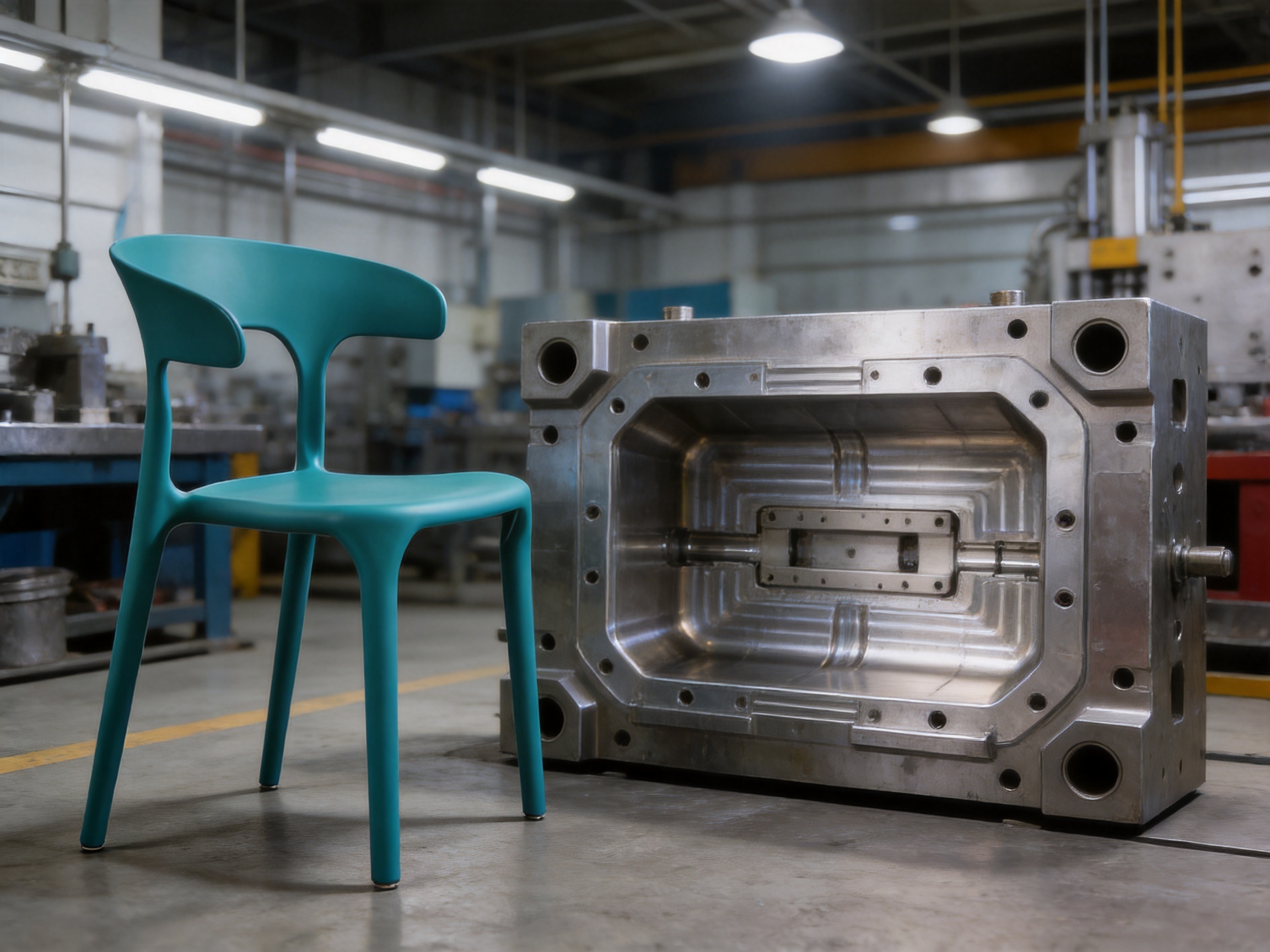
The principal advantage of a professionally engineered horn-back chair mould is consistency. A mould is not simply a metal cavity that creates the outer shape of a product. It is a complete production system that controls material flow, heat removal, part release, dimensional stability, and the repeatability of thousands or millions of moulding cycles.
Accurate mould construction helps maintain the specified width, height, seat depth, back angle, leg position, and overall balance of the chair. Stable dimensions are especially important when chairs are stacked, packed, transported, or used with accessories such as cushions, covers, tables, or storage systems.
Dimensional stability also reduces production waste. If one batch of chairs differs noticeably from another, the customer may experience stacking problems, uneven floor contact, or inconsistent visual appearance. A precisely manufactured mould minimizes these variations and gives the injection moulding operator a more reliable production platform.
Chair strength depends on material selection, wall thickness, rib arrangement, geometry, moulding parameters, and cooling uniformity. The mould must allow the plastic to flow smoothly into legs, seat corners, backrest transitions, and other load-bearing zones.
Properly designed ribs can increase stiffness without making the entire chair excessively heavy. Smooth transitions reduce stress concentration, while carefully designed radii help prevent cracking. The mould cavity and core must reproduce these details accurately so that every chair has the intended reinforcement structure.
A high-quality mould produces clean surfaces with controlled texture and minimal defects. The cavity surface can be polished or textured according to the design requirements. Proper venting helps prevent trapped air, burn marks, incomplete filling, and dull areas. Correct parting-line treatment reduces flash and protects the visible areas of the chair.
For consumer products, appearance has a direct effect on purchase decisions. A chair that looks smooth, balanced, and well finished communicates quality before the customer sits on it. Consistent surface quality is also valuable for large projects where hundreds or thousands of chairs must look identical.
Cycle time has a direct impact on production cost. Cooling is often one of the longest stages of injection moulding, especially for large products such as chairs. A carefully planned cooling system removes heat more evenly and can reduce the time required before ejection.
Efficient cooling also helps prevent deformation. If one side of the chair cools significantly faster than another, the part may warp or develop internal stress. Balanced water channels, suitable channel diameters, and careful placement around thick and thin sections help improve both cycle efficiency and product stability.
Large chair moulds can be difficult to demould because the product may have deep contours, textured surfaces, undercuts, long legs, or a large projected area. The ejection system must distribute force carefully. Ejector pins, sleeves, lifters, or other mechanisms should be positioned in areas that can tolerate ejection pressure without leaving visible marks.
Reliable demoulding protects the product and the mould. It also reduces machine stoppages, manual intervention, and the risk of damaging delicate cavity details. A well-engineered release system supports high-volume production and makes the mould easier for operators to manage.
| Design factor | Production benefit | Customer value |
|---|---|---|
| Balanced wall thickness | Reduces warpage and uneven shrinkage | More stable and durable chairs |
| Optimized gate location | Improves filling and reduces visible flow defects | Cleaner appearance and stronger structure |
| Uniform cooling channels | Shortens cooling time and improves repeatability | Lower production cost and consistent dimensions |
| Accurate ejection system | Reduces sticking and moulding interruptions | Higher output and fewer damaged parts |
| Precision cavity finishing | Controls texture, gloss, and surface appearance | More attractive finished products |
| Wear-resistant mould steel | Extends service life and maintains accuracy | Better long-term return on investment |
Horn-back chair moulds are normally large tools that require strong mould bases, accurate guiding systems, robust support structures, and appropriate steel grades. The mould design must account for the dimensions of the chair, the selected plastic material, the injection machine, the expected production volume, and the required surface finish.
The mould base carries the cavity, core, guide components, cooling circuits, ejector system, and other functional elements. It must remain rigid during high-pressure injection. Insufficient support can lead to deflection, flash, uneven parting surfaces, and accelerated wear.
For a large chair mould, support positioning is especially important around the seat, backrest, and legs. The mould designer must evaluate where injection pressure will act and ensure that the supporting plates and pillars can maintain alignment during repeated operation.
The cavity forms the outside surface of the chair, while the core forms the inside surface. Their relationship determines wall thickness, draft angles, rib details, and the final visual quality. The core and cavity must be aligned precisely to prevent mismatch, uneven edges, or dimensional variation.
The parting line should be located in a way that balances manufacturing practicality with product appearance. Where possible, visible flash should be kept away from important decorative or contact surfaces. The parting line must also allow the product to release smoothly without creating unnecessary undercuts or complex mechanisms.
Draft angles are essential for removing the chair from the mould. Vertical walls, textured areas, deep contours, and internal ribs require sufficient draft to prevent sticking and surface damage. The required draft depends on the plastic material, surface texture, depth, and ejection force.
Too little draft can increase wear and cause scratches or deformation. Excessive draft may change the appearance or dimensions of the chair. Experienced designers balance these factors during the initial product and mould review.
The gating system controls how molten plastic enters the chair mould. Since a chair is a large product with several legs, a broad seat, and a shaped backrest, the flow path must be planned carefully. The gate position influences filling time, weld-line location, pressure distribution, shrinkage, and the visual result.
Depending on the design and production requirements, the mould may use a cold runner system, hot runner system, edge gate, fan gate, pin gate, or another suitable solution. A hot runner may reduce material waste and improve automatic production, while a cold runner may offer simpler maintenance and lower initial complexity. The correct choice depends on the customer’s machine, material, production volume, and cost targets.
Air trapped inside the cavity must be able to escape as the plastic fills the mould. Inadequate venting can lead to short shots, burn marks, gas traps, weld-line weakness, and inconsistent surface gloss. Vent locations are commonly planned near the final filling areas, deep ribs, corners, and other regions where air may accumulate.
Vents must be deep enough to release air but controlled enough to prevent excessive flash. They also require periodic cleaning because plastic residue, dust, and processing deposits can reduce their effectiveness over time.
Cooling design is one of the most important factors in a chair mould. The mould should remove heat evenly from the seat, back, legs, and other thick sections. Water channels may be placed through the mould plates, around the core, or near areas with higher thermal loads.
Uneven cooling can cause twisting, leg misalignment, seat deformation, and dimensional instability. A balanced system helps the chair retain its intended shape after ejection and reduces the need for secondary correction.
The ejection system must release a relatively large chair without damaging the product. Ejector pins are usually distributed according to the product’s stiffness and geometry. In certain areas, ejector plates, sleeves, lifters, or specialized mechanisms may be required.
The ejection stroke, return system, guide components, and machine interface must all be checked. The system should return completely before the next moulding cycle, preventing interference between the product and the mould.
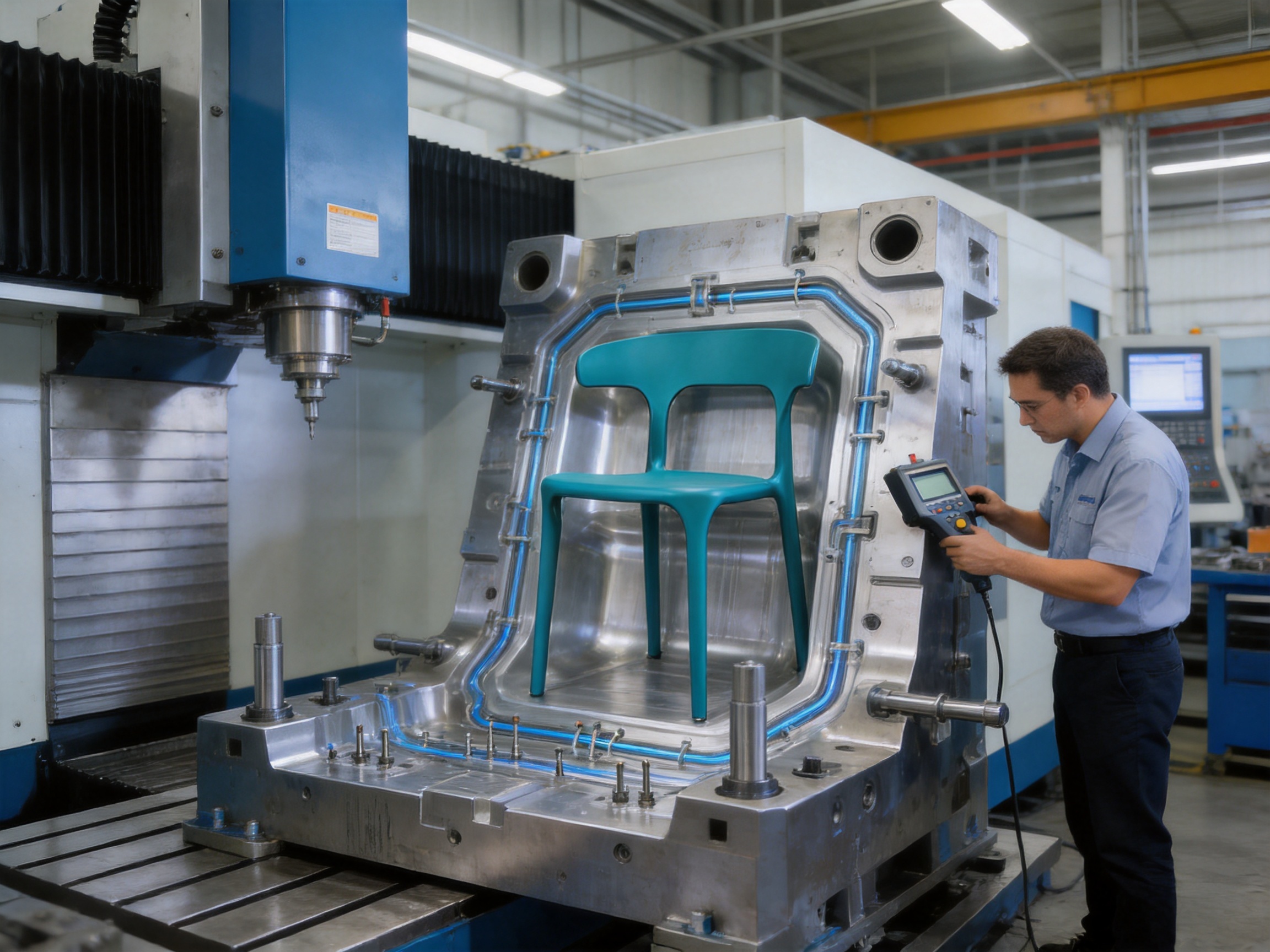
The quality of a horn-back chair mould depends heavily on the manufacturing process used to convert digital design data into a precise steel tool. Yingxiang Plastic Mould uses CAD, CAE, and CAM systems together with modern machining equipment and experienced technicians. This integrated approach helps connect product development, mould analysis, machining, assembly, testing, and customer approval.
The process begins with a review of the chair design. Engineers examine the product’s overall dimensions, wall thickness, ribs, draft angles, parting line, gate position, ejection requirements, surface finish, and expected production conditions.
This review can identify potential problems before mould manufacturing begins. For example, a sharp internal corner may create stress concentration, a thin leg section may fill poorly, or an undercut may require a complex mechanism. Early review reduces redesign costs and helps establish a realistic production plan.
Once the product is reviewed, the mould structure is developed in three-dimensional CAD software. The design includes the mould base, cavity, core, guide pillars, cooling circuits, runner system, ejectors, inserts, slides, lifters, and machine connection details.
Three-dimensional design allows engineers to inspect the mould from different angles and check whether components interfere with one another. It also supports clear communication between the mould manufacturer and the customer. Modifications to logos, textures, leg geometry, seat contours, or backrest details can be evaluated before machining.
Computer-aided engineering can be used to evaluate filling behaviour, pressure requirements, weld-line locations, air traps, cooling effects, and shrinkage tendencies. Flow analysis is particularly useful for large chair components because the part may have long flow paths and significant differences in wall thickness.
Analysis results can guide the selection of gate locations and injection parameters. They may also indicate where additional vents, stronger ribs, modified radii, or cooling improvements are necessary. Although simulation does not replace physical testing, it reduces risk and supports more informed engineering decisions.
Mould steel must be selected according to production volume, plastic material, surface requirements, corrosion exposure, and expected maintenance conditions. Different steel grades offer different combinations of hardness, toughness, polishability, machinability, and wear resistance.
For a high-output chair mould, wear resistance and dimensional stability are important. If the chair material contains glass fibre or other abrasive additives, the mould may require increased resistance to erosion. If the chair has a polished or decorative surface, the selected steel must also support the required cavity finish.
Computer numerical control machining produces the major cavity and core surfaces with high repeatability. Rough machining removes excess steel, while semi-finishing and finishing operations gradually achieve the required form and dimensional accuracy.
Tool selection, cutting parameters, machine stability, workpiece fixturing, and temperature control all affect the result. Large mould components require careful machining strategies to avoid deformation and maintain alignment between related surfaces.
Electrical discharge machining can be used for deep ribs, narrow slots, sharp details, complex corners, and areas that are difficult to reach with conventional cutting tools. EDM is especially valuable when the mould includes fine textures, intricate logos, or complex functional details.
After EDM, the affected surface may require polishing or additional finishing according to the product requirement. Proper control of EDM parameters helps limit excessive recast layers and supports a clean final cavity surface.
Wire cutting may be used for inserts, precision openings, and components requiring accurate profiles. Mould parts are then fitted and measured to ensure that the cavity, core, slides, lifters, and inserts work together correctly.
Precision fitting is essential for controlling parting-line quality and avoiding flash. It also allows replaceable components to be installed in areas that may experience higher wear during production.
Surface treatment is completed according to the chair design. Polishing can produce a smooth or glossy appearance, while texturing creates a matte, patterned, or decorative finish. The process must be controlled carefully so that the texture remains consistent across large surfaces.
Inconsistent polishing may produce bright spots, direction marks, or differences in gloss. Uneven texturing can make identical chairs appear different. Professional surface preparation is therefore a major part of product quality, not merely a cosmetic finishing step.
After machining and finishing, the mould components are assembled. Engineers check guide movement, ejector travel, slide operation, cooling connections, hydraulic or mechanical systems, and the machine installation interface.
Assembly checks also include verification of component markings, spare parts, fasteners, water circuits, and maintenance access. Clear organization at this stage helps make future servicing faster and more reliable.
The completed mould is tested through trial moulding. Engineers inspect filling behaviour, ejection, surface quality, dimensions, flash, weld lines, shrinkage, and chair stability. Processing parameters are adjusted as necessary, and any required mould corrections are completed before final delivery.
Trial moulding is a practical confirmation that the mould performs under real production conditions. It provides information that cannot always be obtained from drawings or simulations alone.
Quality control should continue throughout the entire mould lifecycle. It begins with design review and material verification and continues through machining, assembly, trial production, final inspection, packaging, and customer support.
Mould steel, standard components, copper electrodes, and other materials should be checked before use. Material certificates, dimensions, hardness requirements, and surface conditions may be verified according to the project specification.
Critical mould dimensions are measured using suitable inspection tools and coordinate-based methods. These may include cavity dimensions, core dimensions, insert positions, guide systems, cooling locations, ejection alignment, and machine mounting points.
Measurement records help confirm that the finished tool corresponds with the approved design. They also provide useful information if future modifications or replacement inserts are required.
The mould must open and close smoothly, with proper movement of slides, lifters, ejectors, and return mechanisms. Cooling circuits should be checked for leakage and correct flow. The hot runner or runner system must also be tested where applicable.
Trial chairs should be inspected for appearance, dimensions, warpage, flash, sink marks, short shots, weld lines, colour uniformity, and structural performance. Particular attention should be paid to the legs, seat corners, backrest transitions, horn sections, and areas where users apply force.
When required, load testing, impact testing, stacking checks, and repeated-use evaluations can be carried out according to the customer’s standards or market requirements.
Price is an important consideration when purchasing a mould, but the lowest initial price does not always produce the lowest total cost. A low-cost mould may use inferior steel, simplified cooling, weak support, insufficient venting, or limited trial testing. These compromises can create higher costs during mass production.
A precise mould reduces the likelihood of producing chairs with visible defects or dimensional problems. Lower rejection rates save raw material, machine time, labour, packaging resources, and inspection effort.
Appropriate steel, heat treatment, surface finishing, and replaceable wear parts can extend mould service life. A durable mould maintains cavity accuracy over many cycles and reduces the frequency of major repair work.
Well-designed cooling channels, runners, ejectors, and guide systems are easier to inspect and maintain. Clear access to important components allows technicians to solve problems before they become serious production interruptions.
Stable cycle times, consistent product quality, and reduced waste make manufacturing costs easier to calculate. This is valuable for chair producers working on large contracts, retail programs, hospitality projects, or export orders.
A professional mould manufacturer can adapt the design to different chair sizes, backrest shapes, surface finishes, logos, materials, colours, and packaging requirements. Customization allows the customer to differentiate the product rather than competing only on price.
When a chair has a consistent shape, clean surface, stable legs, and reliable strength, the finished product is more likely to satisfy distributors, retailers, project contractors, and end users. Mould quality therefore contributes directly to brand reputation even when the mould itself is not visible to the market.
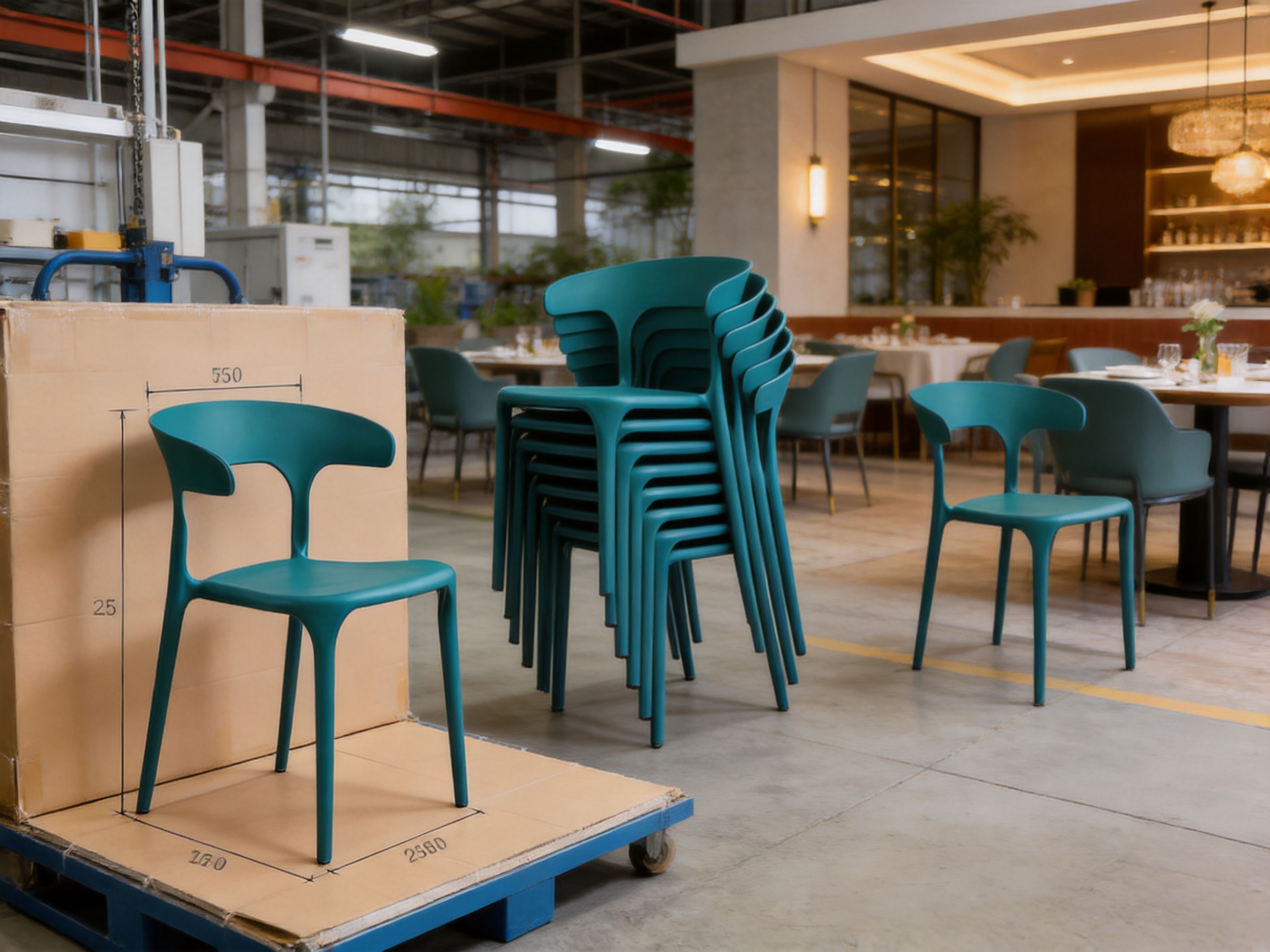
TaiZhou HuangYan YingXiang Plastic Mould Co., Ltd. was established in 2012 and is located in Huangyan, Taizhou, Zhejiang, a region widely associated with plastic mould manufacturing. The company operates a plant of approximately 7,000 square metres and has around 50 employees, including experienced technicians and engineering personnel.
The company uses CAD, CAE, and CAM systems to support the complete mould development process. These systems help connect product design, simulation, machining, inspection, and manufacturing communication. Advanced equipment supports the production of large and complex moulds, while experienced technicians contribute practical knowledge developed through repeated projects.
Yingxiang’s product categories include integral box moulds, pallet moulds, fruit basket moulds, logistics crate moulds, folding box moulds, stool moulds, food storage container moulds, trash can moulds, beverage box moulds, hand basket moulds, household product moulds, floor mat moulds, and chair moulds.
This broad product experience is valuable because many mould engineering principles apply across different products. Experience with logistics crates and pallets contributes knowledge of heavy-duty structures, ribs, cooling, and high-cycle production. Experience with household products contributes understanding of appearance, ergonomics, surface texture, and consumer expectations.
The company emphasizes lean manufacturing, long-life moulds, on-time delivery, premium quality, competitive cost, and comprehensive customer service. These priorities are relevant to horn-back chair production because customers usually require more than a mould that can produce one acceptable sample. They need a reliable production asset that can support commercial output over an extended period.
Different markets may require different versions of the horn-back chair. The mould can be developed according to a customer’s product drawings, three-dimensional data, sample chair, or functional specification.
The overall height, seat width, seat depth, back angle, leg spacing, and stacking height can be customized. Dimensions should be reviewed together because changing one feature may affect moulding balance, packaging, stability, and ergonomics.
Common chair materials may include polypropylene, high-impact polypropylene, polyethylene, or specially modified engineering plastics. The selected material influences shrinkage, filling behaviour, impact resistance, stiffness, chemical resistance, and moulding temperature.
The mould designer should receive accurate information about the material grade and any additives. Glass fibre, mineral filler, flame retardant, recycled content, and colour masterbatch can all influence mould wear and product performance.
The chair may have a smooth, matte, patterned, wood-like, leather-like, or custom textured finish. Texture depth affects draft requirements and release performance. A higher texture depth generally requires more draft and careful ejection planning.
Logos, symbols, model numbers, recycling marks, and other identification details can be integrated into the mould. Their position should be selected according to visibility, product appearance, cleaning requirements, and moulding practicality.
Although colour is normally controlled during injection moulding rather than by the mould itself, the cavity surface should support the required appearance. Dark colours may emphasize flow marks or gloss variation, while light colours may reveal contamination or surface inconsistency. Mould cleanliness and polishing quality are important for every colour, especially high-gloss products.
Commercial chairs are often stacked to reduce storage and transport volume. The mould can be designed to produce compatible stacking features, stable contact points, and controlled nesting depth. Packaging requirements should be considered early because they may influence chair geometry and tolerance control.
The horn-back chair can serve a wide range of environments. In homes, it may be used in dining rooms, kitchens, living areas, balconies, or covered outdoor spaces. Its distinctive shape can provide a decorative element while maintaining practical functionality.
Restaurants, cafés, hotels, banquet venues, and event spaces often value chairs that are easy to clean, move, store, and replace. Plastic construction can offer resistance to moisture and many common cleaning agents when the correct material is selected.
Schools, meeting rooms, community halls, and public facilities may require lightweight chairs that can be rearranged quickly. A mould designed for strong legs, stable floor contact, and consistent stacking can support these operational demands.
Retail and export customers may request colour variation, private mould branding, custom packaging, or different surface treatments. A flexible mould manufacturing partner can help adapt the tool to these commercial requirements.
Even a well-made chair mould requires correct operation and maintenance. The injection moulding machine should be suitable for the mould size, clamping force, injection volume, and product projected area. Processing conditions should follow the recommended range for the selected plastic material.
Cavity surfaces, vents, parting lines, ejector areas, and runner components should be cleaned at suitable intervals. Dust, plastic deposits, oil, and corrosion can affect appearance and movement if they are not removed.
Cooling channels should be checked for blockage, leakage, scale, and unstable water flow. Poor cooling performance can increase cycle time and create dimensional variation. Clean water or a controlled cooling medium can help protect the system.
Guide pillars, guide bushes, slides, lifters, and other moving parts require suitable lubrication. Over-lubrication should be avoided near visible cavity surfaces because excess oil can contaminate the plastic or affect surface appearance.
Ejector pins, return pins, sliders, locking blocks, springs, seals, and other wear components should be inspected during scheduled maintenance. Replacing a worn standard component early is usually less expensive than repairing a damaged cavity or production part.
When the mould is not in use, it should be cleaned, dried, protected against corrosion, and stored in a safe position. Cooling water should be removed where appropriate. The mould should be closed or secured according to the manufacturer’s storage recommendation.
When evaluating a horn-back chair mould supplier, buyers should consider more than equipment lists or quoted prices. The supplier should be able to demonstrate relevant experience with large household products, structural plastic parts, complex surfaces, and long-cycle production.
Important questions include whether the supplier can review the chair design, provide mould-flow analysis, recommend suitable steel, explain the cooling and ejection strategy, perform trial moulding, supply inspection information, and provide after-sales technical support.
Communication is also important. Clear exchange of drawings, material data, production targets, machine specifications, packaging requirements, and quality standards reduces the possibility of misunderstanding. A professional supplier should identify potential risks early and provide practical solutions.
The supplier’s factory capacity is another consideration. A facility with suitable floor space, machining resources, experienced technicians, assembly capability, and testing arrangements is better prepared to manage a large chair mould from design through delivery.
Customers should also ask about delivery planning, spare parts, maintenance instructions, mould modification procedures, and support after installation. These factors influence the total value of the mould throughout its working life.
Huangyan, Taizhou, Zhejiang, is widely known as an important mould manufacturing centre. The region has a developed industrial network, experienced mould technicians, equipment suppliers, machining services, standard component providers, and plastic processing companies.
This concentration of expertise supports efficient cooperation and access to specialized resources. It also gives local mould manufacturers practical experience with a wide variety of products, from household items to heavy-duty logistics equipment.
For international customers, working with a manufacturer in an established mould cluster can provide access to experienced engineering teams and a mature supply chain. However, the specific supplier’s quality system, communication ability, project management, and technical capability should still be evaluated carefully.
A successful horn-back chair mould project usually follows a structured workflow. The first stage is customer consultation, during which the product concept, dimensions, material, production volume, machine details, and quality expectations are discussed.
The second stage is product and mould design. Engineers review the three-dimensional model, identify potential moulding problems, and prepare the cavity, core, gating, cooling, and ejection concepts. Design data is then submitted for confirmation where required.
The third stage is material preparation and machining. Steel and standard components are prepared, rough machining begins, and precision finishing follows according to the approved design.
The fourth stage is mould assembly and testing. Components are fitted, moving systems are checked, cooling is tested, and the mould is installed for trial production. Sample chairs are inspected and any corrections are completed.
The final stage is delivery and customer support. The mould is cleaned, protected, packaged, and shipped with relevant documents, spare parts, and operating recommendations. Technical communication can continue during installation and initial production.
| Project stage | Main activities | Expected result |
|---|---|---|
| Consultation | Review product concept, material, output, and machine information | Clear project requirements |
| Design | Develop 3D mould structure and analyze filling, cooling, and ejection | Approved technical solution |
| Machining | Cut, finish, polish, texture, and inspect mould components | Accurate mould parts |
| Assembly | Fit cavity, core, guides, cooling, runners, and ejectors | Functional complete mould |
| Trial production | Run samples and inspect dimensions, appearance, and performance | Verified moulding result |
| Delivery | Protect, package, document, and ship the mould | Production-ready tool |
A horn-back chair mould is an injection mould designed to produce a plastic chair with a distinctive horn-shaped or raised backrest profile. It can reproduce the chair’s seat, legs, back, ribs, textures, logos, and other details in a repeatable production process.
The suitable material depends on the required strength, flexibility, impact resistance, weather resistance, appearance, and cost. Polypropylene and modified polypropylene are common options, while other thermoplastics may be selected for specific performance requirements. The exact material grade should be confirmed before mould design is finalized.
Yes. The mould can be customized according to chair dimensions, backrest shape, leg design, surface texture, colour requirements, logos, stacking features, material, production volume, and injection machine specifications.
Cooling affects cycle time, shrinkage, warpage, surface quality, and dimensional stability. A balanced cooling system helps the seat, backrest, and legs cool more evenly, reducing deformation and improving production consistency.
Mould-flow analysis helps predict filling behaviour, pressure requirements, weld lines, air traps, cooling performance, and shrinkage tendencies. It allows engineers to improve gate locations, vents, wall thickness, ribs, and processing conditions before the mould is manufactured.
Surface quality depends on cavity steel, machining accuracy, polishing or texturing, venting, processing conditions, material cleanliness, and mould maintenance. A professionally prepared cavity and correctly controlled moulding process help reduce flow marks, burns, flash, and uneven gloss.
Important factors include production volume, plastic material, abrasive additives, surface finish, corrosion exposure, expected mould life, repair requirements, and budget. The steel should provide an appropriate balance of hardness, toughness, wear resistance, machinability, and polishability.
The cavity number depends on chair size, machine capacity, target output, mould budget, cycle time, and automation requirements. Large chairs often require careful evaluation because increasing cavity number also increases mould size, injection demand, cooling complexity, and investment.
The mould manufacturer normally needs the machine’s clamping force, tie-bar spacing, platen dimensions, maximum mould height, injection capacity, screw diameter, ejector specifications, and available hydraulic or electrical connections. This information helps ensure that the mould fits and operates correctly.
Regular cleaning, lubrication, cooling-system inspection, vent maintenance, corrosion protection, and early replacement of worn components can significantly extend mould life. Operators should also avoid excessive injection pressure, improper ejection settings, and unauthorized modifications.
Yes. A logo, model number, recycling symbol, or other identification detail can be integrated into the cavity. The location, size, depth, orientation, and surface finish should be reviewed during design.
An experienced manufacturer can identify design risks earlier, select suitable mould structures, improve cooling and ejection, control machining quality, complete realistic trial testing, and provide more useful technical support throughout the project.
The horn-back chair is a practical and visually distinctive plastic product that requires a mould capable of combining appearance, strength, comfort, stability, and production efficiency. The mould must accurately reproduce the backrest, seat, legs, ribs, textures, and functional details while supporting fast and reliable injection moulding.
Its main advantages over less carefully engineered alternatives include better dimensional stability, improved surface appearance, stronger structural consistency, more reliable demoulding, shorter and more stable cycle times, lower rejection rates, and longer operating life.
The manufacturing process is equally important. Product review, three-dimensional CAD design, CAE analysis, appropriate steel selection, CNC machining, EDM, precision fitting, polishing, texturing, assembly, trial moulding, and inspection all contribute to the final result.
TaiZhou HuangYan YingXiang Plastic Mould Co., Ltd. combines the location advantages of Huangyan’s mould manufacturing industry with a 7,000 square metre facility, approximately 50 employees, CAD/CAE/CAM systems, advanced equipment, and experienced technicians. Its experience across chair moulds, household product moulds, logistics crates, pallets, boxes, baskets, and other injection moulds supports a broad understanding of plastic product manufacturing.
For customers developing a horn-back chair for domestic, commercial, hospitality, public, or export markets, a customized mould solution can provide a reliable foundation for long-term production. By focusing on engineering quality, process control, efficient manufacturing, and responsive service, the mould supplier becomes an important partner in delivering durable and attractive plastic chairs to the market.
1. Injection Molding Handbook, technical principles of polymer flow, mould design, cooling, and ejection.
2. Plastics Engineering Fundamentals, guidance on thermoplastic materials, shrinkage, warpage, and structural design.
3. Mould Engineering Practice, methods for cavity design, gating, venting, machining, polishing, and mould maintenance.
4. Product Design for Manufacture and Assembly, principles for improving manufacturability, reliability, and production efficiency.
5. International practices for plastic seating products, structural evaluation, stability, durability, and user safety.
6. Technical information supplied for the horn-back chair mould product and the manufacturing capabilities of TaiZhou HuangYan YingXiang Plastic Mould Co., Ltd.
If you are interested in any of our products or services, please feel free to ask and we can talk about your ideas.
 QUICK LINKSMOBILE SITE
 FACTORY ADDRESS
 CONTACT INFORMATION



 English
 Español