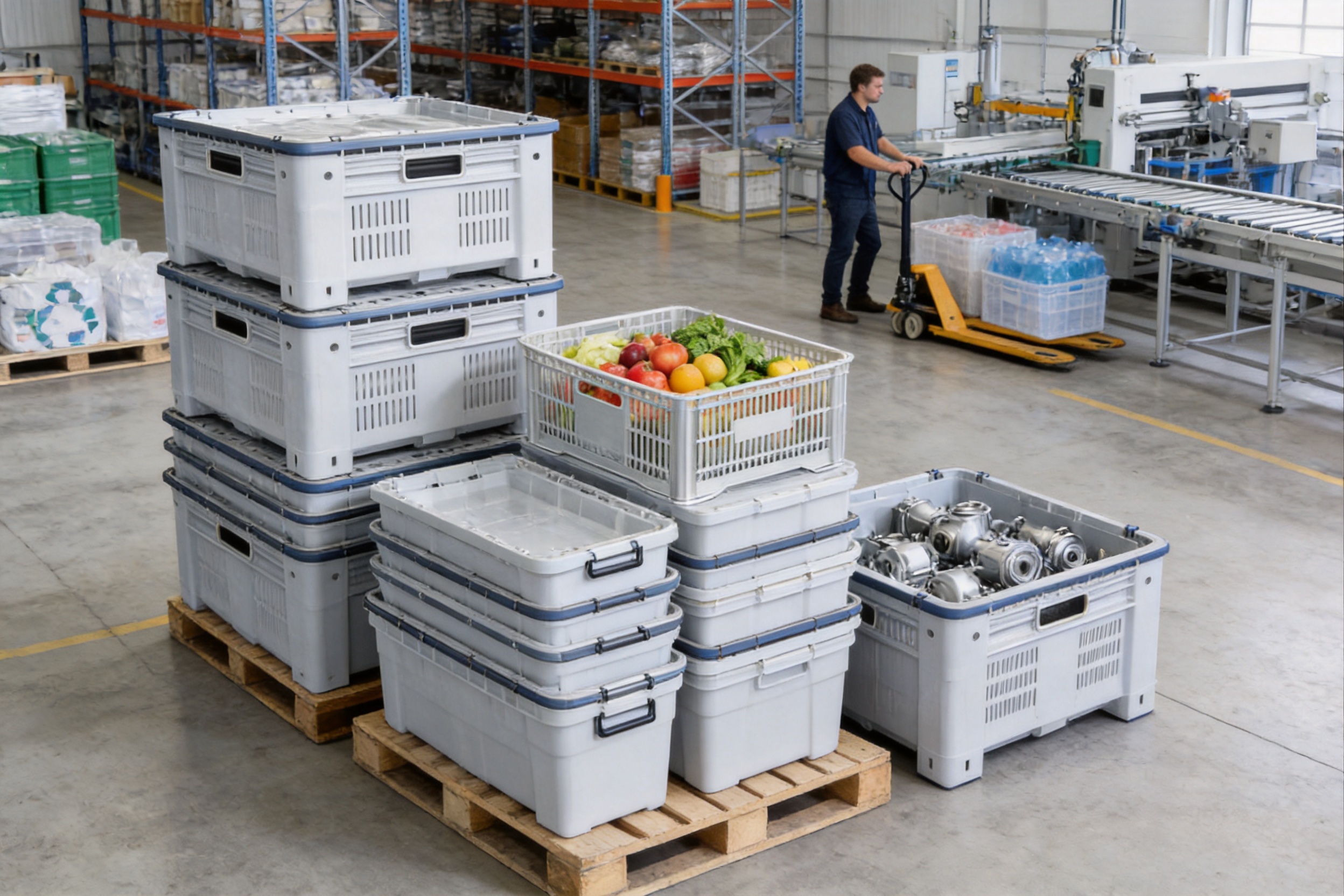
Integral box moulds are essential tools for producing strong, reusable, and accurately shaped plastic boxes for logistics, warehousing, retail, agriculture, food handling, household storage, and industrial applications. As supply chains become more demanding, manufacturers and end users require plastic boxes that combine structural strength, dimensional stability, efficient nesting, easy cleaning, long service life, and attractive production costs. The mould is the foundation of all these qualities. A well-designed integral box mould directly influences product performance, cycle time, material consumption, surface quality, assembly accuracy, and the total return on investment for the mould owner.
TaiZhou HuangYan YingXiang Plastic Mould Co., Ltd. develops and manufactures customized plastic injection moulds for integral boxes and a wide range of related products. Located in Huangyan, Taizhou, Zhejiang, China, a recognized centre for mould manufacturing, the company serves customers requiring reliable tooling for household and industrial plastic products. Its product capabilities include integral box moulds, logistics crate moulds, folding box moulds, beverage box moulds, pallet moulds, fruit basket moulds, food storage container moulds, trash can moulds, hand basket moulds, chairs, stools, floor mats, and other injection-moulded products.
With a 7,000-square-metre plant, approximately 50 employees, advanced CAD, CAE, and CAM systems, modern machining equipment, and experienced technicians, the company provides complete mould development from concept analysis to final testing. Its manufacturing approach combines practical engineering, controlled machining, careful assembly, systematic trials, and responsive service. This makes the integral box mould a suitable choice for customers seeking dependable tooling rather than a short-term, low-cost mould with uncertain production performance.
An integral box is generally produced as one complete injection-moulded unit. Unlike a folding box, which uses hinges or multiple parts to create a collapsible structure, an integral box normally has fixed side walls, a base, corner supports, and reinforced rims formed in a single moulding cycle. Depending on the product design, the box may be stackable, nestable, ventilated, solid-sided, ribbed, or fitted with handles and label areas.
The mould is usually composed of a core, cavity, mould base, cooling system, ejection system, guide components, and other functional elements. The cavity forms the exterior surface of the box, while the core creates the internal space. Because an integral box often has a relatively large projected area and a complex network of ribs, the mould must be designed to manage injection pressure, material flow, cooling uniformity, shrinkage, warpage, and demoulding forces.
Many integral boxes are produced using polypropylene, high-density polyethylene, or other thermoplastic materials selected for impact resistance, chemical resistance, low density, and recyclability. Material selection affects the moulding process. For example, polypropylene can provide a good combination of stiffness and flexibility, while high-density polyethylene can offer toughness and resistance to repeated handling. The mould must be adapted to the chosen material, product wall thickness, expected cycle time, and injection machine capacity.
A successful integral box mould does more than reproduce the product shape. It must help the injection moulder achieve stable mass production. This means maintaining consistent dimensions from shot to shot, avoiding excessive weld lines in highly stressed areas, reducing visible sink marks near ribs, and ensuring that the finished box can be removed without deformation. A mould that performs well during the first trial but becomes unstable after several thousand cycles is not a reliable industrial solution. Long-term performance is therefore a central consideration in tooling design and manufacture.
Integral plastic boxes are used in many sectors because they can be designed for repeated circulation and efficient handling. In logistics, boxes transport parts, components, produce, beverages, packaged goods, and warehouse materials. Their standardized dimensions allow them to work with pallets, shelving, conveyors, forklifts, and automated storage systems. Their smooth surfaces can also make them easier to clean than wooden or corrugated alternatives.
In agriculture, ventilated integral boxes are frequently used for fruit, vegetables, flowers, and other delicate products. Ventilation openings help reduce heat accumulation and improve air movement. Rounded internal corners and smooth transitions can reduce damage to produce during loading and transportation. The mould must produce clean openings with sufficient strength around the rim and side walls.
In manufacturing facilities, reusable plastic boxes support line-side supply, work-in-process handling, and component organization. Boxes may be produced in different sizes, colours, and configurations to identify production stages or product categories. The mould can include identification panels, barcode areas, embossed symbols, or customized branding features according to the customer’s requirements.
Household applications include storage boxes for clothing, tools, toys, cleaning supplies, kitchen articles, and general organization. In this field, appearance and touch quality may be as important as strength. A well-polished mould surface can produce a clean appearance, while carefully controlled parting lines and ejection marks help improve the perceived quality of the final product.
Food-related applications require additional attention to hygiene, cleanability, and material compatibility. A food storage box may require smooth internal surfaces, rounded corners, limited recessed areas, and a design that reduces the accumulation of residue. The mould manufacturer must understand the intended application and coordinate product geometry with the customer’s material, production, and regulatory requirements.
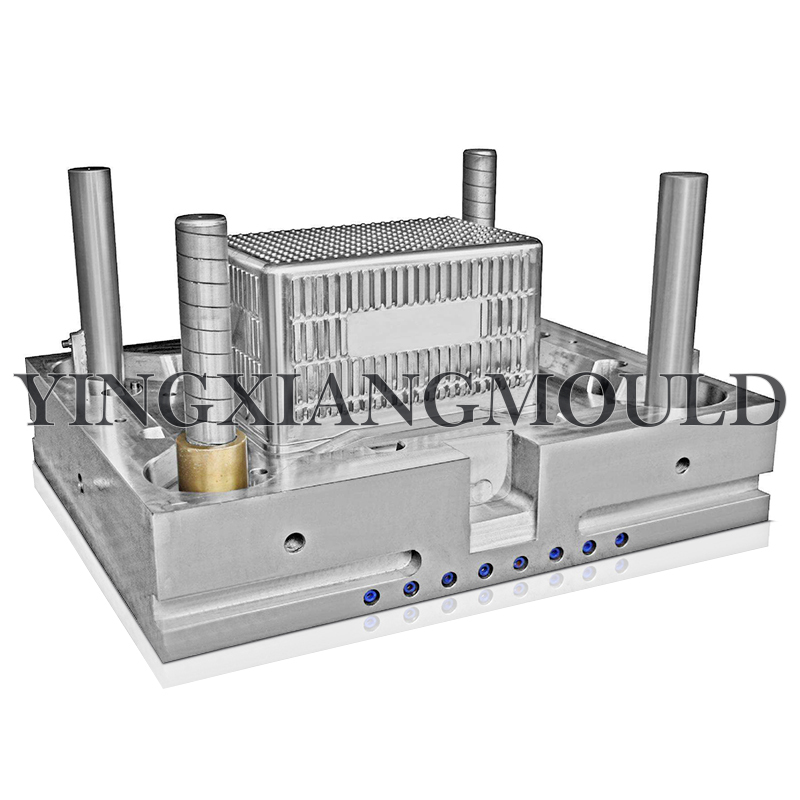
Integral Box Mould
Integral boxes often have broad surfaces, multiple ribs, deep corners, and relatively thin walls. These characteristics can make filling more difficult than the apparent simplicity of the product suggests. If molten plastic does not flow evenly, the finished box may show short shots, weld lines, air traps, uneven shrinkage, or local deformation.
During mould development, the engineering team evaluates the best gate location, gate size, runner layout, and filling sequence. A balanced flow path helps distribute material throughout the cavity and reduces pressure differences between areas of the product. Depending on the box design and customer requirements, the mould may use a hot runner, cold runner, edge gate, pin gate, or another suitable gating arrangement.
Flow analysis through CAE software can help identify potential filling problems before steel machining begins. It can provide insight into filling time, pressure requirements, weld line positions, air entrapment, cooling behaviour, and expected warpage. Simulation does not replace practical mould engineering, but it gives the team a valuable opportunity to improve the design before expensive corrections are required.
Cooling is one of the most important factors in injection mould performance. Plastic boxes typically contain large surfaces that need to cool evenly. If one section of the product cools faster than another, differential shrinkage may cause warpage, twisting, uneven stacking, or difficulty with demoulding. Poor cooling may also increase the cycle time and reduce the number of products that can be manufactured per day.
A professional integral box mould incorporates cooling channels positioned to support the most important product areas. The cooling layout must consider ribs, corners, thick sections, handles, inserts, and areas around the gate. Where ordinary straight channels cannot provide sufficient control, the design may require baffles, bubblers, special inserts, or other cooling solutions.
Good cooling design provides several advantages. It helps maintain consistent product dimensions, improves productivity, reduces energy consumption per part, and supports longer mould life by limiting excessive thermal stress. It can also improve surface appearance by reducing local defects caused by uneven cooling.
Because an integral box has deep walls and internal ribs, demoulding must be planned carefully. The product should separate from the core smoothly without sticking, whitening, cracking, or deformation. Ejector pins, ejector plates, stripper systems, air assistance, and suitable draft angles may be combined depending on the product structure.
Ejection forces should be distributed across appropriate areas of the box. Concentrating force on a small number of pins can leave visible marks or distort the bottom and side walls. A well-engineered system supports the product during removal while keeping the cycle stable. Ejector components should also be selected and fitted with sufficient precision to prevent premature wear, flash, or movement problems.
Draft angles are necessary to release the box from the mould. The correct value depends on the material, surface texture, wall depth, rib structure, shrinkage characteristics, and product requirements. Too little draft can increase friction and cause sticking. Too much draft may affect usable capacity, stacking behaviour, or the appearance of the box.
When the customer has a specific internal volume or external dimension, the mould designer must balance draft requirements with functional performance. Textured surfaces generally require more draft than highly polished surfaces. Deep ribs and narrow slots also need careful attention because they can create localized resistance during ejection.
Integral box moulds are often used for high-volume production. The mould therefore needs durable steel and replaceable wear components in areas that experience repeated movement, pressure, friction, or thermal cycling. Guide pillars, bushes, sliders, lifters, ejector components, inserts, and other moving parts should be selected and installed with long-term maintenance in mind.
Replaceable inserts can be especially valuable for customized boxes. If a customer later changes a logo panel, label area, ventilation pattern, or local structural feature, selected inserts may be modified without rebuilding the entire mould. This can reduce future costs and shorten the time required for product updates.
A well-developed mould helps create a consistent wall thickness and a carefully organized rib structure. This allows the final box to withstand stacking, impact, lifting, and repeated circulation. In contrast, poorly engineered tooling may produce uneven walls, weak corners, excessive weld lines, or inconsistent ribs. These defects can cause cracks, deformation, and premature failure in actual logistics environments.
Structural strength does not simply come from adding more material. Excessive wall thickness increases weight, cooling time, and material cost. The more effective approach is to use engineering principles to place material where it contributes most to stiffness and load resistance. A mould manufacturer with experience in crates and containers can help optimize the balance between strength, weight, cycle time, and cost.
Boxes often need to stack or nest with other boxes of the same model. Small dimensional differences can lead to unstable stacks, excessive gaps, difficult nesting, and problems on conveyors or automated handling equipment. Balanced cooling, suitable steel construction, accurate machining, and controlled processing all contribute to dimensional stability.
The mould’s design should also account for material shrinkage and the expected production conditions. A product that looks correct in a single sample may not perform consistently when produced at different machine settings or with recycled material percentages. A robust mould design gives the processor a wider and more manageable operating window.
Cycle time is a major cost factor in plastic box production. Every unnecessary second affects output and energy consumption. An optimized mould supports faster filling, efficient cooling, reliable ejection, and reduced operator intervention. This can provide a significant advantage over tooling that requires slow cooling or frequent manual assistance.
Cycle time must be optimized without compromising product quality. Excessively fast processing can lead to incomplete cooling, warpage, stress, or ejection damage. The most valuable result is a stable cycle that produces acceptable parts continuously rather than a short theoretical cycle that creates a high rejection rate.
The purchase price of a mould is only one part of its total cost. Maintenance, repairs, rejected products, production downtime, energy use, mould transportation, and replacement tooling can have a greater financial effect over the service life of the project. A higher-quality mould may provide a better economic result because it runs more consistently and requires fewer corrective interventions.
Yingxiang focuses on long-life moulds, on-time delivery, premium quality, competitive costs, and comprehensive customer service. This approach recognizes that customers need a dependable production asset rather than simply a mould delivered at the lowest initial price.
Integral boxes can be customized in many ways, including length, width, height, wall thickness, ventilation, handles, stacking feet, label panels, colour separation, surface texture, and identification marks. A manufacturer experienced in customized mould solutions can adapt the tooling to the customer’s actual application rather than forcing the customer to use a standard design that may not be suitable.
Customization can also involve the production process. The mould may be designed for a particular injection machine, automation system, material, cycle target, or packaging method. Early communication between the customer, product designer, and mould manufacturer helps prevent conflicts between the product concept and the production equipment.
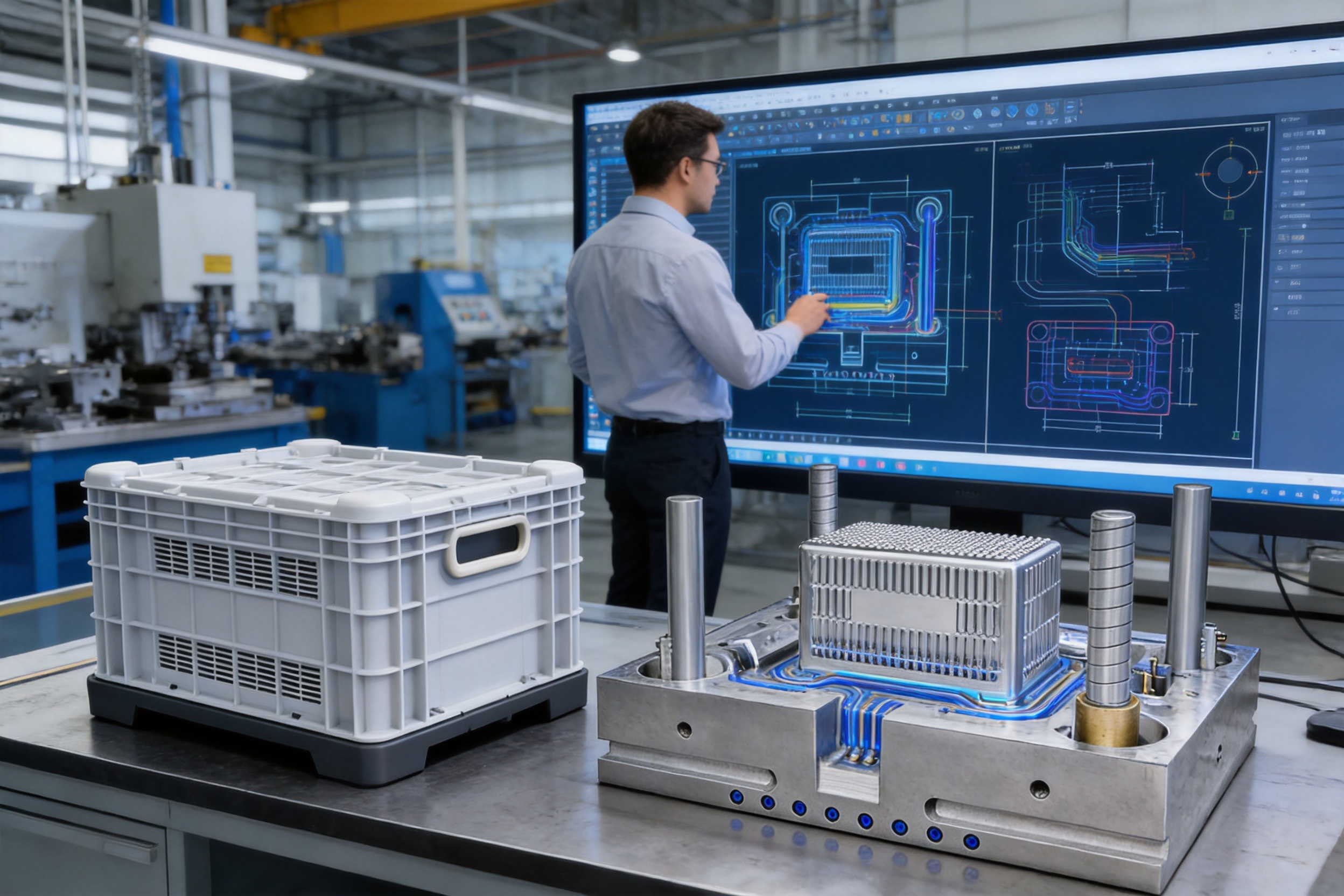
The process begins with a detailed review of the customer’s product requirements. Important information includes the box’s dimensions, intended load, stacking or nesting method, material, colour, surface finish, expected annual volume, machine specification, target cycle time, and any applicable application requirements.
The team also reviews 2D drawings, 3D files, samples, reference products, and packaging or logistics conditions. If the product is still at the concept stage, the mould engineer can provide design-for-manufacturing recommendations. These recommendations may concern wall thickness, corner radii, draft angles, rib proportions, gate position, ejector locations, and the feasibility of special features.
Using CAD software, engineers create or review the product model and develop the mould structure. The design must account for parting lines, mould opening direction, core and cavity separation, cooling circuits, ejection, guide systems, sliders, inserts, and maintenance access.
The parting line should be positioned where it causes the least functional and visual impact. On an integral box, this may involve the upper rim, outer side wall, or another area that can tolerate a small mould line. The choice must also support reliable mould opening and avoid undercuts that would require unnecessary mechanisms.
At this stage, engineers check whether the box can be demoulded and whether all ribs, corners, handles, and openings can be produced with practical tooling. Design reviews help identify potential problems before manufacturing begins.
CAE analysis can be used to predict the filling and cooling behaviour of the mould. The analysis may evaluate the proposed gate position, runner balance, injection pressure, filling pattern, weld lines, air traps, cooling time, shrinkage, and warpage. The results support informed decisions about mould layout and product geometry.
If the analysis indicates an unacceptable weld line near a high-load corner, the gate or wall structure may be revised. If a large flat base is predicted to warp, the cooling layout, rib design, material distribution, or processing plan may be adjusted. Early correction is usually more efficient than modifying completed steel.
Steel selection depends on the expected production volume, plastic material, mould size, surface requirements, and customer budget. The main mould components should provide suitable hardness, toughness, machinability, and resistance to wear or corrosion. Moving parts and high-wear inserts may require different steel grades or heat treatment than the main mould plates.
The selection process must also consider the customer’s maintenance expectations. A mould intended for very high-volume production may justify more durable materials and replaceable inserts. A lower-volume project may be optimized through a different material and structure while still maintaining reliable performance.
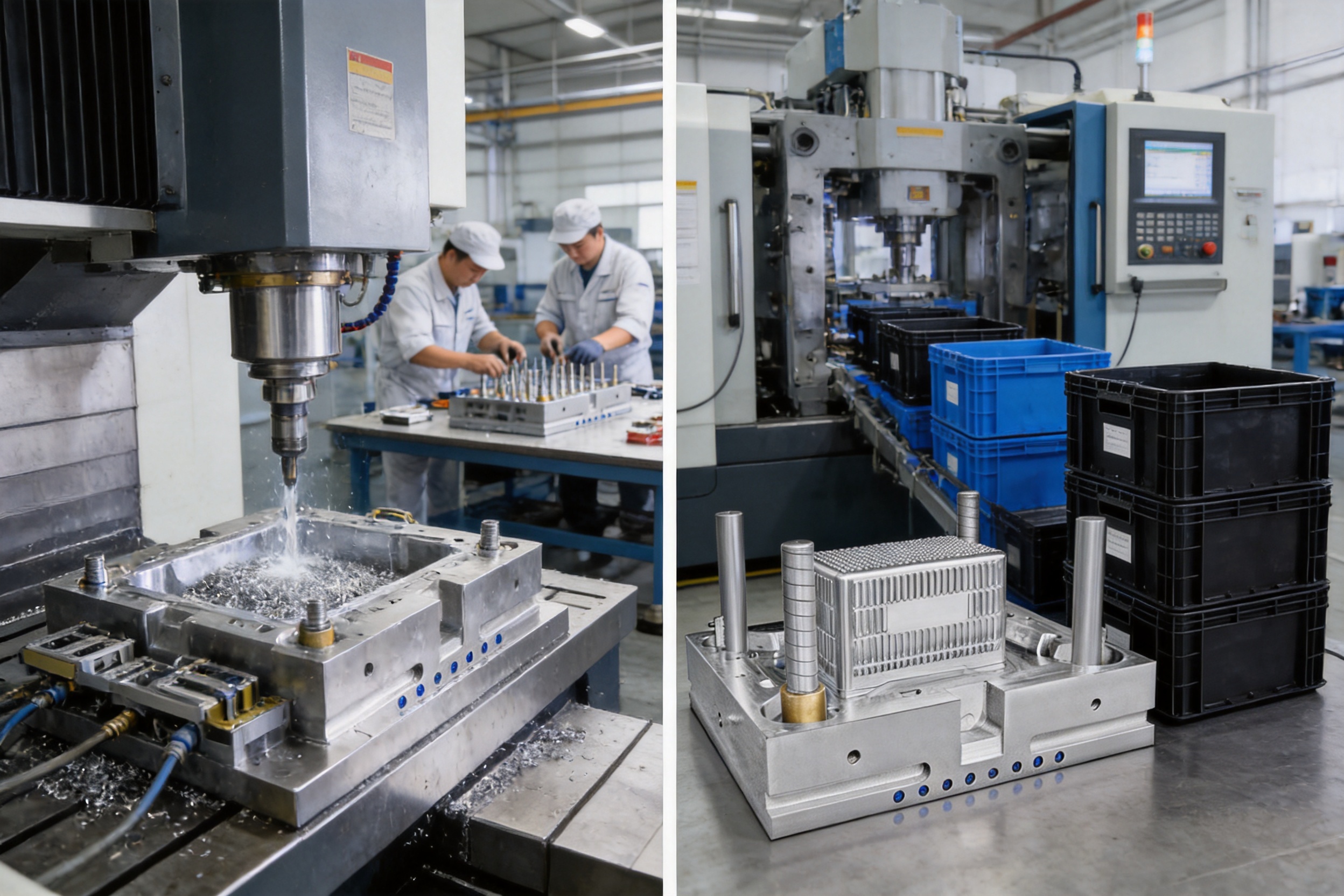
After design approval, mould components are manufactured using advanced machining equipment and CAM programming. CNC milling creates the primary cavity and core geometry, while other equipment may be used for drilling, engraving, wire cutting, electrical discharge machining, grinding, and precision finishing.
Large integral box moulds require careful control of machining accuracy because even small errors can affect wall thickness, alignment, cooling, or product assembly. CAM programming helps convert the digital design into controlled machining paths. Experienced technicians review the machining strategy to ensure that tools can reach deep corners, narrow ribs, and complex surfaces without leaving unacceptable marks.
Selected mould components may undergo heat treatment to achieve the required hardness and stability. After heat treatment, components may be ground or machined again to restore dimensional accuracy. Surface finishing is carried out according to the product requirements. A box designed for a smooth, easy-clean surface may require polishing, while a textured or matte appearance may require controlled texturing or another finishing method.
Surface quality affects both appearance and release. Poor finishing can create drag marks, sticking, inconsistent gloss, and visible defects on the plastic box. The finishing process must therefore be treated as a functional engineering step rather than only a cosmetic operation.
During assembly, the core, cavity, mould base, guide systems, cooling components, ejectors, slides, inserts, and other elements are carefully fitted. Technicians check clearances, movement, alignment, sealing surfaces, water connections, and the operation of the ejection system.
Assembly quality has a direct effect on mould life. Incorrect fitting may create uneven wear, flash, leakage, poor alignment, or difficult maintenance. A professional assembly process includes repeated manual checks and movement tests before the mould is sent for injection trials.
The first mould trial verifies whether the tooling can produce an acceptable product under practical conditions. Technicians inspect filling, appearance, dimensions, ejection, cooling, cycle time, and mould operation. Samples are compared with drawings or approved reference standards.
If correction is required, the team identifies the root cause rather than making random adjustments. Possible corrections include modifying the gate, polishing a sticking area, improving venting, changing ejector timing, adjusting cooling, removing excess steel, or revising a local product feature. Trial results are documented so that improvements can be tracked systematically.
Before delivery, the mould undergoes final inspection. This may include dimensional checks, water pressure or leakage checks, mould opening and closing tests, ejection tests, surface inspection, and confirmation of accessories and spare parts. The final product sample and mould documentation are prepared for the customer.
Clear technical communication at delivery helps the customer install, operate, and maintain the mould correctly. Information about cooling connections, recommended processing conditions, lubrication points, spare parts, and maintenance intervals can reduce start-up problems and support long-term production.
TaiZhou HuangYan YingXiang Plastic Mould Co., Ltd. combines a specialized mould location, an established plant, modern design systems, and experienced technical personnel. Its 7,000-square-metre facility provides space for design, machining, assembly, testing, and project management. A team of approximately 50 employees supports the manufacturing process, allowing the company to maintain technical coordination across different stages of a project.
CAD, CAE, and CAM systems help connect product development with machining and process analysis. This digital workflow improves communication between design and production, reduces avoidable errors, and supports more accurate tooling decisions. However, software alone cannot guarantee a successful mould. Yingxiang also relies on practical experience in plastic product design, mould construction, injection behaviour, and customer application requirements.
The company’s product range demonstrates experience across different plastic mould categories. Crate moulds, folding box moulds, pallets, beverage boxes, food storage containers, chairs, stools, baskets, and household products all require different combinations of strength, appearance, cooling, ejection, and cycle control. Experience across these products can help engineers identify solutions for complex integral box projects.
Another strength is the company’s focus on customized solutions. Some customers require a standard logistics box, while others need a specialized design for a particular machine, warehouse system, agricultural product, or household market. A flexible engineering process allows the mould to be developed around the customer’s real production conditions.
Quality control should be applied throughout the mould project, not only at the final inspection stage. During design, engineers verify product feasibility and mould structure. During machining, components are checked for dimensions and surface condition. During assembly, moving systems and cooling circuits are tested. During trials, the finished plastic product is evaluated for appearance, dimensions, function, and stability.
Important inspection points for an integral box mould include cavity and core dimensions, wall thickness distribution, parting-line fit, cooling-channel integrity, ejector alignment, guide-system performance, insert positioning, and mould-opening stroke. The finished box should be checked for length, width, height, diagonal dimensions, stacking or nesting performance, rim flatness, base flatness, handle strength, and visual defects.
Quality criteria should be agreed with the customer before the trial. Different applications have different priorities. A warehouse crate may prioritize strength and dimensional stability, while a household storage box may place greater emphasis on appearance and surface finish. Clear standards make the approval process more efficient and reduce the possibility of misunderstanding.
Even a well-manufactured mould requires proper maintenance. Routine care may include cleaning the cavity and core, checking cooling connections, lubricating moving components, inspecting ejector pins, removing plastic residue, and confirming that guide systems operate smoothly. The frequency depends on production volume, material, cycle time, and environmental conditions.
Cooling circuits should be monitored because scale, rust, or contamination can reduce flow and create uneven temperatures. If cooling performance changes over time, the mould may produce more warped or dimensionally unstable boxes. Regular water-flow checks can help detect problems before they cause extensive production losses.
Moving components should be inspected for wear, especially slides, lifters, ejector pins, guide pillars, and bushes. Early replacement of a worn component is usually less costly than allowing it to damage adjacent mould parts. Spare components can be prepared for high-volume production to reduce downtime.
The mould should also be stored correctly when not in use. After production, the mould may need to be cleaned, dried, protected against corrosion, and stored in a safe closed position. Cooling water should be removed when appropriate to reduce corrosion risk. A documented maintenance record helps the customer understand the mould’s condition and plan future service.
Reusable integral plastic boxes can help reduce dependence on single-use packaging. When designed for repeated circulation, they can replace disposable cartons, sacks, or less durable containers in suitable applications. Their service life depends on product design, material choice, mould quality, and operating conditions.
A precise mould supports material efficiency by producing consistent parts with controlled wall thickness. Reducing unnecessary material lowers product weight and transportation energy while preserving required strength. Efficient cooling and shorter cycle times can also reduce the energy used during production.
Many integral boxes are manufactured from recyclable thermoplastics. At the end of their service life, appropriate plastic products may be recycled into new products, depending on material identification, contamination, local recycling systems, and customer practices. Product designers and mould manufacturers can support recyclability by avoiding unnecessary material combinations and by considering end-of-life requirements at the beginning of the project.
Durability is itself a sustainability advantage. A box that survives repeated handling and circulation creates less waste than a product that must be frequently replaced. Mould reliability contributes to this result by helping manufacturers produce boxes with stable structural performance and fewer rejected parts.
Customers should evaluate more than catalogue images or initial quotations when selecting a mould supplier. The manufacturer should be able to explain how it will manage product design, material flow, cooling, ejection, steel selection, machining, trials, corrections, and after-sales support.
Relevant questions include whether the supplier has experience with similar box sizes, whether it understands the customer’s injection machine, whether CAE analysis is available when needed, how mould components are inspected, what trial process is used, and how spare parts or maintenance support are handled. A supplier’s experience with related crates, pallets, baskets, containers, and household products can also be valuable.
Communication is another important factor. Integral box moulds often involve numerous details that cannot be resolved through a single drawing. The supplier should respond clearly to questions about design changes, delivery schedules, technical risks, sample approval, and production requirements. Transparent communication reduces delays and improves the chance of achieving the expected result on the first or second trial.
Yingxiang provides customized mould solutions from its Huangyan facility and emphasizes lean manufacturing, long-life moulds, on-time delivery, premium quality, competitive costs, and comprehensive service. These priorities are relevant to customers who view the mould as a long-term production investment.
To prepare an accurate technical proposal, the customer should provide a 3D product file or detailed drawings whenever possible. The information should include the overall dimensions, internal capacity, wall thickness, rib design, handles, holes, ventilation, stacking method, nesting requirements, surface finish, and any logos or marks.
The customer should also identify the intended plastic material, colour, recycled-content policy, annual output, target cycle time, injection machine model, maximum mould dimensions, and number of cavities. For products used in food handling, agriculture, or other specialized environments, the application and cleaning conditions should be explained.
Photographs or samples of existing boxes can help clarify functional expectations, but they should not replace technical drawings. If a competitor’s box is being improved, the customer should identify the weaknesses to be corrected, such as low load capacity, poor stacking, difficult cleaning, excessive weight, or short service life.
With complete information, the mould manufacturer can recommend the most appropriate structure, steel, cooling arrangement, gating system, ejection method, and production strategy. This improves quotation accuracy and helps prevent later cost increases caused by missing requirements.
An integral box mould is an injection mould used to produce a fixed plastic box as one complete part. It creates the outer walls, base, rim, ribs, handles, openings, and other features in a single moulding cycle. It is different from a folding box mould, which produces a box with folding hinges or collapsible sections.
Polypropylene and high-density polyethylene are common choices because they can provide impact resistance, chemical resistance, low weight, and suitability for repeated handling. The best material depends on the box’s load, temperature, flexibility, food-contact requirements, surface expectations, and recycling strategy.
Yes. An integral box mould can be designed for different lengths, widths, heights, wall thicknesses, ventilation patterns, handles, ribs, label panels, stacking feet, and surface finishes. The product design should be reviewed carefully to ensure that customization remains compatible with injection moulding, cooling, and demoulding.
Cooling affects cycle time, dimensional stability, warpage, surface quality, and mould life. Uneven cooling can cause the box to twist, become difficult to stack, or fail to meet dimensional requirements. A carefully arranged cooling system helps the product solidify evenly and improves production consistency.
Ribs increase stiffness and load resistance without requiring a solid thick wall. They can improve stacking strength, side-wall rigidity, base performance, and resistance to impact. However, ribs must be designed with appropriate thickness and draft to reduce sink marks, shrinkage, and demoulding problems.
Warpage can result from uneven wall thickness, unbalanced filling, poor cooling, excessive residual stress, unsuitable processing conditions, or an inadequate rib layout. Mould design and injection process analysis can help identify and reduce these risks before production begins.
Long service life depends on suitable steel, accurate machining, reliable heat treatment, robust guide and ejection systems, correct cooling design, proper assembly, and regular maintenance. The mould should also be operated within its intended process range and protected from corrosion during storage.
No. The best runner system depends on the box size, material, cavity arrangement, production volume, gate requirements, machine conditions, and cost target. A hot runner may reduce runner waste and support certain cycle-time goals, while a cold runner may be appropriate for other projects. The mould engineer should evaluate the complete application rather than automatically choosing one system.
The trial should evaluate filling, short shots, weld lines, air traps, flash, sink marks, warpage, surface finish, dimensions, ejection, cooling performance, cycle time, and mould movement. The box should also be tested for practical functions such as stacking, nesting, handling, and load resistance where applicable.
Many integral boxes can be produced with recycled thermoplastic, but the material’s flow, shrinkage, contamination, colour variation, and mechanical properties must be considered. The mould and processing conditions may need to accommodate changes in material behaviour. The customer should identify the expected recycled content before the mould design is finalized.
The schedule depends on product complexity, mould size, cavity number, steel selection, cooling requirements, surface finish, design approval speed, and trial corrections. A precise schedule should be confirmed after reviewing the product data and technical requirements. Faster delivery should not come at the expense of machining accuracy, testing, or mould reliability.
Design-for-manufacturing helps ensure that the box can be filled, cooled, ejected, and produced economically. It can prevent problems such as insufficient draft, excessive wall thickness, sharp corners, inaccessible ribs, weak handles, poor gate locations, and difficult parting lines. Early design review is usually less expensive than correcting the mould after steel has been machined.
Useful support may include installation guidance, trial assistance, processing recommendations, maintenance instructions, spare-part advice, correction support, and communication during production ramp-up. Comprehensive service helps customers achieve stable output and protect the value of the mould over its operating life.
Integral boxes share technical challenges with logistics crates, folding boxes, beverage boxes, pallets, baskets, storage containers, and other household products. Experience across these categories can help the manufacturer understand material flow, structural reinforcement, stacking, ventilation, cooling, ejection, and high-volume production requirements.
An integral box mould is a precision production system that determines much of the final box’s strength, accuracy, appearance, productivity, and service life. The best results come from combining practical product design, balanced filling, effective cooling, reliable ejection, durable steel, accurate machining, careful assembly, controlled trials, and consistent maintenance.
Compared with inferior tooling, a professionally engineered integral box mould can provide better dimensional stability, stronger products, shorter and more stable cycles, lower rejection rates, more flexible customization, and reduced total ownership cost. These advantages are especially important for logistics, agriculture, warehouse handling, food storage, household organization, and other applications where boxes must perform repeatedly under demanding conditions.
TaiZhou HuangYan YingXiang Plastic Mould Co., Ltd. offers customized plastic injection mould solutions supported by a 7,000-square-metre plant, approximately 50 employees, CAD, CAE, and CAM capabilities, advanced equipment, and experienced technicians. Its focus on lean manufacturing, long-life tooling, timely delivery, competitive cost, and customer service makes it a capable partner for integral box mould projects and related plastic product applications.
Customers planning a new box should begin with a clear product specification and an early technical discussion. When the product design, material, injection machine, expected output, and service conditions are understood from the beginning, the mould can be engineered for stable production rather than simply made to reproduce a shape. That approach creates a stronger foundation for product quality, manufacturing efficiency, and long-term commercial success.
1. Injection Molding Handbook, technical principles of thermoplastic injection moulding, mould design, cooling, and ejection.
2. Plastics Design Handbook, guidance on ribs, draft angles, wall thickness, shrinkage, and product design-for-manufacturing.
3. Mold Engineering Practice, methods for mould-base construction, steel selection, machining, assembly, and maintenance.
4. Engineering Materials and Processes for Plastics, reference information on polypropylene, polyethylene, flow behaviour, cooling, and recycling.
5. Industrial Packaging Design Principles, considerations for reusable logistics boxes, stacking, nesting, handling, and supply-chain applications.
6. International guidelines and established industry practices for injection mould inspection, trial evaluation, maintenance, and quality control.
If you are interested in any of our products or services, please feel free to ask and we can talk about your ideas.
 QUICK LINKSMOBILE SITE
 FACTORY ADDRESS
 CONTACT INFORMATION



 English
 Español