The round double-layer waste bin is a practical household product designed to combine cleanliness, durability, convenient handling, and attractive appearance. Behind the quality of this type of container is a carefully engineered plastic injection mould capable of producing consistent wall thickness, accurate dimensions, smooth surfaces, and reliable structural performance. For manufacturers of household storage and sanitation products, selecting the right mould partner is essential because mould quality directly influences production efficiency, product life, appearance, and total operating cost.
TaiZhou HuangYan YingXiang Plastic Mould Co., Ltd. develops and manufactures moulds for round double-layer waste bins and a wide range of household and industrial plastic products. Located in Huangyan, Taizhou, Zhejiang, China, an area widely recognized for mould manufacturing, the company combines engineering experience, modern design systems, advanced machining equipment, and practical production knowledge. Its capabilities support customers that require customized plastic injection moulds for household containers, logistics products, crates, pallets, chairs, stools, food storage products, and related applications.
A round double-layer waste bin mould must satisfy several demanding requirements at the same time. It must create a clean circular form, maintain the relationship between the external shell and internal liner, support smooth demoulding, withstand repeated production cycles, and deliver an attractive finished surface. It must also be compatible with the intended plastic material, injection machine, cycle time, and production volume. A mould that performs well in only one of these areas may still create quality problems during mass production.
The following article explains the product concept, mould structure, manufacturing process, quality advantages, customization options, and service strengths associated with a professional round double-layer waste bin mould solution.

Round Double-Layer Waste Bin
A double-layer waste bin generally consists of two coordinated plastic elements. The outer body provides the visible shape, impact resistance, and overall support. The inner layer or liner creates a cleaner internal surface and can help separate waste from the external shell. Depending on the product design, the two layers may be permanently assembled, mechanically fitted, or designed as a coordinated container system with a removable inner bucket.
The round shape is popular because it provides a familiar appearance, efficient rotational symmetry, and relatively simple placement in kitchens, bathrooms, offices, hotels, schools, commercial buildings, and other indoor environments. A circular body can also eliminate sharp corners that might collect dirt or interfere with cleaning. When combined with a double-layer design, the product can deliver a practical balance between hygiene, visual quality, and structural strength.
Although the finished waste bin may appear simple, its mould requires precise attention to many details. The diameter must remain stable from the top opening to the lower body. The base must be flat enough to prevent rocking. The upper rim must maintain consistent geometry so that a lid, liner, retaining ring, or other accessory can fit correctly. If the design includes handles, foot pedals, slots, ribs, or decorative sections, these features must be integrated without creating weak areas or difficult demoulding conditions.
The inner and outer components also need to work together. Their dimensions must allow correct clearance while avoiding excessive looseness. If the gap is too small, assembly may be difficult or the two parts may rub during use. If the gap is too large, the product may appear unstable or allow dirt to collect between the layers. A professionally engineered mould accounts for shrinkage, material flow, assembly tolerance, and the intended production method before steel cutting begins.
Injection moulding is a repeat-production process. Once a mould is installed on an injection machine, it may produce thousands or millions of parts over its service life. Small design or machining errors can therefore be repeated throughout a large production batch. A minor mismatch on a parting line may become visible on every product. An unbalanced filling system may create variation between cavities. Poor cooling may extend the cycle time for every shot.
For this reason, the value of a mould is not limited to its purchase price. A more reliable mould may reduce scrap, lower maintenance requirements, shorten production cycles, improve assembly consistency, and minimize interruptions. It can also help a manufacturer protect its brand reputation by delivering products with stable appearance and performance.
For a round double-layer waste bin, key mould performance indicators include:
These factors are interconnected. For example, an unsuitable gate position may create a visible mark, unbalanced filling, or uneven shrinkage. An inadequate cooling layout may cause the body to ovalize after ejection. A poorly designed ejector system may leave marks on visible surfaces. Professional mould engineering addresses the complete production system rather than treating each feature separately.
The outer shell and inner layer can work together to provide a stronger overall container than a single thin wall. The gap between the layers may improve resistance to impact and handling stress. This is particularly useful for waste bins that are moved frequently, placed under desks, used in busy kitchens, or transported between production and retail locations.
A double-layer configuration also gives the designer more freedom to optimize each component. The exterior can focus on appearance, grip, and stiffness, while the liner can be shaped for hygiene, easy emptying, or compatibility with waste bags. The mould supplier can help determine where ribs, support rings, reinforced rims, and base structures should be placed to achieve the desired performance without unnecessary material use.
The inner liner can conceal waste bags, structural features, or fastening details. This allows the external body to maintain a neat appearance in visible environments such as offices, hotel rooms, reception areas, bathrooms, and modern homes. A well-designed product can also support multiple colors, surface textures, and decorative treatments.
Because the mould controls the visible surface, the quality of polishing, texture transfer, parting-line control, and gate placement is especially important. A professional mould manufacturer evaluates which surfaces will be seen most often and adjusts the mould structure accordingly.
A removable or separately moulded inner layer can make emptying and cleaning more convenient. Users may remove the liner, rinse it, wipe the outer shell, and reassemble the components. Rounded internal transitions are also helpful because they reduce corners where dirt and moisture may accumulate.
The design must still allow reliable assembly after repeated use. Dimensional stability, controlled shrinkage, and sufficient clearance are necessary to prevent the liner from becoming difficult to remove or excessively loose. These requirements begin with mould design and are confirmed through sampling and testing.
The same basic mould concept may be adapted for different market segments. A compact version can serve bathrooms or bedrooms. A larger version can be used in kitchens, workplaces, or commercial areas. A premium model may include a refined texture, concealed liner, soft-touch details, or a coordinated lid. A cost-sensitive version may use a simpler structure and fewer components while retaining the double-layer concept.
This flexibility allows brands and distributors to develop product families instead of relying on one standard size. With suitable engineering, the manufacturer can evaluate shared mould bases, interchangeable inserts, or related mould designs to reduce development costs when several sizes are required.
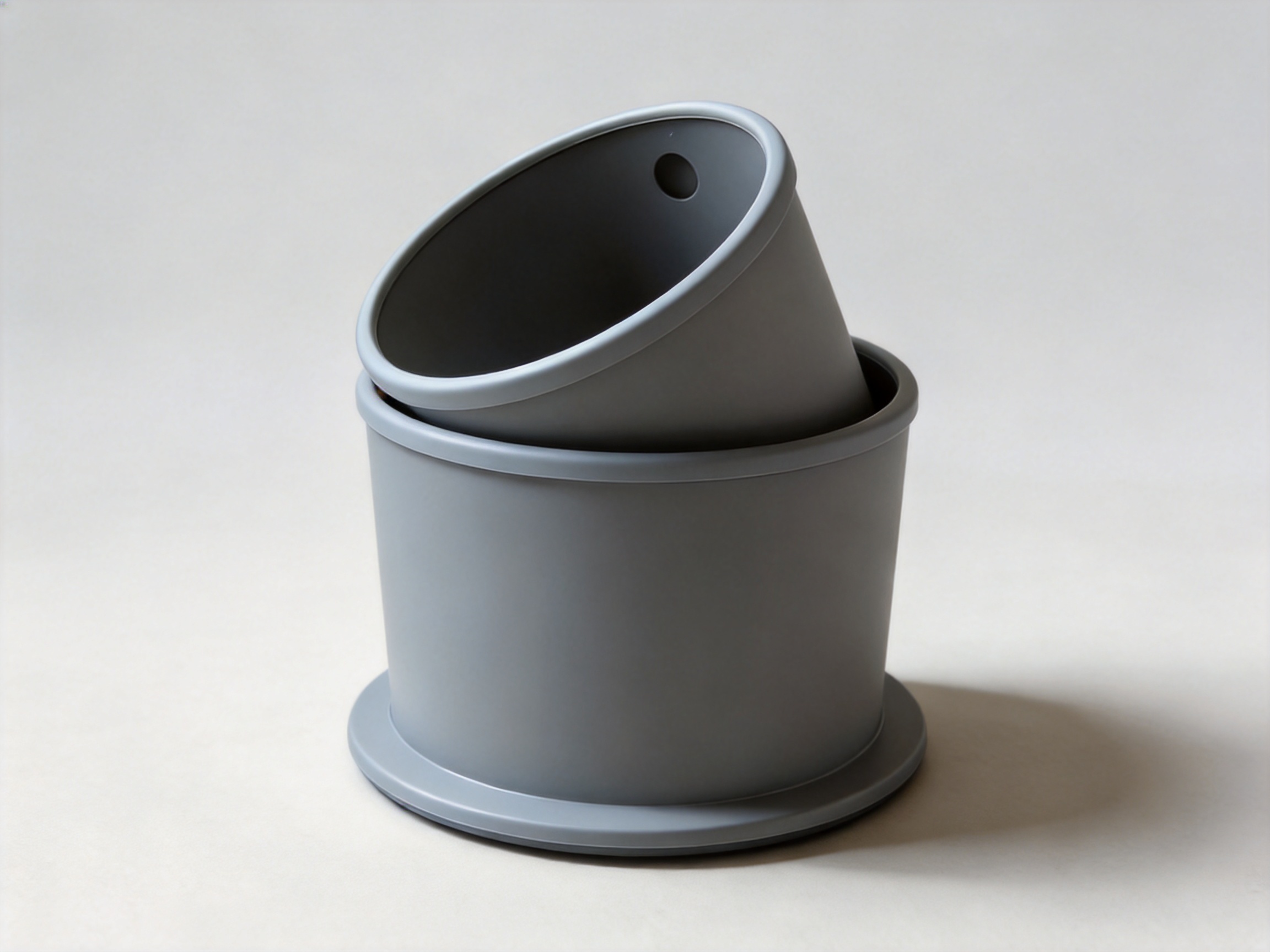
The parting line is the location where the mould separates to release the moulded component. On a round waste bin, the parting line is often positioned around the body or near the upper rim, depending on the product geometry and demoulding direction. Its location influences flash, visible marks, tooling complexity, and the ability to remove the part smoothly.
A well-planned parting line should be placed in a position that is practical for machining and minimally noticeable on the finished product. It must also provide a reliable sealing surface during injection. If the parting line is too complicated, the mould may require additional sliders or inserts, increasing cost and maintenance requirements. If it is too simple for the product geometry, undercuts or dimensional problems may occur.
Draft angles allow the moulded part to move away from the cavity or core without excessive friction. The correct draft depends on the material, surface texture, wall height, depth, and finish. Textured surfaces generally require more draft than polished surfaces because the texture can resist release.
For the outer body, draft must preserve the visual shape while making ejection reliable. For the inner liner, draft must also maintain the required clearance between components. Too little draft can create drag marks, deformation, or production stoppages. Excessive draft may affect capacity, appearance, or assembly fit. Engineering analysis helps establish a practical balance.
Uniform wall thickness is one of the most important principles in injection moulding. Significant changes in thickness may cause sink marks, voids, uneven cooling, warpage, or inconsistent strength. A round waste bin often contains a tall body, a reinforced rim, a base, and possibly ribs or attachment features. These areas must be designed to fill properly without creating excessive material concentration.
Flow analysis can be used to review filling time, pressure requirements, weld-line locations, air traps, and predicted cooling behavior. This allows the mould design team to identify potential risks before machining. Where necessary, the product can be adjusted with gradual transitions, controlled ribs, modified gate positions, or improved venting.
The gating system delivers molten plastic into the cavity. Its design affects filling balance, pressure, appearance, and cycle stability. A large round component may require a central gate, edge gate, tunnel gate, hot runner arrangement, or another solution selected according to the part size and production requirements.
For visible household products, gate marks should be placed in locations that are hidden, minimized, or easy to trim. The selected gate must still support good material flow and avoid excessive shear or hesitation. If a customer wants a highly clean exterior, the gating strategy should be considered together with surface texture and product orientation.
Cooling is a major factor in cycle time and dimensional stability. The mould must remove heat from the plastic efficiently and evenly. A poorly designed cooling layout can leave hot areas near thick sections, causing differential shrinkage and deformation. This is especially important for a tall round body because even a small difference in cooling can affect roundness or vertical alignment.
Cooling channels should be positioned to support the cavity and core surfaces while maintaining adequate steel strength. The design may include different circuits for the body, rim, base, or inner component. During mould trials, the manufacturer can review part temperature, cycle time, deformation, and surface quality to make improvements where necessary.
The ejection system must remove the waste bin component without damaging its appearance or structure. Ejector pins, sleeves, stripper plates, air ejection, or combinations of these methods may be used depending on the component design. On a round container, a stripper plate can sometimes provide more even release around the circumference, while other designs may use strategically positioned ejector pins.
Ejector marks should be located on hidden or less visible surfaces wherever possible. Ejection force must be distributed sufficiently to avoid local stress. The system also needs to reset reliably and remain accessible for maintenance. A professional mould design considers not only the first successful ejection but also stable operation over a long production run.
YingXiang Plastic Mould uses a structured manufacturing process designed to control quality from initial communication through final mould acceptance. The company was established in 2012 and operates a plant of approximately 7,000 square metres with around 50 employees. Its engineering and production activities are supported by CAD, computer-aided engineering, computer-aided manufacturing, modern equipment, and experienced technicians.
The process begins with an evaluation of the customer’s product concept and production expectations. Important information includes the 3D product drawing, material selection, part weight, dimensions, surface requirements, expected annual output, injection machine specifications, cycle-time targets, and preferred mould life.
If the product design is still being developed, the engineering team can review draft, wall thickness, ribs, fastening features, assembly clearance, and potential moulding risks. Early cooperation is valuable because changes made before steel cutting are normally faster and less expensive than changes made after mould completion.
After reviewing the product, engineers determine how the part should be divided, where the parting line should be positioned, and which ejection method is appropriate. The team also assesses whether the inner and outer components can be produced with stable dimensions and assembled reliably.
Computer-aided engineering may be used to study filling behavior, cooling, shrinkage, weld lines, air traps, and deformation. The objective is not only to make the part mouldable but also to achieve a production process that is repeatable and commercially practical.
Detailed three-dimensional design defines the cavity, core, mould base, inserts, cooling channels, runner system, ejection components, guide systems, and safety features. The design must reflect the intended injection machine, clamping force, nozzle position, mould dimensions, and available production equipment.
For a double-layer waste bin, the design stage may involve multiple related moulds. The outer body and inner liner may require separate mould structures, and their dimensions must be coordinated from the beginning. If the product includes a lid or accessory, those components should also be reviewed for assembly and visual consistency.
Mould steel is selected according to expected production volume, plastic material, surface requirements, maintenance conditions, and budget. The cavity and core may require materials with suitable hardness, toughness, wear resistance, corrosion resistance, or polishing performance.
Steel preparation includes cutting, rough machining, stress relief where necessary, and accurate preparation of the blocks and inserts. Good material preparation helps reduce distortion during later machining and provides a stable foundation for precision work.
Computer numerical control machining creates the main cavity and core surfaces with repeatable accuracy. Complex curves, circular forms, rim details, ribs, and transition areas can be machined according to the approved digital model. Precision machining is especially important for the roundness and symmetry of a waste bin body.
Additional processes may include drilling, wire cutting, electrical discharge machining, grinding, and manual fitting. Each process has a specific purpose. Electrical discharge machining can form detailed areas that are difficult to cut conventionally. Wire cutting can produce accurate slots and profiles. Grinding can improve flatness and dimensional control on mating components.
The surface finish of the mould determines the appearance of the finished waste bin. Depending on customer requirements, the mould may be polished to a smooth finish or prepared for an engineered texture. Surface treatment must be consistent across the visible area, with careful control around corners, ribs, transitions, and the parting line.
A high-quality surface finish also supports easier cleaning of the mould and more stable production. Poorly finished areas may cause drag, inconsistent gloss, visible machining marks, or difficulties during demoulding.
After machining, mould components are assembled and fitted. This stage checks the relationship between the cavity, core, inserts, guide pillars, locks, ejector system, cooling circuits, and other components. Contact surfaces must close correctly without excessive interference or unwanted gaps.
Fitting is particularly important around the rim and any visible parting-line areas. The mould must withstand injection pressure while maintaining the intended product dimensions. Skilled technicians use practical experience to identify issues that may not be obvious in a digital model.
The completed mould is tested through trial injection. The resulting samples are inspected for dimensions, weight, surface appearance, flash, warpage, sink marks, weld lines, ejection marks, and assembly fit. Process conditions such as injection speed, pressure, holding time, cooling time, and mould temperature are adjusted as required.
Trial moulding is also an opportunity to evaluate production efficiency. Engineers can observe the opening and closing sequence, ejection movement, cooling performance, operator access, and potential maintenance concerns. If improvements are needed, the mould can be modified before final delivery.
Before shipment, the mould is checked against the approved drawings and technical requirements. Key dimensions, mould operation, cooling circuits, ejection movement, surface quality, and accessories are reviewed. Documentation may include mould specifications, trial records, maintenance recommendations, and production notes.
Proper packaging and delivery preparation protect the mould during transportation. Clear identification of cooling connections, oil circuits, spare parts, and operating instructions helps the customer install the mould efficiently at the production site.
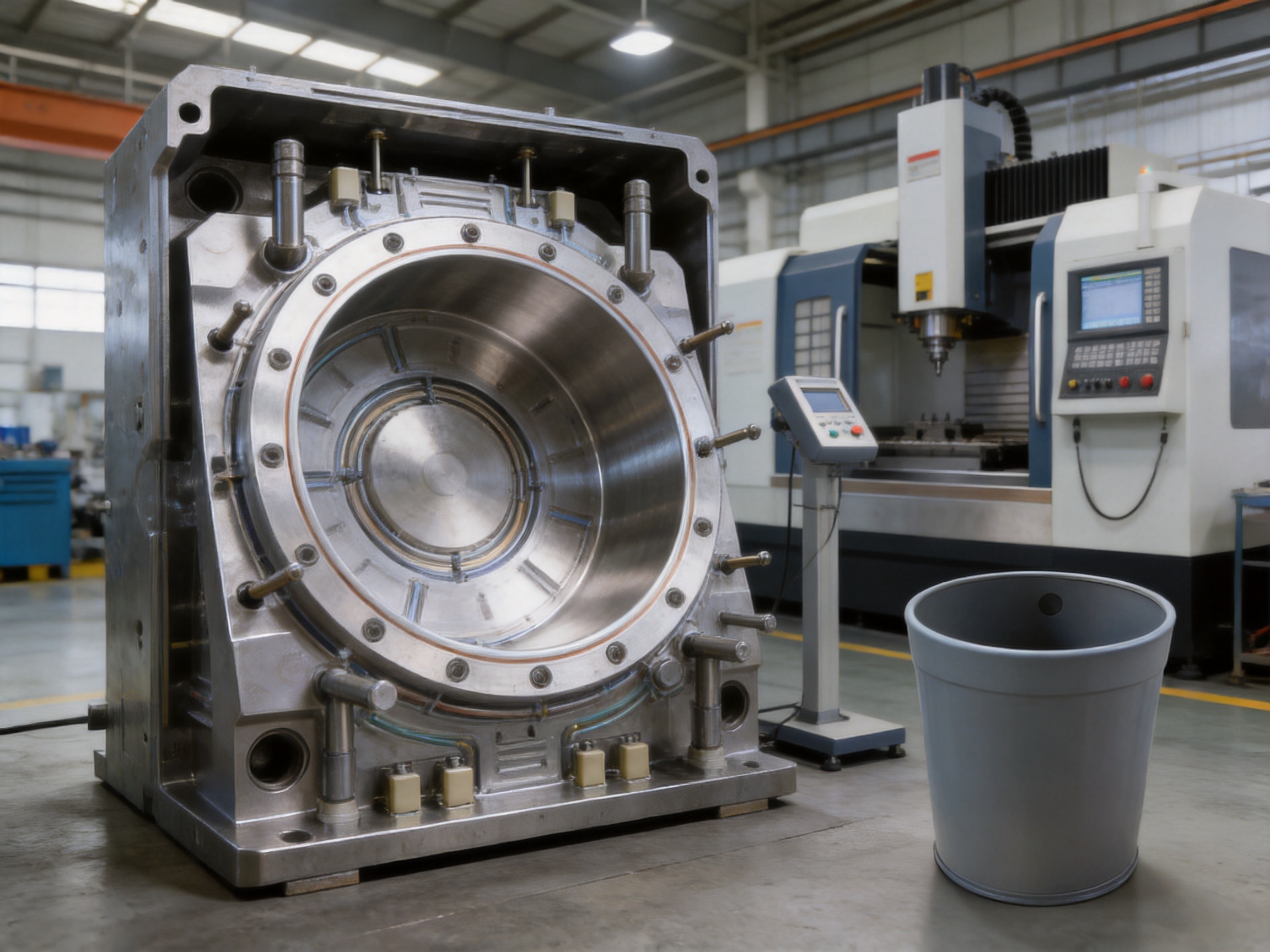
One of the primary advantages of an engineered mould is consistency. Household waste bins are often produced in large quantities, and every unit must meet the same basic expectations. Stable cavity dimensions, accurate ejection, balanced cooling, and controlled material flow reduce variation between production batches.
This consistency is important for products sold through retail channels or used in coordinated product ranges. A customer expects the same diameter, height, liner fit, color appearance, and surface finish whether the item is purchased early or late in the product life cycle.
A low initial mould price does not necessarily represent the lowest manufacturing cost. Frequent repairs, long cycle times, high scrap rates, and difficult maintenance can make a cheaper mould more expensive over time. A well-designed mould may require a larger initial investment but provide better productivity and lower operating risk.
Total cost of ownership can be improved through durable steel, replaceable wear components, accessible cooling channels, reliable ejection, optimized cycle time, and accurate spare-part planning. These benefits are especially valuable for customers expecting long-term or high-volume production.
Material efficiency depends on part design, wall thickness, runner configuration, process control, and scrap management. The mould cannot eliminate all production waste, but careful engineering can reduce over-thick areas, unstable filling, repeated trial failures, and rejected parts caused by dimensional variation.
Where appropriate, the mould design can support efficient runner layouts, controlled gate sizes, and optimized packing. If recycled material or a particular resin is to be used, the processing characteristics should be considered during feasibility analysis.
Waste bins are functional products, but their appearance often influences purchase decisions. Retail and household products must look clean, uniform, and well finished. A mould with controlled polishing, texture, venting, and parting-line design can create a more attractive result than a mould built without sufficient attention to visible surfaces.
Customers may select different surface treatments depending on their market. Glossy surfaces can create a modern appearance, while matte textures may reduce the visibility of fingerprints and minor scratches. Textured mould surfaces can also improve grip and help establish a distinctive product identity.
Common plastic options for waste bins may include polypropylene, high-density polyethylene, acrylonitrile butadiene styrene, or other engineering and general-purpose polymers. Each material has different shrinkage, flow, stiffness, impact, and surface behavior.
A mould should be designed with the selected material in mind. If the customer may change materials in the future, the potential effect on gates, shrinkage allowances, cooling, and ejection should be discussed in advance. Material selection should always be confirmed through testing rather than assumed solely from product appearance.
Quality control begins with technical documents and continues through every stage of production. For a round double-layer waste bin mould, important controls include steel certification where required, dimensional inspection, cavity and core matching, cooling-channel testing, ejection testing, surface inspection, and trial-part verification.
Finished samples should be inspected using suitable measuring tools and clearly defined criteria. The inspection may cover:
Quality control should also include production repeatability. One acceptable sample does not guarantee stable mass production. The mould should be observed over multiple cycles to confirm that temperature, filling, ejection, and dimensional behavior remain consistent.
YingXiang Plastic Mould can support customized mould solutions based on customer drawings, samples, product concepts, and manufacturing requirements. Customization may include product dimensions, capacity, wall design, handle structure, liner configuration, lid interface, surface texture, color strategy, and assembly method.
Waste bins may be designed for small personal spaces, standard household use, or larger commercial environments. The mould must be scaled carefully because simply enlarging or reducing a digital model can create unsuitable wall thickness or structural proportions. Each size should be reviewed for filling, cooling, ejection, and handling.
The upper rim may be designed to hold a waste bag, conceal the bag edge, support a lid, or retain a removable inner bucket. The liner may use a simple open form or include a reinforced lip, handle, or locking feature. The mould design must maintain enough accuracy for these components to function after repeated use.
Customers can select polished, matte, grain, or other decorative surfaces according to their brand positioning. A suitable texture can improve grip, reduce the appearance of minor scratches, and create visual differentiation. The required draft angle and polishing method should be confirmed before mould manufacture.
Although color is determined mainly by the plastic material and production process, the mould surface can influence perceived color and gloss. A consistent mould finish helps different colors maintain a coordinated appearance. Manufacturers can also develop several related sizes or styles based on a shared design language.
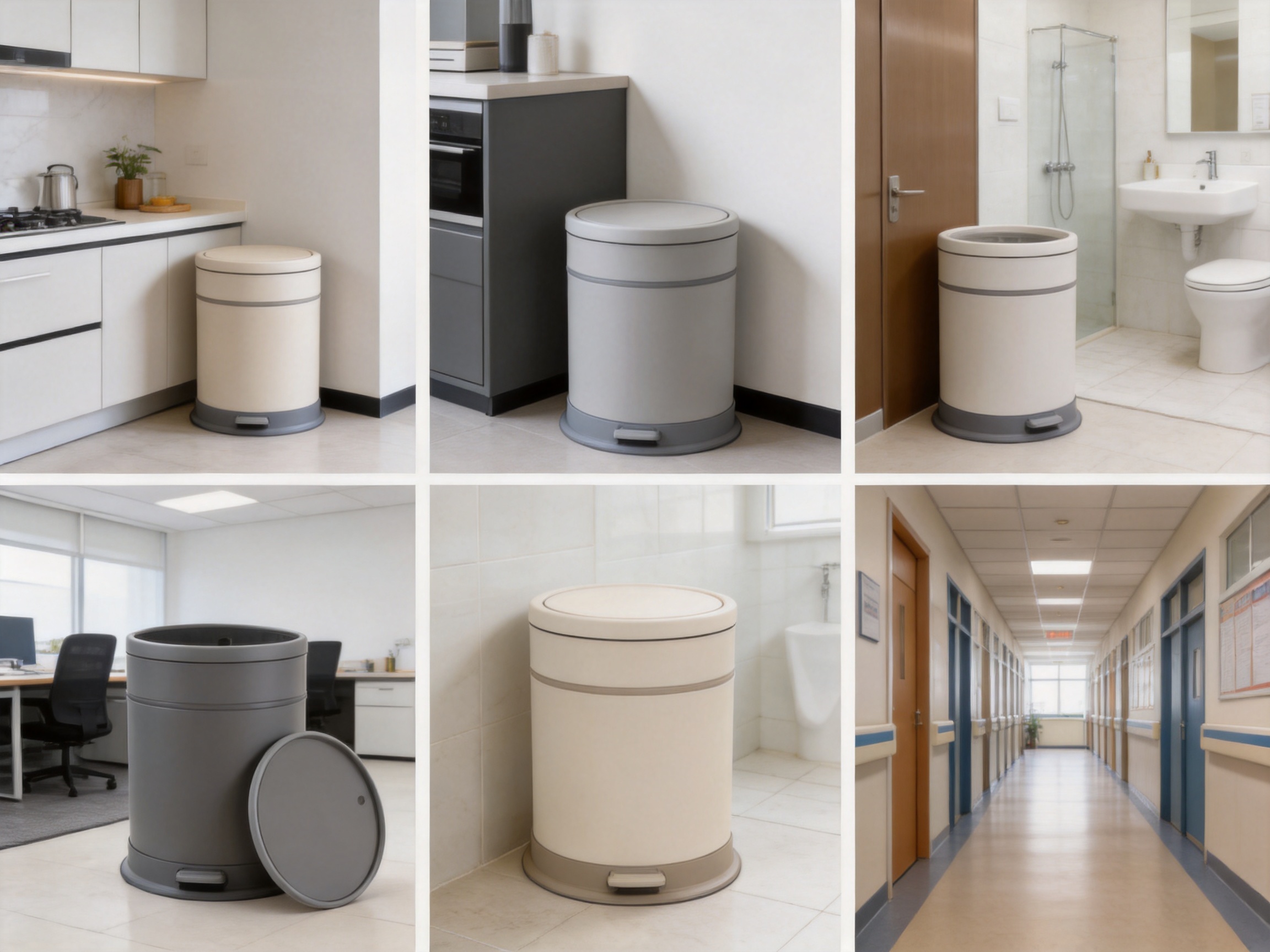
The round double-layer waste bin can serve many indoor applications. In households, it may be placed in kitchens, bathrooms, bedrooms, studies, utility rooms, or children’s spaces. In offices, it can be used beside desks, in meeting rooms, or in shared work areas. Hotels, clinics, schools, restaurants, retail stores, and public facilities may also use similar products depending on local requirements.
The product can be positioned as a basic utility container or as part of a higher-value home organization range. Its commercial success depends on the relationship between appearance, capacity, price, durability, packaging, and user convenience. A reliable mould gives the product manufacturer a stronger foundation for competing in each of these areas.
Where hygiene is important, the product design should support easy cleaning and appropriate material selection. Where impact resistance is important, the outer shell, rim, base, and liner should be tested under realistic handling conditions. Where the bin is used with a lid or pedal system, the interface between the container and accessory must be checked carefully.
Long-term performance depends on both mould construction and operating discipline. The mould should be cleaned according to the plastic material and surface finish. Cooling circuits should be monitored for blockage or corrosion. Moving components should be lubricated with suitable products. The parting surface should be kept free from contamination, and the mould should be stored in a dry, protected condition when not in use.
Replaceable inserts and wear components can simplify future maintenance. If a gate, guide component, ejector element, or localized surface is likely to experience greater wear, it may be designed for practical replacement. This approach can extend mould service life and reduce the time required for repairs.
Production efficiency can also improve through standardized operating procedures. Consistent mould temperature, injection parameters, cooling time, material drying where applicable, and part removal methods help protect both product quality and mould condition. YingXiang’s technical communication and after-sales support can assist customers in understanding these requirements.
Experience is valuable because injection moulding problems are often connected across several disciplines. A product designer may focus on appearance, while a production engineer focuses on cycle time and a quality team focuses on dimensions. The mould manufacturer must bring these priorities together in one workable design.
TaiZhou HuangYan YingXiang Plastic Mould Co., Ltd. has specialized in customized plastic mould solutions since 2012. Its product range includes integral box moulds, pallet moulds, fruit basket moulds, logistics crate moulds, folding box moulds, stool moulds, food storage container moulds, trash can moulds, beverage box moulds, hand basket moulds, household product moulds, floor mat moulds, and chair moulds.
This broad experience helps the company understand different types of plastic products, including thin-wall containers, reinforced industrial items, large household components, and products that require attractive consumer surfaces. Knowledge gained from one product category can often support better decision-making in another, particularly in areas such as cooling, ejection, material flow, surface treatment, and long-life mould construction.
The company’s approximately 7,000-square-metre facility, engineering systems, production equipment, and team of around 50 employees provide a practical base for handling customized projects. Its stated focus includes lean manufacturing, long-life moulds, on-time delivery, premium quality, competitive costs, and comprehensive customer service.
A successful project benefits from clear communication between the customer and mould manufacturer. The customer should provide accurate product information whenever possible, including drawings, samples, dimensions, material, expected quantity, machine details, and quality standards. The mould manufacturer should respond with a feasibility review, proposed structure, estimated schedule, quotation, and list of required confirmations.
During design approval, both parties should confirm the parting line, gate position, ejection marks, surface finish, shrinkage allowance, cooling expectations, and acceptable sample standards. This stage is also the right time to discuss whether future product sizes or related components may be required.
During mould production, progress updates can help the customer coordinate machine availability, material preparation, packaging design, and downstream assembly. After trial moulding, sample evaluation should be based on agreed criteria rather than subjective comments alone. If modifications are required, they should be documented and verified through additional testing.
After delivery, technical support remains important. Installation instructions, water and oil circuit identification, maintenance recommendations, spare-part information, and troubleshooting guidance can help the customer achieve a smoother production start.
It is a plastic injection mould used to produce a waste bin with two coordinated layers, typically an external shell and an internal liner or bucket. The mould may be designed as one tool or as a set of tools for separate components, depending on the product structure.
It can provide improved structural stability, a cleaner appearance, easier cleaning, better concealment of waste bags, and greater flexibility in product design. The actual performance depends on the plastic material, wall design, assembly method, and production quality.
Possible materials include polypropylene, high-density polyethylene, acrylonitrile butadiene styrene, and other suitable thermoplastics. The correct choice depends on impact resistance, stiffness, appearance, chemical exposure, cost, and intended use. Material selection should be reviewed with the mould and injection process requirements together.
A high-quality mould can reduce scrap, shorten cycle times, minimize maintenance, improve dimensional consistency, and decrease production interruptions. These benefits may lower the total cost of ownership even if the initial tooling investment is not the lowest available.
Yes. Dimensions, capacity, liner structure, rim design, surface texture, handle details, lid interface, wall thickness, and assembly method can be customized. The final design must be reviewed for material flow, cooling, ejection, shrinkage, and production feasibility.
The mould designer calculates the required dimensional relationship using the product drawings, material shrinkage, assembly clearance, and production conditions. Trial moulding and sample assembly are then used to verify that the parts fit correctly and remain functional after production.
Useful information includes a 3D drawing or sample, product dimensions, intended material, estimated production quantity, injection machine specifications, surface requirements, number of cavities, expected mould life, and target delivery schedule. Even incomplete information can be used for an initial feasibility discussion.
The mould is installed for trial injection, and samples are examined for dimensions, appearance, flash, warpage, sink marks, weld lines, ejection marks, weight, and assembly fit. The mould operation, cooling, ejection, and cycle performance are also reviewed before final approval.
Yes. A product family can be planned with several sizes or related styles. Depending on the design, the project may use separate moulds, interchangeable inserts, or a common mould-base strategy. The best approach depends on the geometry, production quantity, budget, and required flexibility.
Routine maintenance generally includes cleaning the cavity and core, inspecting the parting line, lubricating moving components, checking ejectors and guides, monitoring cooling circuits, and protecting the mould from corrosion during storage. A maintenance schedule should reflect production volume and plastic material.
The round double-layer waste bin is a versatile household and commercial product that combines practical capacity with a clean, modern appearance. Its performance depends heavily on the quality of the injection mould used to manufacture it. Accurate geometry, controlled wall thickness, effective cooling, reliable ejection, appropriate gating, and durable mould construction are all necessary for stable mass production.
A professional mould solution offers advantages beyond the first production sample. It supports consistent dimensions, attractive surfaces, efficient cycles, lower scrap, easier maintenance, and improved long-term cost control. These benefits help manufacturers compete more effectively in markets where product appearance, reliability, and delivery performance are increasingly important.
TaiZhou HuangYan YingXiang Plastic Mould Co., Ltd. brings together mould engineering, CAD and CAE capability, advanced manufacturing equipment, experienced technicians, and a broad product background. Its experience with household products, trash can moulds, logistics containers, crates, pallets, chairs, stools, and other plastic items supports customized projects from initial concept through trial production and delivery.
For buyers seeking a dependable round double-layer waste bin mould, the most important evaluation should include engineering quality, manufacturing process, sample performance, service capability, and total value over the mould’s working life. With careful design and disciplined production, the resulting mould can become a reliable foundation for durable, attractive, and commercially successful waste bin products.
1. Injection Molding Handbook, principles of polymer flow, mould design, cooling, ejection, and process control.
2. Plastics Engineering Fundamentals, guidance on thermoplastic behavior, shrinkage, wall thickness, and product design.
3. Mold Engineering Practice, recommendations for parting lines, draft angles, gating systems, mould bases, and maintenance.
4. Standard practices for plastic injection mould inspection, trial production, dimensional verification, and quality assurance.
5. Product development principles for household plastic containers, including ergonomics, cleaning requirements, structural design, and surface finishing.
6. Technical information supplied for the round double-layer waste bin mould project and the manufacturing capabilities of TaiZhou HuangYan YingXiang Plastic Mould Co., Ltd.
If you are interested in any of our products or services, please feel free to ask and we can talk about your ideas.
 QUICK LINKSMOBILE SITE
 FACTORY ADDRESS
 CONTACT INFORMATION



 English
 Español