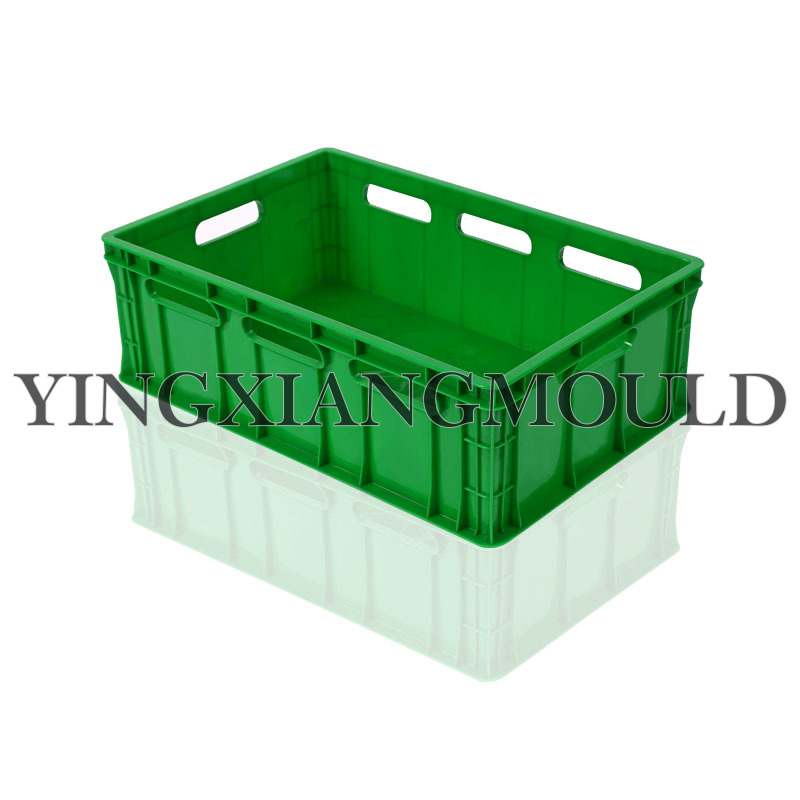
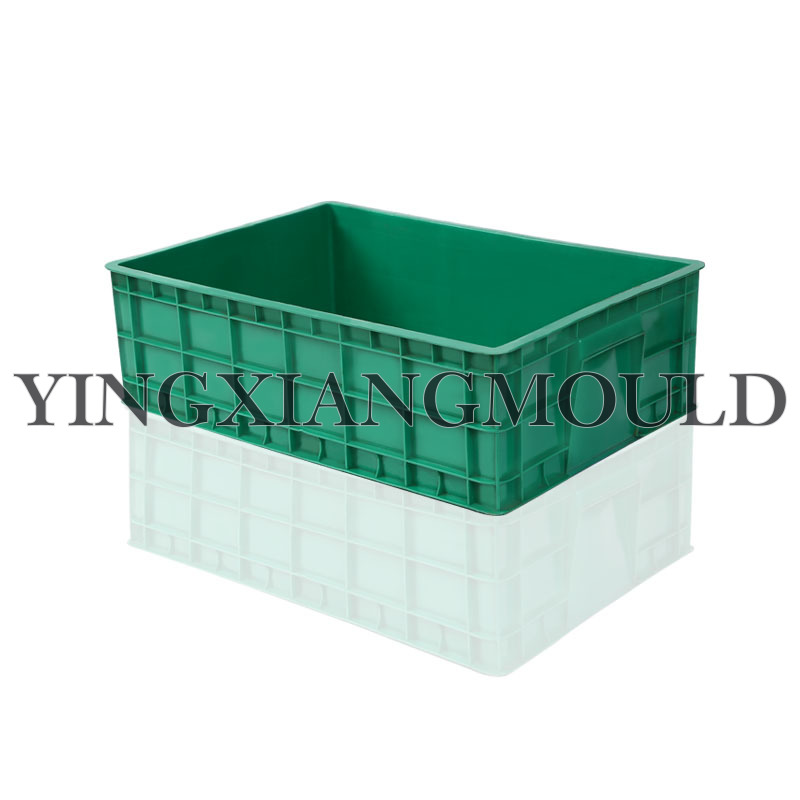
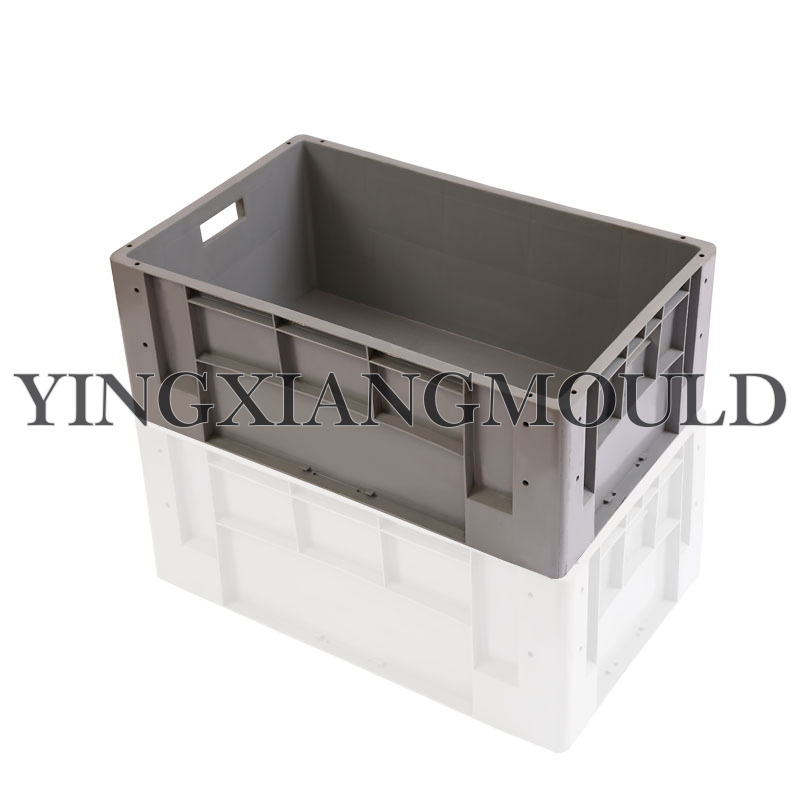
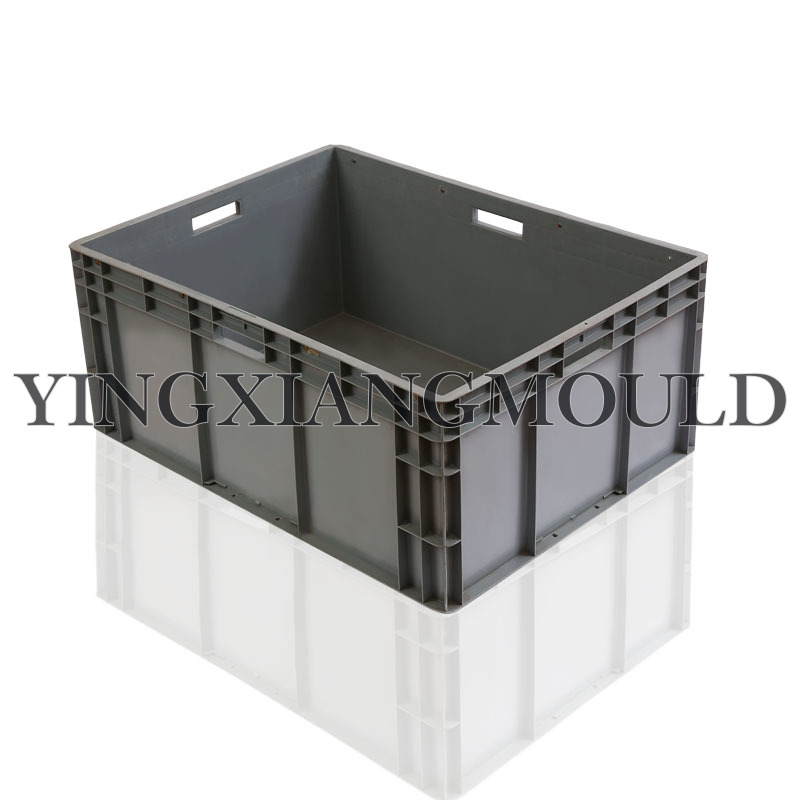
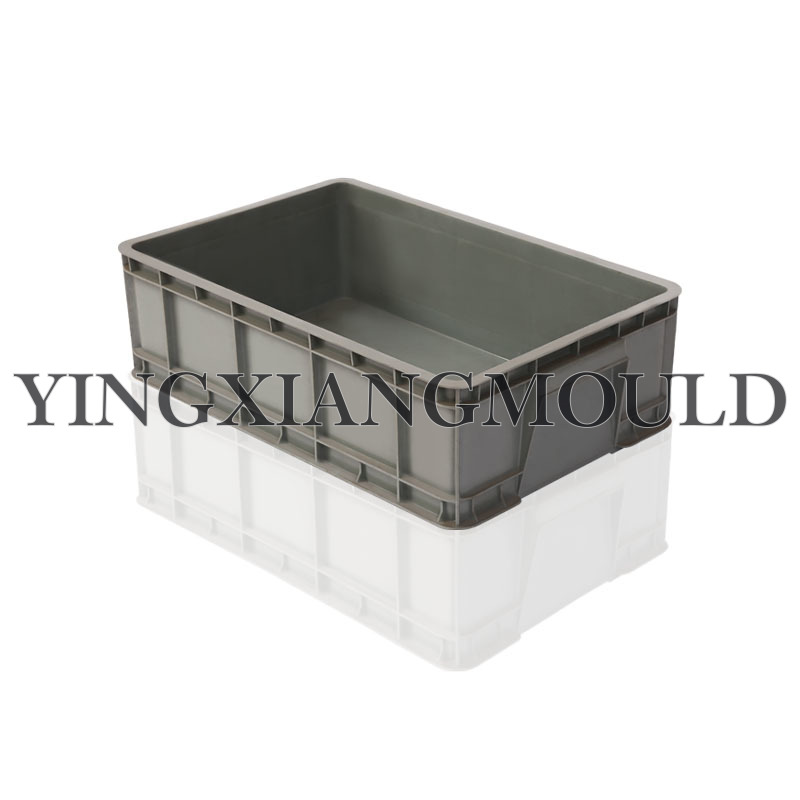
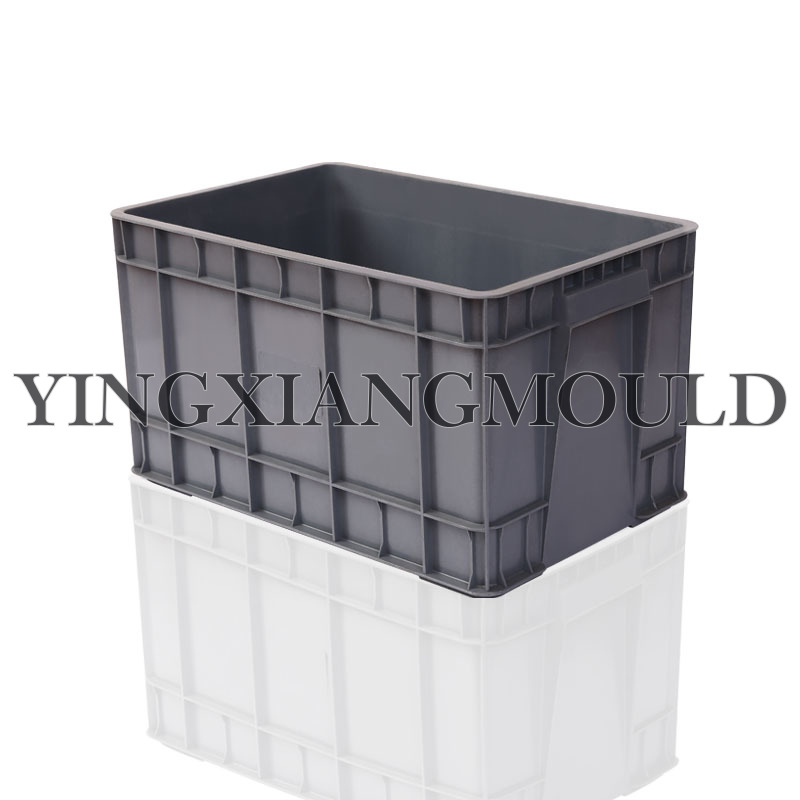
Plastic crates used for beverage distribution, produce handling, and warehouse turnover must do more than hold products. Their structure needs to support stacking, repeated movement, ventilation, and efficient storage. These requirements place specific demands on the Plastic Crate Mould, because the mould determines how accurately the finished crate reproduces its walls, ribs, openings, and load-bearing features.
A plastic crate usually combines a relatively lightweight body with reinforced corners, a stable base, and openings that reduce material use while supporting ventilation. Each feature affects the mould structure.
For example, stacking ribs need sufficient definition to connect securely with another crate. The bottom must maintain its shape under repeated loading, while the side walls need to balance rigidity with material efficiency. A Plastic Crate Mould therefore requires more than a simple box-shaped cavity. Its internal and external structures must work together during injection, cooling, and demoulding.
YX Mould develops plastic injection moulds for beverage boxes, logistics crates, folding boxes, fruit baskets, and other storage products. Its product range reflects the different structural requirements found across reusable plastic container applications.
Stacking and nesting are important functions in beverage and logistics crates. Stacking features help loaded containers remain stable, while nesting features reduce the space required when empty crates return to a warehouse or distribution centre.
The mould must reproduce these features with consistent dimensions. Small differences in the height of a stacking rib, the position of a corner lug, or the angle of an internal support can affect how crates fit together. If the geometry varies between production cycles, operators may experience unstable stacking or difficulty separating nested crates.
For this reason, the design of a Plastic Crate Mould needs to consider the relationship between the crate’s external shape and its internal supports. The cavity, core, and moving components must maintain the intended geometry without creating unnecessary interference during demoulding.
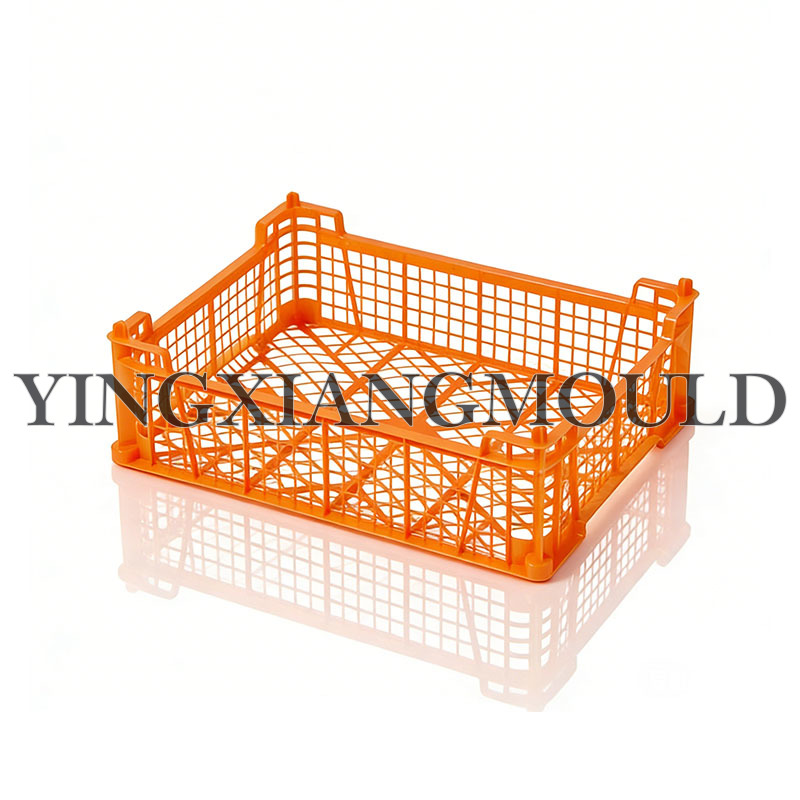
Many plastic crates use perforated walls to reduce weight and improve airflow. Beverage crates may also require openings that help workers handle the container. However, these openings create a more complicated filling pattern than a solid wall.
Molten plastic must flow around ribs, corners, and narrow sections before the cavity is completely filled. Uneven filling can affect wall thickness, surface appearance, and the strength of the finished part. The gating and runner arrangement within a Plastic Crate Mould therefore needs to support balanced material distribution across the crate structure.
Reinforced areas also require attention. If the base or corners contain thicker sections, the cooling conditions may differ from those of thinner walls. Mould development must account for these changes so that the finished crate maintains its intended shape after cooling.
Crates with deep internal sections, reinforcing ribs, and interlocking features can create challenges during ejection. The mould needs to release the finished part without damaging thin walls or leaving excessive marks on visible surfaces.
The ejection system must apply force in suitable positions. If force concentrates around one rib or corner, the crate may deform during release. A properly developed Plastic Crate Mould coordinates the core structure, ejection layout, and draft angles to support smooth demoulding.
This is particularly relevant for high-volume production, where repeated opening and closing cycles place continuous demands on moving mould components. Stable demoulding helps reduce interruptions and supports consistent cycle operation.
Plastic crate production commonly involves materials such as PP or HDPE, depending on the required impact resistance, flexibility, weight, and operating conditions. The selected resin affects shrinkage, flow behaviour, and cooling performance.
A mould designed for one material cannot automatically deliver the same dimensional results when the resin changes. The material’s processing characteristics need to be considered during mould development, especially when the crate includes thin walls, deep ribs, or multiple openings.
YX Mould’s logistics crate mould information identifies structural factors such as load-bearing capacity, stacking stability, ventilation, nesting, and material suitability as part of crate mould development. These factors connect the mould design with the actual handling requirements of the finished container.
Digital design and precision machining establish the basic geometry of a Plastic Crate Mould, but trial moulding remains important for evaluating how the tool performs under production conditions. During trials, engineers can review filling behaviour, demoulding, product dimensions, and visible surface quality.
If a crate shows uneven filling, deformation, or difficulty during release, the mould may require adjustments to its processing conditions or mechanical structure. Trial results also help confirm whether the mould supports the intended production rhythm.
YX Mould uses CAD, CAE, and CAM technologies in mould development and provides mould trial and technical support for plastic product projects. Its manufacturing scope includes small, medium, and large plastic injection moulds for different container and industrial applications.
For beverage distributors, logistics suppliers, and plastic product manufacturers, the value of a Plastic Crate Mould is closely connected to how well its design supports the finished crate’s stacking, handling, storage, and repeated production requirements.
If you are interested in any of our products or services, please feel free to ask and we can talk about your ideas.
 QUICK LINKSMOBILE SITE
 FACTORY ADDRESS
 CONTACT INFORMATION


 English
 Español