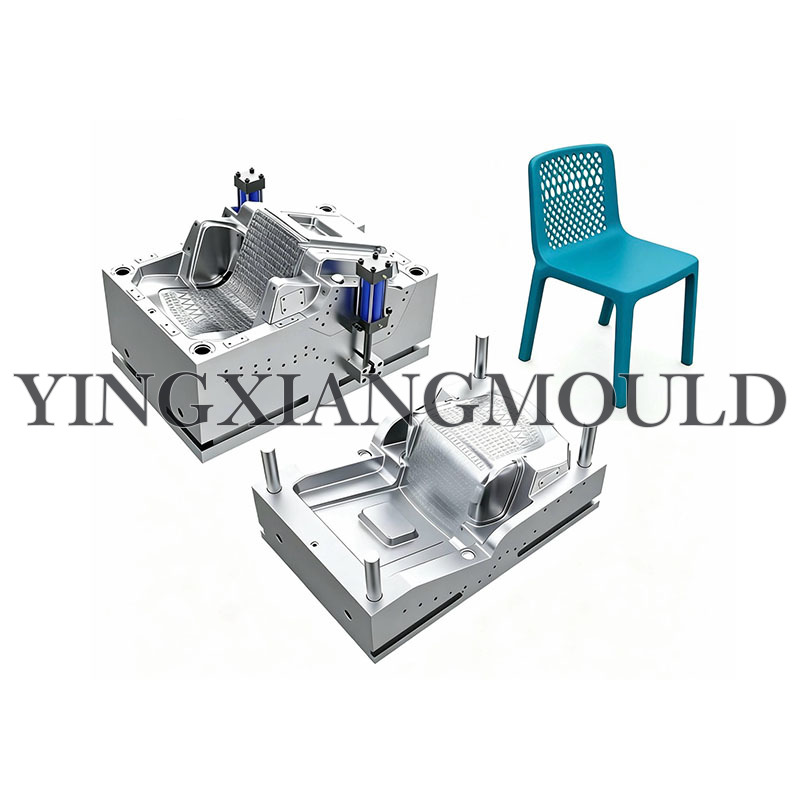
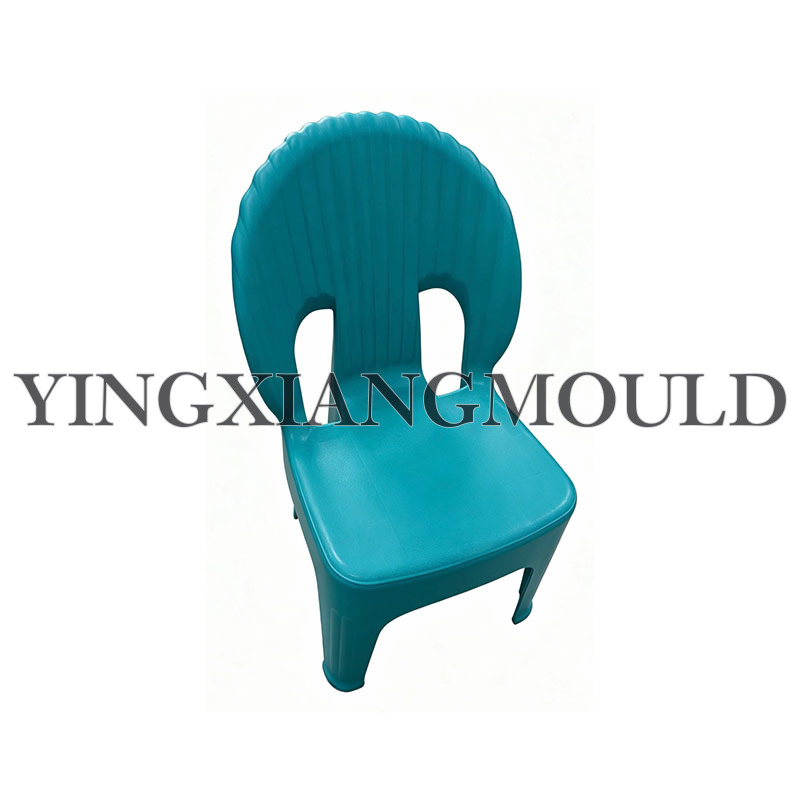
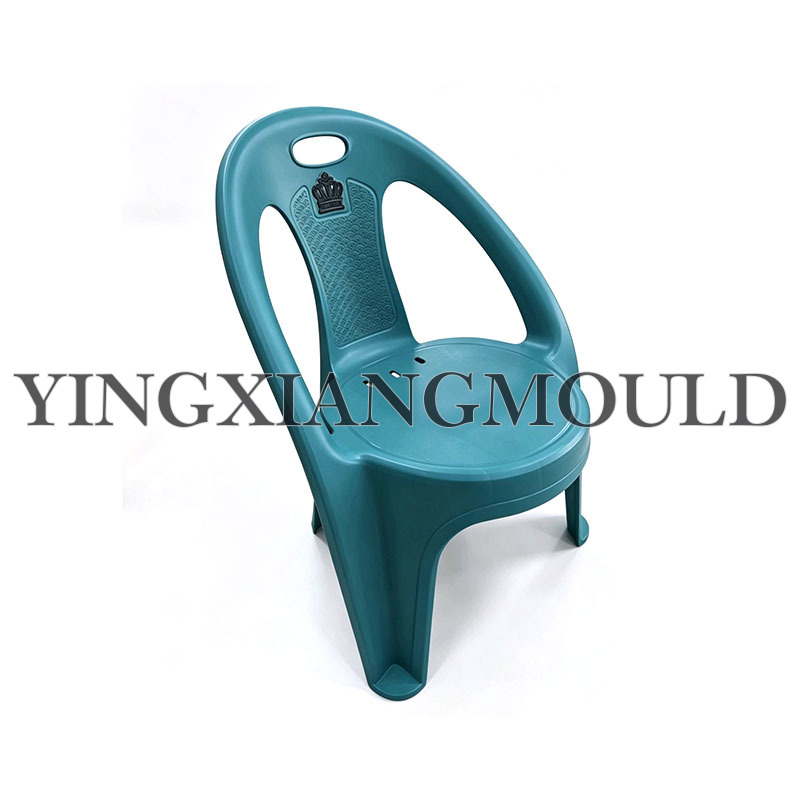
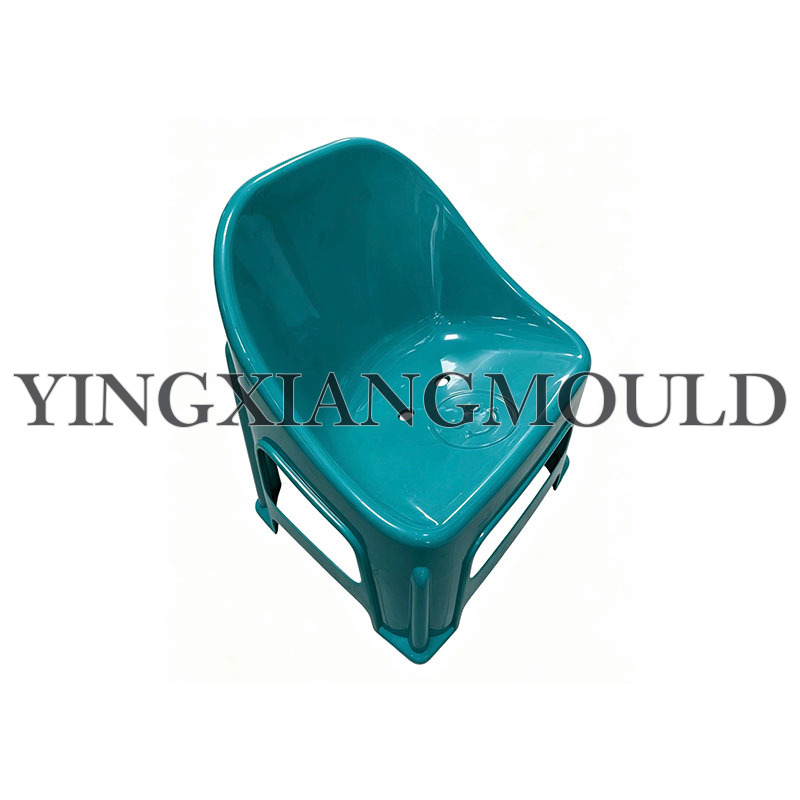
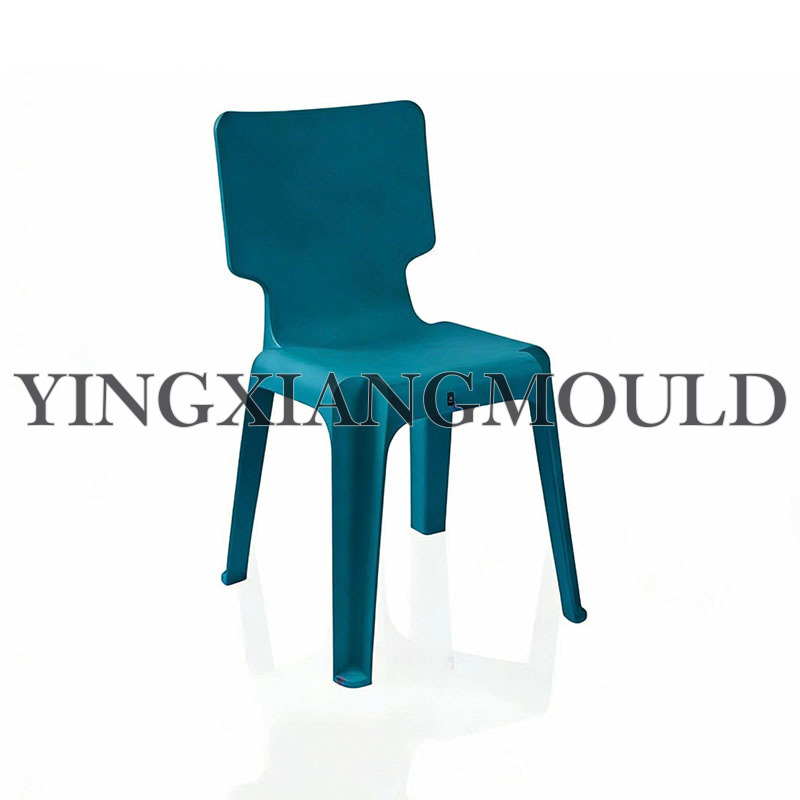
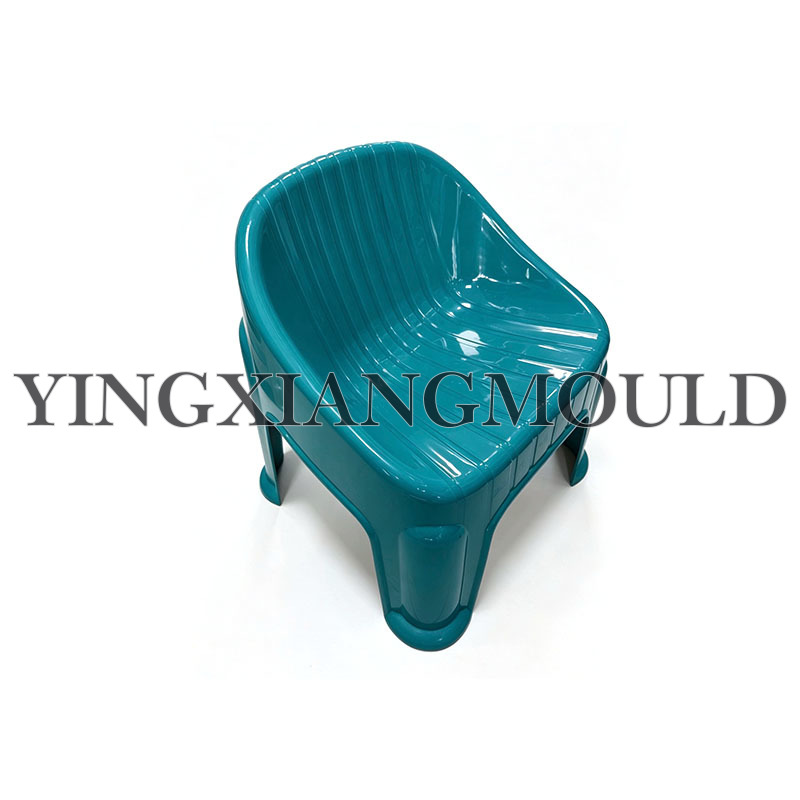
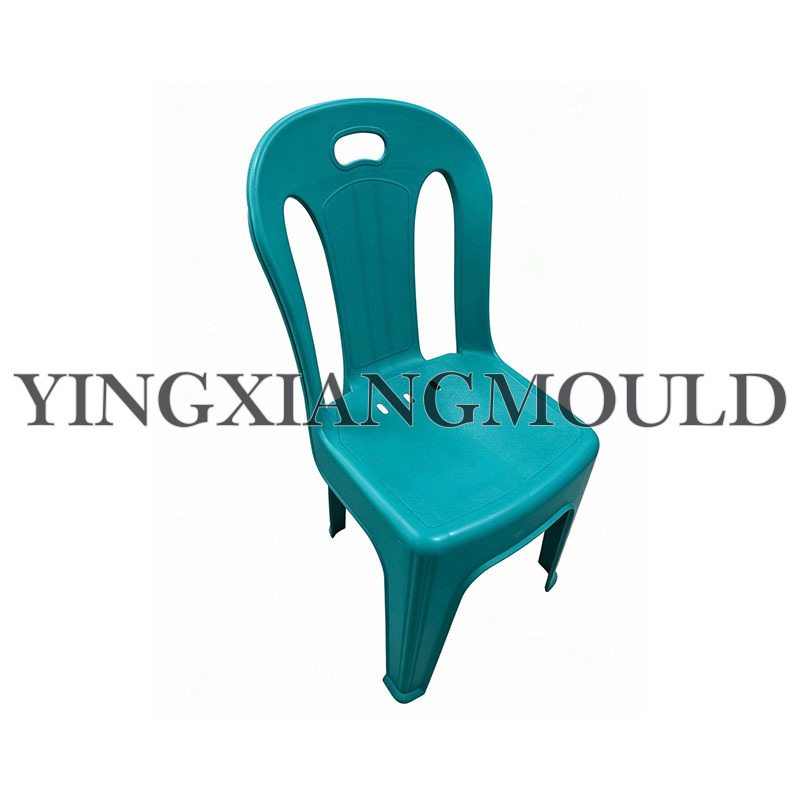
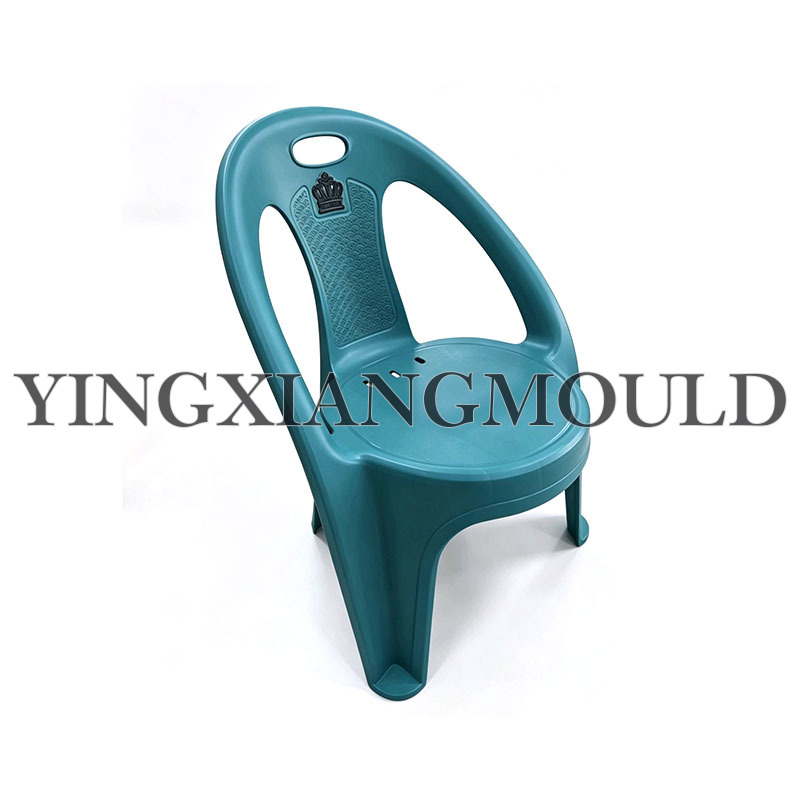
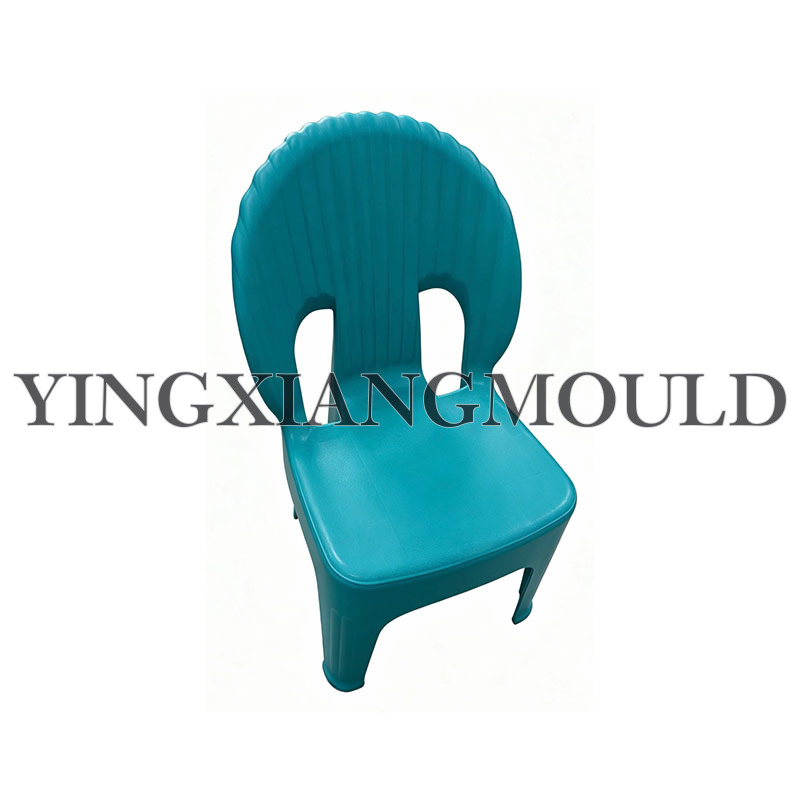
A plastic chair mold is an injection mold mounted on an injection molding machine. It's used to mass-produce plastic chairs or chair parts with uniform shapes by injecting molten plastic into the mold cavity, allowing it to cool, and then ejecting it.
Unlike metal or solid wood chairs, every geometric detail of a plastic chair—curvature, thickness, reinforcing ribs, surface texture—is determined by the mold. A high-quality mold allows a factory to consistently produce finished products that meet dimensional tolerances and appearance standards without any manual adjustments.
Based on structural type, plastic chair molds can be divided into integral molding molds (backrest and seat integrated) and split molds (backrest, seat, armrests, and legs are injection molded separately and then assembled). Split molds have lower development costs and are suitable for multiple styles; integral molding molds have higher structural strength and are suitable for single, high-volume models.
Applications of Plastic Chair Molds
- Restaurants/Fast Food Chains: These use a large number of stackable PP chairs, requiring stable leg support, a surface resistant to cleaning agents, and molds that ensure uniform wall thickness to prevent warping.
- Furniture Export OEM: Manufacturing for European and American retailers, chair styles are frequently updated, requiring mold factories to have rapid mold-making and partial mold modification capabilities to respond to market changes.
- Outdoor Leisure Venues: Chairs for swimming pools, patios, and campsites use UV-resistant stabilized PP formulas. Mold surface treatments feature anti-slip textures, balancing aesthetics and safety.
- Education/Training Institutions: Bulk purchases are price-sensitive, requiring stackable chair structures to save space. Molding materials are mostly PP with a controllable proportion of recycled materials. Mold design emphasizes the distribution of reinforcing ribs.
- Office/Conference Rooms: Chair backs and seats are commonly injection molded from ABS or PC+ABS, with metal legs. High requirements are placed on surface finish and color consistency, necessitating high-gloss or leather-textured molds.
- Children's Furniture: Small dimensions and strict requirements for safe rounded corners. Food-grade PP is commonly used. Precise control of mold parting line positions is needed to avoid sharp edges.
Why Purchase? Reasons?
Large-Scale Production Cost Advantages: With self-owned molds, the marginal production cost of plastic chairs mainly consists of raw materials, utilities, and labor. Mold development costs are rapidly amortized as production volume increases. For factories with annual production exceeding a certain scale, the overall cost per unit is significantly lower than purchasing finished chairs and rebranding them.
Complete Control over Product Design: The chair's shape, ergonomic curves, brand logo lettering, and color formula are all defined by the buyer; the mold is the sole carrier of these designs. Purchased finished chairs cannot achieve customized designs; owning molds is the foundation of differentiated competition.
Consistent and Traceable Quality: The wall thickness distribution and reinforcing rib positions of each batch of chairs are fixed by the mold structure, reducing human variables and making it easier to pass safety standards certifications for chairs such as EN 16139 (outdoor furniture), BIFMA, and GB/T.
Rapid Color Changes and Multiple SKU Flexibility: The same set of molds can be used to mass-produce different colors and styles by changing the raw material color masterbatch, without the need for additional mold opening. The split mold solution also allows for rapid switching of backrest patterns or armrest styles by changing individual mold plates.
Complete SKU Flexibility: Long-term asset preservation: High-quality molds have a lifespan ranging from hundreds of thousands to over a million cycles, making them depreciable fixed assets. Maintaining clear ownership of molds with suppliers ensures a stable supply chain, unaffected by fluctuations in the production capacity of a single OEM factory.
Lowering export certification barriers: Owning product drawings and mold ownership is a prerequisite for applying for certificates of origin and submitting product structure change declarations, simplifying export compliance procedures.
Frequently Asked Questions
What are the different mold design requirements for PP and ABS materials?
PP typically has a shrinkage rate between 1.5% and 2.0%, with significant shrinkage and marked anisotropy. Precise calculation of dimensional compensation is required during mold design. Shrinkage marks are prone to appear on the back of reinforcing ribs, necessitating optimization of injection pressure and cooling time. PP is suitable for textured or matte surfaces, effectively concealing minor shrinkage marks.
ABS has a shrinkage rate of approximately 0.4% to 0.7%, offering better dimensional stability and suitability for high-gloss surface treatments. However, it places higher demands on mold cavity smoothness and venting (poor venting can easily lead to scorching marks). For ABS mold steel, S136 or 718H are recommended as the first choice to ensure long-term high-gloss mirror finish.
How to choose between integral molding and separate molding in purchasing decisions?
The advantages of integral molding (backrest and seat molded in one mold) are seamless finished products, high structural strength, fewer processes, and more stable quality. The disadvantages are larger mold size, higher processing difficulty, significantly higher mold opening costs, and substantial modification costs if any part of the design needs adjustment. It is suitable for scenarios with a single high-volume style and stable annual production expectations.
Separate molding has lower development costs per set. The total cost of using multiple small molds is lower than that of a single large integral mold. Furthermore, the backrest and seat can be individually molded for different styles, offering greater flexibility.



 English
 Español