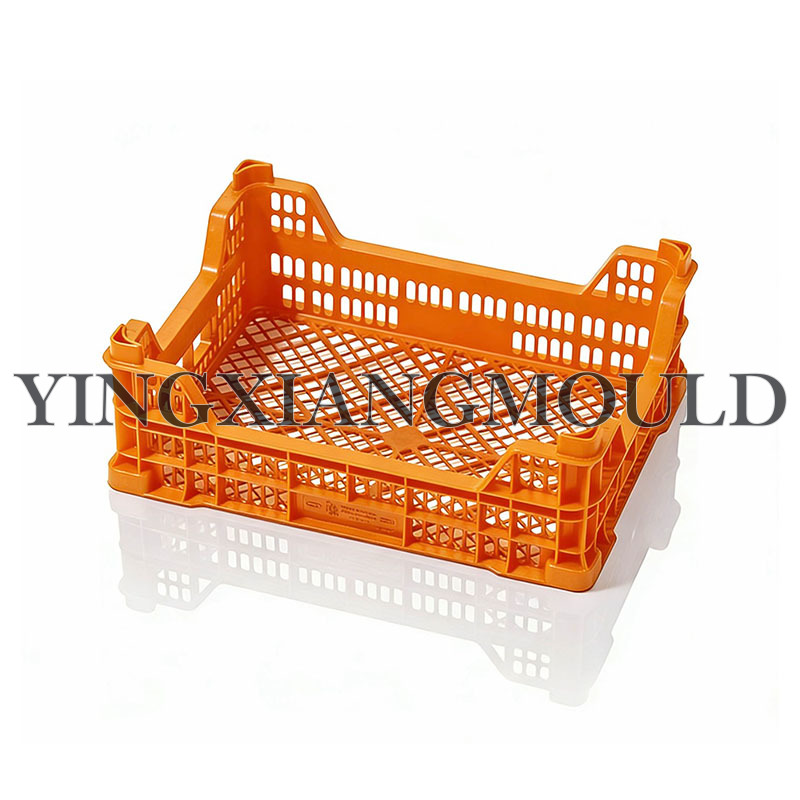
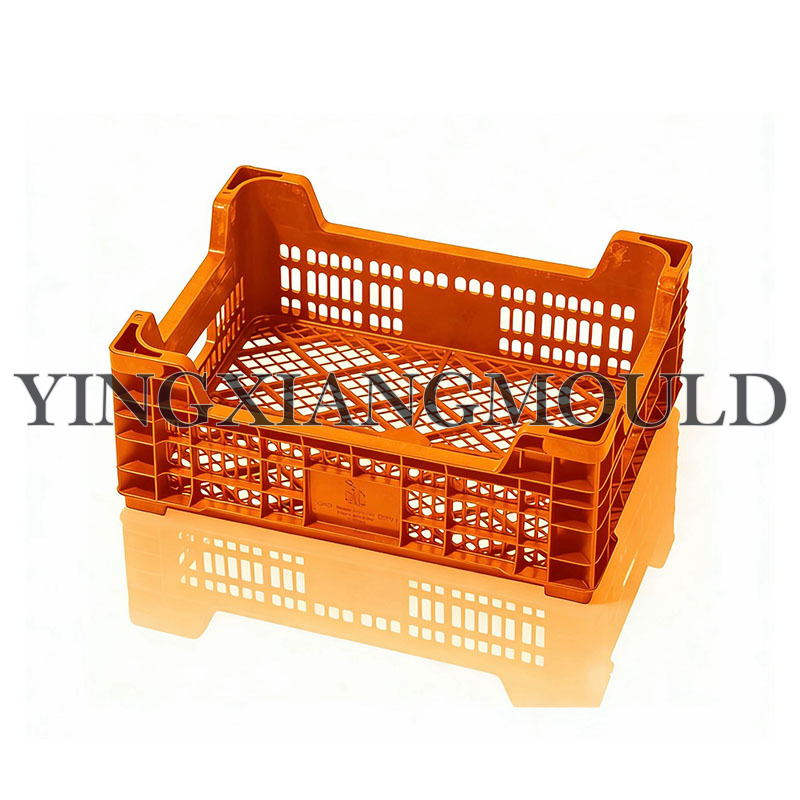
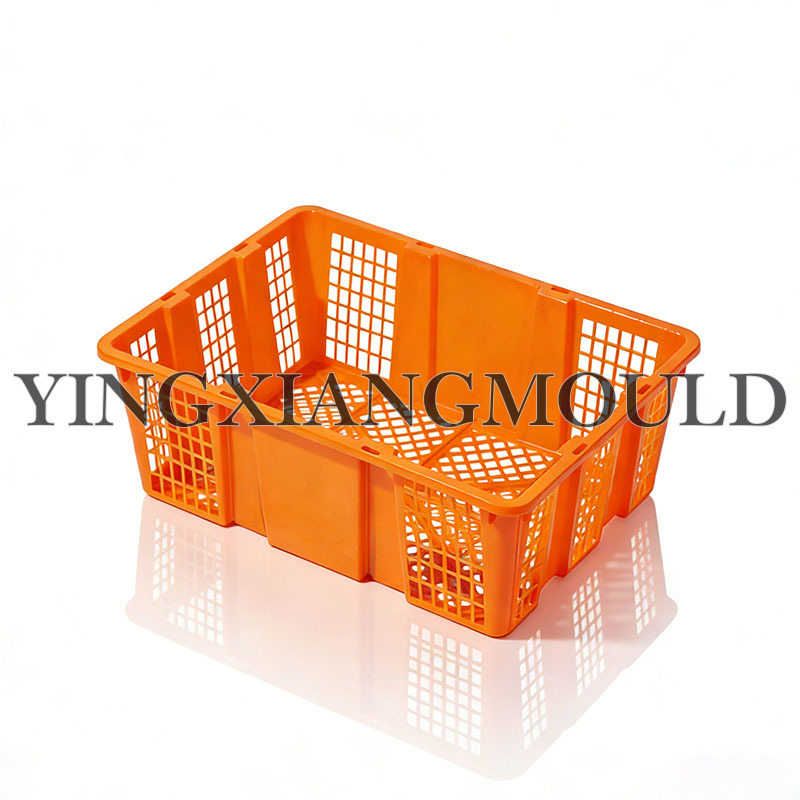
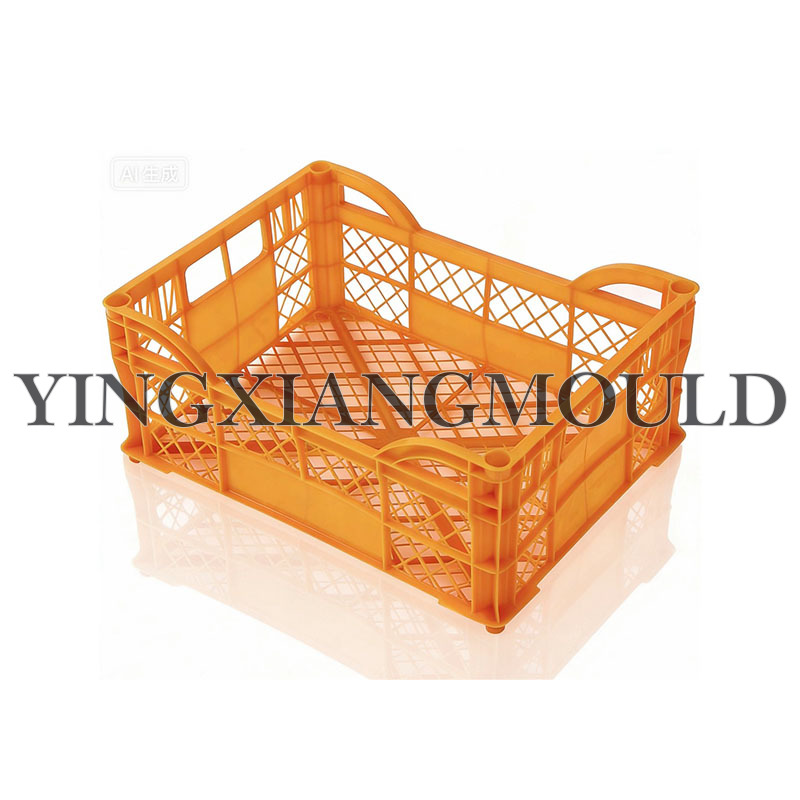
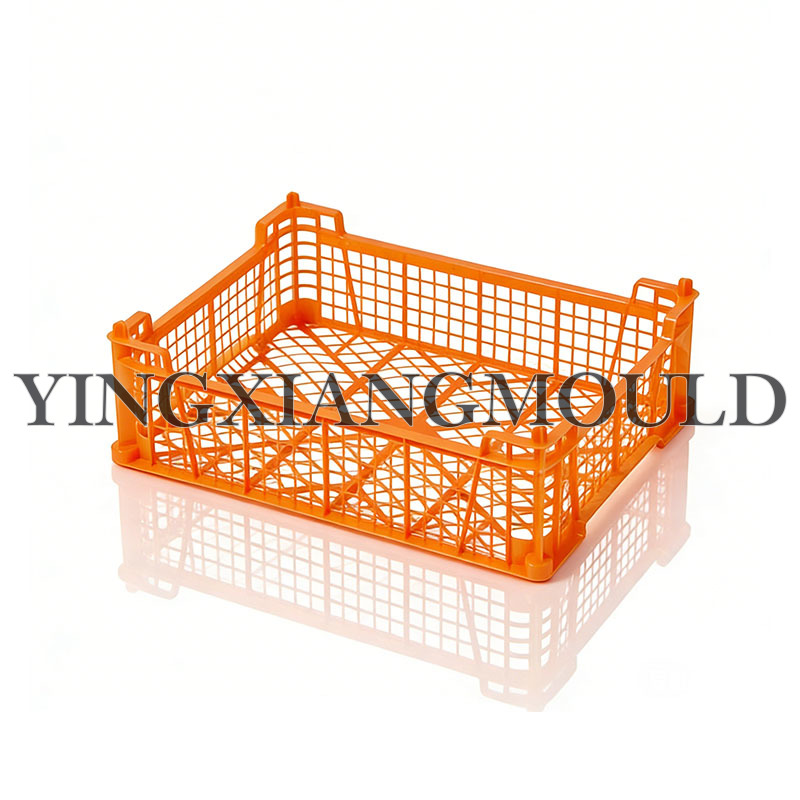
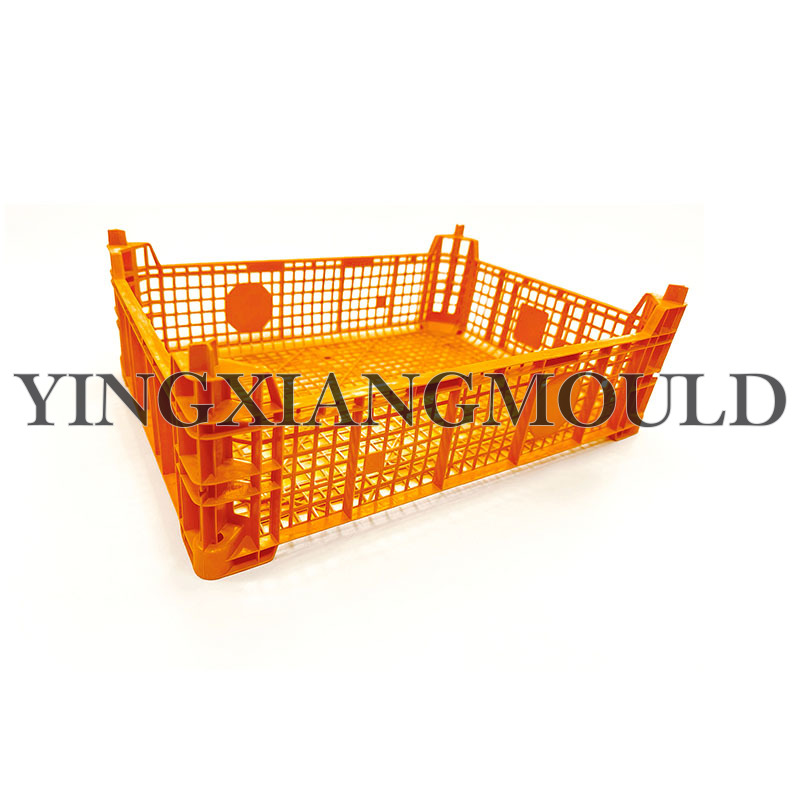
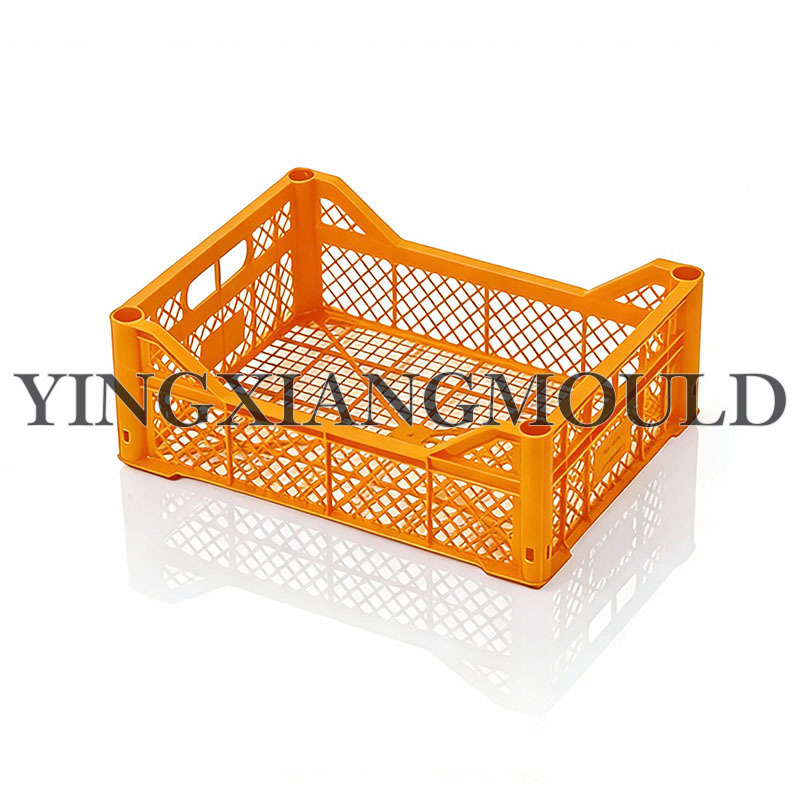
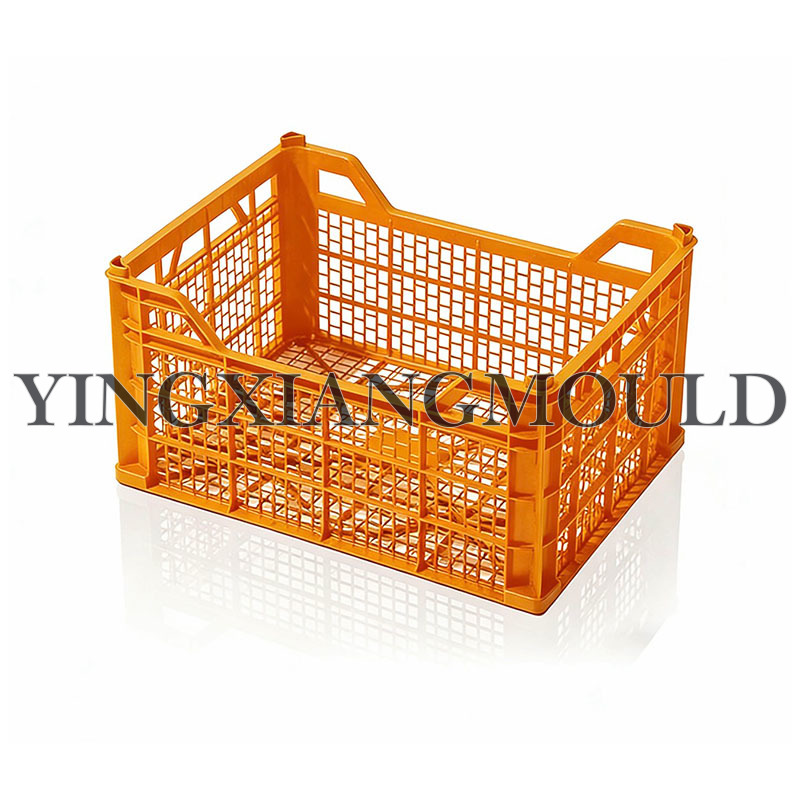
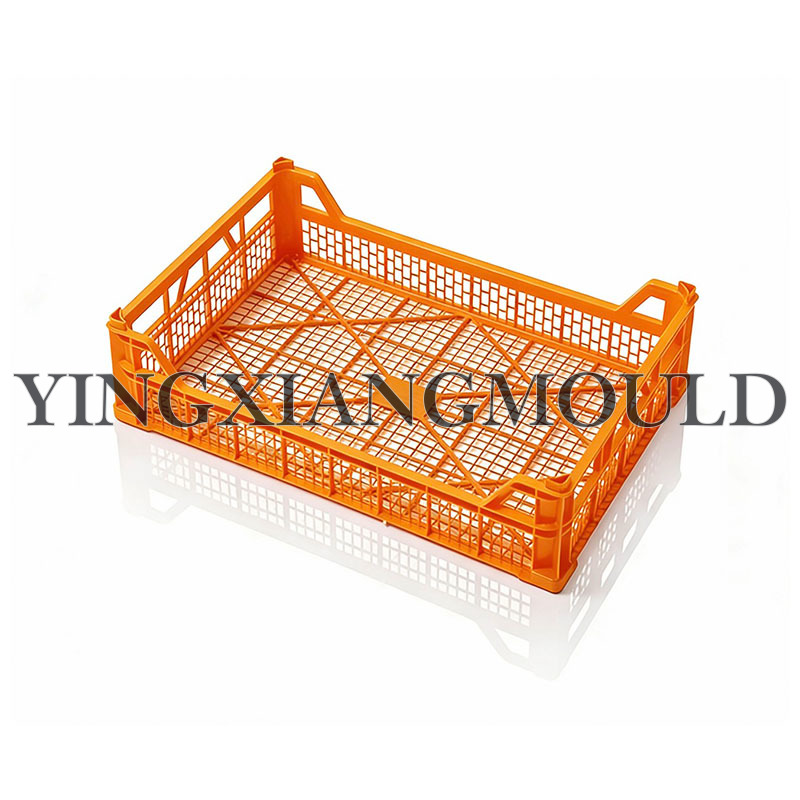
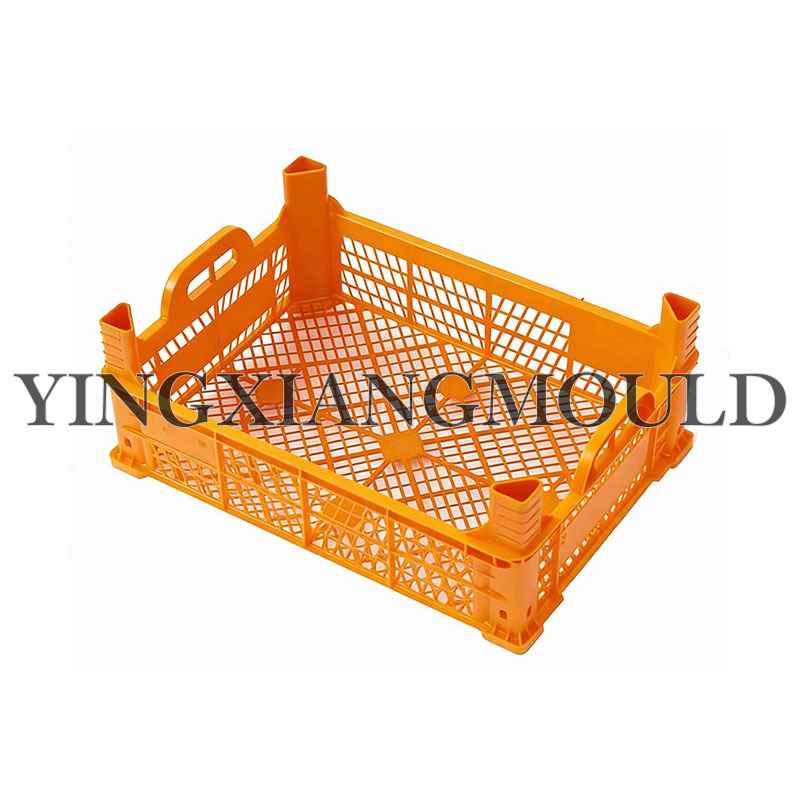
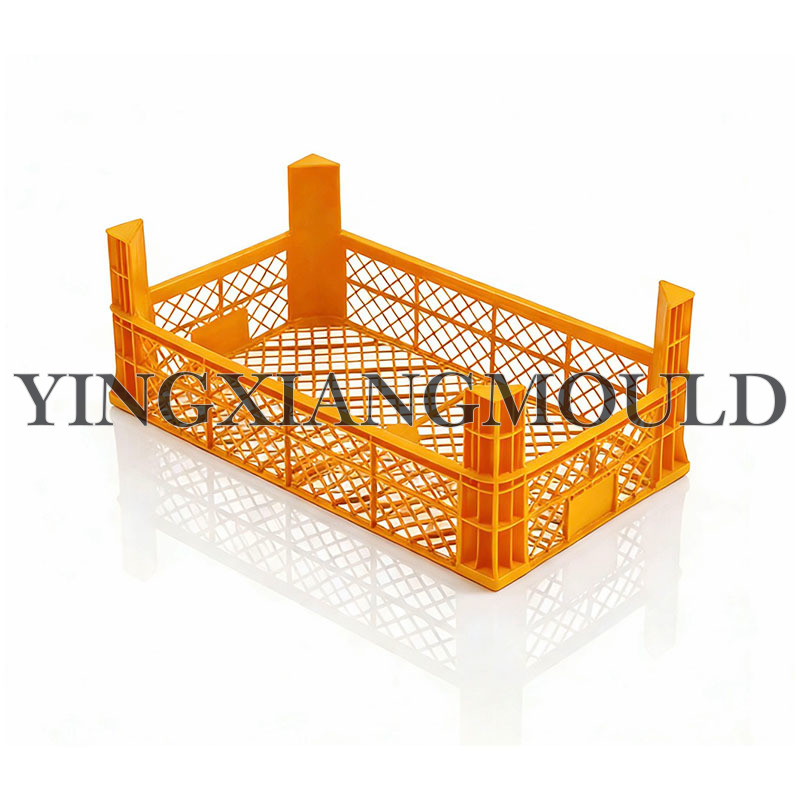
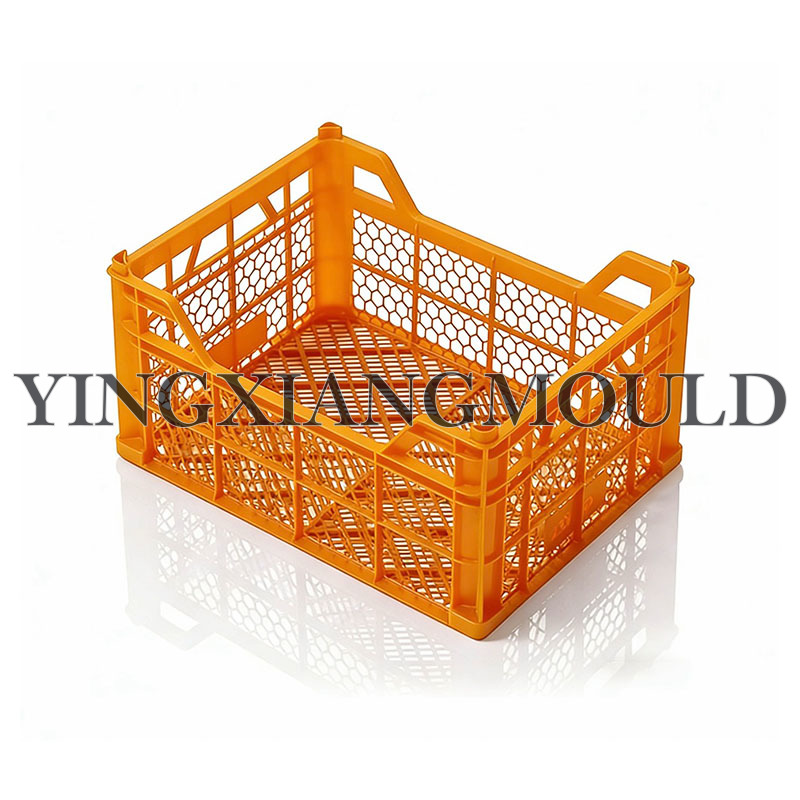
Precision molds used for mass injection molding of plastic fruit baskets (fruit crates, supermarket display baskets), compatible with food-grade materials such as PP/HDPE, are core production tooling in fruit and vegetable retail, cold chain packaging, farmers' markets, and supermarket supply chains.
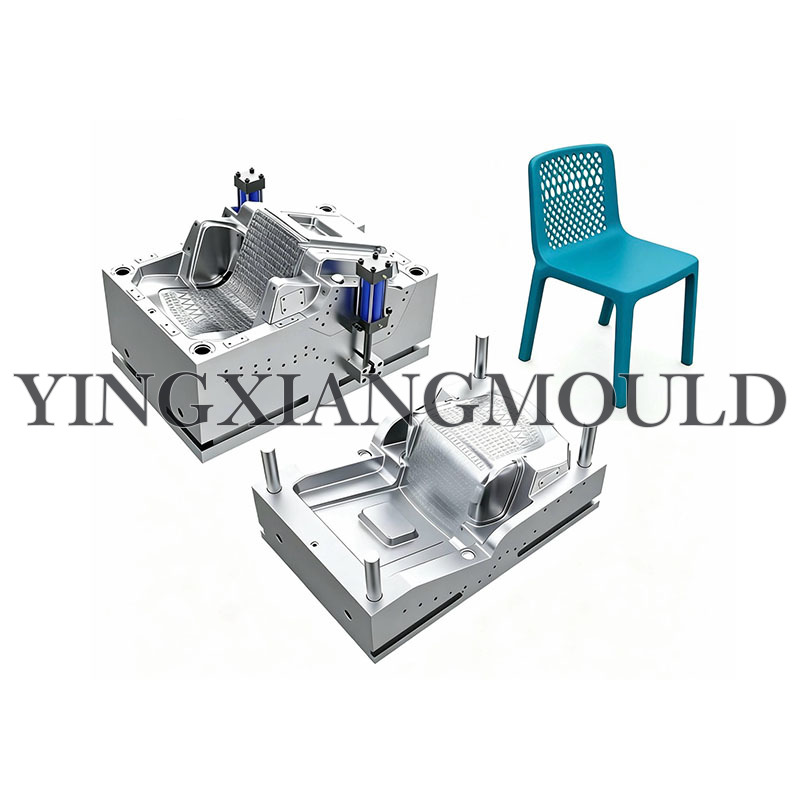
A Plastic Fruit Basket Mould is an industrial injection mold used to inject molten plastic raw material (usually PP or HDPE) into a cavity under high pressure. After cooling, it is demolded to form a finished plastic fruit basket with mesh holes, stacking ribs, and handles.
Applications of Injection Molded Plastic Fruit Baskets
- Supermarkets & Chain Retail
Used for displaying fruits and vegetables in fresh produce sections, requiring good ventilation, stackability, and bright colors to attract consumers. Purchase quantities are typically in the tens of thousands.
- Agricultural Product Distribution & Cold Chain
Turnover baskets from production areas to wholesale markets, requiring low-temperature resistance (0 ~ -18 °C), stackability, and a mesh design to meet pre-cooling and ventilation requirements.
- Farmers Markets & Wholesalers
High-frequency use and high breakage rate scenarios require heavy-duty models made of HDPE material with a wall thickness ≥ 2.5mm. Molds must support low-cost, rapid reordering.
Primarily small-sized, aesthetically pleasing designs, typically requiring 2-4 color SKUs. Molds must allow for easy color switching and have no weld lines on the surface.
- E-commerce Warehousing & Sorting
Used for picking and packaging fresh produce in e-commerce. Baskets must be compatible with standard shelf dimensions and support pre-drilled barcode scanning holes.
Buyers provide design files (3D/2D), and the factory creates molds accordingly. Finished products must have FDA/LFGB or other food contact material certifications.
Purchasing Reasons—Why Purchase from a Professional Mold Factory?
- Self-built Production Line, Reduced Unit Costs: Outsourcing finished baskets typically incurs markups of 30-60%. Owning your own molds significantly reduces bulk injection molding costs, making it suitable for buyers with annual usage exceeding 50,000 units.
- Exclusive Design, Brand Differentiation: Logos can be embossed on the basket body, and mesh shapes and color schemes can be customized, creating a competitive advantage; this is especially common with supermarket private label (PL) purchases.
- Fully Controllable Parameters: Wall thickness, mesh size, stacking ribs, and handle design can all be adjusted to meet the load-bearing and ventilation requirements of different product categories (strawberries, mangoes, cabbages).
- Food Contact Compliance: European and American markets require fruit baskets to meet FDA 21 CFR / EU 10/2011 food contact material regulations. Custom molds allow for proactive control of compliance risks in material selection and cavity treatment.
- Rapid Order Replenishment, Ensuring Supply Chain Resilience: With molds, the order replenishment cycle is reduced from 60+ days with traditional procurement to 7-15 days (injection molding cycle only), significantly improving response speed.
- Self-Hedge on Raw Material Costs: PP/HDPE granule prices fluctuate with oil prices. Buyers with molds can purchase raw materials in bulk when prices are low and inject them as needed, flexibly mitigating cost risks.
Frequently Asked Questions
Q1: How many products can a fruit basket mold produce before it needs major repair or replacement?
A: Under normal maintenance conditions, a high-quality P20 steel mold has a lifespan of approximately 500,000 cycles; using 718H or H13 pre-hardened steel can reach 800,000 to 1,000,000 cycles. Key factors affecting lifespan include: the frequency of mold release agent use, daily maintenance (rust prevention, cleaning of water channels), and the skill level of the operators. It is recommended to clearly stipulate the warranty period and major repair clauses in the contract.
Q2: Cold runner vs. hot runner molds: How to choose for fruit basket products?
A: Cold runner molds are the mainstream choice for fruit basket products because PP/HDPE has higher requirements for temperature control in hot runners, and fruit baskets are large, and sprue recycling does not affect quality, making cold runners more cost-effective. Hot runner molds are suitable for scenarios with many cavities (4 or more cavities), requiring extremely short molding cycles, or high-end appearance without gate marks; the initial mold investment is approximately 30% to 50% higher.
Q3: During mold acceptance, what items should the buyer focus on checking?
A: Core acceptance items:
- ①Dimensional inspection report (CMM data, critical dimensional tolerance within ±0.1mm);
- ②Visual inspection (no shrinkage marks, weld lines located on non-visual surfaces);
- ③Stacking stability test (recommended 5 layers fully loaded and left to stand for 24 hours);
- ④Demolding action check (smooth ejector pin/slider movement, no mold jamming);
- ⑤Continuous injection stability (recommended to perform 500 consecutive injections for confirmation).



 English
 Español